My name is Denise Leo, and I hail from Australia. My journey with dogs, especially with the delightful Pomeranian breed, has been a lifelong passion extending over 50 years.
I have had the honor of breeding and exhibiting close to 100 Pomeranian Champions, dedicating many years to the intricate art of dog training across various disciplines.
Beyond the show ring, my experience stretches to the pastoral fields as both a Dairy Farmer and Beef Cattle Breeder, where working with dogs of all breeds has been an integral part of my daily life. This diverse exposure has deepened my understanding and appreciation for these incredible animals.
I firmly believe that dogs are the most extraordinary beings in our universe, capable of offering us unconditional love that surpasses even their own self-interest. The countless wonderful dogs that have shared my life over the years have not only brought immense joy and companionship but have also profoundly enriched my existence in ways I could never have imagined. About us page
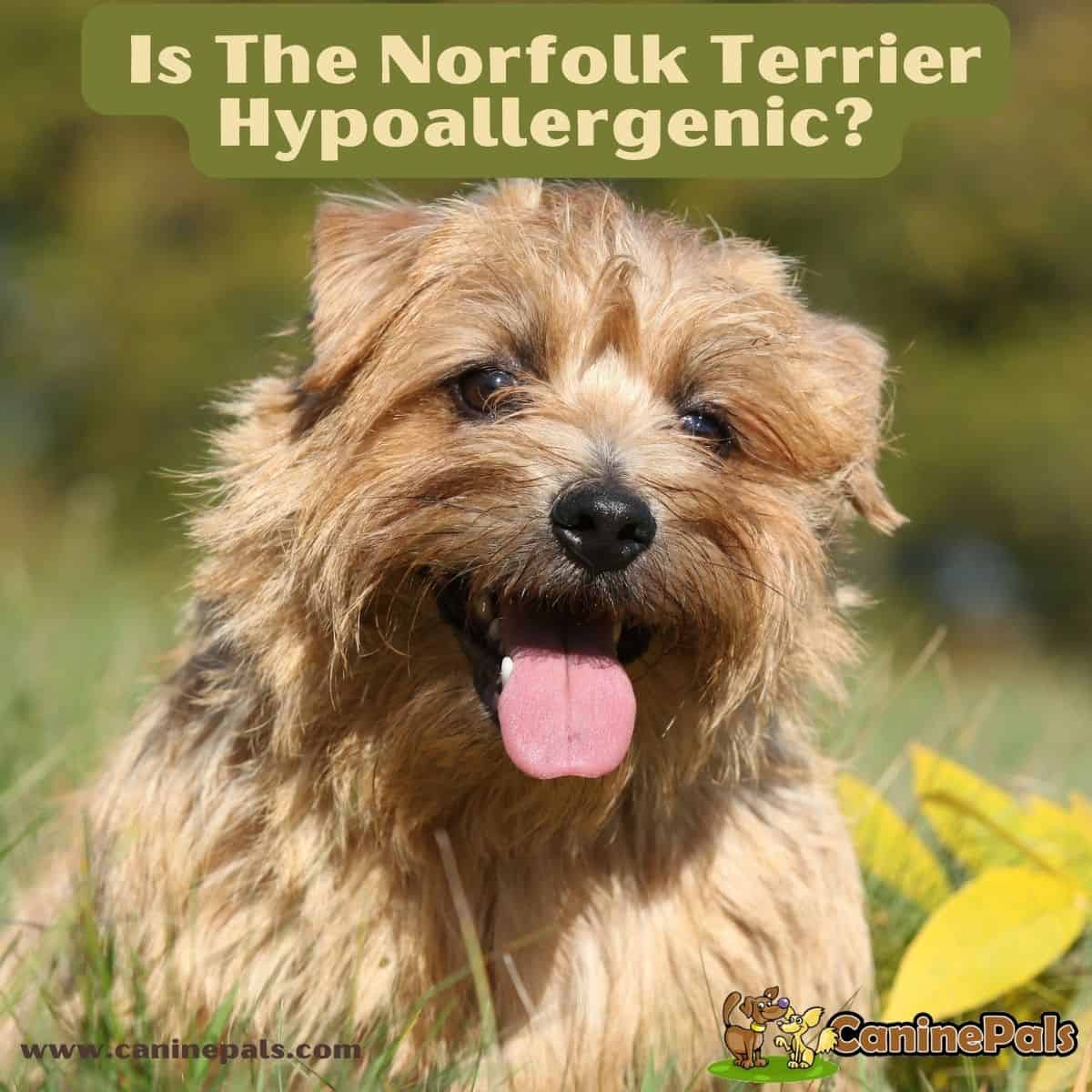
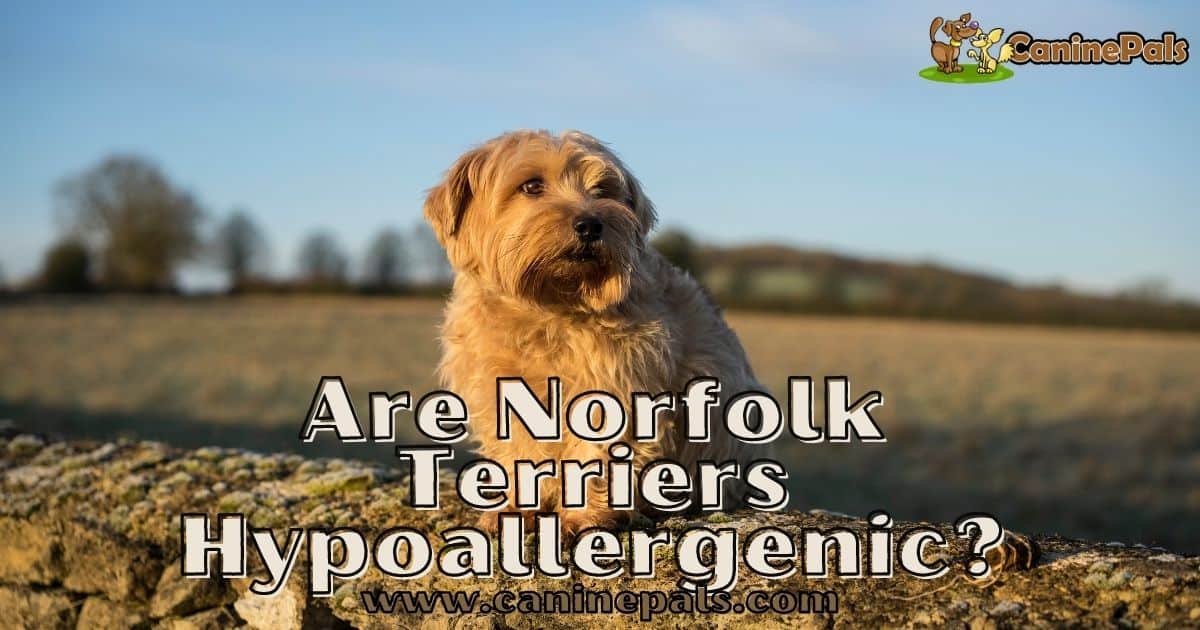
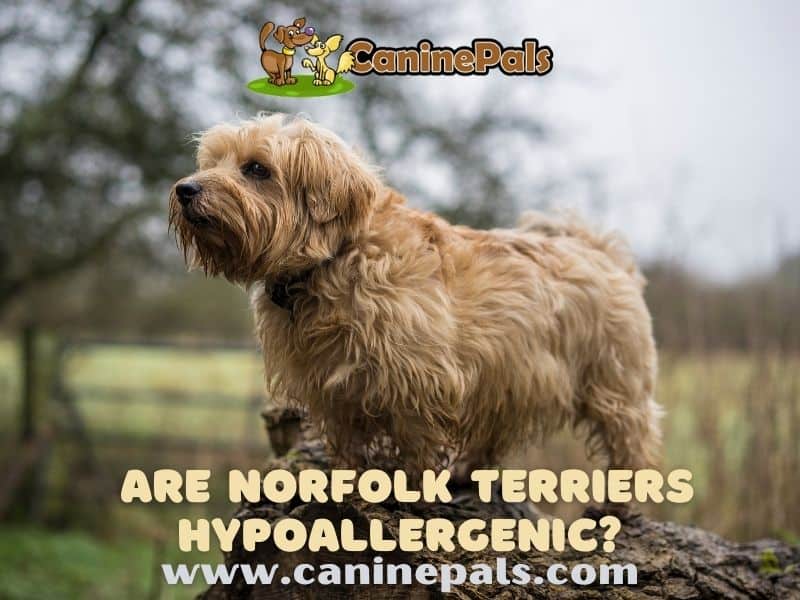
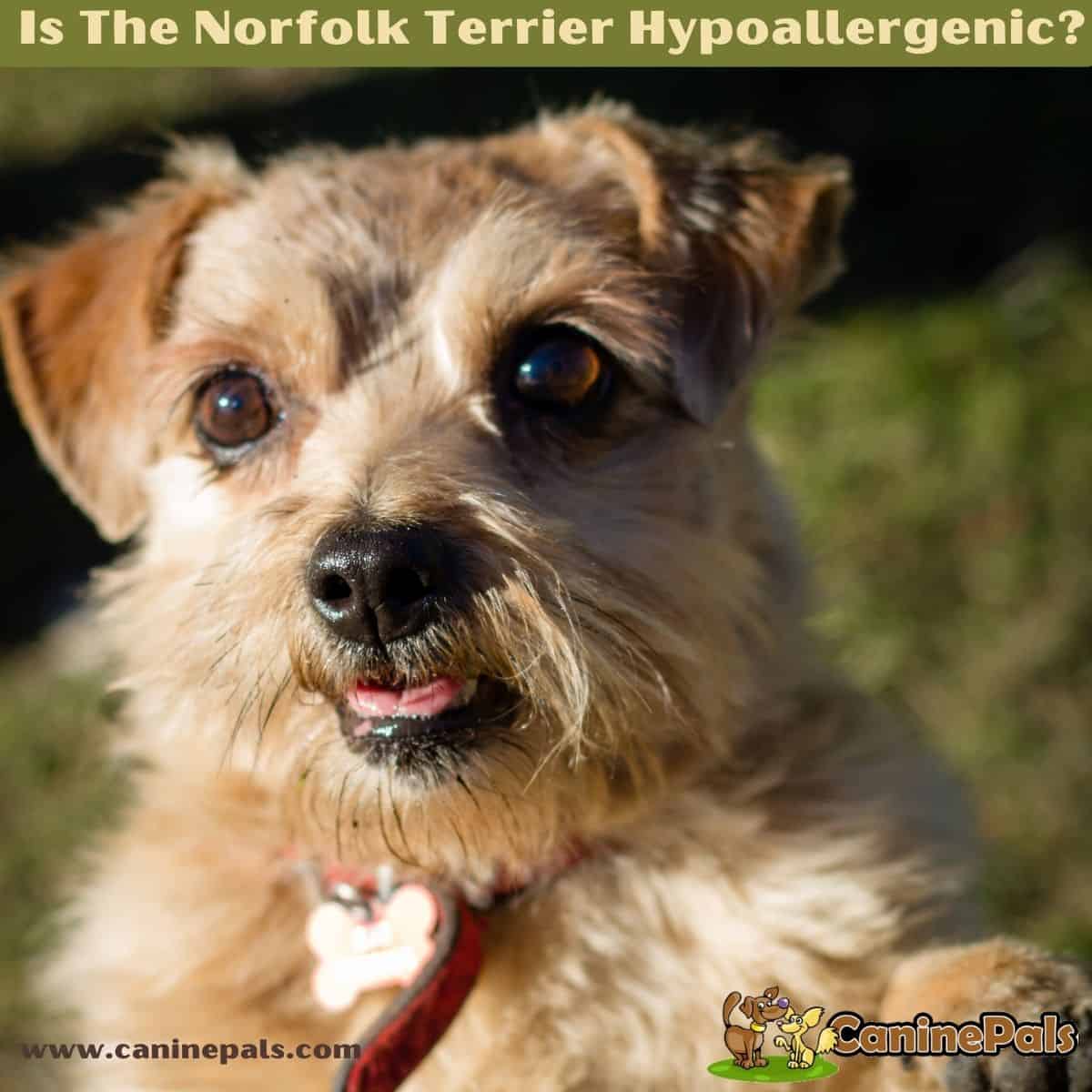
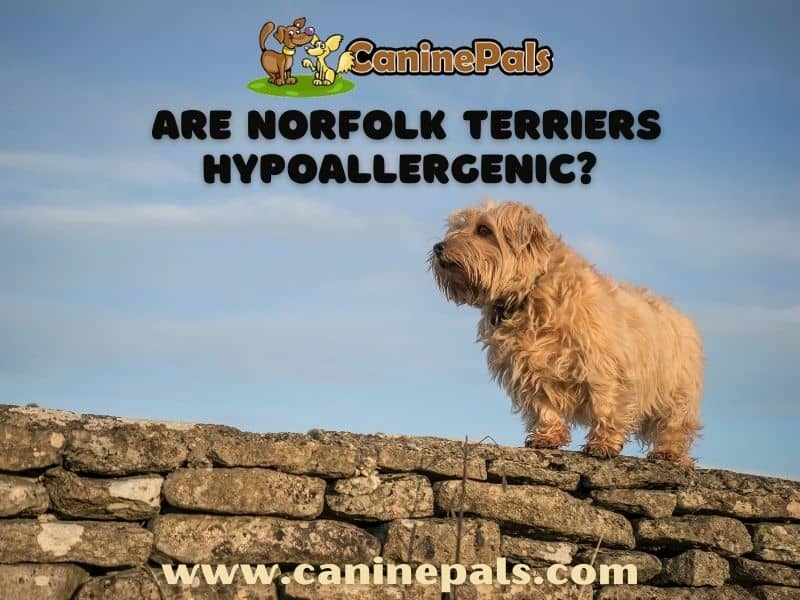
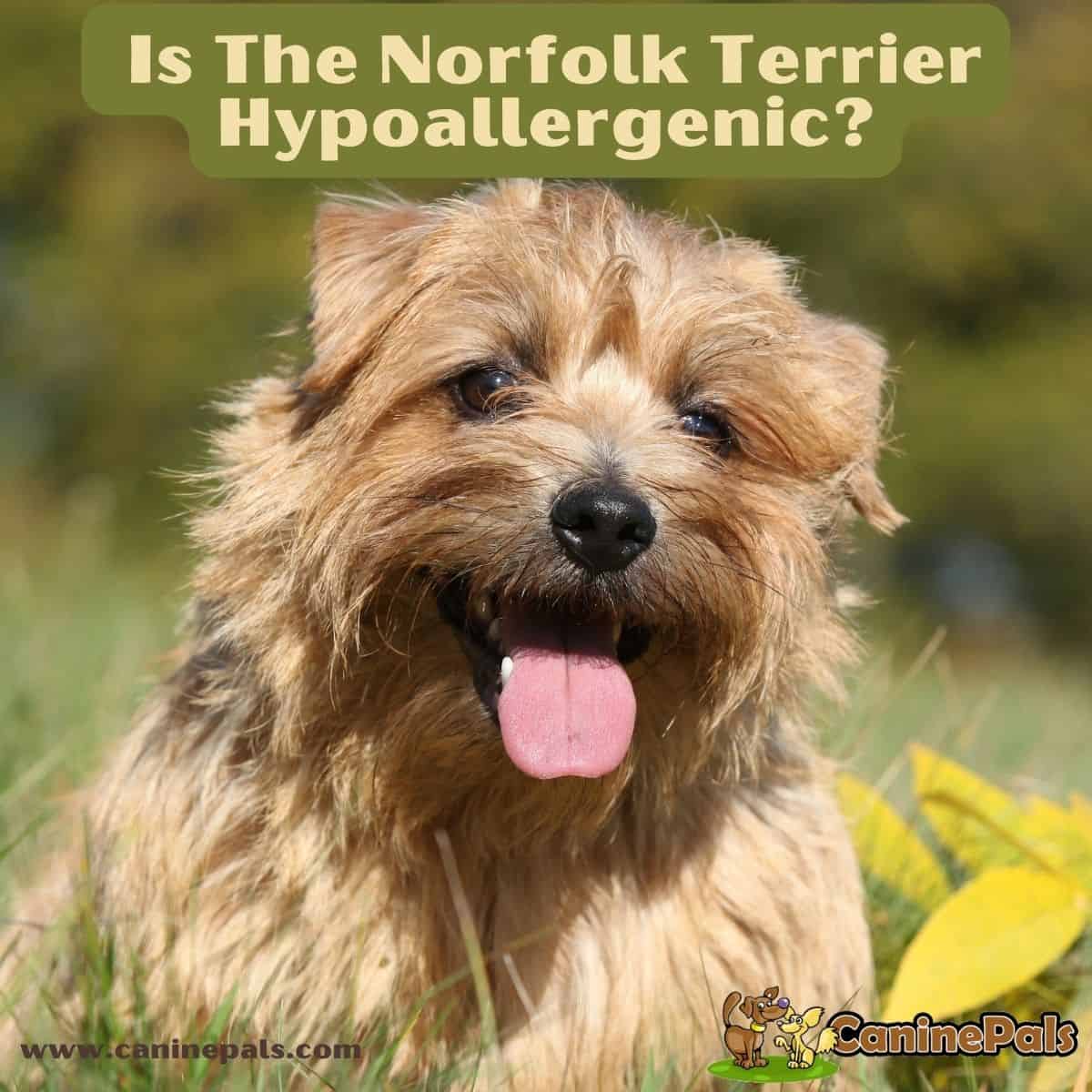
Norfolk Terriers are very playful and loving dogs but if you suffer from allergies you’ll need to consider the effects on your health before considering getting a Norfolk Terrier puppy. On this page, we’ll answer the following question: Is the Norfolk Terrier hypoallergenic? Let’s check this out.
Are Norfolk Terriers Hypoallergenic?
The Norfolk Terrier is considered to be hypoallergenic. No dog breed is totally hypoallergenic, but these dogs shed less than most breeds. They also shed throughout the year rather than in certain seasons, avoiding a sudden shedding of hair which can be a problem for those suffering from allergies.
If you are allergic to dogs or other animals then you’d do well to heed the advice of an experienced breeder of Norfolk Terriers,Shiela Foran, who says that she cannot definitely say whether this breed of dog is hypoallergenic or not. She advises anyone with allergies to try spending some time with this dog before buying one.
The reason for this advice is simple. Despite the dog, everyone reacts slightly differently and sufferers of dog allergies may react more to certain breeds and less to others.
A Norfolk Terrier is a small, compact dog that is known for its friendly and outgoing personality. They are also known for their intelligence and agility.
Norfolk Terriers are a cross between the Norwich Terrier and the Black-and-Tan Terrier. They were originally bred in England to hunt rats in the Norfolk area. They were also used to hunt foxes and other small animals. They are known for their long, wiry coats and their ability to hunt in packs.
The Norfolk Terrier is native to England and is among the smallest working terriers. He was formerly regarded as the same as the Norwich Terrier. He’s a barnyard ratter and fox hunter. In 1979, the drop-eared breed took the name of the Norfolk Terrier while the prick-eared breed remained as the Norwich Terrier. He works equally well on his own or in packs and is hardy, compact, and very active.
He easily adapts to different environments so he can live in the country or the city. He’s loyal and a devoted companion, His coat is wiry and resistant to the weather. Coat colors can be black, red, tan, wheaten, or grizzle.
The Norfolk Terrier temperament is charming. His energy levels are moderate and he is a fun-loving dog who loves walking and being with his owner. His coat needs regular hand stripping to remove dead hair. Brushing and grooming to remove dead hair. He’s 9 – 10 inches high.
Is a Norfolk Terrier Hypoallergenic or Not?
Norfolk Terriers are the Perfect Dog for People with Allergies
Norfolk terriers are one of the better small dogs for people with allergies. They have a low to no shedding coat, which means they produce fewer allergens than other breeds. These little dogs also don’t require as much grooming as other breeds, which helps with allergies too. This does not mean, however, that they shouldn’t be brushed. Brushing a dog regularly helps remove matted hair that may cause allergies and removes dead skin cells from the fur.
Norfolk terriers are known for their wiry coats. Their coats can be black, brown, or tan in color with white markings on the chest and feet. The hair is usually short but can grow to be longer if it is not trimmed regularly.
Is The Norfolk Terrier Hypoallergenic or Not?
What is the Reason for Allergic Reactions to Dogs in Some People?
As explained by Scientific American, most allergic reactions are not caused by hair or shedding of the dog but a protein in the dog’s saliva. This means that no dog can be truly hypoallergenic.
However, different proteins exist in different breeds and some of these proteins may affect fewer people than others. Therefore two factors affect the potential of the Norfolk Terrier to cause allergies in people: the type of protein from the dog’s saliva that a person is allergic to and the amount of shedding of the dog.
It just so happens that the Norfolk Terrier is much less likely to cause these allergies because of its less frequent shedding and also due to the type of coat it has.
In fact, there is even less likelihood of an allergic reaction to a female or a neutered dog as they often produce less of the proteins that can cause allergies. Here issome research on this.
Is The Norfolk Terrier Hypoallergenic
What is the Evidence that Norfolk Terriers are Hypoallergenic?
Norfolk Terriers have a double coat which means they shed less than other dogs because the undercoat is not as thick as the topcoat. The topcoat sheds more because it has to protect the undercoat from dirt and debris.
There doesn’t appear to be much in the way of scientific research to confirm that the Norfolk Terrier is truly a hypoallergenic dog breed, but many claims they are as close as any dog can come to this.
According toPreferred.com, the Norfolk terrier is classed as a low-shedding dog breed and requires little grooming. It claims the dog can be included in those considered hypoallergenic.
Also, on thiswebsite, the Norfolk Terrier is described as a hypoallergenic dog. There is also other useful information about this dog breed that is so popular.
Is a Norfolk Terrier Hypoallergenic or Not?
Final Thoughts on is the Norfolk Terrier is Hypoallergenic or Not?
The Norfolk Terrier is one of the smallest terriers according to the American Kennel Club and as such, they shed less hair than larger dogs. The kind of hair they have and the lack of sudden seasonal shedding mean that they have less hair which drops off the dog and floats around the home. The Norfolk Terrier is more hypoallergenic than most other dog breeds but can never be totally hypoallergenic because shedding does occur if only at low levels.
It is not the hair that causes allergies in people but the dander, or dead skin cells which become trapped in the falling fur of dogs. Within these skin cells is a protein from the dog’s saliva which is the real culprit for the allergies that sensitive people have as a result of dog shedding.
Fortunately, as Norfolk Terriers shed less they deposit less dander around the home and their coats can be managed quite easily due to the wiry nature of the hair. Norfolk Terrier grooming is probably best left to a professional groomer.
Any person who is concerned about a possible allergic reaction to this dog should first test spending time with one and make sure they do not suffer allergies before getting their own Norfolk Terrier.
Copyright CaninePals. All Rights Reserved.
References and Further Reading:
American Kennel Club Norfolk Terrier Information
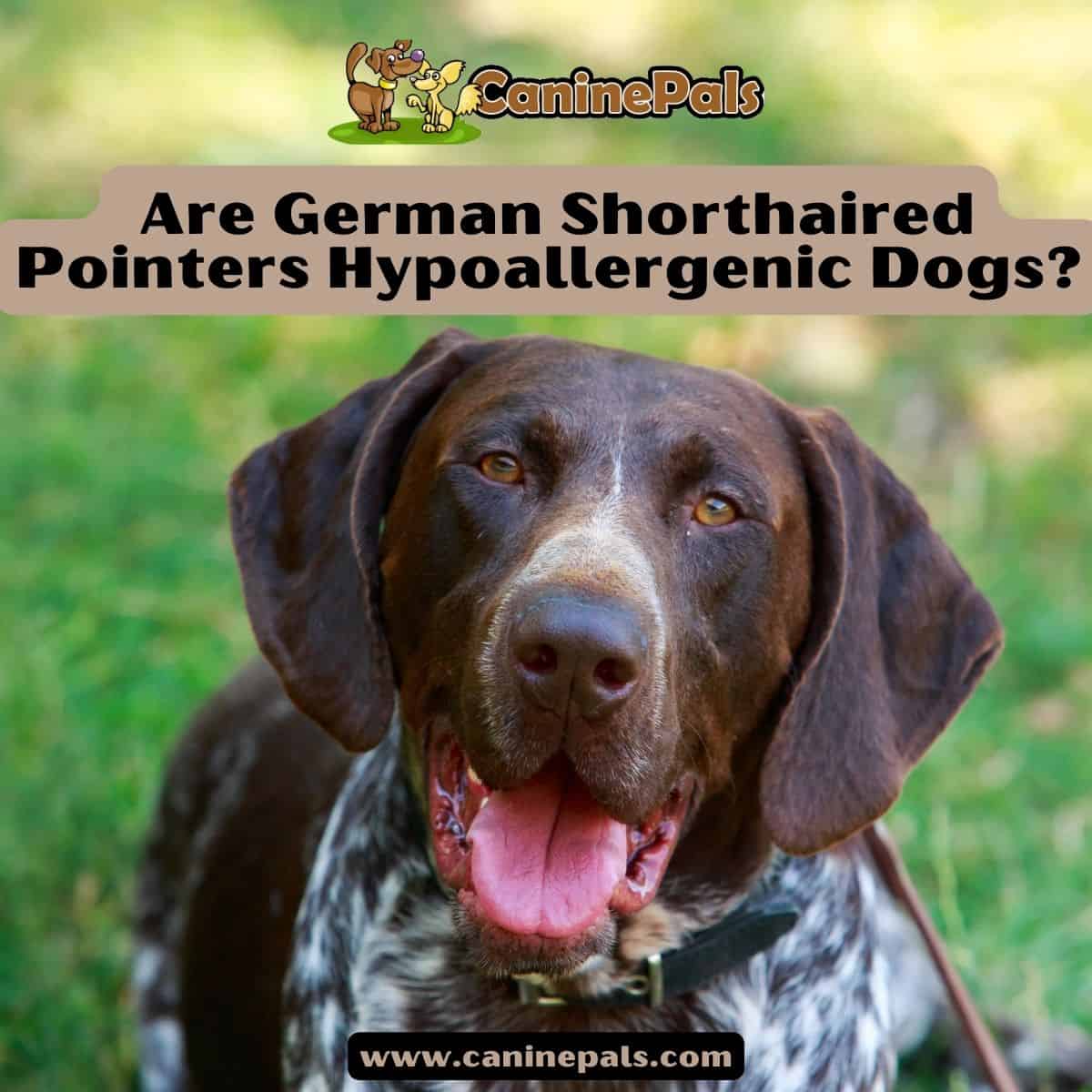
The most frequently asked question is, are pointers hypoallergenic, or are German shorthaired pointers good for allergies? In the following piece, we will cover all these aspects of German shorthaired pointers and how you can keep them at home.
Are German Shorthaired Pointers Hypoallergenic?
GSPs are certainly not hypoallergenic, but the correction is that no such dog is truly hypoallergenic as all of them shed some hair and skin particles called dander. And the dander can cause some kind of allergic reaction in those prone to allergies, but some dogs cause lesser allergies, but none is 100 percent hypoallergenic.
German shorthaired pointers are double-coated breeds that have two short coats. They have a thick and short top coat, and beneath that, they have water-resistant undercoats, which make them shed more. However, GSPs are moderate shedders that only shed twice a year and aren’t the most allergenic dogs out there.
German shorthaired pointers, known as GSPs, are among the most popular dog breeds for outdoor activities and adventures. GSPs are very friendly, obedient, and energetic dogs that they bred for hunting purposes. These dogs have a well-muscled body with solid thighs and can eagerly become more muscular if given the proper training and exercise. Pointers are a versatile sporting breed that is great for hunting; these types of dogs have water-resistant courts that make agile hunters perform terrifically in both land and water fields.
When going out to buy a dog, everyone wants to get on board a breed that is playful, loyal, friendly, and easy to train and groom. German shorthaired pointers are those versatile sporting breeds that can hunt and live as great family dogs. They can sometimes become challenging to handle for new owners, but once they settle down, you won’t like having any other pet.
Are German Shorthaired Pointers Hypoallergenic Dogs?
History
German shorthaired pointers are the most obedient and well-mannered hunting dogs; they are known for their high performance in dog services and sports like dog diving, agility, and obedience. This breed can survive well in outdoor and indoor atmospheres, but their best performance is indoors. This sleek and speedy dog breed is full of stamina and famous for its endurance. They have been honored for having great smelling sense and courage to fight big animals.
This famous breed came into being during the 18th century after German hunters spent generations cross-breeding several hunting dogs to get this breed. Many German tracking dogs contributed to the expansion of this breed, like English pointers and Arkwright pointers.
However, it’s not known which two breeds produced GSP. Still, it seems that GSPs are the descendant of Spanish pointers and German bird dogs. After going through several phases of evolution, the breed got official recognition from American Kennel Club in 1930. GSPs breeding was highly affected by the Second World War, and the breed became rare; by the war’s end, the German breeders worked extensively with the limited gene pool to rebuild this beloved breed.
GSPs are best known for working with intelligence and law enforcement agencies to track illicit material and criminals. This breed assists the armed forces when they perform big missions; their outstanding sense of smell makes them one of the favorites of the armed forces as they help them sniff out explosives.
Besides their exceptional hunting abilities, German shorthaired pointers inspired many writers to celebrate this breed in their writings; one such display in a famous mystery series Spencer in which the famous detective had three German shorthaired pointers.
German Shorthaired Pointer
Appearance
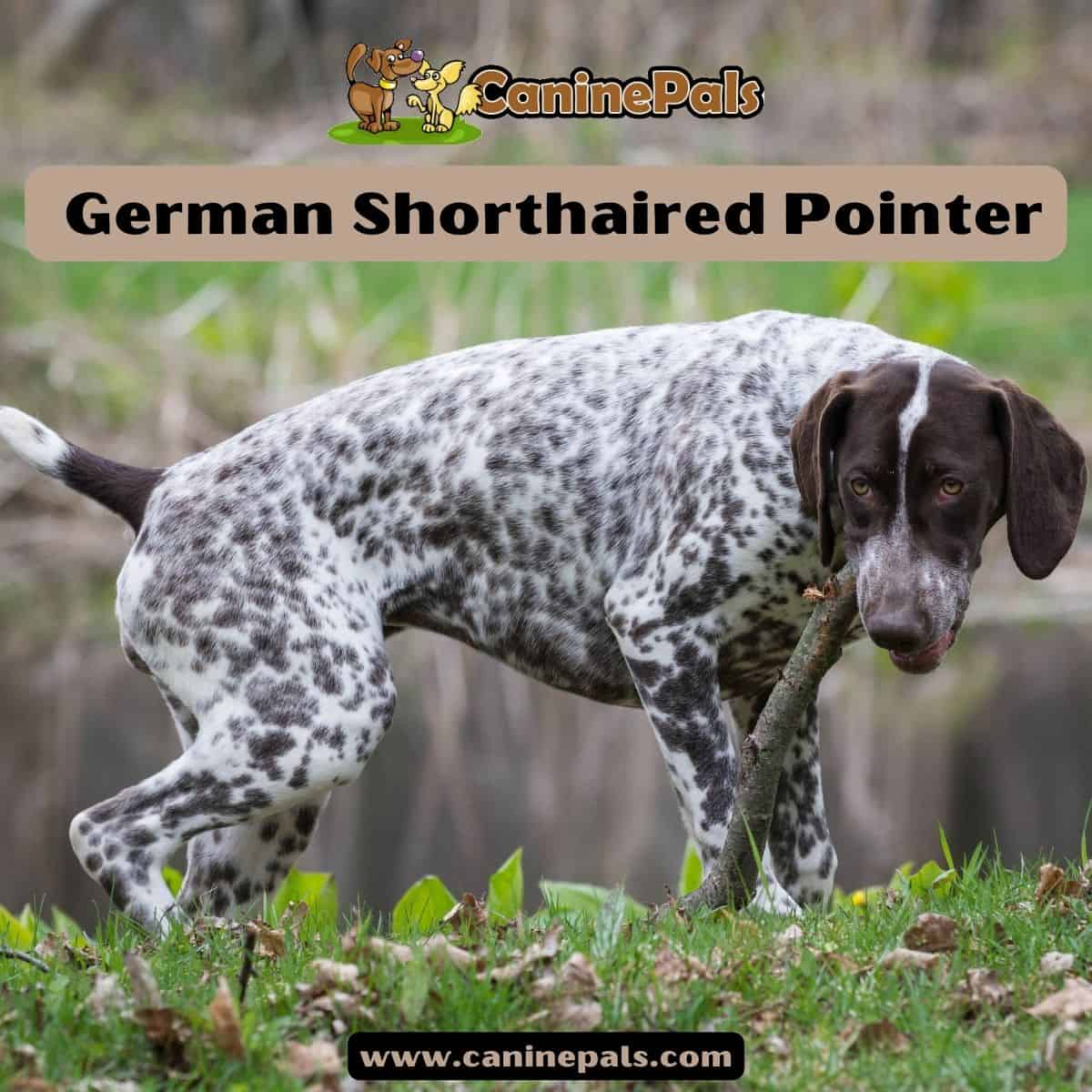
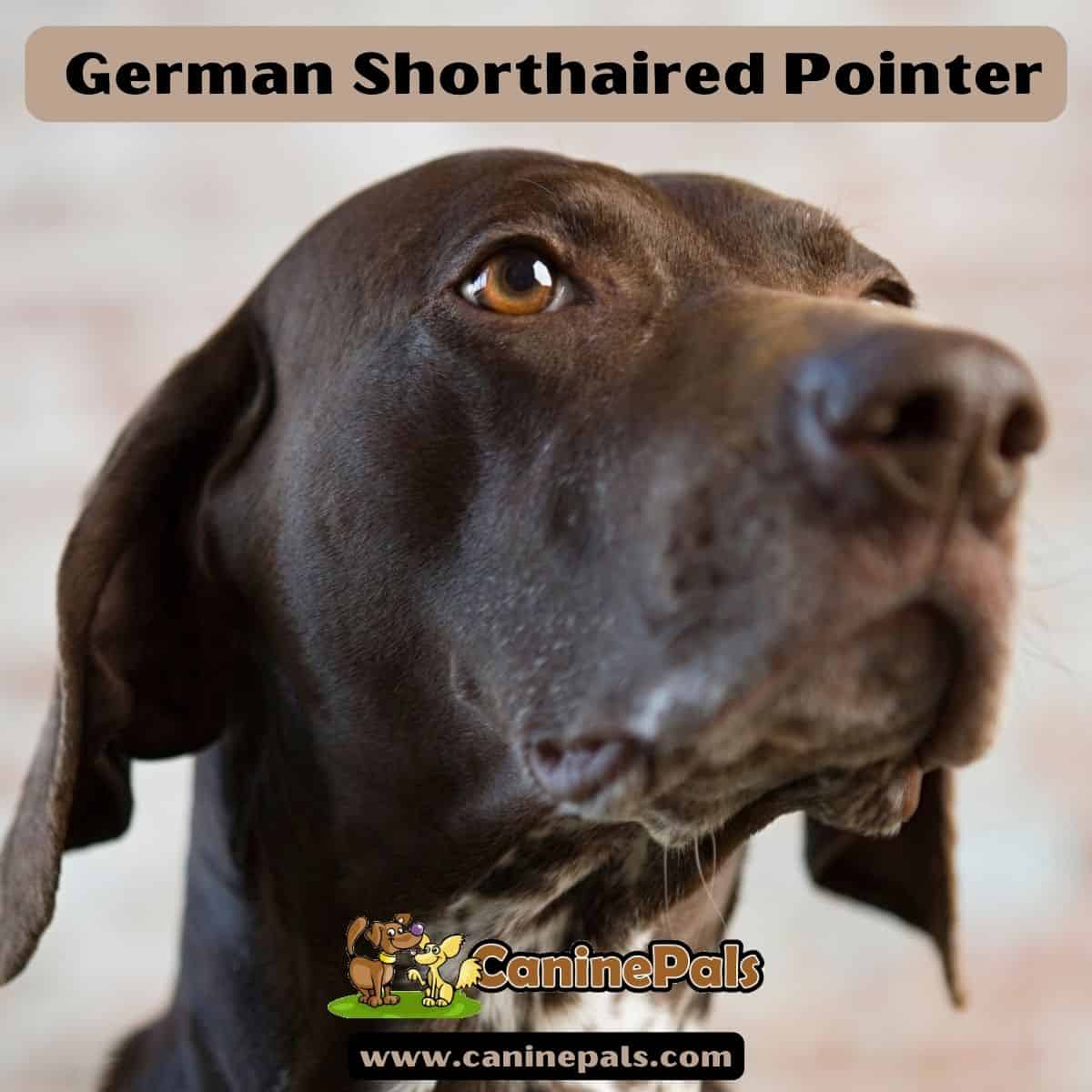
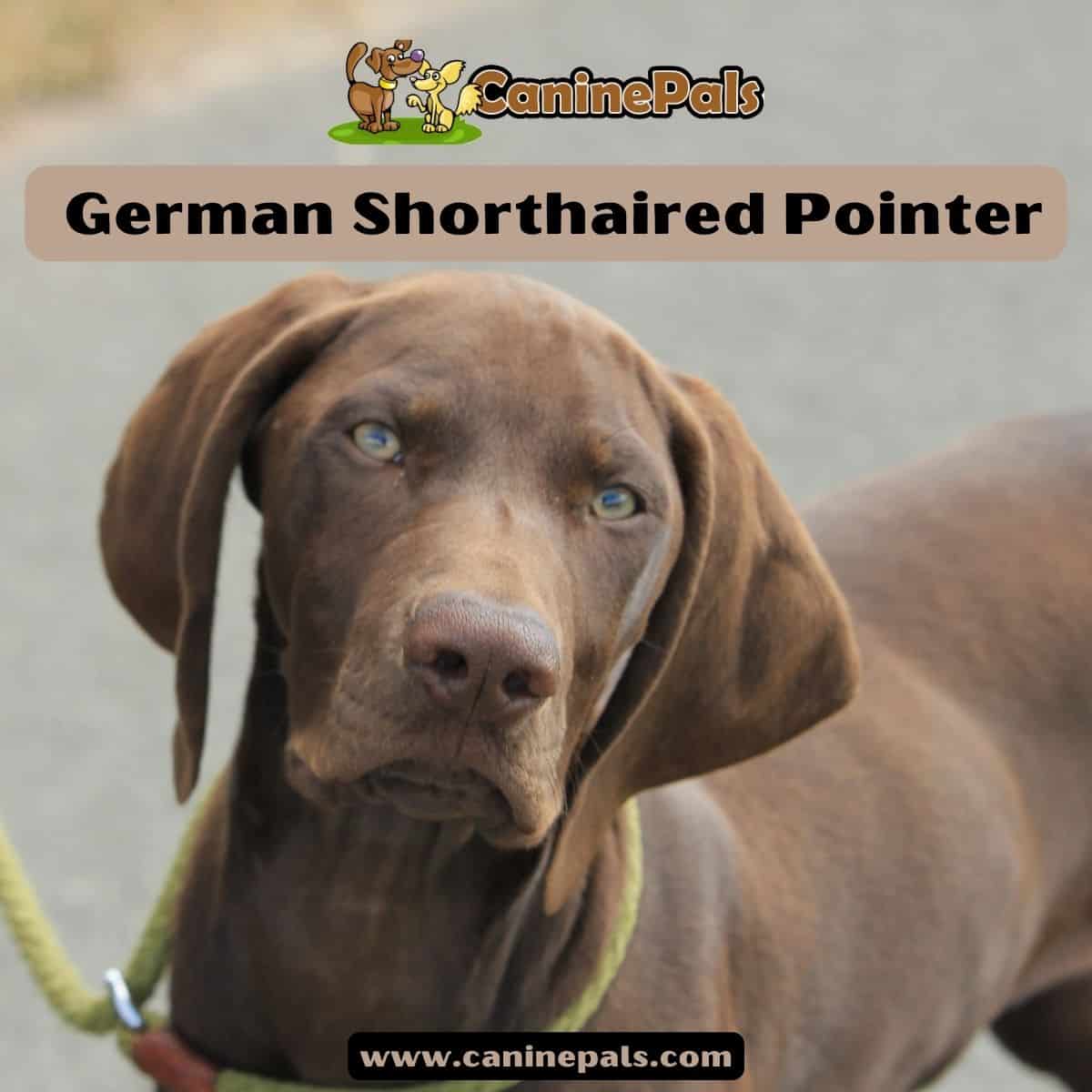
GSP is medium-to-large-sized dogs with short and flat coats that are water resistant to keep them warm in winter. Pointers are known for their unique combination; the coats of this beautiful breed are usually liver (dark brown) in color with black or white spots on it, or in some cases, they can be in solid colors, but commonly they are liver with spots.
They have a large nose, big almond-shaped eyes, and dark-colored floppy ears, and the unique thing about pointers is that the color of their nose always matches the coats. The male GSPs are 55-70 pounds in weight and are generally 23-25 inches tall, while the females usually reach 23-25 height and weigh around 45-60 pounds.
Temperament
GSPs are one of the most friendly, playful, energetic, and intelligent dogs. There are hardly times when you would find this breed not doing any activity. Their hunting history makes them an incredibly free-spirited breed that likes wandering around if not trained to live under the fence.
The good thing about these pointers is they are quick learners and easy to train. They are also kid and dog friendly and love playing with kids, but it’s suggested not to leave this breed unsupervised with kids. Pointers generally welcome strangers and don’t bark excessively but alarm their caretaker of any strange activity going around nearby.
Moreover, GSPs are working dogs as they get training to do hunting jobs, so they don’t like sitting idly. If these dogs are not kept busy with activities, they can become aggressive and furious. So it’s suggested to always occupy their mind with plenty of activities, exercises, and interactive toys, so they don’t get bored. These dogs crave for purpose, and if they don’t get one, they start barking and chewing.
This breed can become challenging to handle for impatient owners when they are untrained and babies. Pointers are very sensitive and like living in a positive environment to get trained; they are not happy when left alone, so we recommend that only those caretakers keep these dogs who stay out for long.
Living Atmosphere
As we have discussed, GSPs are sporting dogs who need a spacious area to run and play; that’s why these dogs can’t live in confined places like apartments and condos. GSPs possess boundless energy; they need owners with ample space to engage them in different activities. GSPs are great performers as organized athletes, but even if you don’t train them for competitive agility, they can happily become your companion for family adventures.
A positive atmosphere encourages them to do good, so always treat your pointer delicately and praise them for all their good deeds because this breed gets disappointed with the harsh and commanding behavior of the owner. Even treating them with some delicacy can also do wonders.
German Shorthaired Pointer
Care Tips for German Shorthaired Pointers
GSPs are easy to groom and clean; their nails need trimming at least once a week, while their ears also need to be checked for cleanliness. Pointers have small coats that need regular brushing with the right tools.
This breed relies heavily on its natural oils for skin protection; they only require occasional or once-a-month bathing and shampooing. A German shorthaired pointer sheds hair only twice a year in fall and spring; they need extra brushing with a firm bristle brush during this time.
GSPs need considerable food and water as they are active mid-to-large-sized dogs and might get dehydrated if they don’t get enough water. The vigorous exercises require them to eat high-quality dog food in reasonable portions divided into meals a day. But your pet’s diet should have a proper balance so they don’t get obese.
The Lifespan of GSPs and Their Health Issues
German shorthaired pointers are generally healthy dogs; they live for a good 12-14 years, which is a healthy lifespan. Like any other mid-sized dogs’ pointers also face several health conditions, progressive retinal atrophy, heart issues, skin disorders, and hip dysplasia. Pointers are also prone to gastric problems like excessive bloating and vomiting, which can become life-threatening if not treated promptly. Hence, scheduling check-ups with your veterinarian for all health-related issues is better.
Hunting dogs also quickly get fungal and bacterial infections on their open wounds and cuts that the contact due to scratching against bushes as they go out in the woods for hunting sessions. Here are a few other diseases commonly found in a German shorthaired pointer.
Von Willebrand’s Blood Disorder
This disease is a blood disorder that influences clotting due to the shortage of von Willebrand’s in the blood. The dogs that suffer from this disease have typical symptoms of excessive nose bleeding, gums bleeding, and sometimes bleeding in the stool. Fortunately, there are treatments for this disease, and the transfusion can fully cure your pet of von Willebrand’s factor.
Entropion
Entropion is a common eye defect found in most dog breeds; in this disease, the eyelid starts rolling inwards, which causes irritation and injury to the eyeball. Generally, GSPs get this defect at an early age, at six months, and start rubbing their eyes relentlessly. The proper treatment for this condition is surgery.
Lymphedema
Lymphedema is a common disease in dogs that occurs due to an obstruction in the lymphatic system; in this condition, lymph flow gets blocked, resulting in tissue swelling. There is no cure or surgical procedure to cure this condition; you can only improve your pet’s condition by giving them rest and massage on the affected area to improve lymph circulation.
Gastric Dilatation Volvulus
Gastric dilatation volvulus or bloat is a known life-threatening disease in medium-to-large-sized dogs that is caused by excessive rapid eating, drinking and doing forceful exercises after eating. This condition occurs when the stomach gets full of gas, and the dog cannot get rid of it. This condition becomes life-threatening when dogs panic and their blood pressure drops. You should call for immediate medical assistance for help if your dog suffers from this condition.
Is GSPs Good For Allergies?
Well, German shorthaired pointers are not bad for allergies if you can manage the cause of allergies. But it completely depends on how severely allergic you are to dogs. You can always ask your doctor for advice on whether the breed is workable for your type of allergy.
People are generally allergic to dander; you can always reduce the risk of allergies by getting rid of dander and hair by regularly bathing and brushing your pointer, as it reduces the dander’s presence in the house.
Tips to Manage Allergies
If you are allergic to dander and still want to keep a dog in your house, then there are plenty of things you can do to minimize the impact of allergens a dog carries in your house, which include the following:
Regularly vacuuming your house can help eliminate the dander settling in different parts of your house.
Mop the areas that can have dander settled there.
We would also suggest you keep the dogs out of your resting places like the bedroom and other places where you can sleep.
The easiest way to remove the dander from your house is to groom and bathe the pet outside. Bathing outside will help you secure the house from allergens. It would be better if you did the job wearing masks and gloves.
An air purifier can be a savior when cleaning the air; try getting one with HEPA filters.
Always wash your hands and properly sanitize them after touching and cuddling your dog.
German Shorthaired Pointer
Conclusive Thoughts
German shorthaired pointers are an exuberant and full-of-life breed; they can bring liveliness to your household through their active presence and playful nature. Hence to sum it up, we would say that this smart breed is not hypoallergenic, but German shorthaired pointers are not too bad for allergies as no dog is 100 percent hypoallergenic. And if you are living with it, then it’s because you take all the right precautions. You can always live with a German shorthaired pointer harmoniously with having an allergy; it’s just that it’s not very common.
So, if you are keen to include a pointer in your family as a pet, then you can always manage the impact of allergens in your house with the management tips we have shared in this article. However, we can only help you understand a German shorthaired pointer more clearly so that you can decide whether you want to keep one or not. We hope this piece helps you take the right pawsome decision.
Keeping a Dalmatian and cat is a dream of every pet enthusiast. Everything you need to know about how to keep the two pets together happily.
Do Dalmatians harmonize with Cats? Things you need to know before keeping these two darlings together.
You’ve finally decided to get a Dalmatian as a pet. You love their spotted fur, friendly disposition, and loyalty to you.
But your pet enthusiast soul cries out for more. You want a cat, too!
While most dog breeds can live harmoniously with cats, you must know whether or not Dalmatians are good with cats before introducing them to each other.
You might think that the answer is straightforward, but several factors come into play when determining how well these two species will get along.
We’ve got everything covered you need to know about Dalmatians and cats before bringing the two darlings under one roof.
Stay tuned!
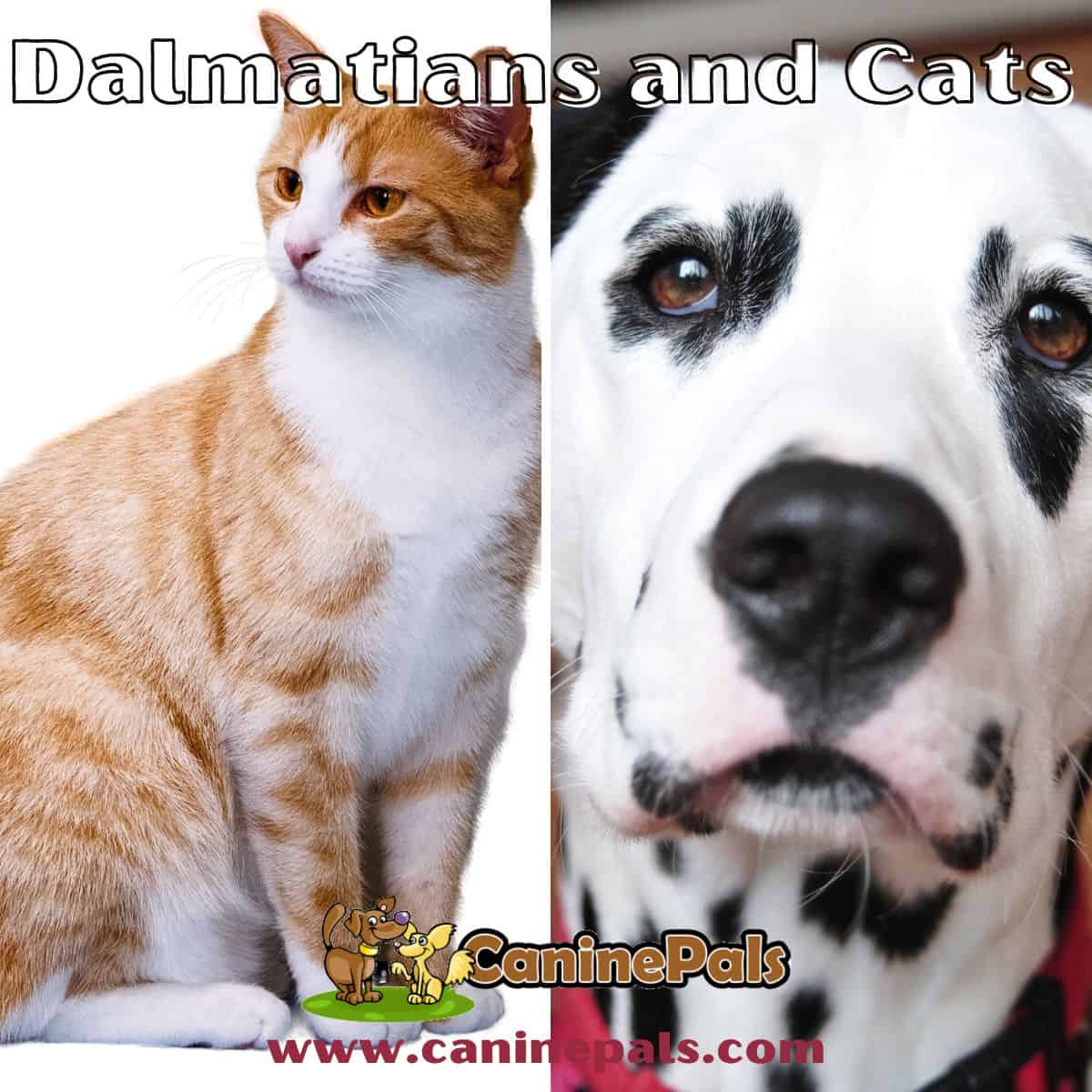
Dalmatians and Cats
Are Dalmatians Good With Cats?
Dalmatians are typically very friendly, outgoing dogs that enjoy the company of other pets.
Their playful and energetic nature makes them fun to have around and interact with.
While they still retain their hunting instincts, they don’t typically chase after small pets like cats or birds as regular day-to-day activities.
However, it is important to consider that Dalmatians were bred as livestock guardians like many other dog breeds. This means they are territorial by nature and will likely view other pets as an intruder into their territory.
But this doesn’t mean you shouldn’t keep the two furry buddies under one roof.
The simple answer to the most commonly asked question ‘Are Dalmatians good with cats?’ is YES!
Dalmatians make excellent companions for any felines! As long as you introduce them properly, both will likely get along quite well. A Dalmatian who is not used to cats as a puppy can behave inappropriately with other pets and chasing cats can occur.
Proper socialization with other animals for all dog breeds is necessary to ensure your Dalmatian dog is cat friendly and the two species can peacefully coexist. My mother owned a Dalmatian dog called Gemma, many years ago. Gemma had a best feline friend. Each individual dog will respond differently to other animals and some will get along with cats.
07 Steps To Introduce A Dalmatian To A Cat
It’s time to introduce your cat to a new friend — a Dalmatian.
Dalmatians are known as a very friendly dog breed, but introducing them to your cat can be a little tricky.
But, if you do it right, you’ll have two happy pets in no time!
Here’s how:
Step 01: Teach Your Dalmatians Basic Commands
Teaching your dog commands like “sit,” “stay,” and “down” will help keep him under control when meeting with the cat for the first time.
While you’re working on commands, keep the cat away from the dog, so they don’t have any chance of interacting until he is fully trained.
Make sure you practice these commands often, so they become second nature for your dog.
Step 02: Give Your Two Pets Individual Space
The first time you introduce your cat and dog, give them their own space in separate rooms.
This will allow them to get used to each other’s scent before they’re forced into close contact.
Keep them separate until you are certain that the two pets can coexist peacefully.
Step 03: Feed Them Separately
A Dalmatian dog can be very territorial and don’t like sharing their food. This is why it is best to feed them separately for the first few weeks until they get used to each other.
You can also bring their food bowls into separate rooms during mealtime so that they don’t feel like they’re competing for territory.
Also, try feeding them and the other pet at different times of the day so that they are not around each other for most of the day.
Step 04: Arrange A Meet Up on the Opposite Side of The Fence/Baby Gate
Introducing a cat to a Dalmatian dog can be fun and exciting, but it could also turn out to be difficult if you are not careful enough while doing it.
When arranging a meet-up between your cat and dog, it is best to do it on opposite sides of a baby gate or fence, not in the same room for the first few sessions.
The barrier will prevent jumping on each other in excitement or aggression.
Also, make sure no toys are lying around which might cause an injury
Step 05: Arrange A Meet Up In A Common Room
When the meet-up with the fence/baby gate goes well, you can now arrange a meet-up in a common area without any barrier.
Keep the meet-up session short and ensure your puppy is on-leash.
If the two pets are calm and friendly towards each other, you can now let them play together in the same space. However, if they are not getting along well, try to separate them before things get out of control.
Step 06: Reward Them For Exhibiting Good Behavior
It’s easy for dogs and cats to get riled up when they’re together — especially if they’re not used to each other yet.
Start off by rewarding both pets for exhibiting good behavior while they are around each other.
Treat their minor positive acts, whether they are sitting quietly when they see each other, sniffing each other through a partially opened door, or even just looking at each other without growling or hissing.
The treats and rewards will encourage positive behavior in them, and they will value each other’s presence.
Step 07: Keep An Eye on Them
Even when the pets are behaving well, it’s important to keep an eye on them. Make sure they’re not getting rough or being aggressive with each other.
As soon as you notice signs of aggression, such as growling or hissing, be sure to separate the two pets immediately.
Note: If the two furry buddies aren’t getting along well, restart with step 01.
Dalmatian Puppy
Things To Avoid When Introducing A Dalmatian To A Cat
Remember, the first step isn’t only challenging for you but for your pets too.
They are feeling stressed, too, and trying to adjust to each other’s presence.
Below are the things that need to be avoided when introducing your Dalmatian to a cat.
First, Don’t Be Harsh To Any of Your Pets
Even though the introduction process can be a little stressful and frustrating, it’s important to remember that you should never be harsh or mean with either of your pets. This includes yelling at them, giving them mean looks or names, hitting them with an object, and more.
You want to make sure they both feel safe and comfortable during this time.
Don’t Confine Them Together In One Room
When confined in one room together, the two pets might end up hurting or chasing each other, leading to destructive behavior.
Therefore, keeping them in separate rooms while they are getting used to each other is recommended.
Never Use Shock Collars
Shock collars are used for punishment-based training. And while introducing Dalmatians to a cat, we avoid harsh behaviors.
Moreover, shock collars cause severe physical harm or even death if misused by their owner.
Therefore, using shock collars on either of your pet is highly discouraged.
Dalmatians and Cats
Pros And Cons of Dalmatian Dogs
There is a big debate about whether or not people should have Dalmatians in their homes.
Before you weigh in on the issue, it’s important to consider the pros and cons of Dalmatians at home.
Pros of Dalmatian Dogs
All dog breeds have its own specifications, which make them different from the others.
Similarly, Dalmatians have pro points that make them stand out from other breeds.
1. Eager To Tickle Pink
Dalmatian dogs score a 10 in bonding with their human family. Dalmatians are known for their loyalty and eagerness to please their owners.
They love to play around, go on a walk, respond quickly to given commands, and understand their owner.
Their endless love makes the owner tickles pink.
2. A Micky Mouse
Forget about your dark nights, gloomy days, and stressful life.
Dalmatians are here to save you!
Everything becomes colorful and exciting when you have a Dalmatian by your side. They are a source of happiness and laughter and will give you a break from your hectic schedule.
Their playful nature, mischievous actions, and great sense of humor will surely make you laugh out loud.
3. Bundle of Energy
Dalmatians are highly energetic and are always up for adventure and fun.
They love to play, run around, and chase things. They have high stamina and can keep up with your busy lifestyle. They are also great companions for taking walks or running errands around town.
4. Easy To Train
Dalmatians are very intelligent dogs and can be trained with ease.
They love the attention and praise they get when they do something right, making them quick learners, and they will remember the things you teach them.
Dalmatians can be easily trained to obey basic commands such as sit, stay, come, and heel.
5. Pal Around
Dalmatians love to be with people. You’ll see your puppy whirl around their favorite people and other pets.
They have outgoing and playful personalities and are very good with children. They love to play and will keep your kids entertained for hours on end.
6. A Guardian
Dalmatians have an innate desire to protect their owner, which makes them good guard dogs. They will bark at anything that comes near their yard or home, making them good watchdogs.
Though they are not aggressive toward strangers, they will not hesitate to give warning barks if they feel something is wrong.
Dalmatians are heavy shedders, and their fur can get everywhere.
They shed year-round and will leave behind bits of hair on your clothes, furniture, and floors.
Grooming and bathing are daily chores that you have to deal with when owning a Dalmatian.
People with allergies should not own Dalmatians.
2. Not Suitable For First Time Owner
Dalmatians are independent-minded dogs who can be stubborn at times. They may be easy to train but requires patience.
Their highly energetic soul, extensive exercise need, and tendency to bond with one owner may make them a bad choice for first-time dog owners.
3. Not For Small Apartments
Dalmatians are energetic dogs that need a lot of exercise.
Dalmatians are not a breed for you if you live in an apartment or condo and don’t have access to a yard.
4. Can Be Destructive When Left Alone
Dalmatians love to socialize with their loved ones and can easily get bored when alone.
Dalmatians are prone to destructive behavior when left alone and may end up chewing furniture or other household items to keep them busy.
5. Health Problems
Dalmatians are prone to multiple health problems. They suffer from deafness, urinary stones, iris sphincter dysplasia, hypothyroidism, allergies, seizures, and more.
Dalmatians and Cats
Are Dalmatians Aggressive?
Dalmatians have an outgoing and friendly nature. They are not aggressive, which makes them good family dogs.
However, their aggression depends on their upbringing, breeder, and environment.
Some people fail to recognize their high maintenance, exercise, and social needs, which turn them into aggressive Dalmatians.
However, when these puppies are not properly trained or socialized early, they can become aggressive. Dalmatians also suffer from separation anxiety which makes them destructive when left alone for a long time.
What Causes Aggression in Dalmatians?
There are many reasons why Dalmatians become aggressive. Some of the common causes of aggression in Dalmatians are:
The dog is left alone for a long time which causes separation anxiety and leads to destructive behavior such as chewing on objects or urinating in the house
Poor breeding
Mistreatment in the former year of life.
Using shock collars
What Are The Signs of Aggression In Dalmatians?
Like other dog breeds, Dalmatians show the signs of aggression in multiple ways, including;
Growling and snarling
Biting
Snapping or baring teeth
Erected tails that don’t wag
Pulling leash
And more
Dalmatians and Cats
Final Words: Do Dalmatians Get Along With Cats?
While the cartoon image of the Dalmatian certainly suggests that it will get along with cats, the real-life version is often a little different.
The Dalmatian is playful and doesn’t mind spending time frolicking with cats. However, he may find it irresistible sometimes to playfully nip at their tails and pounce on them, so you have to supervise their interaction closely.
If you see any signs of aggression in your Dalmatian, it’s important to take action immediately. The Dalmatian is shown in the non-sporting group at American Kennel Club Shows.
Happy Petting!
Copyright CaninePal.Com. All Rights Reserved. References and Further Reading:
It is no secret that dogs are among the most popular and endearing pets, and with good reason. They provide companionship, loyalty, and protection. But some breeds genuinely stand out from the crowd.
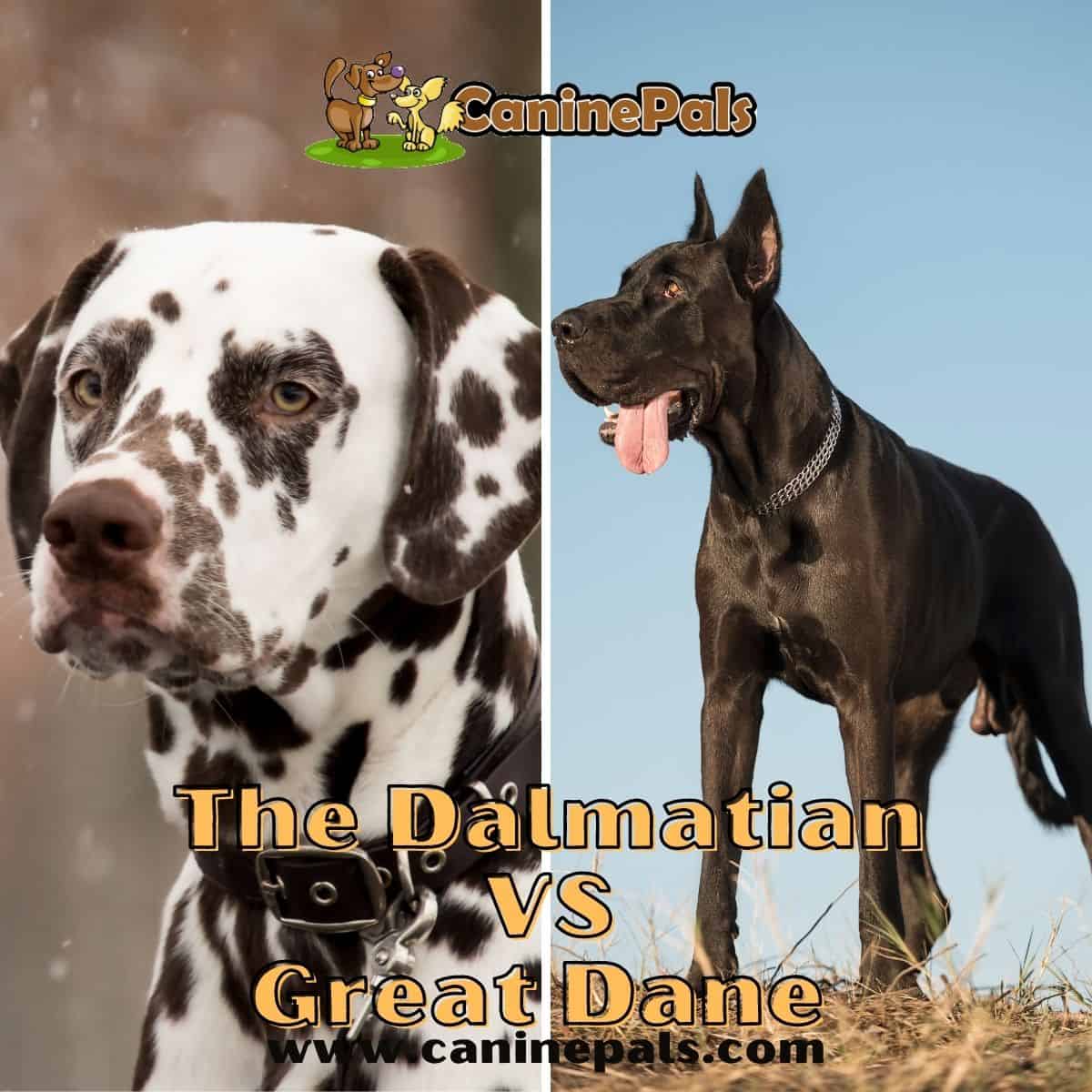
The Dalmatian and the Great Dane are two examples of these popular breeds. Both are great companions and can be trained to do just about anything. Are you wondering which one is the best dog for you?
Keep your eyeballs glued on the screen for a few minutes to evaluate the two dog breeds. The article, Dalmatian versus Great Dane, aims to help you decide which best suits your lifestyle.
Keep reading!
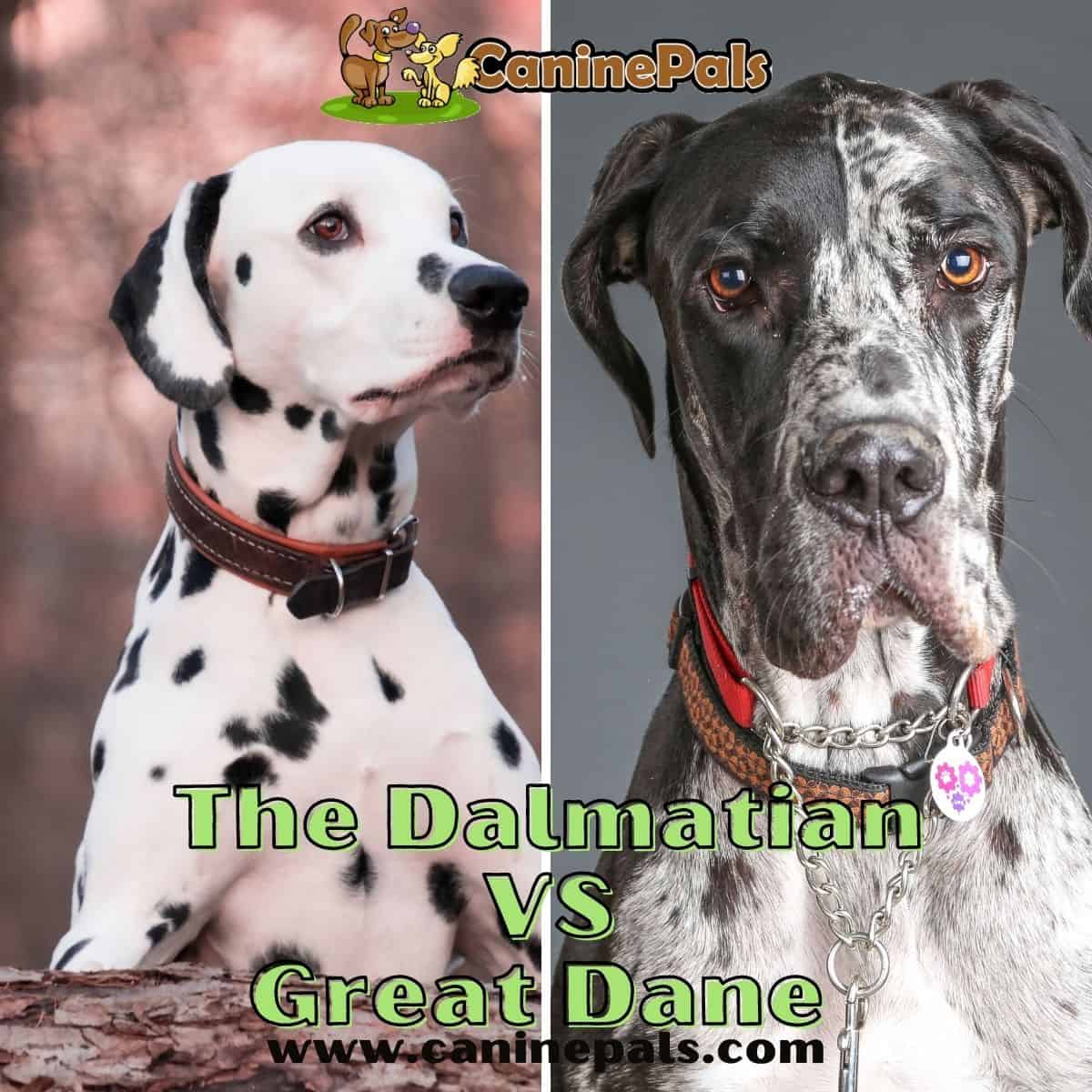
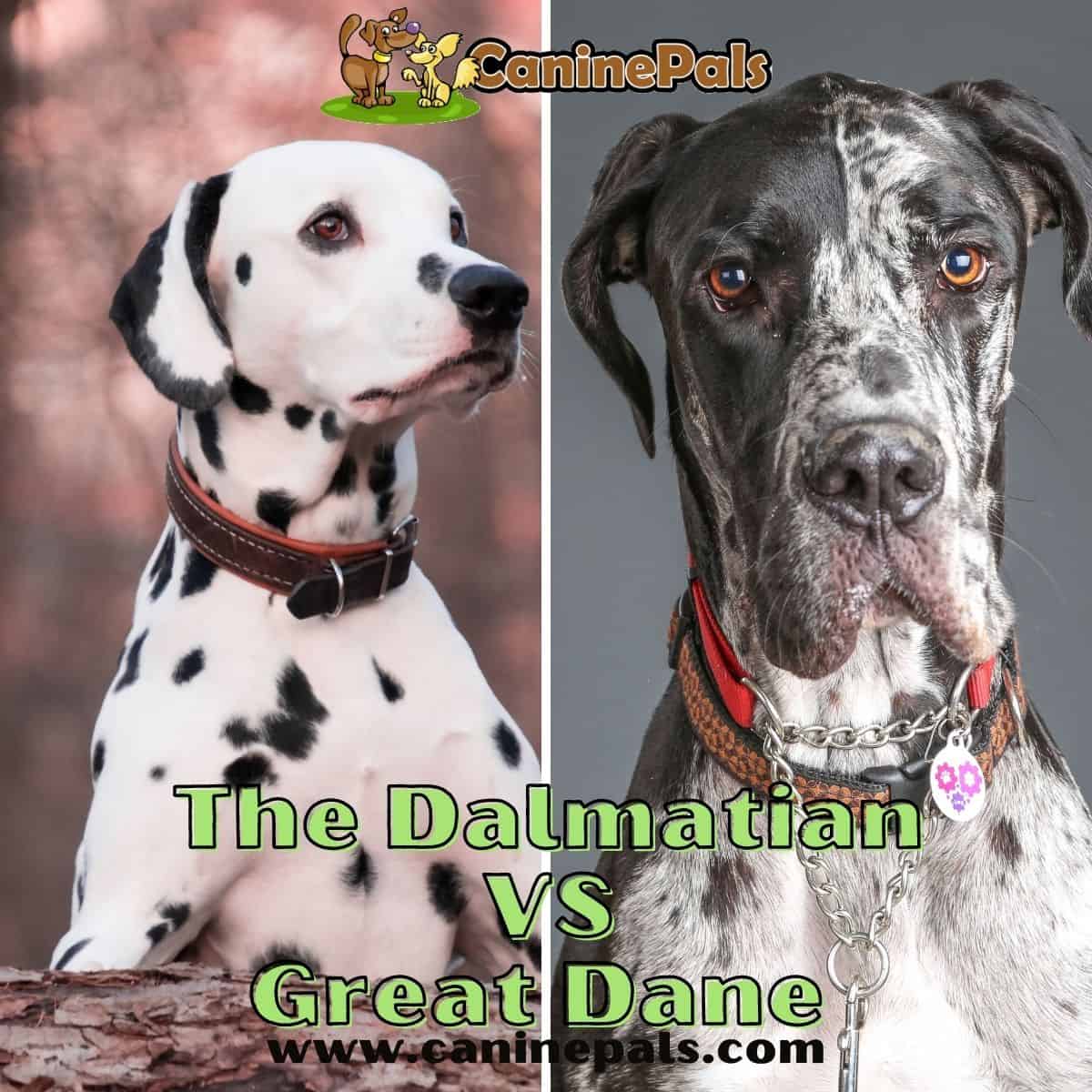
Dalmatian vs Great Dane
The Difference Between Dalmatian And the Great Dane
The Dalmatian and the Great Dane are two breeds of dogs that are often confused. Despite their similarities, however, the key differences between these breeds set them apart.
1. Temperament
Generally, the two dogs are friendly and make up a good family dog. However, the temperament of these beautiful dogs depends on the person.
The Dalmatian breed is known for being energetic, playful, and friendly dogs. They are very social and love spending time with their families.
Additionally, they are known for having a high energy level, which can be controlled with proper training and socialization.
However, they tend to be stand-offish and apprehensive in front of strangers and can react aggressively in front of them. The Great Dane’s temperament is amazing.
On the other hand, Great Dane dogs are calm, gentle giants who enjoy spending time with their owners and surrounding pets in the house. They are not very playful, but they love to cuddle with their favorite human and give them lots of kisses!
Great Danes take time to hit maturity and are easily scared of strange faces. In addition, the presence of strangers makes them aloof, and they may use more protective instincts than usual.
2. Intelligence
Both breeds are considered intelligent and competent. Dalmatians’ independent minds and ability to devise different ways to do a specific task make them intelligent breeds.
On the contrary, Great Danes are considered as smart as a three-year-old baby. They can understand different words and gestures and learn new tricks instantly.
3. Housebreaking
You probably want a dog because it can protect your home from intruders or other threats. Dalmatians are known for being good watchdogs because of their higher intelligence and sense of smell. When trained properly, they make up great watchdogs.
Great Danes’ giant size keeps the intruders away from home, but they aren’t as good at this role. They bark at strangers when they come to the door, but they don’t tend to be very aggressive towards strangers unless they feel threatened by them, which isn’t always ideal if you live in a neighborhood where crime happens often.
4. Training
Dalmatian dogs are much easier to train than the Great Dane breed. Dalmatians are highly intelligent and have a strong desire to please their master. Therefore, training a Dalmatian isn’t challenging if you use positive reinforcement methods like praise and treats.
This happy-go-lucky dog breed yearns to make his owner laugh with his silly actions. However, firm training is required because they have a stubborn streak and may not respond to requests if they don’t want to.
Like the Dalmatian breed, Great Dances are intelligent and pick up things easily. In addition, their love for humans and other animals makes them easy to train.
Starting the training as early as possible is recommended to avoid behavioral issues. Regular training sessions and sweet rewards can help the Great Dane overcome their aggressive attitude.
5. Energy Level
Dalmatians are energetic dogs that require regular exercise to stay happy and healthy. If you aren’t able to take them for walks, play games with them every day, or give them enough exercise, they may become destructive or hyperactive, chew furniture, run around like crazy, or get into mischief.
On the contrary, Great Danes are not energetic with moderate exercise needs. They can enjoy boisterous play sessions all day long if they are followed by a rest or nap time.
6. Size and Weight of The Two Dogs
Dalmatians are medium-sized dog breeds. They can grow between 19 and 23 inches tall at the shoulder and weigh up to 40 to 60 lbs. Their average lifespan ranges between 10 and 13 years.
Dalmatians are sleek and smart and have a long, muscular body with a deep chest and broad skull. His ears are large and floppy, and he has a long, thin tail.
Great Danes are among the world’s giant dog breeds, reaching heights of 28 inches and weighing up to 175 lbs! Their average lifespan is eight years, but they can live up to 10 years.
Great Danes have a long, muscular body with a deep chest, large head, and long legs. They walk with a proud gait that shows off their athleticism.
7. Coat Type
Dalmatians have short, smooth, shiny coats that are easy to groom. Their short hair is hypoallergenic and sheds little, making the breed ideal for those with allergies or sensitivity to dog fur.
While Great Danes have a short, smooth coat but don’t fall under hypoallergenic dogs, they are moderate to heavy shedders and may not be good for sensitive people.
8. Health Issues
Dalmatians are prone to multiple health issues, and most of them are genetics. The diseases commonly found in Dalmatians include;
Skin allergies
Hip dysplasia
Deafness
Urolithiasis
Cardiomyopathy
The diseases commonly found in the Great Dane breed include;
Bloat
Allergies
Hip dysplasia
Cardiomyopathy
Wobbler syndrome
Cataracts
Osteosarcoma
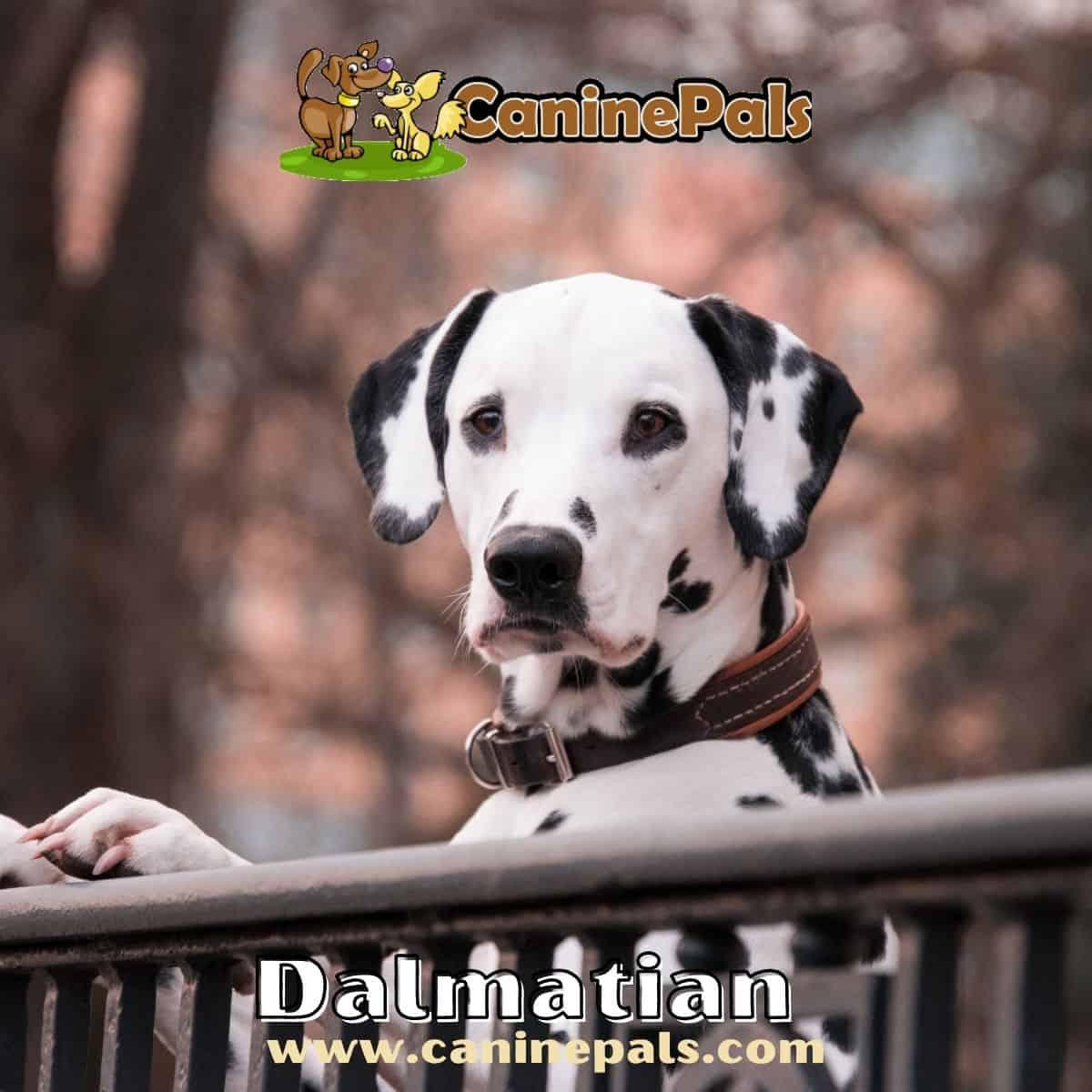
Dalmation
Great Dane Dalmation Mix
Loyal, smart, outgoing, watchful, and whatnot! The two purebreds, Great Danes and Dalmatians, are purposely crossbred to create a new breed known as the Great Dane Dalmatian Mix.
The new breed has all the fabulous attributes of the two purebreds. The Dalmatian mixed Great Dane puppy is a unique breed that has adopted the size of a Great Dane parent and the beautiful spot markings of Dal parents.
Despite being large, the cool breed doesn’t require excessive exercise, making them great house dogs.
Pros of Having A Great Dane Dalmatian Mix Pup as a Pet
Dogs are beautiful and majestic, with uncountable perks that make them perfect for the home. Like every other pet breed, Great Danes and Dalmatians have many benefits.
Below are some wow perks encouraging you to get one for yourself.
1. Adequate Amount of Exercise
Unlike purebreds, Great Danes and Dalmatians require moderate exercise daily despite their large size. However, they don’t need intense workouts or exercise to keep them happy and healthy.
This means they can do well in apartments and smaller houses without a big yard or space to run around.
2. No More Daily Maintenance
The Great Dal has a smooth, short coat. It requires moderate grooming and sheds little to none, which makes it ideal for people with allergies.
The pup needs to be brushed once or twice in 7 days and bathe, and your pup is all good-looking.
3. Bundle of Love
This breed gets along with kids, neighbors, pets, and strangers. However, training them early is recommended to prevent destructive attitudes.
4. No More Housebreaking
The Dalmatian mixed with the Great Dane has given birth to the perfect watchdog. The large size and high barking tendency keep the intruders far away from your sweet home.
5. Effortless Training
Please give them a command and see them fulfilling it in the blink of an eye. The Great Dal mixed dog breed is intelligent and smart enough to catch your gestures and commands and make a move accordingly, which makes the training effortless.
Great Dane
Cons of Having A Great Dane Dalmatian Mix Pup As A Pet
No doubt, the perky perks of the Great Dane Dalmatian mix are an ace up the sleeves of many dog owners. However, a few features need to be considered before getting one.
1. Newbie Owner? Not For You!
The unbeatable smartness of the Great Dal can become challenging for first-time dog owners. The regular training sessions and a handful of companionship require patience, for which most newbie owners aren’t mentally prepared.
2. Not Suitable For Small Spaces
Your sweet little apartment may not be feasible for this large dog breed. Because of their giant size, Great Dales require enough space to roam around and relax.
3. Can Turn into the Heart of Stone
The lively breed craves human attention and company. However, they can turn into hearts of stone, welcoming all the aggressive and harsh attitudes when left alone for longer.
So, if your job consumes your extra duty hours and requires frequent traveling, Great Dal isn’t the right option.
Great Dane and Dalmatian Colors
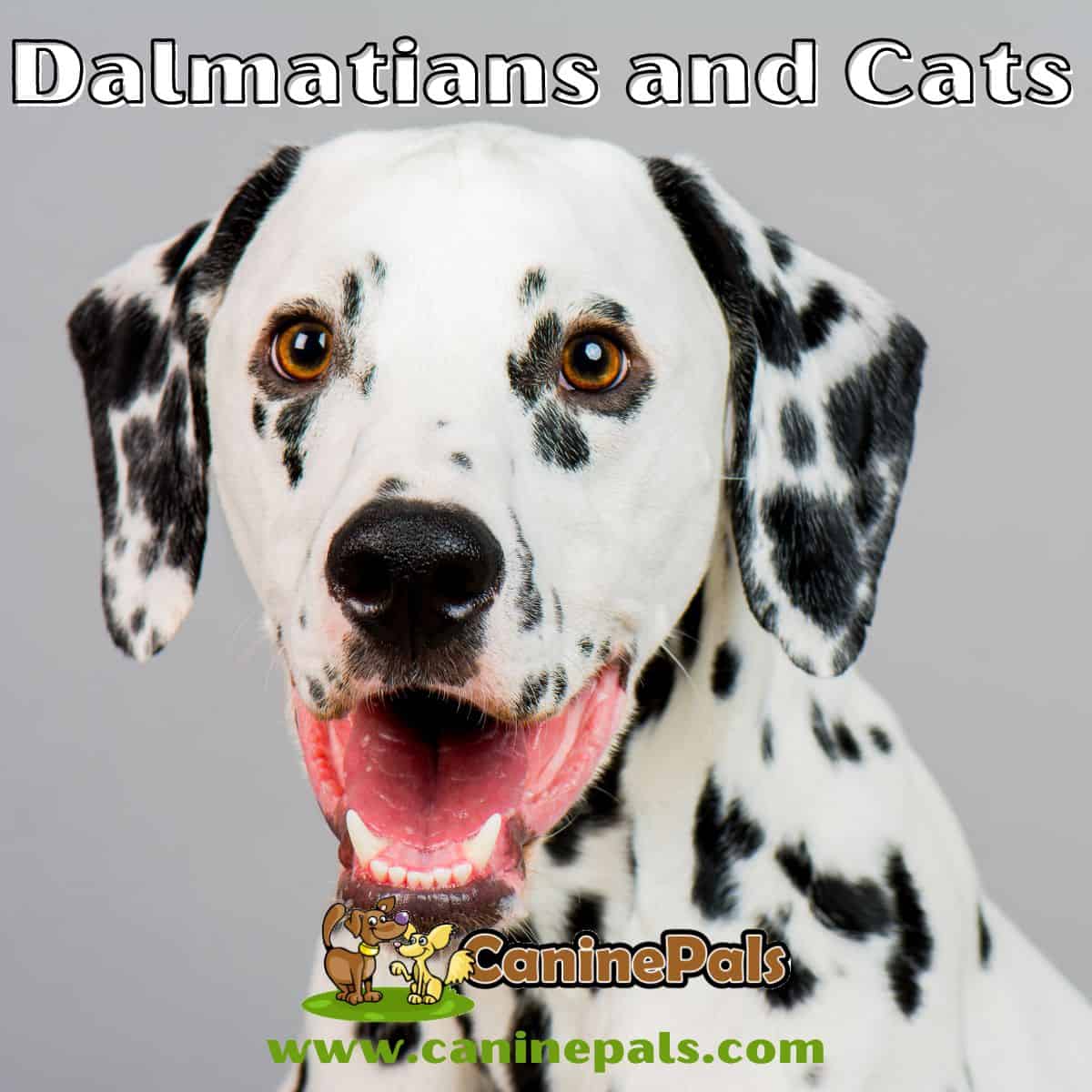
Dalmatians are found in beautiful liver and white and black and white color combinations. The light and dark spot hues make them endearing.
On the other hand, Great Danes are found in various colors, including black, brindle, fawn, mantle, blue, and harlequin. They may also have beautiful black-and-white marks on their bodies, putting cherries on their adorable bodies.
When the two purebreds are combined to make a hybrid dog breed, they adopt the temperament of the two purebreds, physical attributes, and color.
The Great Dane Dalmatian mix has a short, smooth, and shiny coat type, is found in amazing colors like Great Danes, and consists of prominent spots like Dalmatians.
Great Dane Dalmatian Mix Health Conditions
Large dog breeds are expected to have shorter life expectancy than others. The Great Dale has an average life expectancy of 8 to 13 years.
Like every dog breed and its parent breeds, Great Dals are prone to multiple health issues.
1. Diabetes
Continuous or excessive sugar consumption may increase the sugar level in the body, resulting in diabetes. In addition, the higher sugar level increases the chances of organ damage leading to death.
The Great Dal breed is prone to diabetes, which can negatively affect its health. So, keep an eye on your pup and the diet it consumes.
If your pup shows symptoms like excessive thirst, weight loss, increased appetite, and increased urination, consult a vet.
2. Orthopedic Disease
The orthopedic disease may be a cause of aging or increased weight.
If the dog consumes excessive food without adequate exercise, it may gain weight, eventually leading to orthopedic diseases.
Consult a veterinarian if your puppy is lethargic or has sore paws.
3. Elbow and Hip Dysplasia
The elbow and hip dysplasia are common in large dogs. If your dog is reluctant to move, climb stairs, jump, or move slowly, he might be fighting with hip or elbow dysplasia.
Moreover, the clicking sound in joints and continuous pain and shamble symbolize hip and elbow dysplasia.
4. Osteoarthritis
Several reasons, including hip dysplasia, elbow dysplasia, trauma, shoulder or knee dislocation, cruciate injury, and others can cause osteoarthritis.
If your dog shows symptoms like swollen joints, restlessness, whining, licking joints, or resistance to walking, jumping, or standing, consult a veterinarian.
Dalmatian vs Great Dane
Final Words
Choosing between a Dalmatian and a Great Dane comes down to understanding the unique qualities each breed brings to a family. With their high energy levels and wanderlust potential, Dalmatians require a lot of exercise and thrive in environments where they can stay active.
Their intelligence and affectionate nature make them wonderful companions, especially for families with older children or individuals leading an active lifestyle. On the other hand, the Great Dane, known as the “Apollo of dogs” due to its impressive stature and gentle demeanor, demands attention due to its breed’s large size and need for consistent training from an early age.
Despite their intimidating personality, Great Danes are better described as gentle giants. They showcase great intelligence and an easy-going personality that can adapt well to families with young children.
.
Both breeds are purebred dogs, which highlights the importance of sourcing from reputable breeders to ensure a healthy and well-tempered new pet. Great Danes, often regarded as one of the best breeds for their affectionate nature towards family members, require a fair amount of space to accommodate their size. However, they are surprisingly good with novice owners due to their lower exercise needs than Dalmatians.
Dalmatians, with a slightly higher wanderlust potential, may serve better as watchdogs. However, both breeds exhibit traits that make them average watchdogs, with Great Danes potentially being the better guard dogs due to their sheer size.
Ultimately, the right breed depends on your lifestyle, the time you can dedicate to exercise and training, and whether you’re looking for a pet to grow with your family. Whether you lean towards the high-spirited Dalmatian or the majestic Great Dane, early socialization and training are crucial to fostering a well-adjusted and happy family member. Both these breeds can bring immense joy and companionship to pet parents, so choosing between them is a matter of personal preference and lifestyle compatibility.
Please note: while I do discuss health, care, and behavioral issues, you should never use this information as a replacement for advice from qualified veterinarians, diagnoses, or recommended treatment regimes. If you have any worries about your Dog’s health, your first contact should be your regular vet or, if you don’t yet have one, a vet that works locally. Never ignore or avoid treatment and advice from your vet because of a piece of information you have read on any website.
Copyright CaninePal.Com. All Rights Reserved.
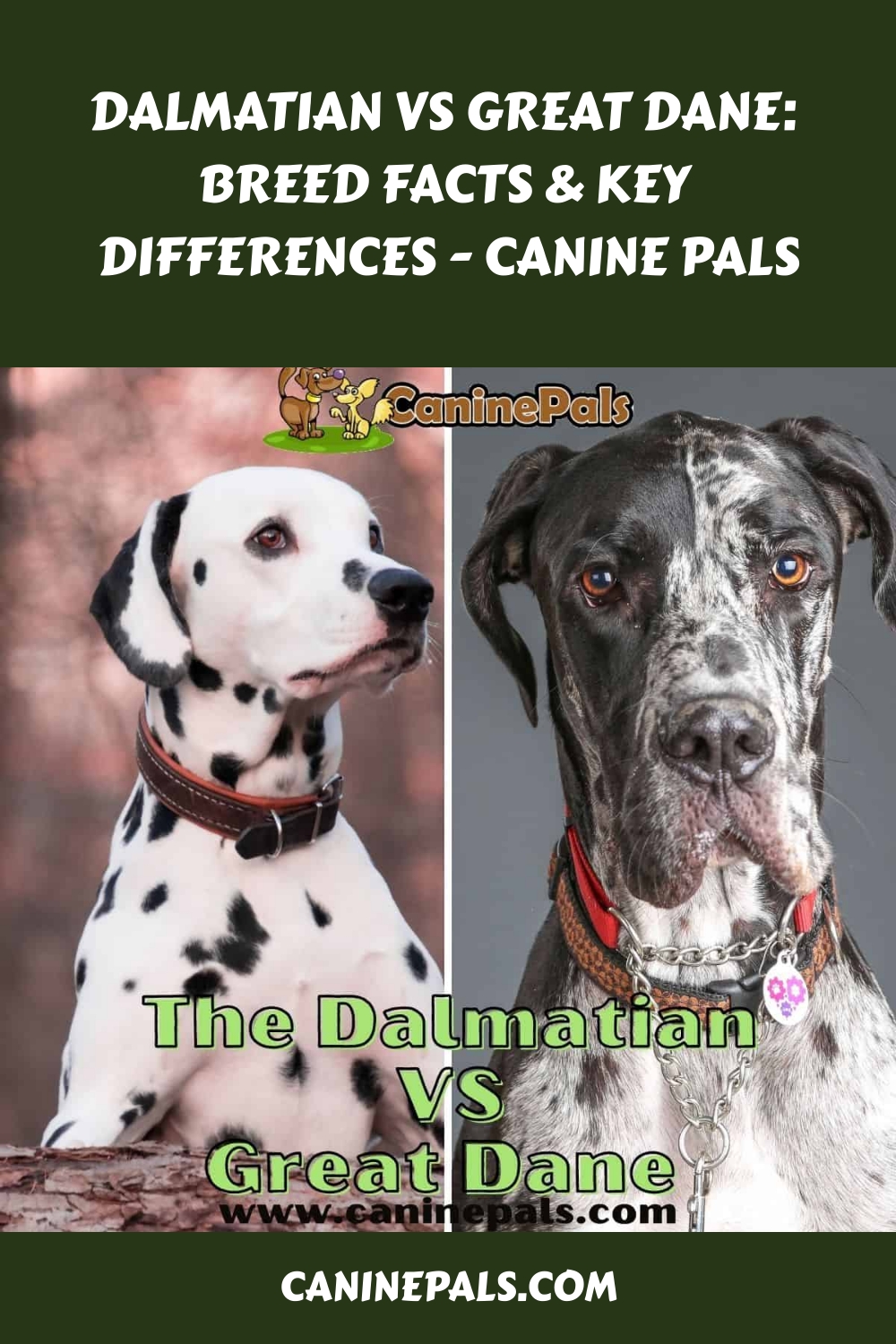
Dalmatian vs Great Dane: Breed Facts & Key Differences
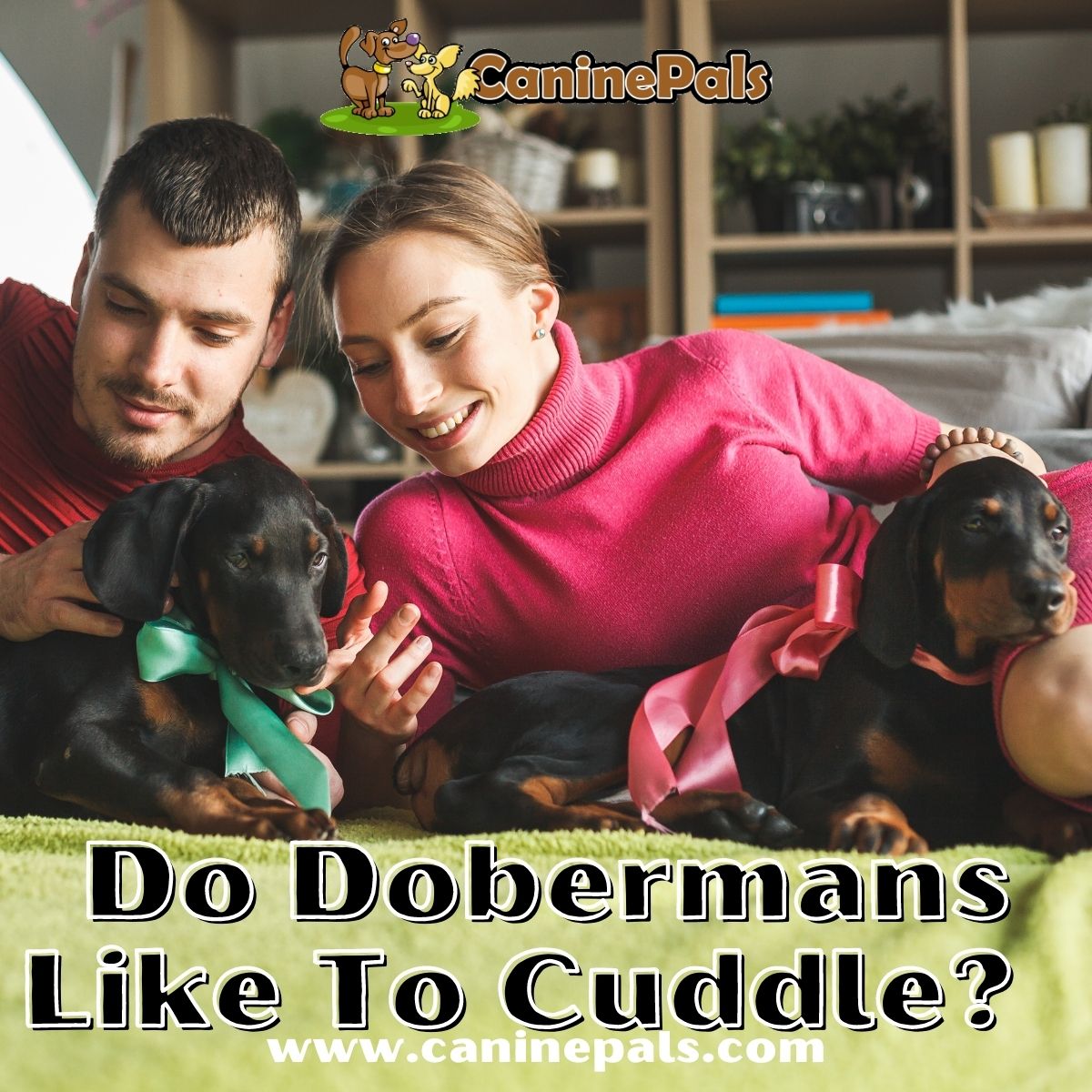
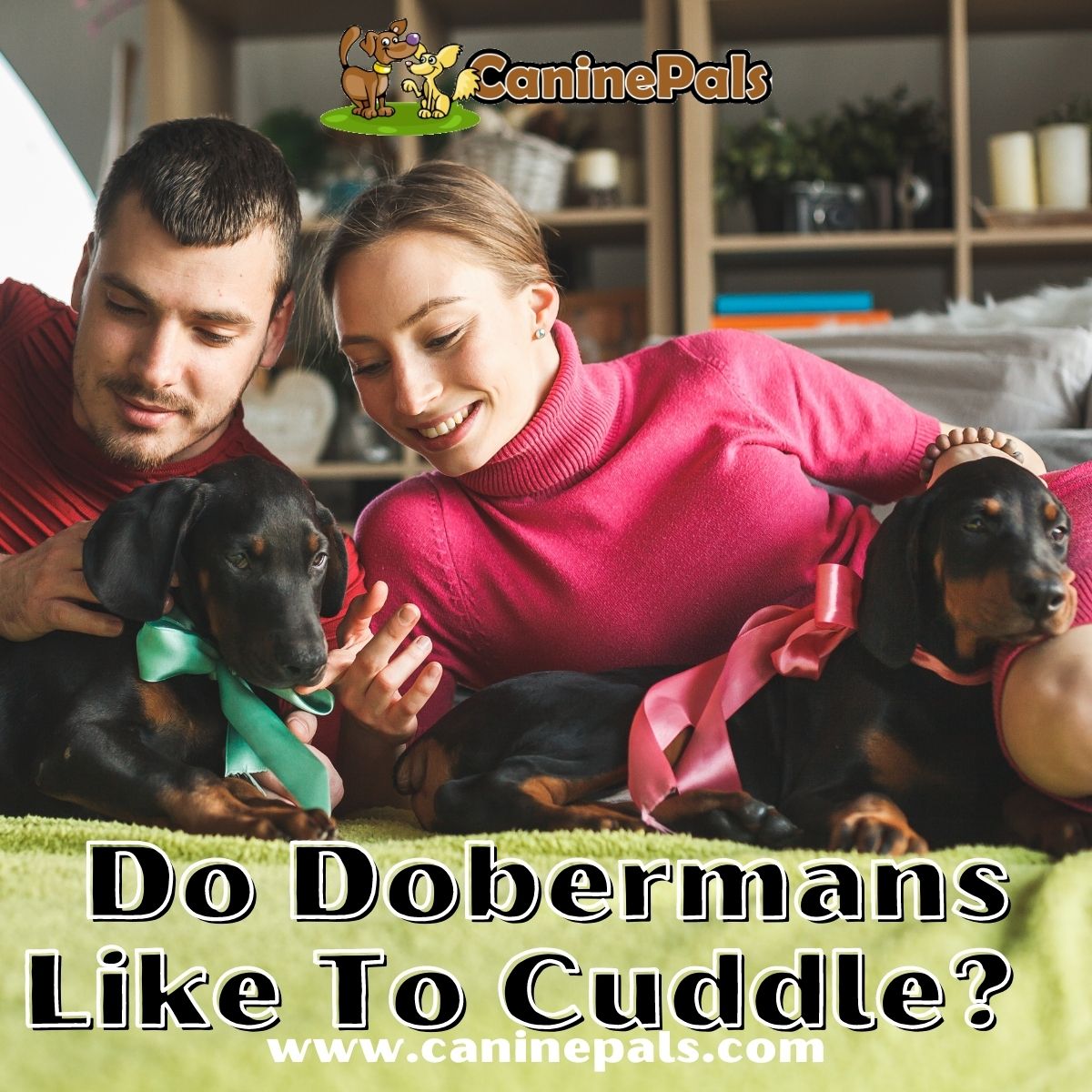
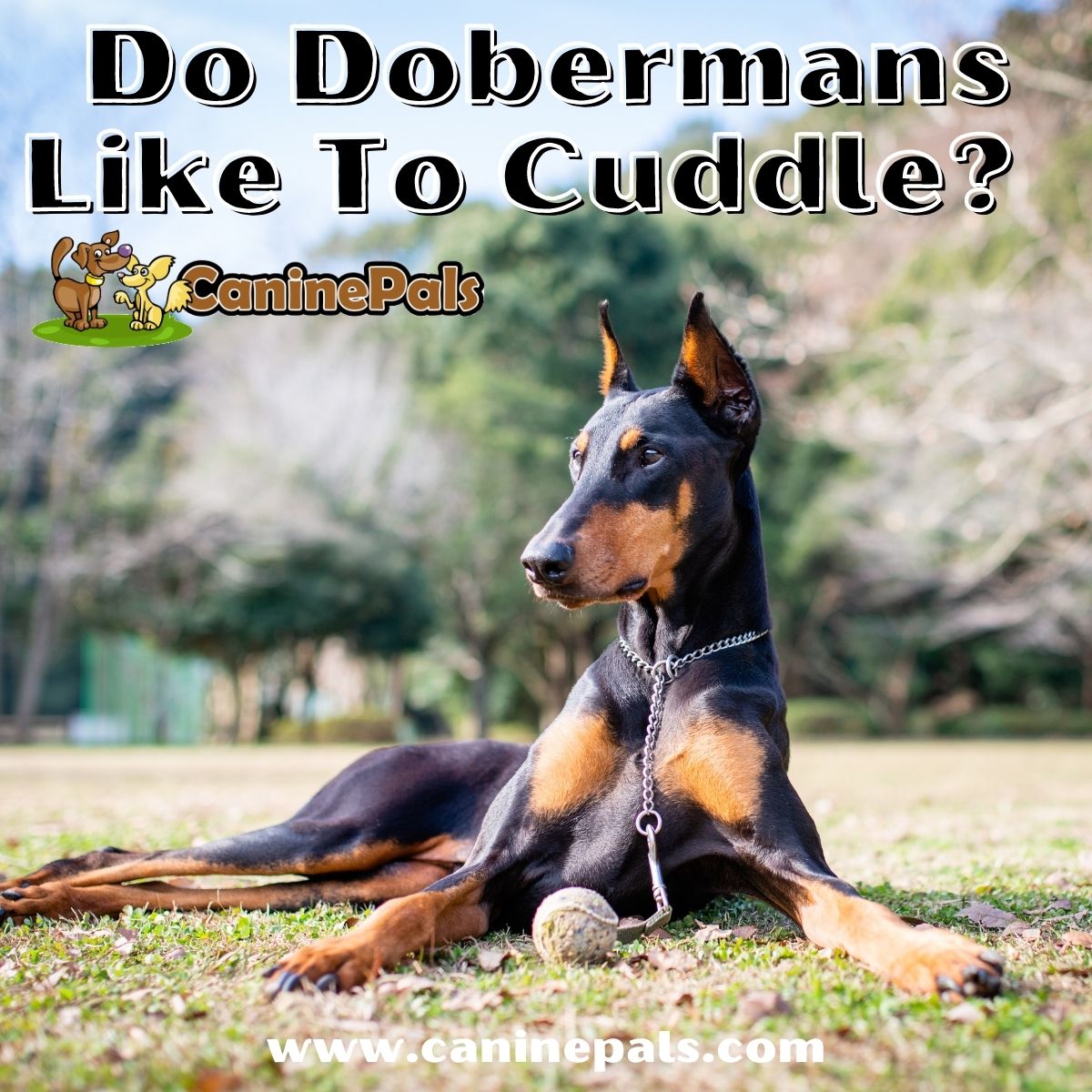
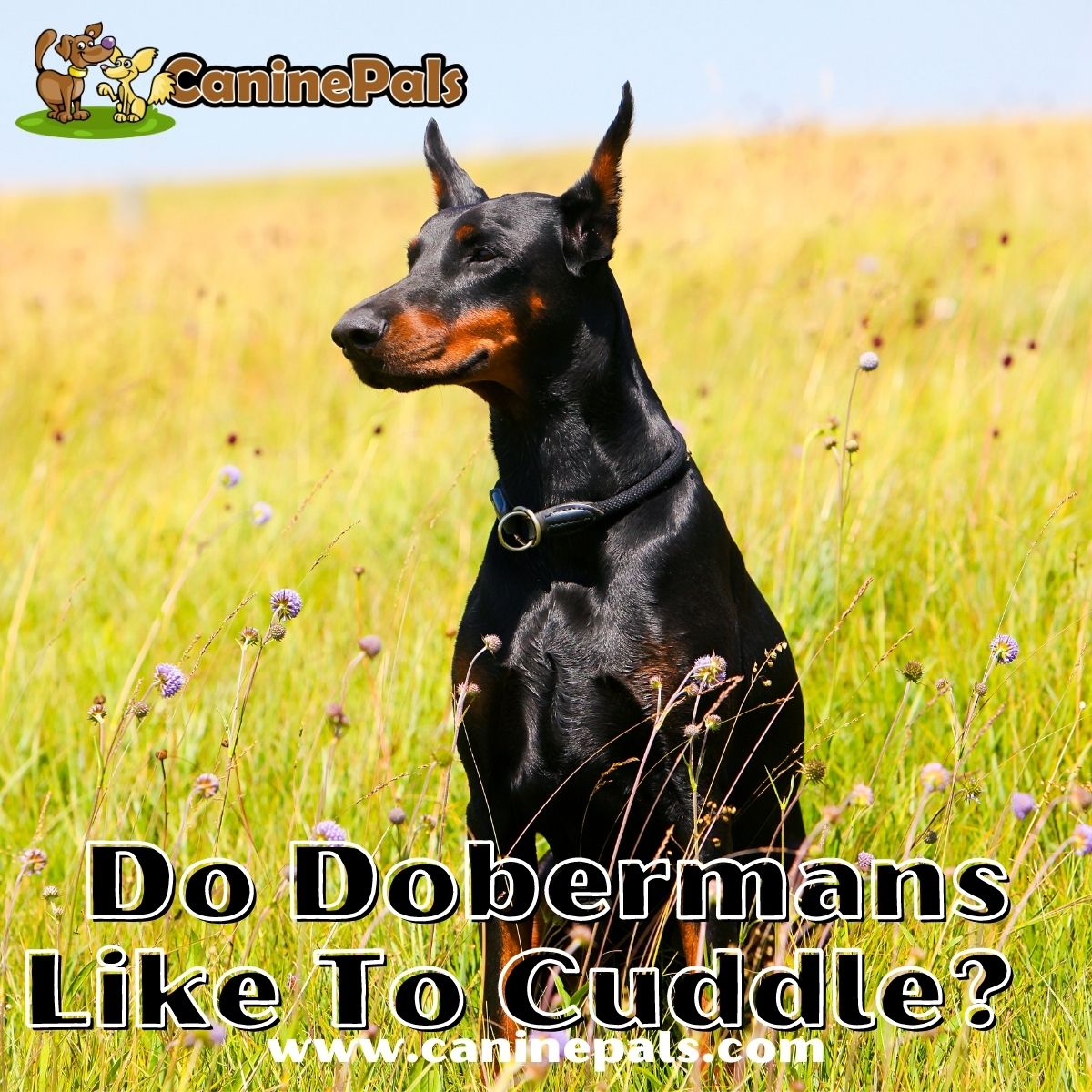
The Doberman is a lovely dog breed They show affection towards humans like no other of the dog breeds. But do Dobermans like to cuddle, is the Doberman a trustworthy breed and are Dobermans affectionate dogs? Give this article a read to know the answer.
In general, all the dogs like to cuddle with their owner, given how much attention and care they receive for being loyal. Now keeping the genetic trait in mind, the Doberman is a loving dog breed that loves to be around its caregiver. So if you are looking for a furry friend who’d be the best of huggers you have, then Doberman can be a good choice.
You must be thinking, do Dobermans like to cuddle is the breed affectionate? The answer is YES! But is the Doberman affectionate dog breed? What makes them want to cuddle? How much do Dobermans cuddle?
These questions will be answered if you follow this article until the end. And if you are fascinated by the people-oriented temperament of Doberman dogs, you are at the right place where you’ll read all about Dobermans!
How To Tell If Your Doberman Loves You?
Once a Doberman takes the sense of security from its surroundings, it’ll start showing love. A Doberman’s affection is reflected by its trait of being expressive. It shares a strong bond with its owner, especially children. They make eye contact, lick their face, lean into them, and rest on their laps.
Here is a list of the behaviors, some or all of which you may observe in your Doberman and tell it loves you.
Making Eye Contact With The Ears Back & Nose Forward, He Loves You!
A Doberman’s love can be assessed by the way it makes eye contact. When a Doberman loves you, it takes the ears slightly back, extends the neck, and puts its nose closer to you. Imagine all of these gestures with that lovely eye contact. You are going to love your Doberman for this!
Running Behind The Owner’s Legs
If a Doberman gets a sense of security in you, it’ll cling to you. Dobies, when frightened, tend to hide behind their owners’ legs. This behavior is more often seen in the young ones as their fearless traits are still under development in adolescence. Running through and behind your legs at the time of trouble shows the trust of your pooch in you.
Won’t Mind Getting Annoyed By You!
If a Doberman stays relaxed while you are annoying him, nothing can be more precious than it! A Doberman would allow you to play with its paws, nose, and lips, tug its ears, and cuddle up while you are on the television couch. This can only be done by the one a Doberman keeps special.
Love To Stay On Your Top While You Have Dreams
This is the most common way for Dobermans to show love to their owners. Your Doberman would love to sleep next to you or over you and vice versa only if he holds you, dear.
Dobermans are also judged by their sleeping styles. You are lucky to have your Dobby’s love if you have experienced your Doberman sleeping next to you again after putting him on the bed.
Often Climbs Up To Your Lap
Dobermans often tend to jump to your lap more randomly out of nowhere. Especially when you are busy doing stuff like taking a skype call, watching TV, or lying in bed. Your Dobby would love to rest on your lap no matter what you do, only if he loves you.
Do Dobermans Like To Cuddle?
Is the Doberman Affectionate Breed?
Doberman dogs are known to show love to their family. Not only that, they are people-friendly too. They enjoy being outdoors & adventures rather than staying still in the corner. They celebrate being around their loved ones by playing, staying active, and cuddling with them.
In general, Dobermans are affectionate enough to cuddle all the time. Some may get snuggly, and some love to cuddle when tired. As the loving nature of Dobermans makes us obvious about their socializing ability, it is also a point to ponder that we need to work on developing vital socializing skills of our Dobermans.
Why Do Dobermans Like To Cuddle?
Although they love to cuddle, sometimes they can be less cuddly. This is nothing but a reserved nature that can vary from dog to dog. If a Doberman is not cuddling up with you, it may show love by sleeping next to you or running around your legs. No matter if a Doberman is cuddling up with you or not, you can always make it do so by showing affection.
Dobermans can be depressed if the required love and affection are not given. Cuddling up with your dog promises sustained mental health for a pet dog. And the good news is, a Doberman always welcomes hugs once it recognizes its people.
Oxytocin is known to be a love hormone that increases with cuddling. It makes a pet and pet owner happy and reduces stress. So if you find that your Dobbie is suffering from depression (that happens less often), then make a habit of giving them regular hugs to feel loved. Because if cuddling up vanishes your dog’s stress, then why not?
Temperament Of Doberman Dogs
Dobermans make a great human companion. They are regarded as the guard dogs for tax collectors and are among the most common family dogs known all over the world. They are agile, strong, and super fast to compete with the horses. In addition, they are remarkably active to the extent that they quickly catch the rabbits and can track faster than a Bloodhound dog.
These energetic human companions are gentle and calm at the same time that they would allow a baby’s crawl over them. Owners trust them enough to keep them as a guard dog and guiding their kids across the paths. Along with being alert and obedient and sensitive, Dobermans like cleanliness around them.
How To Cuddle A Doberman The Right Way?
Step#1. Start by sitting next to the Doberman on the floor. Then, place one hand behind the dog’s head and gently pet it.
Step#2. With your other hand, lightly stroke the dog’s chest.
Step#3. Slowly lean in towards the dog, making sure not to startle it.
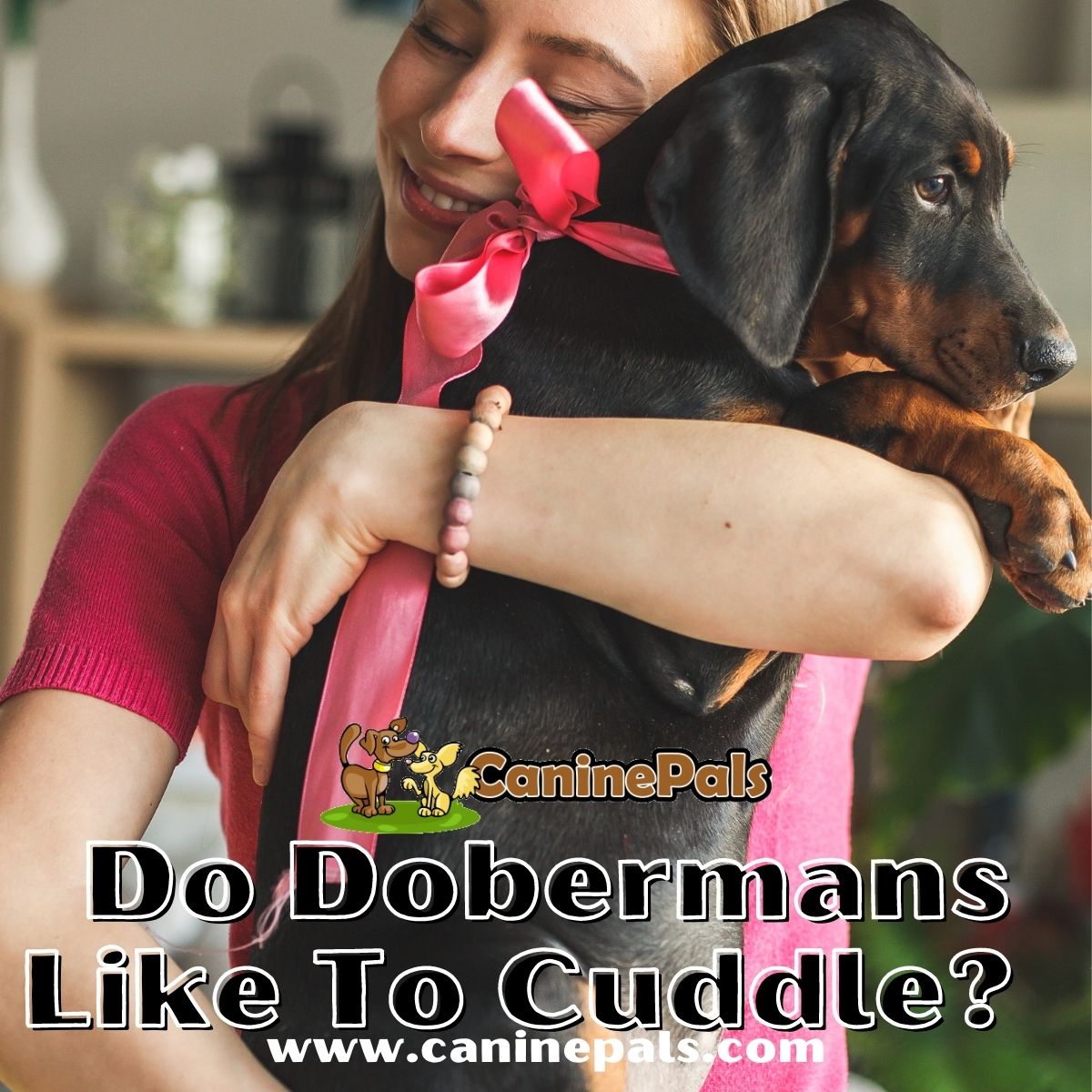
Step#4. Once close enough, wrap your arms around the dog’s body and give it a gentle hug.
Step#5. Hold the hug for a few seconds, then release and sit back next to the Doberman.
Step#6. Repeat these steps until the Doberman seems relaxed and comfortable with being cuddled.
Doberman
Benefits Of Cuddling Your Doberman
There are many benefits of cuddling your Doberman.
1. Forms a strong bond between you and your Doberman
Dobermans are known for being fiercely loyal and protective of their owners, but they can also be big softies when it comes to cuddling. So regular cuddles are a must if you’re looking to form a strong bond with your Doberman.
Cuddles will help your dog feel loved and secure, and it’s also a great way to show your affection. Dogs are highly social creatures and thrive on physical touch, so don’t be afraid to get cozy with your furry friend.
Make sure you do it on your dog’s terms to get the most out of cuddling. Let them come to you for cuddles when they’re feeling calm and relaxed, and avoid doing it when they’re stressed or excited.
When you cuddle, take care to support your dog’s head and back, so they feel comfortable and safe. And always be patient – some dogs take a little longer to get accustomed to cuddles.
2. It helps relieve stress and anxiety in your Doberman, and you
Cuddling can help relieve stress and anxiety in both you and your Doberman. It is a great way to show your dog how much you love them, and it can be a very calming activity for both of you. So if you’re feeling stressed or anxious, try cuddling your Doberman – it just might help make everything feel better.
3. Help to lower blood pressure and heart rate in both humans and dogs
Cuddling your Doberman can help to lower blood pressure and heart rate in both humans and dogs. This is because when you cuddle your Doberman, oxytocin is released into both of your bloodstreams. Oxytocin is sometimes called the “cuddle hormone” or the “love hormone” because it helps to create feelings of bonding, happiness, and relaxation.
Oxytocin has been shown to lower blood pressure and heart rate in both humans and dogs, so cuddling your Doberman is a great way to relax and de-stress. Plus, it’s just plain fun!
4. It can help to improve your Doberman’s immune system
Yes, cuddling your Doberman can help to improve your dog’s immune system. This is because when you cuddle your dog, you increase the levels of oxytocin in their body. Oxytocin is known as the “cuddle hormone,” and it has been shown to have numerous benefits for both humans and dogs, including – a boost in the immune system. Therefore, by cuddling your Doberman, you are increasing their happiness and helping them stay healthy.
5. It can increase levels of serotonin, the “happy hormone,” in your Doberman
Cuddling a Doberman can increase serotonin levels, the “happy hormone,” in your dog. Serotonin is a neurotransmitter that helps regulate mood and social behavior. It is thought to play a role in bonding between humans and dogs.
Are There Any Downsides To Cuddling With Your Doberman?
Though Dobermans are often perceived as aggressive dogs, they can actually be quite cuddly. In fact, many Doberman owners enjoy cuddling with their furry friends. However, there are a few downsides to cuddling with your Doberman.
For one, Dobermans are large dogs, weighing between 60 to 100 pounds. As a result, they can inadvertently hurt you when they move around while cuddling.
Additionally, Dobermans shed a lot of furs, so you may end up covered in hair after cuddling with your furry friend.
Last but not least, Dobermans can get quite drooly so you may end up with a wet spot on your clothing.
Many Doberman owners still enjoy cuddling with their furry friends despite these downsides. If you do choose to cuddle with your Doberman, be sure to do so on a soft surface such as a bed or couch to prevent getting hurt.
How Often Should You Engage In A Good Cuddle Session With Your Doberman?
Cuddling is a great way to show your Doberman love and affection. It can also be used as a way to bond with your Doberman and create a deeper connection. But how often should you cuddle with your Doberman?
There is no right or wrong answer regarding how often you should cuddle with your Doberman. It depends on what works for you and your Doberman. Some people like to cuddle with their Dobermans every day, while others may only do it a few times a week.
If you’re unsure how often you should be cuddling with your Doberman, start by doing it once a day. If that feels good for both of you, then stick with that. On the other hand, if you’re both enjoying it and want to do it more often, then go for it!
Doberman
How To Make Your Dobermans Enjoy Cuddling
This is how you can make your Doberman enjoy cuddling with you more:
Socializing
Make your dog well-behaved by working on its socializing ability. It is always effective in making the dogs become expressive, friendly, and absorb their surroundings. Imagine if human interaction is removed from your life; what it’s going to look like? Similarly, pets also need to interact with other animals for their innate learning.
Ignoring this factor can make your Doberman stay overprotective of you all the time, be scared or aggressive to others, and may resist meeting strangers. Having outdoor rounds with your Doberman would enhance the loving trait of your Doberman.
Playing
Playing with your dog means investing your time in making a strong bond with your pooch. If Doberman sees you as your playmate every day, you would eventually become the favorite person for him to cuddle. You can make him feel safe and loved around you by tugging, playing fetch, and engaging him in the puzzles. A friendship develops when you actively participate with your dog in these activities.
Touching Them Gently
Stay tactile with your Doberman once you bring it home. Cuddling with your dog at the start of paw-parenthood would make him familiar soon. Give a gentle treatment to its ears, lips, and paws. This will train him to stay easy when these regions are being touched so that he may get prepared for a possible future illness. Other family members should also practice this to avoid making their pet clingy to only one member.
Who Should Keep Doberman As A Pet?
Doberman is an ideal pet for people looking for a loyal, loving, and protective companion. They are also great for families with children, as they are very gentle and patient with kids.
If you live in an apartment or a small yard, a Doberman will suffice. They’re actually a good addition since they don’t require much space to roam around. However, keep them busy in exercise activities and provide them full attention, or they can get a bit aggressive.
Do Dobermans Like To Cuddle?
Bottom Line
Dobermans love to stay around their loved ones and their pet owners, which is why they are the best huggers a man can have. Unfortunately, they can be dominant and overprotective towards their dog owner, which can be troublesome sometimes.
Dobermans are not naturally people-oriented dogs and not all dogs are suitable as family pets, but by working on socializing skills and proper training, you can make them love others too.
So if you have already brought a Doberman home, you should start building a mutual bond with him by simply cuddling with him every morning!
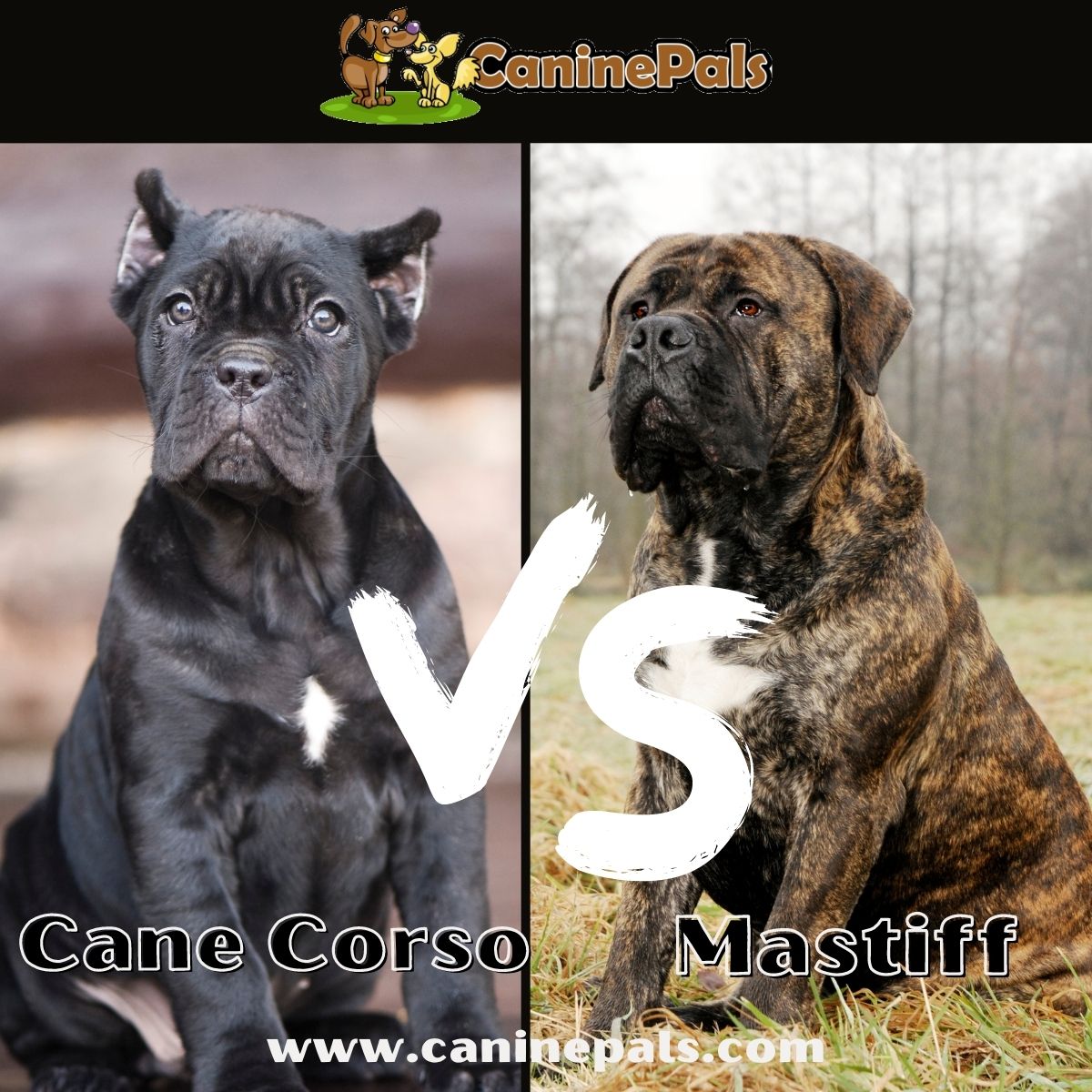
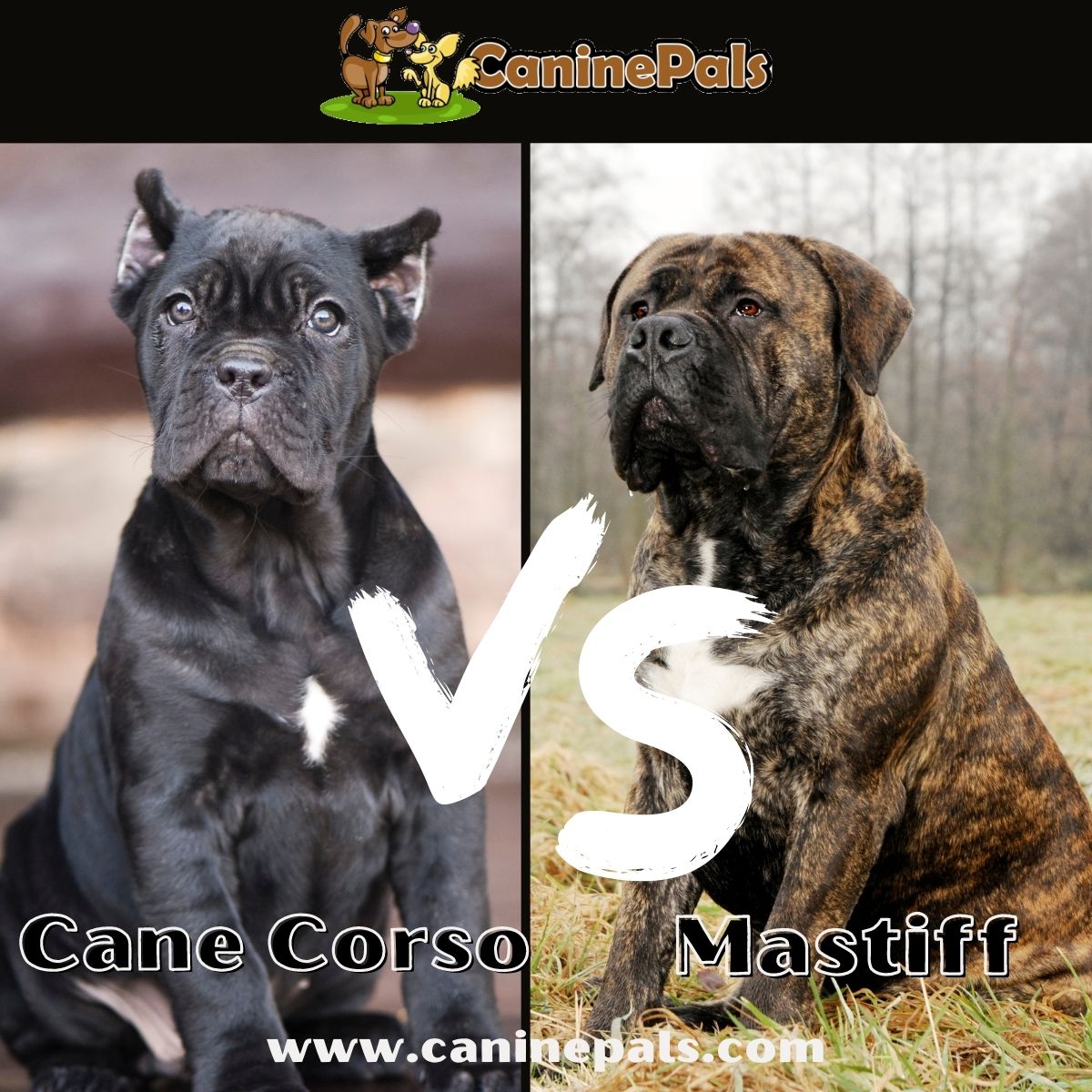
Are you fascinated by massive dog breeds like Corsos and Mastiffs? Let’s do a Cane Corso vs. Mastiff to determine which dog breed can be your future pal.
Are you deciding between the English Mastiff and the Cane Corso as your next family pet or house guardian? The Cane Corso and the Mastiff are both comparable breeds with some distinctions. Both are working dogs as they were bred for the sake of guarding and protection.
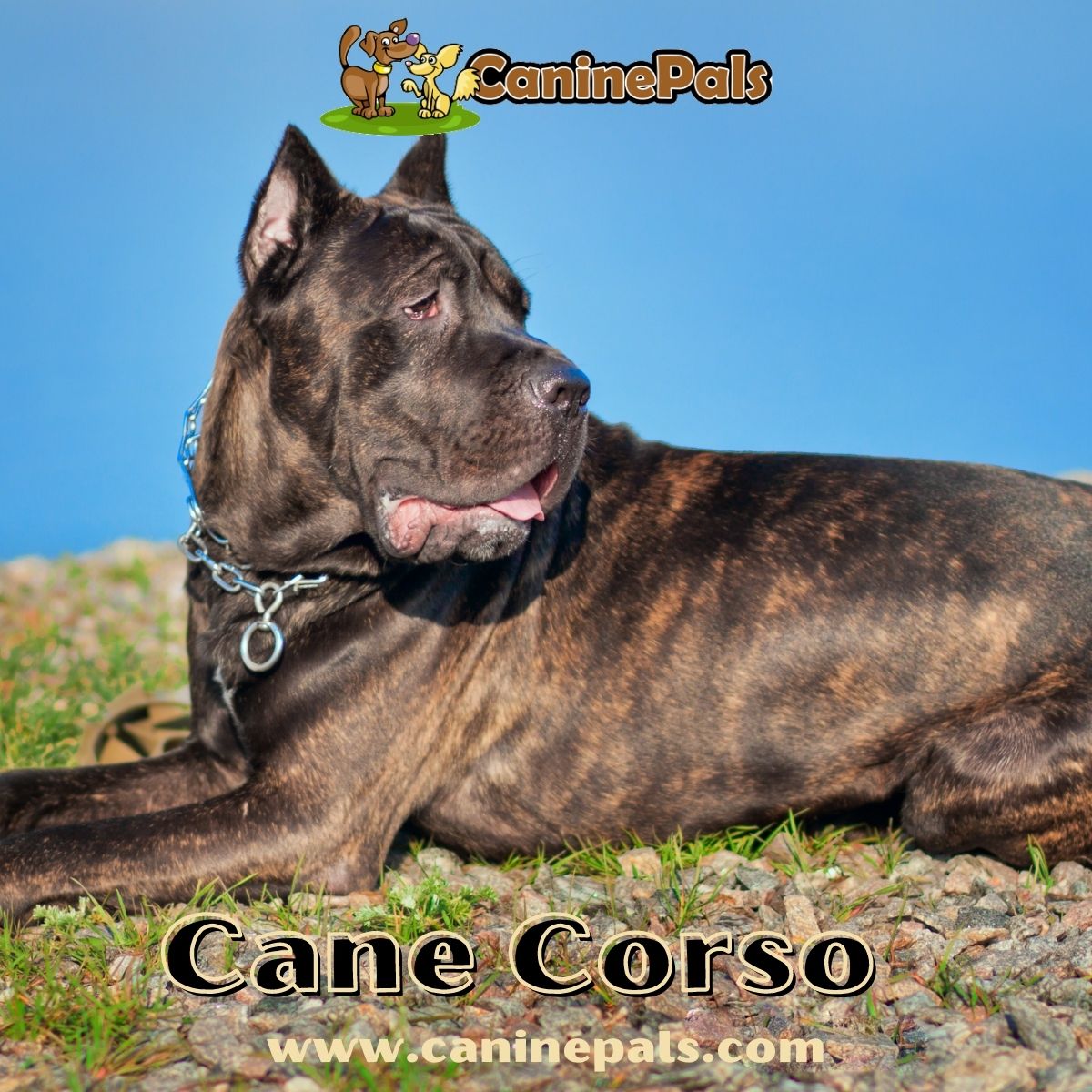
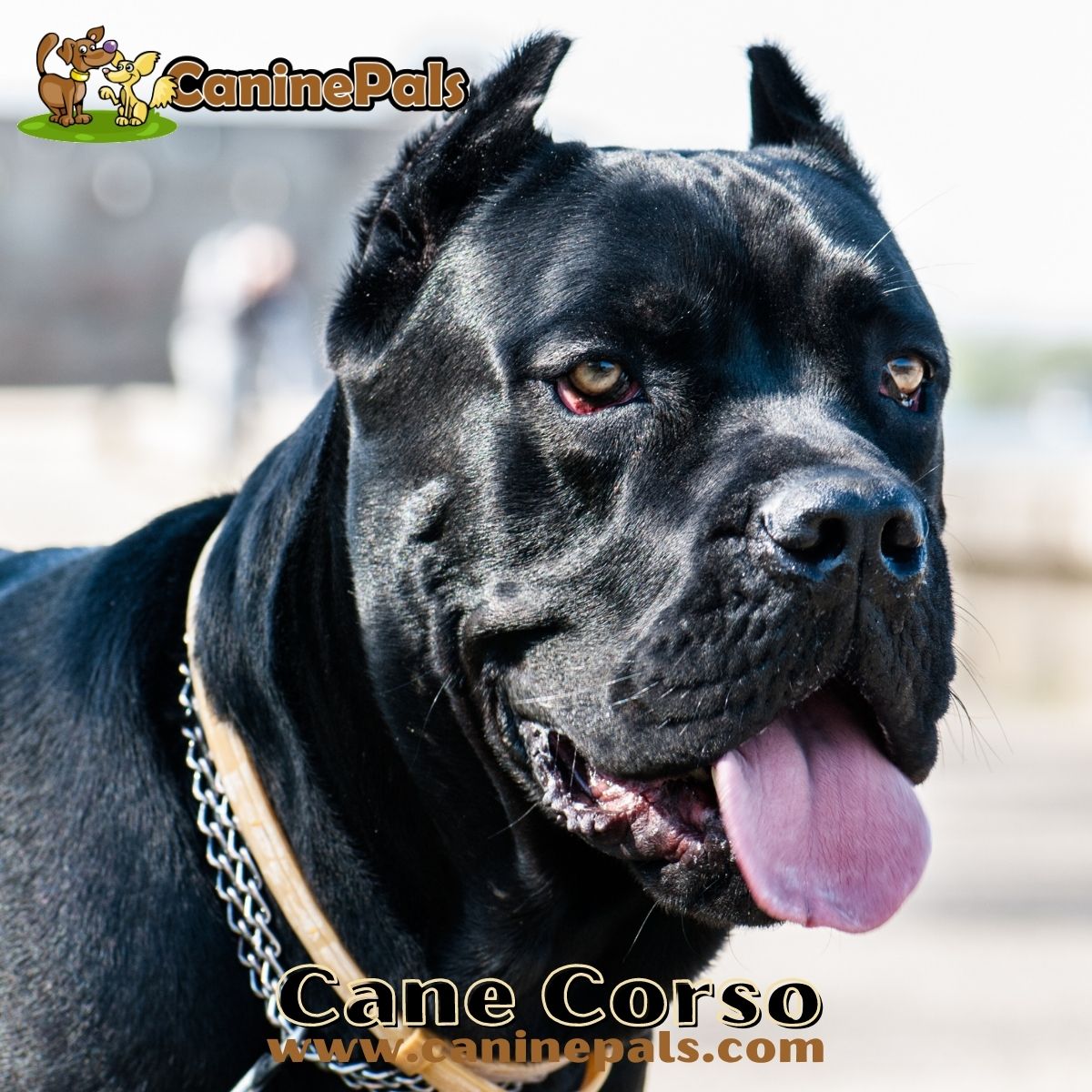
Cane Corsos are much more athletic and agile than their Mastiff counterparts. They’re also more independent and headstrong, making them a bit more challenging to train. A Cane Corse is often referred to as an Italian Mastiff because it comes from Mastiff descent.
Therefore, they have many similarities in their physical activities and can be mistaken for the same breed. All in all, both breeds are incredibly loyal and loving and make wonderful family pets.
In this guide, we will go over all of the distinctions and similarities among the breeds and a few fascinating facts about them. But, first, let’s look into Cane Corso vs. Mastiff!
Cane Corso vs Mastiff
Breed History – Cane Corso Vs. Mastiff
Cane Corso
Cane Corsos are descendants of the huge Roman military dogs. They were kept as versatile farm dogs to herd sheep, drive animals, pull carts, and guard the land and family members. Cane Corsos had to hunt the wild bores to make their position permanent in the family.
Cane Corsos went short when the industrial revolution arrived, but some breeders in Italy could successfully save them by employing the Neopolitan Mastiff. The appearance of Corso in America was made in 1988 and immediately gained popularity since it resembled the American Pitbull Terrier.
Mastiff
The sweet and affectionate family pet – the Mastiff, has a history of meeting Romans and the British Isles. The Romans encountered the terrible hounds that guarded the British Isles during their invasion in 55 BC. They were the forefathers of the Mastiffs’. Julius Caesar was very impressed by them, so he transported them back to Rome and pitted them against the gladiators and other violent animals. That encounter shed blood spots, and the breeders came to know that the frightening characteristics of these Mastiffs’ forefathers are suppressed.
So the breed was perfected into the breed we all know today as the English Mastiff.
The English Mastiff is the largest dog breed known to man, referring to the fact that “Zorba” is the world’s biggest Mastiff dog who was weight in at 343 pounds. Mastiffs are often compared with Saint Bernard because of their enormous size.
Temperament – Cane Corso Vs Mastiff
Cane Corso
Cane Corsos are fighters by nature, so they are best suited for experienced dog owners who can stick to the training and exercise schedule. For keeping a Corso, you need to have lots of space at your home. People living in the apartments are not advised to keep a Corso.
A Cane Corso is an entertaining, active, and attention-grabbing dog. You’ll stay busy in training, socializing, and fulfilling the activity requirements of Corso as it’s a working dog that is meant for guarding. They are affectionate towards their family members, but their cordiality is limited to the house members to some extent. They are serious, sensitive, and devoted canines and would not welcome a new person entering the house. They often show hostility against strangers if not trained well.
You can consider getting a Mastiff if you are experienced, physically strong, and not afraid of drooling. The temperament of a Mastiff is characterized as extremely loyal, courageous, and dauntless. While its large size and height may deter some prospective canine parents, this breed is super friendly and makes a wonderful family pet.
Fortunately, biting and aggression are not typical in this breed; you can socialize young children with a Mastiff who is early and consistently trained. You can also bring other pets like cats and small dogs home while keeping this giant-sized canine because of its friendly demeanor.
Because of their intrinsic intellect and drive to please their owner, Mastiffs keep a notable competence. A Mastiff may thrive on service as a quick learner, sharing their history with the battle fighters. Moreover, this massive pet is a slow learner and is best paired with low-key pet parents.
Lifespan And Weight
The lifespan of a Cane Corso is 10-12 years, while a mastiff is 6-12 years. While both breeds are large, the Mastiff is larger among both breeds and can weigh up to 110 kgs as an adult. On the other hand, a Corso weighs somewhere between 45-50 kgs only. That being said, a Mastiff can be twice as big as a Corso and has a more muscular build.
Color
Mastiffs are typically a very solid color, while cane Corsos can be brindled or have more than one color. In addition, the colors of mastiffs can range from fawn to brindle, while the colors of cane Corsos can include black, blue, grey, brown, and red.
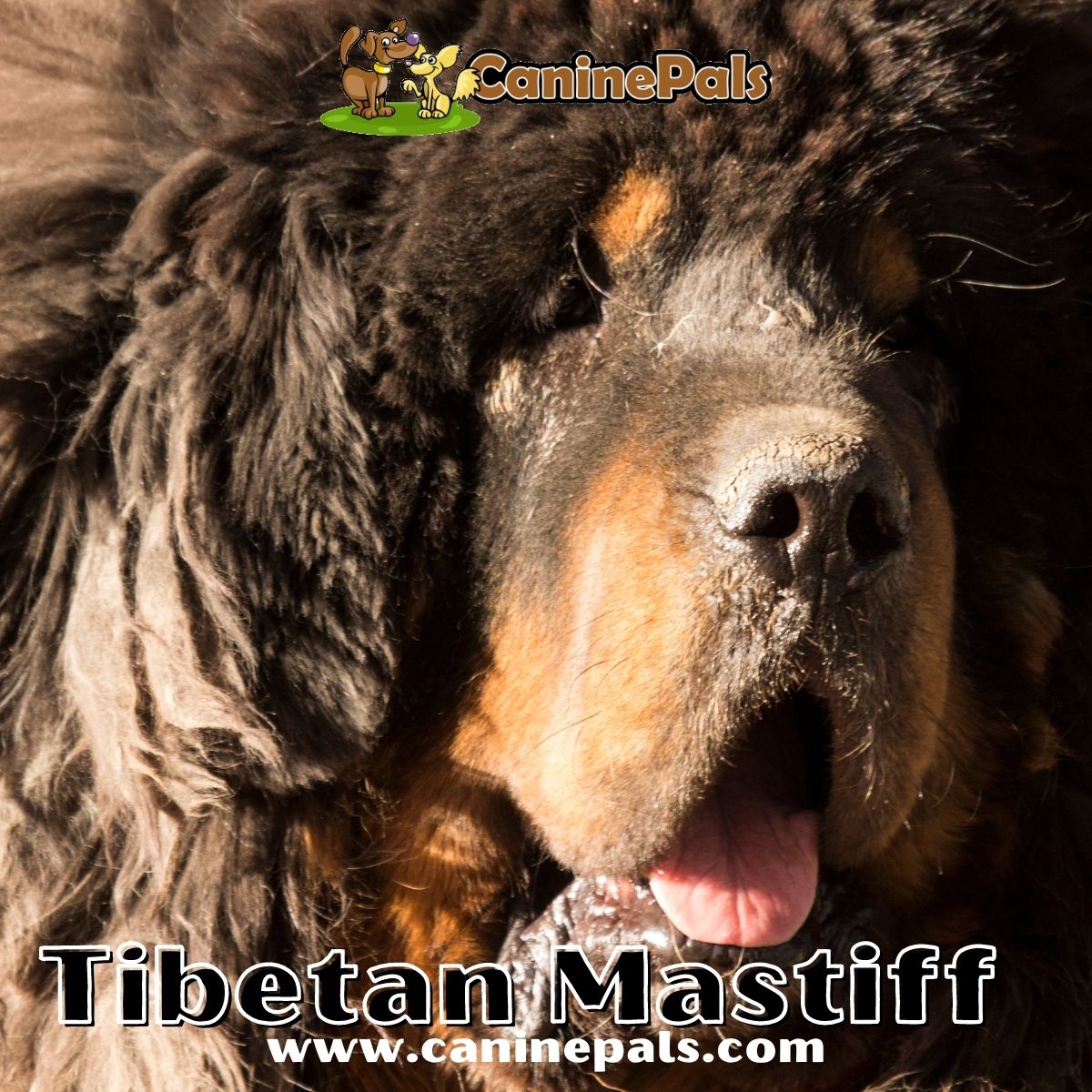
Who is More Energetic – Tibetan Mastiff Vs. Cane Corso?
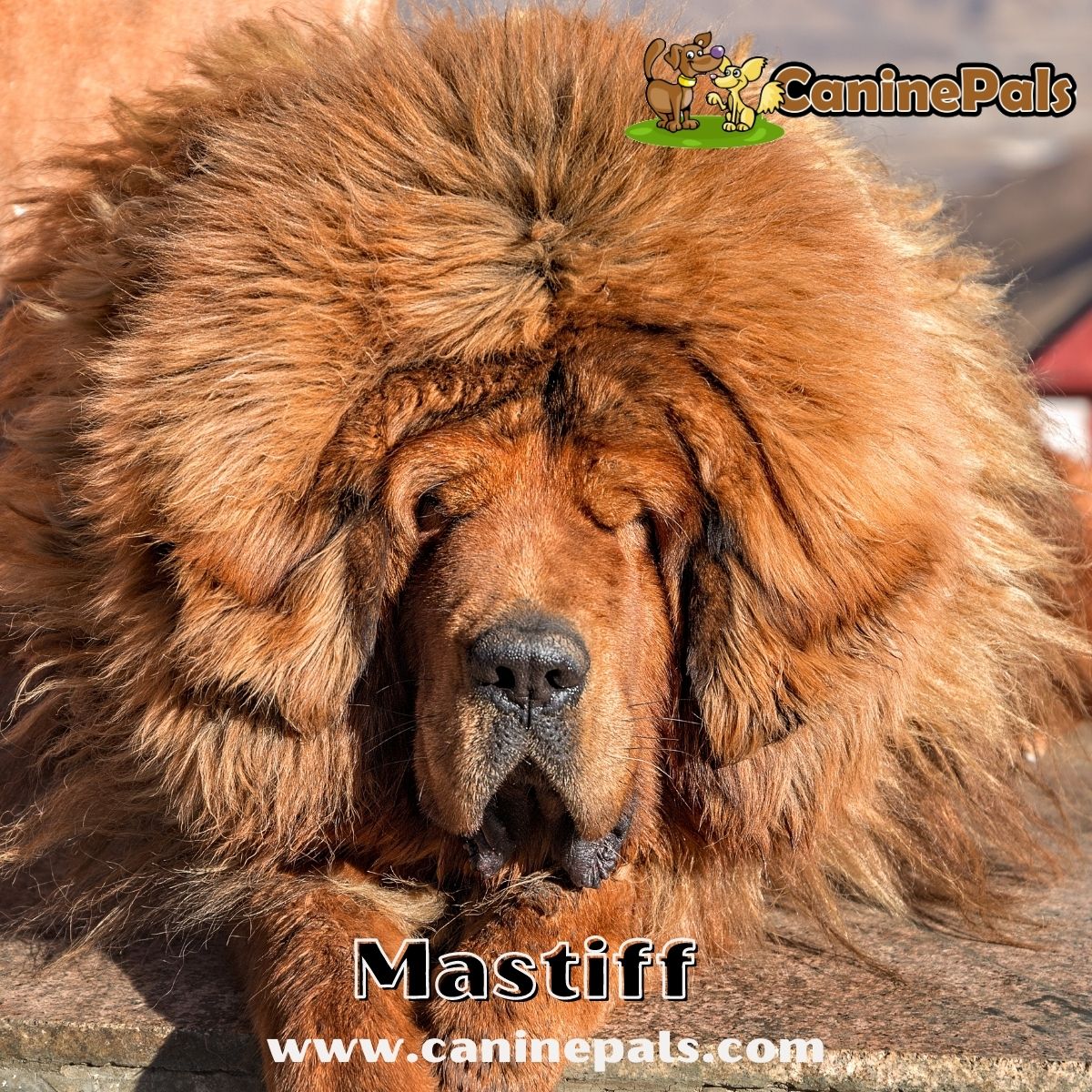
The Tibetan mastiff is a large and powerful dog breed that originates from the mountainous regions of Tibet. They were originally bred as working dogs, and their immense size and strength made them ideal for guarding livestock and property. The cane Corso is a large Italian breed that was also originally bred for working purposes.
These dogs are known for their athletic build and their fearless nature. So, who is more energetic – the Tibetan mastiff or the cane Corso?
There is no definitive answer to this question, as all dogs are individuals with their own unique personalities. However, the cane Corso is likely to be more energetic than the Tibetan mastiff. This is because the cane Corso was initially bred for jobs that required a lot of physical activity, such as hunting and herding.
On the other hand, the Tibetan mastiff was bred more for guarding and protecting. Therefore, they may not have the same high energy levels as the cane Corso.
Who’s Bigger In Size? Cane Corso vs Tibetan Mastiff
When it comes to size, the Mastiff definitely has the Cane Corso beat. While both these breeds are considered large, the Cane Corso can grow to be up to 27 inches at the shoulder, while the Tibetan Mastiff can exceed 35 inches. But don’t let the Mastiff’s size intimidate you – this breed is actually known for being gentle and loving with their family.
When it comes to grooming, Cane Corso requires much more work. But the Tibetan Mastiff may be slightly easier to groom than the cane Corso.
Both breeds will need to be brushed regularly, but the Tibetan mastiff’s coat may be less prone to matting and tangling than the cane Corso’s coat. In addition, the Tibetan mastiff sheds moderately, while the Cane Corso sheds heavily.
So if you’re looking for a slightly easier-to-groom breed, the Tibetan mastiff may be better. But either way, you’ll need to be prepared to invest time and effort into regular grooming sessions.
Exercise Needs – Tibetan Mastiff Vs. Cane Corso
The exercise needs of a Mastiff are not very high. However, they do need some form of exercise to stay healthy and maintain their weight. A simple daily walk or run will suffice. Additionally, playing fetch or other forms of interactive playtime are great ways to keep your Mastiff active.
A Cane Corso will need at least an hour of exercise every day, though ideally, they should have closer to two hours. This can be in the form of walks, runs, or playtime in a secure area. Corsos are very strong dogs, so it’s vital that they get plenty of exercise to avoid destructive behavior. If possible, give your Cane Corso access to a yard where they can run and play freely.
Tibetan Mastiff
Nutrition – Mastiff Vs Cane Corso
Tibetan Mastiffs are very large dogs, and as such, they require a lot of food. The average adult Tibetan Mastiff will need around 4 to 6 cups of food per day, split into two meals. Therefore, it is crucial to ensure that your Tibetan Mastiff has a high-quality diet designed specifically for large breed dogs. This will help to ensure that your dog stays healthy and doesn’t suffer from any joint or bone problems later in life.
A cane Corso’s diet should consist of high-quality dry dog food, meat, and vegetables. Puppies need more calories than adult dogs and may require two or three meals per day. Avoid feeding your cane Corso table scraps, which can lead to obesity and other health problems. Instead, keep fresh water available at all times. Your vet can help you create a tailored feeding plan for your dog.
Who Is Easier To Train? – Cane Corso Vs Tibetan Mastiff
The Cane Corso is typically easier to train than the Tibetan mastiff. However, both breeds require a lot of patience and consistency from their owners to achieve success.
A Cane Corso is generally more food-motivated than Tibetan mastiffs, which makes their training slightly easier. All you need to do is treat them with food upon successfully going through training each day.
However, both breeds are intelligent and can learn a variety of tricks and commands with proper training.
Ultimately, it is essential to choose a breed that best suits your own personality and lifestyle in order to ensure a successful training experience.
The Cane Corso is more athletic, while the Mastiff is more laid back. Both breeds require a lot of exercise and must be trained from a young age. However, remember that socialization is essential for both breeds to prevent aggression. So, keep them indulged in playful activities.
Coat Differences – Mastiff Vs. Cane Corso
Tibetan Mastiff has a thick coat that is double layered. The outer layer is coarse, and the undercoat is dense. They do not have an undercoat. In contrast, Cane Corsos have a short, stiff coat that is easy to groom.
Shedding Differences – Cane Corso vs. Mastiff
Since mastiffs have a denser double undercoat, and a straight, long outer coat, they shed seasonally but heavily. Cane Corsos on the other hand, have a single-layer coat that is short, stiff, and dense. As a result, they are not heavy shedders, but they do lose some hair throughout the year.
What is a Tibetan Mastiff Cane Corso Mix?
A Tibetan Mastiff cane Corso mix is a cross between a Tibetan mastiff and an Italian Corso dog. These dogs are large, powerful, and loyal, making them great protectors. They require plenty of exercise and socialization, but they can make wonderful family pets.
Who’s Better – Cane Corso Or a Mastiff?
There is no clear consensus when it comes to who is the better breed between a cane Corso and a mastiff. Some people may prefer the cane Corso for its loyalty and protective nature, while others might lean more towards the mastiff for its dauntless and courageous personality.
Ultimately, the decision of which breed is better for you depends on what you are looking for in a dog and which traits you value most.
Cane Corso
Conclusion
So these were the tidbits on the comparison between Mastiff Vs. Cane Corso, which we are sure will help you decide your well-matched family pet. The English Mastiff is edgy in size and serves well as a guard dog. Similarly, the Cane Corso also takes its duty very seriously when it comes to guarding.
If you’re a first-time dog owner, you are advised to start with a small and friendly dog before switching to a Cane Corso or a Mastiff. This is because they require training and care to behave as great human companions. Hence, once you get the experience of grooming and training dogs, you can be a happy Mastiff or Cane Corso owner.
The Belgian Tervuren and the Belgian Malinois are two prevalent breeds of dogs. Both breeds are known for their loyalty, intelligence, and trainability. While they may look similar at first glance, there are some significant differences between these breeds. In this article, we’ll take a closer look at the Belgian Tervuren vs Belgian Malinois, highlighting the key differences and similarities between these two popular breeds.
The Belgian Tervuren and Belgian Malinois are two of the most popular dog breeds in Belgium. Both breeds are known for their loyalty, intelligence, and protective nature. So, which breed is right for you? Read on to learn more about them.
Belgian Shepherd Dogs And Their Varieties
The Belgian Shepherd is a versatile herding dog that excels in many different roles. There are four recognized varieties of the breed: the Tervuren, Malinois, Groenendael, and Laekenois. All four varieties are similar in many ways, but there are also some key differences between them.
Since the Tervuren and Malinois are the more popular breeds among the four, this article will be focusing on Belgian Tervuren Vs Belgian Malinois.
Belgian Shepherd Dogs: Belgian Tervuren vs Belgian Malinois
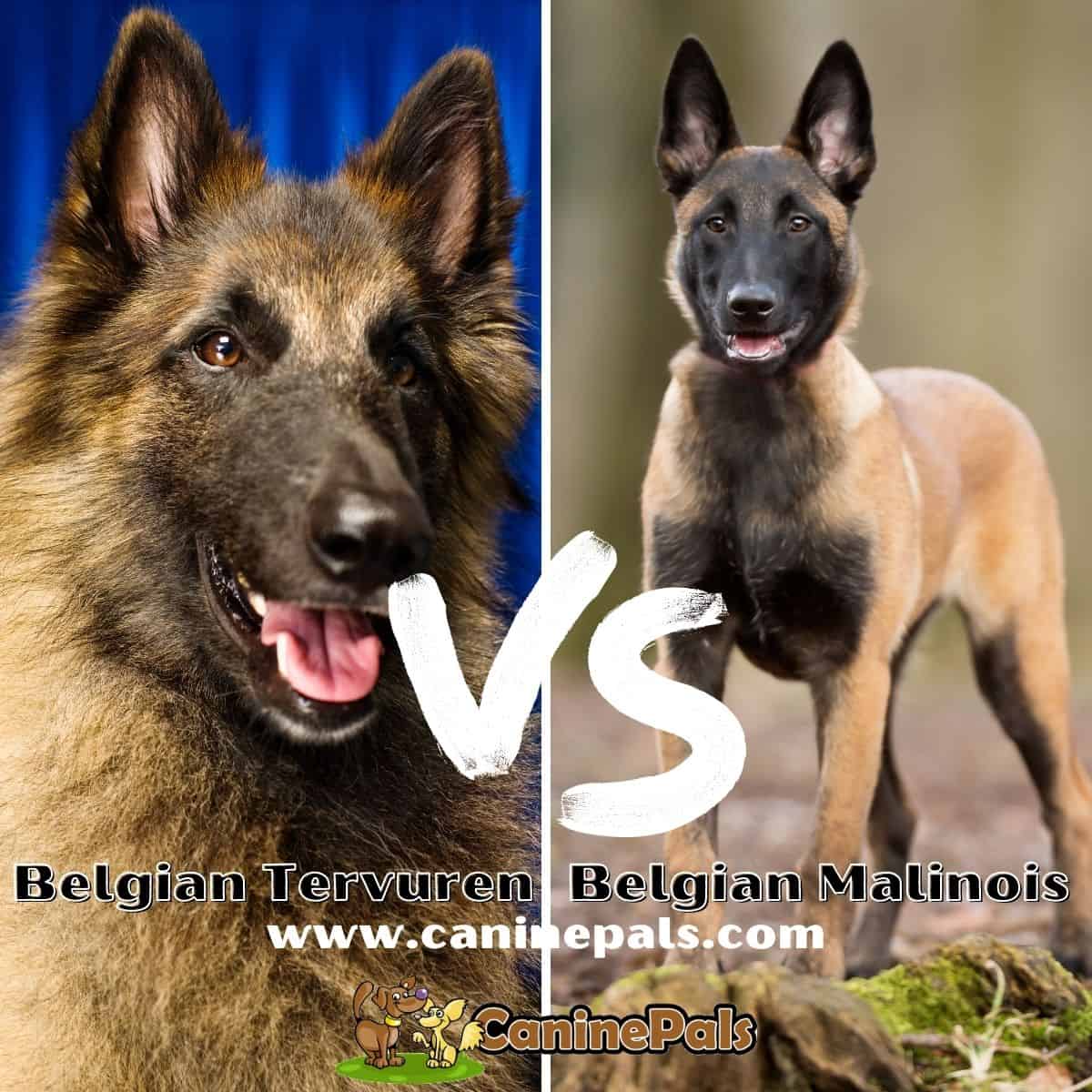
The Belgian Tervuren
The Tervuren is the most popular of the four Belgian shepherd dogs varieties and is known for being an intelligent and versatile dog. It is often used in police and military work and in agility, obedience, and tracking trials.
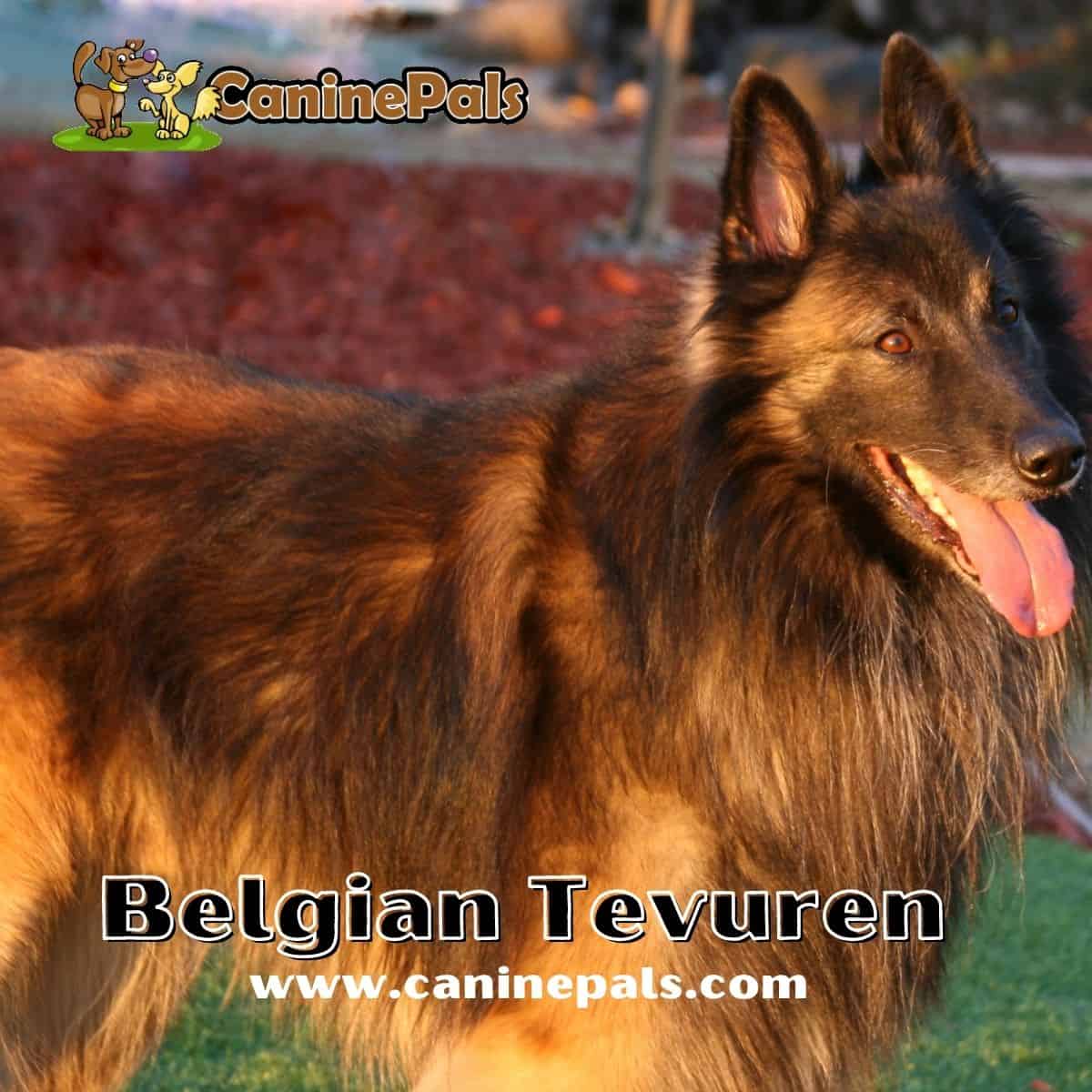
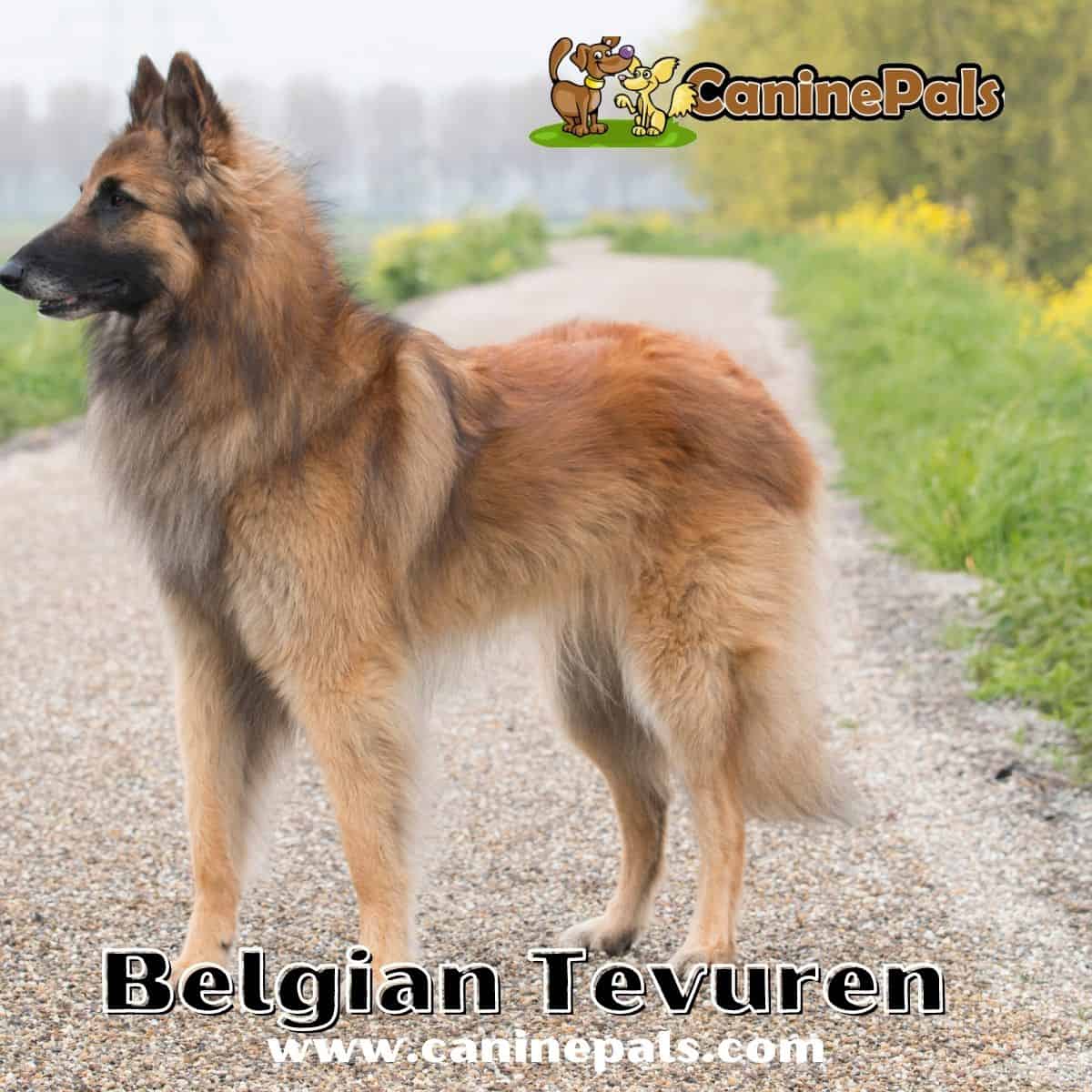
They’re muscular with longer necks and have square-shaped heads with erect ears. Their double-layered coat makes them look more prominent with a dense outer coat and a softer undercoat.
Tervuren comes in various colors, including black, fawn, mahogany, and brindle. The breed is intelligent, alert, and responsive to training.
The Belgian Tervuren is a large-sized dog, with males standing at 26 inches tall and females at 24 inches tall and weighing between 60-75 pounds. It has a thick double coat that is black with mahogany highlights. Being an active dog, Tervuren requires plenty of exercise and stimulation. If you are looking for a loyal and intelligent companion, Tervuren is the perfect dog.
The Belgian Malinois
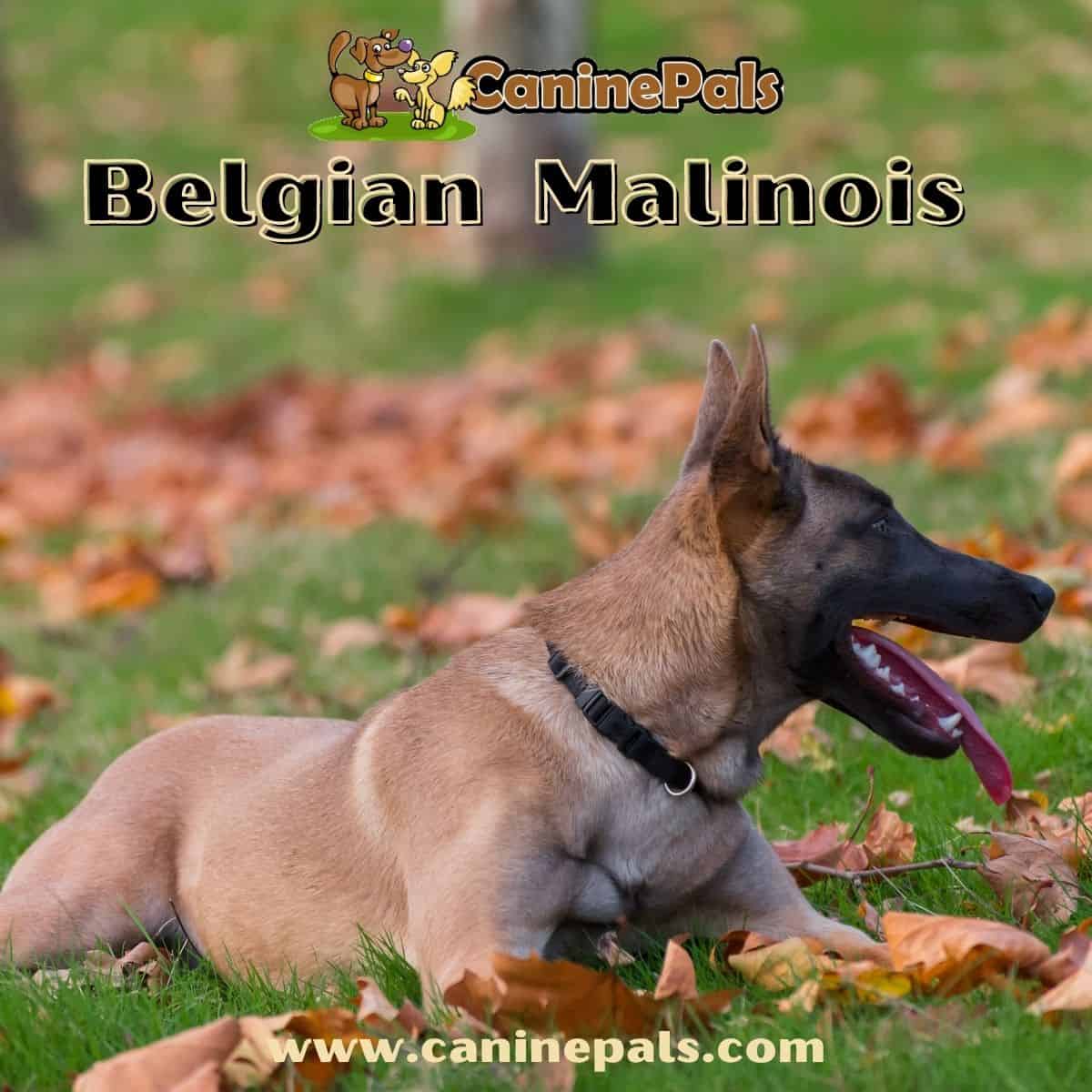
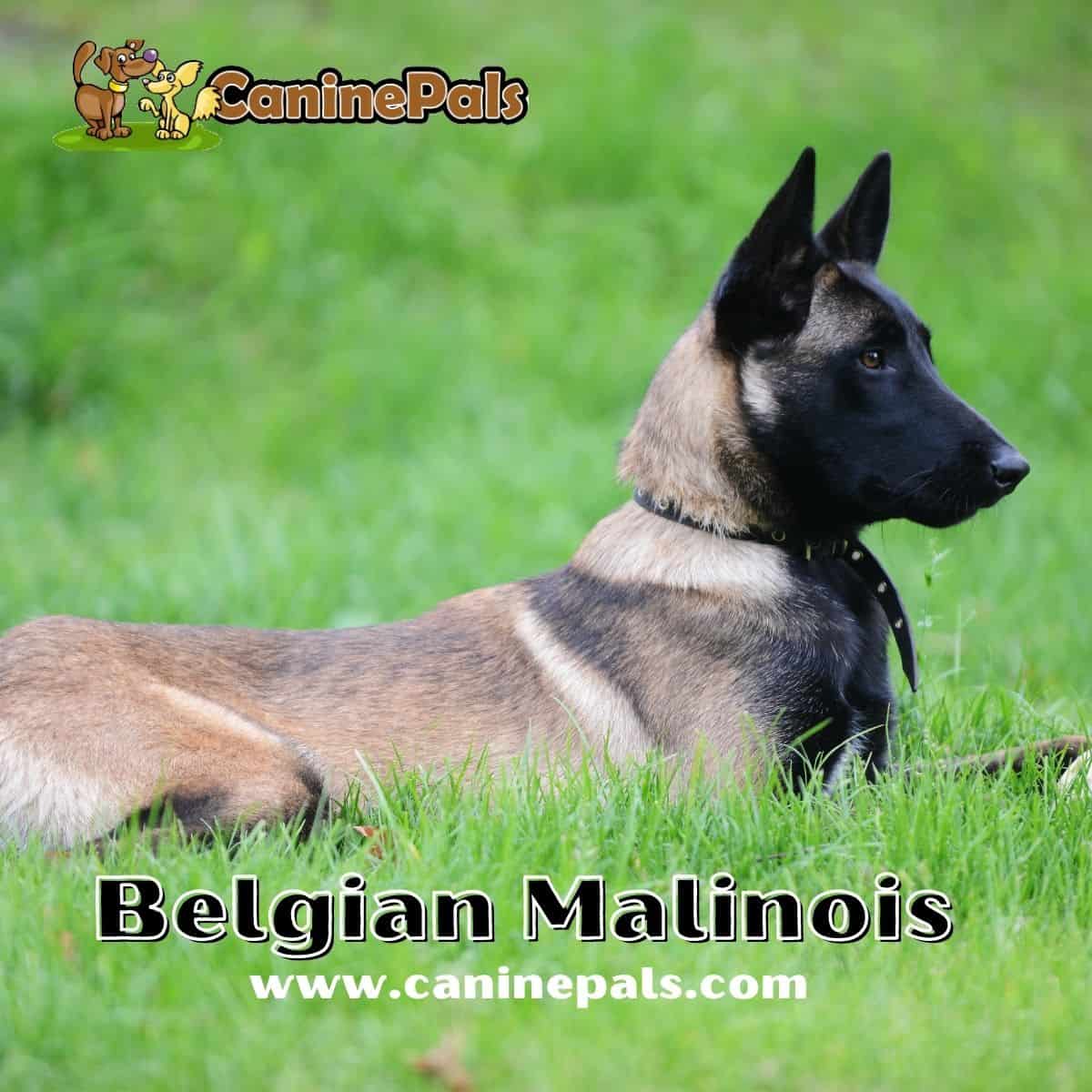
Let’s talk about the other popular Belgian Shepherd now – The Malinois. They are larger than the Tervuren and are very active and energetic. They are also very intelligent but slightly difficult to train. The Malinois is often used as a working dog in police and military work, as well as search and rescue, herding, and obedience.
The breed standard lists the ideal height for a Belgian Malinois as 24-26 inches (61-66 cm) for males and 22-24 inches (56-61 cm) for females. In addition, males typically weigh between 65 and 75 pounds, while females usually weigh between 60 and 70 pounds.
Despite their many positive qualities, Belgian Malinois can also be quite stubborn and headstrong, so they require owners who are willing to put in the time and effort to train them properly.
History
The Belgian Tervuren
The Belgian Tervuren is a relatively new breed, having only been developed in the late 1800s. They were named after a village called Tervuren.
Belgian Tervuren dogs were originally bred as working dogs on farms and villages, but they quickly became popular as companion dogs and family pets. Today, Belgian Tervuren are still used as working dogs in many different capacities, but they are also widely loved as family pets.
The Belgian Malinois
The Belgian Malinois is a herding dog that originated in Belgium. The breed was originally used for guarding sheep and cattle. In recent years, the Belgian Malinois has become popular as a working dog in law enforcement and the military.
The Belgian Malinois is a relatively new breed in the United States. The first recorded Belgian Malinois in the United States was imported in 1911. This breed gained popularity in the 1960s when Belgian Malinois was used in movies and television shows.
Interestingly, the dog who played a vital role during Osama Bin Laden’s capture was a Belgian Malinois named Cairo.
Belgian Tervuren
Belgian Tervuren Vs Belgian Malinois – The Differences
Tervuren is one of two types of Belgian shepherds, the other being the Malinois. Both breeds are similar in many ways, but there are some key differences between them. Let’s get to know the two Belgian Shepherd varieties in detail.
Belgian Tervuren Vs Belgian Malinois – Color
The Belgian Malinois is a dog of many colors, while the Belgian Tervuren can be any shade of fawn to mahogany, with a black mask and black tips on the hair. The coat of a Malinois is short, straight, and harsh, while the Tervuren’s coat is long, dense, and slightly wavy with a thick undercoat.
When it comes to grooming, Malinois requires less maintenance compared to the Tervuren.
Belgian Tervuren Vs Belgian Malinois – Temperament
The Belgian Tervuren is a highly intelligent dog that is very easy to train. They are also very loyal and protective of their family.
In contrast, the Belgian Malinois is also a highly intelligent dog, but they can be more challenging to train. Since they are very active and energetic, you need to have a very active lifestyle to get them accustomed.
If you are looking for a dog that is easy to train and loyal, the Belgian Tervuren is a great choice.
However, if you want a dog that is active and energetic, the Belgian Malinois may be a better choice. Whichever breed you choose, make sure to do your research to know what you’re getting into.
Belgian Tervuren Vs Belgian Malinois – Grooming
The Malinois has a shorter coat than the Tervuren and is easy to groom. The Tervuren’s coat is longer and requires more brushing. Both breeds need to be trimmed around the feet and anus to prevent matting.
Speaking of shedding, the Malinois is an average shedder while the Tervuren sheds moderately. Neither breed is considered hypoallergenic.
The Malinois is an active Belgian shepherd breed that needs a lot of exercise. The Tervuren is also active, but not to the same extent as the Malinois. Both breeds are intelligent and easy to train. However, the Malinois is better suited for protection work, while the Tervuren excels at herding.
Belgian Tervuren
Belgian Tervuren Vs Belgian Malinois – Appearance
The Belgian Malinois is a large-sized Belgian shepherd dog that is very similar in appearance to the German Shepherd. The main difference between the two breeds is that the Belgian Malinois has a shorter coat and a more square-shaped head.
The Belgian Tervuren is also a large breed of dog originally bred in Belgium. The most notable difference between the Tervuren and the Malinois is that the Tervuren has a long, thick coat that can be either black or brown.
Both of these breeds are intelligent and loyal. Still, the Belgian Tervuren is more often used as a companion dog and is better suited for families with children since it is easier to train compared to the Malinois.
Belgian Tervuren Vs Belgian Malinois – Lifespan
Tervuren tends to live around 12 years, while Malinois has a lifespan of around 14 years. However, health, environment, and nutrition factors play a vital role in determining their lifespans.
Belgian Tervuren Vs Belgian Malinois – Health
Both of these breeds are generally healthy dogs when it comes to health. However, the Tervuren Belgian sheepdog is more prone to hip dysplasia than the Malinois. Furthermore, they can suffer from elbow dysplasia as well.
Both Belgian sheepdog dog breeds are also susceptible to eye problems such as progressive retinal atrophy and cataracts.
Belgian Tervuren Vs Belgian Malinois – Which Breed Adapts More Easily?
The Tervuren is more versatile and can do well in various settings, including urban and rural areas. They are also generally more easygoing than the Malinois and can be better suited for families with children.
On the other hand, Malinois are a bit stubborn and aggressive. Getting him accustomed to an apartment or a small home can be challenging since it requires a bigger space to roam around and exercise.
All in all, both breeds require plenty of exercise and stimulation to stay happy and healthy.
Belgian Malinois
Belgian Tervuren Vs Belgian Malinois – Who Is More Prone To Separation Anxiety?
Belgian Tervuren is more prone to separation anxiety than Belgian Malinois. This may be because the Belgian Tervuren are bred as working dogs and have a strong need for companionship and purpose.
Belgian Malinois, on the other hand, are bred as guard dogs and may be less likely to experience separation anxiety because they are more independent. Ultimately, it is up to the owner to provide structure and training to help their dog cope with separation anxiety.
Diet
Belgian Tervuren
The Belgian Tervuren is a very active dog breed that needs a lot of exercise. They are also very intelligent and need to be given tasks to keep them mentally stimulated. For these reasons, it is crucial to choose a diet that will give them the energy they need without being too high in calories.
There are a few things to consider when choosing a diet for your Belgian Tervuren. The first is the ratio of proteins, fats, and carbohydrates. Belgian Tervurens need a higher protein diet than most other dogs because they are very active. They also need a higher fat diet to keep their coat healthy.
The second thing to consider is the type of food. Belgian Tervurens do best on a diet of dry kibble or canned food. They can also eat raw meat, but it is vital to ensure that the meat is lean and free of any bones.
The third thing to consider is the amount of food. Belgian Tervurens need more food than most other dogs because of their high activity level. Therefore, it is essential to ensure that they get enough food, but not too much.
If you keep these things in mind, you will be able to choose a diet that is perfect for your Belgian Tervuren. Choose a food with the proper proteins, fats, and carbohydrates ratio.
Belgian Malinois
The Belgian Malinois is a high-energy dog breed that requires a lot of exercise. Therefore, a diet for Belgian Malinois should be designed to meet their high energy needs. The dietary need of Malinois is quite similar to Tervuren – protein, fats, and a carb-rich diet.
When choosing food for your Belgian Malinois, look for a formula that is high in protein and fat. This will help to keep them lean and muscular. Belgian Malinois are also prone to allergies, so make sure the food you choose is free of common allergens.
Similarities Between Belgian Tervuren and Belgian Malinois
Some of the similarities between Belgian Tervuren and Belgian Malinois include their need for physical activity, their intelligence, and their pride. Both breeds also require a lot of space to live in and do best when part of a family or group.
The food requirement of both breeds is almost the same. You need to divide their diet among protein, carbs, and fat-containing foods.
Lastly, both Tervuren and Malinois are affectionate and protective of those they love. While there are many similarities between these two breeds, there are also some essential differences that potential owners should be aware of.
Belgian Malinois
FAQS
1. Belgian Tervuren Vs Belgian shepherd: Which is the better fit for you?
There are a few key things to consider when choosing between these two breeds. First, think about your lifestyle and whether or not you’ll have enough time to commit to regular grooming sessions. These breeds require significant amounts of brushing and combing, so if you’re not up for that, you may want to choose a different breed.
Secondly, consider your living situation. If you live in an apartment or other small space, a Belgian Tervuren may not be the best fit as they require a lot of exercise and space to run around. However, they would likely be very happy if you have a large backyard or access to a park or other open area.
On the other hand, Belgian Shepherds are a bit more versatile and can do well in both small and large spaces. So, take some time to consider your lifestyle and living situation before deciding.
2. What is the German shepherd Belgian Tervuren mix?
The German Shepherd Belgian Tervuren mix is a cross between the German Shepherd and the Belgian Tervuren. These two breeds are both known for their loyalty, intelligence, and working ability, so it’s no surprise that their offspring would inherit these qualities. This mix is an excellent choice for families looking for a protective yet loving companion.
3. What are the differences And Similarities between a German shepherd and a Belgian Tervuren?
When choosing a German Shepherd or a Belgian Tervuren, there are a few key things to keep in mind. Both breeds are intelligent, loyal, and protective, but they have distinct differences.
Differences – German Shepherd Vs Belgian Tervuren?
The most apparent difference between these two breeds is their size. German Shepherds are significantly larger than Belgian Tervurens, weighing in at an average of 75-95 pounds compared to the Tervuren’s 60-75 pound range. But size isn’t the only difference. German Shepherds are also known for their black and brown coats, while the Tervuren’s coat is a striking shade of mahogany.
Similarities – German Shepherd Vs Belgian Tervuren?
Despite their differences, these two breeds do have some things in common. Both are intelligent, loyal, and protective of their families. They are also versatile breeds that excel in various activities, from obedience and agility to herding and tracking.
If you’re still undecided about which breed is right for you, the best way to make a decision is to meet both breeds in person. Seeing them side-by-side will help you better understand which one is the perfect fit for your family.
Final Words on Belgian Shepherd Dog Breeds: Belgian Tervuren vs Malinois
The final verdict is that Belgian Tervuren is the better breed as they’re more pet friendly.
Furthermore, they are smarter, more trainable, and have a higher success rate when bonding with a family.
Belgian Malinois are also great dogs, but they tend to be more aggressive and less easy to train. And, they require a large space to live and roam freely. So, if you have a small apartment, then a malinois will have a hard time adjusting.
If you’re looking for a loyal, intelligent, friendly, and hardworking dog, then the Belgian Tervuren is your breed.
Is the Belgian Malinois dog aggressive or not? From their build to their needs, here’s a complete guide you need to see and learn about Belgian Malinois behavior and possible Malinois puppy aggression before buying one as a pet or a working companion.
When you are buying a dog, one of the most asked questions is regarding their aggression. People tend to avoid buying particularly aggressive dogs. So if you are planning to have this breed in your life, then you should know whether the is Belgian Malinois aggressive or not?
Even with other dogs, they don’t get along instantly; you would have to take them to play dates a couple of times a week to make them welcome with other breeds.
Is The Belgian Malinois Aggressive?
Belgian Malinois Breed History
This German Shepherd-type looking dog is also known as the Belgian Shepherd Dog or Belgian Sheepdog. Just like its name Malinois originated from the Malines region in Belgium. Belgian herding dogs come in four different varieties, including Groenendael, Tervuren, Laekenois, and Belgian Malinois as one of them. Belgian Malinois earned fame as a separate breed in 1959.
The Belgian herding dog or Belgian Shepherd Dog breed dates back to the 18th century, 1891, to be exact. The breed was becoming obsolete at the end of the 19th century and was on the verge of getting extinct when Professor Adolphe Reul formed a club called Club de Chien Berger Belge to save this type of breed. Along with his team, Professor Adolphe worked extensively to preserve this breed by standardizing them into distinct ranges.
Belgian Malinois gained massive popularity when they accompanied the Belgian Army in World war 1 to find wounded soldiers who went missing during the warfare. Belgian Malinois are pretty famous among Army Personnel for assisting them during wartimes and capturing criminals during the attack. They are used by security forces of various countries as detection dogs or assistant dogs in departments like customs, police forces, military, and border guards.
Belgian Malinois is the dog who got wounded while chasing the ISIS leader when he exploded himself with a suicide bomb. This Malinois named Cannon was honored as a national hero for his bravery, and it gave a boost to the demand for this breed.
Belgian Malinois Behavior
They are high-energy, intelligent, and very active dogs. The Belgian Malinois dog is usually intelligent, has an athletic build, and is a very muscular dog breed. They can be great pets since they are very watchful, alert, and protective.
This dog breed is extremely energetic, and they are not given enough time to exercise and play. They might develop habits like separation anxiety, excessive barking, and chewing due to boredom.
Belgian Malinois were initially bred as herding dogs.
Their trainability and persistence made these dogs one of the finest to assist as police and military dogs. They tend to learn new skills very quickly; they are very eager to respond to their masters, which makes them suitable for rescue operations, bomb detection, and drug-sniffing.
Belgian Malinois Aggression
This breed is famous for its strong prey drive, making them aggressive and dangerous for other dogs, other pets, and young kids at home. They get really aggressive when they are not exercised which makes them not much suitable for a home environment where the owner works for long hours.
Is The Belgian Malinois Dangerous?
They are extremely playful and can’t do well in boredom. All these things play a key role in making a Belgian Malinois aggressive. Belgian Malinois aggression is something that makes it difficult to live with other animals, especially with non-canine animals. They should be kept separated by a fence from other animals to avoid any mishap. However, they can do well in the home as pets if trained properly.
Malinois Puppy Aggression
Puppy kindergarten and obedience training classes are great for Belgian Malinois as puppies. If they are not properly trained as puppies, then they can be dangerous and even aggressive towards humans and other dogs. They also don’t get along with strangers easily.
It’s imperative to make these puppies socialize from an early age. It would help them to welcome unfamiliar faces and dogs; this age is also the time when you would notice aggressive tendencies in this breed.
Is The Belgian Malinois Aggressive?
Belgian Malinois as Working Dogs
Belgian Malinois is generally considered the best dog breed as guard and protector and is primarily known as a proactive working dog. They are highly skilled dogs with a greater instinct which makes them the most celebrated police dogs in the world. Most of the security personnel around the world are keen to have Belgian Malinois onboard for rescue projects.
Can a Malinois be a Good Pet?
If this breed is given a suitable environment, they can be great family pets as they are known as protective dogs, loveable, devoted, and loyal. As we have discussed earlier, a Belgian Malinois temperament requires a committed training plan and strenuous exercises.
If they are not provided with these things at home, then they can get bored and will become very challenging to handle. Although they are one of the most desirable pets, first-time dog owners must know one thing: Malinois are intense dogs, and they need a lot of attention and care, so they are not recommended as family pets.
However, if they are trained well, they can be very playful and love taking part in family activities. They can assist you in any of the outdoor chores as they love playing and doing outside activities.
Living Space Requirements
If you are going to own a dog for the first time, then this breed is not suitable for you as they are pretty active dogs and want proper care to play and exercise. These exercises and training cannot be done in confined places like apartments, so they need open places with a play yard to live in a home environment.
Appearance
Belgian Malinois are mid-sized to large dogs with moderate weight. They are usually fawn to mahogany in color with a black overlay and face mask. They are square proportioned dogs with oval-shaped bones and powerful bodies, which give them an impressive stature.
This breed has double-coats with dense undercoats to resist the rainy climate of their origin country Belgium. They are sharp and are able to read the smallest of movements and facial expressions. A Belgian Malinois is a shedder; it sheds only twice a year but sheds heavily.
Is The Belgian Malinois Aggressive?
Height and Weight
These dogs are generally 22 to 26 inches tall, the male breed is 24 to 26 inches long, and females are 22 to 24 inches tall. A Belgian Malinois dog’s weight varies from 40 to 80 pounds in males and females, respectively, which makes them 18 to 27 kilograms.
How Long does a Belgian Malinois Live?
The Belgian Malinois lives a healthy and longer life compared to the other mid-sized dogs. They live an average life of 10 to 12 years. Some lucky and healthy ones may live a couple of more years.
Belgian Malinois Health
Malinois are usually healthy dogs, but like other dog breeds, they are also prone to some health issues. Following are the diseases that are common in this breed.
Progressive Retinal Atrophy:
This is a very common health condition in this breed in which the dogs lose the photoreceptors present in the back of the eyes, due to which they may face blindness. It is a degenerative eye disorder that happens due to aging and results in damaging central vision. The good part is that dogs have pretty strong other senses, which help them live a happy life even with blindness.
Sensitive to Anesthesia:
The most common health condition in Belgian Malinois is their sensitivity to anesthesia. They are very sensitive to anesthesia due to the muscle to fat ratio. The death rate in Malinois is on the higher side when the anesthesia is applied to them. So make your vet aware of his sensitivity before he opts for some surgery.
Is The Belgian Malinois Aggressive?
Elbow Dysplasia:
This is also a common health issue in mid-sized and large dog breeds. This is caused by the abnormal formation of the three bones that makes elbow joints in the dogs, which results in restlessness and severe pain. Your Malinois may lose movement due to pain if they are not suggested medication for pain reduction. However, this is a curable condition that can be cured by surgery.
Hip Dysplasia:
Just like most mid-sized dogs, Hip dysplasia is a common health condition in Malinois as well. It is a heritable condition; the dogs with hip dysplasia face constant discomfort, which results in lameness and excruciating pain. This is a condition when the thigh bone does not fit properly in the hip socket; this may also develop arthritis in the dogs as they age.
Obesity:
Obesity in Belgian Malinois is one significant health condition. The excessive weight gain in Malinois triggers more diseases in this breed like severe joint issues, digestive and metabolic disorders, heart diseases, and back pain. So as a caregiver, you are suggested not to give more than the diet which is appropriate for your Malinois. Maintaining discipline while feeding them is very important as it reduces the chance of becoming obese.
Is The Belgian Malinois Aggressive?
Care Tips for Belgian Malinois
The Belgian Malinois is usually a low-maintenance breed; it does not require much grooming. However, they should be bathed as frequently as once a week.
To maintain their healthy skin and coats, frequent brushing is also suggested, but during the shedding season, the brushing of a Malinois should be a daily ritual. As Malinois is a double-coated breed and has dense undercoats, it is recommended to brush them with a dryer to remove dirt and grime before taking them to bathe.
Nail trimming, ear cleaning, and proper nail care are also suggested for these dogs once a week for a healthy routine.
Maintaining healthy dental hygiene is also essential for this breed; they need to be brushed at least 2 to 3 times a week with canine toothpaste as human toothpaste can be harmful to them if they swallow it.
Malinois Puppy
Cost of Belgian Malinois
This most desirable and extremely attractive dog is an expensive breed. An active Malinois can cost you as much as $3500 to $9000, as the purebred dog is usually worth more. It also depends on the availability of the breed in the vicinity.
A Belgian Malinois may cost more in the USA as compared to its native country Belgium. A puppy of this breed may cost you around $2500 to $3000.
The price of this dog depends completely on its lineage and training. However, the adult and fully trained Malinois can range up from a whopping $45000 to $65000 because these dogs are known as national heroes.
Is The Belgian Malinois Aggressive?
Summing Up
Belgian Malinois are beautiful herding dogs; they are extremely energetic and friendly if they are given proper socialization training at a young age. A properly socialized Belgian Malinois is a joy to own. They can be great pets also due to their brilliant watchdog skills and their loyalty and protectiveness.
However, if they are not trained well at an early age and introduced to different people, other dogs, and animals, then it can get difficult for you to keep this breed at home. You should only purchase a Malinois if you are one of those individuals who are experienced in dealing with such dogs who crave activities and can invest significant amounts of time in providing them with such exercises.