
Disclaimer

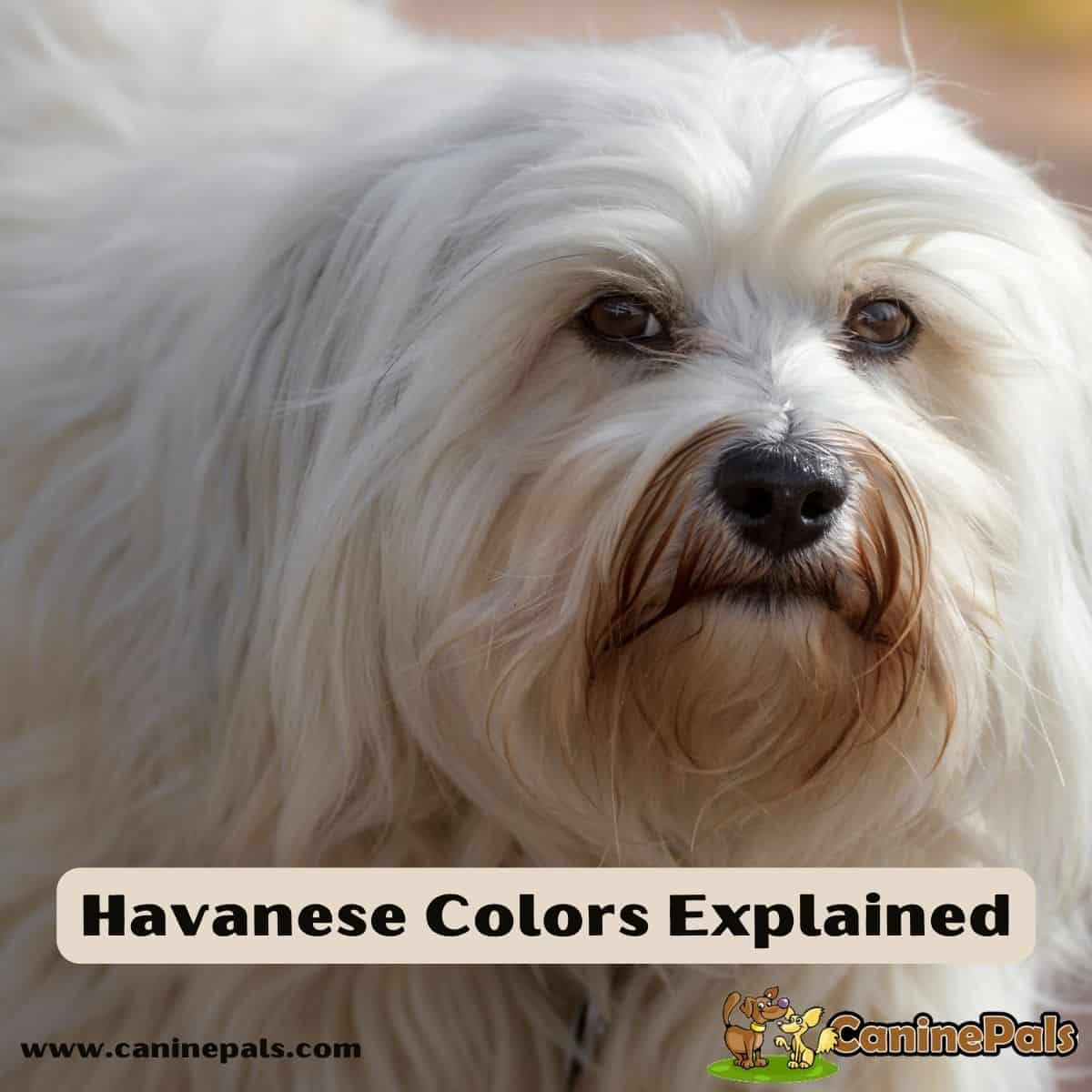
Havanese Colors Explained

Havanese Colors Explained | Most Desirable Havanese Dog Colors

Many dog owners today pick their puppy based on their tastes and preference. Havanese colors come in a remarkable array of shades and patterns.

If you are trying to decide what color Havanese to bring into your home, read about the different Havanese colors.

About Havanese Dogs

Havanese are cheerful little dogs that are neither fragile nor overdone. They’re small, sturdy dogs of immense charm that is known for their intelligence and easy-going nature.

The Havanese dog breed is funny dogs with a sweet and friendly temperament. These companion dogs usually get along with everyone. They are full of energy and have a zest for life.

  •  Havanese are small, sturdy dogs that are friendly, energetic and full of life.
  •  The AKC recognizes 16 different colors and eight types of markings or patterns for Havanese.
  •  Among the most popular colors are black, black & silver, black & tan, chocolate, cream, fawn, gold, red and red brindle.
  •  White markings, tan points and cream markings are some common color markings seen in Havanese.
  •  Havanese puppies often change color as they develop and can be difficult to identify at birth.
  •  Black is the most popular color of Havanese overall.

Let’s have a look at the important stats that you need to know about Havanese:

Stats Description
Bred for Companionship
Overall Grooming Needs High
Coat Length Medium
Average Height 8 to 11 inches tall at the shoulder 
Average Weight Range 7 to 13 pounds
Energy Level Energetic
Exercise requirements 20 – 40 minutes per day
Social/Attention Needs High
Temperament  Playful, Affectionate, Intelligent, Responsive, Companionable, Gentle
Tendency to Dig Low
Tendency to Drool Low
Life Expectancy 12-15 years
Havanese Colors Explained

What Havanese Colors Are Officially Recognized By The AKC?

Havanese dogs are popular for having diverse coat color patterns and combinations. You’d be surprised just how colorful the Havanese is. While Havanese can come in almost every color, there are only 16 that are approved by AKC ( American Kennel Club). 

You can use these 16 colors and color combinations when registering your Havanese with a kennel club. Also, there are eight further types of markings or patterns. 

The diverse markings and colors of the Havanese are just one reason they’re so popular among households. Let’s start exploring these glamorous colors.

What Are The Best Havanese Colors?

The vibrant world of Havanese color is full of striking hues and unique combinations. From the classic blues, blacks, creams, and whites recognized by the AKC ( American Kennel Club) to fanciful fawns, chocolate golds, or brindles – these dogs can come in a spectrum ranging from subtle shades to bold statements, sometimes even with two colors at once like majestic red sable or striking black-and silver!

Havanese Colors and Markings

Color Standard Color or Not
White Yes
Black Yes
Black Brindle Yes
Blue
Blue Brindle
Chocolate Yes
Cream Yes
Fawn Yes
Gold Yes
Gold Brindle Yes
Gold Sable Yes
Red Yes
Red Sable Yes
Red Brindle Yes
Silver Yes
Silver Brindle Yes
Black & Tan Yes
Black & Silver Yes
Fawn Brindle
Fawn Sable
Chocolate Sable
Chocolate Brindle
Black & Tan Brindle
Black & Silver Brindle
Silver Sable

Whichever colored Havanese you choose to get, I can assure you that you will have a best friend that will make your days much better and happier.

  1. Black

Black Havanese are among the most common and popular dogs. They have a deep, black color with a glossy shine. Solid colored dark black Havanese dogs should have all black fur from head to toe and tail. 

Most black Havanese will also have some brown, white, or silver color on them. Strictly speaking, the black Havanese should not have markings in any other color anywhere on their body. They don’t change color even as they grow older, unlike most other Havanese color variations.

  • Black & Silver

Black and silver are among the most eclectic color combinations in the Havanese dogs. For the most part, black and silver Havanese dogs have a mainly black coat with silver markings, usually on the face and paws. In some cases, the black and silver fur appear mixed all over the body for a dark, ashy aesthetic.

  • Black & Tan 

Black and tan Havanese dogs are unique and beautiful but rare. Black is the predominant color in this case and appears on most parts of the head, torso, limbs, and entire tail. The tan markings are limited mainly to the face on the muzzle and over the eyes. The tan fur may also appear on the neck, fore-chest, and paws. 

  • Chocolate

Havanese chocolate dog’s coat color can vary from a very light Café Au Lait color to a very dark chocolate color. Chocolate Havanese dogs must retain at least a 1-inch patch of chocolate hair. The chocolate shades in Havanese can stay the way it was at birth, lighten up, or get darker over the years.

  • Cream

Cream Havanese can range from an off-white color to a light tan color. The coat can also have golden undertones. Cream Havanese can also have patches of various shades of cream. Their coat can lighten as the puppy ages until it appears almost white.

  • Fawn 

Fawn Havanese are light brown to dark blonde. They can have patches of white or dark brown as well. Lighter hair is often present on the chest and stomach, while darker hair is on the head, back, and ears.

  • Gold

The color manifests in vivid and gleaming forms before developing into a more subtle shade. Gold color can range from a sandy brown to an apricot color. The back, head, neck, and ears are often a dark shade of tan. Some Havanese will lose their gold color as it fades away with age.

  • Red

While technically considered red, these Havanese look orange in the light. Red Havanese can have orange to dark reddish-brown coats, with reddish-to-brown tones. They can also have patches of white and light brown. The red color is mostly visible in puppies as Havanese coats change color as they age.

  • Red Brindle

A Red Brindle Havanese looks like they have black stripes on a red coat. They’re often described as tiger-striped, but brindle Havanese doesn’t look much like tigers. Havanese born with a Red Brindle coat pattern carries a particular recessive gene.

  • Red Sable

Sable Havanese dogs have dark tip markings on lighter red fur. The sable markings do not always appear uniformly over the entire coat. In some Havanese dogs, the sable tip markings may spare some parts of the coat.

  • Silver

Listed by the AKC as an acceptable color for Havanese, silver can range from a soft gray to a dark smoky color. They’re born with dark hair, but it lightens as they get older. 

Silver Havanese are generally pale in appearance but have a silvery sheen to their coats. They have black pads, eye rims, lips, and a black nose. Some Havanese born black “transition to a more silver color coat” as they age.

  • White

Solid white coats do exist, but sometimes other shades creep in. White Havanese can be pure white or have patches of varying shades of white. The nose will still be black on a white Havanese. 

  • Black Brindle 

You can easily recognize a black brindle Havanese by their black base coat having irregular light fawn streaks all over their body. Depending on the mixture of black and fawn hairs, these Havanese can range from very dark to light. They usually have a black nose and dark-colored eyes.

  • Silver Brindle 

The combination of a silver and brindle coat is quite rare, but it can occur. The silver brindle pattern features shades of silver as the base color with black stripes on top. Both parents have to carry a brindle gene to get a brindle puppy. The brindle pattern may cover the whole body or be on the colored part of the dog. 

  • Gold Brindle

The gold brindle pattern typically features shades of gold as the base color with black stripes on top. The coloring can vary considerably, depending on other coat genes that are present.

  • Gold Sable

These coats are distinguished by darker tipping on a lighter gold-colored undercoat. The dark patches appear on the lighter part of the dog’s fur. The sable points are not always all over the coat. In some cases, sable markings may appear on only certain parts of the Havanese coat. When a Gold Sable Havanese is a puppy, he can have dark patches, but as he grows up, those patches slowly fade and are not so noticeable.
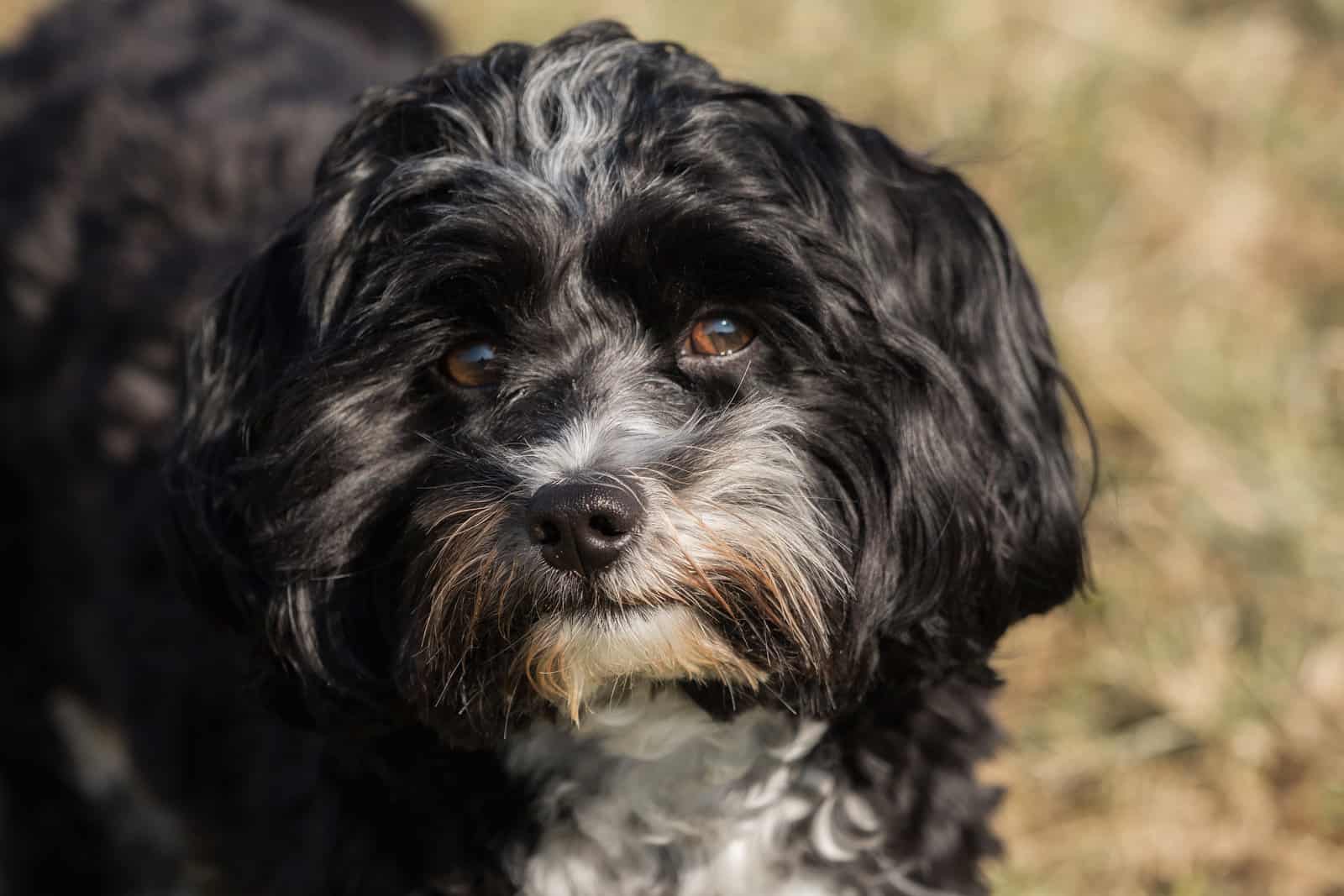
Purebred Havanese Puppy

Havanese Markings 

Let’s take a look at the many color markings on Havanese.

  1. White Markings
  2. Tan Points
  3. Cream Markings
  4. Parti-Color
  5. Silver Markings
  6. Irish Pied
  7. Silver Points
  8. Parti Belton

Havanese colors can change while they’re growing up, so it can be hard to tell what coat color the Havanese dog will be when they reach adulthood.
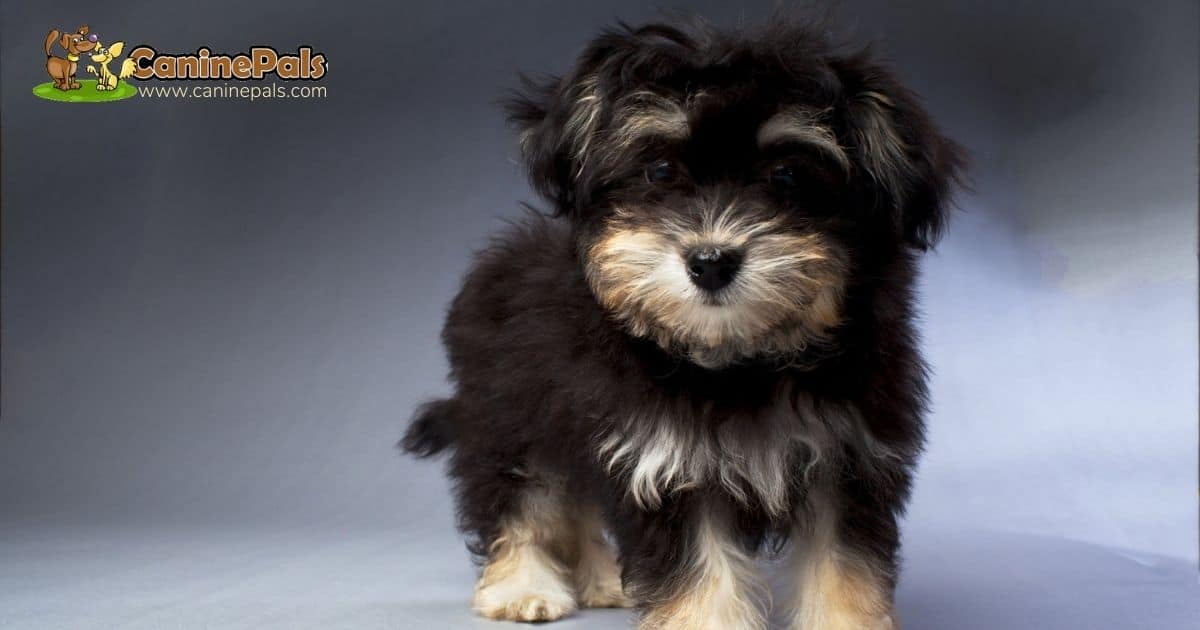
Havanese Puppy
Havanese Puppy

Do Havanese Puppies Change Color?

Havanese dogs are born with a coat of soft fluff and only start to lose this puppy coat once they reach 6 to 12 months of age. As they begin to develop their mature coat, their coloration may change. This change is either darkening or lightening, depending on their genetic makeup. 

Solid black-and-white coats are less likely to change, but most other colors will have some change. Brindles and sables are the most likely to fade or lighten. This is due to each dog’s specific genes.

Because Havanese change color as they develop, identifying a Havanese correct color at birth can be extremely challenging. Oftentimes if the parent has a coat that has changed color, their offspring will too.

What Is The Most Popular Color Havanese?

Black Havanese is the most popular color of Havanese. The black color gives them a silky, glossy shine that everyone is crazy about. Also, the white Havanese, along with silver and cream, is very popular among Havanese.
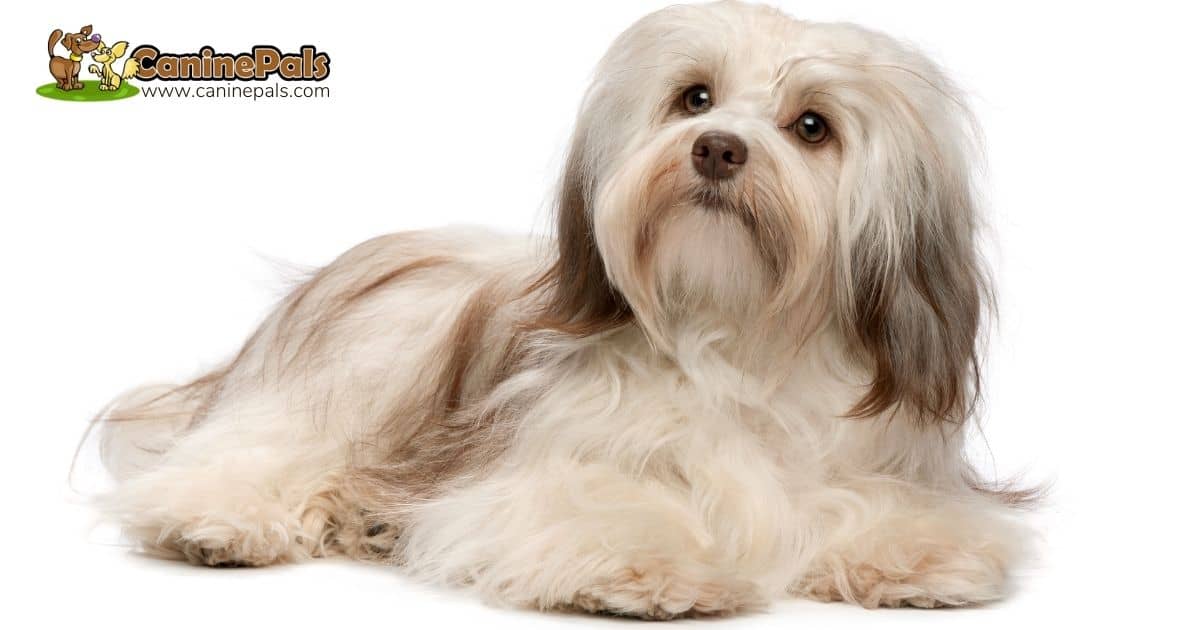
Havanese Dog Price
Havanese Dog Price

Conclusion

The diversity of rich colors and patterns makes Havanese the canine equivalent of a box of chocolates when it comes to the best Havanese color, that will be a personal choice.

Regardless of the color of Havanese you choose, you’ll end up with a loving four-legged companion who will stay by your side and bring you years of happiness and companionship. 

Hope you enjoyed reading this article! If you have any comments, please do let us know. We would be happy to hear from you.
Copyright CaninePals.Com. All Rights Reserved.

References and Further Reading:
[1] American Kennel Club, Havanese Information.;

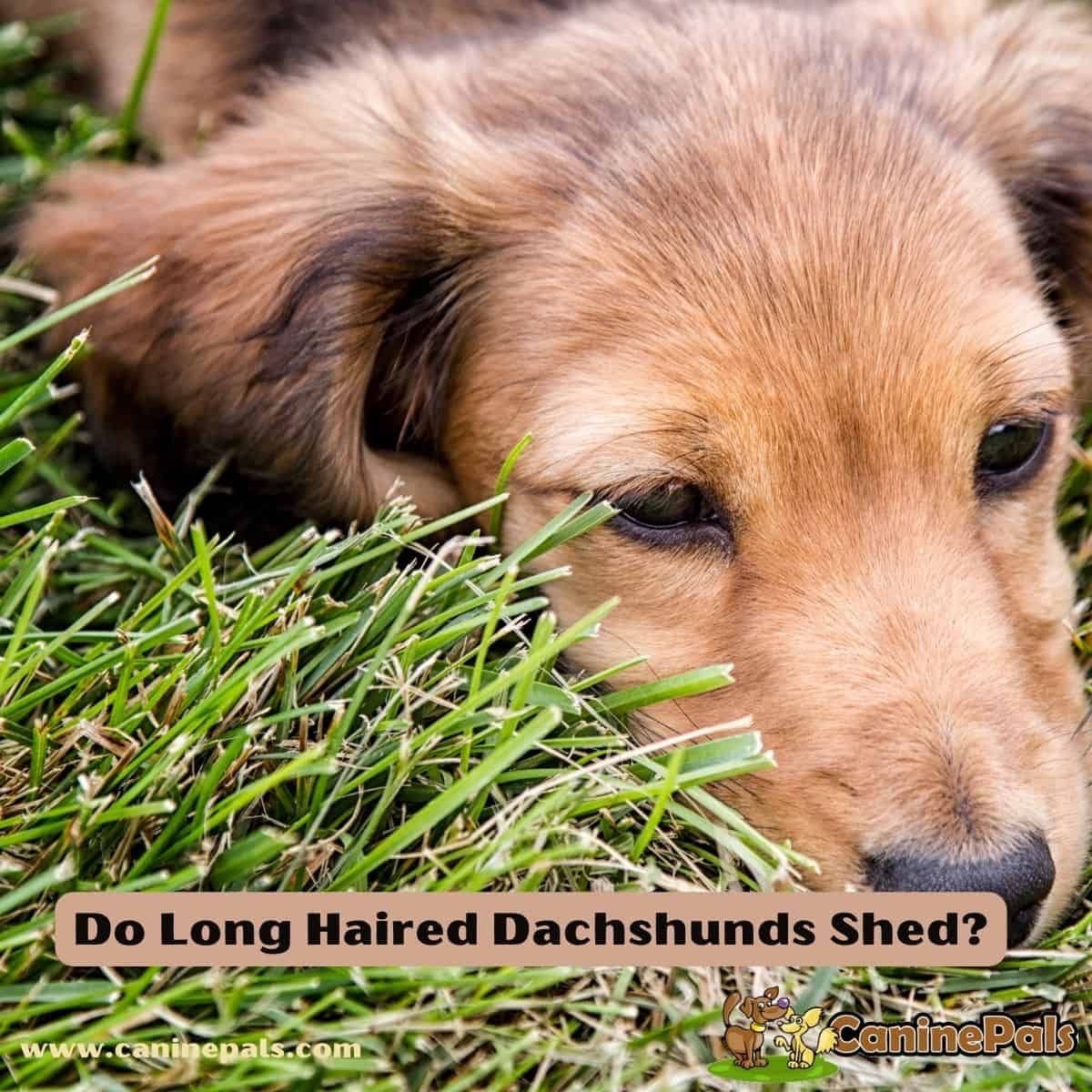
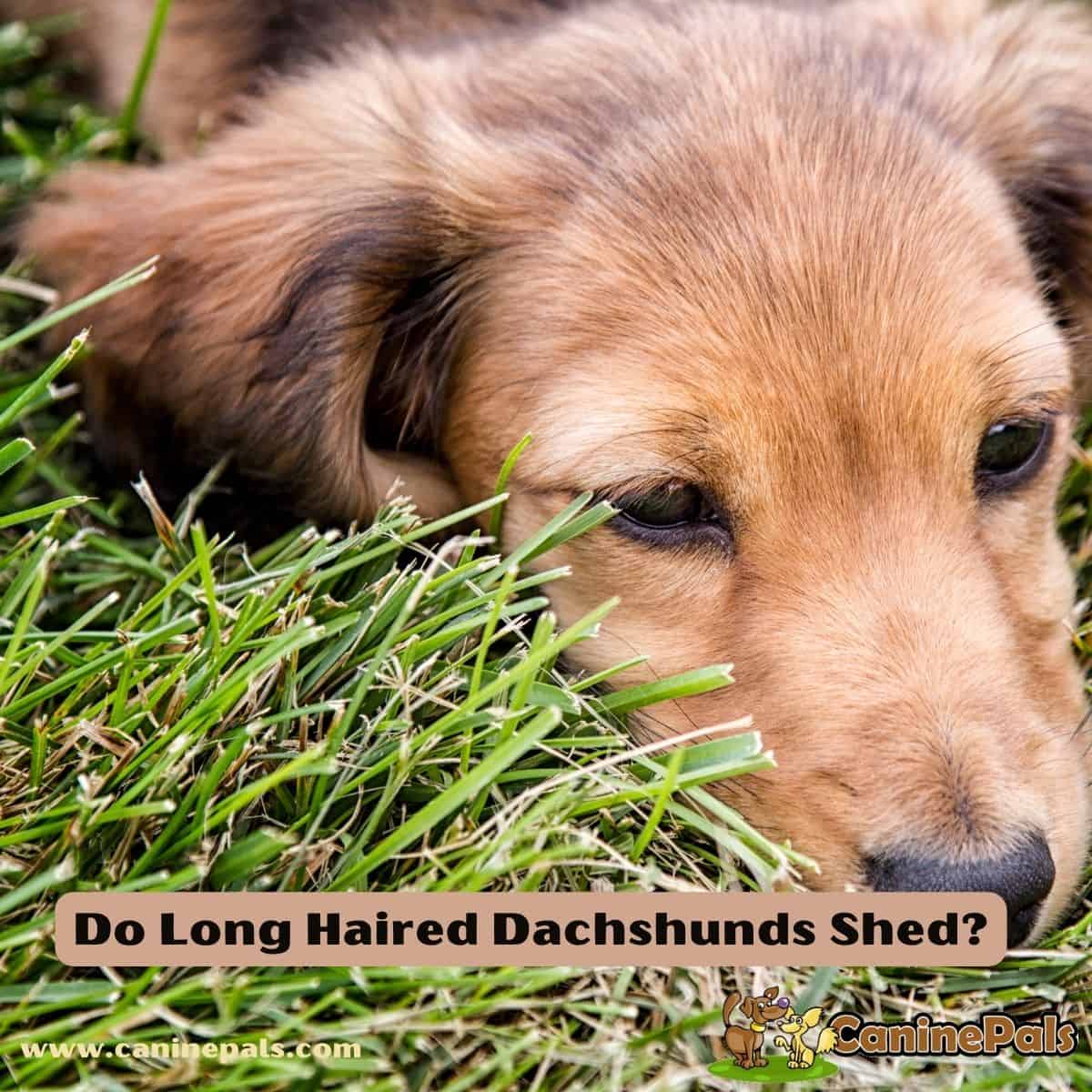
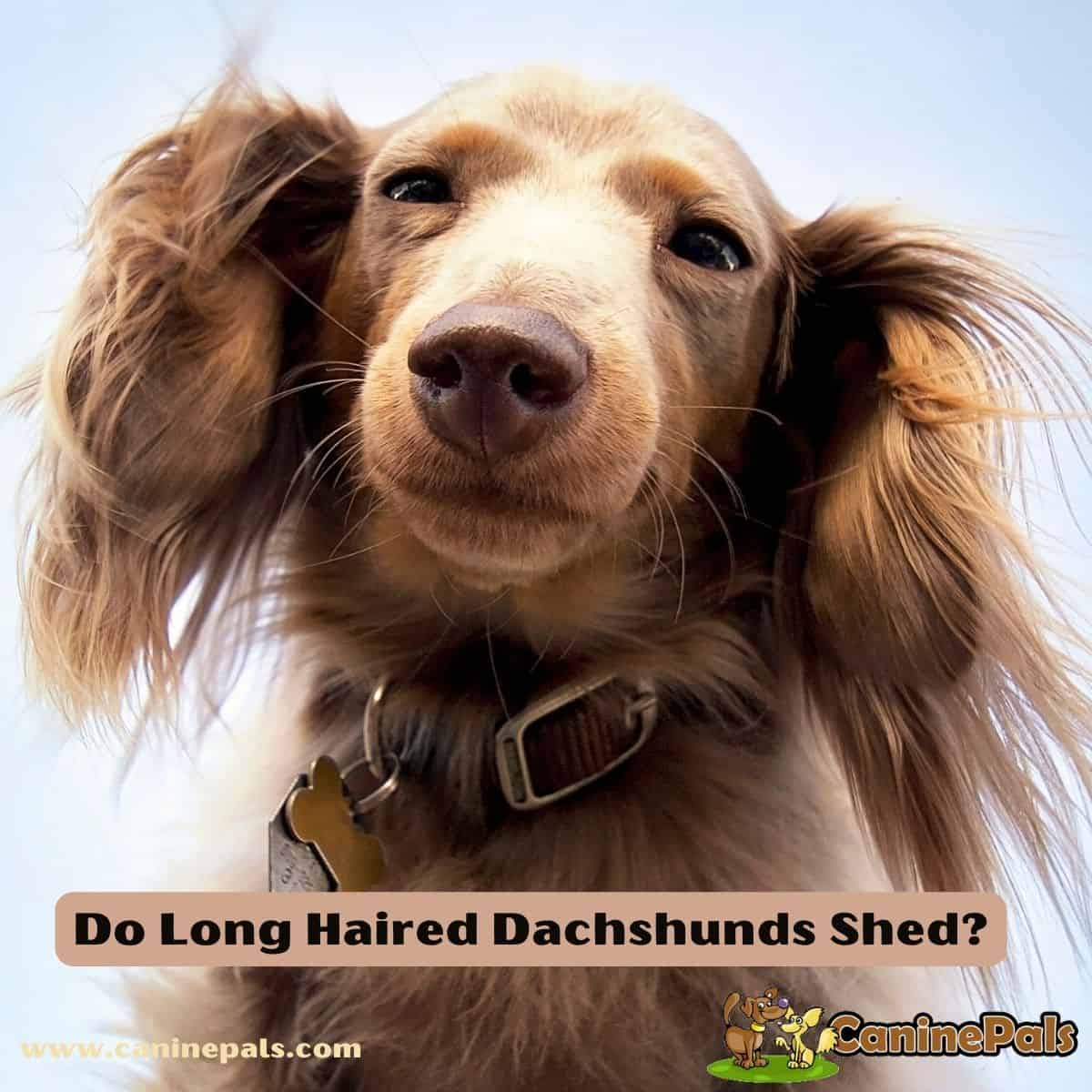
Do Long Haired Dachshunds Shed?

Debunking the Myth – Do Long Haired Dachshunds Shed?

Are you worried about your Long-Haired Dachshund shedding too much around the house? Learn more about this popular myth and how to manage it with a few effective tips.

Long Haired Dachshunds are a beloved breed of dog known for their unique appearance and loving personality. They have sleek, elegant, and slightly wavy coats. While they are often kept as companion animals and are well-loved by their owners, shedding is one concern that potential owners may have.

In this article, we will explore the topic of shedding in Long Haired Dachshunds, including whether or not they shed, how much they shed, and what factors can affect their shedding. We will also provide tips on how to shed and keep your Long Haired Dachshund’s coat healthy and shiny.

Do Long Haired Dachshunds Shed?
Do Long-Haired Dachshunds Shed?

Do Long-Haired Dachshunds Shed a Lot?

Long-haired Dachshunds are the biggest shedders out of the three Dachshund varieties. They have a dense double coat and shed more prominently in spring and autumn. The hair is longer, more obvious, and easier to spot on the floor or couch. However, with proper grooming and a healthy diet, shedding can be managed to keep your Long Haired Dachshund’s coat healthy and shiny.

Do Long-Haired Dachshunds Shed More Than short-haired Dachshunds?

Regardless of the coat length, all Dachshunds will shed to some extent, and regular grooming is important to help manage to shed and keep your dog’s coat healthy. Long-haired Dachshunds have a longer and thicker coat, which means there is more dog hair to shed. However, the amount of shedding can vary between individual dogs and may also depend on age, health, diet, and grooming habits.

Reasons Which Affect Long-Haired Dachshund Shedding

There are several reasons why a long-haired Dachshund may shed more or less than usual, including:

  • Age: Younger dogs may shed more than adult dogs as they go through their puppy coat to adult coat transition. Also, shedding can increase as dogs age and their coats thins out.
  • Diet: A healthy diet is important for maintaining a healthy coat and reducing shedding. Dogs need a balanced diet that provides essential nutrients, vitamins, and fatty acids. If a dog’s diet lacks essential nutrients, it can lead to dry, brittle hair that is more prone to shedding.
  • Health: Certain health conditions, such as allergies or skin infections, can cause excessive shedding. Dogs with an underactive thyroid gland may also experience increased shedding. Regular vet check-ups can help to identify any underlying health issues.
  • Environment: Environmental factors can also affect shedding in dogs. Changes in temperature or humidity can cause dogs to shed more than usual, as can seasonal changes.
    Stress: Excessive shedding in Long haired Dachshunds may be a sign of stress. Long-haired Dachshunds may get stressed because of loud noises, environmental change, separation anxiety, or when introducing new pets into your home. Dogs may also shed more than usual if exposed to stress or anxiety.
  • Grooming: Regular grooming, including brushing and bathing, can help to manage shedding by removing loose hair and keeping the coat healthy. Poor grooming results in excessive shedding. Also, over-bathing can strip the coat of natural oils and worsen shedding.
  • Genetics: Some dogs may shed more than others due to their genetics and inherited traits from their parents. Long-haired Dachshunds are bred to have a thick, long coat, which means they may naturally shed more than other breeds or coat types.
  • Ticks and Fleas: Fleas, ticks, or parasites may also result in noticeably high Long haired Dachshunds shedding.
  • Hormonal Changes: Hormonal swings in female Long haired Dachshunds affect how they shed, and you might not be able to control it. Hormonal imbalance may happen due to pregnancy, recent spaying or neutering, or female Long haired Dachshund going into heat.

Dachshund owners need to be aware that all dogs shed, and some shedding is normal for all dog breeds, and it’s impossible to stop shedding completely. However, by identifying any underlying issues and practicing good grooming habits, you can help to manage to shed and keep your long-haired Dachshund’s coat healthy and shiny.

Do Long Haired Dachshunds Shed
Do Long-Haired Dachshunds Shed

At What Age Do Long-Haired Dachshunds Start Shedding?

Young Long-haired Dachshund puppies have a single coat that is very soft and short. All Long haired Dachshund puppies enter a phase of relatively fast transition where the puppy coat sheds off and is replaced by the elegant adult coat.

Long-haired Dachshunds sheds their puppy coats at the age of 4 to 5 months. At this age, Long haired Dachshunds will get rid of the old puppy coat to develop the longer double-layered coat. So, for a short period, their fur may look light and uneven. The adult Long haired Dachshund has a very dense undercoat and an outer coat of long hair.

Do Long Haired Dachshunds Shed?
Do Long-Haired Dachshunds Shed?

How Do I Stop Long-Haired Dachshund Shedding?

It’s impossible to completely stop a long-haired Dachshund from shedding, as shedding is a natural process that helps remove old or damaged hair and keep the coat healthy. However, there are a few things you can do to minimize shedding and keep your dog’s coat looking healthy:

  • Regular Grooming: Regular grooming can help remove loose hair before it falls around your home. Brush your Dachshund’s coat at least once or twice a week to help remove any loose hair and prevent mats from forming.
  • High-quality Diet: Feeding your Dachshund a high-quality diet can help to promote a healthy coat and reduce shedding. Look for dog food rich in protein and essential fatty acids, such as omega-3 and omega-6, which help nourish the skin and coat.
  • Bathing: Bathing your Dachshund once every two months can help to remove any loose hair and prevent mats from forming. However, over-bathing can dry out the skin and make shedding worse, so be sure to use a gentle dog shampoo and avoid bathing too frequently.
  • Keep Your Home Clean: Vacuuming regularly and using lint rollers can help to remove any loose hair that your Dachshund may shed around your home. It’s also a good idea to wash your dog’s bedding and toys regularly to keep them free from hair.
  • Regular Vet Checkups: Take your Long-haired Dachshund to the vet regularly to prevent skin diseases and rule out the possibility of any other underlying condition. While all dogs shed, excessive shedding could be a symptom of an allergy or underlying health issue. Your vet can also guide you on what diet to feed your Long-haired Dachshund that can keep the coat healthy and reduce shedding.
Do Long Haired Dachshunds Shed?
Do Long-Haired Dachshunds Shed?


Grooming Task Frequency Grooming Tool Purpose
Brushing At least once or twice per week A slicker brush or pin brush Removes loose hair, prevents matting, and distributes natural oils throughout the coat.
Bathing As needed Dog-specific shampoo and conditioner Removes dirt and debris, reduces dander, and promotes a healthy coat.
Coat Trimming Every 8-10 weeks Scissors or electric clippers Reduces the length of the coat to prevent matting and reduce shedding.
Diet A high-quality, balanced diet N/A Provides essential nutrients to support a healthy coat and skin.


Remember that some shedding is normal for all dogs, so it’s essential to be patient and consistent with your grooming routine to keep your long-haired Dachshund’s coat healthy and reduce shedding as much as possible. It’s essential to consult your vet and professional groomer for additional advice and guidance on maintaining your long-haired Dachshund’s coat and reducing shedding.

Which Type of Dachshund Sheds The Least?

All three types of Dachshunds shed to some extent, but generally speaking, the wire-haired Dachshund tends to shed the least. Their coat is uniformly tighter, wired, and thicker than the other two types.

This can help to trap shedding hair and prevent it from falling out as easily. However, it’s worth noting that no dog breed is completely non-shedding. Wire-haired Dachshunds will still require regular grooming to keep their coat healthy and clean.

Dachshund Coat Type Shedding Level

Coat Care

Smooth Moderate Regular brushing with a bristle brush or rubber grooming mitt. Bathing as needed.
Long-haired Moderate Regular brushing with a slicker brush to prevent matting. Bathing as needed.
Wirehaired Low to Moderate Regular brushing with a wire slicker brush to remove loose hair and prevent matting. Trimming as needed.

Can I Shave My Long-Haired Dachshund?

While it is possible to shave a long-haired Dachshund, it is generally not recommended. Long-haired Dachshunds have a double coat that protects them from the sun, heat, and cold. The undercoat provides insulation, while the topcoat helps to repel water and prevent dirt and debris from getting trapped in the coat. Shaving a long-haired Dachshund can disrupt the natural balance of the coat and make the dog more susceptible to sunburn, heat stroke, and cold weather.

Additionally, shaving a long-haired Dachshund can cause the coat to grow back unevenly or not at all. These dogs also have delicate skin prone to dryness and irritation, and shaving can worsen these problems.

Do Long Haired Dachshunds Shed?
Do Long-Haired Dachshunds Shed?

Final Thoughts

Dachshunds are intelligent and lively dogs with a playful spirit. They make loyal, charming, and devoted companions who interact well with family members. If you’re going to share your house with a Long Haired Dachshund, you’ll need to deal with a lot of dog hair in your house.

Long-haired Dachshunds have thicker and longer coats than short-haired Dachshunds, which means they may naturally shed more. However, by practicing good grooming habits, such as regular brushing and bathing, and providing a healthy diet, shedding can be managed to keep your dog’s coat healthy and shiny.

Copyright CaninePals.Com. All Rights Reserved.

References and Further Reading:
[1] American Kennel Club, Dachshund Information.

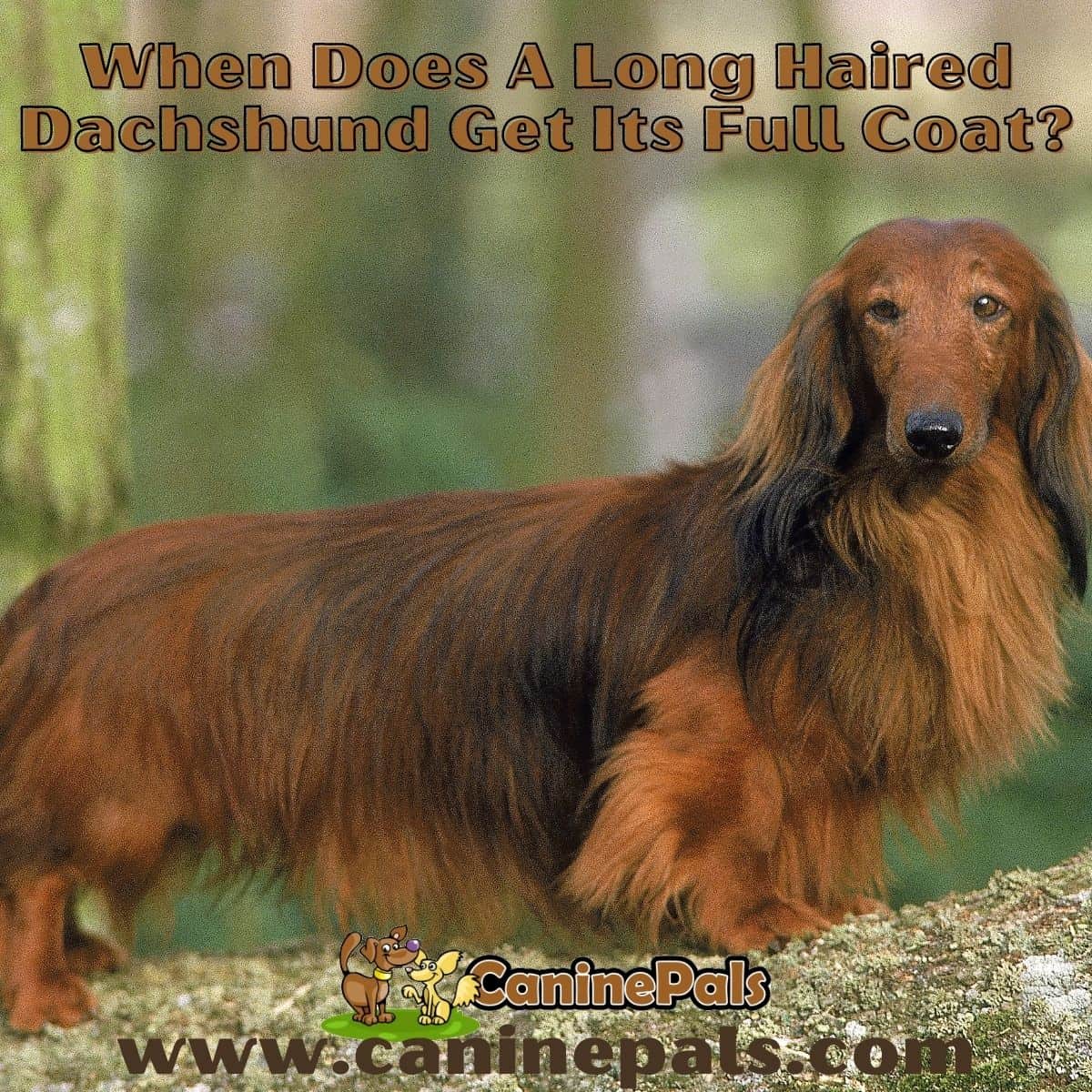
When does a long-haired dachshund get its full coat?

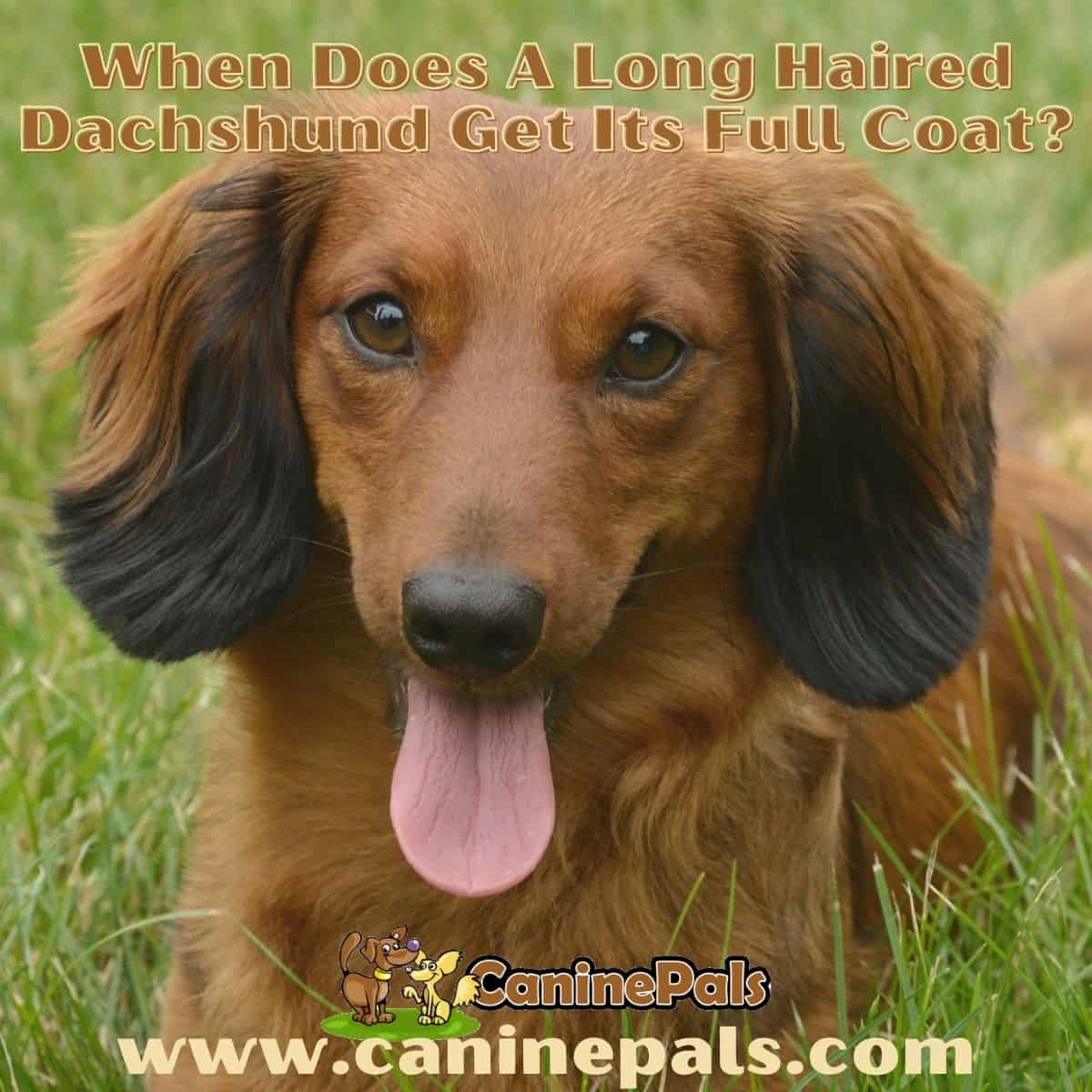
When Does A Long Haired Dachshund Get Its Full Coat?

Do you find Dachshund’s long, sleeky, and wavy hair adorable? Want to know more about their coat? Let’s explore when a long-haired dachshund gets its full coat.

Long-haired Dachshunds, on average, take 18 months to 12 years to develop their full coat, depending on their bloodlines.

Long-haired Dachshunds have been a famous dog breed since their origin in Germany in the 16th century. They are intelligent dogs with curious and a bit stubborn temperaments. Their soft and wavy hair, among other genetic traits, is their most attractive feature. You can see those shiny fringes, making it a super adorable pet in your family.

Dachshunds are 12 to 14 inches tall dogs with medium fur lengths, which you’ll see in varying tones from cream to black. Referring to their long wavy hair, they are frequent and require grooming.

Most new owners are concerned about when a long-haired Dachshund gets its full coat. If you are one of those who have recently adopted one, this article is for you.

How To Tell If A Dachshund Puppy Is Long Haired? 

If you are willing to adopt a long-haired Dachshund puppy but can’t distinguish between the breeds, here’s how to tell if a dog is long-haired. They have varying forms of hair lengths and fur colors. First, you need to observe the hair texture. Long-hair Dachshunds have wavy textured hair and fluffy fur. Also, their skin is visible through the fur on the back or stomach.

Another way to know if a puppy is a long-haired Dachshund is to know its parent’s breed. If both of a puppy’s parents are long-haired Dachshunds, chances are higher for your puppy to be like its parents.

Hair growth and texture can be observed when a Dachshund puppy is one month old. By observing it at four weeks of age, you can predict whether your Dachshund’s fur length will be short, medium, or long. If your newly adopted pup has long hair, it may develop into a full-grown long-haired dachshund. Moreover, the Dachshund breed possesses four types of fur:

  • Smooth – It is sleek, short in length, easy to care for, and the most common type of fur.
  • Wired hair is dense and needs daily brushing because mats and ticks can colonize.
  • Long Hair – The hair shaft is long and flowing and requires attentive grooming, which is not difficult to manage because of the soft and plush texture.
  • No Coat – Dachshunds also come without fur. Such Dachshunds are known as Dapple because they have unique patterns all over. Their grooming is hassle-free due to the absence of shedding.

The hair fully grows at three to six months of puppy age. Trimming a puppy’s hair before they are fully grown can put the developing skin of your puppy under stress.

When does a long-haired dachshund get its full coat?

What Does A Long-Haired Dachshund’s Hair Look Like?

Dachshunds are similar in structure, given that their hair length is their distinguishing feature. A long-haired Dachshund coat has visibly long and denser hair on the puppy’s ears, tail, legs, and skirts. In addition, long-haired Dachshunds have solid colors such as black, red, cream, and isabella. Coat color combinations, such as black and tan, and chocolate and tan, come with patterns like dapple or piebald.

Dachshund Fur FAQ

  • Long-haired Dachshunds have been a famous breed since origin in Germany in the 16th century; they are intelligent and have curious, stubborn temperaments.
  • Long-haired Dachshund puppies can be identified by their long, thick hair on their ears and fringe regions at four weeks old.
  • They have wavy hair and come in varying fur colors and lengths.
  • Hair growth of Long-haired Dachshunds can be observed when puppies are one month old; they take 18 months to 12 years to develop their full coat.
  • Long-haired Dachshunds get their full coat by the age of 2.
  • Observing the hair texture, knowing parents’ breeds, and predicting fur length at four weeks can help determine if a puppy is long-haired.
  • Long-haired dogs need daily brushing, bathing once a month or three, and frequent trimming for proper grooming.
  • They shed heavily when the season changes from winter to spring, spring to summer, and after female dachshunds’ regular heat cycles.
  • Training puppies with positive reinforcement makes them easier to groom and train.

Shedding In A Dachshund Dog

Dachshunds shed because of their dense coat, and shedding in a Dachshund may take weeks to a few months. Usually, a Dachshund develops its full coat in 3 months, and little shedding is expected after this interval.

The long coat of a Dachshund starts getting thinner when it reaches puberty, growth hormones being the greatest triggers. When a Dachshund puppy ages one month, its coat is rapidly growing. However, the growth process doesn’t last long until the puppy comes to a solid diet.

At the age of six to eight months, there is 50% growth of a Dachshund’s fur, which groups to 25% at the age of one to two years. A Dachshund dog’s coat grows thicker with age but is the densest puberty.

How To Groom A Long-Haired Dachshund

Whether you are about to be a long-haired Dachshund parent or have recently adopted one, you must know that it needs attentive grooming, and a routine should be set for the “fur care.” Training your puppy to sit still while brushing, bathing, and trimming is better because it can be too difficult with an untrained, long-haired dog. Your new furry guest may not like you touching its paws at the start, but daily lessons and attention can make it feel comfortable.

Grooming a newly adopted old dachshund can be challenging because it might not like new hands grooming it. So, take baby steps on a daily basis to put your dachshund at ease. Then, you can groom your long-haired Dachshund dog by brushing, bathing, and trimming.

Brushing

Being a long-haired dog, a dachshund’s fur will likely get entangled and matted more frequently. So, it is understood that you need quick brushing daily, which will help limit the shedding process and save your home surfaces from extra fur too. However, they don’t need a bath too often; it is enough to bathe them once a month or three. This is because of the hair’s sleek texture.

It would be best if you watched where the direction hair grows and brush following the direction. This will easily detangle the hair and facilitate blood flow—brush by starting at the head and descending the tail by detangling the top and undercoat.

Picking the right brush is also essential in caring for a long-haired Dachshund’s fur. All brushes are not for every kind of fur. First, use a slicker brush to remove all the mats, dead hair, and tangles. Then, continue brushing by switching to a bristle brush.

This will get your dog a smooth and shiny texture of hair. You can also use a pin brush and get an adorable fluffy look by teasing the hair in the opposite direction. Put a sheet on the surface below wherever you are brushing your dog because of heavy shedding while brushing.

As brushing the long, wavy hair can be challenging, divide hair into sections using sectioning clips. Then, brush each divided section by removing the clips individually so the detangling procedure remains gentle to your canine.

Bathing

Although a Dachshund’s coat doesn’t need frequent baths and is essential to grooming, you can’t ignore it. Long-haired Dachshunds need a bath within three months unless they seem dirty. Make sure you bathe your dachshund with lukewarm water.

Use a fragrance-free dog shampoo and conditioner to avoid skin reactions and make your pooch smooth and easily manageable.

Trimming

Long-haired dachshunds need frequent trimming of their fur. The fringes region requires the most frequent trimming. This includes the region around the ears and feet. Trimming makes brushing easier for you, for which you need a pair of scissors with which you need to trim a small quantity of fur at a time.

History Of Long Haired Dachshund

At the time of the origin of long-haired Dachshund dogs, there was a cross-breeding done with some long-haired dogs with a Dachshund dog. It is believed that the long-haired dog used in the Dachshund breeding was a small spaniel. The small spaniel was dominant from the pair who introduced the long-haired gene in this breed.

The breeders in those times adored those doggie faces with the sleeks of long and wavy hair, and they started keeping this breed. As the cross-breeding of a Dachshund was made with a spaniel, the temperament of a spaniel is observable, usually in short-haired to wire-haired dachshund breeds.

Temperament Of A Long-Haired Dachshund

Long-haired Dachshunds are joyous, stubborn, curious, intelligent, treat loving and energetic dogs, and stay determined. They dig and jump a lot to keep them engaged whenever left alone.

Dachshund comes from one long-haired dachshund parent, and both short-haired dachshund parents have different temperaments. Long-haired dachshunds are calm, easily obey commands, and make good family companions.

Pros

  • They are loyal to the family.
  • They are of a spaniel nature.
  • They are intelligent so they can be easily trained.
  • They are affectionate pets.
  • They are adorable due to their short height and long wavy hair.

Cons

  • Long-haired Dachshunds need attentive grooming.
  • They can be too stubborn at times.
  • Heavy shedding, especially with the changing seasons and hormonal shifts.
  • They may smell bad if not groomed properly.
  • Can dig up your entire backyard if left alone.


Long-haired dachshunds are easier to train than the other breeds because of their spaniel origin, who love to please their owner. Whichever the coat type is, the Dachshund breed is stubborn. In the case of long-haired Dachshunds, they show stubbornness when they want something and can’t get it.

Therefore, it is favorable for a dachshund parent to start training it at a young age with positive reinforcement so that its grooming and temperament building may become less challenging for you. One pro tip here is that Dachshunds are big fans of FOOD! Just give them a treat and see them obeying you.

When does a long-haired dachshund get its full coat?

FAQs

Q. When do long-haired dachshunds get their full coat?

Getting a long-haired dachshund coat depends upon the breed’s bloodline, food intake, and coat care. When a long-haired dachshund completes its one year, it starts losing its fur, which then grows again into the adult coat. They develop fully-grown coats by the age of 2 years.

Q. Do long-haired dachshunds shed?

Long-haired dachshunds are likely to shed due to long hair shafts and dense fur. You’ll observe heavy shedding in your dachshund when the season changes from winter to spring and then spring to summer. Female dachshunds lose their fur after their regular heat cycles.

Q. How to tell if a dachshund puppy is long-haired?

The easiest way to know a dachshund’s breed is to know its parent’s breed. For example, if both parents are long-haired, your puppy is a long-haired dachshund. A breeder learns about the hair type of his dachshund when it reaches four weeks and starts getting long, thick hair on its ears and fringe regions.

Q. Does the hair type of long-haired dachshunds determine their stubbornness?

Hair type does not necessarily define to what extent a dachshund will be stubborn. However, long-haired Dachshunds have been seen as calmer than short-haired dachshunds. Stubbornness is a trait of this breed, whether it’s a short, long, or medium-haired dachshund.

Q. Is the long-haired dachshund the right pet to keep?

Dachshunds are easy-going dogs who love playing and obeying their owner. However, if you can’t spend time on routine grooming or dog shedding bothers you, they might not be the right choice. Moreover, they tend to get a dog smell if you increase the bathing gaps. So, if you can do attentive pet grooming, you should go for a long-haired Dachshund dog.

When Do Long-haired Dachshunds Hair Grow Conclusion

Ultimately, this breed has determined hunting capability and a remarkable drive to get their prey. Coming in short and standard sizes with varying colors and patterns, all Dachshunds are cute dogs. The lifespan of a long-haired Dachshund is between 12 to 15 years on average.

With super excitability towards playing, these small human pals come in smooth, wired, long, and coatless fur.

Dachshunds would not get tired of playing with toys and enjoying treats. But they can be stubborn at times. However, you can make them obey you by positive reinforcements such as consistently giving repetitive commands.

Your long-haired Dachshund Doxie will need more attention because its long hair demands daily brushing and frequent trimming. So if you adore a long-haired Dachshund Doxie to the extent that you can dedicate some time grooming it, you must adopt one!

Copyright CaninePals.Com. All Rights Reserved.

References and Further Reading:
[1] American Kennel Club, Dachshund Information.


Bloodhound Colors

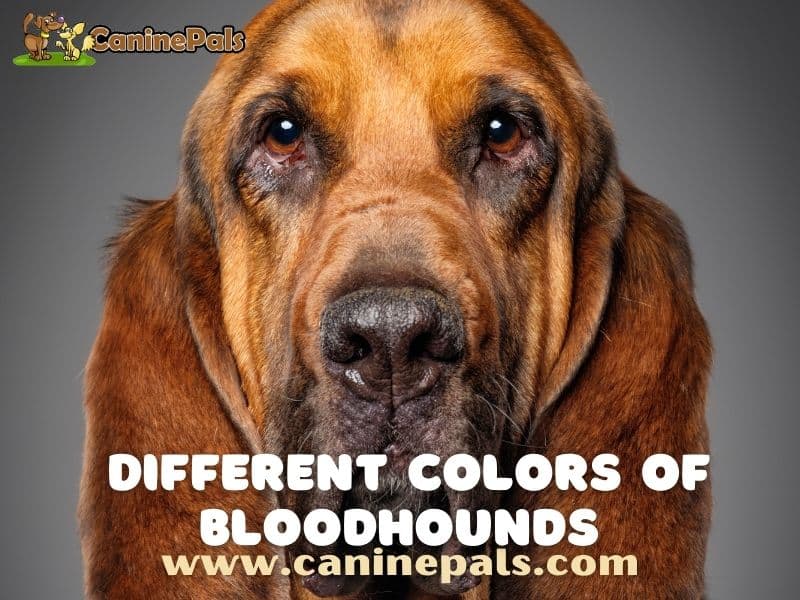
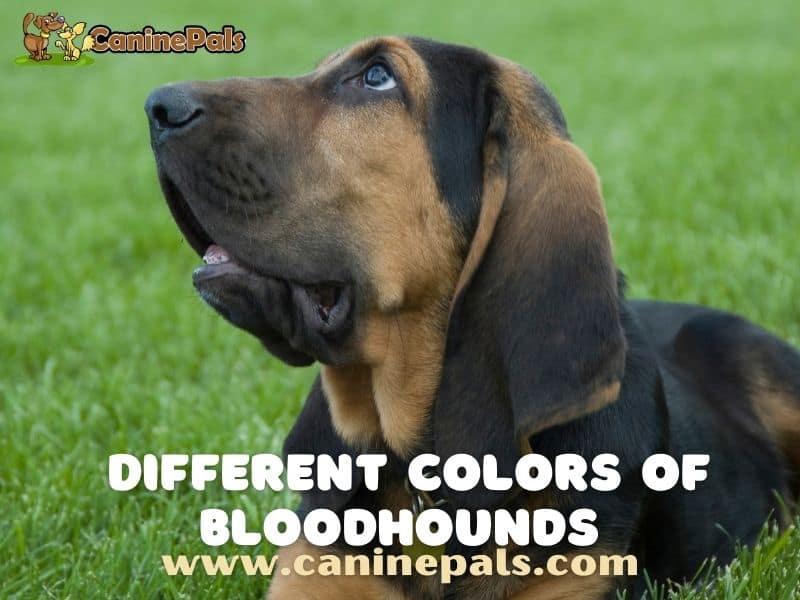
Different Colors Of Bloodhounds – All You Need to Know.

Bloodhound dogs are descendants of noble ancestors. They are calm and loving dogs with varying coat shades. You can learn about the different colors Of Bloodhounds in this article.

Do you remember the old-school TV show character – The Droopy Dog? The features of a bloodhound dog breed inspired the character. Bloodhounds are physically large and strong dogs with calm and affectionate temperaments.

They are also known as St. Hubert hounds due to their splendid scenting ability. The scent-hunting breed of these dogs is derived from the St. Hubert stain. Law enforcement departments have used them as scent trail dogs during rescue operations.

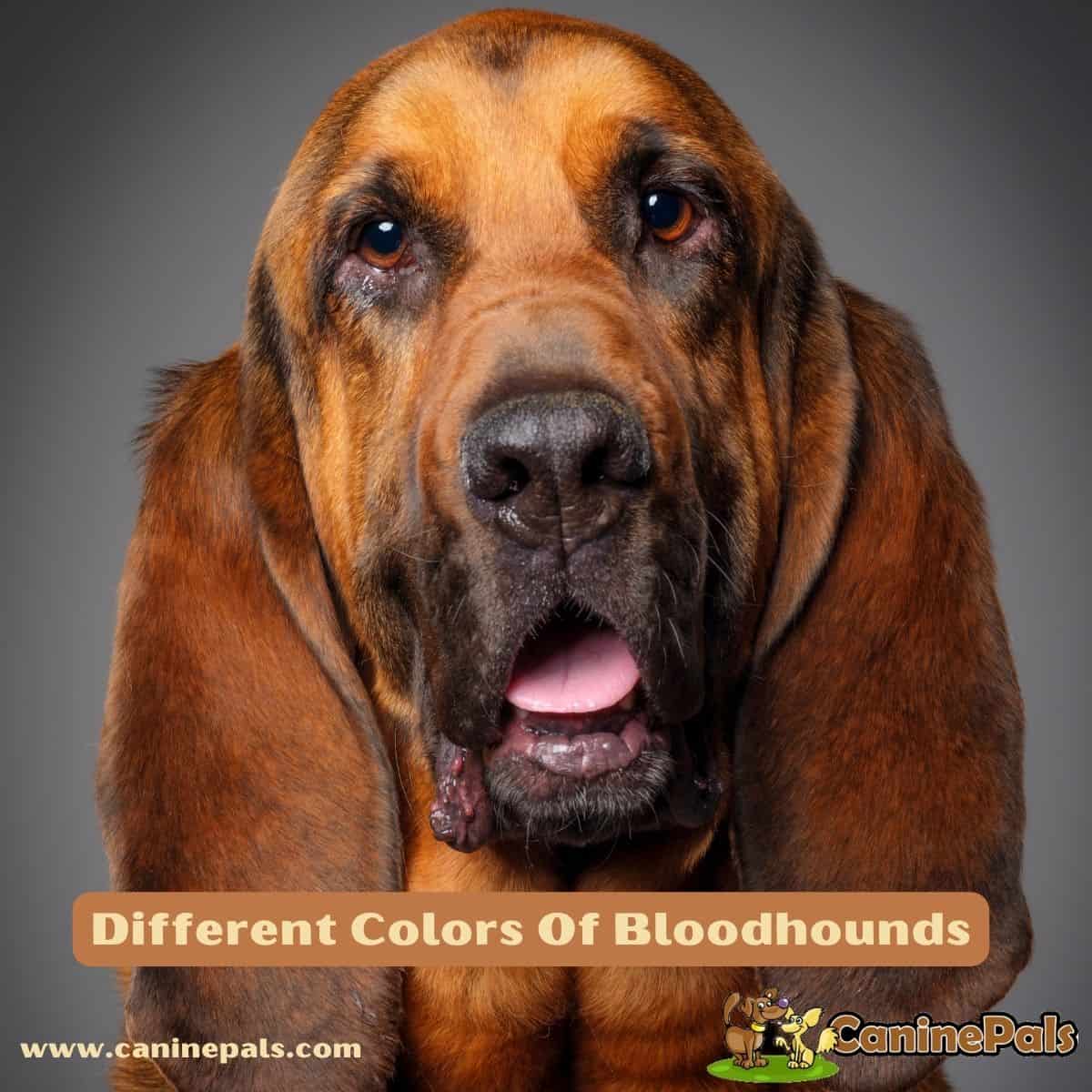
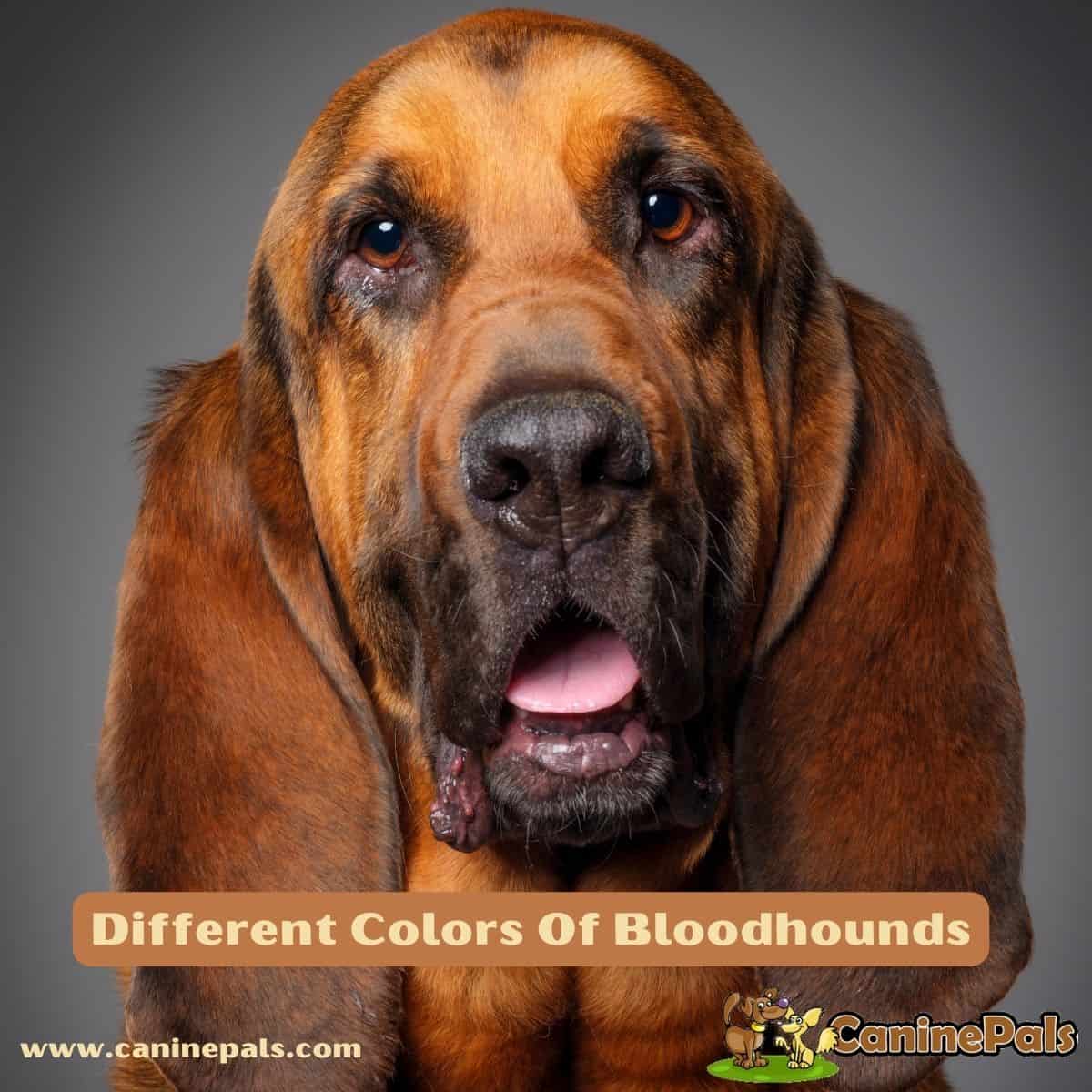
The typical average weight of a bloodhound varies from 80 to 110 pounds with 23 to 27 inches of height. With short hair, drooping ears, deep folds in loose skin, wrinkled faces, and coats varying from the tones of black & tan to brown & red – bloodhounds are being used as police dogs due to their incredible sense of smell. When bloodhounds are on the scent, they follow their noses by dragging on the ground,

This guide will cover all you need to know about these scent hounds: bloodhound dog breed, history, personality traits, and physical appearance, including different colors of bloodhounds. But, first, let’s discover the aspects of this adorable dog.

Different Colors Of Bloodhounds

History Of Bloodhounds

The Bloodhound appeared in Europe well before the Crusades. Two strains were brought from Constantinople, white and black. They have been in America for over 100 years and immensely helped the police force, to the extent that evidence they discover is accepted in court.

This scent hound breed was known to discover and trace the tracks of animals from the first century A.D., which have now evolved as Bloodhounds. The early bloodhounds were called the Saint Hubert Hounds in the 7th century as the Saint Hubert of Belgium perfected this breed along with his monks.

A conqueror named William carried many bloodhounds with him when he arrived in England in 1066. That is why modern bloodhounds are known to have a noble history because they are derived from breeds belonging to royalty.

By the 16th century, this breed became a means to track deer for recreational purposes, and this practice evolved to track down missing people by law enforcement departments.

Bloodhounds were preferred to track missing people because they do not tear off their target after finding them due to their affectionate nature. Their nature could be why the poet Humphrey de Bohun used the name “Bloodhound” (pure blood) for these dogs in his poem for the first time in history.

Bloodhound Colors
Bloodhound Colors

Temperament Of Bloodhounds

Bloodhounds love to mingle with their family members as they are affectionate and playful. They look dizzy due to their droopy eyes but love being around kids and sharing their playful energy. Training adult dogs can be prolonged because they are naturally independent and stubborn. But their patience and mild manners conquer their persistent personality trait.

Socializing Ability

Bloodhounds have good socializing abilities, i.e., they quickly make friends with other dogs and small dogs and are tolerant towards kids. However, they are determined and may not obey your commands at times. For example, if a bloodhound has sensed a scent, he will follow it with complete determination without paying attention to his master’s command.

This breed can perform expressive whining and howling, an exciting aspect of their personality. In addition, they are dignified, docile, easy to make companions love to wander, and are good at reward training, friendly to strangers but bark up when they get excited.

Factors Affecting Temperament

Inheritance, training methods, and social habitat are the factors that affect their temperament. For example, too shy or playful breeds are difficult to train as their determined mind exceeds their instruction-following ability. So, a bloodhound puppy can be developed into an active, obedient, and gentle family pet.

Recognized Bloodhound Colors Patterns and Appearance

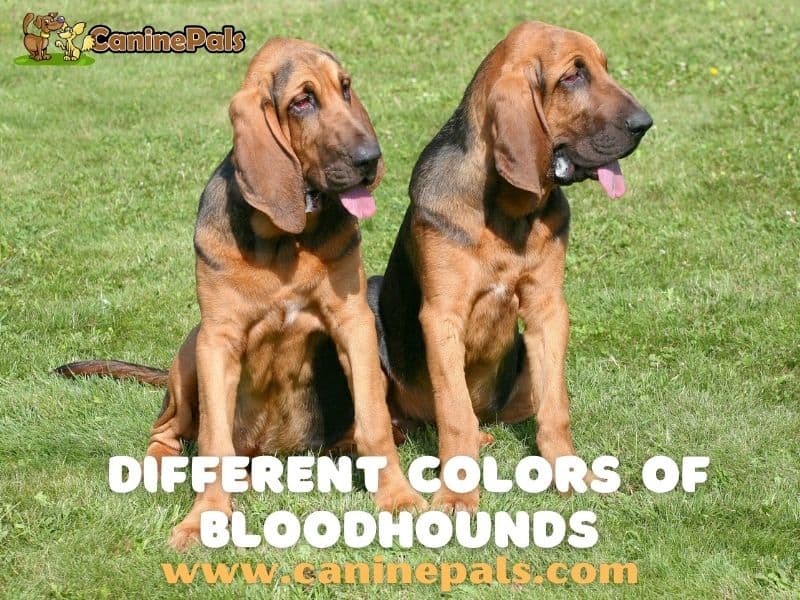
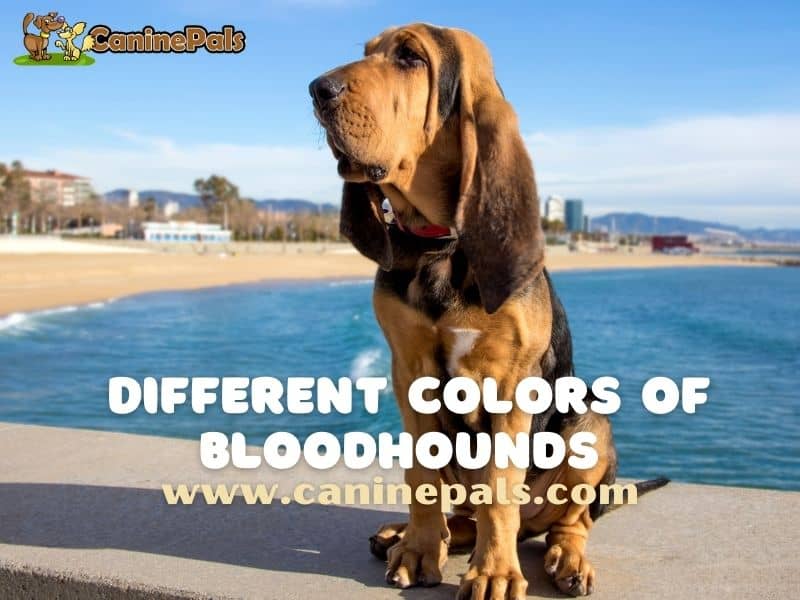
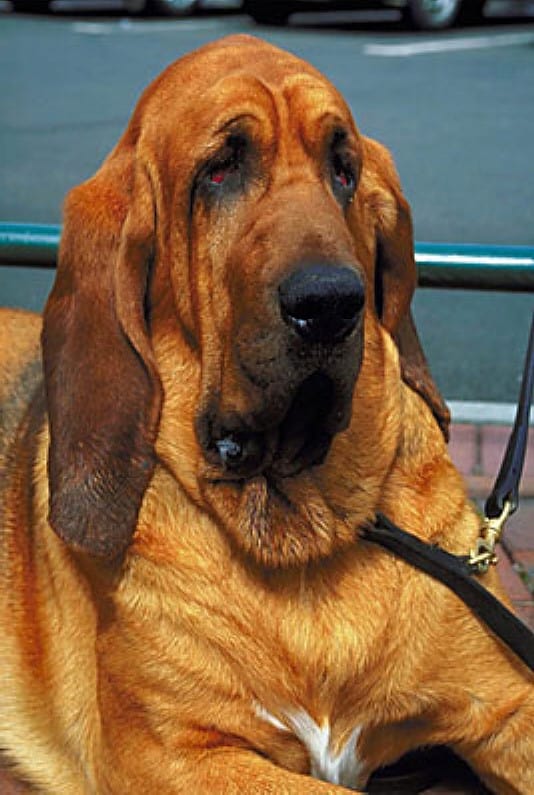
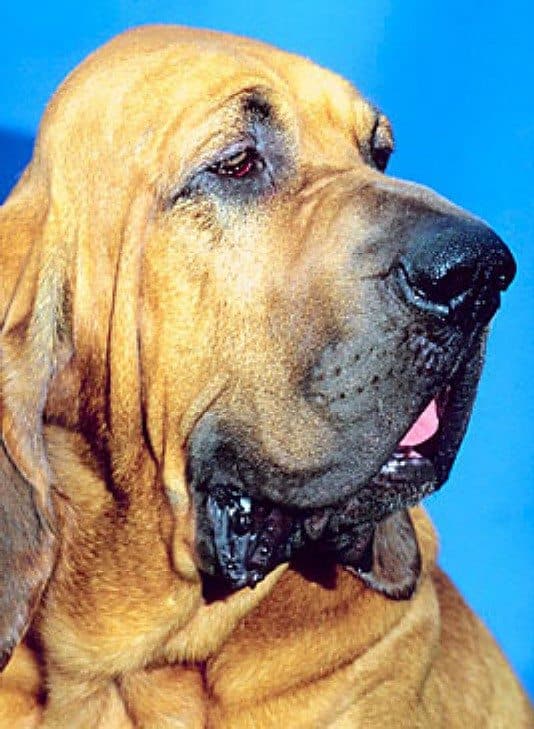
Bloodhounds typically stand 23 to 27 inches tall. However, males range from 90 to 110 pounds in weight, and females are between 80 to 100 pounds. With short and smooth coats, you will come across three different colors of bloodhounds:

  • Black & tan
  • Liver & tan
  • Red

A speck of white can be seen on the chest, feet, and tail tip in significant strains. These Bloodhound coat color patterns are recognized as the following types:

  • Blankets or Full coats
  • Liver-pigmented
  • Black-pigmented
  • Saddle (predominantly black with little red)

Blanket and saddle types are seen in black and tan and liver and tan dogs. At the same time, red bloodhound breeds are seen in black-pigmented and liver-pigmented types (regarded as black bloodhound and liver bloodhound, respectively).

The variations in recognized Bloodhound colors, liver and tan, black and tan, and light to dark red, are determined by alterations in the black and brown genes. Black nose, black eye rims & paw pads will be seen in a Bloodhound if he inherits the black variant dominantly.

Different Colors Of Bloodhounds

Which Habitat Does A Bloodhound Require?

Keeping a Blooded hound is challenging for Bloodhound owners. Because they are slow learners due to their determined nature, a bloodhound can be clumsy during adolescence and may follow unusual scents fearlessly. They also tend to chew things that smell different or bless their nose.

Following are the habitats of bloodhounds that you need to consider before keeping them:

  • They can chew car seats, remotes, batteries, and towels because these articles smell different.
  • A bloodhound ignores the caregiver on trails and outdoors if he smells an exciting scent. So roaming with a bloodhound requires a dog leash.
  • They need good exercise. The typical lifespan of a bloodhound is ten years. If you get a puppy, you need to work on its activity, which promises a better quality of life.
  • Long trail walks along with a leash are an essential part of their training so that they may develop a habit of listening to their guardian and develop required dependency. Also, bloodhounds tend to gain weight quickly. This makes walking a necessary health aspect for them.
  • A calorie-restricted & balanced diet should be fed to a bloodhound as they are prone to get obese.
  • Apartments are not a good place for this large breed. However, if you keep them in an apartment, taking them out daily to play is a good idea.

How To Groom A Bloodhound?

Following are the essential measures to groom your adult or puppy Bloodhound based on their wrinkled face, large body, drooping ears, and thick coat:

  • Since the coat of the bloodhound is tight and thick, they shed moderately. So brushing them once a week aids in removing debris and dead hair.
  • Bloodhound has wrinkles on its face and neck, which should be cleaned and dried regularly. As dirt and germs may reside and cause infection.
  • Brushing should be done with a tool such as a rubber hound mitt. Bloodhounds seasonally shed hair, and sometimes you need a shedding blade to remove excess hair in the shedding season.
  • The upper part of the lips drools in bloodhounds. So the mouth should be thoroughly cleaned after meals.
  • The long ears of a bloodhound become home to dust and bacteria. So cleaning them once a week is necessary.
Different colors of bloodhounds

Is Bloodhound A Good Dog To Keep?

Bloodhounds are reliable companions and make great house pets because of their calm, loving, and good nature. They have a docile personality trait which is suitable for many dog lovers. Keeping a Bloodhound means you must keep them going with physical activities so they do not become lazy, and you keep finding them resting on the couch.

A home with children is a perfect place to keep a bloodhound; these dogs are kind to humans. Although they are difficult to train to their independent personality trait, their calm nature and controlled temperament make them easy to handle and be with.

Puppy training is best to start early rather than late as an adolescent, so puppy bloodhounds develop into obedient adults through early intervention. This breed possesses good energy, no matter how lazy they seem by their droopy eyes. They are always willing to play with and be around their family members.

Some Facts About Bloodhounds

Here are some interesting facts about this dog breed:

  • We know that bloodhounds are great at tracking. But they were not named upon this ability. Instead, their ancestors went through noble acts of purity.
  • The bloodhounds are trained to track missing humans and follow long trials by detectives and law enforcement agencies. They can follow the scents from miles away with very close accuracy.
  • This dog breed can follow a scent even from 130 miles away. They have a tremendous smelling ability, but you should never test them without a leash.
  • Bloodhounds can smell 300 hour-old scents and follow it on the track. This is an incredible and distinctive characteristic of this dog breed.
  • The resting heart rate of a bloodhound is from 70 to 120 beats per minute which shows 40 times more capacity than a human heart rate of 70 to 80 beats per minute.
  • These dogs don’t bark. They howl and produce a very different sound from their chest, called Bay.
  • The coat of bloodhounds quickly gets greasy. They have a smooth texture on their fur to survive in the wild. Even though they are slippery and have not been cleaned for a long time, they still can actively follow a smell with incredible energy.
  • Bloodhounds got extreme popularity after their portrayal in TV, and dog shows in the Victorian era. Since then, they have been great human companions and favorite dogs of many dog lovers.
  • They consume four to eight cups of dry dog food daily in two divided meals.
  • Bloodhounds have a habit of chewing. They may chew your household items, such as furniture and mattresses. Please do not keep them alone in the house outside their crate.
  • They may sometimes develop anxious behaviors as they get bored quickly and crave attention.
  • Exercise for 15 minutes a day is enough for bloodhound puppies. However, you can take them for long walks.
Different Colors Of Bloodhounds
Black and Tan Bloodhound Puppy

FAQs

Q. How smart are Bloodhounds?

Bloodhounds are an obedient and intelligent breed. Their smartness is known mainly due to their efficient scenting and tracking abilities.

Q. Do Bloodhounds make a good pet?

This breed is a great family pet. They are docile, playful, tolerable, and affectionate, especially towards kids. However, they need good exercise to stay energetic.

Q. Bloodhounds belong to which breed?

Hubert – a French monk of the 7th century, kept their ancestors for hunting purposes who were later named Saint Hubert hounds and evolved as Bloodhounds.

Q. What is the lifespan of Bloodhounds?

Bloodhounds can live from 10 to 12 years.

Q. What are the personality traits of bloodhounds?

They are calm, loving, and docile but independent and determined simultaneously. They follow attractive scents passionately, irrespective of their guardian’s command.

Q. How to play with a Bloodhound?

Take a ball with which your dog usually plays. Mark it and after applying a scent to the ball. Mix it with the other unscented balls and let your bloodhound dog find it passionately. This would be an excellent time for your dog to embrace its nature.

Q. What temperament do bloodhounds have?

They are calm but stubborn, affectionate but independent, and gentle towards family members and strangers.

Q. Do bloodhound dogs shed?

Bloodhound dogs shed moderately. Most of the shedding is seen seasonally during autumn and spring. The dense and short coat can be cleaned with a bristle brush once weekly to deal with bloodhound shedding.

Q. What colors do bloodhound dogs have?

Bloodhounds have three tones of color with a white patch on the feet, neck, or tail. The different colors of bloodhounds are Black & tan, Liver & tan, and varying shades of red.

Conclusion

Lastly, this is about the bloodhound breed born with incredible scenting ability and attractive personality traits. If you want to keep a bloodhound as your companion, follow a guide specifying its personality traits and training considerations.

The Bloodhound is a dog who will take charge if you let him. So you need to maintain your authority while giving him all the love and attention you can. He’s very affectionate and needs to be groomed regularly to feel, look, and smell good.

So, out of these different colors of bloodhounds, which color would you like in your bloodhound?

Copyright CaninePals.com. All Rights Reserved.

References and Further Reading:

[1] American Kennel Club, Bloodhound Information.

Bloodhound
Bloodhound
Bloodhound
Bloodhound
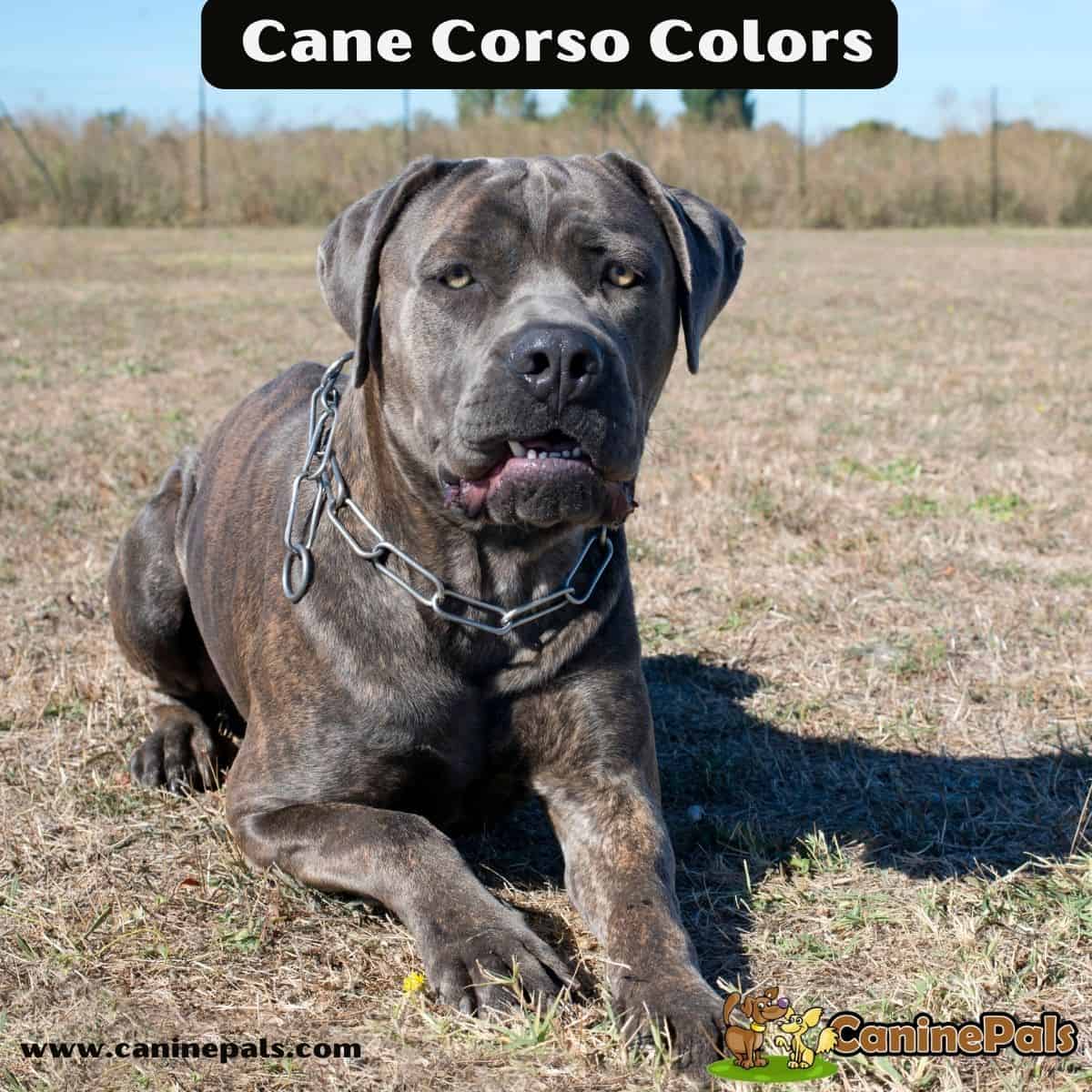
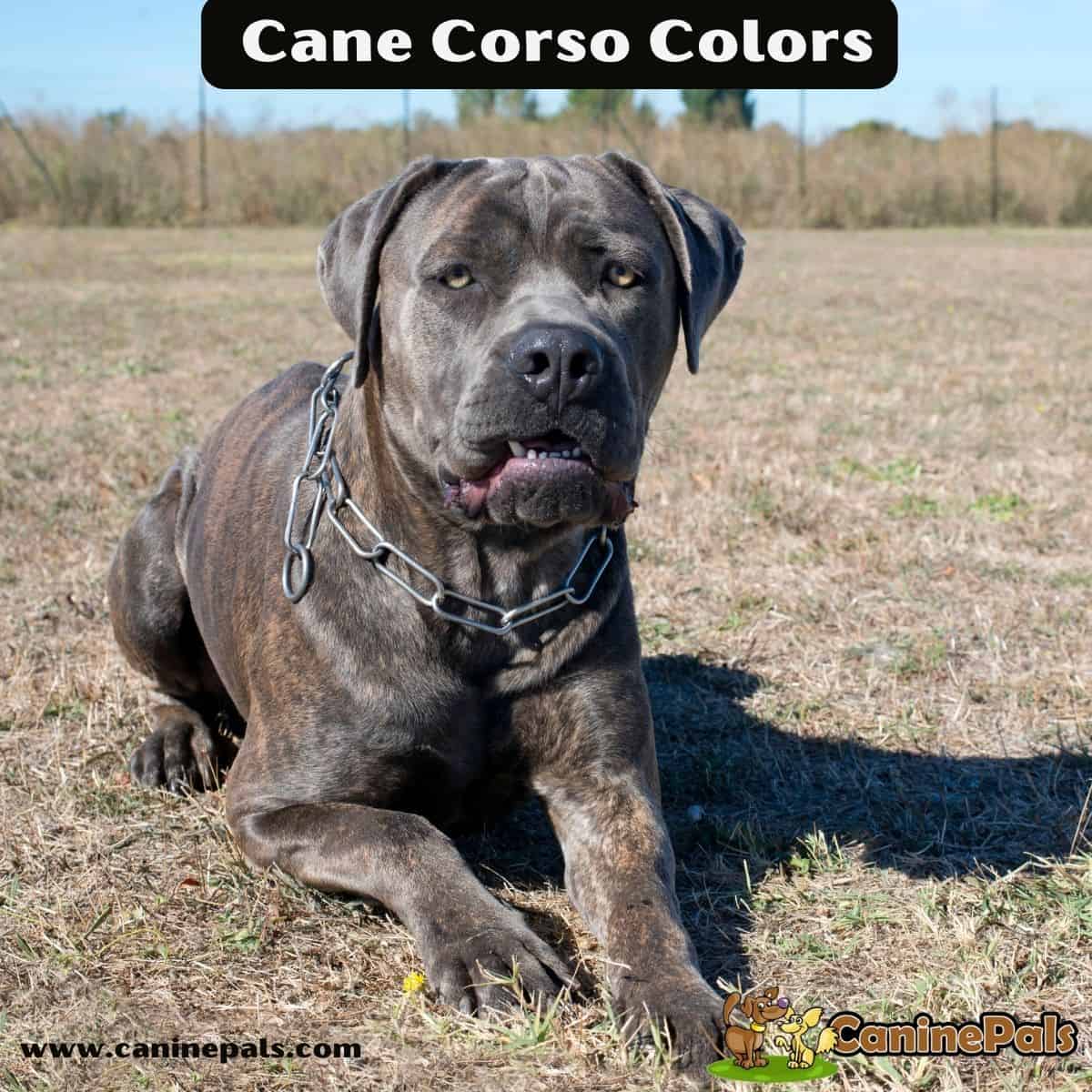
Cane Corso Colors

Full and Complete Details about Cane Corso Colors

The Cane Corsos, also known as Italian Mastiffs, are athletic, agile, energetic, and powerful dogs that are gentle and affectionate with their family. They stand out wherever they go, and you can’t even walk down the street without drawing stares and having people ask to pet them. 

Corsos certainly make a statement, and there’s no doubt about that! Their distinctiveness can extend to their remarkable coat colors as well.

Picking a color for your Cane Corso can be one of the first big decisions! We’re going to take a look at different Cane Corso colors and the differences in each. 

Quick Facts About Cane Corso Colors

  • Cane Corsos come in seven officially recognized colors: black, black brindle, gray, gray brindle, fawn, red, and chestnut brindle.
  • Black Corsos have a deep coat that shines in the sunlight and is ideal for show dogs or watchdogs.
  • The other colors range from cream to brownish tan, with various masking shades around their eyes.
  • There are also unofficial Cane Corso colors such as blue/gray (dilute black pigment), chocolate/liver (solid brown version of a black Corso), and Isabella/tawny which is not considered an official color by AKC due to its recessive genes causing it to be prone to diseases.
  • Puppies can change color over time, but they won’t turn into a completely different color on the opposite end of the spectrum than what they were born with – just subtle changes like darkening or lightening occur over time as markings shrink or expand slightly when reaching maturity age.
  • Ultimately, no ‘best’ Cane Corso color is solely about personal preference! Health & temperament should always remain a top priority when considering adopting one.
Cane Corso Colors
Cane Corso Colors

What Colors Do Cane Corsos Come In?

Why settle for just one color type of Cane Corso when you can have several?

While Cane Corsos come in various colors and patterns, only seven breed colors are officially recognized by the American Kennel Club (AKC). These colors are black, black brindle, gray, gray brindle, fawn, red, and chestnut brindle.

Take a look at the Cane Corso color chart: 


Coat Color AKC Accepted? 
Black Yes
Black Brindle Yes
Gray Yes
Gray Brindle Yes
Fawn Yes
Red Yes
Chestnut Brindle Yes
Isabella No
Chocolate/ Liver No
Formentino No

Let’s look at each coat color in more depth: 

Black 

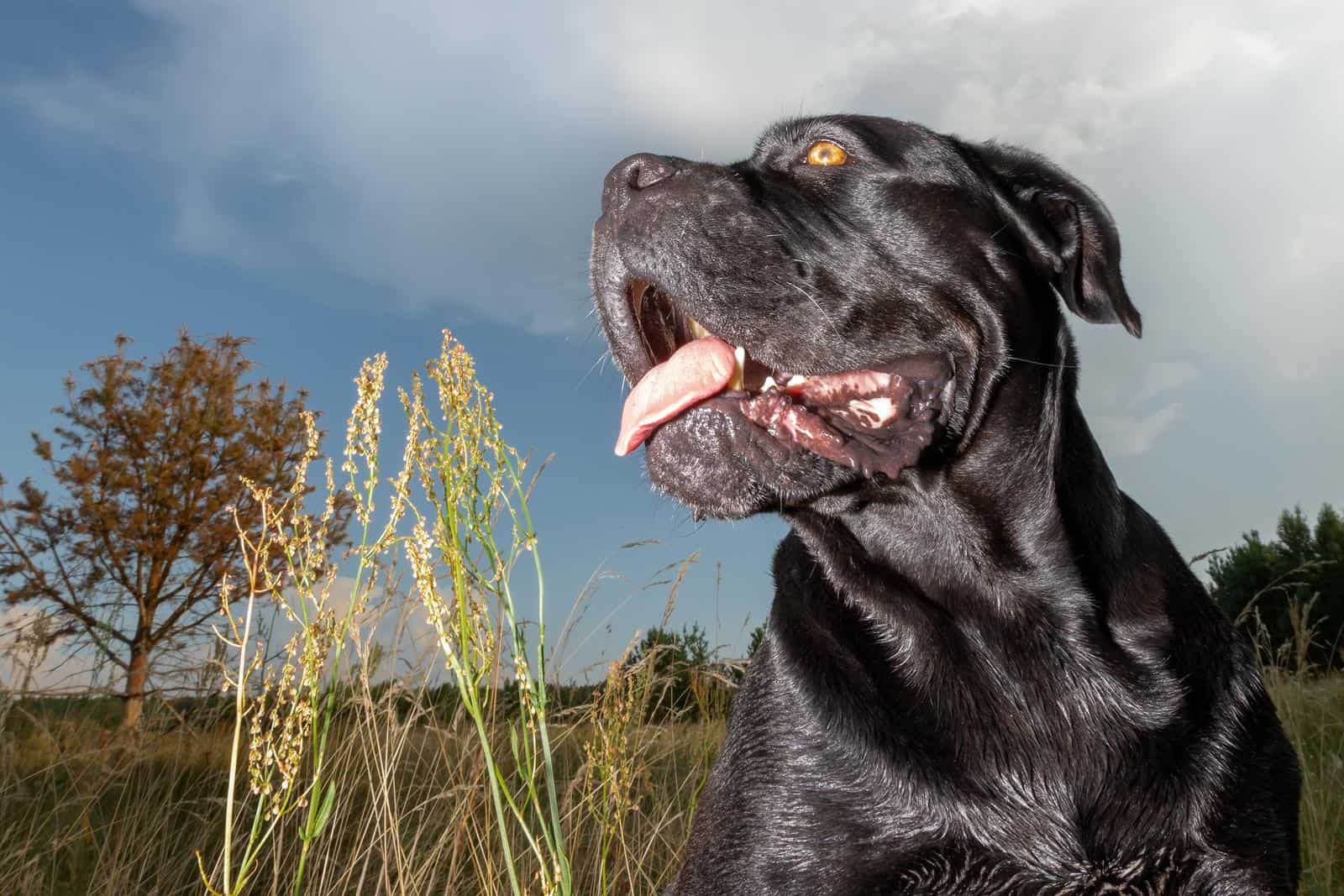
You might think that this coat color of Cane Corsos would be boring, but these dogs have such deep, rich coats that they’re incredibly striking. These are stunning dogs, plain and simple. Other notable features of a black Cane Corsos are their black nose and brown eyes. They tend to have more airy undercoats compared with brindles or fawns.

Black color is produced through one of the two pigments in dogs, called eumelanin. A healthy black coat will shimmer brilliantly in direct sunlight. So, this coat color is particularly useful for show dogs as it helps to accentuate the Corso’s impressive musculature. Black Corso’s intimidating appearance will also make it an ideal watchdog.

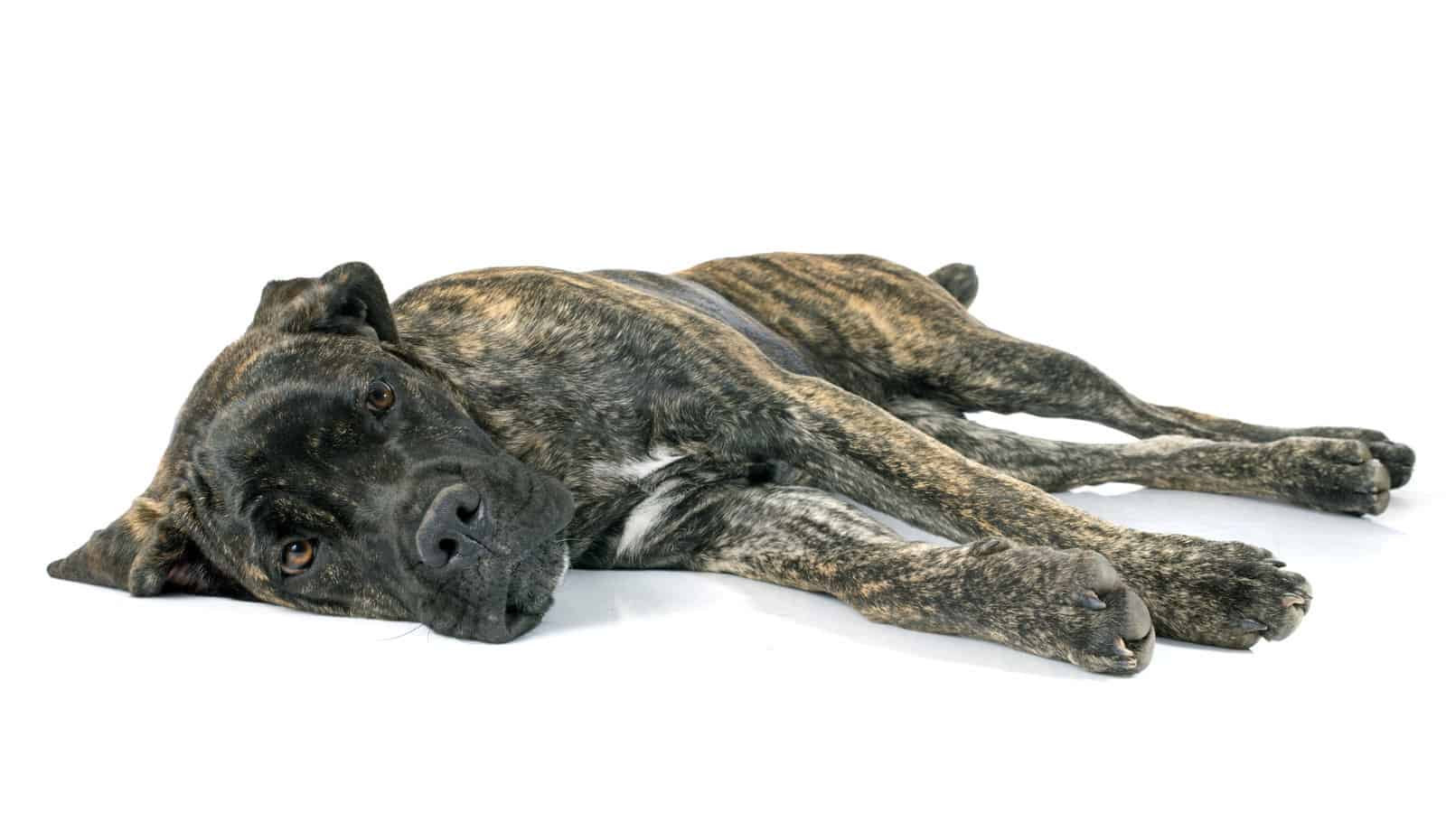
Black Brindle 

Brindle black Corsos are known for their brown or red base and their brindle “tiger stripes,” which are black. This is a normal coloration for Corsos and doesn’t indicate any genetic anomaly.

Black Brindle Corsos have the longest life span among other breed colors. They were often used for hunting and described as tiger-striped dogs with huge jaws. In Italy, this coloration is referred to as ‘tigrato.’ 

Gray 

Gray Corsos get their coat color from the recessive dilute gene(d), which inhibits the eumelanin production in a Corso’s coat. The dilute(d) recessive gene in Corsos will dilute black pigment to gray. The gray color is produced when Corso parents carry this dilute gene and pass it on to their offspring. Many breeders also call the gray shade ‘blue.’

The gray coat color is highly sought after and prized by many Corso lovers. Gray Corso puppies may lighten or darken as they mature.

Gray Brindle 

They have a brown base color, like the black brindle, and their stripes are grayish or blue. Their coat patterns appear blotchy at times but appear stunning like other Corso puppies. Gray brindle Corsos rarely have any brindling on the tips of their muzzles. These dogs have a longer life expectancy than their solid-colored cousins.

Fawn 

Fawn Corsos are very popular due to their striking appearance. Fawn Corso coats range from cream to brownish tan. Any shade of fawn, from light cream to brownish tan, is acceptable by AKC. 

Fawn is a gorgeous color that extends almost across the dog’s entire body. Most fawn Corsos have a black or gray mask, which means the coloring around their face is much darker than the rest of their body. The black or gray mask doesn’t go beyond their eyes. Some white markings on the throat, chin, chest, or pasterns are also acceptable.

Red 

The Red Cane Corso coat is developed through the pigment called pheomelanin. This red pigment concentration varies through different genetic pathways and results in an array of red shades.

Some Corsos have a deep mahogany shade, while others possess a pale champagne color. Red Corsos have a black or gray mask around their eyes, which are highly pigmented on their muzzles. Some red Cane Corso puppies are born with a black or blue saddle mark which fades as they mature.

Chestnut Brindle 

The chestnut brindle Corsos are another striped dog variety but are not as common as the black and gray brindle. This is because they can be challenging to breed. 

Chestnut brindle Corsos have a brown or red tone for their base, and their stripes are saturated reddish-brown. The stripes can vary from light to heavy and are sometimes difficult to distinguish from the black brindle. In dim lighting, they almost appear like a black brindles. However, the difference is very much visible in natural light.

Do Blue Cane Corsos Exist? 

According to AKC, the blue Cane Corso doesn’t exist. Instead of using blue to label a dilute of black pigment, they named the coat color gray. 

Some breeders and pet owners address their Corso with a steely-gray tone as blue Cane Corso. Blue and gray are used interchangeably by most Corso lovers. Perhaps it’s simply because blue sounds more exotic and exciting than gray. Gray Corsos also have a dilute gene that causes them to appear gray instead of black.

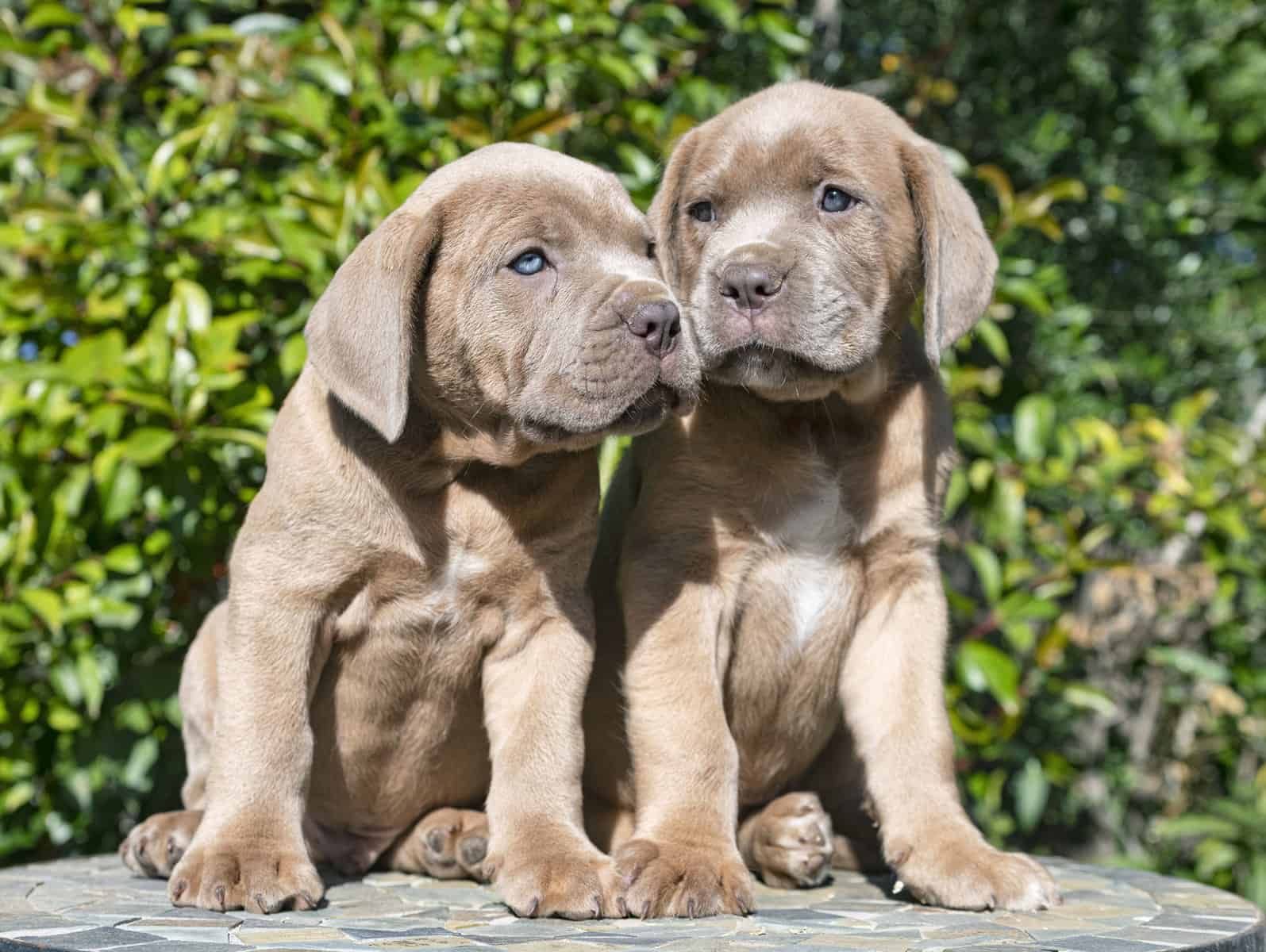
Cane Corso Puppies
Cane Corso Puppies

What Is The Rarest Cane Corso Color?

In addition to the seven officially recognized Cane Corso coat colors, there are several unofficial colors. However, the ones above are the only official Cane Corso colors.

Most of the other potential shades are gorgeous and mishmashes the official colors. These coat colors are uncommon because they are a result of recessive genes. They don’t indicate crossbreeding, as they can occur without genetic manipulation.

  • Blue Fawn/ Formentino  

A dilution of the fawn coloration, the Formentino Corso has a carbon-colored coat with a blue or gray nose and mask in addition to gray patches over his shoulders and back. They have unusual light-colored eyes too. Formentino Corsos have a lower life expectancy of 8 years and are prone to skin conditions.

  • Chocolate/ Liver 

These dogs have a solid chocolate or liver base color and look like the brown version of a black Cane Corso. Chocolate Corsos have a pinkish tone around their eyes and nose. They usually have green hazel eyes, which gives them a striking appearance. 

  • Isabella/ Tawny 

Isabella, tawny, or lilac coat is highly sought after but is considered a severe fault in Cane Corsos. They have a pinkish tinge to their noses, lips, and eyelids and often have green hazel eyes like the chocolate Corso. Tawny Corsos are more susceptible to diseases, such as Color Dilution Alopecia which can cause hair loss and skin irritation.

Brindle-Cane-Corso
Brindle-Cane-Corso

Why Do Corsos Have Many Different Coat Colors? 

Two types of pigments determine the color of Cane Corsos. The dark pigment is called “Eumelanin,” and the light pigment is called “Phaeomelanin.” These two pigments create all different color variations.

Eumelanin’s default color is black and codes for the black color spectrum. It can turn brown, gray, and pale brown when diluted. When modified, Phaeomelanin produces red, orange, gold, cream, tan, and other colors. Eumelanin is responsible for the color of the Cane Corso’s coat, eyes, and nose. Meanwhile, phaeomelanin only affects the Corso’s coat color.

Can Cane Corso Puppies Change Color?

Yes, like many dog breeds, Corso puppies can mature to have different colored coats from the ones they were born with. You’ll see the most significant change in their coats in the first year of life. The changes in their color are subtle, and they won’t turn into color on the opposite end of the spectrum.

Cane Corso puppies born light gray may develop a darker gray coat as they age. However, a black Corso can’t suddenly become fawn or red-colored. Also, when puppies mature, their markings may shrink or expand. 

Black Cane Corso
Black Cane Corso

What Is The Best Cane Corso Color?

There is no ‘best’ Cane Corso color – it’s solely a matter of personal preference! No matter what color or pattern their coats are, Cane Corsos are remarkably stunning and regal creatures. While the AKC will tell you that there are only seven legitimate Cane Corso colors, we believe all Corsos are beautiful and equally deserving of love! 

Final thoughts: Cane Corso Colors 

There’s much more to owning a Cane Corso than just coat color. Adopting a pup shouldn’t be done just on the basis of coat color. While you may have a personal preference for one color over another, the overall health and temperament of the dog are far more important to consider than its color alone. 

Regardless of your Cane Corso’s coloration, your pet will be full of life and positivity, and they’re bound to bring you and your family happiness and laughter for many years.

I hope that you found this article informative. Please feel free to leave comments below with any outstanding questions that you may have!
References and Further Reading:

[1] American Kennel Club, Cane Corso Dog Information.

Fox Face Pomeranian

Everything You Need To Know About The Fox Face Pomeranian Before Getting One

Loyal, smart, intelligent, cute, vigilant, alert, affectionate, and umm… I’m out of words when describing this beautiful toy dog breed. All fox face Poms traits can’t be jotted down in a single moment.

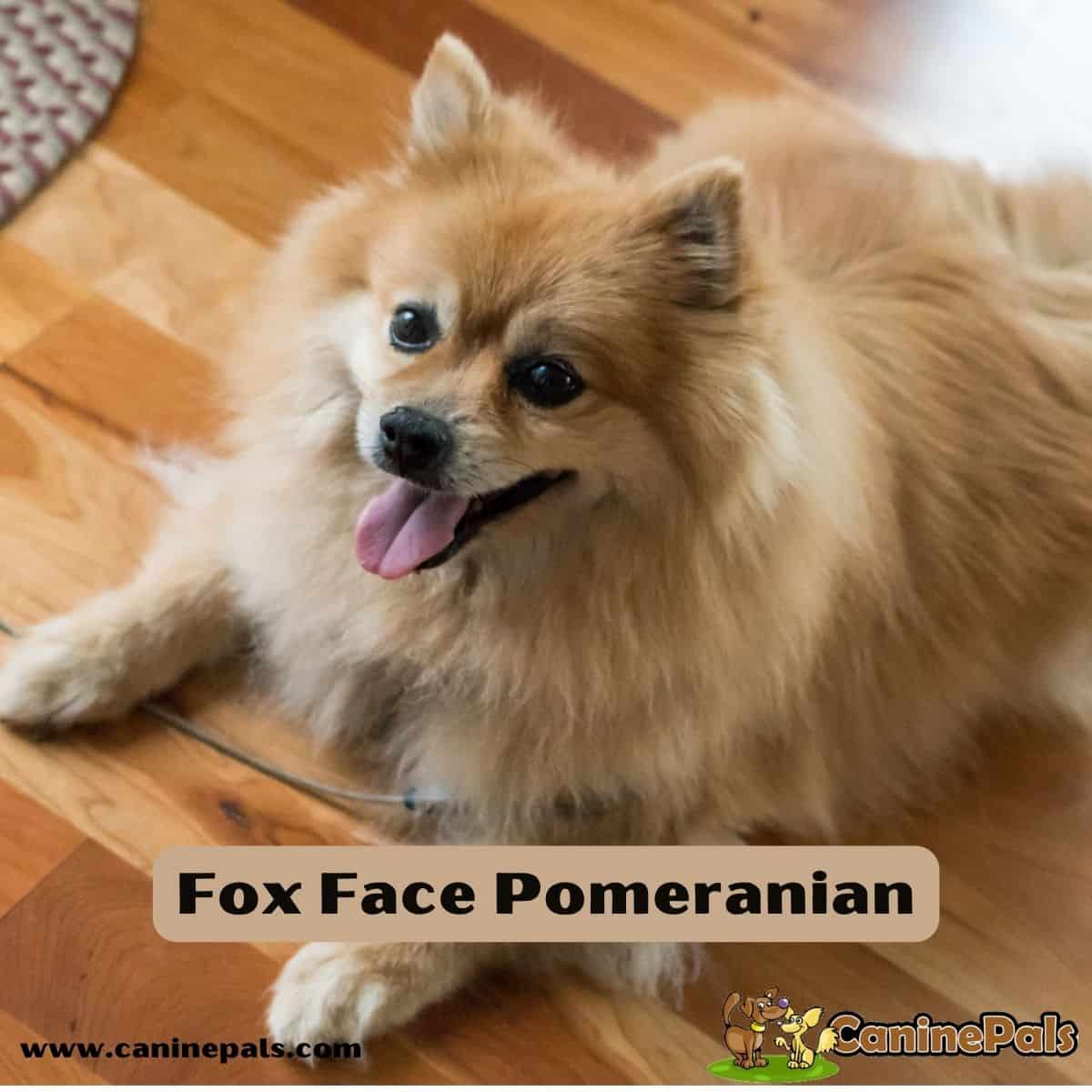
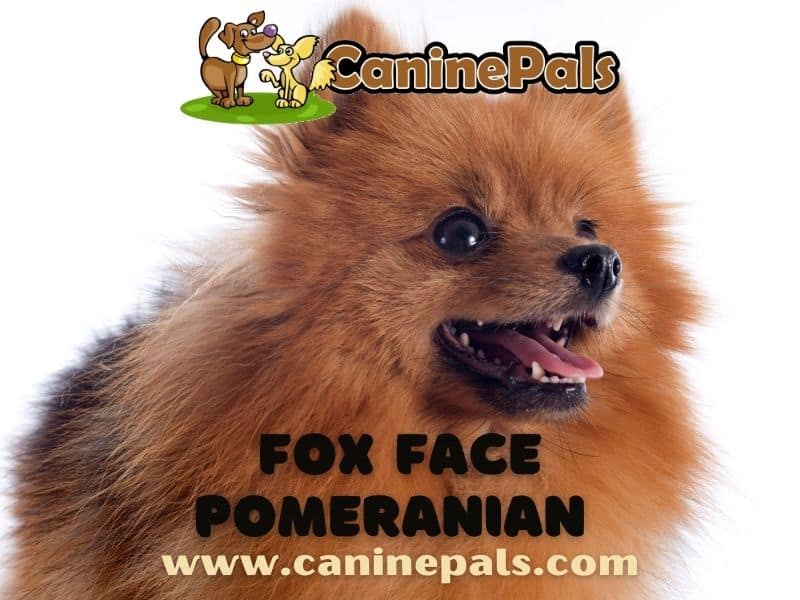
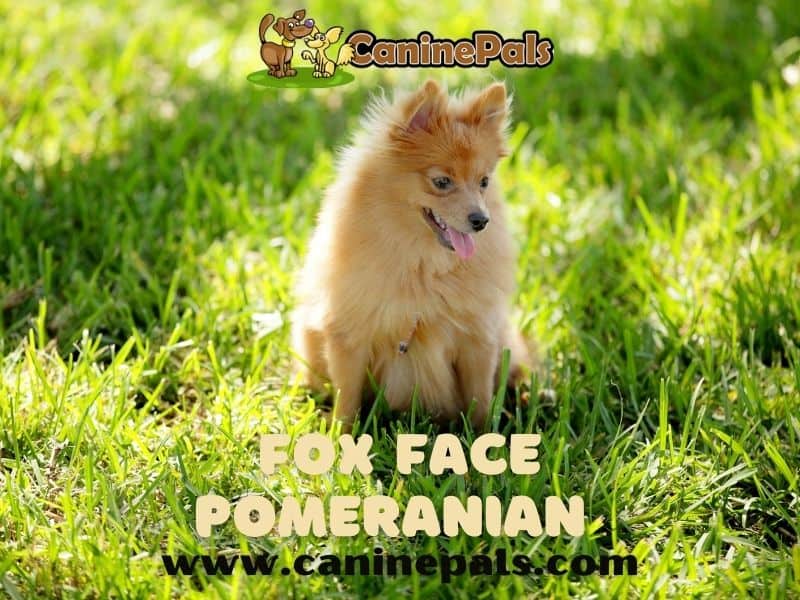
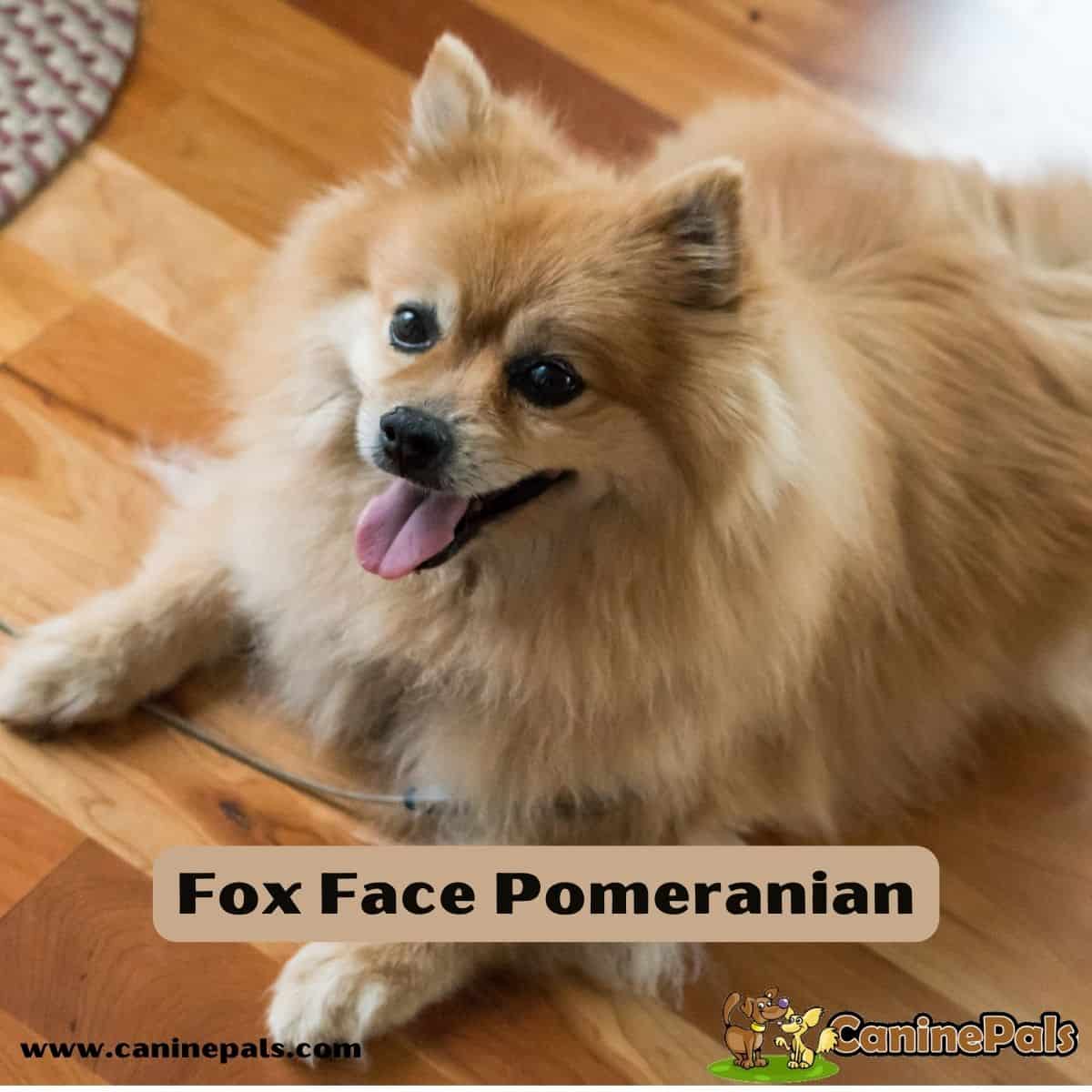
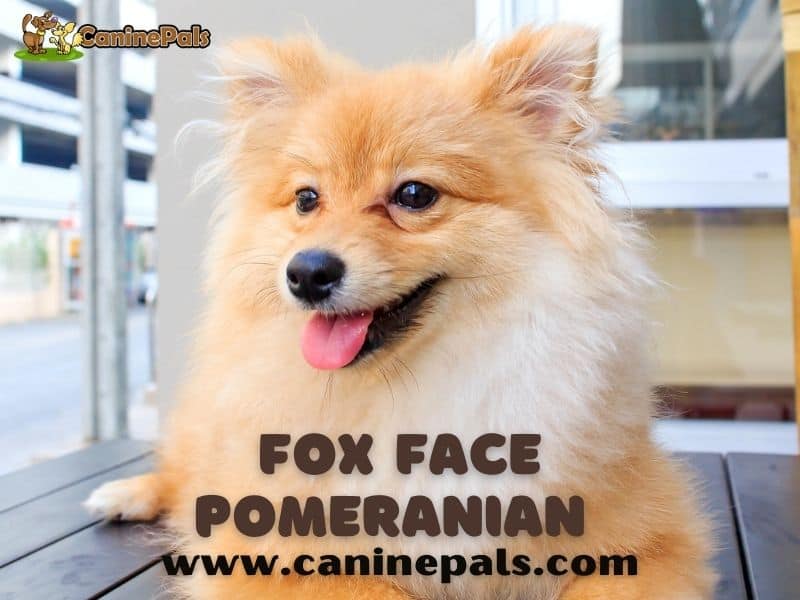
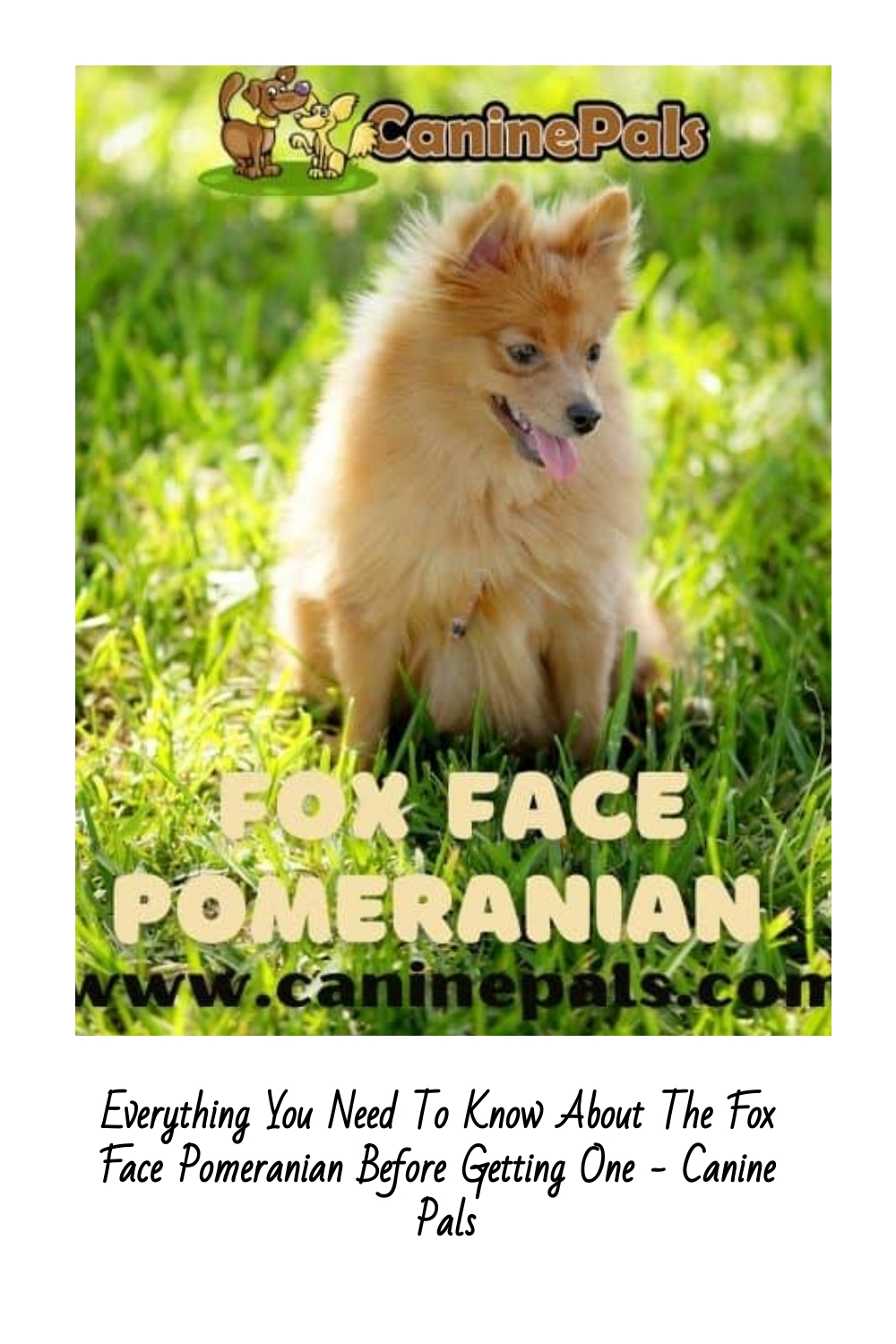
The fox face Pomeranian is the cutest of the toy dog breeds, having beautiful looks, dark eyes, big fluffy coats, almond-shaped eyes, and a cute appearance that make this toy breed stand out from the crowd.

Like the teddy bear Pom and the baby doll Pomeranian, these dogs come in a wide range of beautiful colors, including black, white, lavender, blue, red, orange, and others. Poms are the best, with beauty, a unique good nature, intelligence, and personality.

Here’s a deep look into fox face Poms. The article includes everything from A to Z you need to know about fox-looking Pomeranian breed dogs.

Fox Face Pomeranian
Fox Face Pomeranian

Looks and Facial Features of the Fox-Faced Pomeranian

A type of Pom known as fox faces Pomeranian puppies. These puppies resemble foxes in facial feature outlines and expressions. According to American Kennel Standard (AKC), a Pomeranian that has the following facial features will be regarded as fox face Poms;

●     Head

When viewed from the top down, the head is a broad back tapering to the nose for a wedge shape.

●     Eyes

This dog has medium-sized almond-shaped eyes that are set deep into the skull. They are black, and the eye width is so perfect that it maintains facial balance.

●     Ears

Poms have small, triangular-shaped, high-mounted, and erected ears.

●     Skull

Fox face Poms have a slightly round skull, but it is not domed.

●     Muzzle’

The muzzle should be comparatively short and not snipey.

●     Nose

Nose pigments are black, excluding the chocolate, blue, and beaver ones.

●     Expressions

The longer nose than most show-type Pomeranians, almond-shaped eyes, and intelligent expression can give these Poms a fox-like appearance.

Fox Face Pomeranian
Fox Face Pomeranian

Full Grown Fox Face Pomeranian Size

There’s a world of difference between the tiny, dainty Pomeranian you see at dog shows and the full-grown fox face Pomeranian.
.
Full-grown fox-face Pomeranian pets often weigh more than show-type pets due to breeding practices that result in larger dogs with larger bodies, oversized ears, and longer muzzles—looking more like what some call a throwback Pomeranian.

Do Fox Face Pomeranians Change Color?

When it comes to Pomeranian puppies, the most dramatic coat color change can be seen when they undergo what some breeders call the Pomeranian puppy uglies. Some puppies who are nearly white at birth will gradually take on a creamy or light-orange hue as they mature. A dog, born nearly black, may turn lighter as its fur develops.

What is The Difference Between a Fox Face And a Teddy Bear Pomeranian Dog?

The Fox-face Pomeranian has a longer, finer muzzle, more prominent ears, and less dense fur than teddy bear Pomeranian pups.

What is The Difference Between the Fox Face and Baby Doll Face Pomeranian Dog?

The Pomeranian with a shorter muzzle is called the baby doll face of the Pomeranian dog. It has features similar to foxes but not as short or pointed compared to Poms regarding lengthwise facial structure.

Fox Face Pomeranian
Fox Face Pomeranian

Fox Face Pomeranian Personality Traits

Some fox Pomeranians resemble stuffed toys. They are cute and fluffy, with adorable personalities. Despite their small size, they can confront bigger dogs. Here’s everything you need to know about their personality.

1.   Their Dynamic Soul

Poms have a dynamic soul who enjoys an active lifestyle. Their stamina matches no other, and they need daily exercise to lead a happy, active lifestyle.

2.   You’ve All Their Heart!

Want to know the real meaning of love? Learn from fox faced Pomeranian puppy. They crave all the love in the world. They are loving and affectionate and will never let you go without a hug or cuddle. They value their families above everything else, striving to keep their owners happy with their ecstatic personalities.

3.   Mingle Easily

If you’re a first-time owner looking for a family-oriented puppy, fox-looking Pomeranians are the go-to. Having friendly nature, these dogs get along easily with other pets and children and can play for hours and hours. They love spending time with people and easily mingle with every other person. These dogs do not need socializing training. However, their over-excitement can hurt their fellow kid or pets. It is necessary to give them behavioral training to avoid destructive behavior while playing.

4.   They Love to Explore

You will never see the fox face Poms hanging around unnecessarily. They have a purpose! A purpose of exploring their surrounding environment. Poms have an explorative nature. They love to travel around and explore the backyard, park, and every cranny of the house. They keep roaming around to find new things and places around them. P.S. You cannot hide anything from them as their explorative nature will assist them in finding out things.

5.   Loyal, Loyal, Loyal!

Yes, Poms are loyal, super loyal dogs! Their loyalty is unquestionable. If you’re not around, they’ll wait for you at the doorstep all day and will start wagging their tails and dancing when they see you coming. They can live without their master; if they get off the leash, don’t worry; they will return! P.S. Make sure they don’t go too far!

6.   Filled with Aplomb

Fox face Poms are filled with aplomb.  Like all toy breeds, they are brave little dogs, bold enough to stand their ground without fear. They love to maintain their dominance and control other pets around them. P.S. These daredevil-natured dogs tend to bully the weak and insecure pets around them, so training them early is necessary.

7.   Don’t Let Them Outsmart You!

Poms are undoubtedly the most intelligent dogs among other dog breeds. Their intelligence, obedience, and adaptability are unquestionable. They grab things quickly, learn from them, and solve problems within a few minutes. Their smartness makes them the perfect dog for agility shows and circuses. A clue is enough for them to understand the whole thing, and they’ll prove to be crème de la crème. P.S. Don’t let them outsmart you. They should know you have the power to rule over them!

8.   They are Vigilant

The personality traits of Poms make them the ideal watchdogs. They are vigilant around the clock and watchful of everything around them. They are intelligent, active, independent, suspicious, alert barkers who do not accept nonsense around them. Despite their 6 to 7 inches size, Pomeranians can sniff fishy things and stop fallacious happenings.

9.   Say Goodbye to Housebreaking

Having the traits of watchful dogs, Poms are perfect for protecting the house even in the presence of their owners. The smallest size toy breed can confront large dogs and stand against every danger that comes their way. They never allow strangers to cross the home boundary without permission and keep burglars at bay.

10.  Pomeranians can be Aloof with Strangers

Pomeranians are known as the man’s best friends. They are loving, affectionate, cordial, and companion lap dogs. But, aggression toward strangers, unwanted happenings, chaotic situations, and loud noises are commonly found in Poms. They freak out easily when in shock, fear, change in ownership, or feeling sick. Note: If you think your Pom tends to bite when he freaks out, hire a professional trainer as soon as possible.

 Full grown Fox Face Pomeranian,
Full-grown Fox Face Pomeranian,

Health Problems Associated With Fox-Looking Pomeranians

Fox Face Poms is regarded as the best family dog. Based on their lively nature, they can prove to be rewarding for families and kids. However, it is necessary to know that, like every other dog, Fox, like Poms, is prone to multiple diseases. Some of the diseases are commonly found in Poms. However, they can be prevented when properly taken care of; Here are some of the diseases;

  • Respiratory problems
  • Dental problems
  • Urinary tract infection
  • Eye issues
  • Hair loss or Alopecia X
  • Collapsed trachea
  • Luxating patella
  • Skin condition
  • Hypoglycemia

Though Poms, as a dog breed, are prone to these diseases, this doesn’t make it inevitable for a dog to succumb to them. A healthy diet, daily exercise, weight management, and timely check-up can increase your pup’s life expectancy making him happy and active.

Are Pomeranians Costly?

Fox face Poms are commonly found in most countries due to their unique features and appearance. There are many factors involved in pricing a Pomeranian. Many people sell their pups at market price- anywhere at $1500, depending on their lineage and if their bread is to be a fox-faced version. Note: White Poms may cost you more.

Factors That Impact the Fox Face Pomeranians Price

1.   Quality of a Dog

Price is influenced mainly by quality, and there are many ways to determine this. A dog’s health is an important factor, but it does not tell the whole story. Attention to personality and behavior also play a role in determining how “quality” a dog is and how much value it will have for its owners. Moreover, quality also refers to how well the dog can be expected to do in competitions and producing other top-quality Pomeranian dogs.

2.   Health Condition

A reliable breeder will provide you with a list of the dog’s parents’ health testing and have the puppy vet checked prior to any sale. A reputable dog breeder will also supply kennel club registration papers. By familiarizing yourself with this information, you can make an informed decision about whether or not this puppy is the perfect choice for your lifestyle.

3.   Time of Purchase

In late summer and spring, the demand for dogs increases two to three times as people are looking for a canine friend to accompany them on beaches, parks, or a long peaceful walk. At this time of the year, breeders usually increase the selling price of a dog in response to the demand.

4.   Breeder

A breeder from whom you’re buying the fox face Pom also matters the most. Reputable and reliable breeders often have high selling prices as they have all the necessary documents and medical records of the dog, which are then compensated in the final price.

5.   Coat Color

Fox-faced Pomeranians have different coat colors and patterns. Solid colors include black, white, lavender, blue,  red, and orange.

6.   Gender and Age

Female fox-looking Poms are more expensive than males. A fox-faced Pomeranian puppy is more expensive than an adult full-grown fox face Pomeranian.

What Fox Face Puppy Should I get? Female or Male?

There’s no definite answer to which Poms is the best, male or female. Both are loving, caring, and affectionate in their ways. However, their personality might differ from others.

Male Poms tend to be more affectionate, outgoing, exuberant, relaxed, and less moody than their female counterparts – they’re often eager for games in any situation, can be very fun when they want to be, and will stick around even when you’re old. If you want a more relaxed puppy with fewer mood swings, a male Pom is the best. However, for more fun and attention, females are the go-to.

What Does Fox Looking Pomeranians Love to Eat?

Like every other dog, Poms are more attracted to food that fulfills their nutritional needs, including beans, turkey, chicken, pork, fish, cheese, and more. Some of the food Poms love the most, which also fulfill its nutritional needs, are jotted down below;

  • Organs, including kidneys, brain, and liver
  • Lean meat, including white breast chicken, fish
  • Potatoes (sweet and regular)
  • Spinach, carrots, broccoli
  • White or brown rice
  • Pasta
  • Meat
  • Note: Also avoid candies, bubble gums, toothpaste, diet foods, baked stuff, and highly sweetened food to maintain the good health of your puppy.

Last Words: The fox face Pomeranian is a dog breed with a fox-like appearance. These dogs have an average lifespan of 12 to 16 years. The ancestors of the modern fox-face Pomeranians were bigger and often used as hunting dogs, watchdogs, and farm workers.

Fox Face Poms are a perfect reflection of all dogs’ personalities. They are the cute and smartest of all dog breeds. These cute little pals can cheer up their owner’s life with their sociable nature, keep the kids happy, and protect the house from all dangers.

Poms are the perfect to adopt if you’re a first-time dog owner. Enjoy every moment with the best buddy.

Happy puppying!

More Pomeranian Information is available on the Pomeranian Resource Website

Pomeranian Dog Breeders Pomeranians Australia

Copyright CaninePals.Com. All Rights Reserved

References and Further Reading:

  1. Official Standard of the Pomeranian (AKC). American Kennel Club, 2011.
  2. Official English Kennel Club Pomeranian Breed Standard, 2017.
  3.  Kimbering Pomeranians “1891-1991.
  4.  Denise Leo, The Pomeranian Handbook.
  5.  L.Ives, Show Pomeranians.
  6.  L.Ziegler Spirer & H.F. Spirer, This is the Pomeranian.
  7. FEDERATION CYNOLOGIQUE INTERNATIONALE (FCI) German Spitz, including Keeshond and Pomeranian Breed Standards. PDF file.

The Pomeranian Handbook by Denise Leo

Fox Face Pomeranian
Fox Face Pomeranian
Are Yorkies Hypoallergenic?

Are Yorkies Hypoallergenic: Learn the True Facts

According to a survey, more than 30% of people in the US suffer from a dog allergy each year. So what if you own a Yorkshire terrier? Will you suffer from allergies? Are Yorkies hypoallergenic dogs?

This article will give detailed answers to these questions, whether Yorkies are hypoallergenic and if this breed is right for you.

Allergies are the worst. It’s like your body is fighting itself every day, and you can’t escape this feeling of disgust all over the place. Allergy symptoms lead to a weakened immune system, making it easier to catch colds or asthma. However, we still have the power to control how much these conditions worsen by reducing allergens where possible.

Allergies suck because they feel really bad when you experience them, and they also seem impossible to avoid as there are tons of things that cause allergies.

A person’s immune system causes their symptoms and makes them more vulnerable to disease. Unfortunately, the rate of allergies also increases every year. A common allergy today is pet allergies.

While dogs or cats have been domesticated for centuries, they can still trigger an allergic reaction in some people, especially those with previous sensitivities from an early age, such as children. The immune response often leads to unpleasant symptoms that weaken our immunity against them.

Are Yorkies Hypoallergenic?

Yes, Yorkshire terriers are hypoallergenic. Yorkies have hair, just like humans, so they don’t shed seasonally, and there is less chance of your dog producing allergens. If you are allergic to dogs but love Yorkies, this must be great news.

Yorkies’s hair is not the source of the allergy. They are like human hair; they cannot cause allergies. Instead, allergens are saliva, hair fragments, odor and dander, and other items associated with your puppy’s life.

Another important characteristic of Yorkies is that they are dogs that do not shed hair. This means that there will be less hair loss and dandruff that you will find in your home compared to other dog breeds.

Are Yorkies Hypoallergenic?

How Do Allergies Spread in Humans?

Some specific allergens trigger an allergy in dogs, but many environmental factors are worth considering. Dogs produce a large amount of waste and bacteria that can make life uncomfortable for people allergic to dogs or other animals. They also lose hair that has been found on clothing worn by people who later develop an allergic reaction after contact with their pets.

Dog allergies can be difficult because we don’t know specifically why some people react and others don’t. These common allergens are the main source of allergies in humans.

Saliva

Saliva is the other thing most people are allergic to. Saliva is normally present in dogs, and no matter how many times you brush your dog’s teeth, it will continue to appear in combination with bacteria.

Dog saliva is the germ factory and can cause dermatitis, itching, and other skin problems. Unfortunately, these problems cannot always be prevented.

Dogs have a habit of licking people, especially when they smell something delicious. This is also a gesture of affection on their part, and they sometimes do it when they find the remains of dinner on your hand.

By Dander

Dander is one of the main causes of allergies in humans. Dander is basically defined as dead skin cells, and it is like dandruff present in humans.

The dander that forms the fine dust-like particles on your pet’s fur is protein. These allergens are usually the ones that cause allergic reactions in people with pets at home.

The protein contained in dandruff can trigger this reaction and generally has negative consequences. In most cases, these proteins trigger bouts of sneezing or other symptoms associated with a fever-like illness.

Your dog’s dander will fall off and build up, making it a breeding ground for allergens. If you have allergies to pets or anything else in the house, such as dust mites, pollen, and fungal spores, these can all be present at higher levels due to this high concentration of loose skin cells.

Over time, your dog’s skin will dry out, leading him to shed old layers that need to be replaced with new ones every few months, based on his schedule. Once shed, they release dandruff into the surrounding hair follicles, where the bits are carried through the air and stick to everything around them.

Foreign Invaders

Some people think they are allergic to dogs, but they are not. They are basically allergic to the allergens that dogs bring when they go outside. Pollen is one example and only one type among many allergens that can cause such a problem for hypersensitive humans. Pollens often come from flowers, trees, and grasses.

Your dog may come from a long walk with pollen all over his coat. If you’re not careful, they shake or roll on the floor to get comfortable next time. They will spread more of those allergens around your house and mess up any allergies!

How are Yorkies Hypoallergenic?

Now that you have a basic understanding of how allergies occur in humans, we can discuss how Yorkies are hypoallergenic in nature. Yorkies have many physical traits that help with allergic reactions. They produce fewer allergens than other breeds, shed little hair, don’t drool or slobber as much as others, and stay clean by licking their paws frequently to remove dirt between the pads of their feet. Another feature that makes them less allergic for owners are

Low Dander Shedding

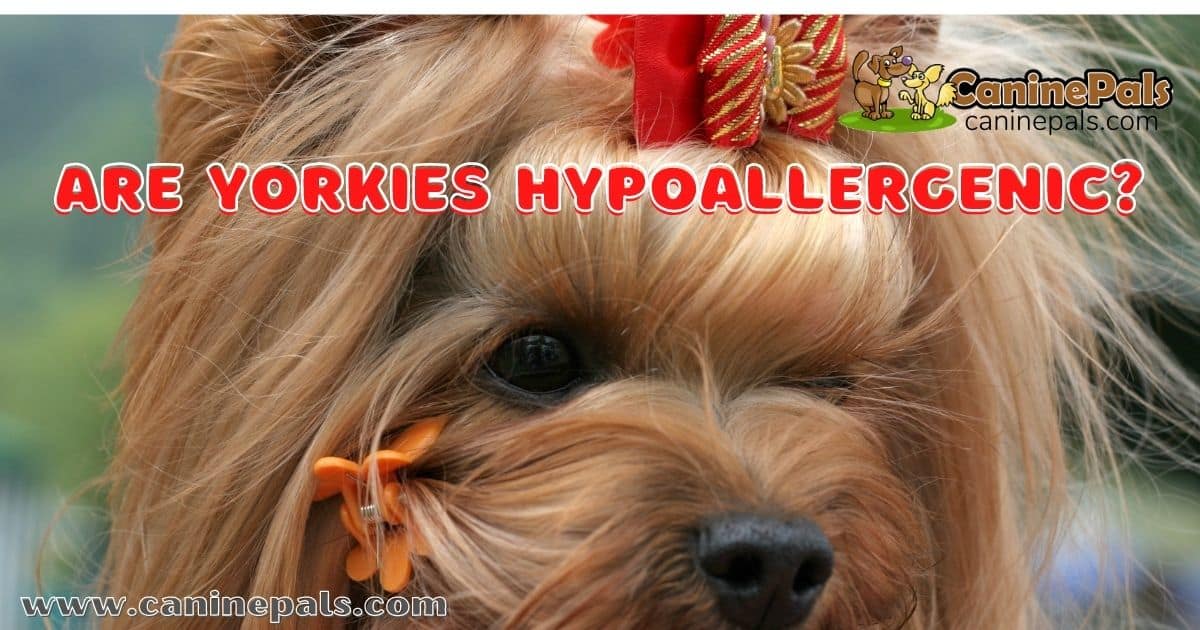
It’s hard to believe that a long-haired dog doesn’t also have dandruff. But, unlike furry friends who shed strands of hair and leave it on furniture or clothing, Yorkies release dandruff differently.

In other breeds of dogs, dander is released into the environment when the fur is shed from the body. In the case of Yorkies, dandruff is present at the root of the hair, and when one hair falls out, it sticks to the other root. There is less chance that this dander will be released into the environment and become airborne.

Human-like Hair

Yorkie’s unique coat makes this dog breed so different from the others. They are not covered with thick layers of fur like most breeds, but only a couple of layers of hair. These layers provide your Yorkie with insulation from hot and cold weather.

Other dog breeds have a fur coat with a thick undercoat that sheds throughout the year. Most breeds of dogs shed at different times of the year, and in that shedding period, the underlying skin layer is shed.

If you ever have a dog with thick fur, you will see that the fur will be shed at different times of the year. Most dogs shed their fur during the winter and summer seasons.

In the case of Yorkies, there is no need to worry that Yorkies have a special coat texture that other dogs do not have. The Yorkie’s coat is thicker and grows throughout the year, unlike most dog breeds’ thinner individual strands of fur.

Yorkies’ hair growth cycle is also different from other dog breeds. Their hairs do not grow or fall out like other dogs but grow continuously throughout the year, just like humans do, and fall out naturally.

Small Size

Yorkies are very small, meaning there are fewer dandruff problems. As you know, Yorkies produce dandruff, but the nature of that dandruff is different, and the structure of the hair makes it difficult for dandruff to be released into the environment.

The average height of the Yorkie is about eight to ten inches, which means that the dander they produce will be very low. The benefit of this small size is that it not only limits the amount of dander but also prevents it from spreading in the home.

Yorkies have very limited activity. Unlike large or medium dog breeds, Yorkies cannot jump on furniture and bed. Yorkies can get on your bed only if they get help. To spread dandruff, you need a pack of Yorkies to do.

No Hair Shedding

Yorkies are not only hypoallergenic, but they also don’t shed. This can be misleading as all the creatures with fur or hair will shed at some point during the year. Even humans lose hair throughout the year. However, due to their unique growth cycle and texture, they hardly need care to maintain a beautiful coat despite shedding. Yorkies almost always go unnoticed, while others try to keep up with cleanliness.

As you know, Yorkies have a different coat texture than other dog breeds. If you touch their hair, it will feel like human hair. The Yorkies’ hair growth cycle is different; the hairs grow almost all year round. Their hairs are completely different if you compare it with the fur that grows and is shed throughout the year.

You might think that a Yorkie doesn’t lose as much hair, but it does the same amount of hair as yours.

Some reasons for this are its small size and double coat. When you have shorter fur, like on the top of their head, they shed less than if they had long, shaggy fur that reaches down to their feet. You will see that some Yorkies have smaller hair while others have large hair, and it all depends on their genetic makeup. But once their hair reaches its maximum size, it will eventually fall out and new hair will grow.

This hair cycle continues throughout your puppy’s life. It is challenging to notice hair loss in Yorkies because they fall out at different times.

Another unique thing about Yorkie’s hair loss cycle is that all the hair falls back into the coat. All surrounding hairs trap loose hair and can only be physically removed.

Most Yorkie owners only notice hair loss when brushing or bathing their puppies’ fur. That is why it is recommended to groom them regularly. If you remove them in time, your home will remain dandruff-free and clean.

Non-Droolers

Yorkies are low-maintenance dogs. These puppies don’t drool unless they have a dental or health problem, so there will be no need to clean up after their messes. The only thing that can give you and your furniture an unwanted visit is their constant licking habit, but luckily you can change this behavior with a bit of behavioral training.

Are Yorkies Hypoallergenic?

Are Yorkies Completely Hypoallergenic?

According to the American Kennel Club, no dog breed is entirely 100% hypoallergenic. Even the most hypoallergenic breed, like the Yorkies, still produces some allergens. If you are sensitive to allergens, you are likely to experience symptoms from time to time.

However, due to its small size and other characteristics, there is less chance of allergies to a Yorkie. Also, if you are allergic, you should take extra precautions to avoid allergies.

Is There Any Period of Excessive Shedding in Yorkies?

There is no suitable time in a year when Yorkies shed excess hair, but there are some situations where Yorkies shed more hair than usual. Most pregnant Yorkies lose more hair than normal due to hormonal changes. At some point, under certain health conditions and medications, the hair can fall more. If you find any of these conditions, see your vet right away.

What Are The Preventive Measures That Can Protect You From Allergies?

These are some of the measures that can protect you from dog allergies.

Proper Training

You want to do many things the first time your Yorkie comes home. You will need to establish some house rules, such as not licking your body and staying away from furniture that belongs to you.

Yorkies are very intelligent puppies. While they can have some rebellious tendencies, a Yorkie will catch up quickly and learn new tricks easily when given the proper training.

Your Yorkie will respond well to positive reinforcement. You should focus on good behaviors and praise them when they do something right, like sitting on command or lying next to you at your feet without jumping up for attention.

When training a puppy, it is essential to be gentle with him because Yorkies are known to be sensitive. So yelling at them won’t work! When they do something wrong, ignore that behavior instead of getting angry about it. Only then can we encourage better behavior in future attempts by giving rewards without punishment.

When you are new to training your puppy, it can be difficult and frustrating. But with a little help from professional dog trainers, the process will be easier for both of you. If you are frustrated, consult any professional trainer around you.

Regular Grooming

Grooming is an important part of a dog’s routine, and if you keep your dog’s coat clean, there will be less chance of dandruff-causing irritation. Unlike other breeds, Yorkies need to be groomed more often. However, if you are allergic to dogs, do not groom your Yorkie on your own but use the services of any professional groomer.

Professional groomers know how to style Yorkies’ hair. A groomer can also help keep their hair at the proper length—some owners like short hair due to allergies. With short hair, there is less chance that bugs and pollen will stick to your dog.

You can also use allergen-reducing products like conditioners and shampoos when grooming your Yorkie so that the skin remains hydrated and reduces dandruff’s fall.

Practice Good Hygiene

After spending a long day with your furry friend, it can be tempting to forget the basics, like washing your hands. But that’s never an option! Washing your hands after playing with or petting your dog will keep you and them healthy and safe from any harmful bacteria left on their fur.

It is also important not to touch your eyes or face if you cannot wash them immediately after contact. But don’t worry; there are many effective hand sanitizers for those who may find themselves in this position more often than expected.

Clean Your Home Regularly

It would be best if you took care of your dog, not only with grooming but also by keeping his environment clean. A minimum for house cleaning is once a week, especially where they spend most of their time or areas where you know they hang out and do their business, like in backyards, which means regularly picking up poop. You also have to vacuum your house to remove unwanted dandruff.

Are Yorkies Hypoallergenic?

Are Yorkies Hypoallergenic Conclusion

If you are looking for a hypoallergenic breed of dog, Yorkies are a perfect choice. These puppies have an ultra-fine coat that is less likely to trigger allergic reactions in people with sensitivities than other breeds.

They also don’t shed a lot of hair and require minimal care, so they can be great pets for allergy sufferers who live in small apartments where space can be limited. We hope this article has helped you answer some of your questions about your favorite breed.

Copyright Caninepals.Com. All Rights Reserved.

References and Further Reading:
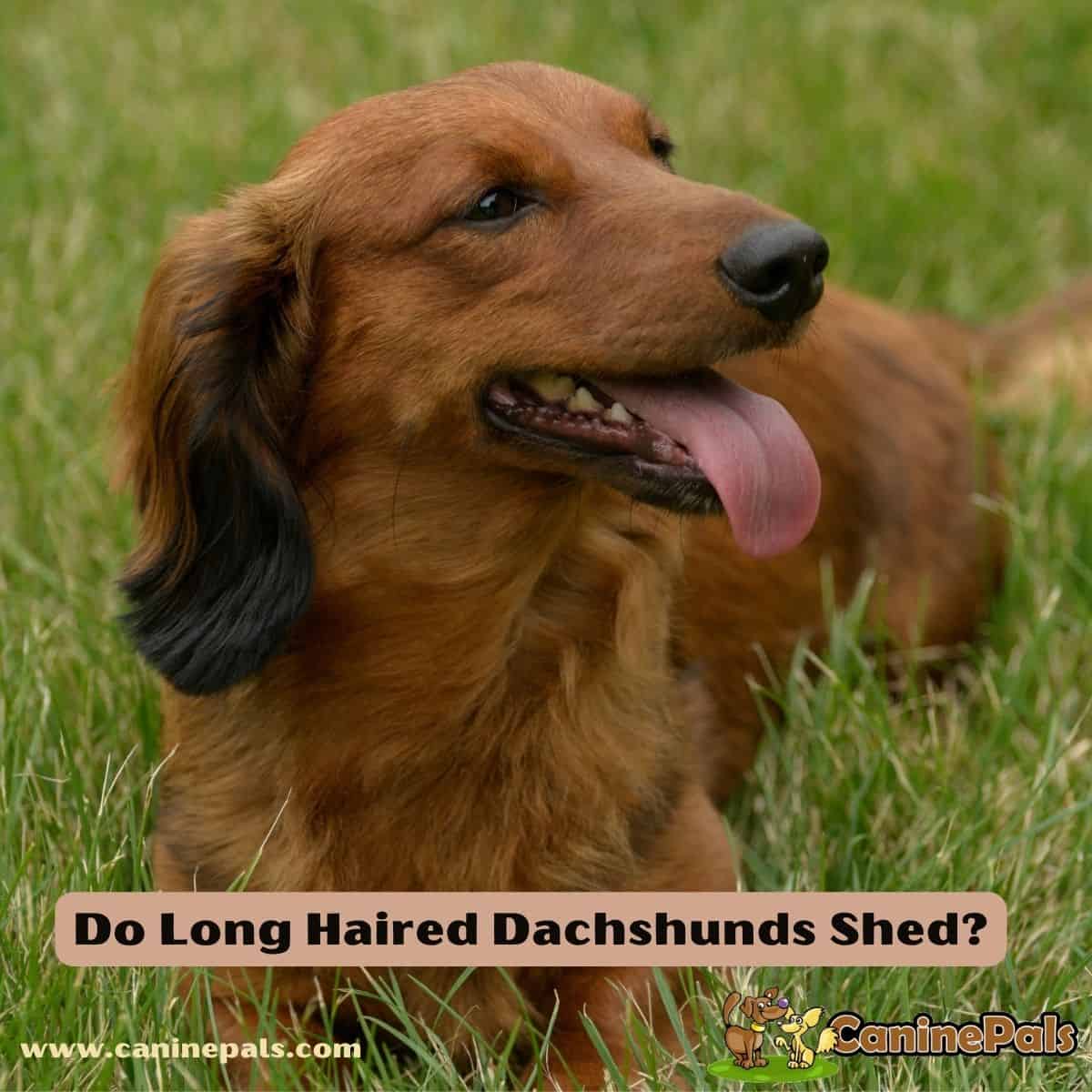
[1] American Kennel Club, Yorkshire Terrier Information.

Pros And Cons of a Yorkie.

The Complete Pros And Cons Of A Yorkie Guide

Like all dog breeds, there are pros and cons of a Yorkie, and we will discuss them in detail here. Yorkshire terrier is one of the best dog breeds in the world.

Whenever you are looking for great companion dogs, Yorkshire Terriers are always among the top contenders. They are so cute that they can melt anyone’s heart. Yorkshire terrier is very intelligent and has a mind of their own.

Yorkshire Terriers are also the number one choice for those who suffer from allergies; they are considered hypoallergenic compared to other toy breeds. They have hair, not fur, that helps control dandruff more effectively.

The Yorkshire Terrier breed (nicknamed the “Yorkie”) is named after his city of origin. In the 19th century, he was used to catching rats in clothing mills. The Yorkie originally belonged to the working class people, but eventually, he became a companion of people in European high society. He’s one of the most popular dog breeds and is determined, brave, and energetic.

Pros And Cons of a Yorkie.

Yorkshire Terrier Quick Facts

  • The Yorkshire Terrier (nicknamed the “Yorkie”) is a popular dog breed due to its small size, hypoallergenic qualities, and friendly personality.
  • Yorkies are known for their courage, curiosity, and attractive appearance with bows and ponytails.
  • They are easy to carry when traveling by car or plane due to their small size, making them ideal companion dogs for apartment dwellers who suffer from allergies.
  • These dogs have hair instead of fur, their hair helps reduce dandruff levels, making them less likely to cause allergic reactions in humans than other breeds.
  • Yorkies make excellent pets due to their cuddly, loyal nature and small size.
  • They are easy to get along with and the favorite pet of the elderly.
  • The Yorkshire Terrier also makes an excellent watchdog.
  • Their hypoallergenic nature makes them ideal for those who suffer from allergies or asthma.
  • Yorkies are in the top 10 intelligent dogs because they were bred as working dogs; this means that they have fewer exercise demands than other breeds and consume less food, leading to lower bills overall.
  • Additionally, their therapeutic dog-like qualities can help reduce symptoms of depression or anxiety in owners, making them ideal companions for those suffering from such conditions.
  • Before getting a Yorkie, it is essential to consider all the pros and cons of this particular breed so you can be sure you’re ready for life with one!

Pros of Owning a Yorkshire Terrier

Several qualities in Yorkshire terriers make them popular. Here are some of the pros of Yorkies.

Appearance and Personality

One of the main qualities that attract people to Yorkies is their appearance and the personality that goes with it. Yorkies are adorable and are always well cared for. You will always see a Yorkshire Terrier with bows and ponytails that make their appearance more powerful.

Yorkies also have a very calm nature, and their curiosity and courage make them loved by people. They are always considered dogs full of courage and who do not care about their size.

Small Size

Everyone thinks that Yorkies’ size makes them easily adaptable and easy to carry. If you plan to go on a trip, these dogs are very easy to carry and move due to their size and flexible attitude. They can easily fit into small-sized crates and even fit easily in the aircraft cabin. It is also straightforward to travel with a Yorkie by car. It is straightforward for a dog of this size to adjust them on your lap during the trip. He stands at 7 – 9 inches in height.

Hypoallergenic

Another benefit of Yorkie is that they are hypoallergenic, making them one of the most popular apartment dogs. Hypoallergenic means that these dogs are less likely to cause allergies in humans. Some people are still allergic to Yorkies, but the intensity of the allergy is not that hard.

To understand how Yorkie puppies are hypoallergenic, you need to know how allergies work in humans. If you are allergic to something, your body will make antibodies whenever you come in contact with that substance. In dogs, that protein is that substance that can be spread through drool, dander, and hair.

Yorkies have hair instead of fur, which helps reduce dandruff. They also like to be neat and clean and constantly move around with pride. If appropriately groomed, Yorkies will shed significantly less hair as well.

These factors will combine to protect you from allergens, and sensitive people will react less when they come in contact with Yorkies.

Pros And Cons Of Owning A Yorkie
Pros And Cons Of A Yorkie

Easy to Cuddle With

Due to their small size, Yorkies make excellent lap dogs. If you are one of those people who likes to be affectionate with their pet, Yorkie is the perfect choice for you. You can hug them, pick them up and place them on your lap. You don’t even have to worry about them if they sleep on your lap due to their weight.

Never Get Aggressive

If you have Yorkies, you don’t always have to keep them under control because they don’t have temperament issues. They are very kind to children and adults, and there are no worries that they will hurt anyone because they never get aggressive. You’ve never heard Yorkies pouncing on a young child and knocking him down.

Attentiveness

Yorkshire terriers are too small to be guard dogs, but they make excellent watchdogs. They are territorial by nature and will instantly alert their owners if they feel something wrong. These dogs’ unique ability is comforting for owners because if someone arrives in the twenty to the thirty-foot range, they will inform you.

However, they are not used because people often get large breed dogs for this purpose. But their squeaky nature and high-pitched bark make them very noticeable. The benefit is that this comes at no cost; you don’t have to train your dog for this; they are naturally trained.

Best Apartment Dogs

As explained above, the rise in popularity of Yorkies is due to their adaptability to urbanization. Yorkies can easily fit in apartments and bungalows, which is why they are the first choice of all pet owners.

There are also a few other things that are a plus for apartment-living Yorkies. The main point is their hypoallergenic nature. You know that allergies occur when you come into contact with a specific protein; the greater the amount of protein, the greater the allergic reaction.

If you live in a smaller apartment, allergens are more likely to build up quickly. In such an environment, if you have a hypoallergenic dog, there is less chance of allergy.

Another benefit is that you don’t need to worry about losing your dog. They love to live in tight spaces, and if they live in big houses, they easily lose track. Living in a small apartment can make life easier for both of you.

Low Exercise Requirements

Most people in cities don’t have time to take their dogs for long walks and exercise. It is also difficult for those living in small apartments due to a lack of space. Due to this urbanization, most people want dogs that can live in small spaces without driving their owners crazy. For these urban areas, a Yorkshire terrier is always a perfect pet.

These dogs are very active, but it is very easy to wear them due to their small size. Because of their tiny legs, they have to take more steps to perform the same activity as you in fewer steps. If you take them out for a walk with some playtime, that’s enough for these guys.

Also, you will always quickly know when a Yorkie is bored because he will bark and act restless. If you’ve taken them out for a walk, but they’re still fidgety, it means your dog needs some mental stimulation to satisfy their curiosity.

Yorkshire Terriers love nothing more than participating in family activities and playing with their owners. They always love to participate in such activities.

Highly Intelligent

The great point in favor of the Yorkies is their intelligence. They are so intelligent and alert that they can grasp all the instructions quickly. Their intelligence makes them excellent watchdogs. Sometimes they go past the barking stage when a stranger gets too close to them.

They are also compassionate in nature and can easily detect changes in your mood. They are also very easy to train and can learn all the tricks quickly. They are so bright that people often use them for agility courses. They’re an excellent option for first-time dog owners because they pick up directions so easily, and that’s a huge plus.

Yorkies also have a sense of emotional intelligence because they can easily sense when you feel down and offer their love and support by sitting on your lap. These are the reasons that make these intelligent dogs so affectionate and cuddly.

Pros And Cons Of Owning A Yorkie

Cons of Owning a Yorkshire Terrier

Many qualities make Yorkshire terriers so popular in today’s world. But like any other pet, owning a Yorkshire Terrier has some downsides. You must know the downsides before deciding to own a Yorkie.

Bad with Other Dogs

One of the important characteristics of this breed of dog is that they often become aggressive towards other animals, especially other dogs. Their behavior will be different if they think that a dog is driving attention away from them.

Yorkies are notorious for their jealousy; they think the world revolves around them, and if they don’t get attention, they react very badly. If Yorkies understand that some dog is drawing their owner’s attention, they will respond aggressively.

You may think your pet may harm any other dog out of jealousy, but that is not the case. Due to their small size, they cannot harm anyone, but the problem is that they get in trouble by becoming aggressive toward large breed dogs. As you know, they don’t care about their size, and they get aggressive with dogs that are much bigger than they are. They don’t consider it a problem, but it’s up to you to save your puppy from any awkward situation.

Difficult to House Train

It must be strange to know that a dog of such intelligence is challenging to house train. However, there are certain factors behind this.

Due to their small body size, Yorkies have small bladders, making it difficult to hold their urine for long. This is why you will often see more bathroom accidents in the case of Yorkshire terriers.

Being a Yorkie fan, this can be offensive, but the truth is that they require very high maintenance. Yorkies are also very bad at warning their owners to go to the bathroom. When owning a Yorkie, you should always look for any warning signs.

If your dog does not learn good habits, he will learn the bad ones, and once he has learned the bad ones, it is difficult for him to forget them.

Can Get Injured

As you know, there are different disadvantages to the small size of Yorkies, one of the main disadvantages of their small size is that they are prone to accidents and easily get injured. If you are one of those owners who like to get physical with their dog, Yorkies are not made for that. They are so fragile that they cannot bear to be thrown away. If you have small children in the house, it is also a very dangerous situation because children do not understand how sensitive Yorkies are.

Another thing Yorkies do is hide in different inconvenient places. The best place they like to hide is under the blanket, and it is difficult for anyone to realize that they are under it until something terrible happens. This is one of the most common reasons for Yorkie injuries as they dig under something and get sat upon, resulting in severe damage.

If you like to be a little rough with your dog and at the same time worry about hurting him, Yorkie is not the best pet for you.

Pros And Cons Of Owning A Yorkie

Persistent Health Problems

Yorkshire terrier suffers from specific health problems that are primarily hereditary. Some diseases are associated from birth to life. Another problem is that their immune systems are not the best, and they often struggle to stay healthy.

One of the common diseases that affect Yorkies are

·         Patella Luxation

This problem occurs when the knee cup slides out of its usual space. This problem occurs in the puppy stage when the tendons are weak.

·         Hypoglycemia

This problem is prevalent in all toy dog ​​breeds. The leading cause of this problem is low blood sugar. This problem is quite common in the first few months and later in the adult part of life.

·         Leggs-Perthes Disease

This is a genetic problem and affects different lines of Yorkies. In this disease, there is the weakness of the femur that causes many problems in the bones.

High Grooming Requirements

As you know, Yorkies don’t require a lot of exercise to stay in shape, but they do need a lot of grooming to stay healthy. Compared to their size, they require a lot of care. Otherwise, their fur can easily become tangled. It always takes hours to groom your dog. However, the main thing to consider is its silky coat. They need daily brushing with a brittle steel brush, which is enough.

Yorkshire Terrier Grooming Requirements:

His long coat is tan and blue and needs to be brushed regularly. If you have difficulty grooming your dog, use a conditioner to make the coat silkier. You can also use water to moisten their coat.

Also, if they get dirty in some routine activity, you should bathe them immediately. You will generally need 15-20 minutes a day to keep your puppy clean and tidy. If your puppy is misbehaving, this time may increase.

Your Yorkie will also need a full-body wash after each week. It takes almost an hour to bathe your dog thoroughly. It is essential to train your Yorkie to bathe; it will help in the future.

Another important thing is the haircut your Yorkie requires every month, especially on the front of the face and legs. This haircut is important so your Yorkie can see clearly. You must have understood that these dogs have a very demanding schedule, and if you leave them dirty for too long, they can get in a bad mood.

Struggle to be Left Alone

Yorkies are always the center of people’s attention and love to get noticed. But when these dogs are left alone, they don’t do well. Yorkies show different activities such as frequent urination, barking, and scratching at furniture when they get anxious or bored.

This is the biggest problem for owners who cannot live with their pets all day. Also, Yorkies do not like living with other dogs, so that option is also in vain. To overcome this problem, people often acquire two Yorkshire terriers from a young age to keep each other company and not get involved in any fights.

But getting two Yorkies means double the money for grooming, vet bills, health problems, and food.

Do Yorkshire Terriers Make Good Pets?

Yorkies make excellent pets because they are adorable and cuddly. They love physical contact and are very loyal to their owner. Their small stature makes them adaptable and perfect for living in tight spaces. Yorkies are easy to get along with and the favorite pet of the elderly.

They may not be able to defend your home physically, but they make excellent watchdogs and do not allow anyone near your home. They are in the top 10 smart dogs because they were bred as working dogs.

Another reason Yorkie makes great pet is because of their hypoallergenic nature. If you have allergy problems, the Yorkie is an ideal breed for you. Yorkies also shed less hair; not only will it cause fewer allergy symptoms, but there will also be less need for cleaning and maintenance.

The main benefit that makes Yorkies more unique is their therapy dog ​​nature. If you suffer from depression and anxiety, Yorkies can help reduce many symptoms. They also have less exercise demands compared to other dog breeds. Similar to their small size, they consume less food and fewer bills. All of these points add up to make Yorkies an excellent pet dog.

Pros and Cons of a Yorkie Conclusion

Before getting a Yorkie, it is essential to consider the pros and cons of this breed. Knowing all the good and bad about them will make it easier for you to live with them.

Copyright Caninepals.Com. All Rights Reserved.

References and Further Reading:
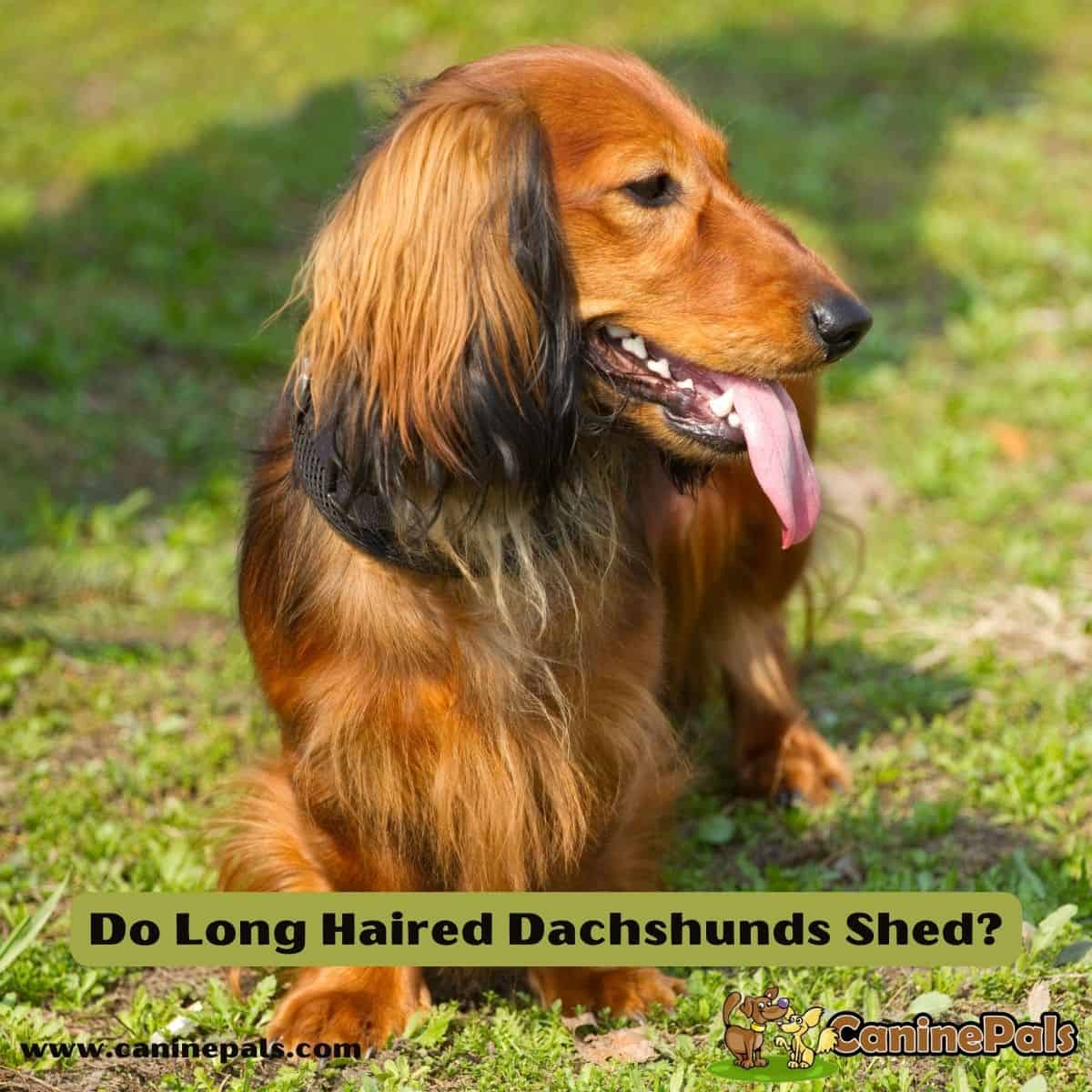
[1] American Kennel Club, Yorkshire Terrier Information.

Yorkshire Terrier
Yorkshire Terrier