
Disclaimer

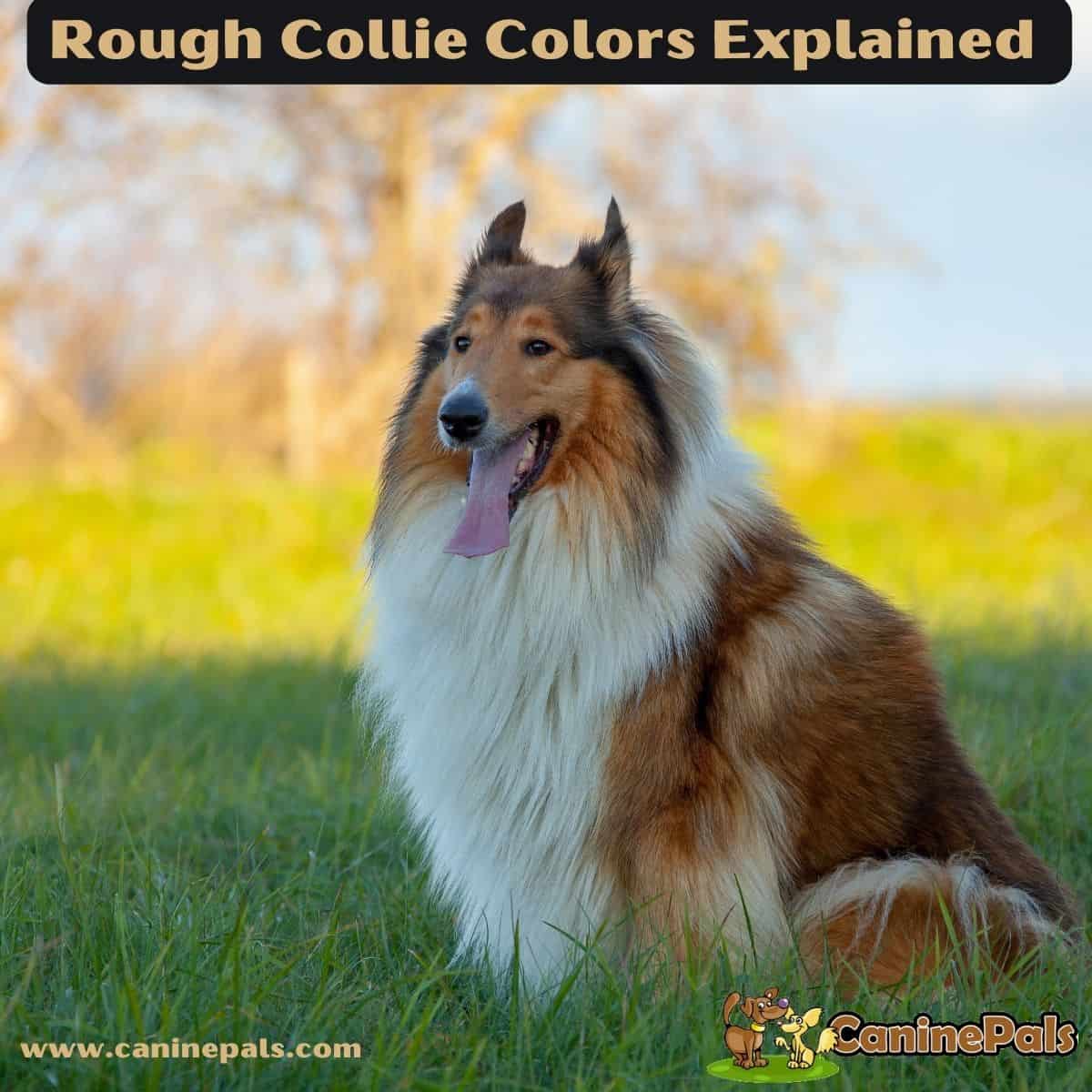
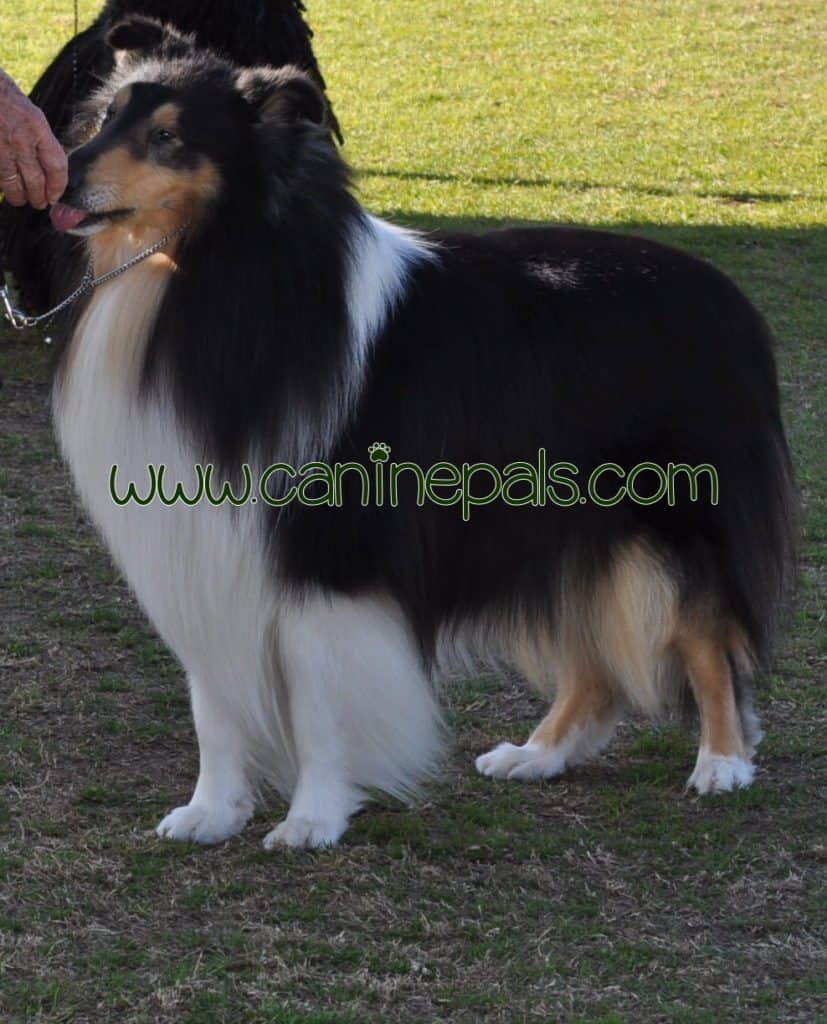
Rough Collie Colors Explained

Smooth and Rough Collie Colors Explained in Detail

The Collie breed has been a herding dog for centuries in England and Scotland. He was used as a droving dog to help guide the sheep and cows to the market. During the 1860s, he became more popular because Queen Victoria paid a visit to the Scottish Highlands and quickly fell in love with the Collie.

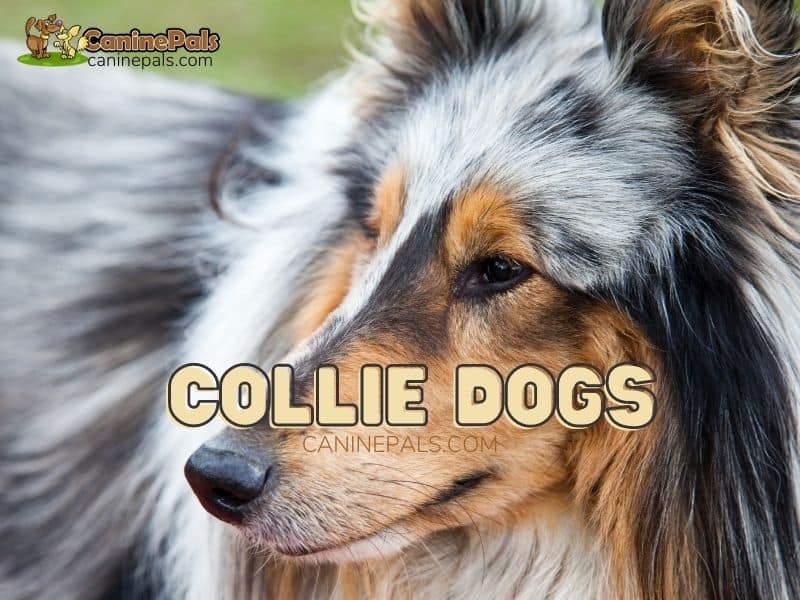
Known for its long, slender, and wedge-shaped face resembling a sheep’s face, Collie is a superstar dog. The distinctive Collie colors and a thick, long fur coat make it a unique dog.

Collie is known for its intelligence, trainability, and companionship. It is a loyal family dog that takes pride in being the guardian and protector of the members of its human family.

This article concerns this outstanding dog breed and its colors, traits, and characteristics.
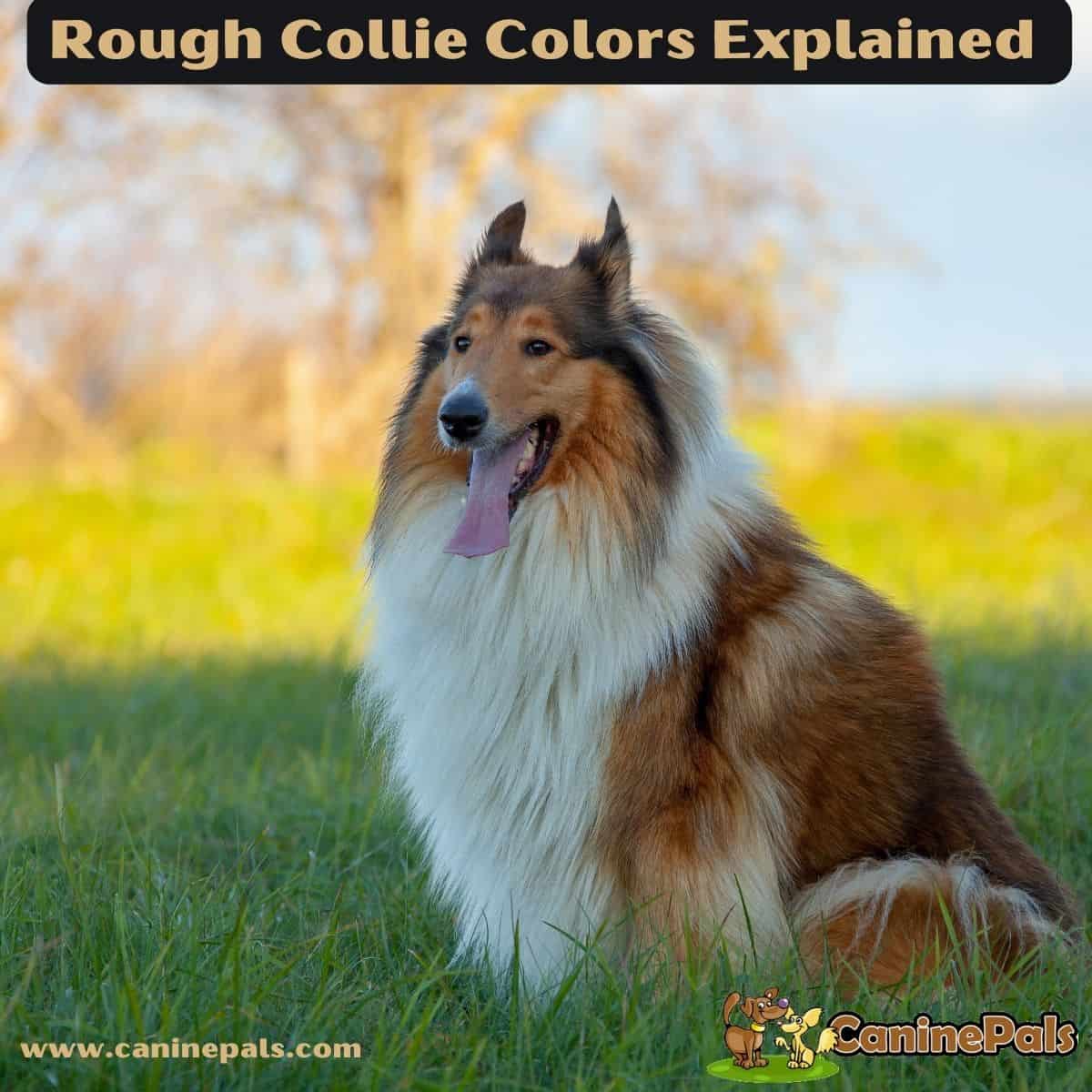
Rough Collie Colors Explained

Collie Dog Facts

  • The Collie is a herding breed native to Scotland and England. It was popularized by Queen Victoria in the 1860s when she visited the Scottish Highlands and fell in love with this dog.
  • The most famous Collie of all time is Lassie, who was featured on TV. He had tri-color or white & sable or white & blue merle fur colors recognized by the American Kennel Club (AKC).
  • Rough Collies have long hair with an abundant outer coat that’s harsh to the touch, while Smooth collies have short coats with thick undercoats.
  • Male dogs are 24-26 inches tall while females are 22-24 inches tall; males weigh 60-75 pounds; females weigh 50–65 pounds; life expectancy ranges from 12 -14 years old.
  • They adapt well to apartment living as they’re low-maintenance pets whose energy levels aren’t out of control but who enjoy being active outdoors daily too! They also reasonably tolerate cold weather conditions due to their double coat protection against winter winds.
    Collie is an intelligent and obedient dog, making it relatively easy to groom. Regular brushing of the coat and bathing is essential for keeping its skin healthy.
  • This breed is vulnerable to specific ailments such as skin disorders, nasal conditions, eye diseases, gradual deterioration of the retina, and food/contact allergies.
  • The American Kennel Club recognizes ten different colors in this breed for both types of coats, including Blue, White, Tan, Sable, Blue Merle Collies, etc.

History and Origin of Collie Breed

Collie is native to Scotland and commonly found in Scottish highland regions. It is thought that the name of this dog, ‘collie,’ comes from ‘Colley’ – the name of the sheep it used to guard. Others think ‘collie’ might have originated from ‘col’ or ‘coll’, which means black in Anglo-Saxon.

There may be disagreement as to how the name of this cute dog originated. However, there is no disagreement that it was used to herd sheep in Scottish highlands and Southern England.

There are two traditions as to how the ancestors of modern-day Collie arrived in the British Isles. Some dog historians believe that Stone age nomads brought them to the British Isles. Yet others believe that Roman conquerors brought the Collie ancestors to the British Isles.

It is Queen Victoria who is credited with introducing Collie to the world. On one of her Scottish retreats to her estate in Balmoral, the Queen caught a glimpse of this lively farm dog and fell instantaneously in love with him. The Royal favor brought Collie into the limelight, and it was not long after the courtiers, aristocrats, and the British gentry owned it.

The first Collie arrived in the United States in 1879. It was recognized as a breed by American Kennel Club (AKC) in 1885, and since then, it has become a trusted family dog.

The Most Famous Collie Dog

The most famous Collie dog of all time is a fictional dog called Lassie. Lassie was a Rough Collie dog who was featured in a TV series. Lassie was played by a dog called Pal in the movie. Pal was also the sire of many Collie dogs who later portrayed the fictional dog, Lassie.

Lassie propelled the breed into the spotlight, and many decades later, people still know what dog breed you are talking about if you mention a “Lassie dog.  As a child, I adored the TV series and dreamed of owning my own Lassie dog.
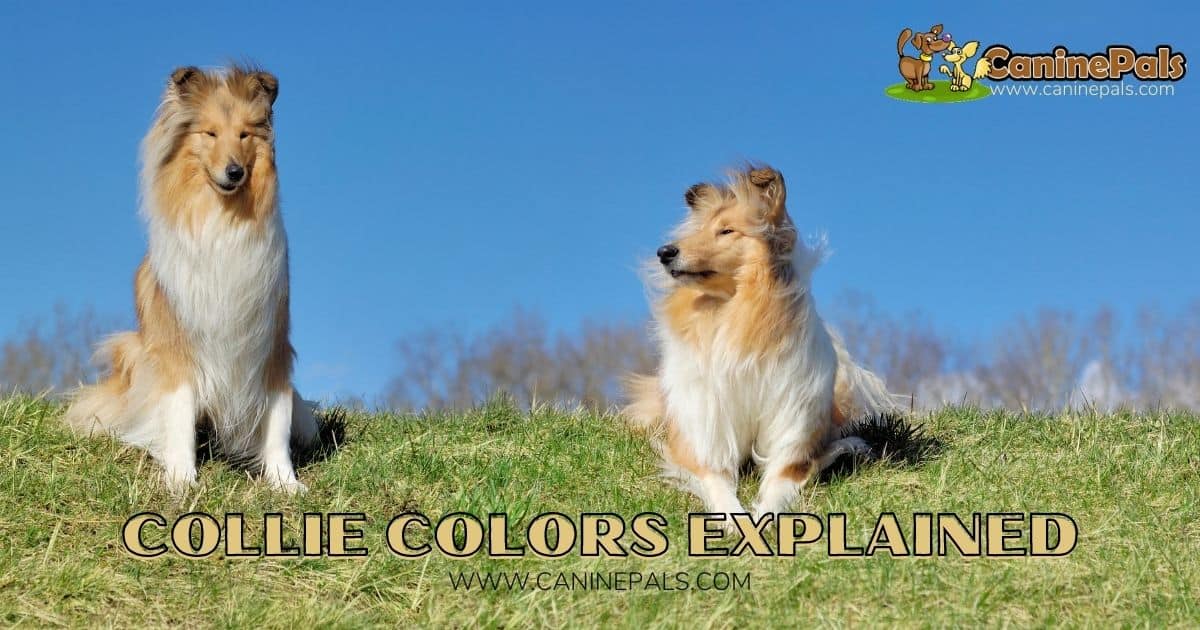
Collie Colors Explained

Collie Colors

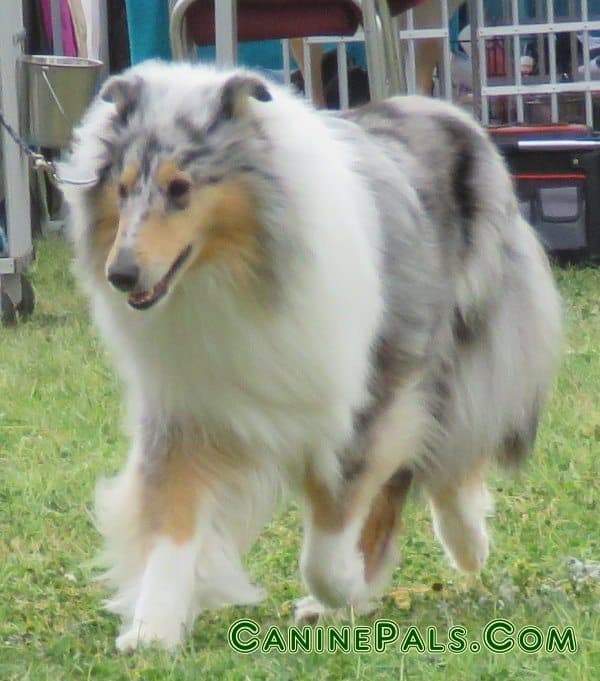
Collie colors are many. The dog is found in many colors. The most common Collie colors are blue, sable, and merle, which have many variations. American Kennel Club (AKC) recognizes ten different Collie colors.

This section deals with Collie’s colors and everything about them.

Collie Color Chart

American Kennel Club recognizes ten different standard Collie colors. The details of these are described below in the table.

Collie Color

Registration Code

Blue White and Tan 34
Blue Merle 50
Blue Merle and White 51
Blue Merle White and Tan 52
Sable 164
Sable and White 165
Sable Merle 166
White 199
Sable Merle and White 277
White Merle 311

Rough Collie Colors

Two different types of coats are found in Collies.

  • Rough Collies
  • Smooth Collies

Rough Collies are long-haired Collies with a double coat. It has abundant hair on the outer coat, which is harsh to the touch. The undercoat is soft and so thick that it cannot see the skin through it. The other is the short-haired Collie, known as the smooth Collie. It has a short, thick, dense outer coat and an equally thick undercoat.

Rough Collies Black

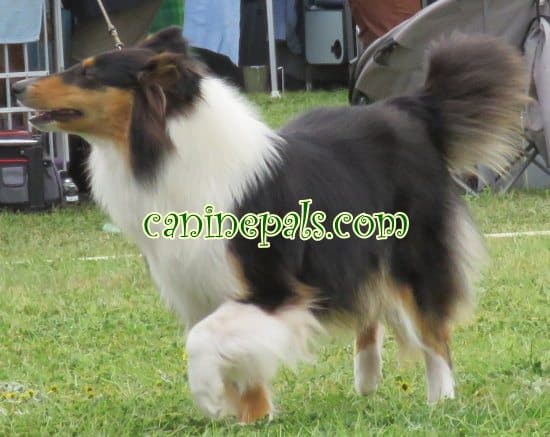
The rough Collie Black has a black double coat. Generally, rough Collie black is never black throughout. It is a tricolor. A tricolor is predominantly black with white markings and tan markings.

Sable Merle Rough Collie

Sable Merle Rough Collies are double-coat dogs with a mix of sable and merle gene simultaneously. The darker sable color is a shade of brown, whereas the merle gene gives shades of black and blue. Sable merle rough Collie is a unique color loved by dog owners.

Traits and Characteristics of Collies

He’s a big, active dog but is also graceful and elegant. He seems to float when he runs. He’s very affectionate and loyal and responds well to people.

Rough Collie puppies love children. Lassie is the most famous Collie. His colors can be tri-color, white and sable, or white and merle. A full white collar gives this dog a smart appearance.

He does need to be walked every day, but he also loves sleeping. He only needs brushing once a week except in shedding season. He’s clean and generally doesn’t have a “dog smell.” He’s 22 – 26 inches high.

AKC Size Specification

The height of a male Collie is slightly more than a female Collie. A male dog reaches 24-26 inches, while a female Collie is 22-24 inches high.

Also, the weight of a male dog is more than that of a female dog. A male Collie can weigh somewhere from 60 to 75 pounds. A female dog weighs 50-65 pounds on average. The average life expectancy of a Collie is between 12-14 years.

  Male Female
Height 24-26 inches 22-24 inches
Weight 60-75 pounds 50-65 pounds
Life Expectancy 12-14 years
Collie Dogs
Collie Dogs

The adaptability of a Collie Dog

●       Collie is well suited for apartment life

Collies are loyal and friendly. Their small size makes them well-suited for living inside an apartment. It can be challenging for dogs to live comfortably in a high-rise apartment, but it is not the case with Collie.

Dogs are full of energy, and there is not much space in an apartment. Hence, due to their high energy, they do crazy stuff and might break things. However, the energy level of a Collie is not out of control.

It is playful but knows its limits well. It is usually quiet and remains calm in an indoor apartment setting. These traits make the Collie a perfect dog for apartment living. Collies are ideally suited to the role of therapy dogs.

●       Perfect for novice dog owners

Collie is a low-maintenance dog. It is intelligent and understands the needs and requirements of its human owner. Because of this, even a novice owner without prior experience in owning a dog can pet a Collie.

Collie belongs to those dog breeds that are easier to keep. They are better at training and easy to handle. Once commanded, they would never defy.

Even if there is a change in their routine, they respond fairly well to the change and adapt to it. Also, they are never stubborn.

These are the desirable traits that make owning a dog a delightful experience. The easygoing nature of Collies makes them suitable for novice owners.

●       Tolerance to hot and cold weather

Collie has a thick double coat that protects it from cold. It is native to Scottish highlands and there occur extreme colds.

The double coat protects it from the winter winds. It means that it can stay well outside in the cold.

However, the double coat that protects it from the cold traps the heat inside in the summer. Dogs with double coats get hot easily, even in mild heat.

Hence their resistance to withstand summer heat is low. They should be kept indoors in summer to avoid catching heat stroke.

●       Tolerance of being alone

Collies may be good on many counts, but they don’t like to be alone. Their tolerance to being alone is minimum. They need company all the time and don’t respond well to being alone.

Lack of tolerance for being alone makes them somewhat difficult to handle. It is because they are inclined to bark and misbehave when left alone. Because of this, it is advised that they may not be left alone for long periods.

Collie Behavior

●       Behavior with humans

Collies are affectionate, kind, and friendly to their human family members. They like to be in a family and enjoy being with humans. This is the sole reason they don’t like being left alone even for some time.

Some dog breeds are aloof and independent. They would recline all day in their bed and wouldn’t want to come out.

Collies are not one of them. They have energy and like to display it by being close to their family.

●       Behavior with Children

Collie loves kids and it is loved by kids. It has a thick fur coat and is a joy to cuddle with this dog. It takes care of the children and protects them from any harm. However, it is generally advised that an adult should always supervise the dog-children’s playtime.

●       Behavior towards strangers

Collie is also kind to strangers. It is a gentle dog and behaves well with strangers that often visit its owner’s home. It is not suspicious of strangers in general.

However, Collie has an instinct that alerts it of any dangers. It reacts if it senses any danger and protects the members of its human family from harm.

●       Behavior with other dogs

Collie tolerates the presence of other dogs around him. It is one of those dogs that does not fiercely react whenever a dog enters its territory. They are neutral to other dogs.

If the dog is groomed from the beginning to tolerate other dogs, it feels no danger in the presence of other dogs.

Grooming Requirements of a Collie

Collies have a double coat, and they shed a lot of hair. It is another disadvantage if you are planning to own a Collie. The rough Collie has long hair, and the shedding is very difficult to clean from the carpet and couch.

However, Collie comes clean when you consider its drooling levels. It is a dog that has a minimum to no drooling level.

Drooling makes it challenging to own a dog in an indoor environment. You always have to carry a towel around your dog for cleaning. But it is not the case with Collie.

Grooming a Collie is relatively easy. It is an intelligent dog with a lot of potential to learn and understand commands.

Moreover, it is not a stubborn dog which makes it easy to groom this dog. Grooming requires brushing the coat to keep it clean and healthy.

Regular bathing is also essential to keep the dirt and mud out of the coat. A healthy coat and skin would prevent many dog diseases.

Health Requirements of a Collie

Collie is generally a healthy dog. However, it is vulnerable to certain dog ailments. It must be given special attention to avoid catching a disease.

This breed is vulnerable to skin infections, nasal ailments, eye diseases, and immunity problems. The details of these ailments are described below.

●       Skin disorder

Collie can develop a skin disorder. The skin disease can cause itching, pain, and swelling. An autoimmune skin disease that is common in Collies is Dermatomyositis. This disease not only infects the skin but also hurts muscles and deteriorates joints.

Other than that, if the dog coat is not kept clean, it can lead to multiple parasitic, bacterial, and viral infections because of the fleas, ticks, and burrs that stick to the skin and cause illness.

●      Nasal Conditions

Collies can develop nasal conditions in which the nasal cavity gets sensitive. The skin of the nose starts peeling off. The nose gets extra sensitive, and nasal secretions to flow out of the nose. In severe cases, it can even lead to cancer.

This condition is mostly caused by excessive exposure to sunlight. Protecting the nose from direct sunlight can help alleviate this condition.

●      Eye Diseases

An inherited eye disease in Collies can make them blind. It is commonly known as Collie Eye Anomaly. Changes and abnormalities occur in the eyes.

The changes include thinning the eye’s outer layer and abnormalities in the inner layers. Unfortunately, there is no cure for this eye disease.

●      Gradual deterioration of the Retina

Another eye infection that is common to Collies is the gradual deterioration of the sensitive layer retina. The retina is the layer of the eye that is crucial to your dog’s sense of sight. A gradual deterioration means compromised eye performance. It is an old-age disease common to Collies.

●      Food Allergy

Food allergies are quite common in Collies. There are certain foods that Collies are sensitive to. Consumption of such foods leads to food poisoning. If treated immediately, the health condition gets better. If left untreated, it can lead to bigger digestive concerns.

●      Contact Allergies

Collies are also sensitive to certain contact allergies. A reaction to any particular substance causes these allergies. It may be caused by dog grooming products such as shampoos, dog lotions, or other chemicals. Sometimes, dog bedding is infected and causes contact allergies in your dog. Contact allergies cause discomfort and skin diseases.

Conclusion

Collie is a Scottish dog that is known for its looks and beauty. The long and thick outer coat makes this dog look beautiful.

It goes to the credit of Queen Victoria, who introduced this dog to the world. Before the royal favors, it used to be a farm dog capable of herding animals.

Collie colors are beautiful and light. Sable, merle, and black are the colors that combine on the dog coat. The American Kennel Club recognizes ten Collie colors.

Collie is a loyal, friendly, and trusted companion of humans that stays around and protects the members of its human family. It is a much-loved dog and is rightfully adored by dog lovers.

Copyright CaninePals.Com. All Rights Reserved.
References and Further Reading:

[1] American Kennel Club, Collie Dog Information.
 

Collie
Collie
blue merle collie dog
Blue Merle Collie Dog
collie dog
Collie Dog


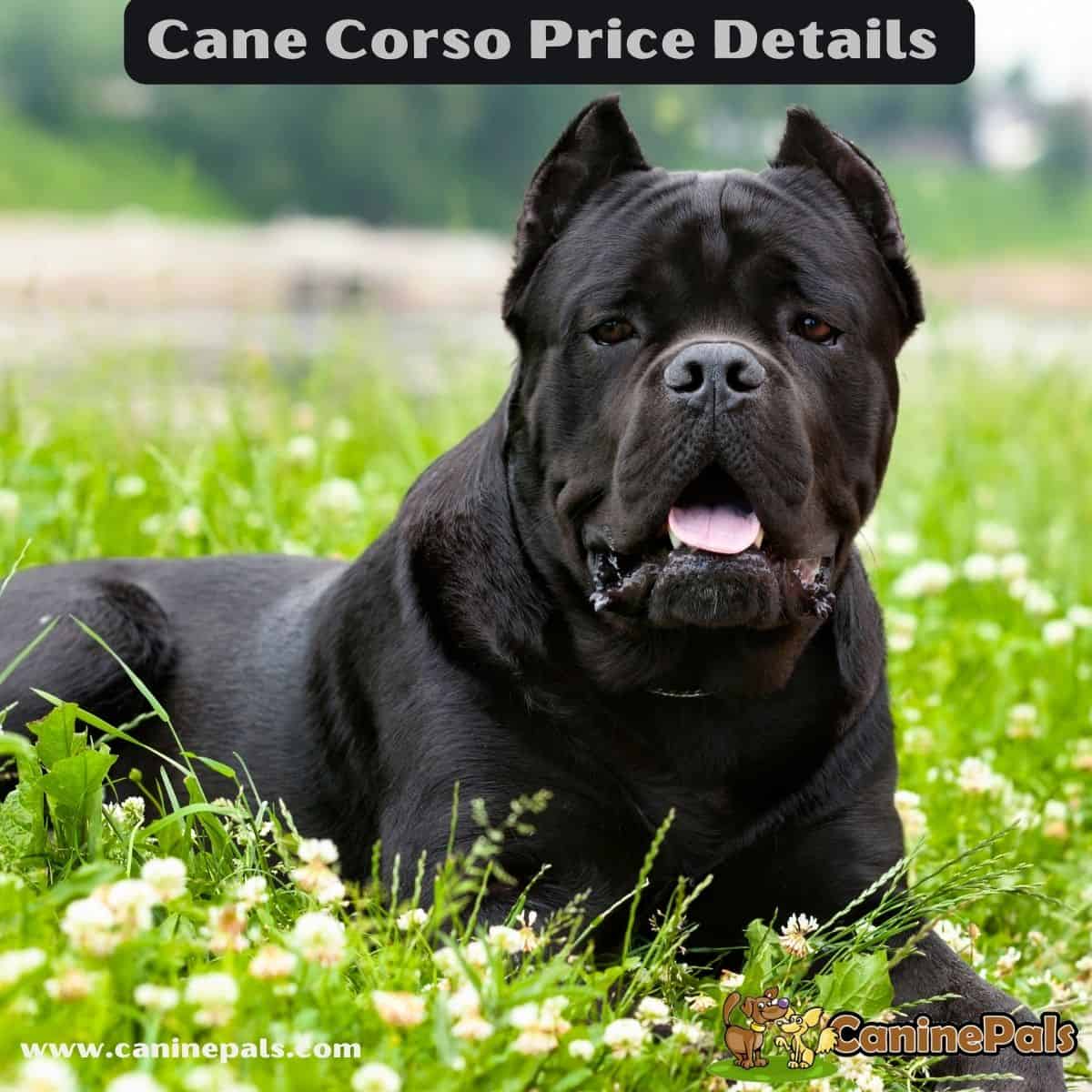
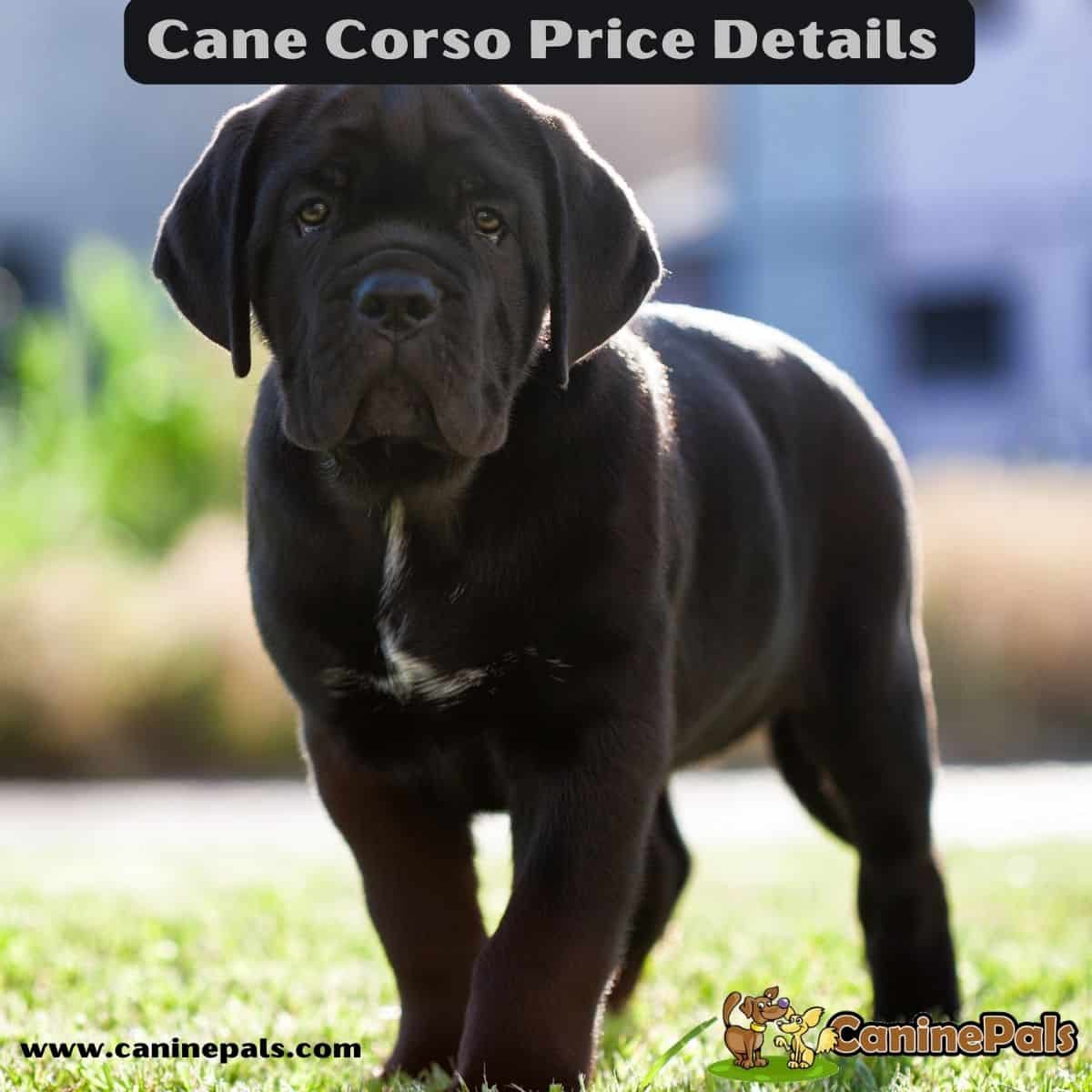
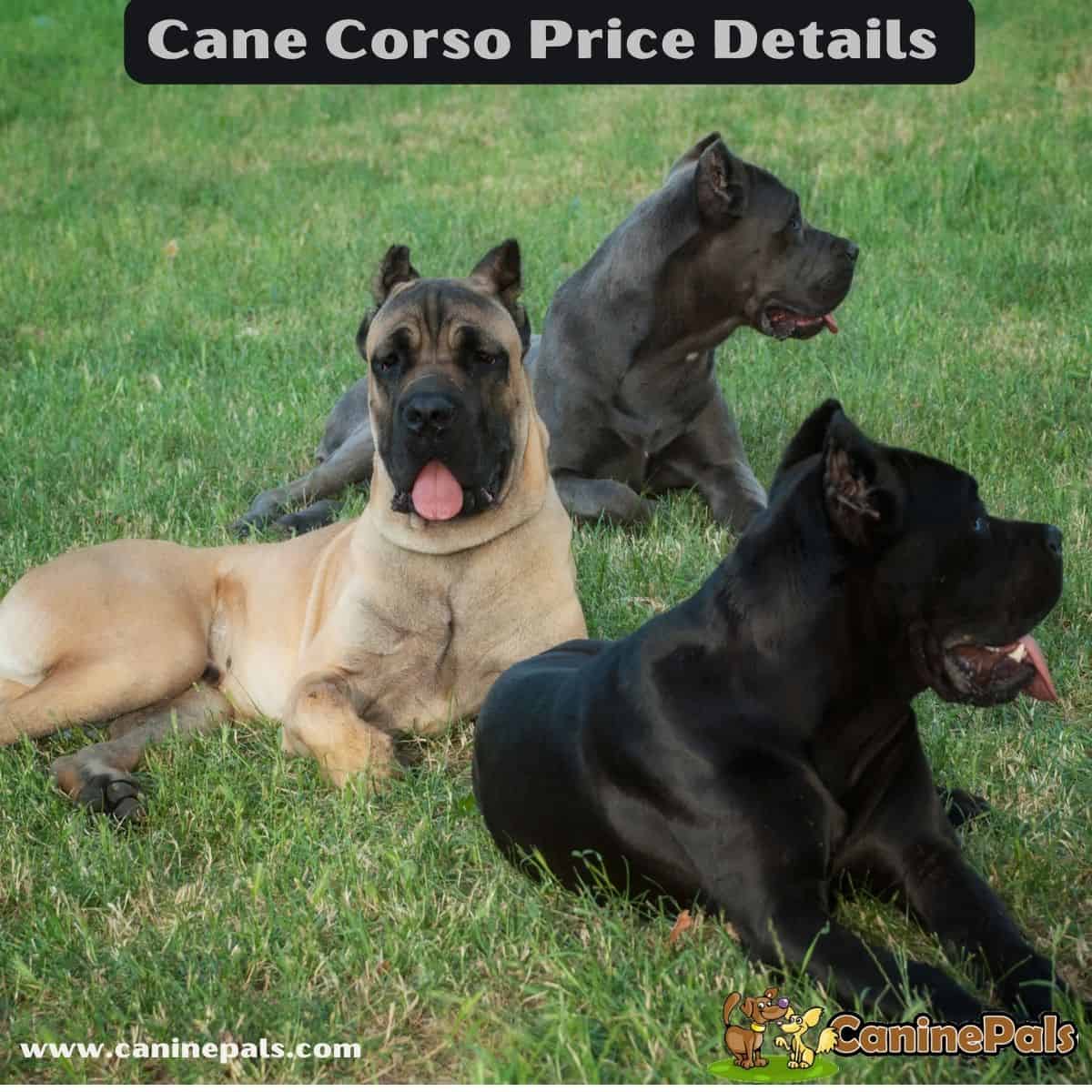
Cane Corso Price Details

Complete Cane Corso Price Details

Cane Corsos are beautiful animals, but have you ever wondered how much it would cost to own one?

In this guide, we take you through everything you need to know about the cost of owning a Cane Corso in the first year and over your dog’s lifetime. We even explore additional expenses to expect when adopting a new Cane Corso, making budgeting for your dog easy.

How Much is Cane Corso Puppy Price: One-time Costs?

Planning to bring any new dog into your home is an expensive proposition, especially if you’re starting from scratch in terms of dog gear. Cane Corsos are no different, but unlike many other pets, your costs might not go down too much after your initial expenses. On average, you can expect to spend between $1,000 and $2,500 on your purebred Cane Corso puppy.

Reputable breeders tend to be on the upper end of the price spectrum. Some Corsos from champion bloodlines can cost you $4,000 or even more!

Cane Corsos can be expensive to purchase and since they will grow quickly from the time they’re puppies until they’re fully mature, many of the things you buy in the first place will soon need to be replaced.

Cane Corsos are beautiful dogs, but make no mistake, they’re expensive dogs too. Corsos also require a lot from their dog owner regarding everyday needs.

Cane Corso Price Details

Cane Corso Price Summary

  • Cane Corso ownership can be expensive, with initial costs ranging from $1,000 to $2,500 for a purebred puppy.
  • Factors that influence the Cane Corso price include the age of the dog, bloodline quality and reputation of the breeder, health screenings, and coat color.
  • Female Cane Corsos may cost more than males due to breeding challenges and higher upkeep maintenance costs.
  • Adopting a rescued Cane Corso is one of the most cost-effective ways to own this breed; adoption fees range between $150-$400 depending on policies at shelters or rescues where they are available.
  • Owning a Cane Corso requires budgeting for ongoing expenses apart from the initial purchase price; having sufficient disposable income each month is essential in order to meet all their needs.

Cane Corso Cost: Initial Setup and Supplies

Before bringing home your Cane Corso, there are other expenses you must keep in mind after paying for the price of the puppy itself. You will need to invest in making your home the best fit for the safety and happiness of your pet and other family members. These costs can vary wildly, depending on your initial setup.

Here’s a list of Cane Corso’s care supplies and costs:

Food and Treats

Corsos require higher quality food and healthy dog treats. All in all, these may cost around $100 to $120. We strongly recommend that you not feed them cheap food lacking in some of the vital nutrients. It can shorten their lifespan and put more stress on their joints. Corsos need to stay healthy, and the money you save in the short term will likely be eaten up if your furry companion needs health care.

Food and Water Bowls

Many Cane Corso owners use elevated feeders to prevent bloating, which is common in these dogs. Investing $15 to $35 in one may truly assist your Corso in reducing strain and maintaining good posture.

Bed and Blanket

Consider how the dog bed’s structure and comfort affect your Cane Corso’s health and disposition. An excellent dog bed costs $50 to $100+.

Dog Crate

A crate provides a safe and secure place for your Corso to relax. Consider the crate’s size, material, and overall quality upon purchasing. A large-sized crate should cost around $60 to $200.

Leashes, Harnesses, and Collars

If you want to walk around freely with your Cane Corso, you may want to invest in collars and leashes that could help you overcome the size and strength of your pet. This will set you back around $20 to $50.

Toys

Cane Corsos love to play with toys that could help stimulate them and release energy. So investing in dog toys such as kong, chew toys, and interactive puzzle toys should cost around $30+.

Grooming Supplies

Since Cane Corsos have short coats, irregular bathing is crucial to minimize shedding and sustain a healthy coat. Investing in grooming tools may cost you between $100 and $200.

Deworming, Flea, and Tick Medication

You need another $50 to $300 to guarantee a healthy dog if your Cane Corso is not dewormed and unvaccinated. Keep in mind that prevention is better than cure.

Initial Vet Visits

Given Cane Corso’s predisposition to various genetic illnesses such as bloating and joint problems, vet visits are crucial in Cane Corso’s early life. These appointments may run you around $100 to $500.

Neutering or Spaying

If you bought a Cane Corso less than a year old, it’s still unneutered or not spayed. You may need at least $50 to $250 to prepare for the surgical costs.

Microchip Cost

For only $45 to $60, you can microchip your Cane Corsos and keep them safe.

Training

Training is a crucial part of Corso ownership. Training classes almost cost between $75 and $200 for a 5-6 week class. Hiring a private owner for one-to-one training will be even more expensive.

Miscellaneous Supplies

Other things you may need to purchase for your Cane Corso may include carpet cleaners, poop bags, etc. These supplies may cost you around $20 to $30.

The main thing that would increase the cost is if you need to have medical procedures performed or screening for health conditions. It is always important to do your research before owning a Cane Corso. You need to budget for ongoing expenses apart from the initial price.

Cane Corso's Price
Cane Corso Puppy

Factors That Influence Cane Corso’s Price

Purebred Cane Corsos will be costly, especially if they’re still puppies.

The factors that may affect the Cane Corso price are as follows:

Age:

The younger the dog, the higher the price. When buying Cane Corsos as puppies, expect to pay more due to vet fees, vaccinations, and treatments the breeder pays for. A Cane Corso older than five years is considered a senior dog and typically sold for less.

Bloodline:

Champion bloodlines produce show-quality Cane Corsos and usually cost more. Hence, expect to pay more if you want a Cane Corso from the best lineages.
Breeder’s reputation: A reputable breeder spends considerably more to maintain the quality of their dogs.

Hence, your choice of breeder greatly affects the price of a Cane Corso puppy. You may get a low-price Corso puppy from unethical backyard breeders, but it’s not advised. If you want purebred Cane Corso puppies for cheaper, consider adopting one instead.

Health Screenings:

Due to the Cane Corso’s susceptibility to hip dysplasia and bloat, reputable breeders hike the price of Cane Corso puppies that underwent health checks. Sickly Corso puppies may be offered for lower prices, but expect to spend on vet fees later. A responsible Corso breeder will conduct several health screenings to ensure their breeding stock is healthy.

Coat Color:

One of the aspects that can significantly influence how much a Corso puppy costs is its coat color. Coat colors play a crucial role in deciding the prices. The rare colored Cane Corso coats are expensive, while the common ones are less expensive. Some colors are very rare, like straw or liver. Blue Cane Corsos are also rare and desirable. Hence their price usually exceeds the price of a standard Cane Corso.

Professional training and socialization:

Cane Corsos require socialization, puppy training classes, and canine education for good behavior. Trained Corso puppies may be costly at first but it is arguably a good investment.

Location:

The breeder’s location can highly influence the price of the dog. The Corso price differs in different geographical locations. Dogs are always more expensive in locations where they are more popular. Corsos are usually more popular in rural areas, where there is enough space and a need for excellent guard dogs.

These factors greatly influence the Cane Corso cost. Regardless, the gender and demand for this breed in your location may also affect the cost of having a Cane Corso puppy.

Cane Corso Puppy
Cane Corso Puppy

Female and Male Cane Corso Price Differences

When we compare the prices of male and female Cane Corsos, it seems that female Cane Corso puppies cost more than males in some cases. Female Corso puppies are priced higher when breeders sell for breeding purposes. However, many breeders will sell their puppies for the same price regardless of gender. The upkeep maintenance cost of female Corsos is usually higher than males due to breeding challenges.

How Much Does it Cost to Adopt a Cane Corso From a Rescue?

One of the most cost-effective ways if you want to own a Cane Corso is by adopting one from a rescue or a shelter. Finding purebred Cane Corsos in shelters is rare, but it’s not impossible.

Adoption fees may range from around $150 to $400, depending on the shelter policies, the dog’s age, and health. Rescued Cane Corsos will usually be spayed or neutered. Most of them have also had behaviorally modified before being adopted.

Cane Corso Price Details

Conclusion: Cane Corso Price

Corsos are fantastic animals and make affectionate and lovable pets. Despite their large size, they’re one of the best-natured dogs because of their loving nature and gentleness with family, including kids.

This dog breed is for you if you are an experienced dog parent and have a house with a yard. These gentle giants may be no lap dogs, but a glimpse of these stunning pups may make the cost of owning well worth it.

They’re not cheap to own, though. Remember that you must budget for the upkeep cost apart from the initial price. You’ll need a sizable monthly disposable income to attend to all their needs.
Copyright CaninePals.Com. All Rights Reserved.

References and Further Reading:

[1] American Kennel Club, Cane Corso Dog Information.
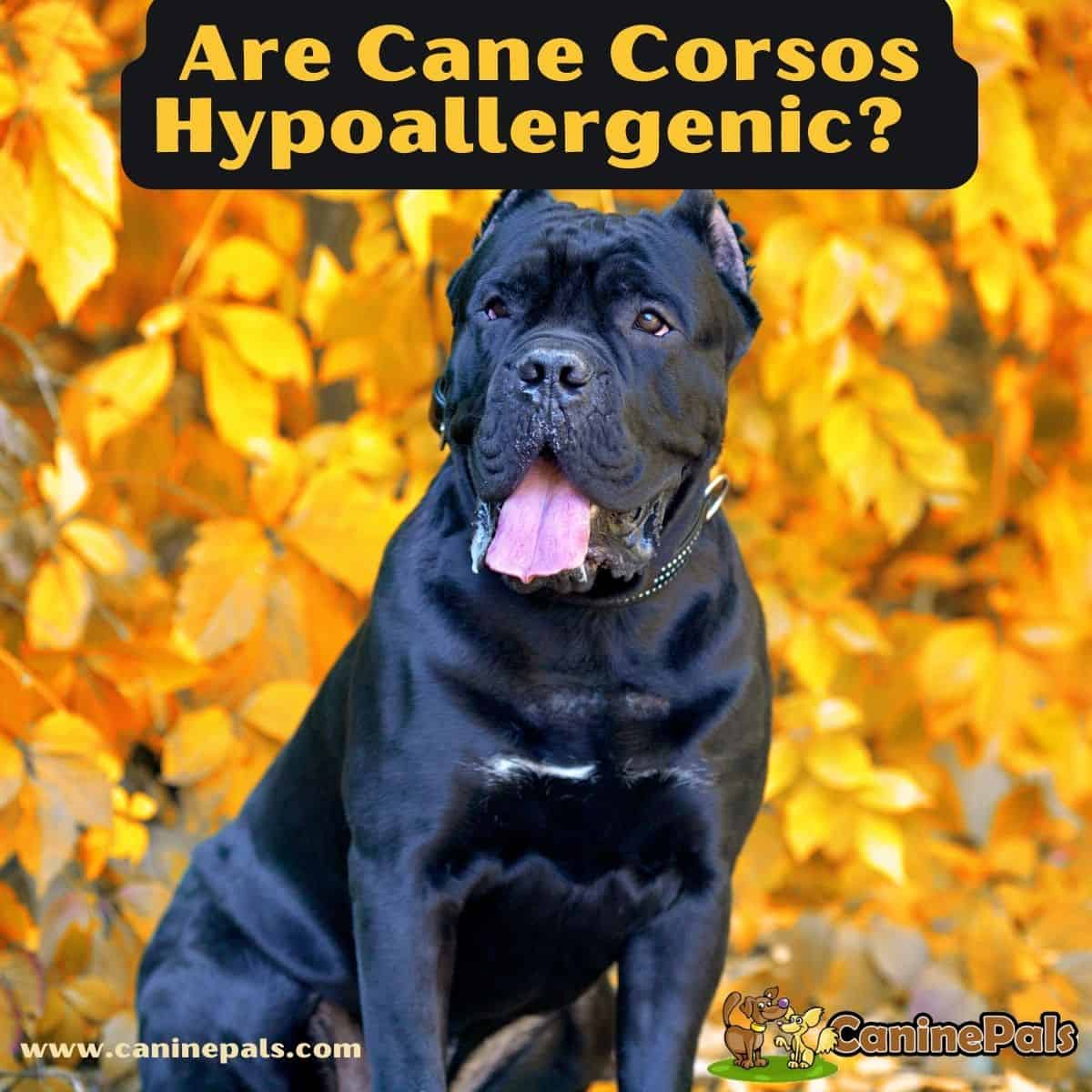
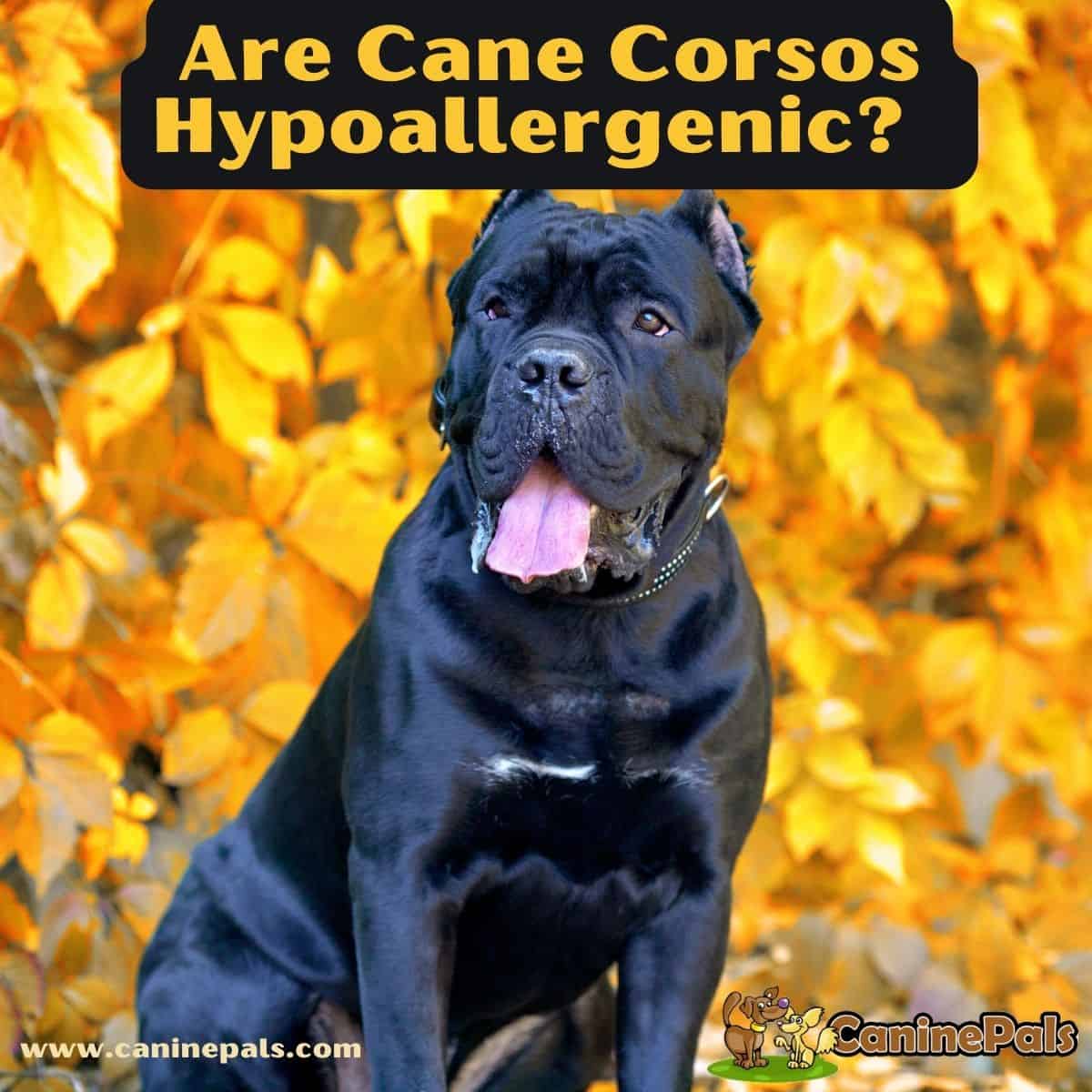
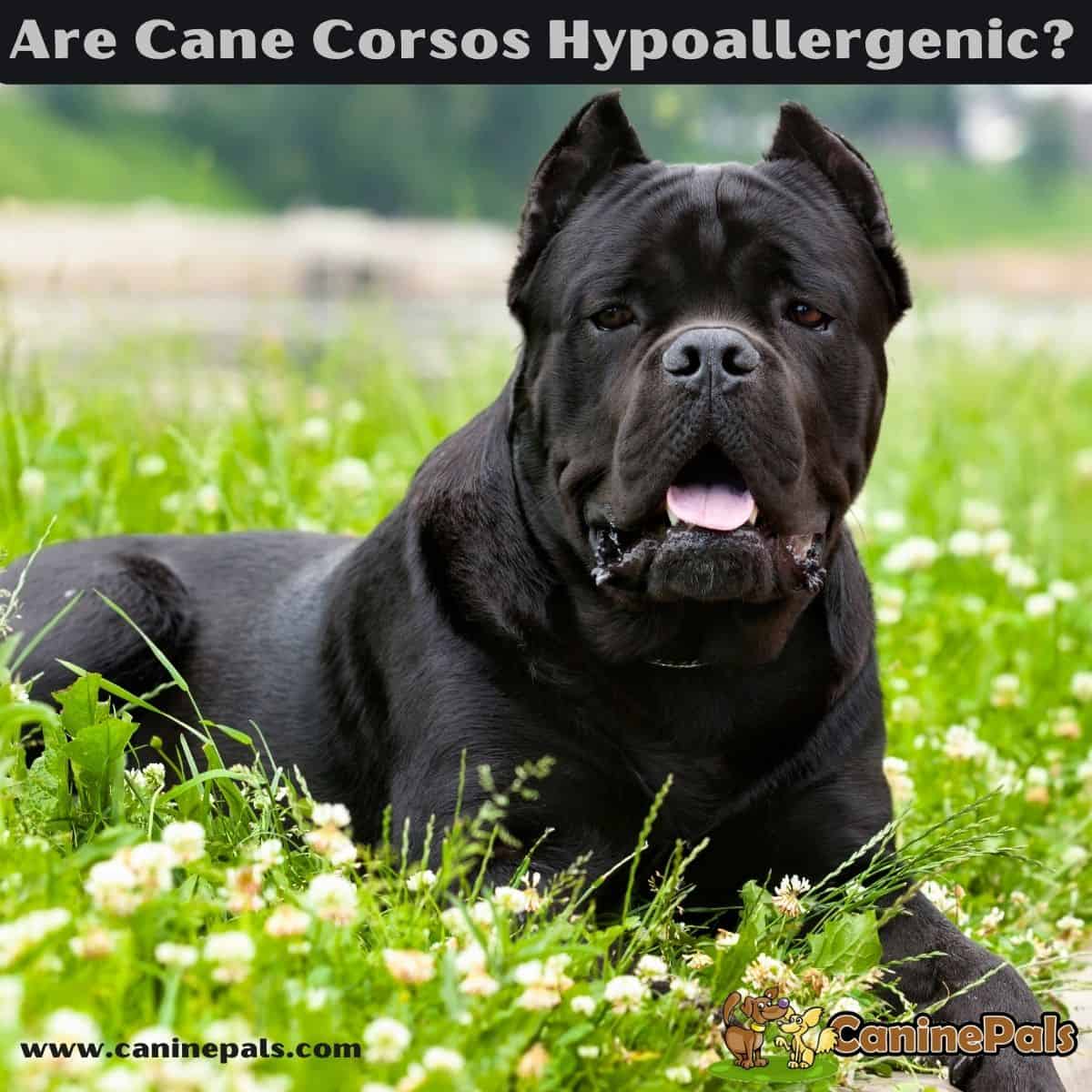
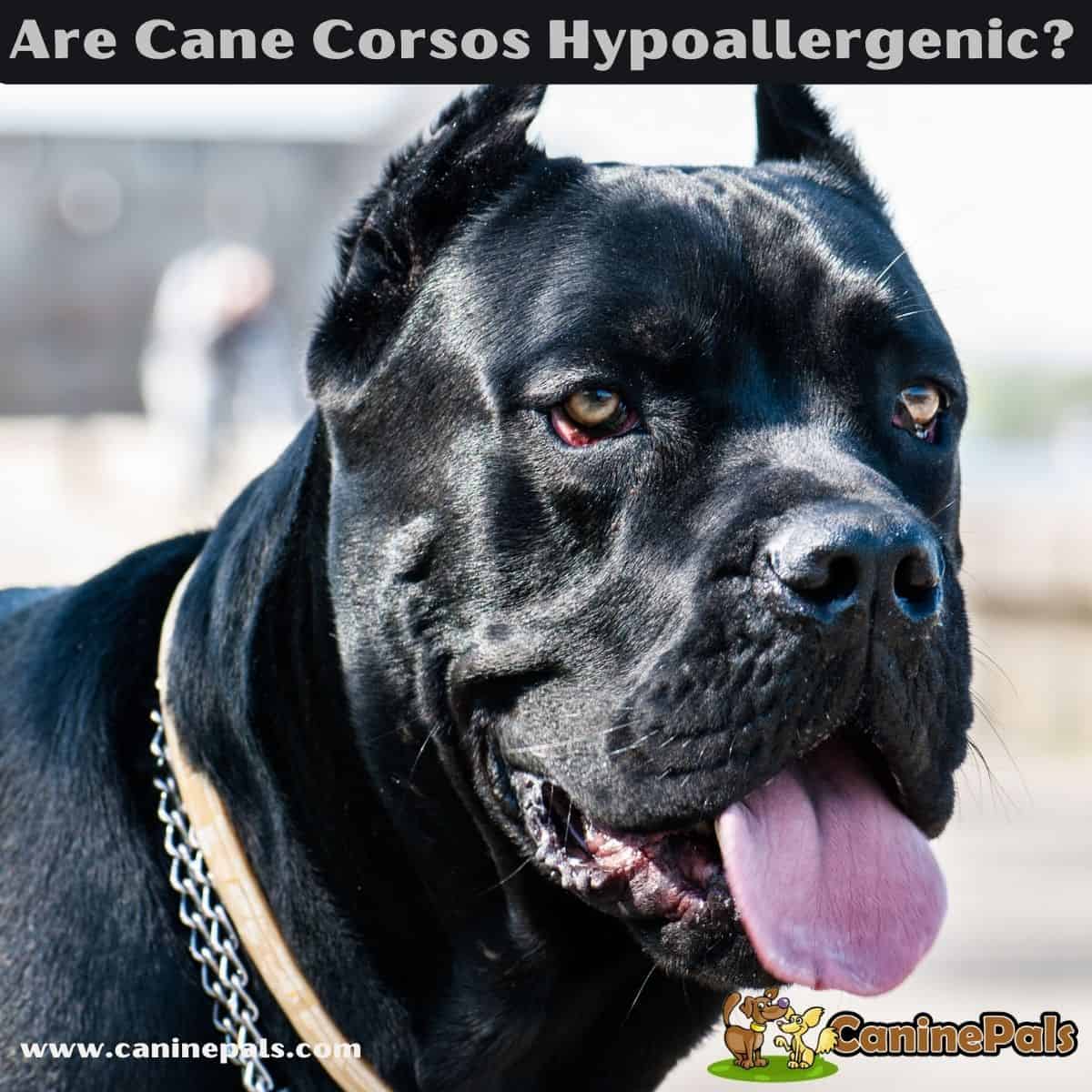
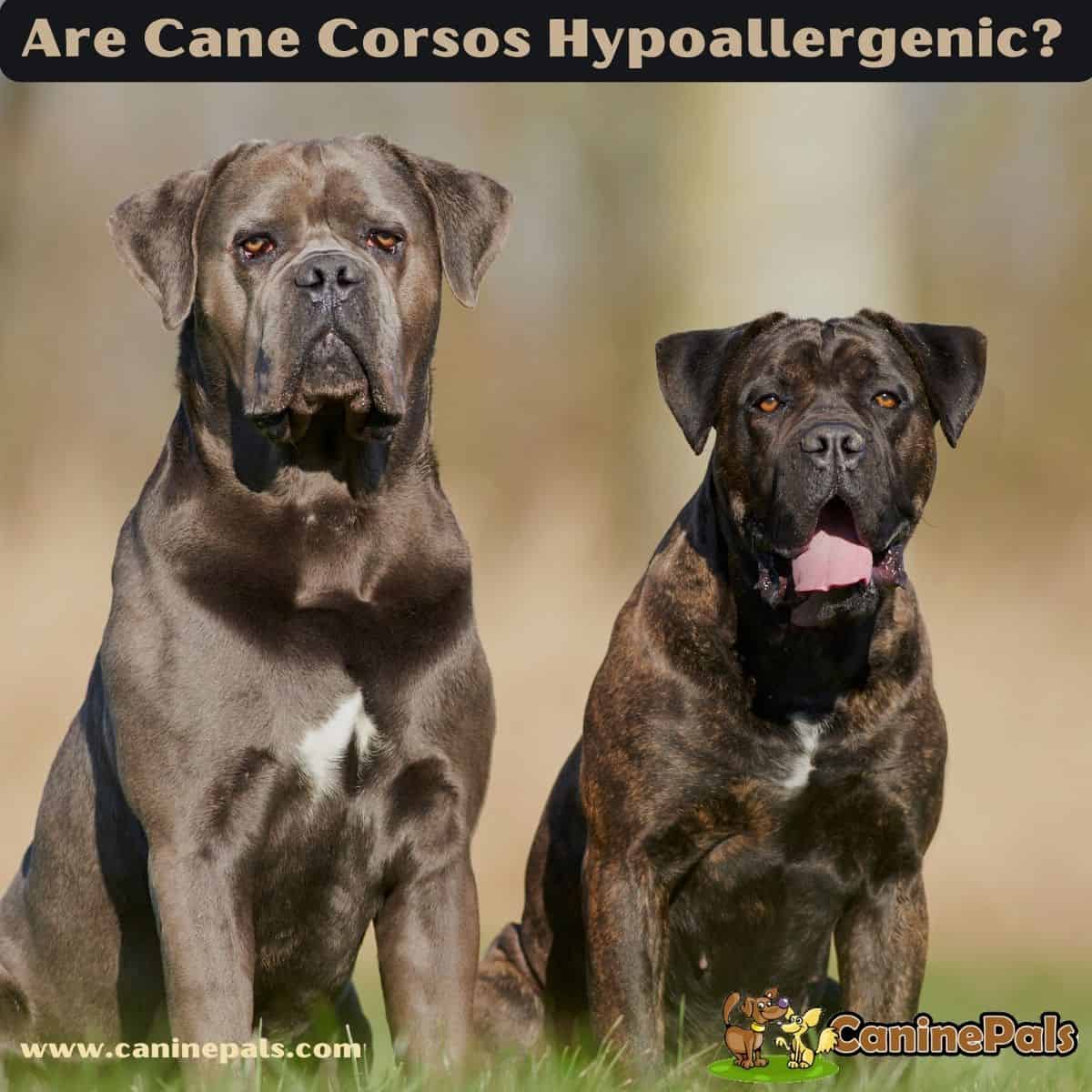
Are Cane Corsos Hypoallergenic?

Are Cane Corsos Hypoallergenic? All about this Dog Breed

Everybody wants to live a pawsome and pawsitive life with a dog, as they are the most faithful and loyal animals in the world. But many of us are allergic to dogs and want to own a breed that doesn’t cause irritation and sensitivity.

In such cases, a hypoallergenic dog breed is a breed to own. Hypoallergenic dog breeds don’t stimulate any allergies in humans. Many dog breeds have lesser chances of provoking allergies in humans as there is nothing a truly allergen-free dogs breed.

Many people want to own this giant dog breed called the Cane Corso and want to know whether Cane Corsos are hypoallergenic. People with several types of allergies ask such things as their allergies are severe in the presence of dogs.

Hence, to answer such reservations, we say that a Cane Corso puppy is a canine that is not one of the hypoallergenic dogs; although they have short hair and don’t shed much hair, they produce the protein that can trigger allergies in people who are allergic.

A few dog breeds make a kind of protein particles that causes disturbance in the immune system of an allergic person. These dogs produce dog allergies in their saliva, urine, and hair.

The presence of protein particles in these dogs causes sneezing, watery eyes, cough, and even swelling sometimes. People with asthma can suffer from difficulty breathing, chest tightening, pain in the chest, and shortness of breath while sleeping.

However, you can always significantly minimize the allergic reactions in Cane Corsos if you take proper care of three things: saliva, shedding, and dander. A Cane Corso doesn’t shed much, and it doesn’t even drool as much as the other giant breeds do.

This cute dog breed drools excessively in a few situations, like when the weather is too hot, when they are hungry or nervous, when they have pain in the stomach, and due to motion sickness or nausea. So if you can control its drooling beforehand in these circumstances, you can reduce the chances of allergies in the house.

If you are prone to dog allergies and still want to buy a Cane Corso, here is a list of some useful tips to make it easy for you to deal with this dog breed.

Are Cane Corsos Hypoallergenic?

Tips to Make a Cane Corso Hypoallergenic

Undoubtedly, Cane Corso is one of the cutest, most loyal, and lovable dog breeds; everyone wants one. If you have someone with allergies in the house and still want Cane Corso in your family, you can certainly do a few things to diminish the symptoms.

  1. You can reduce the allergic symptoms by building your immune system, most of the people who own Cane Corso say that they face allergenic reactions in the beginning, but after somewhat 6 to 8 weeks, their body becomes more immune to this breed.
  2. A proper diet plan plays a vital role in your dog’s and his coat’s health. To make your Cane Corso less allergic, try different diets, especially the RAW diet, which can be very helpful.
  3. Wipe your dog’s coat daily, always with a baby wipe, to reduce the allergens from his skin; this will help a lot.
  4. Regular grooming can also play a key part in diminishing symptoms; you can regularly bathe them once a week with hypoallergenic shampoos, which help remove allergens from the skin. You can also brush them regularly but always do this outside the house to avoid the presence of hair and dander in the house.
  5. Besides all these tips, self-protection is the best thing you can do for yourself or the person with allergies. Since mostly the allergens in Cane Corso cause skin irritation, you can always control it by covering your skin completely by wearing long sleeves clothes while contacting your pet.

What are the Other Reasons why Cane Corsos cause Allergies?

Apart from protein particles, there are a few other reasons these sweet creatures cause allergic reactions in humans, even those who don’t have allergies. The only way to control these conditions is by taking the right precautions. Here are the reasons:

  • Although a Corso doesn’t shed much hair, it has short pointy furs which can be piercing to our soft skin. Sometimes by this point, hair and our skin may face irritation, rashes, itchiness, and other problems.
  • The other thing is this breed is extremely playful and real explorers; they love to wander around and roll almost everywhere. The rolling makes them stick many allergenic plants to their coats, like poisonous ivy, sumac, and oak which also results in causing skin irritation and rashes when you contact your pet.
Are Cane Corsos Hypoallergenic?

Cane Corso History

It’s always fun to know more facts and history about your pet. The origin of this breed traces back thousands of years as they are linked with the working breed molossers, who used to be the guardians of an ancient Greek clan known as Mollosi. Later, the Romans conquered the Greek Island and brought this breed to Italy with them. They then bred this breed with their native canines to produce this giant breed called Neopolitan Mastiff and Cane Corso.

Originally Romans bred them to use in warfare; they used to serve as weapons that carried fire buckets on their back in the military services. But after the fifth century, when the Roman empire ended, these energetic dogs were used as hunters and farm guards.

This dog breed gained immense popularity in the twentieth century after creating the Amorati Cane Corso society that the Cane Corsolovers created in 1983. Luckily, this boosted their recognition, and they became show-stoppers in dog shows across Europe.

The Eighties was the same time when these adorable pups made their way to America from Italy and made quite a wave there. Its popularity led to the International Cane Corso Association, and in 2010 American Kennel Club officially recognized this dog’s breed.

Are Cane Corsos Hypoallergenic?

Appearance and Traits of Cane Corso

Can Corso have a majestic appearance? They are muscular and sturdy giant breed bred to protect. This large-sized dog breed has a stern demeanor, making them the best warrior dogs; however, their floppy ears make them adorable. The Cane Corso comes in many colors, like black, fawn, brindle, grey, and brown.

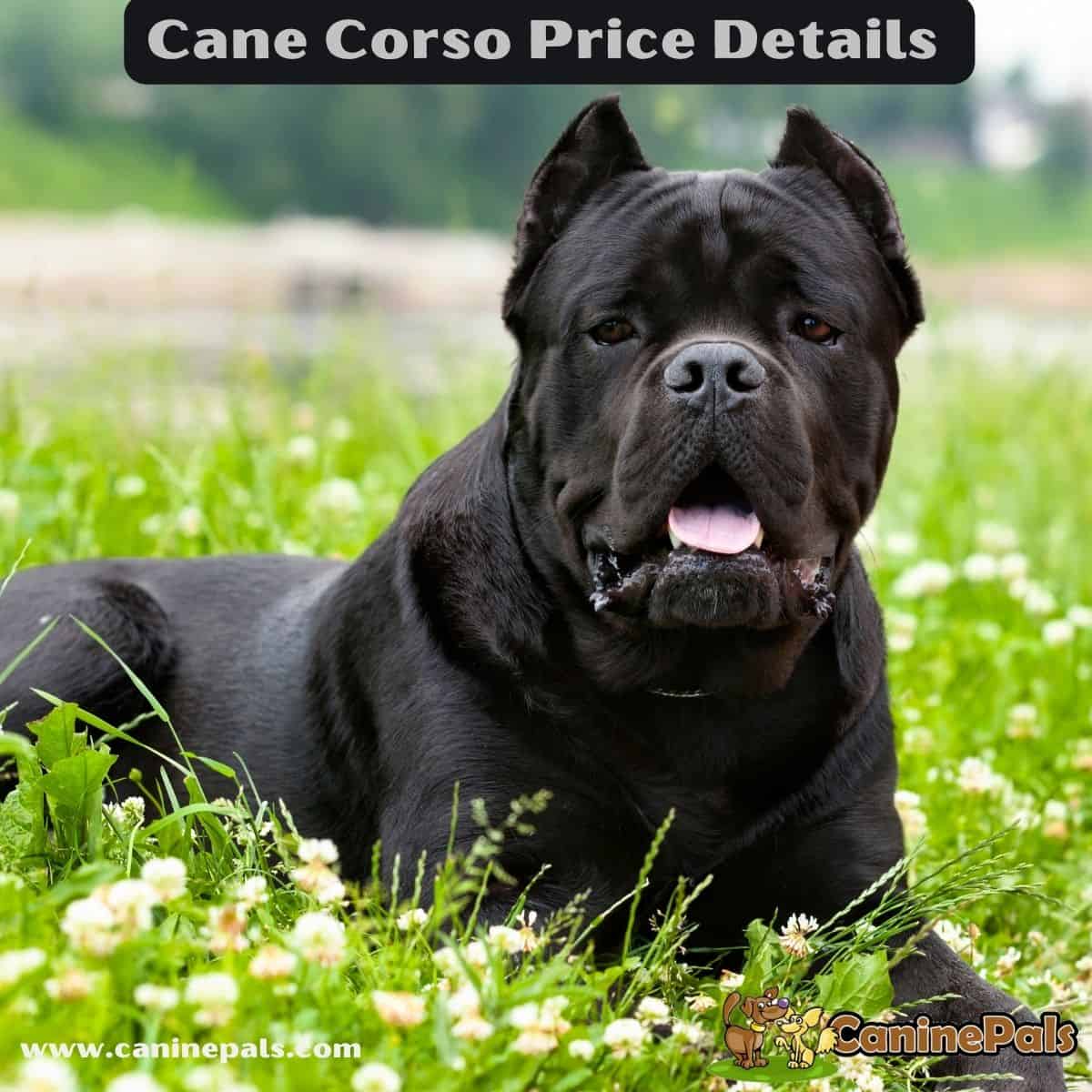
They possess cropped ears and have large nose flush with grey and a black muzzle. These friendly dogs are super-energetic and playful; this breed needs excessive exercise and training. They can survive in cold weather; however, on hot days, they get cranky.

Cane Corso is a gregarious and extremely loyal canine; they love their owner and show tremendous loyalty to them. These are warrior breeds, so they tend to bite and bark. This breed takes time to make friends with other dogs and doesn’t get along with cats much, so if you own a cat as a pet, you must think twice before getting a Cane Corso onboard.

Temperament

As we discussed earlier, this breed was bred as a protector, so they are serious, sensitive, and intensely faithful dogs. These are not very friendly dogs to any strangers, be it humans or animals; they get alert after seeing new people and also show anger toward them. But if you regularly socialize them and give them training can be very affectionate and playful. So, always train them before bringing strangers home so the pet doesn’t get offended by their presence.

Cane Corsos as Pets

If you plan to add Cane Corso to your family, you must know that this breed makes amazing pets as they are loyal, affectionate, and true protective guardians. All these canine needs are proper training and socialization; these are warrior breeds, so you need to give them consistent training throughout their lives to see their affectionate, cool and loving side.

This dog breed is not for occasional or first-time pet owners as they require a lot of time and energy from their owners for training and exercises.

Living Space for Cane Corso

Cane Corsos are an energetic dog breed that needs open space for exercise, training, running, and playing; they prefer living outside in backyards and big areas. These big size dogs can’t live in small apartments and confined places as this may result in causing various health issues in them. It’s common in most giant dog breeds that they develop anxiety and aggression if they don’t find freedom for exercise and playing.

Are Cane Corsos Hypoallergenic?

General Health Issues in Cane Corsos

Cane Corso is a large-sized breed; they generally have a life spanning over 9 to 12 years. But during this period, they face many health issues that play a key role in determining their lifespan. Following are the common medical issues that normally a Cane Corso can encounter.

Hip Dysplasia

Hip Dysplasia is a common skeletal problem found in most large and medium-sized dog breeds; in this condition, the hip joints of your pet start deteriorating with age. Dogs with hip Dysplasia suffer from excruciating pain affecting their overall life and mobility.

This condition is treatable and needs proper aid; however, you can always make things better for your pet by providing the right diet and competent joint care.

Just like hip dysplasia, this giant breed is also susceptible to elbow dysplasia, a medical condition used for abnormal growth of elbow joints and bones. This condition is painful and causes extreme lameness and arthritis in your pet. However, if diagnosed at an early age, there are various treatments to cure this ailment, like physical therapies, proper medications, and joint fluid modifiers.

Obesity

Weight plays an important part in maintaining a healthy life for all the dogs’ breeds, but in Cane Corso’s case, it needs to be more particular as these are already giant-sized dogs, and extra weight can worsen their condition. When these dogs gain excessive weight, it puts more strain on the joints, resulting in mobility issues and joint pains. Hence, daily exercise and a strict calorie diet are suggested for these dogs so they don’t put on extra weight.

Bloating Issues

Like other canines, Cane Corso also tend to have bloating issues as they have big, deep chests, making them vulnerable to bloating. Cane Corso can encounter many acute problems like gastric dilation, GDV, and volvulus, which causes agonizing stomach aches and can be deadly at times.

You can prevent this condition by taking some precautionary measures; always give your dog a small portion of meals throughout the day so that they can only take one bite at a time.

Demodectic Mange

This term is a skin condition found in most dog breeds. Mites, hair loss, and skin irritation cause this skin disease. Puppies usually inherit this disease from their mothers as it’s a genetic predisposition. Many proper medications are available to treat this ailment to make your pet healthy and lively.

Idiopathic Epilepsy

This condition is a seizure disorder that can only be controlled by medication if your pet encounters it. Idiopathic is a hereditary disorder; this medical term is used for “no known cause,” that’s why it’s not treatable. A Cane Corso can get this disorder when he gets three years old.

Eye Problems

Ailments related to the eyes are another common health problem faced by Cane Corsos, and most of the problems are related to the eyelid. Your pet can encounter entropion and ectropion eye diseases in which eyelids fold inwards and outwards, respectively.

Another common eye problem in Corsos is cherry eyes; it’s when the corner of the eye bulges out because of swollenness. These are the common problems; however, red eyes and eye irritation are also common eye infections in this breed.

How Much Does a Cane Corso Cost?

Since these are guardian dogs, this dog breed is expensive, and living with it is even more expensive than buying one. A small Cane Corso puppy from an average breeder may cost you around $1500 to $2500; if you want to buy a top breed Cane Corso, then it will increase the price and make it somewhere around $3000 to $5500.

Are Cane Corsos Hypoallergenic?

Final Thoughts: Are Cane Corsos Hypoallergenic?

The most frequently asked question by this breed lovers is the Cane Corso a hypoallergenic dog breed. We made sure to answer this question in the aptest way possible so that it helps you when you go to buy your new pet.

However, you can always control your Cane Corso being a hypoallergenic dog breed or non-hypoallergenic by taking preventive measures to reduce the risk of allergies. Besides all this, these giant dogs are the most playful loyal, and adorable dogs breed to add to your family.

To give our final words on Cane Corsos, we can say that this breed is flexible and durable once trained properly. They require regular exercise and a training regime to stay calm and affectionate, so if you are planning to get a Cane Corso onboard, all you need is patience and super-energy. This blog helps you deal with this adorable breed more accurately.

Copyright CaninePals.Com. All Rights Reserved.

References and Further Reading:

[1] American Kennel Club, Cane Corso Dog Information.
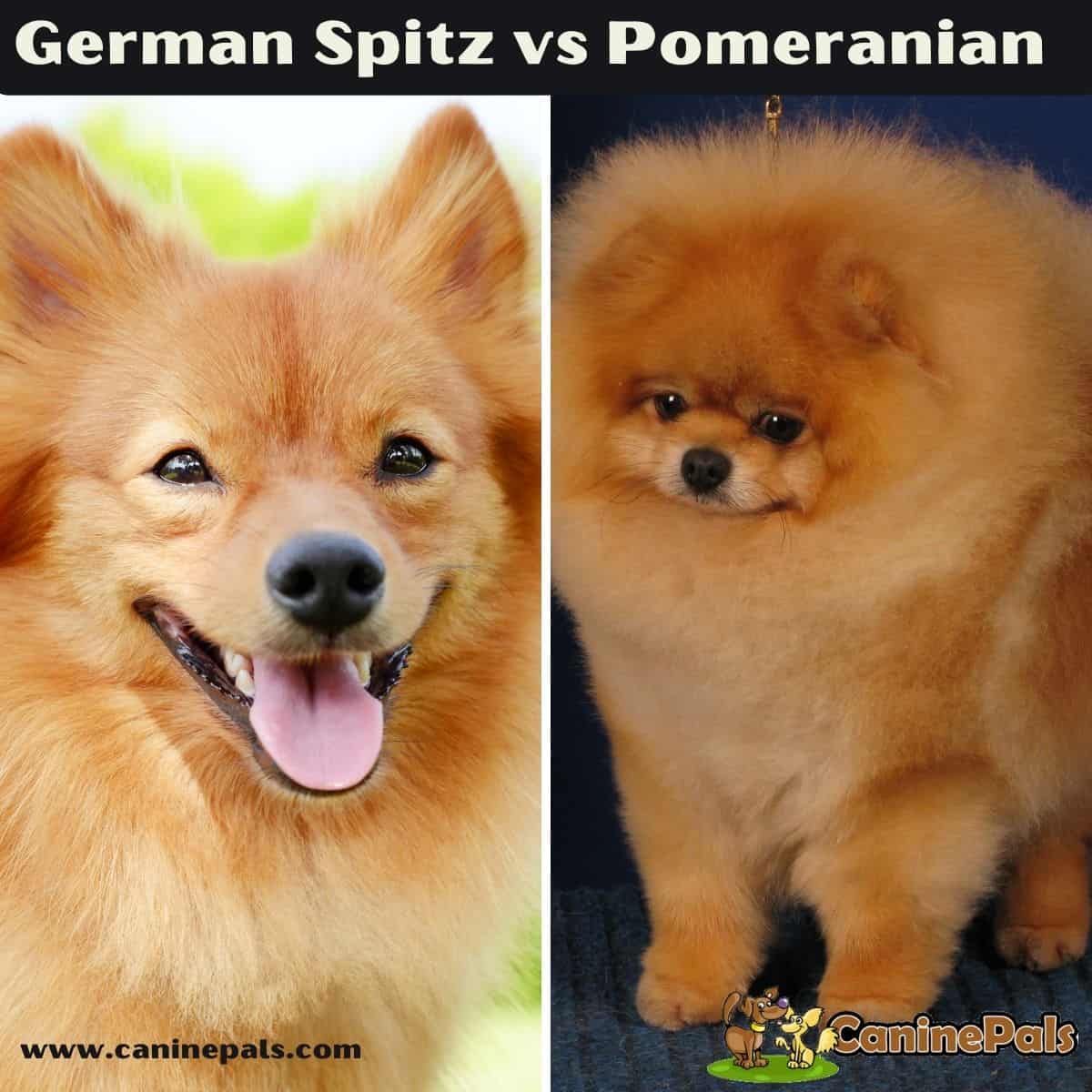
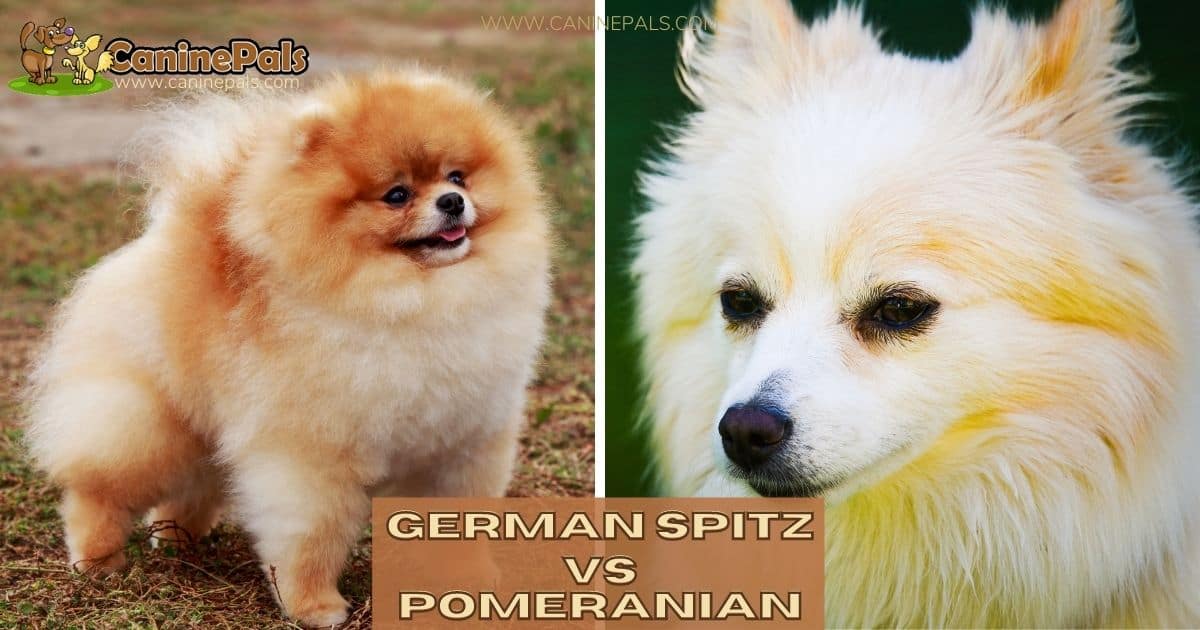
German Spitz vs Pomeranian

A Guide to German Spitz vs Pomeranian Dog Breeds

References and Further Reading: [1] Denise Leo “The Pomeranian Handbook”.

The Pomeranian Handbook


Looking for a perfect furry little pal but stuck with the German Spitz vs Pomeranian debate? Let us help you decide what you can expect from either breed! There are lots of dog breeds that are pretty similar to one another.

This statement is especially true for two dog breeds, German Spitz and Pomeranians, sharing the same ancestry. At first glance, you may feel that they belong to the same dog breed. The physical appearance of these majestic pals makes it a little difficult to distinguish between the two lovely species.

However, both German Spitz and Pomeranians have key differences, making them separate dogs falling under the umbrella of the Spitz family. Let’s have a look at both Spitz breeds to find out what makes them different.

German Spitz vs Pomeranian

German Spitz vs Pomeranian

Both German Spitz and Pomeranian dogs share the same heritage. They are the descenders of large sled-pulling Arctic dog breeds, and we can trace them back almost 6,000 years. Ever since their history has been intertwined. Germany is believed to be the origin of these guys. The initial purpose of both breeds was to serve as herding and watchdogs. Although today they make a great family pet, their piercing barking can make them wonderful watchdogs.

Breed Overview

German Spitz Breed

  • German Spitz can have a height of around 12 to 15 inches.
  • Weight is a factor that significantly differentiates a German spitz from a Pomeranian, as German Spitz weighs around 24 to 26 pounds. Which is a lot more than the weight of a Pomeranian.
  • These fur babies have a loving, attentive, and lively temperament.
  • German spitzes are average-energy dogs.
  • The lifespan of a German spitz dog is around 13-15 years.
  • Their price can range up to $800 and more.

Pomeranian

  • Pomeranians typically reach a height of 6 to 7 inches. Yes, their height is almost as half as a German Spitz’s height.
  • These puppies don’t weigh much. Their ideal weight lies around 3 to 7 pounds.
  • Pomeranians are curious little puppies with bold and lively temperaments.
  • The health and energy status of these furballs is also average.
  • A healthy and happy Pomeranian can live up to 12 to 16 years.
  • Depending on the physical features and bloodline, their price can range up to $1000 and more.

Breed History

German Spitz Breed

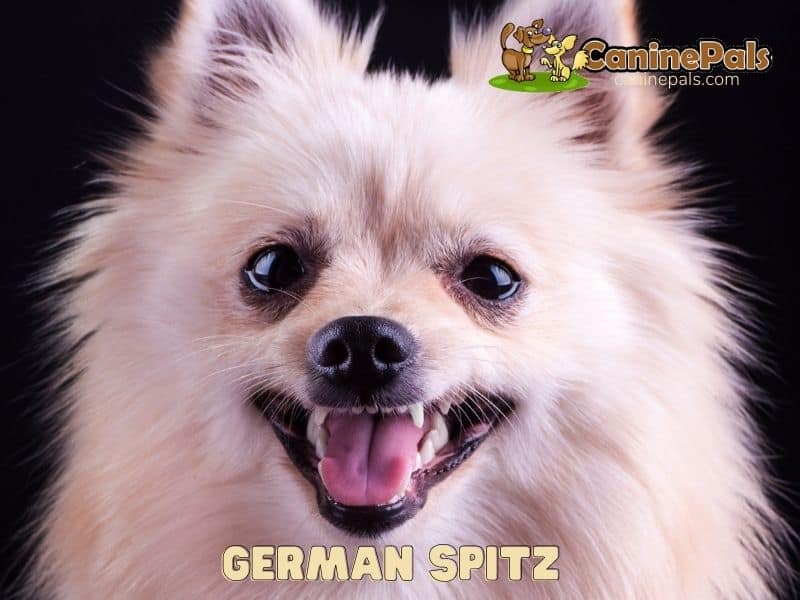
The first documented appearance of German Spitz dogs is from the 15th century. They are believed to be from the area of Pomerania. Back in the day, the poor members of society used them as forming dogs. However, the 18th century was when the royal nobles fancied this breed, and their popularity bloomed.

German Spitz
German Spitz

For pet lovers, it is vital to note that there are five official types of German Spitz dog breeds.

  • Wolf Spitz or keeshond
  • Grosse Spitz or giant Spitz
  • Mittel Spitz or medium-sized Spitz
  • Klein Spitz or miniature Spitz
  • Toy Spitz or Pomeranians

This article refers to the Mittel Spitz or the medium-sized Spitz, as this is what most people think is a German Spitz dog breed. After World War I, the population of the German Spitz suffered a major decline. But thanks to the breeders who revived the Mittel’s number by breeding the Keeshond with the Pomeranian.

Compared to the Pomeranian, the German Spitz is a new breed to America. Its popularity rating is not very high here, and the breed is pretty rare. At present, this fella is in the foundation stock service program, which allows rare breeds to establish recognizable statuses within the AKC.

Interestingly, the American Kennel Club, the United Kennel Club, and the Canadian Kennel Club are the only major clubs that recognize American Eskimo dogs as separate breeds. Most kennel clubs mix up the characteristics of American Eskimo and German Spitz dogs. So make sure to confirm that you are getting a German Spitz dog and not a similar version.

Pomeranian

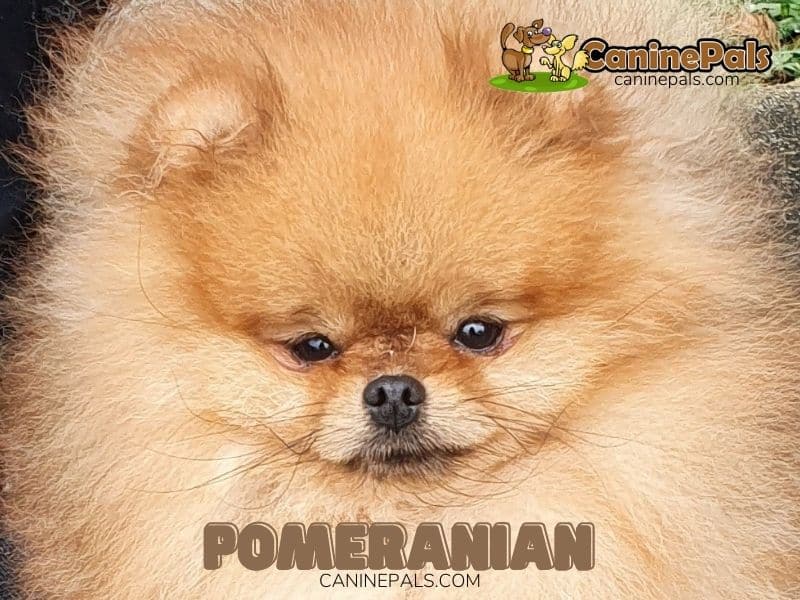
The Pomeranians have taken their name from the province in Germany. The lovely fella was pretty popular in there. Although their origin is the same as German Spitz’s origin, but as a breed, this pal was developed in the United Kingdom.

It is said that some famous personalities, including Michelangelo, were big fans of this smallest Spitz dog. It is also believed that Isaac Newton had a Pomeranian who loved to eat many of his manuscripts. What a mischievous little nibbler!

Pomeranian
Pomeranian

Similar to the German Spitz, the Pomeranians also became famous with the English royalty during the eighteenth century. But back then, the Pomeranians were much bigger in size. Plus, they were not as popular amongst the general public.

Things changed when Queen Victoria I came across a 12-pound Pomeranian in Italy. It then became her favorite hobby to create a much smaller and adorable-looking version of Pomeranians. And eventually, the cute little fellow was refined to the size we know it today.

It may seem unfair, but the toy status of the lovely Pomeranian became an instant hit across the globe. Their popularity reached the sky, and in 1888 was when Pomeranian entered the American Kennel Club. Today, Pomeranians are ranked as the 23rd most desirable breed in America. In many European countries, this puppy is also famous as the Zwergspitz.

Physical Appearance

Both German Spitz and Pomeranians are small-size puppies. Due to the closely intertwined history, you can think of a Pomeranian as a direct descendant or a toy or mini version of the German Spitz dog breed.

The average height of the German Spitz is around 12 to 15 inches. The males and females both have similar heights. While both male and female Pomeranians measure only 6 to 7 inches. German Spitz can weigh up to 24 to 26 pounds.

Whereas a Pomeranian only weighs 3 to 7 pounds. The body weights are similar for both genders (male/female) in both breeds. So, the obvious difference between Spitz and Pomeranian is the height and weight, where a German Spitz can be two times taller and three times heavier than a Pomeranian.

The second biggest difference between the two breeds is their coat. Yes. Both breeds have double coats that kept them warm while watching their herds and farm animals back in Germany.

However, a German Spitz puppy has a soft and fluffy undercoat. Plus, these puppies have coarser and straighter outer coats. A Pomeranian has a short and dense undercoat. In addition, their outer coat has finer and longer fur, giving them a fuzz ball outlook. Usually, the German Spitz’s tail slightly curls to either side of his body.

While the poms have heavily plumed tail that sits flat against their back. Pomeranians have 18 recognized colors, including black, whereas only eight colors are recognized for German Spitz. Their head shapes and muzzles are also different.

For example, a German Spitz muzzle is 1/2 of its skull and is much longer. In comparison, Pomeranians have a much shorter snout that’s only 1/3 of their skull. German Spitz has triangle-shaped erect ears. Therefore, their ears are always visible. Pomeranians also have erect ears, but those cute little ears often disappear in this fella’s fluffy coat.

Temperament

Despite the obvious German Spitz and Pomeranian differences, both breeds have a similar temperament. Both puppies are little pocket rockets. They are lively and will love to bounce around for hours. Both breeds love to stay on the go.

That’s why owners need to be with them most of the time, either cuddling or entertaining them. But if you have to go out for extended periods, then you must leave something entertaining behind for them to play around with. Their tiny legs and adorable paws might not need the exercise, but their hyperactive brain rarely rests!

German Spitz Temperament

The German Spitz dogs were originally bred for working and guarding purposes. Therefore they are naturally active dogs and have a tendency to stay alert. They are famous for their protectiveness. Your German Spitz puppy is highly vocal and may bark at the sound or sight of strangers.

These pups are extremely trainable and smart, but they are pretty self-aware and may become stubborn while dealing with inexperienced handless. Experienced attention and early socialization can make German Spitz an excellent addition to any family.

Pomeranian Temperament

Pomeranian Spitz is a true example of a small dog with a big mindset. And the little pooch will be more than happy to prove it to anyone, anytime! Pomeranians are also quite vocal, and if given a chance, they may bark excessively.

This cute fellow is famous for his companionship and is a little less active than the German Spitz dog. So, he is a great match for individuals looking for a smaller and less active Spitz breed.

Although Pomeranians are highly intelligent and excel in obedience, they have a label of being relentlessly stubborn. But don’t worry, there is nothing that a hint of positive training can’t handle! Overall, both breeds are extremely social and curious and want to befriend everyone.

German Spitz and Pomeranians are generally happy with other dogs and may yap or challenge their fellow pups. Unfortunately, their adorable yet fearless challenges are what cause them injuries by unfamiliar dogs.

They are extremely affectionate and will love spending time while playing or napping on your lap. Both breeds are great with children, but it is important to teach our kids how to handle a small dog properly, so no one gets hurt.

German Spitz Vs Pomeranian

Exercise and Training

No matter what the debate says about Pomeranian vs. Spitz, both puppies are firecrackers. They are middle-energy fellows who bounce all day long. These breeds need almost 30 minutes of exercise per day. And it is essential for their mental and physical health. It is good to socialize and train these guys as soon as possible.

It helps them to become comfortable in different situations. Plus, it increases your chances of getting a well-behaved pooch. So it’s not only beneficial to you but to your pet as well. Although they are not shy in any regard. But their small size makes the world a big scary place. So early socialization is necessary to shape them into vivacious and fearless dogs. Just the way they should be!

German Spitz Dogs

German Spitz was bred as a working breed. Therefore, their exercise requirements are a little higher than other small-breed dogs. A few brisk walks every day and at least 2 hours of playtime are vital to keeping them fit. In addition, these fur balls are natural athletes, and they need daily mental stimulation to build their confidence.

Pomeranians

Unlike most toy breeds, the Pomeranians are a little more active, and their exercise requirements are more than the average lapdog. A few short but fast-paced walks and an hour of interactive games in the backyard should be enough.

One thing’s for sure, whatever you do, don’t expect these fur babies to be classic lap dogs. Cause if they want to, they can be a little destructive devil! Both breeds, especially the Pomeranian, need dog toys that are perfect for their size.

Health

Pomeranians and German Spitz are both healthy dogs. German Spitz is a new breed in America, so only a little information suggests what health tests should be done on him, but both breeds suffer from similar problems. So it’s a safe bet for German Spitz lovers to have the same health evaluations:

  • Cardiac Exam
  • Patella Evaluation
  • Ophthalmologist Evaluation

German Spitz vs Pomeranian Final Thoughts

The German Spitz and Pomeranians are similar in many ways. Both puppies have a life-loving and loyal temperament. They appear to look similar but are quite different when you dig down into finer details.

These guys are not like classic lapdogs and require moderate exercise plus special training, so they don’t get too arrogant. Therefore, you must complete your research before welcoming one of these cute little pals into your home.

Due to their shared ancestry, their traits almost go hand in hand. Whatever the Pomeranian vs. Spitz debate is, they both are small full of energy fluff balls. So, if you are after a small dog with a giant character, these guys are your way to go.

Disclaimer: The Content is not intended to be a substitute for professional veterinarian advice, diagnosis, or treatment. Always seek the advice of your veterinarian with any questions you may have regarding the medical condition of your dog. Never disregard professional advice or delay in seeking it because of something you have read on ANY website.

More Pomeranian Information is available on the Pomeranian Resource Website Pomeranian Dog Breeders Pomeranians Australia

Copyright CaninePals.Com. All Rights Reserved.

References and Further Reading: [1] Denise Leo “The Pomeranian Handbook”.

The Pomeranian Handbook


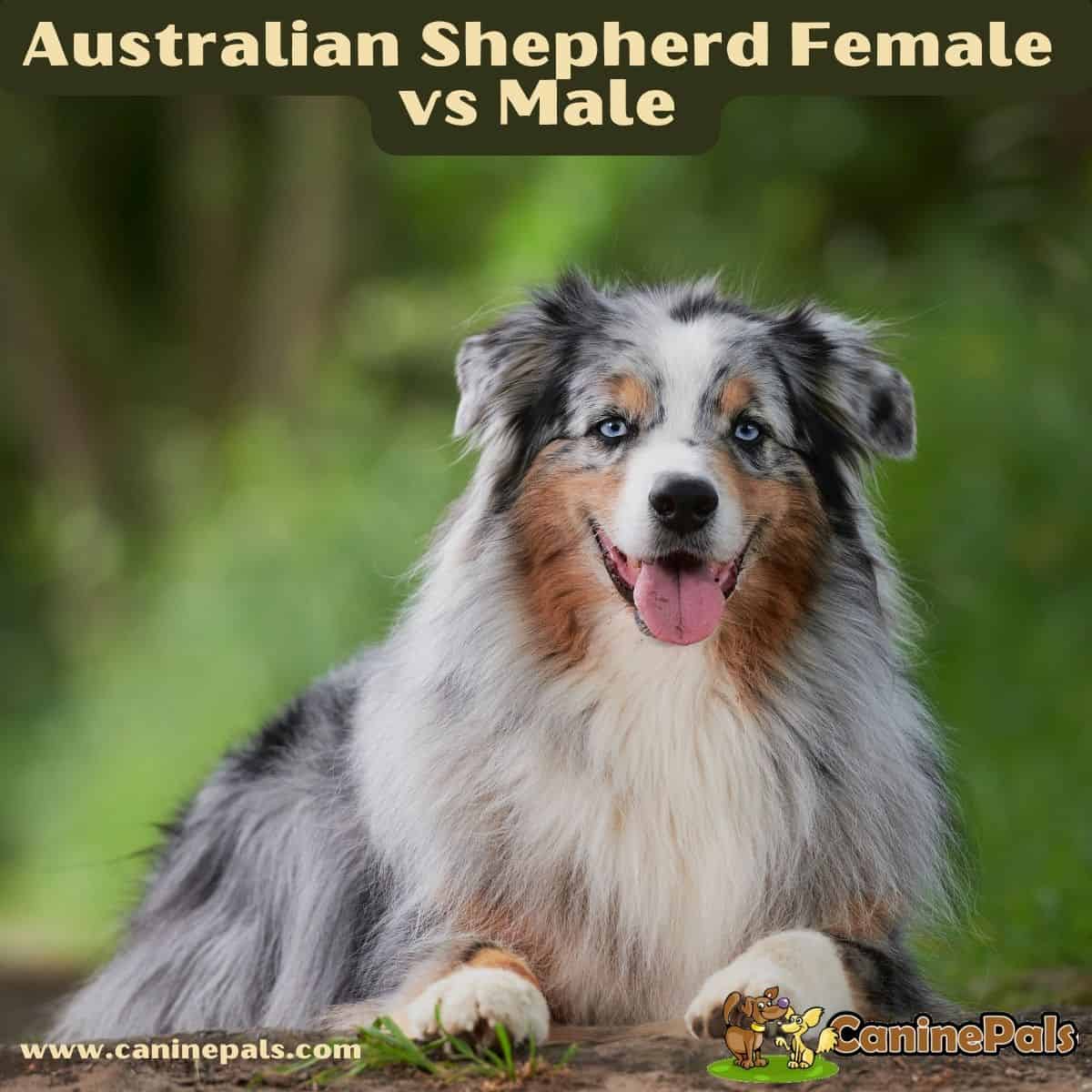
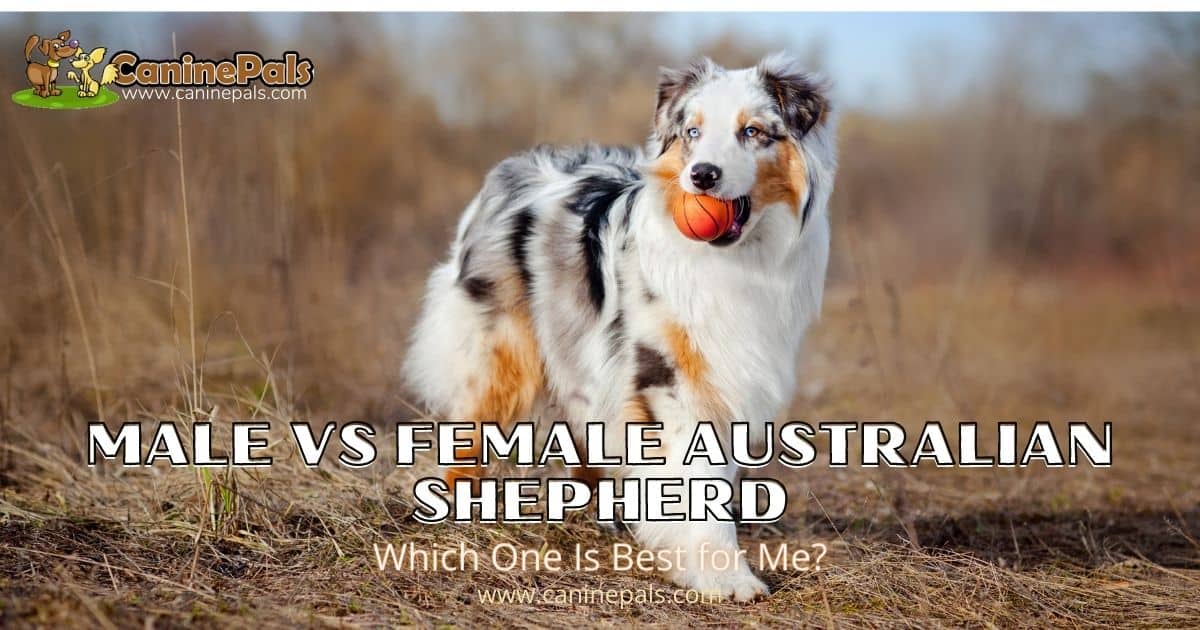
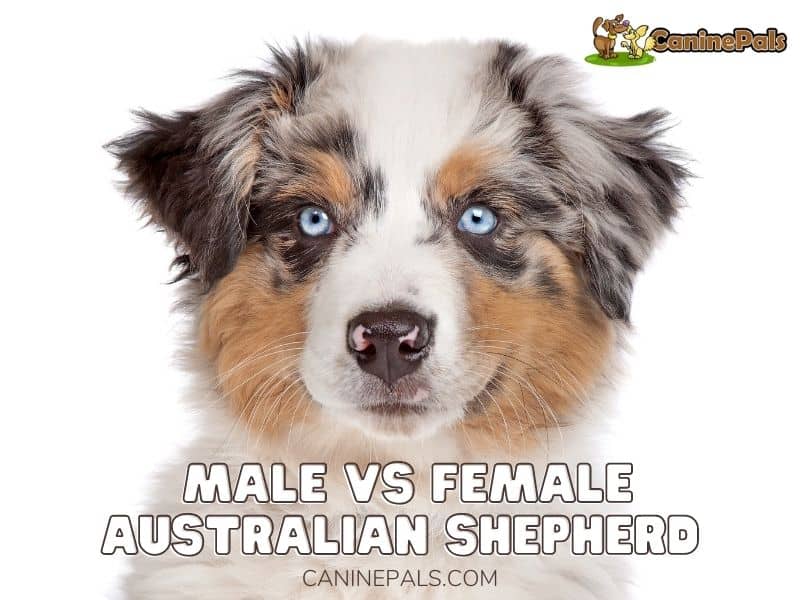
Australian Shepherd Female vs Male

Australian Shepherd Female vs Male – Which One Is Best for Me?

Australian shepherds are the friendliest dogs. Thanks to their fun-loving temperament and most expressive innocent eyes, these witty furballs make the dreamiest pets for anyone looking to adopt a playful puppy.  The Australian Shepherd is not an Australian dog breed.

If you are already adamant about buying an Aussie Shepherd, here comes the main question; Australian Shepherd female vs male? Which one is best for you?

To be honest, there is no difference between a male and female Australian Shepherd apart from the size and minor personality features. A male Australian shepherd likes to shower love, whereas a female Australian shepherd would prefer to receive more.

You may choose a puppy according to its features, personality types, trainability, and temperament, regardless of gender.  Be it a male or female, what matters most at the end of the day is how well you two can bond and reciprocate each other’s emotions.

The Australian Shepherd has powerful guarding and herding instincts and needs lots of daily exercise. He’s a people dog, although may be reserved when around strangers.

If you are still clueless about which one would suit you best, scroll down and get to know in detail the key differences and similarities between male and female Australian shepherds.

Australian Shepherd Female vs Male

Male vs Female Australian Shepherd- What are the Key Differences?

Choosing a male or female puppy is more of a personal preference. Even though they do not have any significant differences to take into account, however, a few aspects like physicality and temperament may differentiate male and female Aussie fur babies from each other.

Size

Size is the most prominent difference between male and female Australian shepherds. Australian Shepherd Male size is noticeably bigger than the female size.

A male Australian shepherd, once fully grown, possesses a height that ranges from 28 to 32 inches. On the other hand, female Australian shepherds have an average size of 25 to 29 inches in general.

Females also differ from males in length and are relatively more minor. The average length for a female dog ranges from 28 to 31 inches, whereas a male Australian shepherd grows from 31 to 36 inches in length.

Overall Australian Shepherds are medium-sized dogs with flexible natures and the most adaptable personalities.

Weight

Male dogs are naturally heavier than female dogs in most dog breeds. Australian shepherds are one of those breeds as well.

The male dog, on average, weighs between 55 to 70 pounds, while a female Australian shepherd weighs between 35 to 55 pounds, which is indeed a vast difference.

Male Australian shepherds have a more macho presentation due to thick coats, heavier build, and muscular bodies than their female counterparts.

Appearance

The heavier head, stronger bones, and ultra-masculine physical features typically distinguish male dogs from females, and Australian shepherds are not exceptional. They also have a particular difference in appearance.

Male Australian shepherds look giant with their more robust built and denser coats in contrast to female Australian shepherds who have a slightly compact appearance.

Conventional female adorableness and male masculinity are a part of the Australian Shepherd breed as well, and you cannot defy nature when it comes to action.

Trainability

Australian shepherds love to please their owners, and they are behaving very well in order to get verbal praise or treat from the owner. They are also categorized as one of the most intelligent dog breeds; therefore, training them is easy.

However, male and female Australian shepherd’s training temperament is slightly different from each other.

Male Australian shepherds are eager to learn new things, so it’s easier to get them on the training track, but boys are boys. They are highly distractible and may lose focus quickly therefore the trainer has to be alert and present. They need constant change in stimulus if you want them to retain attention for longer.

Female Australian shepherds love to perform well on any given task, so training and they would love to remain on track without you putting in the extra effort. However, getting a female Australian shepherd on track and convincing them is relatively harder.

Does it mean male Australian shepherds are harder to train than females? No.

As far as training ability is concerned, both genders are equally intelligent and quick learners. Their innate desire to please the owner also drives them to behave and train well. Just keep giving them attention, and you shall enjoy their obedience to the fullest.

The Australian Shepherd herds livestock and works on ranches and farms. He needs to be kept active to stay happy. Because of his versatility and high intelligence, he also excels in obedience, agility, and herding events in shows.

Temperament

Australian shepherd male vs female temperament is another point to ponder. They do not have an apparent difference in temperament and both are equally playful and loving; however, some distinctive features set them apart.

Male Australian Shepherds are referred to as more loyal and compassionate. They are very protective of their owner and often shower them with great love.

They are also quite expressive and straightforward. Australian Shepherds behave pretty obviously when they like you, so rapport-building is reasonably easy with male Australian shepherds.

On the other hand, female Australian shepherds are subjected to receiving love and attention more than they would like to give. It does not mean they do not show love or loyalty, but in general, they need a little more time in coming out of their comfort zone and being expressive.

You may get a male Australian shepherd if you want your dog to be all over you often and a female Australian shepherd if you want reciprocity in your relationship with your pet. Females demand more attention whereas males impart attention to the owner; simple is that.

Noisiness

Australian shepherds are not aggressive; instead, they are highly expressive. They are super jumpy and energetic. Australian Shepherds have a huge tendency to howl, and this breed is known for its noisiness.

They are pretty sensitive and dependent; Separation anxiety is pervasive in Australian shepherds, so you may expect your dog to bark his lungs off on days you arrive home late. If left alone, they have a tendency to become noisy, unhappy, and frightened.

Females Australian Shepherds are calmer and more relaxed as compared to males. You can train them efficiently not to bark when you leave through treats and appropriate behavioral training.

Loyalty

Australian Shepherds are known for their loyalty and companionship qualities. Male and female both are equally loyal, but Male Australian shepherds like to be around the owner all the time, which often makes them look more loyal.

You shall not mistake typical female self-containment with disloyalty. Females of this breed are also very devoted to their caregivers.

Male vs Female Australian Shepherd

Additional Differences between Male and Female Australian Shepherds

Hormonal Differences

Similar to every species, male and female Australian Shepherds have distinctive hormonal profiles. The body of a female Australian Shepherd allows her to mate twice a year only. During this period, her body produces secretions that attract male dogs toward her. This period typically lasts for two to three weeks.

Unlike females, Male Australian shepherds can mate anytime around the year. A male body is always prepared to mate successfully- provided the female is in the reproductive phase.

If you don’t want your female dog to get pregnant or you do not have time to invest in producing a litter, you may get your female spayed. Spaying is a surgical process in which a doctor removes ovaries and other reproductive parts from a female body. This way, the female permanently loses its ability to reproduce.

Another way to stop female dogs from getting pregnant is to keep them away from male dogs when they are in the reproductive phase and looking to mate instinctively.

Males generally get very aggressive if you do not make proper mating arrangements for them. Many owners get male reproductive organs removed too, to avoid this problem. This process is called neutering. Dogs also undergo a surgical process during which their testes get permanently removed.

Health Differences

The life expectancy of male and female Australian shepherds is quite similar. Both genders have a life span of around 13 to 15 years. However, the diseases differ in nature.

In females, uterine cancer or mammary infection is more common while male Australian shepherds suffer from testicular cancer and prostatic hyperplasia. Spaying females and neutering males help in curbing down the susceptibility to these life-threatening diseases.

Other diseases like corneal infection, arthritis, and orthopedic concerns are common in both male and female Australian shepherds.

Male vs Female Australian Shepherds- the Similarities

Attitude

Male and female Australian shepherds are very lively and high-spirited dogs. They possess the ability to keep their owner on their toes with their vivacious and fun-loving attitudes.

They have exuberant energy and love to socialize. You may find Australian shepherds hoping on any stranger while you take them out for a walk. Yes, they are that friendly. Human interaction is very well-received by Australian shepherds.

They are also extremely intelligent, so you may need to put their brain to good use by assigning them different indoor tasks.

Energy Level

Australian shepherds were originally used by farmers to herd cattle.  Running up and down the hill and chasing cattle comes naturally to Australian shepherds, which explains their high energy level.

If you have Aussies at home, you must engage them in different indoor dog activities or take them out for a walk regularly; otherwise, the boredom will make them show destructive behavior like chewing on furniture, howling, or running around the house.

Neither the Aussie approves of becoming a couch potato himself nor allows the owner to do so. Be ready to have unlimited fun if you are planning to adopt an Australian Shepherd.

The Coat and Color

Male Australian shepherds though have a sturdy appearance and a slightly denser coat however, the male and female dogs look the same when it comes to color and beautiful thick coats.

They have a double-layered coat of medium length, which comes in an array of beautiful colors. His coat can be red, red merle, blue merle, black, and sometimes may have markings. Some dogs also have tan points around their eyes, neck, chest, tail, or legs.

The downside of this thick coat is shedding. They shed twice a year, so you may have to take precautions regarding maintenance and care of the coat. The thick coat needs brushing weekly.

Companionship

Australian shepherds are the best family dogs. They are very protective of their family members and are known for their loyalty toward them.

They are enormously affectionate towards kids as well, and you do not have to worry about a child’s safety around an Australian shepherd. However, you may need to train them not to nip on kids in an attempt to herd which comes naturally to them.

Australian shepherds long for human affiliation and company. They want to be around the family and would love to spend time sitting near you on the couch and play with you in your leisure time.

Owner Pleasing

If pleasing the master had a face, it would be of an Australian shepherd. They just cannot take the rudeness of their master and have to make him happy. Due to this quality, they are straightforward to train and manage overall.

You can even train your dog to help you with simpler house chores. Your Australian shepherd can easily be trained to pick up dirty clothes off the floor or wash the bowl underwater after having a meal.

They are super intelligent, which enables them to learn and adapt to new things quite fast.

Male vs Female Australian Shepherd

Final Word

Are male or female Australian Shepherds better and more reliable pets? Of course, they are. Their dutifulness towards their owner and the sweet face with huge innocent-looking eyes has successfully made their way to many hearts and homes.

Male vs female Australian shepherds, which one is more suitable is a very common concern of several people who want to adopt this breed. The difference between male and female dogs is more related to physical aspects and becomes negligible when deciding to buy one.

Your dog’s eagerness to please you will make it a lot easier for you to train him therefore Australian shepherds make the best pup for a first-time dog parent.

Having said that, either male or female, you are going to love the company of this playful, vibrant, and loyal dog and wouldn’t regret your decision to buy one.

Copyright CaninePals.Com. All Rights Reserved.
References and Further Reading:

[1] American Kennel Club, Australian Shepherd Information.

Australian Shepherd
Australian Shepherd


Australian Shepherd
Australian Shepherd

Australian Shepherd
Australian Shepherd

How Much Does a Newfoundland Cost

Complete Details: How Much Does a Newfoundland Cost?

Loyal, smart, intelligent, friendly, loving, powerful, hardworking, jovial personality, and umm… ugh… I lost my train of thought! All Newfies traits cannot be penned down at the same time. They are the all-in-one package.

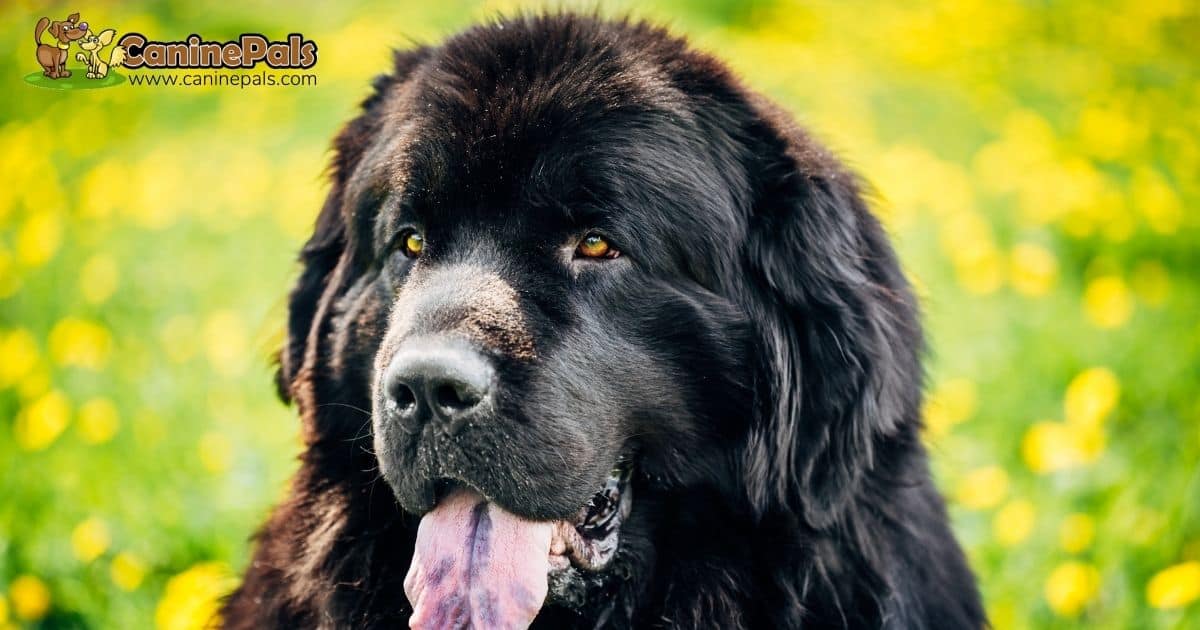
The gentle giant breed with a broad skull, slightly arched crown-shaped head, and dark-brown almond-shaped eyes, small and triangular ears epitomize the Newfoundland dogs. None can have these intimidating features except Newfies.

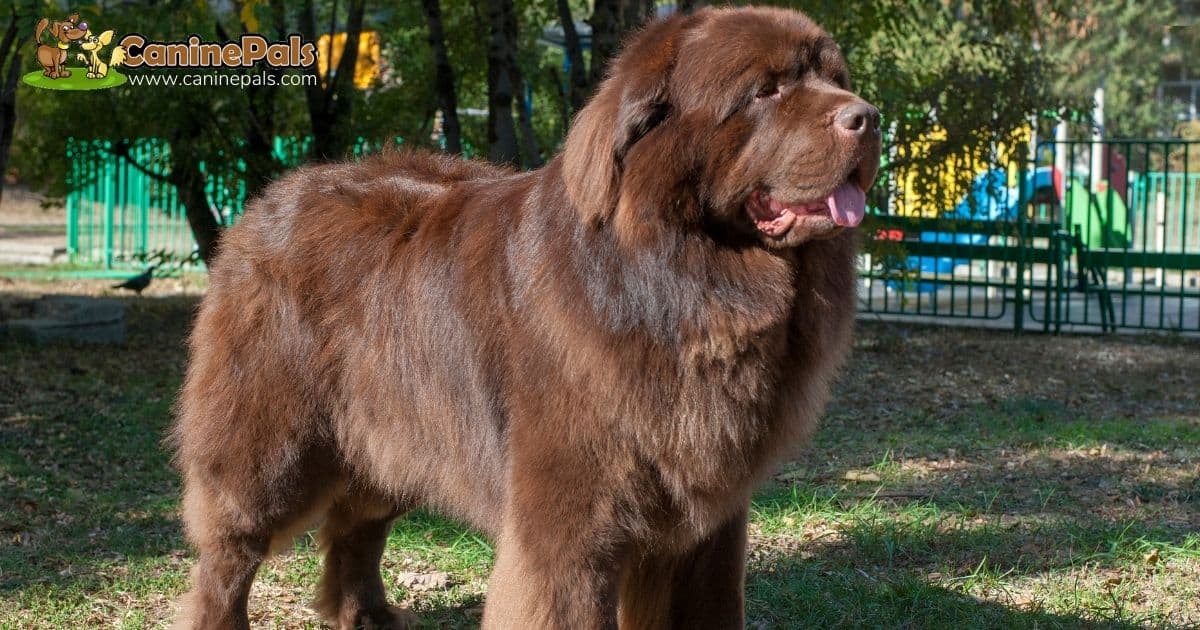
They come in a range of adorable shades from jet black to white, from brown to grey, and in black and white combinations. Landseer was the first color of the Newfoundland breed. They never failed to steal the show with their eye-catching colors.

No doubt all traits rolled into one body are also expensive. Newfoundland dog cost is more than the average expected cost of other dogs. This article discusses everything you need to know about how much does a Newfoundland cost? It is the ultimate guide before you get Newfies for yourself!

How Much Does a Newfoundland Cost?
How Much Does a Newfoundland Puppy Cost?

How Much Does a Newfoundland Dog Cost?

The cost of buying a Newfoundland ranges between $600 and $2000, with an average cost of $1,200 depending upon the dog breed and the reputable breeder you’re buying from. It is recommended to go for a trustworthy, reputable breeder as it is important for the dog’s health.

Newfies are double the size of average dogs and triple in terms of expenses. The first-year expense costs around $3,930 and will eventually decrease to $2,305 per year.

The initial Newfoundland puppy cost includes:

  • Health pet insurance
  • Medical check-ups
  • Health records
  • Health certificate/license
  • Physical exam by a renowned vet
  • Microchip, and others

 Cost of Supplies for a Newfoundland Dog:

Supplies help to welcome a Newfoundland puppy into your home more easily. After extensive research, it is concluded that the initial cost of supplies ranges between $254 and $925, with an average cost of $495. However, in subsequent years the average supplies cost will decrease to $225.

The estimated cost of supplies chart will help you to make a well-analyzed decision:

Supplies Price Range ($) Average Cost ($)
Premium dog food & water bowls $10 – $40 $20
Leash $10 – $30 $15
Dog Collars $10 – $40 $20
ID tag with phone number $5 – $20 $10
Dog Crate (48″ or 60″) $50 – $165 $90
Dog Bed (48″ or 60″) $30 – $110 $60
Pooper Scooper $10 – $30 $20
Plastic Poop Bags (900-1080) $15 – $110 $55
Stains and Odors Removal Spray $5 – $20 $10
House Training Pads (75-100) $15 – $45 $25
First-Aid Kit $15 – $50 $30
Toys $50 – $155 $90
Brush $5 – $45 $15
Shampoo $5 – $20 $10
Tooth-brushing Kit $5 – $15 $10
Toenail Clippers $5 – $30 $15


Cost of Professional Training:

Newfoundland dogs don’t necessarily require professional training. However, a few group lessons by expert trainers cater to basic commands, obedience, and socialization. The Newfoundland cost of professional training ranges between $150 and $200 with an average cost of $175. The sessions are one hour long for up to five weeks.

Newfoundland Dog Price of Medical Requirements:

Yes! Owning Newfies also generates medical costs that ensure your furry pal is healthy and safe from diseases. A medical cost chart is estimated for your Newfies; however, the figures can vary depending upon the factors such as location.

Medical Cost Range ($) Average Cost ($)
First-year vet cost $440 – $855 $650
Spay/Neuter (optional) $50 – $500 $275
Gastropexy (optional) $200 – $400 $300
Adult year vet cost $525 – $1,025 $775

According to renowned and licensed veterinarians Leslie Brooks, one must make an annual visit to a vet with his Newfie for timely exams, vaccines, blood tests, heartworm tests, and potential problems that are likely to arise in subsequent years. This may cost you $125 to $265.

Let’s have a look at some vital stats of Newfies and you can work out how much is a Newfoundland Puppy:

Stats Description
Dog Breed Group Working group
Purpose Working dog
AKC Breed Popularity Ranks 40 out of 197
Average Height 28 inches (male), 26 inches (female)
Weight Range 130-150 pounds (male), 100-120
Temperament  Sweet and devoted
Energy Level Moderate
Features A gentle, sweet-natured, and playful dog
Life Expectancy 9 to 10 years

Newfoundland Dog and Children

About Newfoundland Dog History

The Newfoundland has a mysterious history with conflicting information. Some believe his ancestors were the Great Pyrenees. However, most agree that he came from Newfoundland (hence the name) and that fishermen brought him over from Europe. He was used to pull nets for fishermen and pulling wood in the forest. He also powered the blacksmith’s bellows because of his size and strength.

The Best Newfoundland Care Guide

He’s skilled at long-distance swimming and is a good lifesaver in the water. His coat protects him from the water’s icy coldness. He’s happy in the water or on land. He performs in obedience, conformation, agility, carting, water, drafting and tracking events in shows.

He’s highly intelligent and easy to train. He needs regular exercise because he’s quite active, although docile. His coat needs to be brushed frequently. His height is 26 – 28 inches.

Newfoundland Dog Cost

Newfoundland Dogs Personality Traits

Newfoundland dogs have a phenomenal personality like no other dog breed on earth. Their level of commitment is unquestionable. This dog breed will surprise you with its Christmassy personality.

  • Intelligent:

The Newfoundland dog breed is smarter than humans. They are intelligent and learn things quickly. They understand the process of working and happily help their owners in everything.

Never underestimate the intelligence of a Newfie. He will leave you speechless with his extraordinary work smartness.

  • Loyal:

Want to understand the meaning of love and loyalty? Get Newfoundland dogs! They are one of the most loyal breeds. They form a strong bond with their owner and feel happy around him. The Newfies never enjoy walking alone in the backyard. Note: If they are left alone, they can develop separation anxiety.

  • Trainability:

Challenge a Newfie and see an illusion! Newfoundland Dogs are always ready to learn things. They grab tricks and endure challenges. Training must begin from the early stages and must be kept in continuation. Important: Keep training sessions short and sweet to reinforce positive training behavior.

  • Temperament:

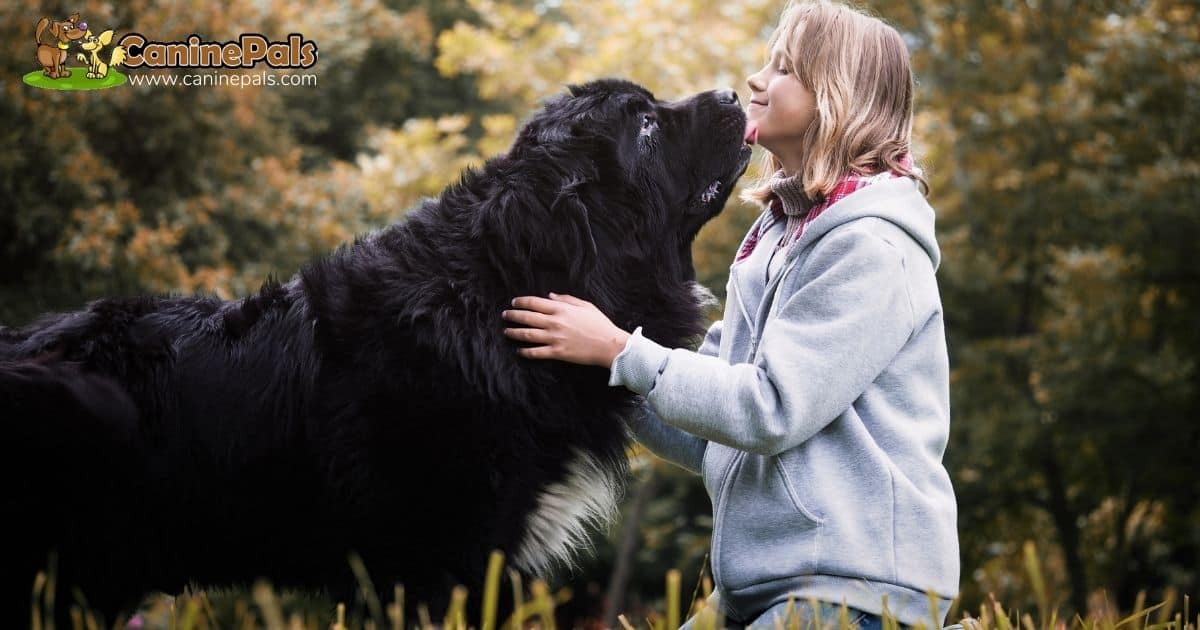
As per the Newfoundland Club of America, ‘sweet temperament is the wow factor of this breed.’ Newfies have joyous and playful personalities. Despite their large size and razor-sharp teeth, their sweetness is unquestioned. Newfoundland Dogs are also known as nanny dogs. They are a good caretaker of your children. However, Newfies are not a good option to safeguard your home or flock. Pro-tip: Never ever take their sweetness for granted!

  • Newfoundland Shedding:

Newfoundland is a double-coat dog, and a dog with a double-coat always shed. The amount of shedding varies as per the dog breed. Newfies shed twice a year. They blow their coats 24/7 and require a lot of grooming to maintain their coat. However, if you cannot handle Newfoundland shedding and their hair sticks on your clothes every time, then this dog breed is not for you!

  • Stamina:

Newfies were originally bred as a working dog. They always adore the working environment, where owners are ready to train them and give them challenges.They are not couch potatoes! Their maliciously strong bones can haul loads by carts, and their unique swimming style helps them to drag the boat to a safer destination. They require proper training because of their high enduring nature.

  • Stubborn:

Remember, Newfies are smart and are happily willing to obey your commands. Yes, but they can be stubborn too. Imagine they are lying on your doorstep, and you ask them to move. If they don’t obey your command, it means they don’t want to. Once they smacked down and decided not to move, your endless effort is meaningless. They will keep gazing into your eyes and won’t take any action.

Information On Newfoundland Dogs Health Issues

Just like every other dog breed, Newfoundland dogs have health issues associated with them too. This doesn’t mean you cannot own a Newf. A healthy diet, routine exercise, weight management, and timely medical check-ups increase their life expectancy.

Many Newfies live a long, happy life with no major health concerns; however, few pups may experience some problems, which is why a cautious lifestyle is preferable. Consider some common Newfoundland health issues before tieing a long-lasting knot with them.

Newfoundland Dog
Newfoundland Dog

  • Allergies:

Newfies suffer from skin infections due to filthy allergies. These allergies may be triggered because of food, environment, or seasonal changes. These allergies can also make them smell stinky.

  • Hot Spots:

Hot spots, skin irritation that causes red spots on the skin. It may occur due to parasites present in the dog’s body, allergies, bacterial infection, or anxiety. However, regular grooming and a proper diet can overcome the disease.

  • Ear Infection:

Newfoundland Dogs have huge, hefty ears with slim; confined canals are prone to ear infections when not properly cleaned and maintained. The ear infection is caused due to environmental or seasonal change, inadequate or low-quality food, or allergies.

  • Arthritis:

Morning stiffness, laziness, or joint inflammation are a sign of arthritis. Newfies may experience arthritis in the neck, spine, and joints. However, maintaining a healthy body and weight can lower the risk.

All About Newfoundland Coat Care

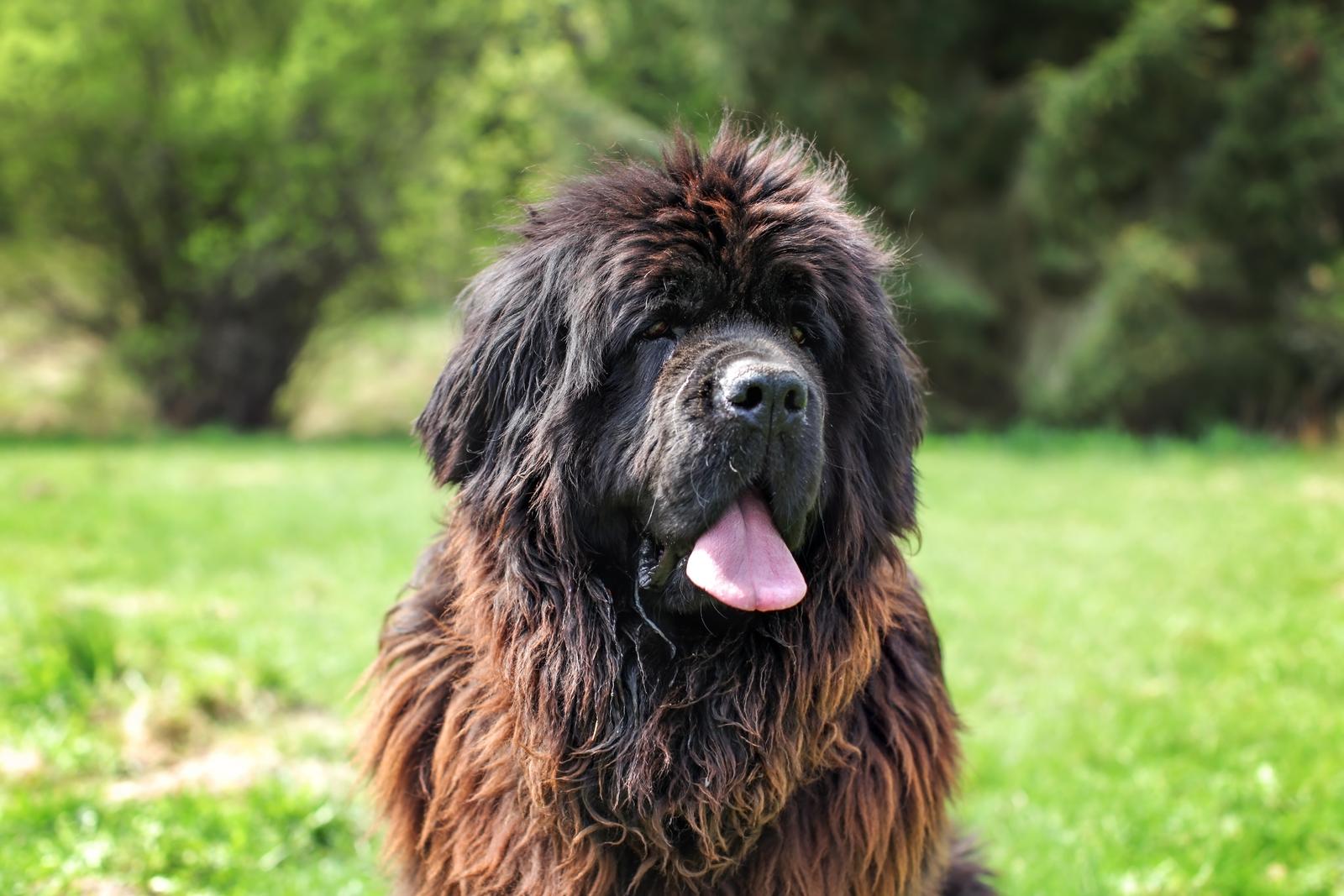
Newfoundland dogs have water-resistant double coats. The outer is generally rough and long, and the inner coat is soft and dense. A large dog breed with pretty long hair and a thick coat needs frequent grooming to keep their coats healthy and shiny.

Professional Newfoundland coat care is costly! Give it a try and groom them by all yourself and save your money! Quality grooming supplies are a must. Save yourself time and energy by buying high-quality grooming supplies.

●     Brushing and Untangling Hair:

Tip 01: Brush and untangle the Newfies coats at least once a week to limit the Newfoundland shedding and transform their rough coat into healthy and shiny.

Note: During the spring season, Newfies undergo a heavy shedding process. Comb them daily to control shedding.

Tip 02: Use a large slicker brush on Newfies coat to purge mats. Brush the coat in the hair growth direction. With slow and short strokes, try to gently untangle the coat and clear mat. However, if purging is difficult, cut it down using a pair of scissors.

Tip 03: Use a large wire-pin brush or a firm bristle brush to comb the dog’s coat. Start from the head using long, gentle strokes, down to shoulders, then back and end at legs and tail.

Tip 04: Lift the outer coat, and comb the inner coat using a wire-pin brush. Use gentle and short strokes to untangle.

Note: Comb the inner coat in the opposite direction of hair growth.

●     Newfies Coat Trimming:

Tip 01: Carefully trim the dog’s fur around the neck, ears, legs, chest, and tail. Trimming hair around the ears increases the airflow into the ear canal, which keeps them dry and prevents bacterial infections.

 Tip 02: Use a grooming rake, hold it at a 45-degree angle to the dog’s body and trim the fur from the dog’s chest. Gently move the rake in the hair growth direction. Note: Take frequent breaks and remove the dead hair from the rake.

Tip 03: Trimming the fur between legs and toes prevents allergies and bacterial infections. Use a pair of shears and prune the excess hair present on the dog’s legs. Important: This can be risky if the dog is not cooperative. Give him a bounty for positive behavior.

●     Give Baths:

Tip 01: Give Newfies bath only when needed. An unnecessary bath dries the coat and causes skin problems such as itching. It is recommended to shower them twice a year.

Tip 02: Fill the bathing tub with lukewarm water for up to 6 to 8 inches. Enthrall the dog into the tub. Use a handheld shower to pour water and massage him to clean the double coat.

Tip 03: Drip a few droplets of shampoo and deeply massage the double coat to clean him up. Make sure you thoroughly rinse the shampoo once you’re done to avoid skin dryness and itchiness. Use a large bath towel and a blow dryer to dry the dog. Important: A bath mitt can also be used as a grooming tool to easily divvy up the lather.

Owning a Newfoundland Dog:

They are just not a dog; they are a lifestyle, a phrase that defines everything about Newfoundland Dogs.

Owning a Newfoundland is not a piece of cake because not everyone is ready to change their lifestyle. Adding this furry breed to your life will require a lot of time for training, socializing, and grooming them. They will love you with all their heart.

Imagine, every time you walk in the door, he throws a welcome party. Isn’t it a sign of pure love?  That’s not it. The lamp or a flower vase on your side table will eventually fall apart with a happy tail.

Couch? Which couch? Get yourself another one because the old one is now a Newfoundland’s property. Stop seeking clean carpets! They are not clean anymore because you’ve got Newfies in your home.

Forget about your clean house. 150-pound shedding and drooling machine have taken over your clean home. Give them daily physical and mental exercise and see the magic of these smart creatures. They will learn to open your refrigerator in no time and will find your concealed secrets.

Although they are huge giant fluff ball puppy doesn’t mean they gulp a lot of food. Because if you’re feeding them high-quality premium dog food, then quantity doesn’t matter. The toughest and most expensive breed will reward your life with its happy-go-lucky personality. Once you have Newfies in your life, there’s no going back!

Newfoundland
Newfoundland

Last Words on Newfoundland Dog Cost:

Outshine your life with Newfies! Newfies are a perfect reflection of all dogs’ personalities. The muscular and heavy-boned canine, massive chest, happy face, powerful legs, and slightly duck feet for swimming emblems their strength.

Although Newfoundland puppy costs are much more than other dog breeds, their generosity and kind nature outrank everything. These furry pals can double up your expenses but it is worth it! They also double-up your laugh, double-up enjoyment, and double-up your cries with all the best moments!

Copyright CaninePals.Com. All Rights Reserved.

References and Further Reading:

[1] American Kennel Club, Newfoundland Dog Information.
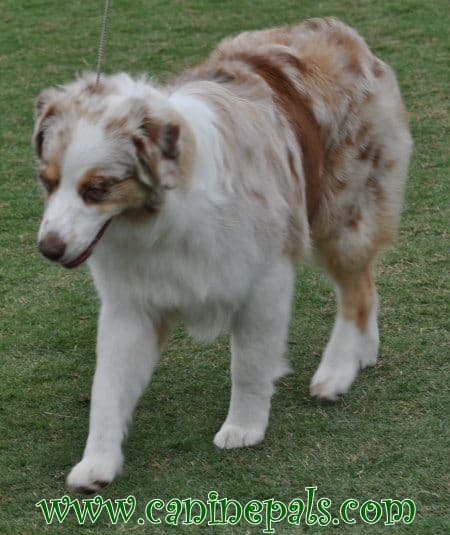
Alaskan Malamute Colors

Alaskan Malamute Colors: Full Details

In this article, we will look at Alaskan Malamute’s pros and cons to find out whether this doggo makes a paw-sitive addition to your family. Keep on reading to know all about this fur person! The Alaskan Malamute is a strong and powerful canine with a muscular physique and strength.

This pup belongs to one of the most ancient dog breeds whose physical traits are not significantly altered. The pooch’s wolf-like appearance is taking animal lovers by storm around the globe. If you also wish to have something closest to a real wolf in your family, then Alaskan Malamute is your way to go. But before having any experience, it’s better to research a breed thoroughly.
Alaskan Malamute colors

Many of us have this misconception that Alaskan Malamutes can only have grey and white coats. But the interesting fact is these canines can have a wide variety of colors. Identifying the official colors of this breed and differentiating between them can be tricky, so we are here to make it handy.

Alaskan Malamute Colors
Alaskan Malamute Coat Colors

AKC Breed Standard on Alaskan Malamute Colors

Alaskan Malamute appearances have a significant variation. To find which Alaskan Malamute coat color pup is a pure breed and which reflects cross-breeding is really hard. The best way to figure out a pure breed Alaskan Malamute color is by looking at the American Kennel Club’s breed standard.

According to the American kennel club’s standards, Alaskan Malamute colors range from:

  • Light grey

  • Intermediate shadings to black

  • Shadings of sable to red

  • Sable

It is essential to know that white is a predominant color for Alaskan Malamute underbody parts, including legs, feet, and face.

However, you can expect some other color variants within Alaskan Malamute breed not specially specified by breed standards. Well, don’t worry, we are here to help!

  • Grey and white

Grey and white Alaskan Malamutes have dark grey guard hairs. Their undercoat or lower body coat has a light grey, white, or creamy color. You may also find some occasional black hairs on their back few and far between. But no red hairs are noticeable.

If we talk about the category of grey and white Malamute, you may find variations in the shades of grey. However, from a distance, the canines appear grey. This coat color is prevalent within the breed and is generally used to represent the whole breed.

You can quickly identify a grey and white Alaskan Malamute with its clear coat and white face. Usually, these puppies have prominent white eyebrows.

  • Silver and white Alaskan Malamute

This coat color is very similar to the grey and white Malamute coat in appearance. The only thing differentiating this coat from a grey and white Malamute coat is that the guard hairs are pretty lighter. Other than that, Alaskan Malamute dogs with silver and white coats also have a solid white undercoat.

Alaskan Malamute puppies with silver and white coats may appear white at birth, but their coat color changes as they grow. This coat color is not very common.

  • Red and white Alaskan Malamute color

As the name implies, red and white Alaskan Malamute has shades of red guard hairs. The pups with this type of coat don’t have any visible black hairs, and their undercoat can be cream, white, or pale reddish. Variation in the shades of red is also possible.

This coat color is not very common. In fact, it’s amongst the pretty rare Malamute colors.

Identifying a red-and-white Malamute is not tricky at all. You just need to look at its pigmented areas such as the nose, eye rims, and lips. All these areas will appear to be red or brown rather than black. Eyebrows and white masks are clearly visible on their face.

  • Black and White Malamute colors

Like red, silver, and white, Alaskan Malamutes with black and white coats have black guard hairs. The thing that makes them unique from other breed dogs is that their lower body coat is usually dark grey or black rather than white or cream, making the pup really special.

  • Seal and white Malamute colors

Seal and white Alaskan Malamutes and not much different than black and white Malamute canines as they also have black guard hairs. What makes them different is their undercoat which has a white or light creamy shade. Their white face mask and eyebrows are also distinctive.

Seal and white coat color is very common in Alaskan Malamutes. Identifying them can be a bit tricky as they look similar to black and white Malamutes from a distance. You can figure out your pooch’s exact coat color by closely observing the undercoat.

  • Sable and White Alaskan Malamute colors

Sable Malamute pups are different because their undercoat and lighter areas have a reddish or orange kind of appearance. This Malamute color is not rare.

These pups are often mistaken for red and white Malamutes who do not have any red/orange tint to their undercoat areas.

  • All-white Alaskan Malamute

All white Alaskan Malamutes are one-of-a-kind Malamute pups having an entirely white coat. These balls of fur have a very pale cream color undercoat and guard hairs. This rare coat fella doesn’t have any black or grey guard hairs on his skin, but it is possible to find biscuit color shading in the ears and around the eye areas.

This coat color is very unique and rare. A Malamute fido with all-white fur is very distinctive. You may think of this furball as a walking cloud. Adorable!

Another thing that makes this coat color more appealing is that according to American Kennel Club breed standards, all-white Malamute coat color is the only solid color variation allowed in this breed.

Alaskan Malamutes
Alaskan Malamutes

Alaskan Malamute Pros and Cons: Breed Overview

Alaskan Malamute is a high-energy pup capable of impressing anyone with his wolf-like markings, sturdy body, and huge tail waiving with delight. But this pooch requires a very active lifestyle. Their exercise requirements are pretty high.

An Alaskan Malamute is not a dog you can leave behind and go to work for long hours. This dog breed is a sensitive fellow, and loneliness can develop anxious, destructive behaviors in them. If you can provide this lovely fellow with a lot of open space to burn off his energy, a cooler climate, and daily exercises, you will win an intelligent and highly trainable companion for life.

An interesting fact about these working dogs is that they are believed to be part wolf. Cool, right? You might see them playing a wolf on the big screen, but in reality, these lovable companions are nothing but loyal domestic dogs.

This intelligent and independent canine was initially sought to pull heavy sleds and for hunting purposes. Alaskan Malamute’s tremendous strength made him excellent for tasks requiring extreme energy and patience. However, their loyalty and ability to work in a team make them a significant part of any household environment.

Alaskan Malamute Pros and Cons

The Alaskan Malamute has great endurance and strength and is very athletic. He’s designed to move big loads over large distances, not to race. He can be a pet but he also loves pulling a sled, jogging, swimming, and back-packing with his owner. He has a coarse, thick coat and a plumed tail. The color varies from black or light gray to red or sable. He often has facial markings such as a cap on the head and/or a mask/bar on his face.

Due to their strong appearance, many people think that Alaskan Malamutes can be excellent watchdogs. But this canine simply loves to make new friends. So, if you are looking for something big to scare the intruders away, this might not be the breed for you!

  • Alaskan Malamute History

 Alaskan Malamute is one of the ancient and strongest dog breeds. This majestic canine belongs to the spitz family of dogs. It is said that this dog breed evolved in arctic regions, so their appearance and temperature requirements are shaped by climatic conditions. This lovely pal’s origin is still not clear, but the breed was highly praised by the Mahlemut people of Alaska. Yes, you got it right. Alaskan Malamute took their name from the Mahlemut people.

The Malamute was named after the Mahlemuts, an Innuit tribe living in Alaska. He’s used as a sled dog in the Arctic and is related to the American Eskimo dog, Siberian Husky, and Samoyed. He needs daily exercise, occasional bathing, and regular brushing of his coat. He stands 25 inches tall and weighs 85 pounds. The females weigh 75 pounds and are 23 inches high.

To date, we are not sure how old the breed is, but statistics suggest that the Alaskan Malamute has been serving as a working dog in Alaska for more than 5000 years. Pretty long duration of companionship!

Initially, these dogs served as hunting partners. They were great at bringing heavy loads back home. Alaskan Malamute was an essential part of Mahlemut people’s life, yet they were never treated as pets. In the 1700s, outside explorers started to visit the region, and they were impressed by this canine’s abilities and obvious attachment to its owners.

In 1896 gold was discovered in Alaska. It was the time when the sport of sled racing became popular with the flood of outsiders. The Alaskan Malamute was not a good match for this sport as the pooch was built for carrying heavy loads, not for speed. The native breeders started their attempts to develop a fast racer dog that could also help with the gold supply. It was a critical time for the breed as pure Malamute dogs were at risk of being lost.

During the 1920s, some New England dog breeders tried to breed traditional Malamutes. The fluffy fellow’s repetition quickly grew, and the canine was called into service during World War II. In 1935 American kennel club recognized the dog as a pure breed, and since then, this fella is making our life bright as a show dog and a loyal friend.

  • Malamute Personality

If we say Alaskan Malamutes are fluffy inside out, it won’t be unjust. This mate will win your heart with his playful gestures and outgoing temperament. Alaskan Malamutes have a lovely personalities, and they adore everyone. You will find your Alaskan doggo greeting everyone in a friendly manner. The pup even makes strangers fall for him with his delightful and friendly charm. They are not suitable as watchdogs, but these fidos are incredibly loyal to their friends and family. Since they are pack animals who love to work in a team, Malamutes enjoy spending time with a pack of other animals and humans. You simply cannot keep the pup away from your activities. No, No, no personal space, hooman. 😉

Alaskan Malamutes don’t have a tendency to bark a lot. Yes, they do howl, but they are famous for making a “woo woo” sound.

  • Alaskan Malamute Temperament

Your Alaskan fido’s temperament is affected by numerous factors such as genetics, proper socialization, and training. These puppies are usually curious, fun-loving, and willing to approach people.

If you are a first-time dog owner will suggest you adopt a curious and willing-to-be-held puppy instead of a puppy who is having a sibling rivalry or one who is hiding away from you.

Just like any other dog breed, your Alaskan Malamute puppy also needs early socialization to be comfortable in any environment. It helps them to become well-rounded dogs in the future. You can enroll your puppy in a kindergarten class for better socialization. Letting the puppy meet new people and animals is also a great start to polish their social skills.

  • Children and other pets

Malamutes are friendly companions with a mild temperaments. They love to play with children and get all the attention they can. But you need to keep in mind that energetic Alaskan Malamute puppies are usually super excited. They can easily knock over a kid under 5 years old. Therefore, the pup is not recommended for a newbie or busy pet owner.

Early socialization and positive training help your Malamute to get along well with children and other pets. Due to hunting nature, your pup may chase small animals (cats). You will need to teach the canine not to do so.

Alaskan Malamute Pros and Cons

Are Malamutes Aggressive? 

Alaskan Malamute is a large breed of dog weighing around 43 kilograms. This fluffy pup was originally bred as a working dog to utilize his natural strength and endurance. But are Malamutes aggressive?

This is the question that definitely pops up in anyone’s mind by looking at the pooch’s muscular appearance. Well, we have spent a while researching to find out the answer, and here, we go.

Generally, these sturdy mates are not an aggressive breed if appropriately trained. A well-socialized Alaskan Malamute is playful and affectionate around animals and people, including strangers. Although your Alaskan pup has a high prey drive, it makes him a bit aggressive toward other animals and dogs of the same sex. Plus, these furballs are very possessive of their food and can show aggression if they suspect someone is gonna take their delight away. Touch my food, and I will summon my demons hooman, says the King!

What can cause Alaskan Malamute aggression?

Alaskan Malamutes are not aggressive canines unless something triggers them. If you plan to own this large dog with so much power, it’s better to know what triggers your friend’s aggression to avoid any unwanted troubles.

Let’s have a closer look at some of the triggers

  • Other animals

Alaskan Malamutes were bred for two purposes; sledding & hunting.

Their hunting instant is natural. Your fido may like to chase other animals if there is an opportunity available.

Therefore, you need to be very careful during the dog’s interaction with other animals. You can overcome this instant with the help of proper socialization in the early years.

  • Food

Like most dogs, Alaskan Malamutes are very protective of their food. So, it’s better to leave them alone during this time. If you plan on interrupting the canine’s mealtime, go ahead and get ready cause you will be on the receiving end of aggression.

  • Sign of dominance to other dogs

Dogs of this breed can become aggressive toward other pups, especially those of the same sex.

This aggression is common in male pups, but female dogs can also act the same way, particularly in the heat season.

This aggression can be your four-legged friend’s attempt to protect you from other dogs, or the furball may be jealous of the attention you are giving them.

How to Prevent Alaskan Malamute Aggression?

Preventing your Alaskan pup from being aggressive is about taking a proactive approach from puppyhood. Although a canine can still display some signs of aggression, a well-socialized upbringing approach can dramatically improve the chances of you raising a lovely pooch.

Here are a few steps you can follow to avoid having any bad experiences with the splendid pal.

  • Let the canine eat his food.

At some point, we all feel “Hangry,” don’t we? For a Alaskan Malamute dog food is a big motivation that doesn’t need any sharing. To prevent your Alaskan pooch’s rain of rage, let the dog eat his food in a peaceful environment. Give him plenty of time and space with zero disturbance.

Always make sure you are feeding the dog on a regular schedule. Ensure the bowl is empty before you take it away. Plus, keep other animals and small children away and don’t let them play with Alaskan Malamute during his mealtime.

  • Obedience Training & Socialization

Taking your Alaskan puppy to obedience training helps the pup learn what behaviors are good and what is wrong. The puppy will learn some boundaries and understand who is the in charge or the pack leader. Enroll your little fella in structured obedience training and let professionals do their work with positive training and socialization.

  • Provide Sufficient Exercise

Alaskan Malamutes are brilliant and active pals. Their exercise requirements are higher than other dogs, and the pup requires a lot of physical and mental stimulation.

Lack of exercise can encourage destructive tendencies in them. If you cannot help them release their energy with a minimum of two hours of daily exercise, don’t get surprised after finding some chew-up slippers, shredded cushions, and furniture along with a deep hole in the backyard.

Alaskan Malamute
Alaskan Malamute

Alaskan Malamute Pros and Cons

Alaskan Malamutes are large Northern canines ranked 58 amongst the most popular dog breeds in the USA. The majestic fellow has his own pros and cons. Some of the highlights are listed below:

Alaskan Malamute Pros

  • Intelligence

Alaskan Malamutes have established a reputation for being intelligent dogs. In the famous “Intelligence of dog” book, Alaskan Malamutes are ranked the 50th intelligent dog breed globally. These canines use their dog IQ to complete a task. The breed’s inner confidence makes them independent thinkers while making a decision. We suggest enrolling your lovely pal in an obedience class to help him learn some manners.

  • Loyalty and Protection 

Generally speaking, this four-legged companion has a pack mentality, so he creates a deep, loyal relationship with his family members. This adoration makes the puppy do his best to protect you. Their special ones mean the world to them, and the pup will try to do anything to make you happy.

Alaskan malamutes have a stranger-friendly temperament. Their enormous stature can scare away unwanted intruders, but other than that, they are not good at guarding. But the pooch is exceptionally loyal and tries his best to protect his pack.

  • Playfulness

These lovely fidos have a very playful side that will definitely put a smile on your face. Alaskan Malamute is a cheerful dog that can be a great playmate.

Alaskan Malamute Cons

  • Trainability

Although Alaskan Malamute is an intelligent dog, the doggo is no less than a challenge to train. Your furball has a reputation of being an Independent and stubborn thinker. You may need to start teaching them from their childhood, so the dog doesn’t choose to ignore you.

  • Watch out for the knockout

Due to their gigantic size, these working dogs can easily knock out their owner. You need to consider this aspect, especially if you are a flimsy fellow. But don’t worry, we have a solution for that. Just got their ear, and the pooch will be back to training!

  • High exercise requirements 

It is no surprise that Alaskan malamutes require a considerable amount of exercise. They have a lot of energy to release. You may need to exercise this canine 90 minutes a day to keep him active and away from frustration and naughty behavior.

  • Expensive to insure and feed

Alaskan malamutes are big dogs that can be a bit heavy on your wallet. Their insurance and feeding aren’t cheap. You will need to provide your Alaskan Malamute an adequate diet filled with all the necessary nutrients. They may shed a lot, so owners have to bear grooming expenses as well.

Final words

Alaskan Malamute is a magnificent dog breed available in a variety of colors. Just like any other dog breed, owning this lovely fella has its own pros and cons. If provided with obedience training and early socialization, this fella will grow into a paw-sitive, friendly, and affectionate playmate ideal for any family.

Copyright CaninePals.Com. All Rights Reserved.

References and Further Reading:

[1] American Kennel Club, Alaskan Malamute Information.


Alaskan Malamute
Alaskan Malamute


Alaskan Malamute
Alaskan Malamute

Alaskan Malamute
Alaskan Malamute

Alaskan Malamute pup

Alaskan Malamute
Alaskan Malamute


Male vs Female Labrador

Male vs Female Labrador and Everything You Need To Know To Make a Choice

They are the best family pet you can think of, the best friend, and the best therapeutic partner, yes they are Labrador retrievers. They’re the best choice when it comes to first-time pet owners because of their ease of training, and friendly persona. There’s an ongoing debate about Male vs female labs”, but be assured they make great pets and you’ll love them to infinity.

In this article, we’ll take an in-depth dive into how male vs female Labrador retrievers vary from each other, keep reading!

Which is Better? Male or Female Labrador?

Finally, you’ve decided to get a pet now, and luckily it happens to be a Labrador Retriever. But you’re confused, like what gender Labrador should I opt for? Your friend might tell you to go for a female pup, on the other hand, the breeder might tell you to go for a male pup. This can be really confusing and frustrating at the same time.

While it is true that some of the major characteristics remain the same in both male and female Labrador retrievers, however, some traits differ vastly. In the end, it matters what Labrador retriever suits your needs, as all they need is love and they’ll return it back to you. We’ll cover some of the major aspects that differ among male vs female Labrador Retrievers. Keep reading and we hope all your queries will be answered.

Male vs Female Labrador

The Difference in Physique:

As is the case with the majority of mammals around the world, males and females have different characteristics when it comes to their physique. In the case of Labrador retrievers, males slightly weigh on the heavier side as much as being 10lbs heavier than their female counterparts. That’s the only major difference in their physiques since their heights are virtually the same with a difference of less than an inch. Although there might be no difference in the heights, due to their added weight, male Labrador retrievers look bulky and are slightly more muscular. This gives them the edge when it comes to brute powers, however, if you want to stay on the softer side, then going with a female Labrador might be the best choice.

The only reason why the difference in physique matters is because there are times when a dog can get aggressive due to being triggered by external stimuli or hormonal causes, and since Labradors are considered family pets, it can get hard to control them. In this case, lighter female Labradors are preferred, since they can be controlled easily.

Nevertheless, obesity issues are quite common in Labrador Retrievers, your female Labrador Retriever might end up gaining a lot more because of no activity.

Personality Differences:

Always remember, each animal has its own personality, it doesn’t relate much to the gender it belongs to, however, some of the personality traits are often influenced by the hormonal dominance in either of the genders. We’ll read about some of the major personality differences among male vs female Labrador retrievers.

Male Labrador retrievers would do anything to please their owners. Command them to run through a wall of bricks, they’ll gladly do it for you. They’re crazy, and loyal to their owners and want absolutely nothing but love in return for their loyalty. On the other hand, female Labrador retrievers tend to be independent side. They’re not there to please you, rather you should be the one to amuse them. That isn’t the case with all the female labs, since a lot of them can show their love to their owners just like the male labs. Since females are on the independent side, they’ll prefer to sleep on their own rather than curl up and cuddle with you.

Male Labradors won’t leave any opportunity to show how happy they are to have you as their owners, whereas the female lab might act “Meh! What’s the big deal?”. Lastly, it mostly depends on the training as well as the breed color. A female in heat might act totally opposite to how she would behave normally.

Hormones Can Be Crazy:

Just like human beings and other animals, Labrador retrievers go through different phases of life as well. These phases include teenage and adulthood as well. The main reason why a dog transitions from a puppy to an adult dog, is because of the action of hormones. While it is advised to spay or neuter your dog, you must also consider the age of their adulthood before going for the operating procedure. Most Labrador retrievers reach maturity around the mark of 2 years.

Once they reach the age of maturity, you can choose to spay or neuter them. Spaying and neutering have their own benefits, but that’s a talk for another day, right now we’ll be sticking strictly to the hormones.

For a male Labrador, you might experience his desire to hump different things, the dog might start humping your cushions, your legs, or even the floor in general. It is completely natural, however, it can persist. The only way possible to mitigate this problem is to have the dog neutered at a certified vet.

Now let’s talk about the female Labrador retriever, females have their own typical way of development. They’ll go through mood swings and eventually have their periods as well. This can be pretty tough to handle, however, once you’re used to it no longer feels like a chore, this is also one of the main reasons why people prefer male Labrador retrievers over female ones.

Your female Labrador Retriever will face mood swings too, and that too out of the blue. So don’t be surprised if you find your beloved puppy growling at you, you didn’t do anything wrong at all, just her hormones are at play. The only way to resolve this is by spaying.

Male vs Female Labrador

An average female Labrador retriever’s heat period lasts roughly three weeks and occurs almost twice a year. It can get really hard to manage a female lab when she’s in heat. If you happen to take her out then she will attract unwanted attention from the male dogs, no matter what breed they belong to.

She’ll constantly call them for mating, and it will get quite disturbing if you don’t take her away from there. The best you can do is to take the authority and always keep a leash on, because if the leash isn’t there, then there’s a high chance that she’ll run away to get male attention.

On the other hand, when it comes to territory marking, male Labrador Retrievers have it the worst. Whilst it is true that females also mark their territory by spraying urine on different corners of your house, or the place they are living in, male dogs just do it way more. Male Labrador Retrievers won’t leave any chance to show their dominance over the territory,  you’ll find urine marks all over your house, and if you’re unlucky you’ll find feces too.

Hence, this makes Labradors in general highly unsuitable for apartment folks, they really need to consider a smaller breed.

Training Differences:

Training Labrador Retrievers is just like training any other dog, however, there are some minute differences between male and female Labrador retrievers. The difference doesn’t matter in the long run once they’ve matured, but for first-time owners, this can be a real pain.

Male Labrador Retrievers generally grow slowly, hence mature slowly. They keep their puppy-like nature for a long time. Due to this training them at an early age is a tough job. They get distracted by the smallest things. You’re training them and suddenly they see a bird out of the window, a plane flying or a cat yowling nearby. These are enough to distract them and disrupt the training session.

During the early stages, they might even be disobedient towards their owners, but it is okay, they might be looking like full-grown adult Labrador retrievers from the outside, but from the inside, they’re still the same puppy. They’ll mature mentally sooner or later, nevertheless, keep the training sessions going. Always keep treats in handy to get their attention whenever you’re training.

Females Labrador retrievers are quite different when it comes to their training period. They mature fasters as compared to the male ones and therefore they’re able to integrate into the training sessions way early. You can start them with basic commands like sit, stand, and lay down from puppyhood.

Attachment to Their Owners:

Oxytocin is one crazy hormone, it is often addressed as the hormone of attachment. Humans have their own way of sharing oxytocin with each other, hugging releases tons of oxytocin and increases the bonding between two people. Similarly, in dogs oxytocin is also responsible for bonding, but surprisingly the same hormone is responsible for our bonding with the dogs as well. Whenever a dog touches us or licks us, it is subconsciously exchanging oxytocin, which in turn makes the dog trust us even more.

This continuous exchange only further deepens the bond, which is why you often see dogs licking their owners, it only signifies love and strengthens the bond between them. However, when we put genders into this perspective then things can get a little messy. Both male and female Labrador Retrievers are attached to their owners and their families, but there’s a pinch of difference among them.

A female Labrador retriever might be attached to your household, but would often keep her distance and would only come near when she wants to. It can take a lot of time for the female lab to get used to the household and show the same amount of attention as the male Labrador.

On the brighter side, a male Labrador Retriever would show you, never-ending love, and chase you to infinity. They are really easy to please as well, just a treat would do the job most of the time. To explain further, let’s say you have a male and female Labrador Retriever pair, and you’re a treat in your hand. The male Lab would jump crazy and go haywire over that piece of treat, but on the other hand, the female Lab will only stare at it and expect you to bring that treat over to her. They would rarely display any enthusiasm over the treat.

Aggression:

Labrador retrievers aren’t known for their aggression, in fact, they’re one of the most friendly breeds all over the world. However, from time to time they do feel anxious, which somehow triggers their aggression. One common way to get rid of aggression once and for all would be to get them spayed.

Female Labrador retrievers never show aggression towards anyone, except other female dogs. They despise each other and would often invite a group of male dogs in their fights as well.

Male labs are different, they can get very aggressive over the things they feel possessive about, this also includes the humans they love. Even at the worst stage of aggression, Labrador Retrievers won’t harm anyone. Plus, they don’t like asserting their dominance over the other dogs as well, such that you can keep several dogs together with no problem at all, given that none of them is remotely aggressive.

Spaying and Neutering:

Spaying is normally used to address the removal of sexual organs from a female animal, whereas neutering is the process of removal of sexual organs from a male animal. There are some differences when it comes to neutering and spaying male and female Labradors.

Males are generally neutered around the mark of 6 months because at this age their territorial traits aren’t in action, neutering the dog can stop the territory marking at the root level.

Females on the other hand a female Labrador retriever must be spayed after two years, this is because her body is fully matured at this point and her urinary organs are well developed. Early spaying can cause bladder and kidney issues in female Labrador retrievers.

Labrador
Labrador

Let’s Talk About Labradors:

Before we get into the entire “Which is better male or female Labrador? debate, we have to talk about the origin of this wonderful breed. How it was formed, and for what purpose were they bred?

Labrador Retriever History

Labradors are among the most popular dog breeds alongside German Shepherds, Pugs, and other widespread breeds. It originated in the United Kingdom. One of the major reasons why they’re popular is because of their behavioral traits. If there was one most friendly animal out there, it would have to be the Labrador retriever.

They were bred to retrieve the game during the hunting process, hence they were named ‘The Retriever’, their sense of smell is top-notch which helps catch fallen prey way more technically with more brute force.

The Labrador Retriever originated in Newfoundland, England, and worked with fishermen to pull nets in and catch escaping fish. His ancestors included retrievers, spaniels, and setters. His primary goal is to be a skilled retriever and his calm temperament helps in this job.

He’s a great family dog because of his easy-going, placid nature when with people. He’s an excellent guide dog for blind people, in police narcotics departments, and in search and rescue teams. His double coat can be chocolate, black or yellow. He sheds seasonally but regular grooming enables it to remain at its best water-resistant level.

Vital Stats About Labrador Dogs

Let’s have a look at some vital stats of Labradors:

Stats Description
Dog Breed Group Sporting Group
Purpose Hunting dogs
Temperament Easy-going and a placid nature
Average Height 22.5-24.5 inches (male), 21.5-23.5 inches (female)
Weight Range  65-80 pounds (male) and 55-70 pounds (female)
Energy level High
Exercise requirements High
Grooming Requirements Low
AKC Breed Popularity Ranks 1 of 197
Life Expectancy 10-12 years

Male vs Female Labrador

Final Word on Male vs Female Labrador:

So, which one should you choose for your home? It depends on what you’re looking for in a dog. If you want a cuddly companion who loves to play fetch, go with a male Labrador. But a male Labrador would be the perfect fit if you need a protector who is always ready to work.

No matter which gender you choose, make sure to provide plenty of love and exercise – Labs are known for being high-energy dogs!

With a lifespan averaging around 10-12 years, Labradors are the must-have family pet. They’re crazy when it comes to loyalty, and make great dogs for children too. If you have a small family that’s looking for a dog to adopt or buy, then get a Labrador Retriever.

Have you had experience with male vs. female Labradors? Share your thoughts in the comments below!

Copyright CaninePals.Com. All Rights Reserved.

References and Further Reading:

[1] American Kennel Club, Labrador Dog Information.
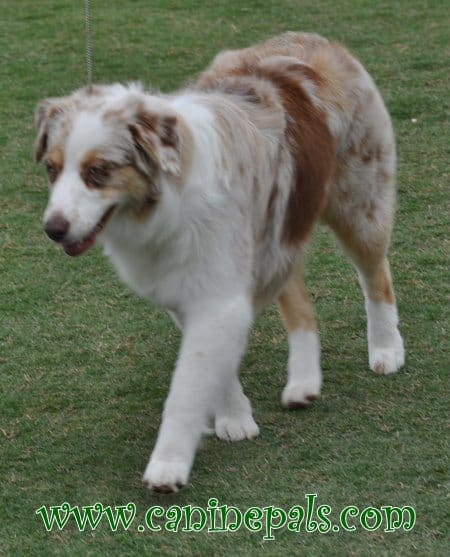
Labrador Retriever
Labrador retriever