
Disclaimer

Do Rottweilers Drool?

Do Rottweilers Drool? The Truth About This Question

Excessive drooling in Rottweilers can be a sign of a health issue or injury, so keeping an eye on your dog’s drooling habits is essential. While some drooling is normal, if you notice a sudden increase or your dog is drooling excessively, the best action is to consult a veterinarian to rule out any underlying health issues.

Training and proper breeding can also affect a Rottweiler’s drooling habits. Responsible breeders will take steps to breed healthier dogs and minimize excessive drooling. Training can also help reduce drooling in Rottweilers, as they can learn to control their habits in certain situations.

Do Rottweilers Drool?

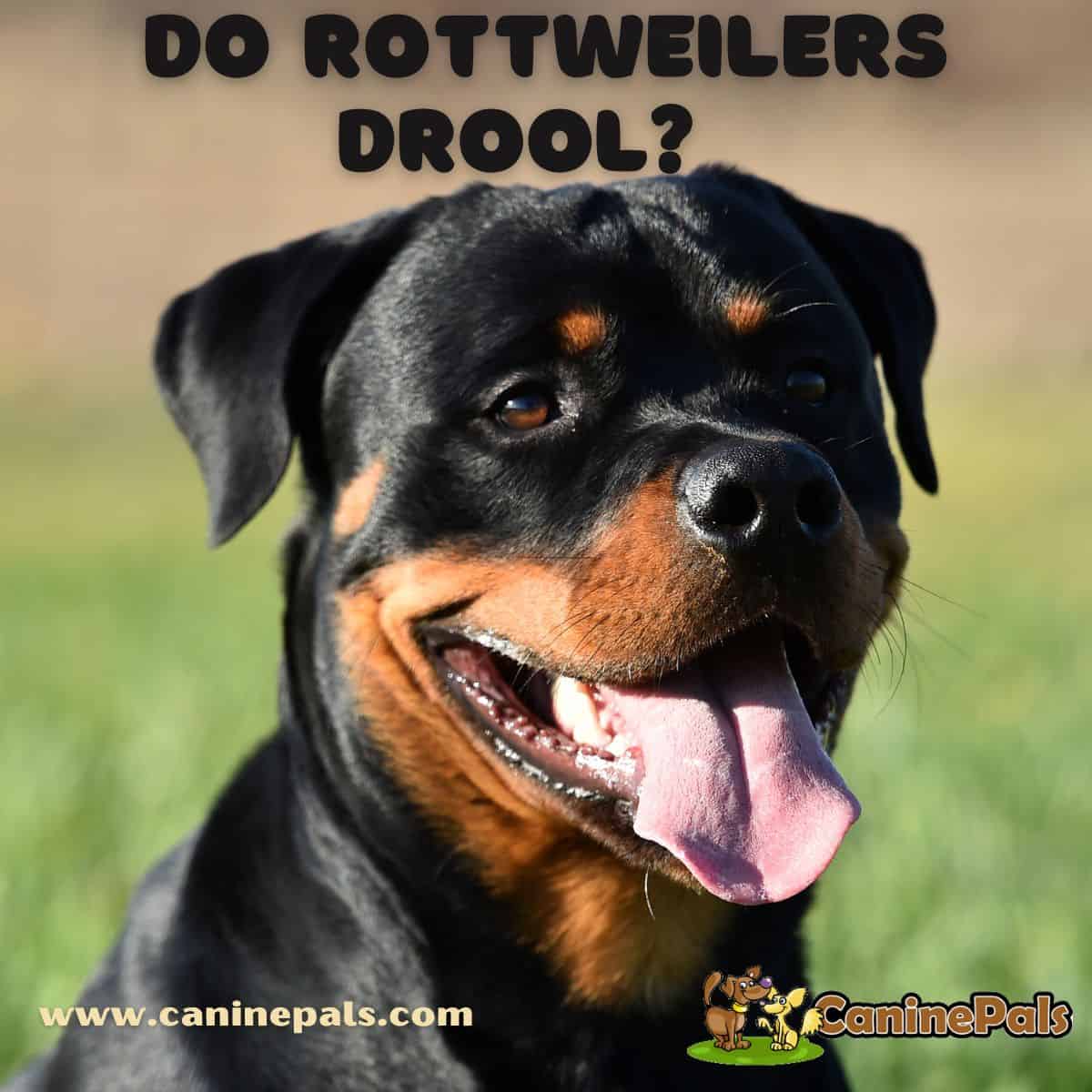
Rottweilers are known for their large, jowly jaws, and some people wonder if this breed drools excessively. The answer is yes, Rottweilers do drool, but not all Rottweilers drool the same amount. In this section, we will explore the causes of drooling, health issues associated with excessive drooling, and training methods to control drooling.

As a Rottweiler owner, you might be familiar with their characteristic drooling. It’s a natural and expected response to various triggers such as heat, excitement, fear, or anxiety.

While it may be unsightly and uncomfortable, especially if you’re on the receiving end of a slobbery kiss, rest assured that there is a logical explanation for this behavior. Drooling is a common feature of this dog breed.
Do Rottweilers Drool?

Summary: Do Rottweilers Drool?

  • Rottweilers do drool, but not all Rottweilers drool the same amount.
  • Excessive drooling can be a sign of a health issue or injury, so it’s essential to monitor your dog’s drooling habits and consult a veterinarian if you notice a sudden increase or excessive drooling.
  • Training and proper breeding can also affect a Rottweiler’s drooling habits, and responsible breeders will take steps to breed healthier dogs and minimize excessive drooling.
    Causes of Rottweiler drooling include the unique shape of their head and jaw, hunger, excitement, anxiety, and health issues such as dental problems, mouth injuries, nausea, and poisoning.
  • Training methods to control Rottweiler drooling include teaching the “leave it” command, using a drool bib, and regular dental care.
  •  Rottweilers are generally healthy, but prone to specific health issues like dental problems, gum diseases, and respiratory diseases that can cause excessive drooling.
  • Dental problems include periodontal disease which can lead to tooth loss, dental chews and regular check-ups with a veterinarian can prevent and treat dental issues.
  • Gum diseases include gingivitis, which can cause tooth loss and bone damage, regular dental care and check-ups with a veterinarian can prevent and treat gum diseases.
  • Respiratory diseases can cause excessive drooling, keeping their environment clean and free from irritants can prevent respiratory problems, and regular veterinary check-ups can help identify and treat respiratory issues early on.

Causes of Rottweiler Drooling

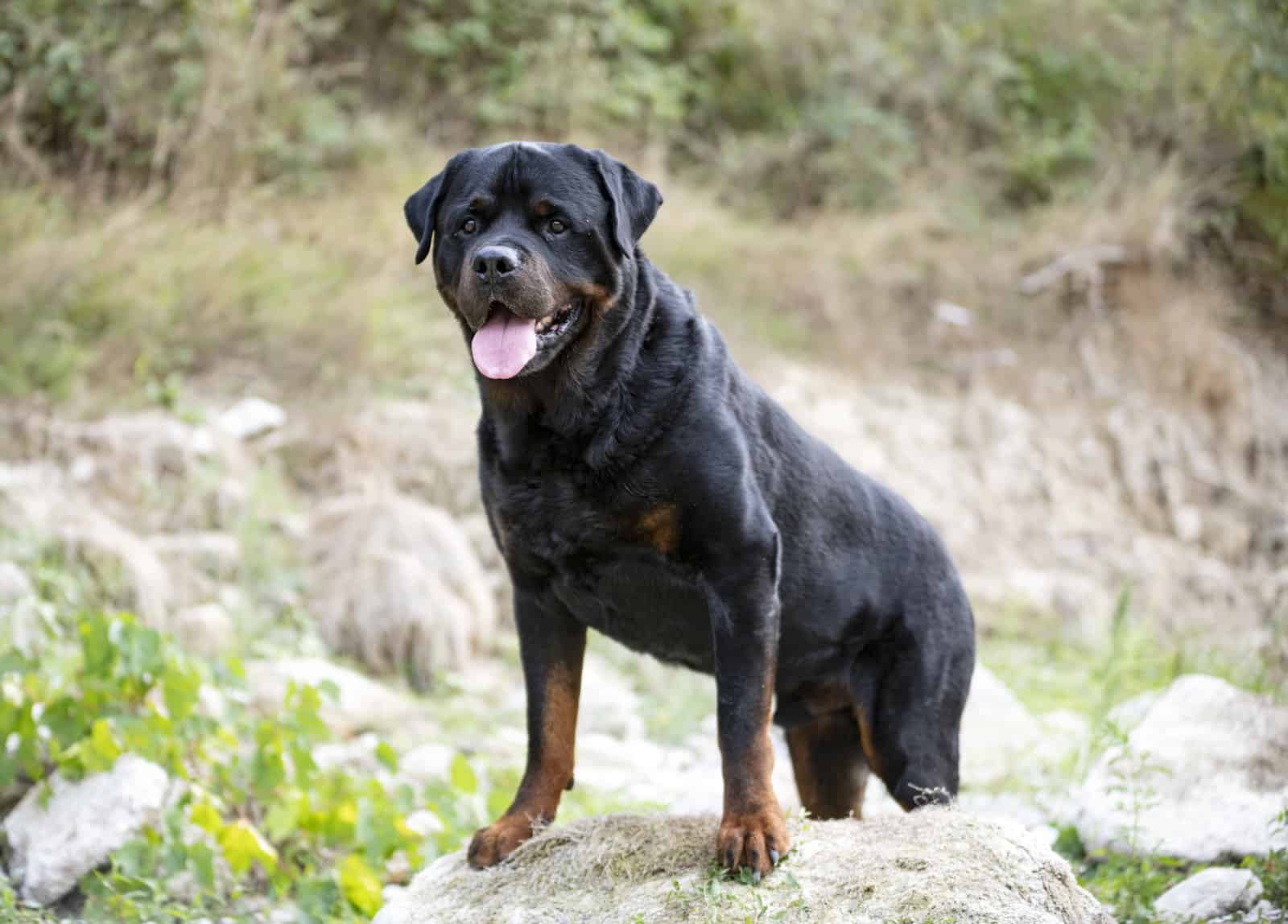
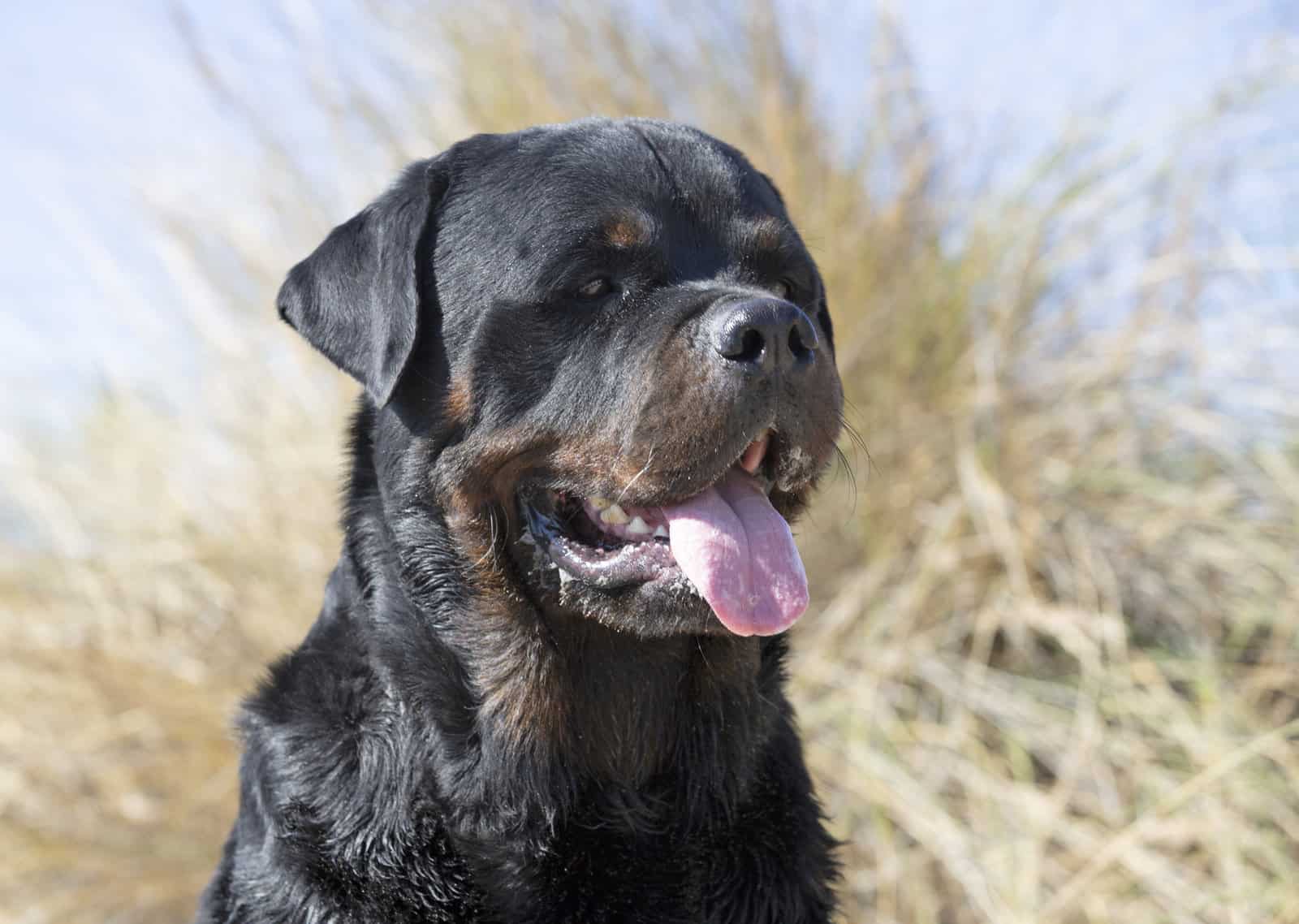
Dog drool for many reasons, but Rottweilers have a unique head and jaw shape that can contribute to drooling, and their jowly jaws and lips can make drooling more prominent and messy. Additionally, Rottweilers with bigger heads, shorter muzzles, and more jowls tend to drool more.

Drooling can also be a sign of hunger, excitement, or anxiety. Rottweilers may drool when they see food, toys, or their owners. Some dogs may also drool excessively when they are nervous or stressed.
Rottweiler
Rottweiler

Health Issues Associated with Excessive Rottweiler Drooling

While drooling is normal for Rottweilers, excessive drooling can be a sign of health issues. Some health issues that can cause excessive drooling include:

  • Dental problems: Rottweilers may drool excessively if they have dental issues such as gum disease, tooth decay, or abscesses.
  • Mouth injuries: Injuries to the mouth, tongue, or teeth can cause excessive drooling.
  • Nausea and digestive issues: Rottweilers with digestive problems or nausea may drool excessively.
  • Poisoning: Ingesting toxic substances can cause excessive drooling in dogs.

If a Rottweiler is drooling excessively and there is no apparent cause, taking them for a veterinarian check-up is vital.

Training to Control Rottie Drooling

While eliminating drooling in Rottweilers may not be possible, some training methods can help control it. These include:

  • Teaching the “leave it” command can redirect a Rottweiler’s attention away from things that may cause them to drool excessively.
  • Using a drool bib: A drool bib can catch excess drool and prevent it from getting on furniture or clothing.
  • Regular dental care: Regular dental care can help prevent dental issues that may cause excessive drooling.

Rottweiler owners need to know that these dogs do drool, but not all Rottweilers drool excessively. While drooling is normal behavior, excessive drooling can be a sign of health issues and should be addressed by a veterinarian. There are also training methods that can help control drooling in Rottweilers.

Health Issues in Rottweilers

Rottweilers are generally healthy dogs, but like all breeds, they are prone to specific health issues. In addition to drooling, Rottweilers may also suffer from dental problems, gum diseases, and respiratory diseases.

Dental Problems

Dental problems are a common health issue in Rottweilers. These dogs are prone to developing periodontal disease, a bacterial infection affecting the gums and the bones supporting the teeth. 

Periodontal disease can lead to severe tooth loss and other health problems if left untreated. Providing dental chews and toys to help clean their teeth is essential to prevent dental issues in Rottweilers. Check-ups with your veterinarian can also identify and treat dental problems early on.

Gum Disease

Gum diseases are another common health issue in Rottweilers. These dogs are prone to developing gingivitis, a form of gum disease that causes bleeding and inflammation of the gums. 

If left untreated, gingivitis usually progresses to severe periodontitis, leading to tooth loss and other health problems.

Providing them with a healthy diet and dental care is essential to prevent gum diseases in Rottweilers. This includes brushing their teeth regularly and providing them with dental chews and toys to help clean them. Check-ups with a veterinarian can also identify and treat gum diseases early on.

Respiratory Diseases

Respiratory diseases are another health issue that can affect Rottweilers. These dogs are prone to developing sinus infections, throat infections, and other respiratory problems that can cause them to drool excessively. 

In some cases, Rottweilers may also develop esophagus problems, such as esophagitis or esophageal ulcers, which can cause them to drool and have difficulty swallowing.

To prevent respiratory diseases in Rottweilers, keeping their environment clean and free from irritants that can cause respiratory problems is essential. Again, regular veterinary check-ups can also help identify and treat respiratory issues early on.

Rottweilers are generally healthy dogs, but like all dog breeds, they are prone to specific health issues. Dental problems, gum diseases, and respiratory diseases are common health issues in Rottweilers that can cause them to drool excessively. Regular veterinary dental care and checkups can help prevent and treat these health issues in Rottweilers.

Common Health Issues in Large Dogs

Large dogs like Rottweilers are prone to specific health issues that can cause discomfort and even become life-threatening if left untreated. 

Some of the common health issues that large dog breeds, including Rottweilers, may experience:

Bloat

Bloat is also known as gastric dilatation-volvulus (GDV). It is a severe condition that can occur in large dogs. It happens when the stomach fills with gas and twists, cutting off the blood supply to the stomach and other organs. This can cause the dog’s blood pressure to drop and, if not treated immediately, can result in death.

Symptoms of bloat include restlessness, pacing, drooling, and an enlarged abdomen. If you suspect your Rottweiler is experiencing bloat, seek veterinary care immediately.

Infections

Large dogs, like Rottweilers, are also prone to infections, including skin infections, ear infections, and respiratory infections. Bacteria, viruses, or fungi can cause infections and can cause discomfort, and pain for your Rottweiler.

To prevent infections, ensure your Rottweiler is up-to-date on vaccinations and clean their living area. If you suspect your Rottweiler has an infection, seek veterinary care immediately.

Injury

Large dogs, like Rottweilers, are also prone to injury, including sprains, strains, and fractures. Injuries can be caused by accidents or overexertion and can cause pain and discomfort for your Rottweiler.

To prevent injuries, ensure your Rottweiler gets enough exercise and avoid activities that could cause harm. If your Rottweiler does experience an injury, seek veterinary care immediately.

Discomfort

Large dogs like Rottweilers are also prone to discomfort, including joint pain, arthritis, and hip dysplasia. Discomfort can be caused by genetics or overuse and can cause pain and discomfort for your Rottweiler.

Ensure your Rottweiler gets enough exercise and maintains a healthy weight to prevent discomfort. If your Rottweiler does experience discomfort, seek veterinary care immediately.

Large dogs, including Rottweilers, are prone to specific health issues that can cause discomfort and even become life-threatening if left untreated. Taking preventative measures and seeking veterinary care immediately is essential if you suspect your Rottweiler is experiencing these common health problems.
Male Rottweiler
Male Rottweiler

Training and Socialization for Rottweilers

Rottweilers are a breed of dog that requires proper training and socialization to prevent aggressive and dominant behavior. The following subsections discuss some critical aspects of training and socialization for Rottweilers.

Aggressive Behavior

Rottweilers can display aggressive behavior if they are not adequately trained and socialized. This can be a severe problem, especially if the dog is not adequately controlled.

Rottweilers are generally confident and independent dogs, sometimes leading to aggressive behavior towards other dogs or people. It is essential to address any aggressive behavior early on to prevent it from becoming a severe issue.

Guarding and Dominance

Rottweilers are known for their guarding instincts, which can sometimes lead to dominant behavior. Establishing yourself as the pack leader early on is essential to prevent dominance issues. 

Rottweilers can be trained to be excellent guard dogs, but it is crucial to ensure they are correctly socialized and trained to prevent aggressive behavior toward strangers.

Socialization and Training

Socialization is an essential aspect of training for Rottweilers. Exposing the dog to various people, animals, and situations is important to prevent any aggressive or fearful behavior. Rottweilers should be socialized from a young age to ensure they are comfortable around other dogs and people.

Training should be positive and consistent, using reward-based methods to reinforce good behavior. Rottweilers are intelligent dogs and respond well to training, but it is essential to be patient and consistent to achieve the desired results.

Training and socialization are vital for Rottweilers to prevent aggressive and dominant behavior. Owners should establish themselves as pack leaders and use positive reinforcement to train their dogs. Socialization from a young age is also vital to ensure the dog is comfortable around other dogs and people.

Traveling with Rottweilers

Traveling with Rottweilers can be an exciting and fun experience for you and your furry friend. Make sure you’re ready for anything by being fully prepared for any potential issues during travel. Here are some tips for traveling with Rottweilers.

Car Sickness

Some Rottweilers may experience car sickness during travel. Symptoms of car sickness in dogs include drooling, vomiting, and restlessness. To prevent car sickness, it is recommended to feed your Rottweiler a light meal a few hours before travel and to avoid feeding them while in the car. Additionally, providing your Rottweiler puppy with plenty of fresh air and taking frequent breaks for exercise and bathroom breaks is vital.

Medications

Medication may be necessary to prevent car sickness in Rottweilers, and it is crucial to seek advice from your veterinarian before giving your Rottweiler any medication. Common medicines used to avoid car sickness in dogs include Dramamine and Cerenia, and these medications should only be given under the guidance of a veterinarian.

Treatments

In addition to medications, other treatments can help prevent car sickness in Rottweilers. Some natural remedies include ginger, chamomile, and lavender, which can be given as treats or oils. It is essential to consult with your veterinarian before giving your Rottweiler any natural remedies.

Overall, traveling with Rottweilers can be an enjoyable experience. By being prepared and taking the necessary precautions, you can ensure a safe and comfortable trip for you and your furry friend.
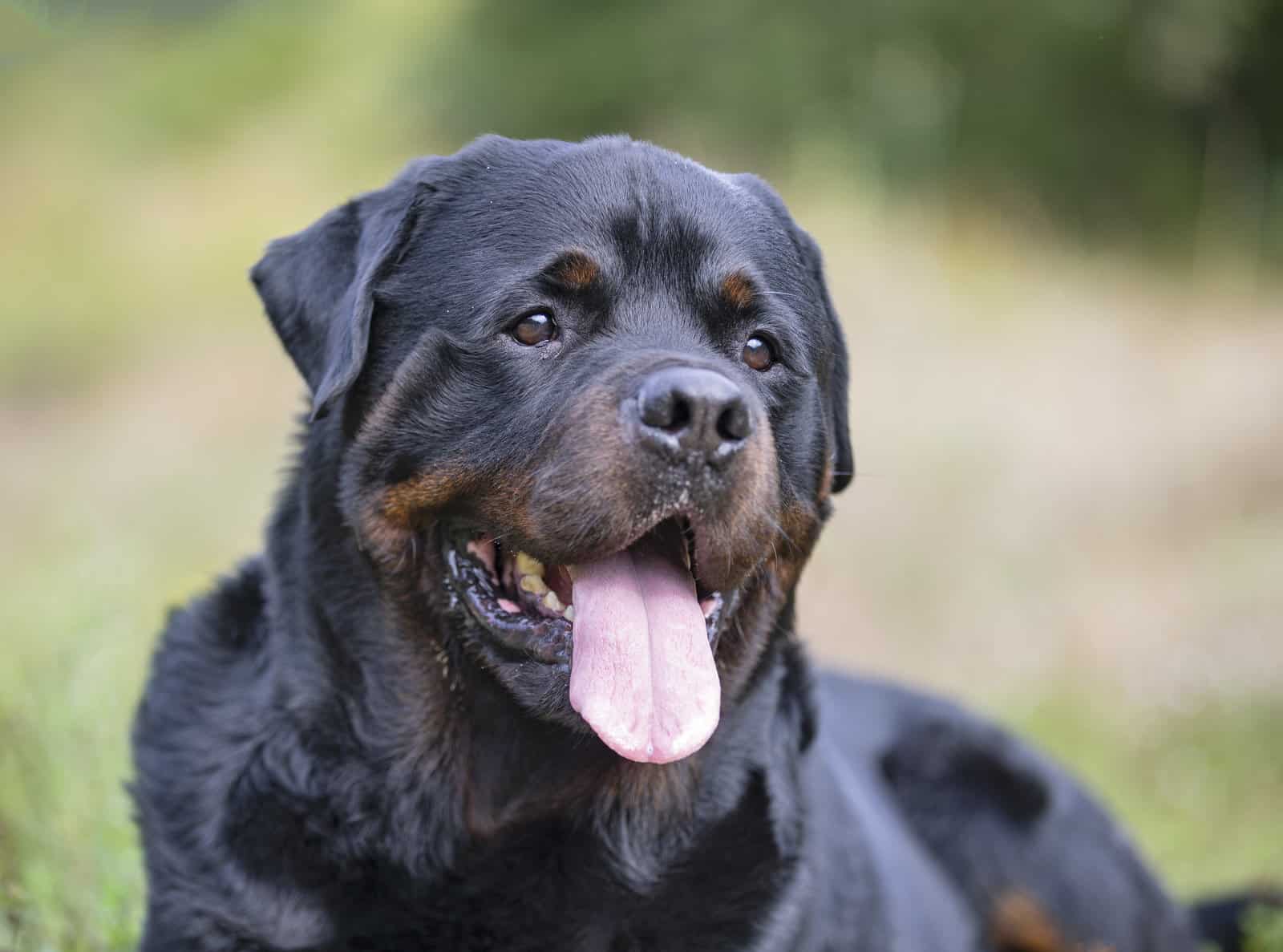
Rottweiler
Rottweiler

Do Rottweilers Drool: Conclusion

In conclusion, it is clear that Rottweilers do drool, but the amount and frequency vary from dog to dog. Factors such as breed, gender, and health can affect how much a Rottweiler does drooling. While some Rottweilers may drool more than others, drooling can indicate an underlying health issue.

It is important for Rottweiler owners to keep an eye on their dog’s drooling habits and seek veterinary attention if they notice any sudden changes. Loose lips, throat infections, hypersalivation, and heatstroke are some health problems that can cause excessive drooling in Rottweilers.

Additionally, Rottweiler breeders should be aware of the potential for drooling in their dogs and inform potential owners of this trait. It is vital for owners to understand that Rottweilers are not the only dog breed that drools. Other dog breeds such as Saint Bernards, Newfoundlands, and any other large dog breed with a big head and skin folds also drool.

Owners can do a few things to manage drooling in Rottweilers. Keeping the dog cool and hydrated can help reduce drooling due to heatstroke while addressing gastrointestinal upset and hunger can also help. Regular dental check-ups and cleaning can also help reduce drooling caused by oral health issues.

While drooling may be a common trait in Rotties,  Rottweiler owners must understand the potential causes and seek veterinary attention if necessary. With proper care and attention, Rottweilers can live happy, healthy lives without excessive drooling.
Copyright CaninePals.Com. All Rights Reserved.

References and Further Reading:
[1] American Kennel Club, Rottweiler Information.

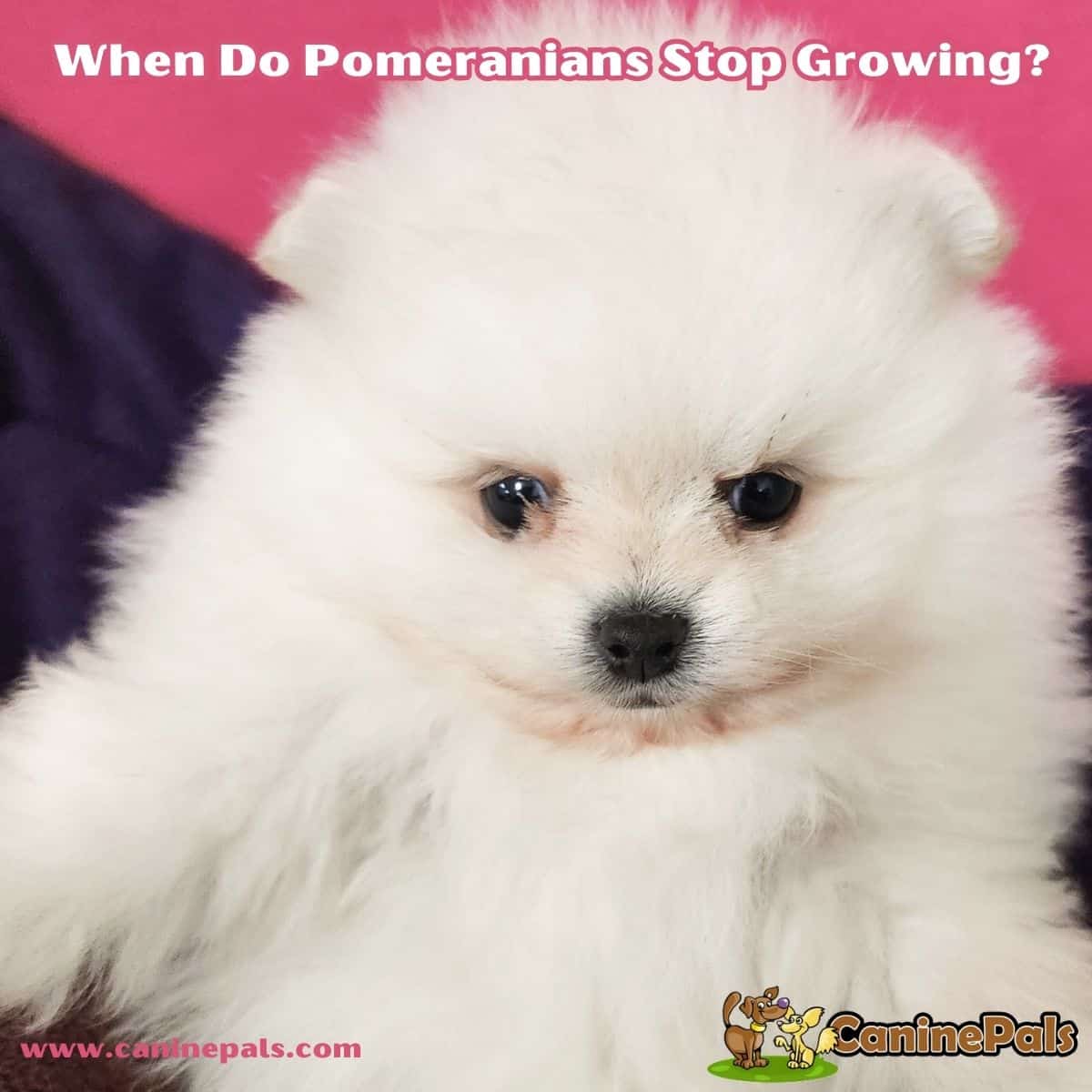
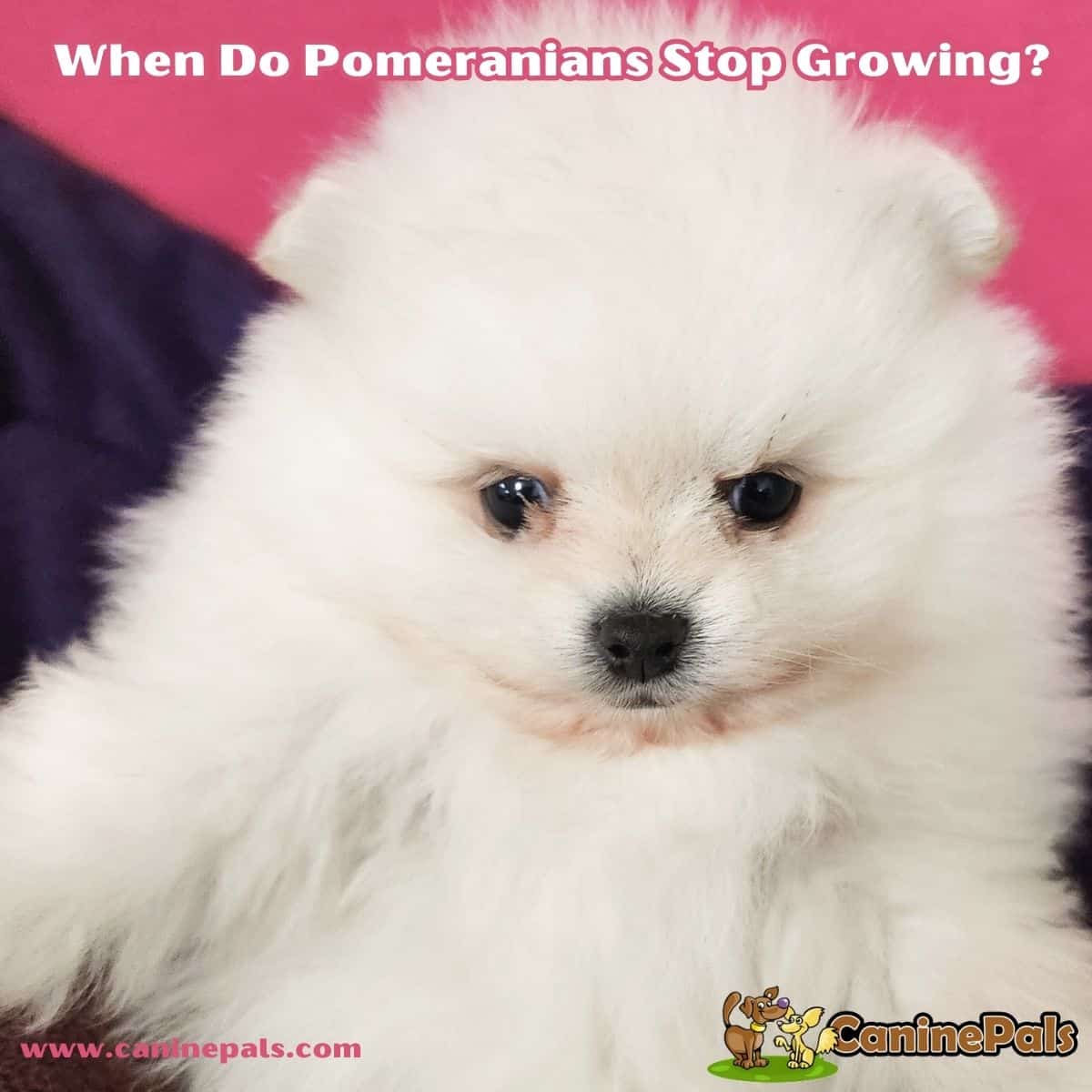
When Do Pomeranians Stop Growing?

When Do Pomeranians Stop Growing? A Guide to Understanding a Pom’s Growth Cycle

Pomeranians are a popular breed of toy dogs known for their lively personality, small size, and big fluffy coats. As with all dogs, Pomeranians go through a growth phase before reaching their full size. But when do Pomeranians stop growing? Curious about when Pomeranians reach their full size?

Learn all about the growth stages of Pomeranians and find out when these adorable dogs stop growing. Get valuable insights and expert tips to understand your Pomeranian’s development and ensure optimal care.

According to various sources, Pomeranians usually stop growing after 12 months. However, some Poms may continue to grow until they are 18-20 months old. Most of the growth for young Pomeranians occurs during the first year.

The growth rate of Pomeranians can vary depending on several factors such as genetics, environment, and diet. Pomeranian owners must understand when their pets will reach their full size, as it can affect their nutrition and exercise needs.

In this article, we will explore the growth patterns of Pomeranians and provide a comprehensive guide to help owners determine when their Poms will stop growing. To provide expert insights on when Pomeranians stop growing, we have gathered quotes from two renowned experts: Denise Leo from Dochlaggie Pomeranians and the team at Pomeranian Headquarters.

Let’s explore their perspectives on this important aspect of Pomeranian development. Denise Leo, Dochlaggie Pomeranians: According to Denise Leo, a reputable Pomeranian breeder and expert at Dochlaggie Pomeranians, she shares her insights on the growth patterns of Pomeranians:

“Typically, Pomeranians reach their full height by the time they are six to eight months old. However, their bodies continue to fill out and develop until they are 12 to 18 months old. It’s important to note that each Pomeranian is unique, and individual growth rates can vary.”

Pomeranian Headquarters: The team at Pomeranian Headquarters, a trusted source of information for Pomeranian enthusiasts, adds their perspective on when Pomeranians stop growing:

“Pomeranians generally reach their full height between six and eight months of age. However, their weight and overall body development may change until they reach around one year old. It’s essential to provide proper nutrition, exercise, and veterinary care during this period to support healthy growth.”
When Do Pomeranians Stop Growing?

Factors that Affect Pomeranian Growth

Pomeranians are small and adorable canines loved by many, and their size and cuteness are why they are so popular. However, many factors can affect their growth, such as genetics, nutrition, and environment. In this section, we will explore these factors in more detail.

Genetics

Genetics is one of the most influential factors that affect Pomeranian growth. The parents’ size is a good indicator of how big the puppy will grow, and if the parents are small, the puppy will likely be small as well. However, genetics is not the only factor determining the Pomeranian’s size; other factors such as nutrition, environment, and activity level also play a role.

Nutrition

Nutrition is another critical factor that affects Pomeranian growth. A well-balanced diet high in protein, fats, and other essential nutrients is crucial for their development. Pomeranians need a diet specifically formulated for their breed to ensure they get the right amount of nutrients they need.  Overfeeding, insufficient food, or poor quality food can affect their growth and overall health.

Environment

The environment in which the Pomeranian lives can also affect their growth. A clean and safe environment is essential for their growth and development. Pomeranians that live in dirty and unsafe environments are more likely to develop health problems that can affect their growth. 

Additionally, the activity level of the Pomeranian can also affect their development. Pomeranians that are over-exercised may have slower growth rates than those more active. Factors such as genetics, nutrition, and environment can affect Pomeranian growth.

A well-balanced diet, a clean and safe environment, and enough physical activity can help the Pomeranian grow to its full potential. It is essential to monitor their growth and consult with a veterinarian if there are any concerns about their growth rate.

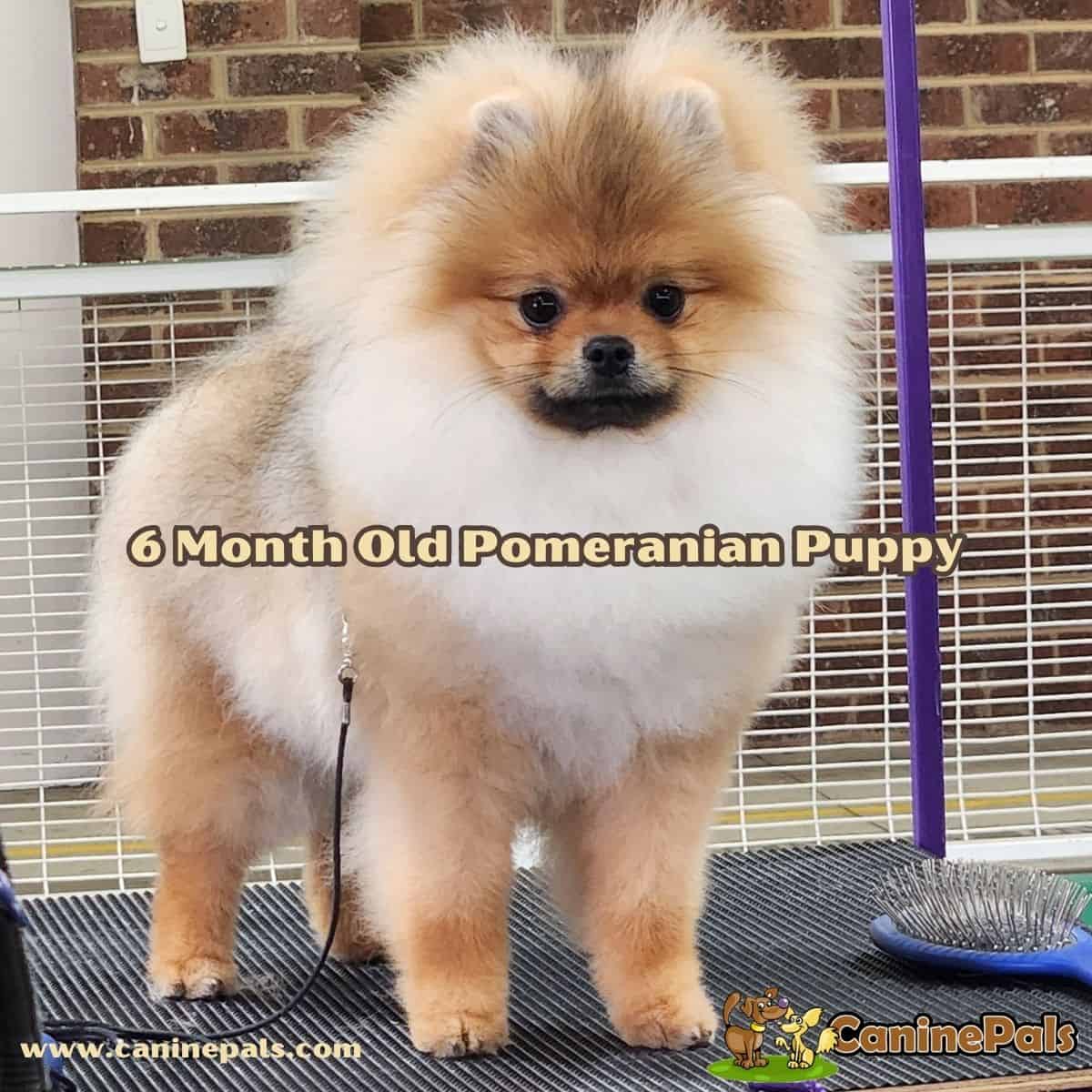
6 Month Old Pomeranian Puppy

Stages of Pomeranian Growth

Pomeranians are tiny, adorable dogs that have captured the hearts of many. They are known for their fox-like faces, small size, and fluffy coats. Like all dogs, Pomeranians go through different stages of growth and development throughout their lives. In this section, we will explore the various stages of Pomeranian growth.

Puppy Growth

Pomeranian puppies are born weighing only a few ounces. They are tiny and helpless, relying on their mother for everything. Pomeranian pups spend most of their time sleeping and nursing during the first few weeks of life. As each day passes and they grow, they become more active and curious about their surroundings.

There are seven acknowledged Pomeranian puppy growth stages: 

  • Stage one: which is from 0 to 3 weeks. 
  • Stage two: which is from 3 to 7 weeks. 
  • Stage three: which is from 7 to 12 weeks.
  • Stage four: which is from 12 to 17 weeks.
  • Stage five: is from 17 to 40 weeks.
  • Stage six: is from 40 to 52 weeks.
  • Stage seven: which is one year and older.

Adolescence

During adolescence, Pomeranians experience growth spurts and may gain weight quickly. Monitoring their weight and ensuring they are not becoming overweight is essential. Pomeranians may also go through a phase where they lose some puppy fur and grow in their adult coats. Their muscles begin to develop, and they look more like full-grown Pomeranians.

Adult Growth

Pomeranians typically stop growing after 12 months, but some may continue to mature until 18. The majority of their growth occurs during the 0 to 12-month period.  For some Pomeranians, growth may continue into the 18- or 20-month period, but this growth tends to be confined to smaller puppies Poms.

Senior Pomeranian

As Pomeranians enter their senior years, they may begin to lose muscle mass and weight. Their appearance may change, and they may become less active. It is vital to monitor their weight and ensure they are not losing too much weight. Senior Pomeranians may also experience health issues, such as arthritis and dental problems.

Pomeranian growth is a fascinating process that involves different stages of development. Pomeranians undergo many changes, from their tiny puppy to their full-grown adult stage. Monitoring their weight and ensuring they are healthy throughout their lives is essential.

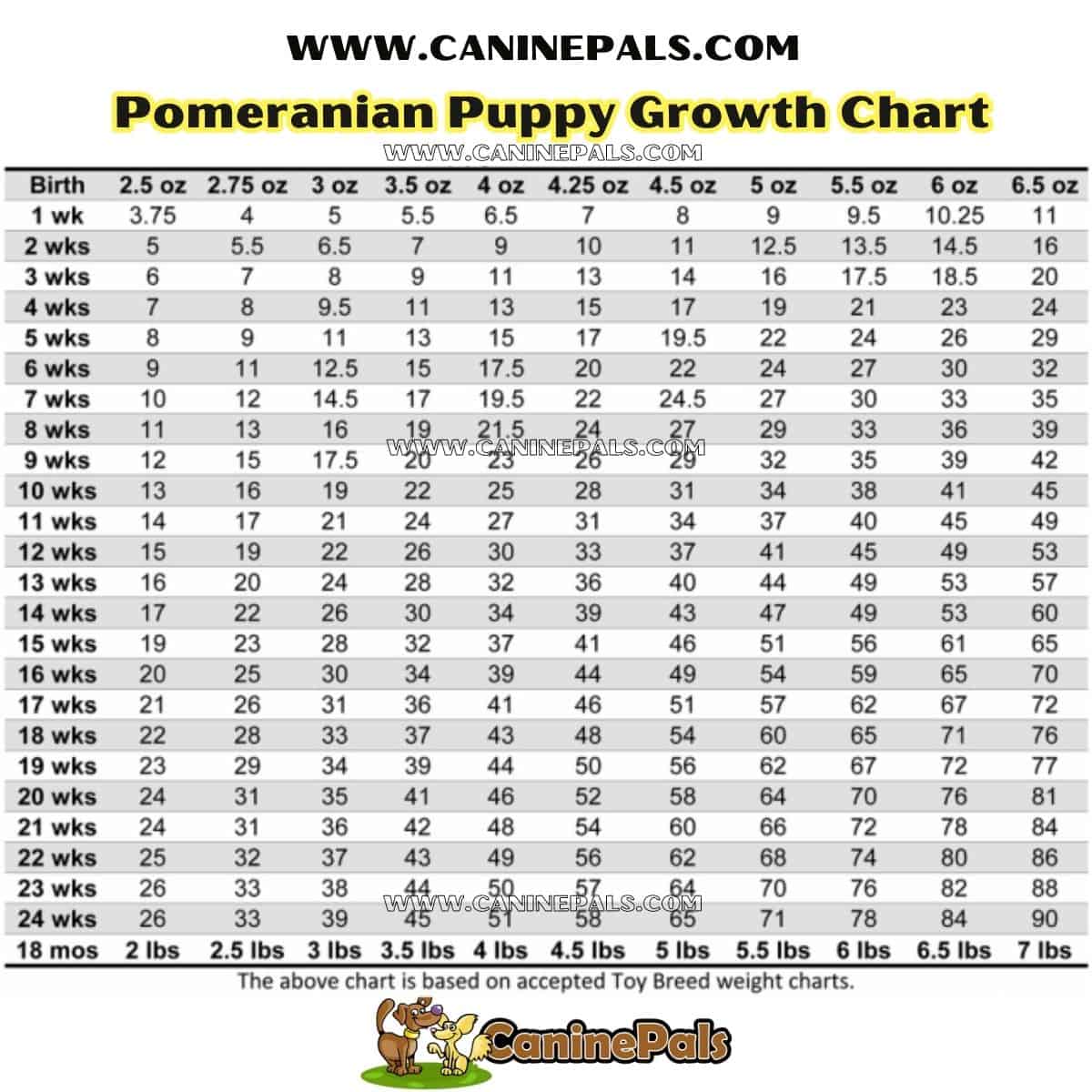
Pomeranian Growth Chart

Learn about Pom puppy growth with our Pomeranian growth chart. Male and female Pomeranians grow at the same rate, so you can easily predict your puppy’s adult weight based on weekly growth since birth.

Use our chart to estimate your Pom’s size based on its current weight and age group. Don’t worry if your pup is slightly ahead or behind the estimates; all puppies grow at their own rate.

What matters most is that your Pomeranian puppy is healthy. If you have any questions or concerns, always consult with your vet.

Pomeranian Growth Chart

When Are Pomeranians Full Grown: Understanding the Growth Process

As a proud Pomeranian owner, you may be wondering when your furry friend will reach their full size and maturity. The growth process of Pomeranians is an intriguing and essential aspect to consider.

Like many other dog breeds, Pomeranians go through a series of growth stages. Generally, Pomeranian puppies reach their full height when they are six to eight months old.

However, it’s important to note that the development and maturation of their bodies may continue until they are around 12 to 18 months old. Pomeranians will gradually fill out and develop their adult body shape during this time.

Supporting Pomeranian Growth

Pomeranians are a small dog breed that requires proper care and attention to grow healthy and strong. Here are some ways to support their growth:

Exercise and Training

Regular exercise and training are essential for Pomeranian growth. Pomeranian puppies need daily exercise to keep their muscles strong and to prevent obesity.  Owners should provide Pomeranians opportunities to run, play, and explore. Training is also essential for Pomeranian growth, and proper exercise can help prevent behavioral problems and ensure that the dog grows up to be a well-behaved and obedient adult.

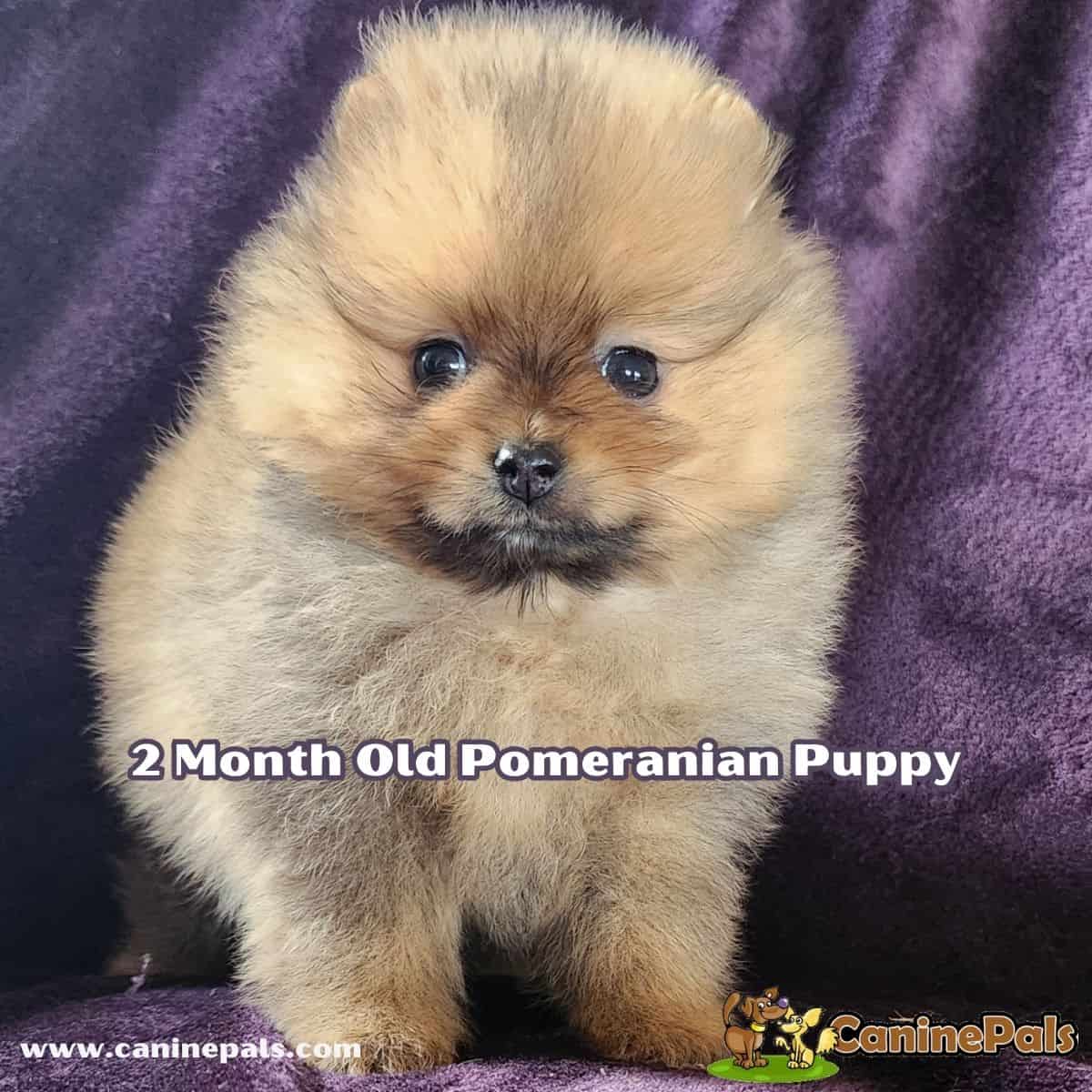
2 month old Pomeranian puppy

Vet Care

Regular vet care is crucial for Pomeranian growth. Owners should take their Pomeranians to the vet for regular check-ups, vaccinations, and preventative care. Pomeranians are prone to certain health conditions, such as hypoglycemia, stunted growth, and weight gain. Regular vet care can help detect and prevent these conditions before they become serious.

Socialization

Socialization is essential for Pomeranian growth. Owners should expose their Pomeranians to various animals, people, and environments to help them become well-adjusted and confident adults. 

Socialization can also help prevent behavioral problems and ensure the dog becomes a friendly and sociable companion. Supporting Pomeranian growth requires a combination of exercise, training, vet care, and socialization.

Owners can help ensure their dogs become healthy and happy adults by providing Pomeranians with the proper care and attention.

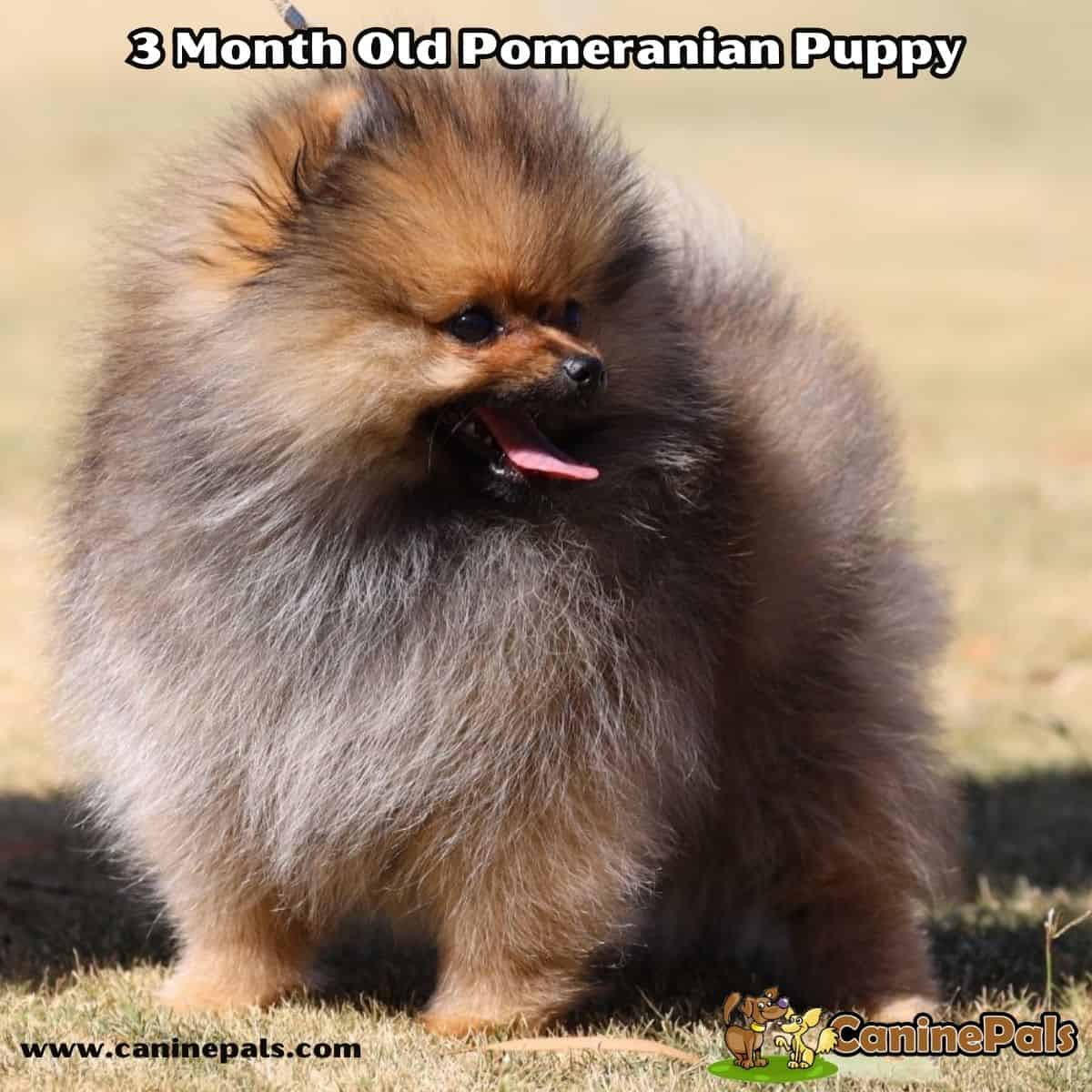
3 Month Old Pomeranian Puppy

Conclusion: When Do Pomeranians Stop Growing?

Overall, Pomeranians are the perfect pet for those looking for a small and spunky companion. Pomeranians won’t reach their full size until they are between one and two years old. Even after growth is completed, Pomeranians require frequent exercise and mental stimulation to keep up with their high energy levels.

While this breed may be more challenging to train than other breeds, it’s worth the challenge! This breed is known for its loyal and fearless personalities. Also, Pomeranians can adapt to any living situation if they get plenty of attention.

With these characteristics, it’s no wonder why Pomeranians have become such popular pets amongst many households!

Copyright CaninePals.Com. All Rights Reserved.

References and Further Reading:
  1. Official Standard of the Pomeranian (AKC). American Kennel Club, 2011.
  2. Official English Kennel Club Pomeranian Breed Standard, 2017.
  3.  Kimbering Pomeranians “1891-1991”.
  4.  Denise Leo, The Pomeranian Handbook.
  5.  L.Ives, Show Pomeranians.
  6.  L.Ziegler Spirer & H.F. Spirer, This is the Pomeranian.
  7. FEDERATION CYNOLOGIQUE INTERNATIONALE (FCI) German Spitz, including Keeshond and Pomeranian Breed Standards. PDF file.

The Pomeranian Handbook by Denise Leo

Does the Havanese Shed?

Does the Havanese Shed? Find Out Now with Canine Pals

Are you considering getting a Havanese dog? As with any dog breed, it’s vital to research before committing to a furry friend.

One common question potential Havanese owners have is whether or not these dogs shed. In this blog post, we’ll explore the shedding tendencies of Havanese dogs and what experts have to say about the topic.

Do Havanese Shed?

Havanese dogs shed, but it’s not as noticeable as other dog breeds. According to the American Havanese Club, the breed is considered a “low-shedding” dog breed.

Havanese dogs have a double coat, with a soft, downy undercoat and a longer, silky topcoat. The Havanese does shed, but not as much as other dog breeds, and their shedding is generally not as noticeable.

Havanese dogs are relatively low-shedding but require regular grooming to keep their coat healthy and prevent matting. The good news is that their fur is reasonably easy to maintain with daily brushing and regular bathing.

The Havanese breed is definitely on the lower end of the spectrum regarding shedding. However, it’s essential to remember that all dogs shed to some degree, and regular grooming is vital to keep shedding under control.

Does the Havanese Shed?

Havanese Dog Coat Explained

The American Kennel Club is the oldest purebred dog registry in the United States. According to the AKC’s breed standard for Havanese dogs, on the coat section

“Coat: Silky to the touch, the coat is soft and light in texture in both outer and undercoat,
although the outer coat carries slightly more weight. The coat is long, abundant and wavy. It
stands off the body slightly, but flows with movement. An ideal coat will permit the natural lines
of the dog to be seen. Puppy coat may be shorter and have a softer texture than adult coat. A
single, flat, frizzy or curly coat should be faulted. A coarse, wiry coat is a disqualification. A
short, smooth coat with or without furnishings is a disqualification. The coat may be corded.
Corded coats will naturally separate into wavy sections in young dogs and will in time develop
into cords. Adult corded dogs will be completely covered with a full coat of tassel-like cords. “

To help illustrate the coat characteristics of Havanese dogs, we’ve created a table outlining the breed standard for coat appearance:

Coat Characteristic Description
Texture Silky
Length Long, but not excessively so
Undercoat Soft and light in texture, not woolly or dense
Color Any color or combination of colors is acceptable

Do Havanese Have a Double Coat?

Yes, Havanese dogs have a double coat. Their double coat comprises a soft, downy undercoat and a longer, silky topcoat. The undercoat provides insulation and helps regulate the dog’s body temperature, while the topcoat is a protective layer against the elements. The combination of these two coats gives Havanese dogs a distinct appearance and contributes to their overall charm.

The undercoat of a Havanese is typically lighter in color and has a soft, silky texture compared to the topcoat. It helps keep the dog warm in colder temperatures and provides extra protection. On the other hand, the top coat is longer and silkier, giving the Havanese its signature flowing and glamorous look. It helps repel water and dirt, keeping the dog’s skin and undercoat dry and clean.

Maintaining the double coat of a Havanese requires regular grooming. Daily brushing is essential to prevent matting and tangling, as well as to remove loose hair.

Trimming the hair around the ears, paws, and tail is also necessary to maintain a neat appearance. It’s important to note that while the Havanese has a double coat, their shedding is generally minimal compared to other breeds, making them a good choice for individuals with allergies or sensitivities to dog hair.

Havanese Grooming Tips

To keep your Havanese looking their best, grooming their long, soft, and silky coat daily is essential. Using a soft brush or comb while your pup sits on your lap will prevent mats and tangles.

If you’re short on time, consider a shorter trim. The corners of their eyes should be gently cleaned daily to prevent tear-staining, and their ears should be checked regularly for excess wax or debris. Keep them clean and happy with occasional baths as needed.

The AKC recommends using a slicker brush and metal comb for grooming and advises against using scissors to trim the coat, which can result in an uneven appearance. They also recommend bathing Havanese dogs every 3-4 weeks.

“The long, soft, and silky coat of the Havanese needs to be groomed daily to be kept free of mats and tangles. This can be done by gently running a comb or soft brush over the dog while he is on your lap. Pet owners often choose to have their dog’s coat clipped to a short trim to reduce grooming time. The Havanese should also be bathed occasionally as needed. The corners of the eyes should be gently cleaned daily to prevent tear-stain of the lighter-colored hair in the area. Check the ears often to remove excess wax or accumulated debris, and wipe out the inside of the ear-flap with a slightly moistened gauze or paper towel.”

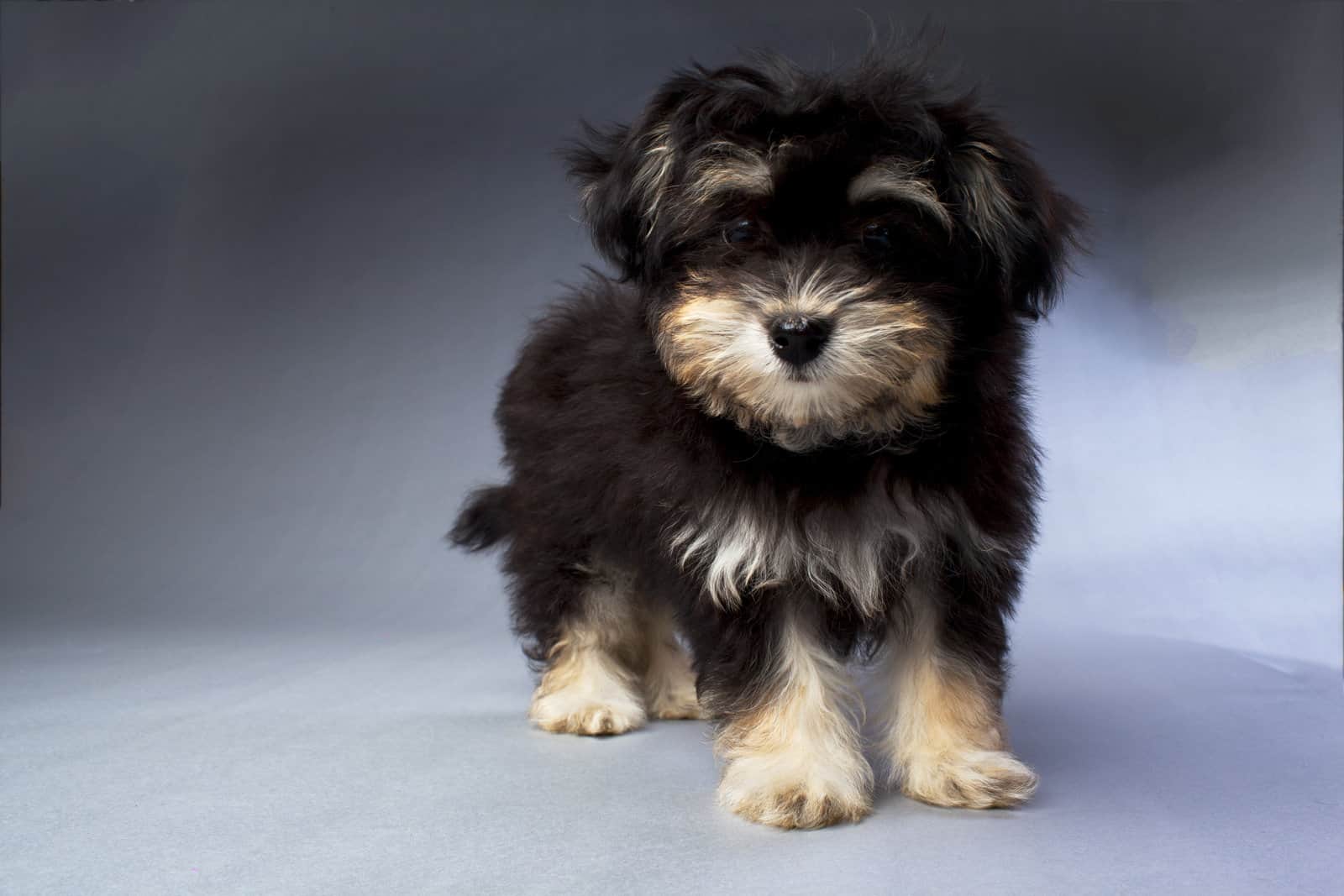
Havanese puppy
Havanese puppy

Conclusion: Does the Havanese Shed?

In conclusion, while Havanese dogs do shed, they are considered a low-shedding breed. Regular grooming is key to keeping shedding under control and maintaining the health of their coat. As with any breed, it’s important to research and consult with experts before committing to a new furry friend to ensure that their needs and grooming requirements align with your lifestyle.

To learn more about Havanese shedding and grooming, you can visit the websites of the American Havanese Club (www.havanese.org) and the American Kennel Club (www.akc.org). These resources provide valuable information on the breed’s characteristics, grooming tips, and responsible dog ownership.

Adopting a Havanese or any other breed is a long-term commitment, and it’s essential to consider factors beyond shedding, such as exercise needs, temperament, and compatibility with your family and living situation. By doing thorough research and understanding the breed’s needs, you can make a well-informed decision and ensure a happy and healthy life for you and your Havanese companion.

Copyright CaninePals.Com. All Rights Reserved.

References and Further Reading:
[1] American Kennel Club, Havanese Information.
[2] Havanese Rescue Inc.
[3] American Havanese Club

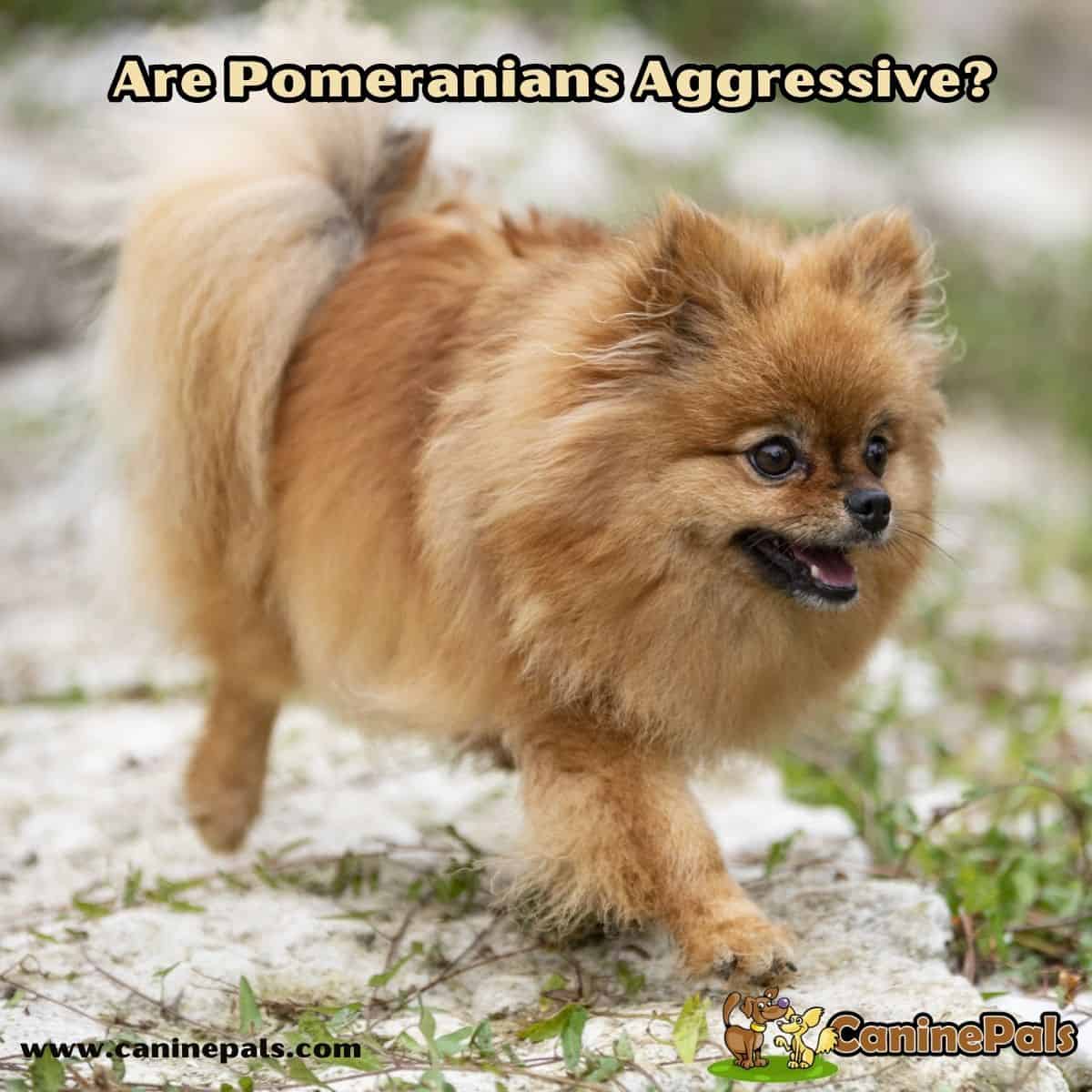
Are Pomeranians Aggressive?

Are Pomeranians Aggressive? Expert Insights and Facts You Need to Know

Pomeranians are small, fluffy, and adorable dogs that make great companions. However, some people wonder if these dogs are aggressive. The answer is complex, depending on various factors, such as the dog’s personality, socialization, training, and health issues.

According to breed experts, Pomeranians are not known for being aggressive. Denise Leo, a Pomeranian breeder and author of “The Pomeranian Handbook,” says, “Pomeranians are companion dogs that thrive on attention and affection and make excellent watchdogs. However, like any dog breed, Pomeranians can exhibit aggressive behavior if they are not properly socialized or trained.

Some signs of aggression in Pomeranians include growling, barking, nipping, biting, and being possessive of food or toys. Addressing any aggressive behavior early is essential to prevent it from escalating.

Positive reinforcement training, such as ignoring bad behavior and rewarding good behavior, can effectively curb aggressive tendencies. Consulting a behaviorist can also help understand and address the root cause of the aggression.

Are Pomeranians Aggressive?

Understanding Pomeranian Behavior

Temperament

Pomeranians are known for their bold and confident personalities. They are intelligent, active, and love to be around people. They are also known for being lap dogs and have a strong guarding instinct.

According to Denise Leo, a Pomeranian breeder, and author, Pomeranians are “extremely loyal, affectionate, and devoted to their owners.”

Socialization

Early socialization is crucial for Pomeranians to develop friendly behavior towards strangers and other dog breeds. The breed tends to be wary of strangers and exhibits aggression if they must be correctly socialized. 

Socialization should start at a young age and continue throughout their lives. The American Kennel Club recommends exposing Pomeranians to different sounds, smells, and environments to help them become well-adjusted and confident dogs.

Aggression Types

Pomeranians can exhibit different types of aggression, including dog aggression, fear aggression, and separation anxiety. Dog aggression can result from a lack of socialization or guarding instincts.  Fear aggression can be exhibited towards strangers or in new environments. Separation anxiety can cause destructive behavior and excessive barking.

Breed Personality Table

Personality Traits Description
Loyal Pomeranians are extremely loyal to their owners.
Affectionate They love to be around people and crave attention.
Confident Pomeranians have a confident and bold personality.
Guarding Instincts They have a strong guarding instinct and can be protective of their owners.
Wary of Strangers Pomeranians can be wary of strangers and require early socialization.
Lap Dogs They are known for being lap dogs and love to cuddle.
Are Pomeranians Aggressive

Signs of Aggression in Pomeranians

Pomeranians are generally known for their friendly and outgoing personalities. However, like any other breed, they can display aggressive behavior under certain circumstances. Pet owners need to recognize the signs of aggression in their Pomeranians to prevent potential harm to themselves, their pets, or others.

Barking and Growling

Barking and growling are common behaviors in Pomeranians but can also be signs of aggression. If Pomeranian bark or growls excessively, especially in response to strangers or other animals, it may display aggressive behavior. Aggressive tendencies can be a result of fear, anxiety, or territoriality.

Biting and Nipping

Biting and nipping are more severe signs of aggression in Pomeranians. Pomeranians may bite or nip when they feel threatened or uncomfortable. This behavior can be a result of fear, anxiety, or pain.

It’s essential to address this behavior immediately to prevent potential harm to others.

Anxiety and Fear

Anxiety and fear can also lead to aggressive behavior in Pomeranians. If a Pomeranian feels threatened or uncomfortable, it may display aggressive behavior as a defense mechanism. This behavior can result from a lack of socialization or past traumatic experiences.

Resource Guarding

Resource guarding is another form of aggression in Pomeranians. Pomeranians may become possessive over their food, toys, or other possessions and display aggressive behavior when others approach or try to take their possessions.

This behavior can be a result of a lack of training or socialization.

According to breed expert Denise Leo “Pomeranians are known for their lively personalities and affectionate nature. However, they can display aggressive behavior under certain circumstances. Pet owners must recognize the signs of aggression in their Pomeranians and address the behavior immediately”.

Breed Personality 

  • Friendly: Pomeranians are known for their friendly and outgoing personalities.
  • Lively: Pomeranians are active and playful dogs.
  • Affectionate: Pomeranians love to be around their owners and crave attention.
  • Intelligent: Pomeranians are quick learners and respond well to positive reinforcement training.
  • Alert: Pomeranians always look for potential threats and bark to warn their owners.

Pomeranians can display aggressive behavior under certain circumstances. Pet owners must recognize the signs of aggression in their Pomeranians and address the behavior immediately. With proper training and socialization, Pomeranians can be friendly and well-behaved pets.

Are Pomeranians Aggressive?

Training and Socializing Pomeranians

Pomeranians are intelligent and active dogs that require proper training and socialization to prevent aggressive behavior. Training your Pomeranian will help you establish a good relationship with your pet and ensure your furry companion is well-behaved and happy. This section will discuss the different aspects of training and socializing Pomeranians.

Obedience Training

Obedience training is essential for Pomeranians as it helps establish a proper hierarchy between the owner and the pet. Establishing yourself as alpha is necessary, meaning you are the leader, and your Pomeranian should respect and obey you. You can achieve this by using positive reinforcement techniques such as reward-based training.

Reward-Based Training

Reward-based training is an effective method of training Pomeranians. This method involves rewarding your pet for good behavior, such as following commands or performing tricks. Rewards can be in the form of dog treats, toys, or praise. This method helps reinforce good behavior and encourages your Pomeranian to repeat it.

Socializing with People

Pomeranians are companion dogs and love to interact with their owners and other people. Socializing your Pomeranian with people from a young age is essential to prevent aggressive behavior towards strangers. 

Socializing with people involves exposing your Pomeranian to different people in different situations. You can introduce your Pomeranian puppy  to family members, friends, and neighbors. Gradually, you can expose your pet to new people in different environments.

Socializing with Other Dogs

Socializing with other dogs is also vital for Pomeranians, and it helps them learn how to interact with other dogs and prevents aggressive behavior toward other dogs. You can start by introducing your Pomeranian to other dogs in a controlled environment, such as an indoor canine playpen.

It is essential to supervise the interactions and ensure that they are positive. You may need to consult a behaviorist if your Pomeranian displays aggressive behavior towards other dogs.

Breed Personality

According to Denise Leo, a Pomeranian breeder, and author, “Pomeranians are intelligent, active, and alert dogs. They are also affectionate and very loyal to their owners”. 

Breed Personality Summary

  • Intelligent: Pomeranians are quick learners and can be trained to perform various tricks and commands.
  • Active: Pomeranians are energetic dogs that require regular exercise and playtime.
  • Affectionate: Pomeranians are known for their affectionate nature and love to cuddle with their owners.
  • Loyal: Pomeranians are loyal to their owners and love to be around them.
  • Extroverted: Pomeranians are outgoing dogs that love to interact with people and other dogs.
  • Playful: Pomeranians are playful and love to play with toys and games.
  • Confident: Pomeranians are confident dogs that are not easily intimidated.

Time-Out Area

If your Pomeranian displays aggressive behavior, you can use a time-out area to calm them down. A time-out area can be designated in your home where your Pomeranian is isolated for a short time.

This can be a crate or a small room where your pet can calm down. It is essential to avoid using the time-out area as a punishment and to ensure that your Pomeranian understands why they are being isolated.

Dog owners must understand that training and socializing Pomeranians is essential to prevent aggressive behavior and ensure your furry companion is well-behaved and happy. By using positive reinforcement techniques and exposing your Pomeranian puppy to different people and situations, you can help your pet become a well-adjusted and confident dog.

Preventing Aggression in Pomeranians

Pomeranians are small dogs with big personalities. While generally friendly and affectionate, they can become aggressive if not properly socialized or trained.  Tips for preventing aggression in Pomeranians.

Health Issues

It is essential to keep your Pomeranian healthy to prevent any underlying health issues that may cause aggression. According to Pomeranian breed expert Denise Leo, “A healthy Pomeranian is a happy Pomeranian.” Regular visits to the vet, a healthy diet, and exercise can help prevent any health issues that may cause aggression.

Teething and Pain

Pomeranians, like all dogs, go through a teething phase. During this time, they may be more prone to chewing and biting. Providing your Pomeranian with appropriate chew toys can help alleviate any discomfort and prevent them from biting or chewing on inappropriate objects. Additionally, if your Pomeranian is in pain, they may become more aggressive. It is essential to address any pain or discomfort promptly.

Proper Play and Roughhousing

Pomeranians are playful dogs, but establishing boundaries is vital to prevent aggressive behavior. According to the American Pomeranian Club, “Pomeranians will be happy to play with their owners, but they should not be encouraged to play roughly.” Encouraging appropriate play and discouraging roughhousing can help prevent any aggressive behavior.

Avoiding Triggers

Pomeranians may become aggressive if they feel threatened or scared. It is crucial to avoid any triggers that may cause your Pomeranian to become aggressive. For example, if your Pomeranian is afraid of loud noises, keeping them away from noisy environments is essential. Properly socializing your Pomeranian is important to prevent fear or aggression towards other dogs or people.

Breed Personality

Pomeranians are confident, friendly, and affectionate dogs. Pom dogs are known for their playful personalities and love to be around people. However, they can become aggressive if not properly socialized or trained. Establishing boundaries and preventing any triggers that may cause your Pomeranian to become aggressive is essential.

Breed Personality Summary

Preventing aggression in Pomeranians requires proper socialization, training, and care. Addressing any underlying health issues, avoiding triggers, and establishing appropriate boundaries can help prevent aggressive behavior in your Pomeranian.

Dealing with Aggression in Pomeranians

Pomeranians are generally not aggressive dogs; like any breed, they can exhibit aggressive behavior. Understanding the reasons behind the aggression and how to deal with it effectively is vital. This section will discuss some ways to handle aggression in Pomeranians.

Time-Out

One of the best and most effective techniques to deal with aggression in Pomeranians is to give them a time-out. This means separating the dog from whatever is causing the aggression. For example, if your Pomeranian is aggressive towards other dogs, you can separate them and give them some alone time, which will help them calm down and reduce their aggression.

Behavior Modification

Behavior modification is another effective way to deal with aggression in Pomeranians. This involves changing the dog’s behavior through positive reinforcement. For example, if your Pomeranian is aggressive towards strangers, you can reward them when they exhibit calm behavior around strangers. This will help them learn that calm behavior is rewarded, and aggression is not.

Working with a Professional Dog Trainer

If your Pomeranian’s aggression is severe or you cannot handle it alone, working with a professional behaviorist or trainer is crucial. These people can help you identify the root cause of the aggression and develop a plan to deal with it effectively.  A professional dog trainer or behaviorist can also teach you how to modify your Pomeranian’s behavior and provide ongoing support.

According to Denise Leo, a Pomeranian expert and breeder, “Pomeranians are generally confident and outgoing dogs. They are intelligent and independent thinkers that love doing things their way. However, these dogs can become aggressive if they feel threatened or uneasy”. 

To better understand the personality of Pomeranians, here is a breed personality summary:

  • Confident: Pomeranians are generally confident dogs that are not easily intimidated.
  • Outgoing: Pomeranians are outgoing and enjoy being around people.
  • Intelligent: Pomeranians are intelligent dogs that are quick learners.
  • Independent: Pomeranians are independent thinkers that like to do things their way.
  • Protective: Pomeranians can be protective of their owners and may exhibit territorial behavior.

Dealing with aggression in Pomeranians requires patience, consistency, and understanding. Using time-outs, behavior modification, and working with a professional, you can effectively manage your Pomeranian’s aggression and help them become well-behaved and happy companions.

Are Pomeranians Aggressive?

Conclusion to Are Pomeranians Aggressive?

In conclusion, Pomeranians are not inherently aggressive dogs. However, like any other breed, they can become aggressive if not properly trained and socialized.

It is important to note that aggression in Pomeranians can also be a symptom of an underlying medical condition or pain, and owners should always consult a veterinarian if their dog displays sudden aggression.

Training and proper socialization and training from an early age can significantly reduce the likelihood of aggressive behavior in Pomeranians. This includes exposing them to environments, animals, and people to help them feel comfortable and confident.

Positive reinforcement training methods, such as rewarding good behavior, can also prevent aggression. It is also essential for owners to understand the triggers that can cause aggression in Pomeranians, such as feeling threatened or overwhelmed.

Owners can help prevent their dogs from becoming aggressive by identifying, avoiding, or managing these triggers. Overall, Pomeranians can make excellent pets with their playful and affectionate personalities.

With proper training and socialization, dog owners can help ensure their Pomeranian remains happy and well-behaved.

Copyright CaninePals.Com. All Rights Reserved.

References and Further Reading:
  1. Official Standard of the Pomeranian (AKC). American Kennel Club, 2011.
  2. Official English Kennel Club Pomeranian Breed Standard, 2017.
  3.  Kimbering Pomeranians “1891-1991”.
  4.  Denise Leo, The Pomeranian Handbook.
  5.  L.Ives, Show Pomeranians.
  6.  L.Ziegler Spirer & H.F. Spirer, This is the Pomeranian.
  7. FEDERATION CYNOLOGIQUE INTERNATIONALE (FCI) German Spitz, including Keeshond and Pomeranian Breed Standards. PDF file.

The Pomeranian Handbook by Denise Leo

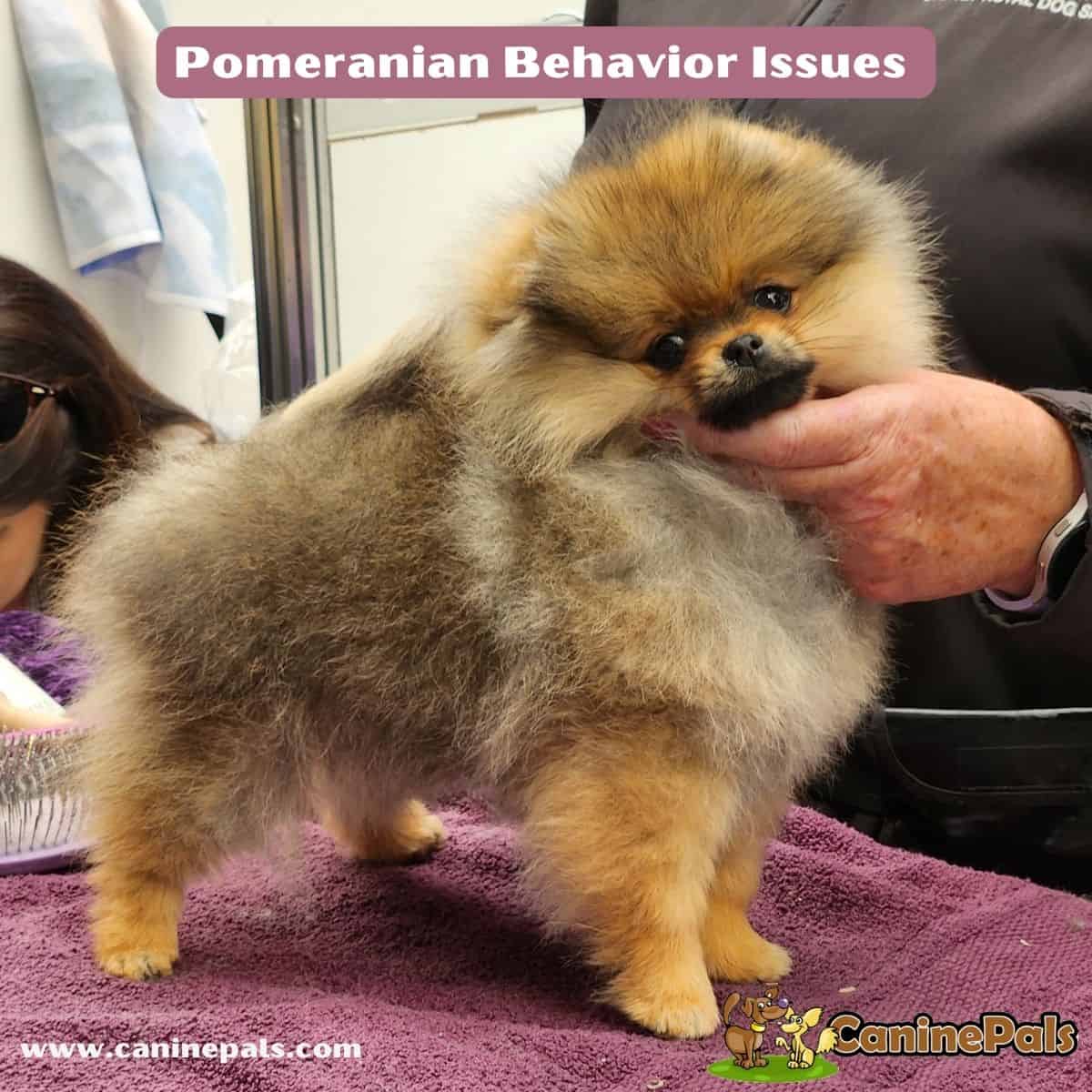
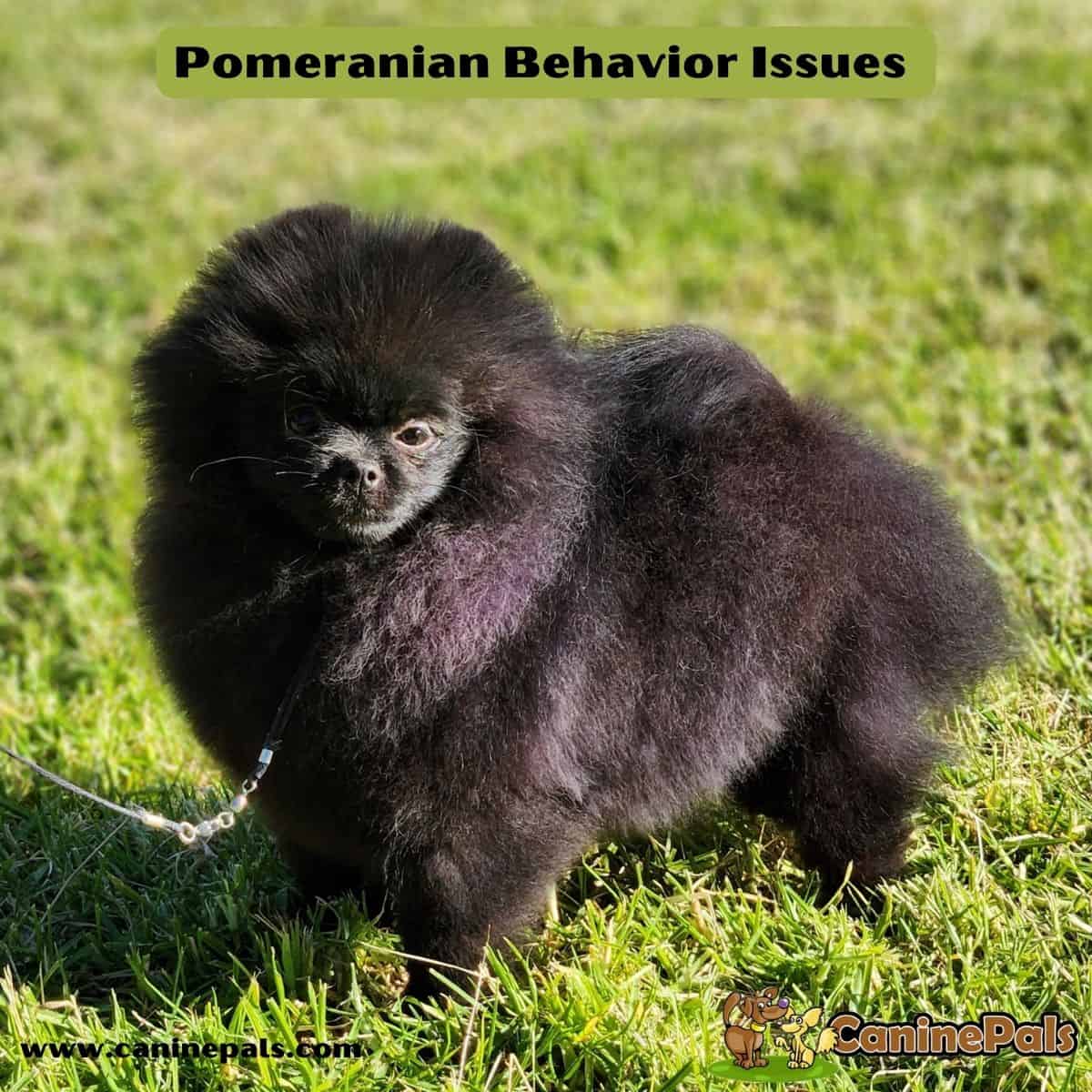
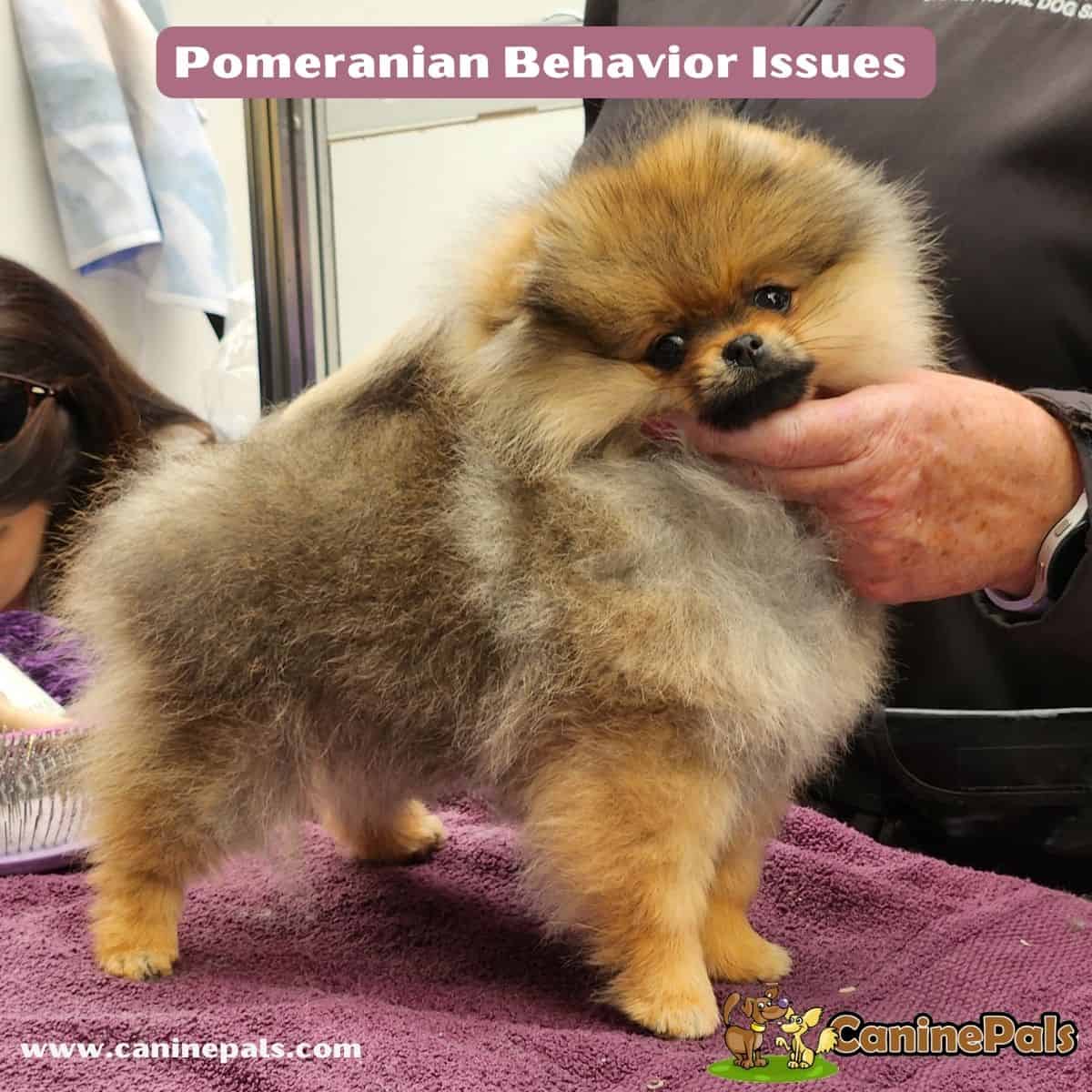
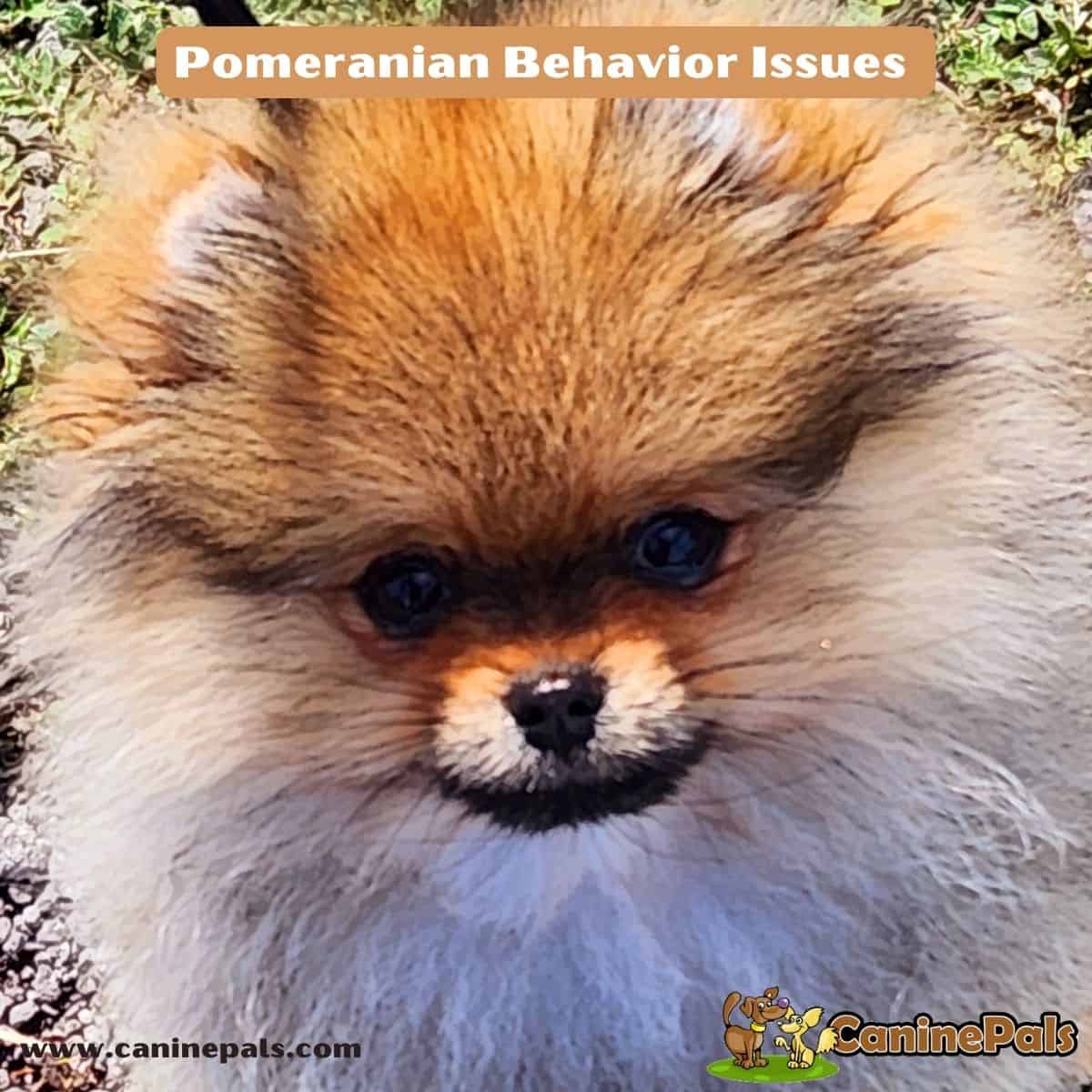
Pomeranian Behavior Issues

Pomeranian Behavior Issues & How to Deal with Them

Pomeranians are known for their small size and adorable appearance but also have unique behavior traits that make them stand out as a dog breed. Understanding Pomeranian behavior is vital for pet owners to provide proper care and training for their furry friends.

In this article, I will explore the behavior of Pomeranians based on insights from experts in the field. Discover how to understand and tackle common behavioral issues with your Pomeranian. Get the tips you need for a happy, healthy pup from the experts at Canine Pals.

Pomeranian Behavior Explained

Pomeranians are generally friendly, outgoing, and playful. They are known to be lively and energetic and love to be the center of attention. Pomeranians are also intelligent dogs and can be trained to perform various tasks, such as agility training or obedience training. However, like all breeds, Pomeranians have unique behavior traits to consider when adopting one.

Pomeranian Behavior Issues

Pomeranian Behavior Traits

  1.  Pomeranian Temperament: Pomeranian dogs have a bold, confident temperament that can make them fearless and protective. They are generally affectionate with their owners but may be wary of strangers. Pomeranians are known to be prone to separation anxiety, which can cause destructive behavior if left alone for long periods.
  2.  Socialization: Socialization is essential to raising a Pomeranian, and they need to be exposed to different people, animals, and environments to prevent fear or aggression. Early socialization can help Pomeranians become well-adjusted, friendly dogs.
  3.  Exercise: Pomeranians are active little dogs that require daily exercise to keep them healthy and happy. Short walks, playtime, and indoor games are great ways to keep them entertained and stimulated. However, they are also prone to weight gain, so monitoring their food intake and exercise levels is essential.
  4.  Training: Pomeranians are intelligent dogs eager to please, making them relatively easy to train. Owners should use positive reinforcement techniques, such as treats and praise, to work well with Pomeranians. However, they can sometimes be stubborn, so consistent training is necessary.
Pomeranian puppy
Pomeranian puppy

Toy Breed Dog Stereotypes

Don’t let Pomeranian dog breed stereotypes fool you. Claims that all toy breed dogs are ‘snappy’ and ‘yappy’ are invalid. Remembering each dog has a unique personality and behavior is important.

Factors determining temperament include instincts, the breeder’s socialization techniques, and the owner’s environment. With proper introductions to the outside world, any Pomeranian can behave accordingly.

In addition, with proper care and training, the behavior of a Pomeranian can be very calm and friendly. Negative behaviors such as nipping, growling, barking, and biting often result from improper hierarchy and poor training. You can ensure a Pomeranian will not develop these behaviors with good training.

Common Pomeranian Behavioral Issues

Sleeping Issues

If you’re a Pom owner, you know these little dogs are generally energetic. However, sudden lethargy or weakness could indicate a health problem or a significant environmental change. It’s essential to watch for these signs in your furry friend.

On the other hand, healthy Pomeranians can have bursts of activity followed by much-needed naps. If you’re curious about your Pom’s sleeping habits or are considering bringing one into your home, check out the Pomeranian sleep patterns guide.

Teething and Chewing Issues

Dealing with a teething pup or an older Pomeranian’s chewing habit can be challenging. The intense itching and discomfort during teething leads to compulsive chewing. And chewing habits may develop in Poms of any age for different reasons.

Coprophagia: When Dogs Eat Poop

This behavior problem isn’t just gross to witness – it can also have negative health consequences for dogs. While many dogs eat their own feces, some may also consume the waste of other canines or even cats.

Separation Anxiety

Separation anxiety is a common challenge experienced by dogs, including toy dog breeds like the Pomeranian, bred to be lap dog companions. It refers to the difficulties puppies or dogs face when left alone, leading to feelings of isolation and loneliness.

Barking

Barking is a natural behavior for most dogs, but excessive barking can be frustrating for pet owners, especially if they own a Pomeranian dog breed that tends to bark more frequently. Although this breed is known for being overly stimulated by visitors and other dogs, some Pomeranians may bark for no apparent reason, causing stress and annoyance for their owners.

Eating Issues

Does your Pomeranian have a picky eating habit? Here are some possible scenarios: rapid eating, hiding food, refusing kibble, being selective with only eating chicken, requiring hand-feeding, and demanding your presence during mealtime.

Begging For Food

If you own a Pomeranian, you may have noticed that they tend to beg for food. However, the most effective way to curb this behavior is by giving them treats only during scheduled meal times and avoiding rewarding them with food or attention when they beg. Following this simple strategy, you can train your Pomeranian to be well-behaved and avoid overfeeding them.

Guarding Food

If you’re a pet owner, food guarding can be a concern you should address. But don’t worry, there are some simple steps you can take to avoid any problems.

  1. Start by giving smaller food portions and incorporating treats into their meals.
  2. Try feeding them one piece of kibble at a time to increase engagement and prevent food aggression.
  3. And remember, only remove the food bowl if you’re offering something better in return.

These easy tips will ensure your pet’s safety and promote healthy eating habits.

Headstrong Behavior

Pomeranian dogs are known for being stubborn and assertive. They can be territorial and uneasy around strangers and other dogs despite their small size. Particularly if not appropriately socialized as puppies. Small children may unintentionally hurt or provoke them, leading to snapping or biting. Therefore, monitoring interactions between young kids and small Pomeranians is crucial. Many Pomeranian owners report that early obedience training benefits these dogs.

House Training

Owners of small dogs, like the Pomeranian, will need to put in more effort to potty train them. Small dogs have small bladders and must go more frequently than larger dogs. However, don’t worry! With consistent effort and vigilance, you can successfully house-train your pup.

Here are some tips:

  1. Take your dog outside to their designated potty area every one to two hours, especially in the morning, after meals, and before bed.
  2. If your pup is still young and has little control, take them out right after they wake up and after meals.
  3. Keep an eye out for signs your Pomeranian needs to go potty and try to prevent accidents.

When your puppy quickly takes care of business outside, make sure to give them lots of praise and a reward before returning indoors. Over time, your pup will understand that going out is for potty breaks. With patience and dedication, you and your furry friend will soon be potty-training pros.

Shyness

Although Pomeranians can experience shyness, teaching them to be confident is still possible. It’s important to show your dog there’s no need to be afraid. Here are some helpful tips to get started:

  1.  Don’t give attention to your dog’s fear or comfort them when they’re timid.
  2.  Celebrate and praise your pup when they show courage and learn something new.
  3.  To ensure your Pomeranian is adaptable and comfortable in different environments, socialize with various people and animals.
  4. By socializing with your dog, you can help them overcome their shyness and build confidence.

Pomeranian Behavior Summary

Behavior Trait Description
Temperament Confident, bold, affectionate with owners, wary of strangers, prone to separation anxiety
Socialization Important to prevent fear or aggression toward people or animals
Exercise Active dogs that require daily exercise to prevent weight gain
Training Intelligent and eager to please, respond well to positive reinforcement techniques


Pomeranian Behavior Advice from Breed Experts

Denise Leo from Dochlaggie Pomeranians says, “Pomeranians are outgoing, friendly dogs that make great companions. Poms are very intelligent and eager to please, making them easy to train.”
The American Kennel Club states that “Pomeranians are active dogs that require regular exercise to prevent obesity and to keep them mentally stimulated. Short walks, indoor games, and playtime are great ways to entertain them.”
Pomeranian puppy
Pomeranian puppy

Pomeranian Behavior Issues Conclusion:

In conclusion, Pomeranians are friendly, outgoing dogs with unique behavior traits that make them an excellent choice for a pet. Understanding their temperament, socialization needs, exercise requirements, and training methods is essential for providing proper care and training. With regular exercise, socialization, and training, Pomeranians can be well-adjusted, happy pets that bring joy to their owners’ lives.

Copyright CaninePals.Com. All Rights Reserved.

References and Further Reading:
  1. Official Standard of the Pomeranian (AKC). American Kennel Club, 2011.
  2. Official English Kennel Club Pomeranian Breed Standard, 2017.
  3.  Kimbering Pomeranians “1891-1991”.
  4.  Denise Leo, The Pomeranian Handbook.
  5.  L.Ives, Show Pomeranians.
  6.  L.Ziegler Spirer & H.F. Spirer, This is the Pomeranian.
  7. FEDERATION CYNOLOGIQUE INTERNATIONALE (FCI) German Spitz, including Keeshond and Pomeranian Breed Standards. PDF file.

The Pomeranian Handbook by Denise Leo

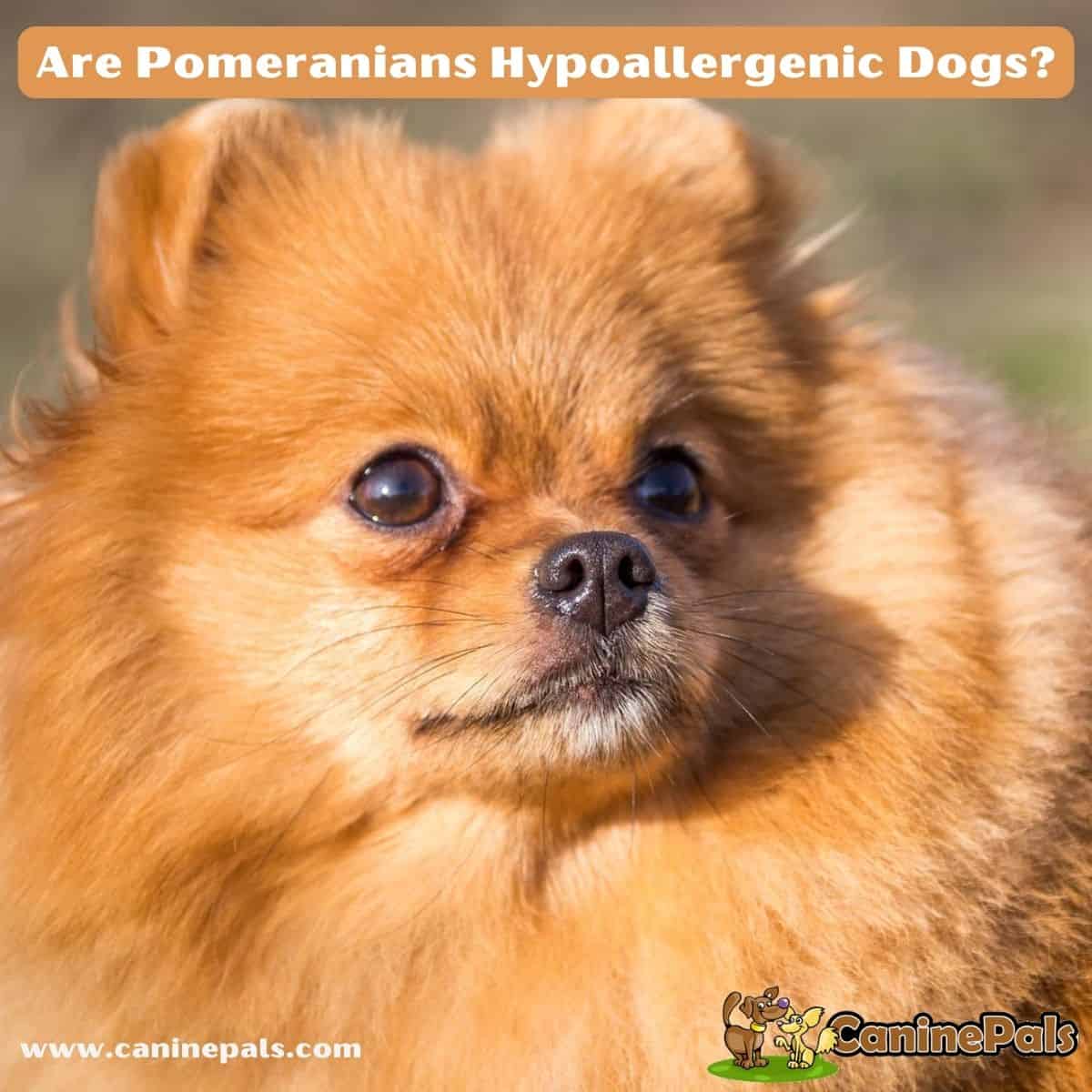
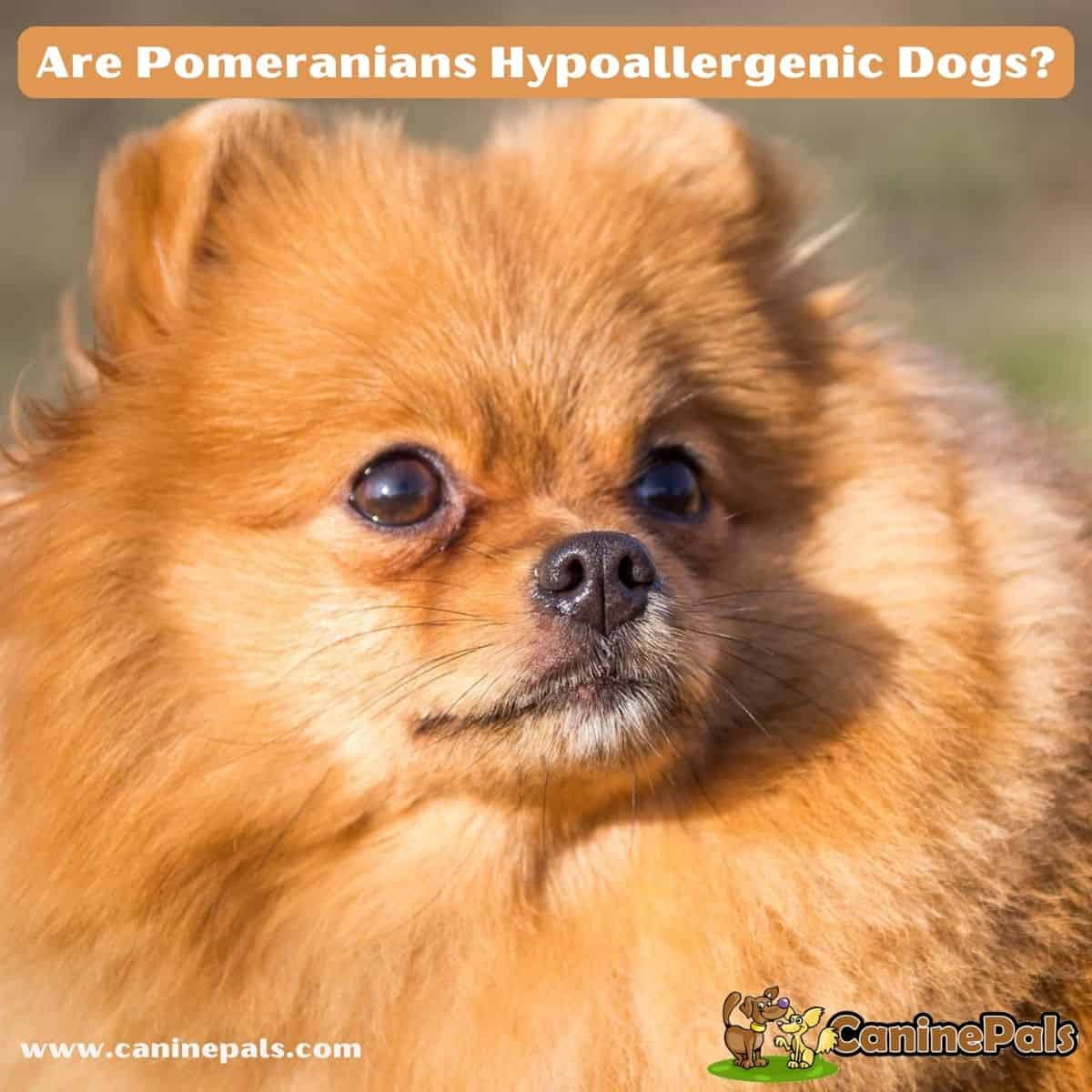
Are Pomeranians Hypoallergenic Dogs or Not?

Are Pomeranians Hypoallergenic Dogs or Not?

Pomeranians are a beloved breed among dog lovers, known for their fluffy appearance and affectionate personalities. However, for individuals with allergies, owning a dog can be challenging.

In this article, I will explore whether Pomeranians are hypoallergenic and provide insights from two experts in the field: Denise Leo from Dochlaggie Pomeranians and Pomeranian Headquarters.

Are Pomeranians Hypoallergenic?

Unfortunately, Pomeranians are not hypoallergenic. If you’re an allergy sufferer considering a Pomeranian as a pet, it’s essential to know that they shed their coat, especially during the spring and fall.

Pomeranians have a thick double coat, which means they shed quite a bit. This shedding can lead to allergens in the dog’s environment, causing allergies in sensitive individuals. While no dog breed is truly hypoallergenic, some breeds may produce fewer allergens than others.

Denise Leo: “Pomeranians are not hypoallergenic, but regular grooming can help manage shedding and reduce the amount of allergens present in the environment.

Pomeranian Headquarters: “Individuals with allergies may consider allergy shots or other treatments to manage their symptoms if they wish to adopt a Pomeranian.

Denise Leo, Dochlaggie Pomeranian Dogs

Denise Leo, a Pomeranian breeder and owner of Dochlaggie Pomeranian dogs, confirms that Pomeranians are not hypoallergenic dog breed. She notes that Pomeranians shed quite a bit, which can lead to environmental allergens.

Denise Leo advises individuals with allergies to spend time with Pomeranians before adopting to ensure they do not have an allergic reaction. Denise Leo also suggests that regular grooming can help manage shedding in Pomeranians, reducing the amount of allergens present in the environment.

She recommends brushing the dog’s coat at least twice weekly with a pin brush, slicker brush, and metal comb to remove loose hair and prevent matting. Additionally, she advises providing the dog with a healthy diet and plenty of exercise to promote overall good health.

Pomeranian Headquarters

Pomeranian Headquarters, a resource for all things Pomeranian, also confirms that Pomeranians are not hypoallergenic. They note that Pomeranians have a thick double coat that sheds heavily twice a year.

During these times, they recommend more frequent grooming and using a de-shedding tool to remove shedding fur and reduce the number of allergens in the environment. Pomeranian Headquarters advises individuals with allergies to spend time with Pomeranians before adopting to ensure they do not have an allergic reaction.

They suggest that individuals with allergies may consider allergy shots or other treatments to manage their symptoms if they wish to adopt a Pomeranian.

Are Pomeranians Hypoallergenic Dogs or Not?

What are Hypoallergenic Dogs?

It helps to understand what the word hypoallergenic means. People with dog allergies are allergic to a protein in pet dander or dead skin cells, and dander often attaches itself to loose hair. 

So, a Pomeranian that sheds is likely to cause dog allergies as the loose hair spreads the pet dander around. Dogs that are considered hypoallergenic are just low-shedding breeds. And the Pom, while not a heavy shedder, sheds their fur a moderate amount.

Facts about Hypoallergenic Dog Breeds: Debunking Myths

Many people believe that hypoallergenic dogs cause zero allergic reactions. However, according to the American Kennel Club, this is a common misconception. While certain breeds are less likely to trigger dog allergies, there is no such thing as a 100% hypoallergenic dog.

For those with allergies looking for a furry companion, there are allergy-friendly breeds such as Bichon Frise, Chinese Crested, American Hairless Terrier, Spanish Water Dog, Poodle, Schnauzer, Maltese, and Irish Water Spaniel.

What Causes Allergic Reaction to Dogs?

Did you know that dog hair is not the only thing that triggers allergies? While some dogs may have fluffy coats, others are entirely hairless. So, what causes allergic reactions to dogs? The answer is pet dander – flaky dead skin cells found in animal hair but not visible to the human eye.

Sadly, pet dander is a leading allergen and can even cause severe allergies. It’s essential to note that there is no direct correlation between potential dog hair and dander.

Just because a dog is hairy doesn’t mean it will lead to allergies, and a hairless dog doesn’t necessarily mean it’s a hypoallergenic dog breed.

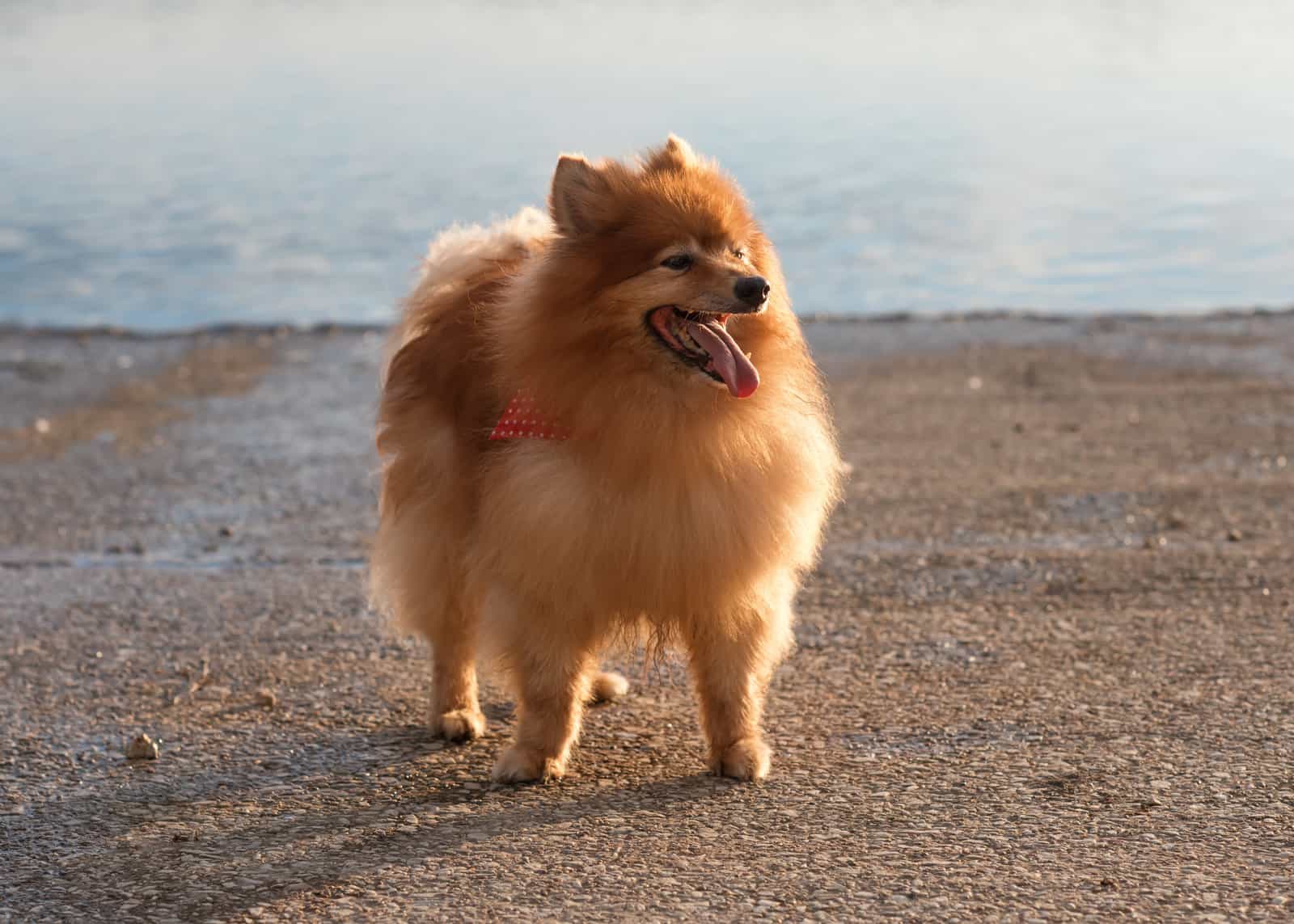
Pomeranian dog
Pomeranian dog

Are Pomeranians Allergy Friendly?

Are you considering a Pomeranian as a pet but have allergies? It’s essential to be aware that Pomeranians are not considered allergy-friendly dogs

Picture this scenario: You come home with an adorable Pomeranian companion but soon discover you have dog allergies. It’s a frustrating situation to face.

To ensure you can handle having one as a companion, spend time with different Pomeranians beforehand. Spending time with a Pom dog will help you make an informed choice and avoid unwanted reactions. Severe allergy sufferers should consider exploring different dog breeds for a more comfortable living experience.

Pomeranian dog
Pomeranian dog

How Much Do Pomeranians Shed?

The Pomeranian dog, ranked 24th on the AKC’s (American Kennel Club) list of most popular dog breeds in 2021, is famous for its distinctive puffy fur coat. This unique feature is what makes them a desirable breed to pet lovers.

However, with this beautiful appearance comes a challenge. The Pomeranian has a double coat consisting of an outer coat and an undercoat. While the outer fur helps to keep them cool, the undercoat keeps them warm in winter.

As with other double-coated dogs, Pomeranians “blow their coats” twice a year, in spring, autumn, or early winter. During these periods, they shed a lot of hair, and dog owners may need to vacuum more frequently to manage all the loose fur.

Managing Pomeranian Shedding

Pomeranian owners should groom their dogs regularly to reduce the amount of dog hair that falls off. Other causes of excess shedding include conditions like stress, poor nutrition, parasites, and hormonal issues.

Ensure you see your veterinarian immediately if you suspect any of these conditions.

Investing in a few air filters can also help minimize the amount of hair and pet dander circulating in your home. Lastly, proper nutrition is essential.
Make sure you pick quality food that will help maintain your dog’s overall health. With these tips, you can still enjoy the company of your Pomeranian without suffering from allergies.

Denise Leo’s Advice on Managing Pomeranian Shedding

Grooming Diet Exercise
Brush coat twice a week with a slicker brush and metal comb Provide a balanced diet rich in protein, vitamins, and minerals Provide regular exercise to reduce stress levels
Regular baths with a good-quality shampoo    

Pomeranian Headquarters’ Advice on Managing Pomeranian Shedding

Grooming Allergies
Brush coat frequently with the de-shedding tool during the shedding season Spend time with Pomeranians before adopting to ensure no allergic reaction
Regular grooming can reduce the amount of allergens present in the environment Consider allergy shots or other treatments to manage symptoms
Pomeranian Dog
Pomeranian Dog

Final Thoughts: Are Pomeranians Hypoallergenic?

In conclusion, Pomeranian dogs are not hypoallergenic due to their thick double coat and shedding habits. However, with proper grooming and care, the number of allergens in the environment can be reduced.

Experts like Denise Leo from Dochlaggie Pomeranians and Pomeranian Headquarters recommend spending time with Pomeranians before adopting to ensure no allergic reaction and managing shedding through regular grooming, a healthy diet, and exercise.

Individuals with allergies may consider allergy shots or other treatments to manage their symptoms if they wish to adopt a Pomeranian. It’s essential to understand the limitations of a breed’s hypoallergenic status and be prepared to take the necessary steps to manage allergies if you’re considering adopting a Pomeranian.

Copyright CaninePals.Com. All Rights Reserved.

References and Further Reading:
  1. Official Standard of the Pomeranian (AKC). American Kennel Club, 2011.
  2. Official English Kennel Club Pomeranian Breed Standard, 2017.
  3.  Kimbering Pomeranians “1891-1991”.
  4.  Denise Leo, The Pomeranian Handbook.
  5.  L.Ives, Show Pomeranians.
  6.  L.Ziegler Spirer & H.F. Spirer, This is the Pomeranian.
  7. FEDERATION CYNOLOGIQUE INTERNATIONALE (FCI) German Spitz, including Keeshond and Pomeranian Breed Standards. PDF file.

The Pomeranian Handbook by Denise Leo

Pomeranians Hypoallergenic Dogs
Are Havanese Hypoallergenic?

Debunking the Myth: Are Havanese Hypoallergenic?

You’re not alone if you’re considering getting a Havanese dog but are concerned about allergies. Havanese dogs are known for their hypoallergenic properties, which make them a great choice for people with allergies.

However, as with any dog breed, it’s essential to research to ensure that a Havanese fits you and your lifestyle. In this blog post, we’ll explore if the Havanese are hypoallergenic dogs as well the personality traits of Havanese dogs according to the Havanese Club of America and the American Kennel Club.

We’ll also delve into what makes Havanese dogs hypoallergenic and provide tips for caring for your new furry friend.

The Havanese dog is known for their outgoing and friendly personalities, which make them great family pets. This dog breed is also intelligent and very easy to train, and This makes the breed a popular choice for obedience competitions.

According to the American Havanese Club, dogs are known for being “lively, playful, and affectionate.” This little dog is also known for their loyalty and adaptability, which makes them an excellent fit for families with children.

Also, Havanese dogs are hypoallergenic, producing fewer allergens than other dog breeds. This makes the Havanese an excellent choice for people with allergies who still want to own a dog.

Are Havanese Hypoallergenic?

The Havanese Dog According To The Breed Experts

The Havanese Club of America is a breed club dedicated to promoting the herd and providing information to Havanese owners and breeders. According to the American Havanese Club, Havanese dogs are “sweet and affectionate” personalities. This dog breed is also known for its extraordinary intelligence and trainability, making it easy to train.

Additionally, Havanese dogs are known for being adaptable, which makes them an ideal fit for families with children. They are also known for being a hypoallergenic dog breed, which makes them an excellent choice for people with allergies.

The American Kennel Club is a national organization promoting purebred dogs and responsible dog ownership. According to the American Kennel Club, Havanese dogs are known for their “gentle and affectionate” personalities.

They are also known for being intelligent and very easy to train, which makes them a great fit for obedience competitions. Additionally, Havanese dogs are known for being adaptable, which makes them a perfect fit for families with children. They are also hypoallergenic, which makes them an excellent choice for people with allergies.

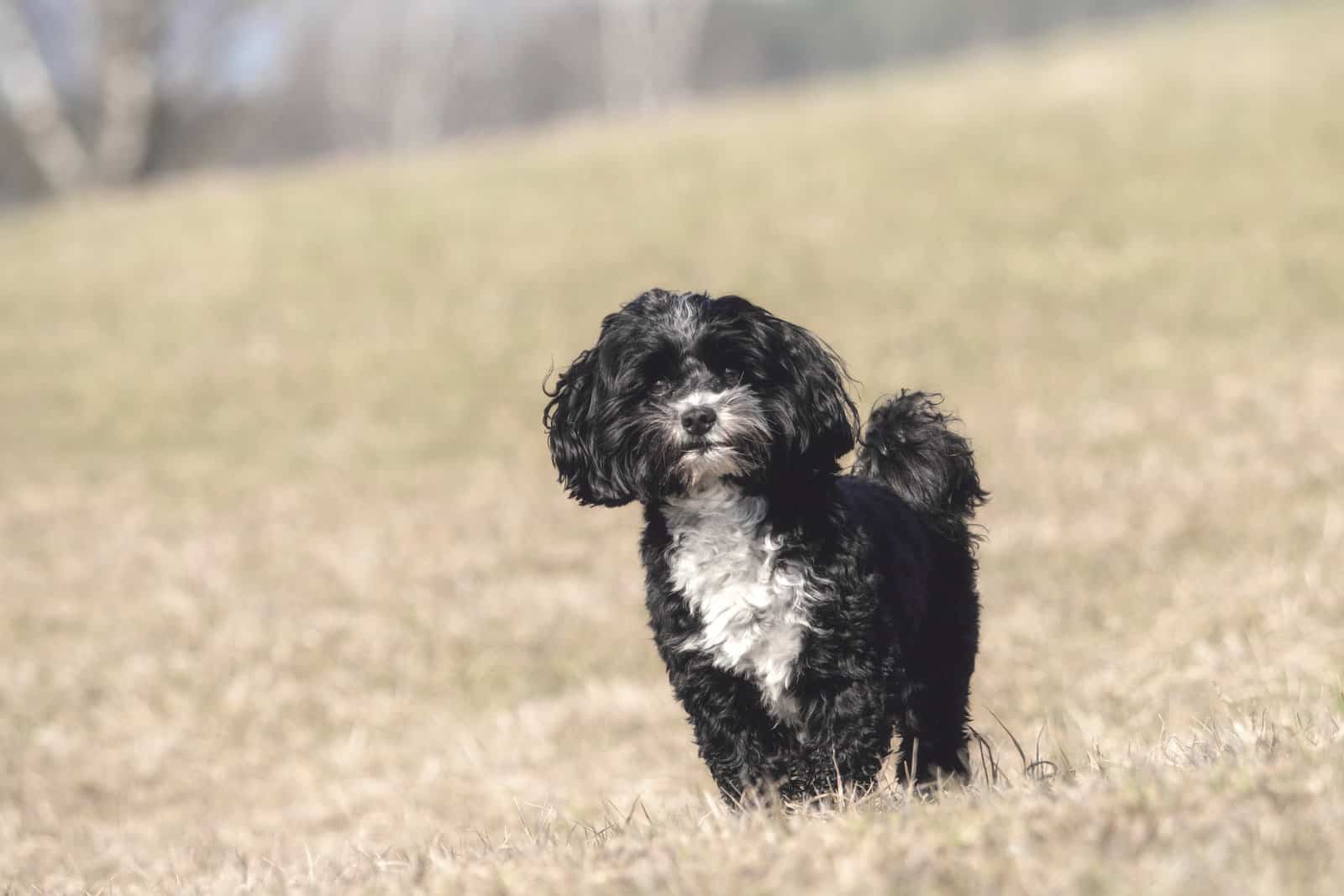
Havanese Dog
Havanese Dog

Is The Havanese Dog Hypoallergenic?

Regarding hypoallergenic properties, Havanese dogs are often recommended for people with allergies. While no dog breed is completely hypoallergenic, Havanese dogs are considered a good option for those with allergies because they have hair rather than fur, which produces less dander.

However, it’s important to note that individual reactions to dogs can vary, so spending time with a Havanese before bringing one into your home is always a good idea.

Havanese Dog
Havanese Dog

What Makes Havanese Dogs Hypoallergenic?

Havanese dogs are hypoallergenic because they produce fewer allergens than other dog breeds. This is because they have hair instead of fur, which means they shed less and produce fewer allergens.

Also, Havanese dogs have silky coats, producing less dander. Dander is a common allergen that dogs produce, and it can cause extreme allergic reactions in people with allergies.

It is essential to remember that no dog breed is completely hypoallergenic, and some people with allergies may still experience symptoms when exposed to Havanese dogs.

Havanese dogs are often recommended for people who suffer from allergies because they have hair rather than fur, which produces less dander.

Havanese dogs produce fewer allergens than many other breeds, making them an excellent choice for people with allergies. However, it’s important to note that individual reactions to dogs can vary, so spending time with a Havanese before bringing one into your home is always a good idea.

To further understand the hypoallergenic properties of Havanese dogs, the table below compares them to other popular hypoallergenic dogs:

Breed Hair or Fur Dander production
Havanese Hair Low
Poodle Hair Low
Bichon Frise Hair Low
Maltese Hair Low
Shih Tzu Hair Low to Moderate

Havanese Dog
Havanese Dog

Tips for Caring for Your Havanese

If you’re considering getting a Havanese dog, there are some essential things to keep in mind:

  1. Providing your Havanese with plenty of exercise and mental stimulation is essential. This can include daily walks, playtime, and training sessions.
  2. Havanese dogs require regular grooming to keep their coats healthy and tangles-free. This can include brushing, bathing, and trimming their hair.
  3. Keep your Havanese healthy by feeding them two meals a day of one-half to one cup of dry dog food. Avoid free-feeding to prevent weight gain, which can lead to serious health issues and shorten their lifespan. If your dog gains weight, talk to your veterinarian to adjust their feeding and exercise schedules based on age, weight, and activity level.
  4. Basic training is essential for your Havanese, just like any other dog. These intelligent and attentive pups are quick learners, so take advantage of the opportunity to contribute to their happiness and teach them good manners that make them well-behaved family members.

Havanese Dog
Havanese Dog

The Conclusion to Are Havanese Hypoallergenic?

Many people, who have allergies to specific breeds of dogs, look for a hypoallergenic dog breed that won’t trigger allergic reactions. The Havanese is an excellent choice because it is low shedders and does not carry the proteins in its fur that other dogs might.

If you are looking for a loving companion, the Havanese is one of the toy dogs to consider.

Not only does this dog breed bring companionship into your home, but it also brings fun. Havanese puppies are intelligent, gentle, easy to train, and affectionate with everyone around them.

They also tolerate young children and other pets, making them perfect four-legged friends. Even if you have pet allergies, consider an allergy test first, as the Havanese can be a good choice on your journey of finding the perfect four-legged friend.

In conclusion, the Havanese puppy is an excellent option for those looking for a hypoallergenic canine companion. Not only is the Havanese hypoallergenic, but they are also incredibly lovable and loyal pets.

Their intelligence and good nature make them perfect playmates for children and adults. Aside from some extra grooming requirements, owning a Havanese is similar to any other type of small dog breed.

The Havanese breed comes in a variety of coat colors and patterns. They love spending time with their owners, going on walks, playing sports like flyball, doing agility training, and performing tricks. This breed is indeed an exceptional one that will make every day brighter with its unique beauty and social nature.

If you’ve been searching for a pup that won’t trigger your allergies but will provide endless love and companionship, the Havanese may be the ideal breed for you!

Copyright CaninePals.Com. All Rights Reserved.

References and Further Reading:

[1] American Kennel Club, Havanese Information.
[2] Havanese Rescue Inc.
[3] American Havanese Club

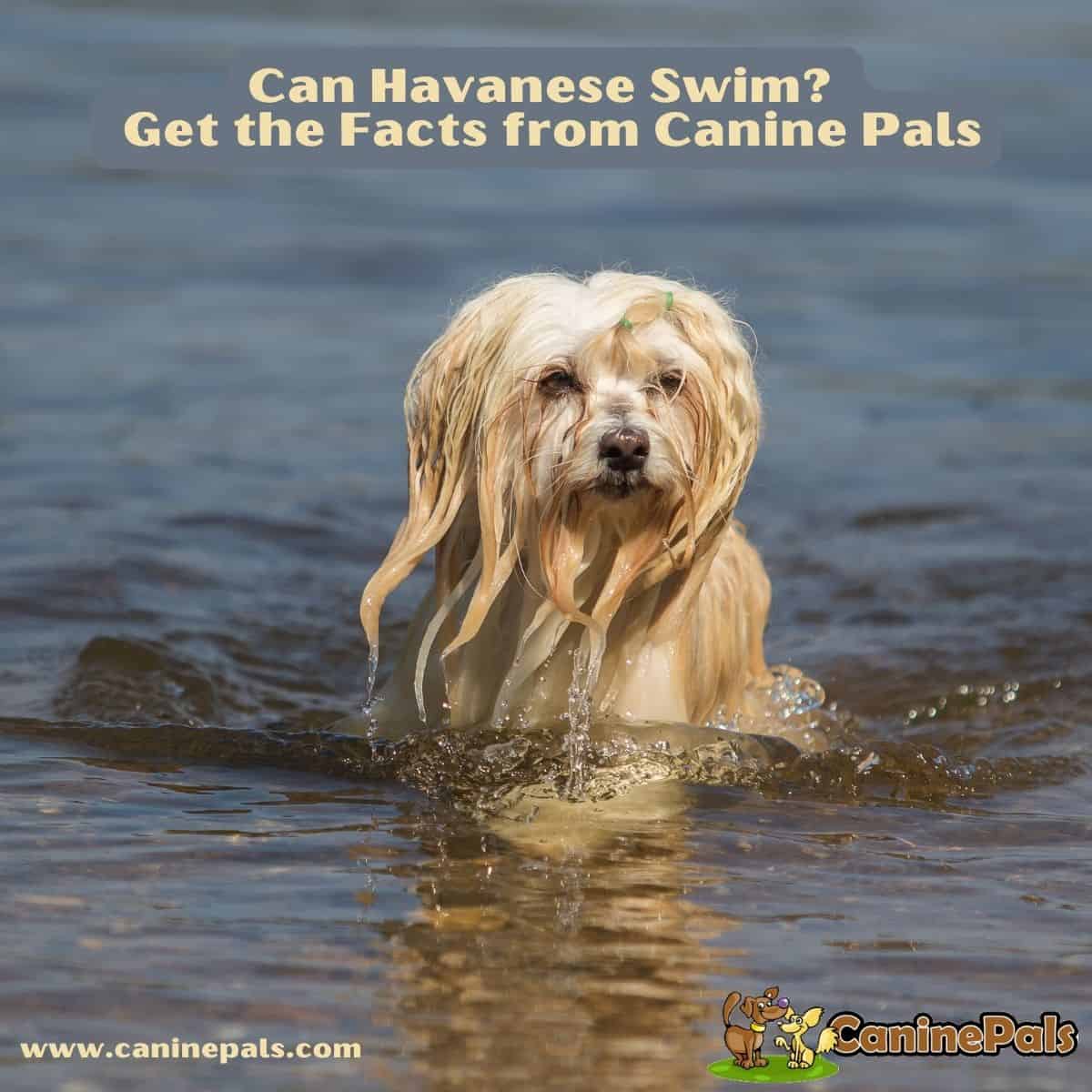
Can Havanese Swim? | Get the Facts from Canine Pals

Can Havanese Swim? | Get the Facts from Canine Pals

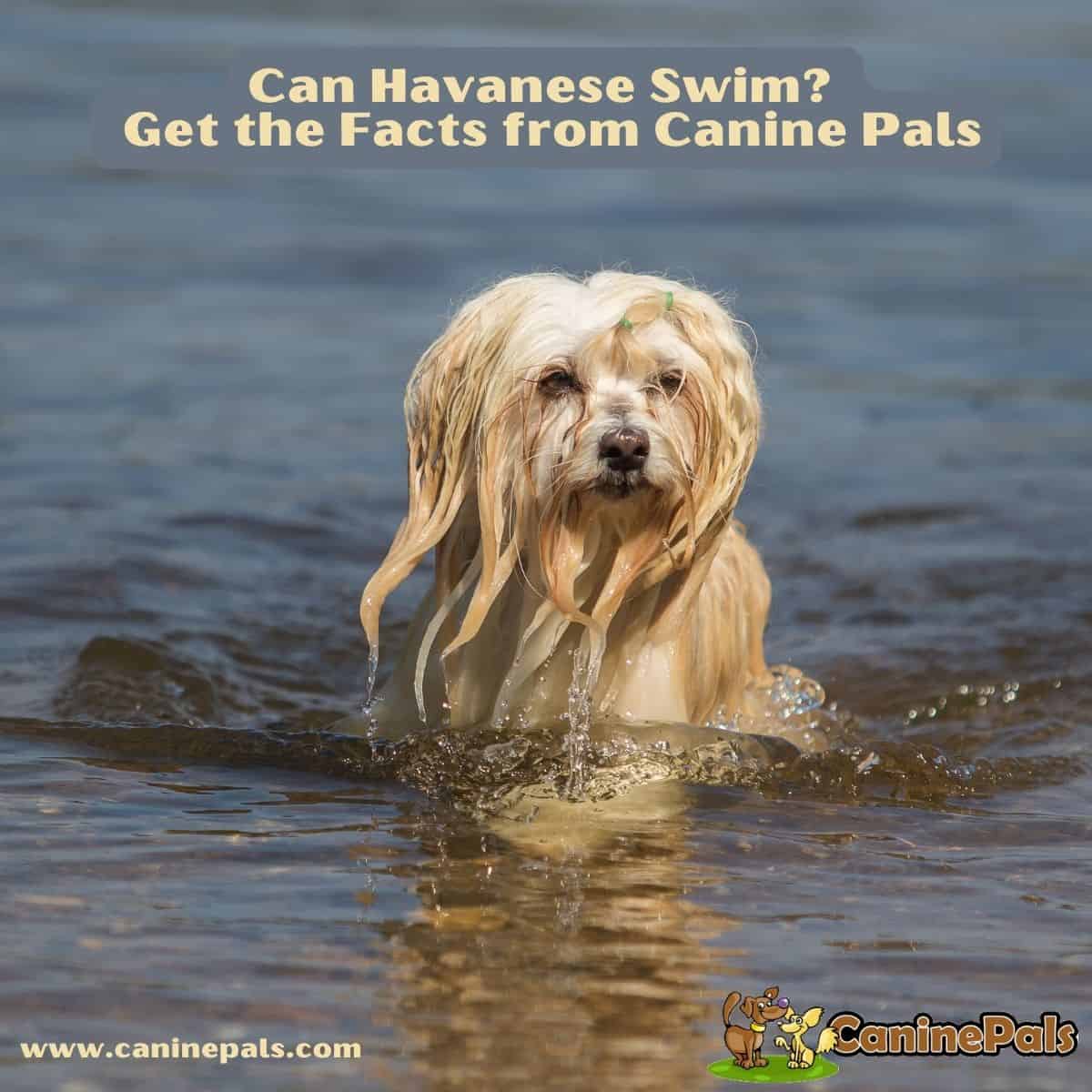
In this article, we will delve into: “Can Havanese dogs swim?” and provide expert insights from two personalities, the American Havanese Club and the American Kennel Club.

The answer to “Can Havanese dogs swim?” is a bit complicated. While Havanese dogs are known for their agility and love for water, they are not natural swimmers.

According to the American Havanese Club, “Havanese dogs may enjoy wading in shallow water, but they are not bred for swimming and can easily become exhausted.”

The American Kennel Club also states, “Some Havanese may be good swimmers, but it is not a common trait of the breed.”

Can Havanese Swim? | Get the Facts from Canine Pals

Havanese Breed Overview

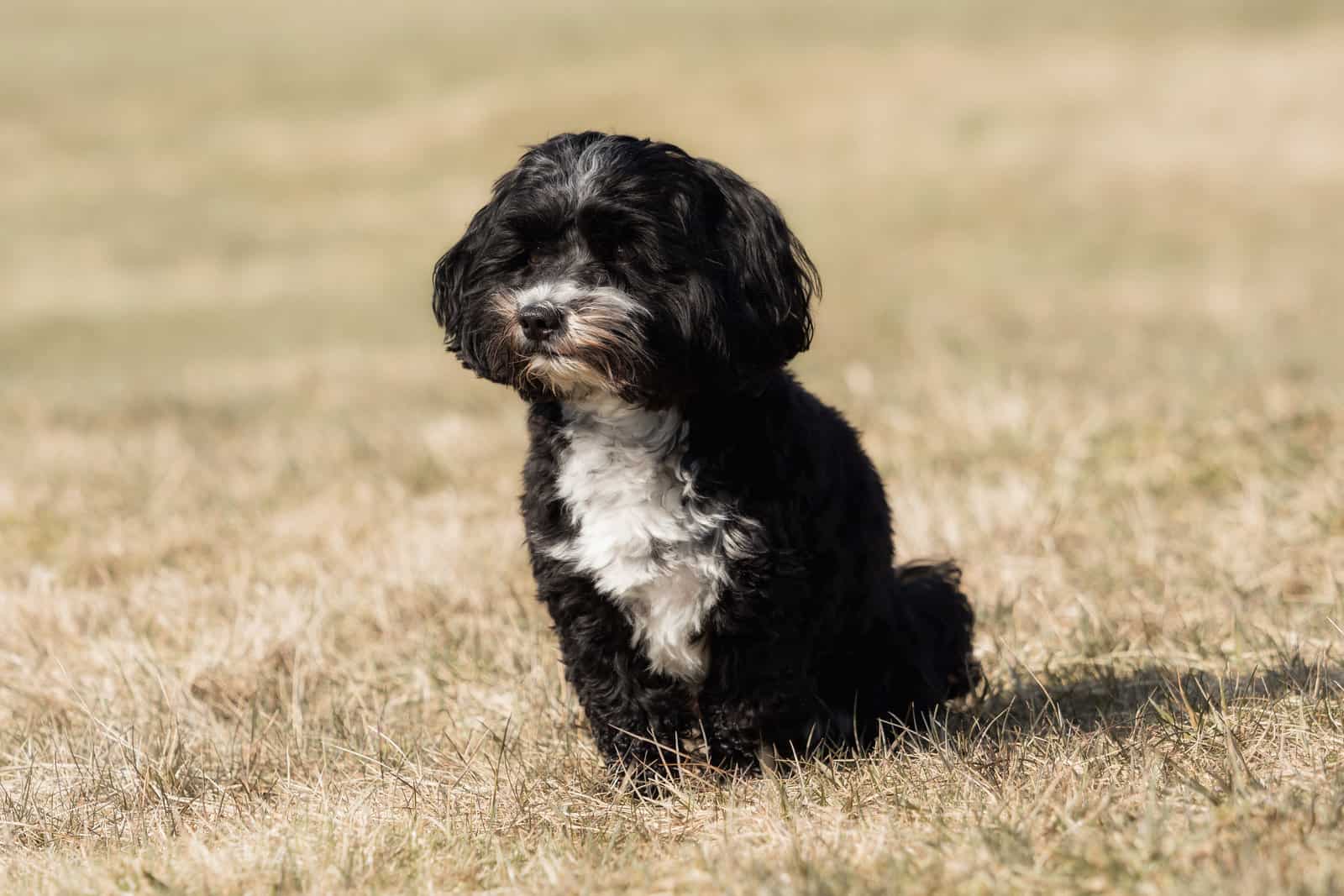
Havanese dogs are a small breed of dog that originated in Cuba. They are often called the “Havana Silk Dog” due to their long, silky hair. These dogs are typically between 8-11 inches tall.

They have large, dark, almond-shaped eyes that exude a cheerful expression. The Havanese breed comes in various colors, including white, black, chocolate, silver, and cream.

One of the distinctive features of the Havanese dog is its luxurious coat. This breed has a long, silky-to-touch coat.

Some owners and breeders say their fur is hypoallergenic and sheds very little, making them a good choice for people with allergies. However, because of their long coat, they require regular grooming to prevent matting.

Havanese dogs are known for their friendly and outgoing personalities. They are very affectionate and playful and make great family pets.

The Havanese are also highly trainable and are sometimes used as therapy dogs due to their gentle nature. Havanese dogs love attention and thrive on being around people, making them wonderful companions for children and adults.

The Havanese breed has a rich history that dates back to the 16th century. The Havanese dog is believed to have been brought to Cuba by Spanish settlers, where they were bred as companion dogs for wealthy families.

Over time, this dog breed became popular with the working class and was used as a companion. In the 1900s, the breed was nearly extinct due to political unrest in Cuba, but a few dedicated breeders saved the breed from extinction.

Today, Havanese dogs are recognized by the American Kennel Club and are popular as show dogs and family pets. They are an intelligent, friendly breed with a charming personality and a gorgeous coat, making them an excellent addition to any family.

Havanese Dog Characteristics

Characteristic Description
Size Small, typically weighing between 7-13 pounds
Coat Long, silky, and hypoallergenic
Temperament Friendly, playful, and affectionate
Exercise Needs Moderate exercise needs
Lifespan 12-15 years

Can Havanese Dogs Swim?

We contacted the American Havanese Club and the American Kennel Club (AKC) for expert opinions to gain further insights into the Havanese breed.

According to the American Havanese Club, dogs are generally not known for their swimming abilities. While some Havanese may enjoy the water and may even be able to swim short distances, they are not a dog breed typically associated with swimming. This is because of their size and non-water-repellent coat, which can make swimming more difficult.

The AKC echoes this sentiment, stating that Havanese dogs are generally good with water but not natural swimmers. The AKC recommends that Havanese dogs be supervised around water, as they may not be able to stay afloat for extended periods and can tire quickly.

That being said, a few factors can affect a Havanese dog’s ability to swim. The first is their temperament and personality. Some Havanese dogs may naturally enjoy the water and be more confident swimmers than others.

The second factor is training. With proper training and socialization, some Havanese dogs can learn to enjoy the water and even become skilled swimmers. It is important to note that swimming should always be done under supervision to prevent accidents.

Havanese puppy
Havanese puppy

Factors that Affect a Havanese Dog’s Ability to Swim

Factor Description
Body Type Havanese dogs have small bodies with short legs, making it difficult to stay afloat.
Health Conditions Certain health conditions, such as respiratory problems, can affect a Havanese dog’s ability to swim.
Experience Exposure to water and swimming at a young age can improve a Havanese dog’s ability to swim.


Havanese puppy
Havanese puppy

Precautions for Havanese Dogs and Water Activities

When engaging in water activities with your Havanese dog, it is essential to take safety measures to prevent accidents and ensure your dog’s safety. Here are these safety tips to keep in mind:

  1.  Use a life jacket: Even if your Havanese is a confident swimmer, it is still a good idea to use a doggie life jacket. A doggie life jacket can help keep your dog afloat in case they become tired or disoriented.
  2.  Stay within arm’s reach: Always keep your Havanese within arm’s reach when swimming or playing in the water. This will allow you to quickly intervene if your dog starts to struggle or becomes tired.
  3.  Avoid strong currents and rough waves: Strong currents and rough waves can be dangerous for dogs, especially toy dog breeds like the Havanese. Stick to calm waters and avoid areas with strong currents or rough waves.

When training your Havanese to swim, patience and positive reinforcement are key. Here are some training tips to help your Havanese become a confident swimmer:

  1.  Start in shallow water: Begin by introducing your Havanese to shallow water where they can touch the bottom with their feet, which will help them feel more confident in the water.
  2. Use positive reinforcement: Reward your Havanese with treats and praise when they enter the water and start to swim, which will help them associate the water with positive experiences.
  3. Take it slow: Take your time with the process. Allow your Havanese to progress at their own pace, and always end training sessions positively.

By training your Havanese to swim and following safety measures when engaging in water activities, you can ensure that your furry friend has a safe and fun time in the water.

Other Water Activities for Havanese Dogs

If your Havanese dog is not comfortable swimming or you prefer to engage in water activities that do not involve swimming, there are still plenty of alternatives you can explore. Here are a few ideas:

  1. Paddleboarding or kayaking: Many Havanese dogs enjoy riding paddleboards or kayaks with their owners. A great way to have fun together while enjoying the water.
  2. Water play: Havanese dogs often enjoy playing in the water, even if they don’t necessarily want to swim. You can fill up a kid’s swimming pool or use a sprinkler to create a fun water play area for your dog.
  3. Dock jumping involves having your dog jump off a dock into the water. While this can be a more advanced activity, some Havanese dogs may enjoy the thrill of jumping into the water.
  4. Canoeing or boating: Havanese puppies and dogs can also enjoy rides in canoes or boats if they are adequately secured, wear a life jacket, and are supervised.

Havanese dog
Havanese dog

Conclusion to Can Havanese Swim?

In summary, while Havanese puppies and adult dogs are not known for their swimming abilities, there are always exceptions to the rule. With proper training, swimming lessons and supervision, some Havanese dogs can learn to enjoy the water and become confident swimmers.

As with any dog breed, it is vital for Havanese owners to know their dog’s abilities and limitations and always to take safety precautions when around water.

When engaging in water-related activities with your Havanese, always remember their safety and their limitations. Not all Havanese dogs will enjoy every activity, so paying attention to your dog’s body language and behavior is essential to ensure they are comfortable and happy.

By exploring alternative water activities, you can still enjoy time with your furry friend while keeping them safe and happy.

Copyright CaninePals.Com. All Rights Reserved.

References and Further Reading:

[1] American Kennel Club, Havanese Information.
[2] Havanese Rescue Inc.
[3] American Havanese Club