
Disclaimer

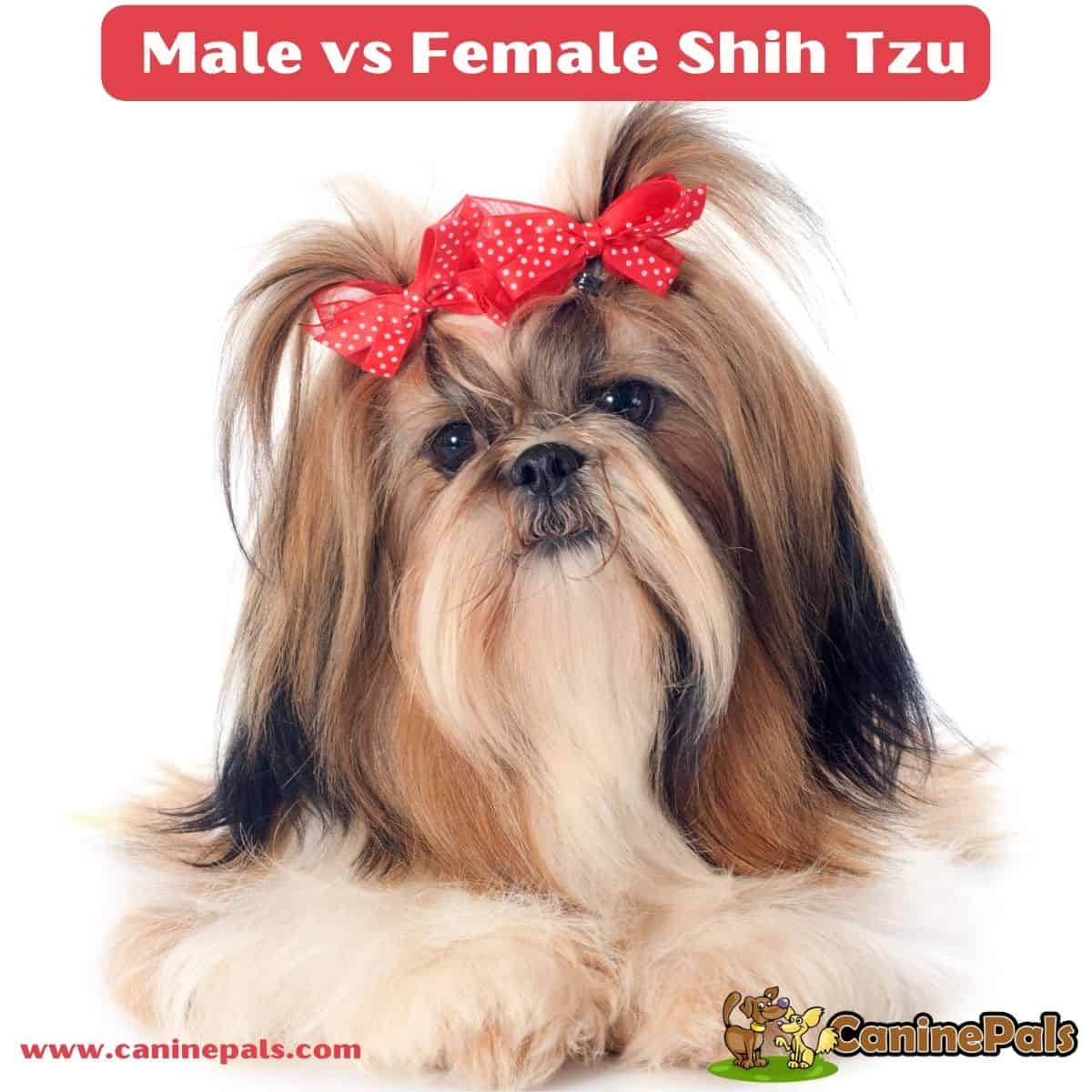
Male vs Female Shih Tzu

Male vs Female Shih Tzu: Which One is Better and Why?

With more than 50 years of experience breeding and exhibiting champion dogs, Denise Leo brings unmatched expertise to every canine topic she writes about. Best known as the breeder behind the world-famous Dochlaggie Pomeranians, Denise has also owned and lovingly raised a litter of Shih Tzu puppies, giving her firsthand experience with this endearing toy breed.

In this comprehensive guide, you’ll discover everything you need to know about the Shih Tzu—from temperament and training to grooming, health, and personality differences between male and female dogs. Drawing on her decades as a champion breeder, Denise combines expert knowledge with practical advice to help you understand what makes the Shih Tzu such a loyal, affectionate, and delightful companion.

Whether you’re searching for detailed Shih Tzu breed information or tips for raising a happy and healthy puppy, you’ll find trusted, experience-based guidance here at CaninePals.com.

Discover the distinct characteristics and behaviors of Male vs Female Shih Tzus.  Perfect for potential Shih Tzu owners and enthusiasts

This article will shed light on the Shih Tzu’s temperament, personality, and the debate over male vs. female Shih Tzus. So, you can choose which tiny sweetheart best fits your lifestyle. Dive in to learn all the Shih Tzu benefits!

Shih Tzu (commonly pronounced as sheed zoo) is an affectionate and outgoing house dog. The term Shih Tzu means little lion. But this doesn’t mean this dog breed is a fierce fellow. The majestic pooch is nothing but loving and loves sitting in his favorite person’s lap.

This dog breed’s obedience, agility, and elegance have established a separate fan base. People from all walks of life wish to have them as snuggle buddies. And to be honest, who can ignore the adorableness and charm of this little face?

However, with its increasing popularity, many questions and inquiries, as well as myths about Shih Tzu males vs. females, also arise. People interested in this toy breed want to know facts regarding their temperament and more.

The Chinese royals have cherished the dog breed as a prized pet for over 1,000 years. His ancestors include the Pekingese and Lhasa Apso. As explained earlier, Shih Tzu means “lion,” and despite his size, this dog is courageous and will stand up for himself when necessary. He was a much-loved and adored house pet for most of the Ming Dynasty.

Shih Tzu Male VS Female

Shih Tzu Dog Appearance

He’s a solid, compact dog with a flowing double coat. He’s among the most popular dogs in the US. His coat can be any color. His tail curves over his back, and he has an arrogant carriage.

Today, his main purpose is to be a pet, and he’s lively, trusting, and loving. He doesn’t need much exercise. He requires a lot of brushing and daily maintenance. He’s 9-10.5 inches high.

Shih Tzu Male vs. Female: What’s the Difference?

Pet lovers often ask if I should get a male or female Shih Tzu dog.

Well, whether you choose a male Shih Tzu or a female, it doesn’t really matter. However, experienced Shih Tzu owners and breeders note a slight variance in the behavior of Shih Tzu puppies of both genders.

Their personality traits may differ. Therefore, before selecting a pet, it’s better to talk to the breeder and tell them what you expect from your male or female Shih Tzu. Both genders have some slight differences and may display some unique personality traits; whether male or female, a Shih Tzu is hard to decide.

Shih Tzus, often referred to as “lion dogs” due to their luxurious mane and noble demeanor, are a popular breed cherished by pet owners worldwide. These little dogs require a lot of love, daily brushing, and proper care to maintain their health and well-being.

Both genders make excellent therapy dogs and are known for their ability to spend quality time on their owner’s lap, truly embodying the essence of a lap dog. However, potential new owners should be aware of the health issues affecting this breed. Females, in particular, may face risks during pregnancy, including the need for a cesarean section, which can contribute to the final price of purchasing one of these dogs, making the most expensive female Shih Tzus those with a history of requiring such medical interventions.

Early training and socialization are crucial for both genders to ensure they grow into well-adjusted adult Shih Tzus. While males can sometimes mark their territory more frequently, both sexes are equally capable of offering unconditional affection and becoming a person’s best friend. For those looking to add a Shih Tzu to their family, it’s a good idea to consider these factors and how they align with your lifestyle.

Regardless of gender, individual dogs will have their unique personalities. With the right care and attention, any Shih Tzu can thrive and bring endless joy and companionship to their human companions.

However, some obvious Shih Tzu qualities are listed below. Just don’t forget that not all dogs fit into every stereotype.
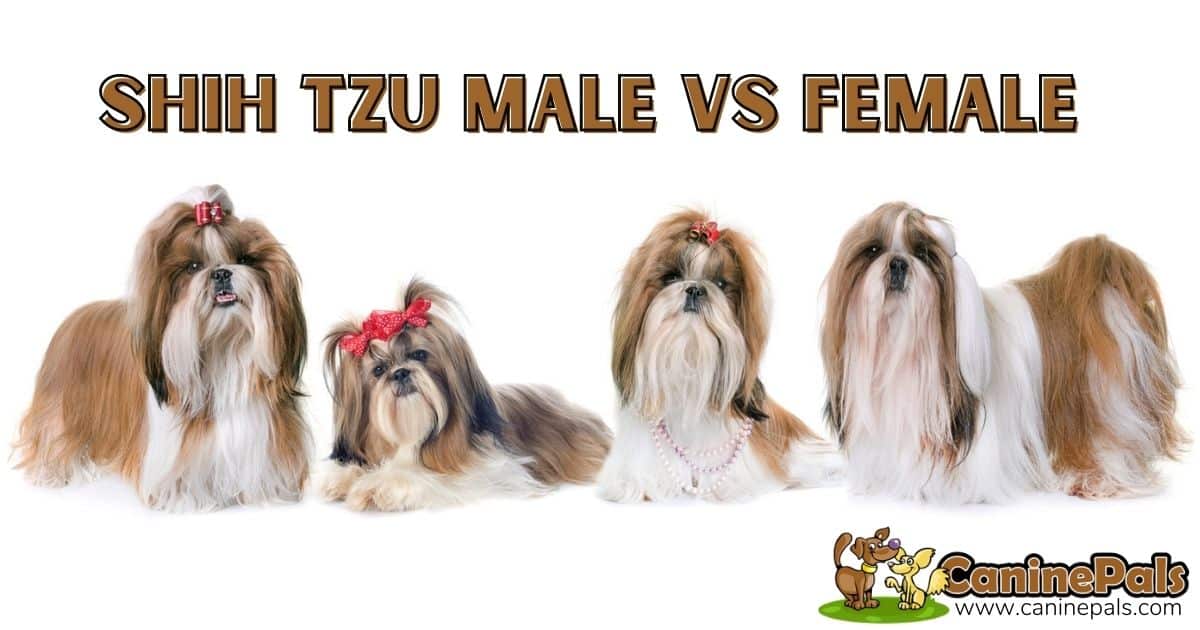
Shih Tzu Male vs. Female: What's the Difference?
Shih Tzu Male vs. Female: What’s the Difference?

Important Shih Tzu Facts

StatsDescription
Dog Breed GroupToy group
PurposeCompanion dogs
TemperamentAffectionate, Playful, Outgoing
Average HeightLow: 20-30 minutes per day
Weight Range9-16 pounds
Energy level Moderate
Exercise requirementsLow; 20-30 minutes per day
Grooming RequirementsHigh
AKC Breed PopularityRanks 20 of 197
Life Expectancy10 to 18 years

Female Shih Tzu Temperament Facts

  • Female dogs, including Shih Tzus, are usually very confident and independent. This elegant little lady has a pretty strong will.
  • The bright-eyed lady needs constant attention. She thinks of herself as a person in charge who loves to run things. You can’t say no to this face!
  • Like dogs of any other breed or gender, female Shih Tzu must be properly socialized. It helps her avoid being too protective of her dearest toy or human.
  • No dog is impossible to train. Some breeds require additional training and special sessions to follow the instructions. Female puppies often find potty training a bit difficult. You may need some patience for that. Plus, she is likely to have more staying power.
  • Females are great at learning tricks. They enjoy doing as many things as possible and are very intelligent.
  • Your female Shih Tzu can get too attached to one person in the whole family. Proper socialization among the other members is significantly more important.
  • A female Shih Tzu demands and craves attention. They love to be petted or, in other words, worshipped.
  • Female Shih Tzus are attention seekers. They love to be around you all day long. You may encounter some resistance if she is not receiving enough attention.
  • Both genders are extremely affectionate, whether you have a male or female Shih Tzu. Their loyalty to their family is unquestionable. This elegant dog breed is not known to be aggressive. You may feel a female is exercising her dominance, but that is just how they are. They enjoy doing what they like. Females are also great at outsmarting you.
  • This breed falls in the category of great companion dogs. One can never get bored with their company. We bet you will enjoy every minute of it.

Shih Tzu Male VS Female
Male Shih Tzu Puppy

Male Shih Tzu Temperament Facts

  • Males are sweet and affectionate and will likely stay in your lap all day. You cannot help giving this fellow all your attention due to his attractive personality. This lovely pooch will stare at you, sit on your lap, eat treats, have a potty break, and snuggle with you again. Who wouldn’t shower affection on such a naturally charming pet?
  • Male Shih Tzu dogs are a ray of love and joy. They love unconditionally but are very sensitive to your mood and tone. This canine’s life revolves around its favorite person. You’d better not raise your voice at him, or the fella may get hurt.
  • A male Shih Tzu tends to exhibit secondary sexual behaviors. Neutering at an early age can help reduce testosterone levels.
  • They can spend the whole day cuddling with you without wanting to do anything else. Male Shih Tzu dogs are the sweetest little thing that loves to worship their owner. This behavior is not very common in their female equivalents.
  • Regardless of gender, Shih Tzu puppies need adequate training and socialization. Pet lovers need to be patient and consistent with the breed.
  • The size difference between male and female Shih Tzus is also distinct. Male Shih Tzus are a little taller and massive (on average, 2-3 pounds more) than females.
  • These companions are very eager to please. A soothing voice, a little pat on the pack, a smile, and praise can easily motivate them to do anything.

Shih Tzu Male vs. Female Personality

Shih Tzu are famous for their happy temperaments and joyful nature. Their friendly nature and tendency to get along well with different species and people of all ages make them ideal for any household. It’s very rare to find a short-tempered Shih Tzu. Usually, they are the cutest little creatures you will ever meet, and the sugariness has nothing to do with their gender!
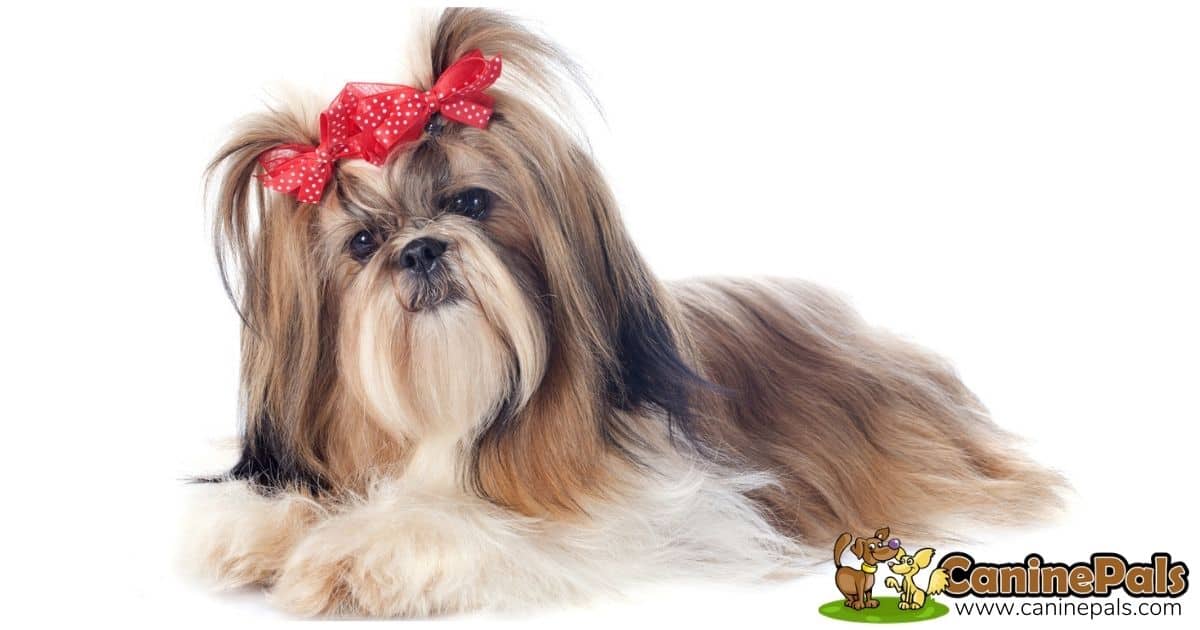
Female Shih Tzu
Female Shih Tzu

Due to their short snout, they are not heavy chewers. However, both males and females are known to indulge in nuisance barking and digging. They desire to be with you, whether you are sitting on your garden chair or taking a hike through a rough trail.

The differences, as mentioned earlier, are not more than generalities. It’s up to you to decide whether you want a male or female Shih Tzu.

Both genders have their own unique personalities with some distinct characteristics. No single statement can describe every dog of a particular breed or gender. You must choose one by considering the chemistry between your family and the pet you are willing to take home.

Are Male Shih Tzu’s Aggressive Than Females?

Shih Tzu is undoubtedly a loyal and loving companion; who can say this energetic personality may have an aggressive side? Well, in most cases, you are right. The Shih Tzu is not an aggressive dog breed. Both males and females are super affectionate and caring. There are, however, rare chances that males may develop an aggressive streak.

The severity of this aggression can vary depending on several factors. It is essential to address the destructive tendencies before the aggression can lead to challenging situations for the dog, the people around him, and other pets.

Shih Tzu Male VS Female
Male Shih Tzu

Why is my Shih Tzu So Aggressive?

Shih Tzus can display aggression for various reasons. Occasionally, aggression is triggered by immediate causes. However, in most cases, pet lovers are the ones who should carry the burden of blame.

You are probably thinking about how this comes true by adorning your fur baby a bit too much.

Pet lovers often make this mistake: They start cuddling and petting whenever their four-legged friend makes a mistake instead of teaching him some morals. This activity lets the puppy think that this is the right thing to do. The situation can worsen if you let his good behavior pass by unappreciated.

Some other causes are listed below:

The Pack Leader

We all adore our small and fun-loving Shih Tzu. However, too much affection can lead to a problem called small dog syndrome aggression. Small dog syndrome occurs when an owner gives in his pet’s demands all the time. This freedom lets the dog think he is the pack’s leader, AKA the Alpha of the house.

Small dog syndrome requires adequate attention before it gets out of control. You must demonstrate to your Shih Tzu that you are the leader here and not him; small dogs must accept this reality.

Dealing with your Shih Tzu’s aggression by shouting at him won’t benefit you or the dog. It will make him more aggressive.

Any unpleasant behavior, including jumping at or on people and other animals, aggressive barking, chewing, and climbing up on furniture, needs a well-thought-out approach. Instead of using force, owners should isolate their puppy in a separate room or gated area where he can see that he is being ignored.

Male Shih Tzu
Male Shih Tzu

Keep your Shih Tzu isolated for a few minutes and let him back when he calms down. Repeat this process whenever your Shih Tzu exhibits any signs of aggression.

Eventually, the Shih Tzu puppy will know that misbehaving and aggression do not help him get what he wants, and only good behavior is rewarded. Perhaps this is not the only reason behind the Shih Tzu’s aggression.

Shih Tzu Energy Level

Aggression can be your dog’s way of expressing his frustration and boredom. If your dog is not exercising enough, he needs to release his energy. If this is the reason behind your Shih Tzu’s aggression, then the obvious solution is to take your pup out more on walks.
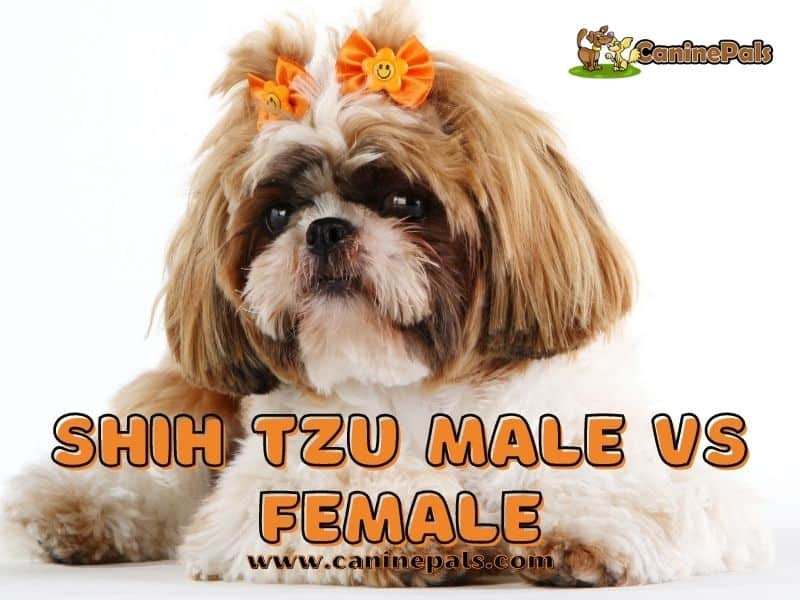
Shih Tzu Male VS Female
Shih Tzu Male Puppy

Puppy Mouthing

Puppies naturally tend to have a biting and nipping contest with their little siblings. It is nature’s way of preparing the dog for future conflicts. However, if this habit continues into adulthood, it can become severe, full-scale biting.

You will be glad to know its cure is quite simple. There is no need to shout commands at your four-legged sensitive fellow. Neither do you have to hold his snout closed. (Suggested by some trainers).

For this, your Shih Tzu needs to be on a harness with a short leash. While walking, don’t let the puppy walk in front of you. Ensure he is always by your side. If the dog tries to pull the leash, turn around and walk in the opposite direction. If he attempts to mouth you, bend your back and step on his leash so he cannot nibble you. Wait until the dog calms down. Repeat the process whenever the puppy tries to mouth. Additionally, be sure to reward any good behavior with petting, cuddling, and treats.

Aggression Due to Traumatic Experiences

If your Shih Tzu is a rescued puppy, then the causes behind his aggression may be fear, past abuse, and traumatic experiences. Dogs with such heartbreaking histories feel trapped and concerned, which makes them panic. The past experiences are etched into their minds. Being a responsible pet owner, you should avoid any situation that triggers his aggressive tendencies. To make headway, you can also consult a dog behavior specialist.

Regardless of gender, if your Shih Tzu exhibits aggressive traits, you must take immediate action to prevent unwanted situations. Start working with your dog while it’s still a puppy. As your canine ages, you must work even harder, or else there may be some pressing consequences.

Anger issues are not specific to any particular gender. Males are as affectionate as their female counterparts. Their intelligence and stubborn streak make them difficult to understand. It has absolutely nothing to do with the gender of this particular breed. The best approach is to identify the cause of the aggression and take appropriate remedial actions. With persistence, you can beat the problem.
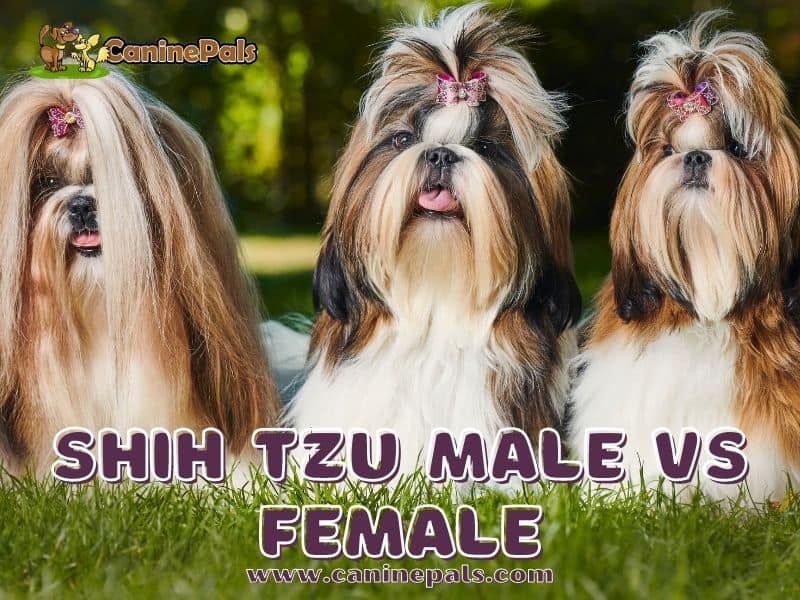
Shih Tzu Male VS Female
Male Shih Tzus

Conclusion to Male or Female Shih Tzu: Which is Better?

Male and female Shih Tzus both possess some unique attributes. Adopting a Shih Tzu should never be based on unconfirmed information. Instead, you should speak to breeders about the parental history of male and female Shih Tzu dog breeds. Don’t quit on a sweet Shih Tzu by thinking he will be challenging to manage.

Try to understand how males and females behave differently in various situations and why they exhibit these behaviors. It will help you know how to handle them.

Always remember, the best Shih Tzu is the one that fits your lifestyle and blends into your family, regardless of gender.

Copyright CaninePals.com. All Rights Reserved.

References and Further Reading:

[1] American Kennel Club, Shih Tzu Information.

Male vs Female Shih Tzu
Do Boxers Bark A Lot?

Do Boxers Bark A Lot? Boxer Barking Issues Explained

Are you wondering whether your Boxer will bark a lot or not?  You will be happy to know that they are not yappy dogs. Boxers are known for their unique ways of communicating with their human family.

Boxers are generally not big barkers, but they are vocal in the sense of growling and whining. That’s really just the dog’s way of talking. If a boxer barks, chances are there is a good reason.  

Boxer is a medium-sized dog breed with a short and tight-fitting coat. This upbeat and playful dog breed has been among America’s most popular dog breeds for a quite long time. This powerful and high-energy dog is square-jawed and muscular.

Do Boxers Bark a Lot?

Reasons for Boxer Barking Issues

Boxer dog barking is due to many reasons. It can represent anything from excitement to stress. Sometimes, Boxers don’t know any other way to express fear, anxiety, pain, or excitement. 

All dogs barks do not mean the same thing. Boxers have several distinct vocal communications they use depending on the situation. There are certain situations when you will find that Boxers tend to start barking more than usual. 

Let’s have a look at the reasons for Boxer dog barking:

  • Territorial bark

Boxers, by nature, are very territorial and protective dogs. They will do everything in their power to protect their family. If they sense danger, they will start barking to alert you. This is called a ‘territorial bark’ or ‘warning bark.’ The area that your Boxer considers its territory might include your home, yard, car, and anywhere your furry friend has spent time including the areas you walk together.

  • Greeting bark

Boxers bark when they greet people or another dog. Greeting bark is high-pitched and repetitive, with brief pauses. It is a friendly bark and Boxers usually get excited with relaxed bodies and wagging tails. 

  • When lonely for a much longer time

Boxers are affectionate companions and need the attention of their owners. Boxer puppy barking may simply be attention-seeking behavior. If a Boxer is kept alone for a long time, it may start barking to draw some attention. Your furry member might be barking in the hopes of getting a treat or some playtime.

  • Playing around

Your Boxer may be barking because he’s playing around with his owner and is full of energy. This is called a ‘playful bark.’ You can take your Boxer for a long walk or throw a ball for him while you walk. Playful bark is accompanied by a wagging tail and a happy body position. 

  • Communal bark

If your Boxer answers when he hears other dogs barking, it is usually a social response. Boxers usually do not engage in communal barking but it depends on your dog’s personality.

  • Anxiety and stress

No matter how happy-go-lucky your Boxer is, they all get anxious and stressed from time to time. They will start barking more often when under stress. This is called ‘distress barking.’ A bored dog or one that isn’t getting enough physical and mental stimulation can also bark.

  • Illness bark

Not all Boxers are vocal when they are sick. Many Boxers often bark or whine in response to pain. Illness bark means your dog is feeling ill and is looking to you for comfort. Your vet will need to examine your Boxer’s overall health to determine any underlying condition that is causing your dog to bark excessively.

If your Boxer puppy is barking, it’s normally just part of the Boxer pup phase. Keep in mind that barking is natural and a means for your Boxers to communicate and express themselves.

Do Boxers Bark A Lot?

How To Stop Boxer Dog Barking

There are several ways to address Boxer barking. The best way to stop this is to prevent this habit in the first place. Try to figure out potential causes of barking and give your Boxers better things to do. Here are some tips to help you stop excessive barking in Boxers.

  • Remove the stimulus

Block your Boxer’s sight to potential barking triggers. If your Boxer keeps barking when he sees something outside, you might want to make a barrier to remove the stimulus. Cover the windows with curtains or blinds. You can also use spray-on glass coating or removable plastic film that makes windows opaque. Use privacy fencing to block views to neighboring yards or the street.  You can give your Boxer an activity so that he is not focused on the stimulus.

  • Teach quiet command

Train your Boxer to stop barking using a command or sound. Teaching ‘speak command’ and ‘quiet command’ is helpful to control excessive barking. These commands are useful to train your Boxer to be quiet on command. Stay patient and consistent until your Boxer learns it completely. 

  • Increase your Boxer’s impulse control

Excessive barking is sometimes related to poor self-control. A relaxed Boxer is a well-behaved dog. If you teach your Boxer emotional impulse control, it will be more pleasant to live with. Impulse control is the ability of dogs to resist excessive barking.  

  • Challenge your Boxer physically and mentally 

Barking in Boxers is often the result of pent-up energy. Your Boxer might need physical and mental stimulation to release its pent-up. Give your Boxer plenty of physical activities and mental stimulation to reduce their physical or mental imbalance.

Physical activity can be long walks, running at the dog park, games of fetch, tug of war, playing flyball, or backyard agility. There are plenty of interactive toys including chew toys or puzzle toys that will reduce excessive barking.

  • Set up a quiet zone

If your Boxer barks when left alone in the house, set up a safe and quiet place for them away from the front door.

Your dog’s safe and quiet zone may include a crate with a comfy bed and blanket, and an interactive toy to keep them busy. You can also use a white noise machine to mask external sounds while producing soothing sounds for your Boxer.

  • Rule out anxiety

Boxers who suffer from anxiety might bark excessively. They need extra support, love, and patience. Give your anxious Boxer a sense of security and safety. Avoid leaving a lonely Boxer by itself for long periods if possible. You can also try natural supplements to keep your Boxer calm. If your dog still seems to be anxious or stressed, you speak to your vet.

  • Check their health

Every Boxer is different but a healthy Boxer usually appears relaxed and comfortable. If your fur buddy is having some type of health problem, you need to examine it and take it seriously. Talk to your vet about your Boxer’s barking issues. Discuss with him if you suspect there might be an underlying medical issue. 

Your vet will help you develop an action plan based on your Boxer’s needs. He may also suggest activities, diets, and supplements specific to your Boxer’s needs. The causes of barking and subsequent action plans also vary with age. A senior Boxer will have different needs than a Boxer puppy.

  • Seek professional help

If training and other methods are not working for your Boxer, you should seek professional help. You can call a dog behaviorist for expert opinion and professional guidance or organize obedience training. 

Pet parents can also manage excessive barking by enrolling in dog training classes. Dog trainers can assess your Boxer’s unpleasant behavior and deal with it accordingly.

Boxer Barking Issues Explained

What You Should Not Do to Prevent a Boxer From Barking 

 Here are a few things that you should never do to prevent Boxer barking:

  • Never stop excessive barking through punishment-based training
  • Never yell at your Boxer. This may actually stimulate the dog to bark even more.
  • Do not hit your Boxer or use harsh devices like shock collars. This is not only painful but also unkind.
  • Never attempt to surgically cut your Boxer’s vocal cords.
  • Don’t use devices like shock collars on a regular basis.

Don’t let your Boxer bark constantly when it’s outside, regardless of the reason. It is one of the fastest ways to turn neighbors into enemies.

All these methods are harsh, unkind, and cruel. They will have a negative outcome and will permanently damage Boxer’s temperament.

Do Boxers Bark A Lot

Final Thoughts on Do Boxers Bark A Lot? 

Boxers often bark because they are trying to tell you something. If you can figure out the cause, you can fix the issue. Your Boxer’s feelings largely depend upon its environment, diet, socialization, and how the owner treats it.

Barking can be a real pain in the ears, but the right combination of techniques and training will help your Boxer learn when to keep quiet. Regardless of the reasons for excessive barking, there is always a solution if you know where to look. 

Unfortunately, excessive barking is a common reason many dog owners rehome their furry friends. Barking can annoy your neighbors as well. However, with the right help, most Boxer dogs’ barking can be managed and prevented.

Hope you enjoyed reading this article! Did you find it helpful? Feel free to share your thoughts with us.

Copyright CaninePals.Com. All Rights Reserved.

References and Further Reading:

[1] American Kennel Club, Boxer Information.
Do Boxers Bark A Lot

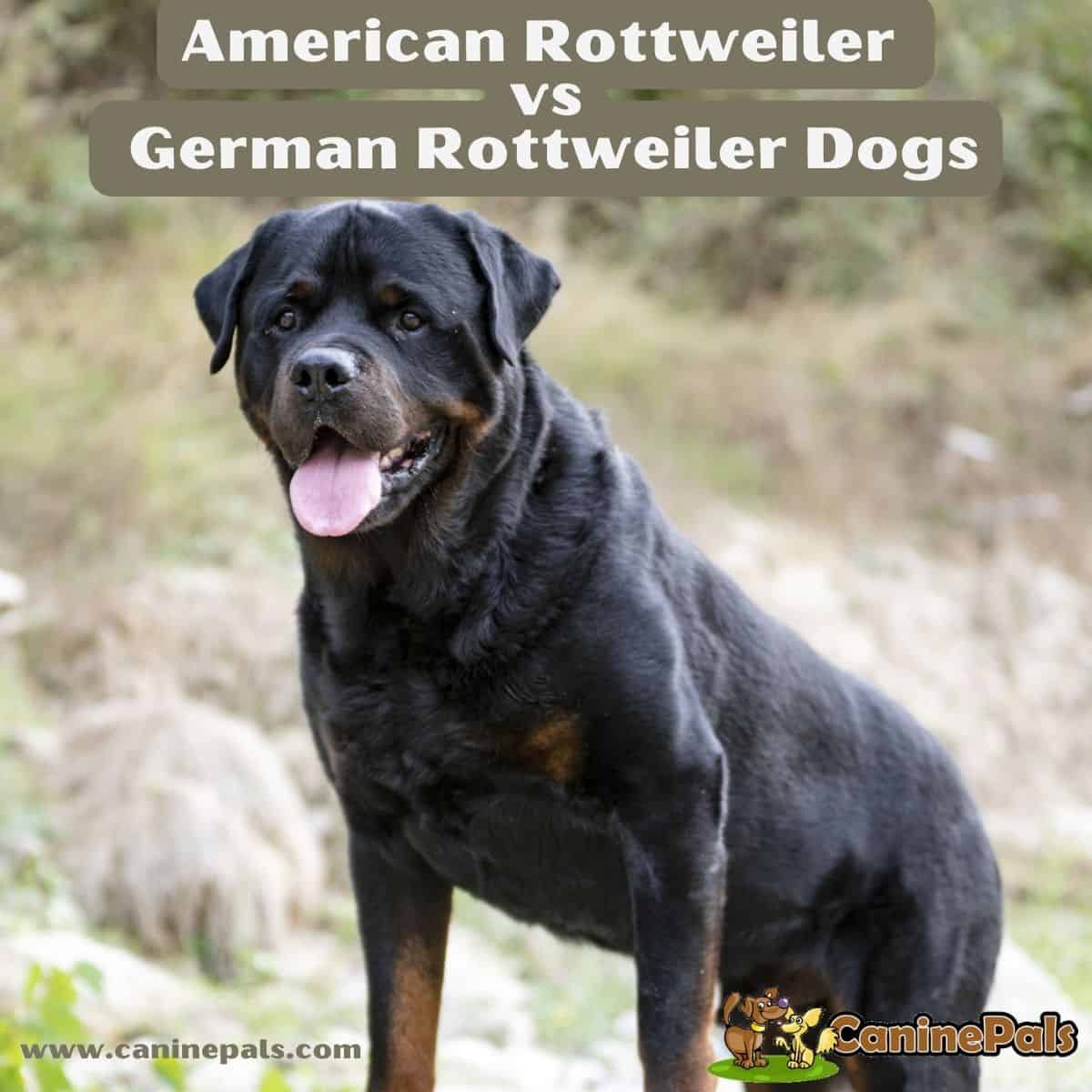
American Rottweiler vs German Rottweiler Dogs

The Facts About American Rottweiler vs German Rottweiler Dogs

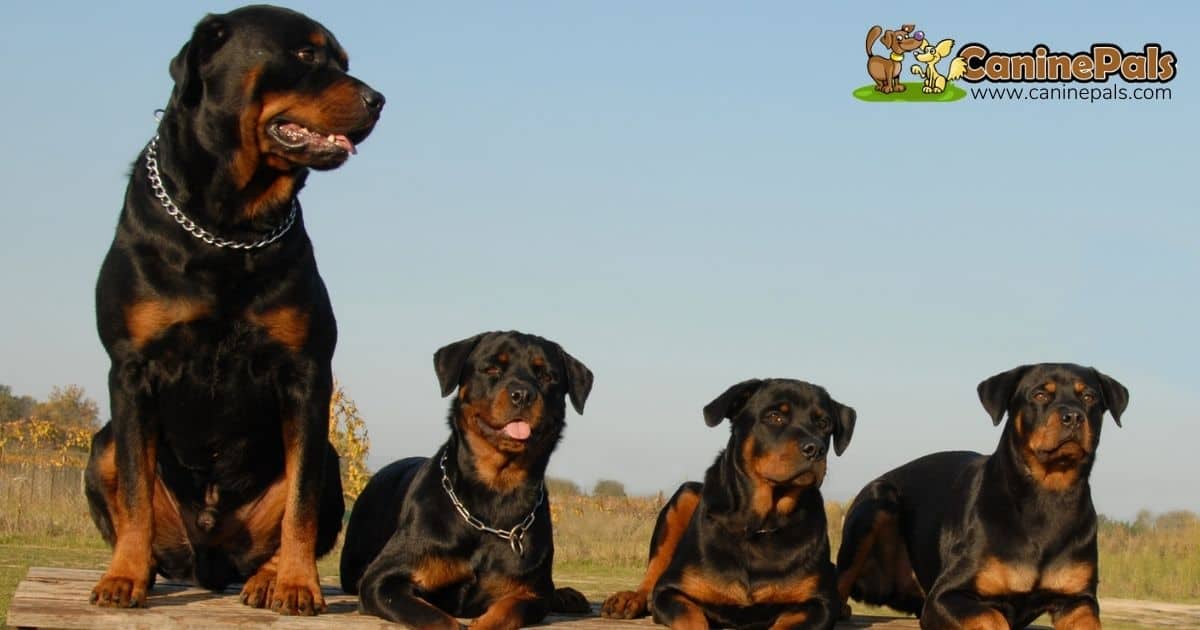
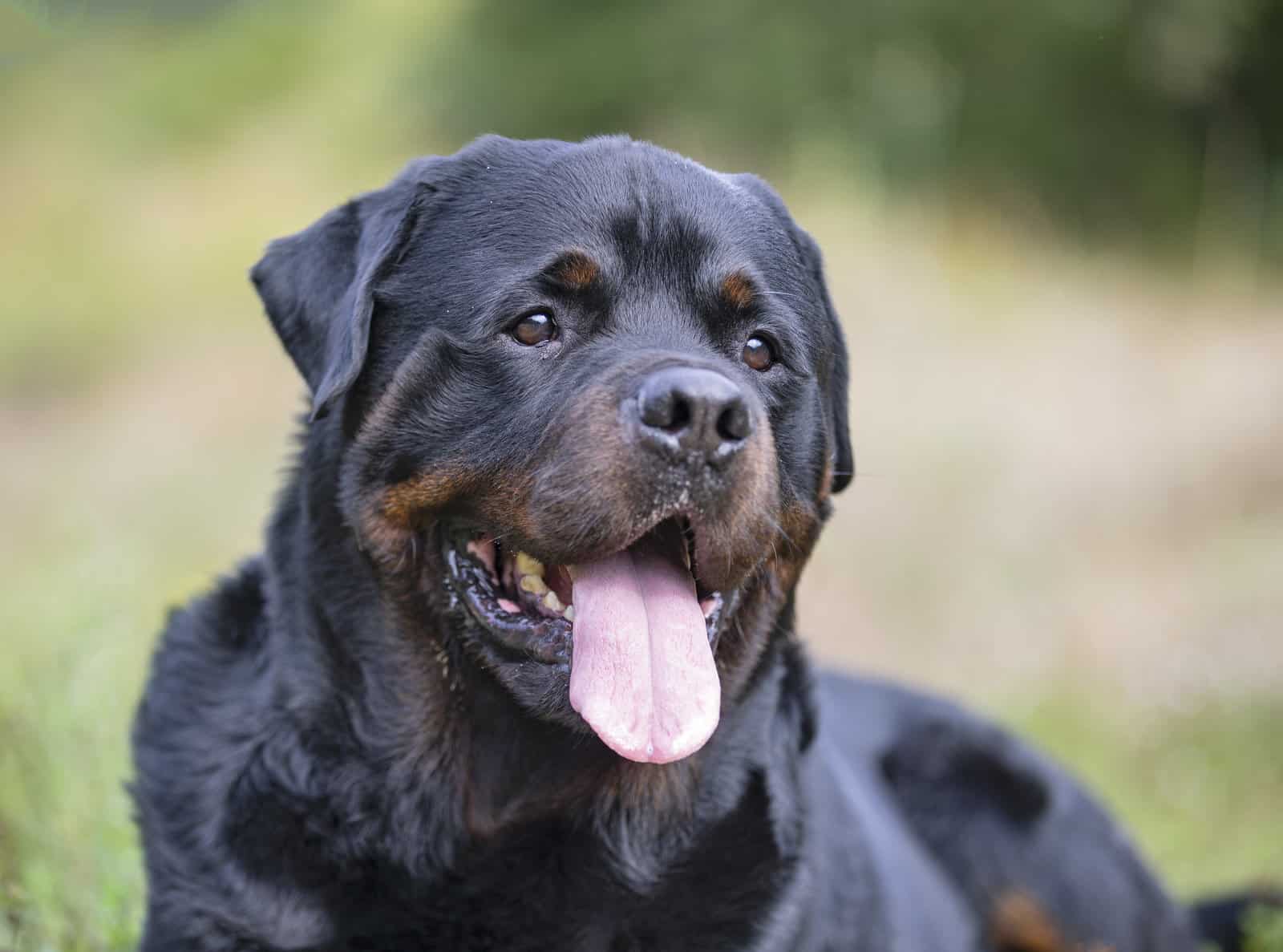
The black and mahogany coat, wide head, broader body, alert ears, and dark-brown almond eyes; none can have these intimidating appearance traits other than a Rottweiler! When you see them, you instantly know it’s a Rottie.

The first question that pops up in your head is if this is an American Rottweiler or a German Rottweiler. Well, this is what we are about to discuss: German vs. American Rottweiler.

The article provides insights into the deal between a German Rottie and an American Rottie or if there is a difference between them at all.

Origin of Rottweilers

Rottweilers are deemed to be one of the oldest dog breeds. Their origin dates back to Roman times. The Romans used them for their protection and driving their cattle. Rottweilers then marched with the Roman legions over the Alps.

The Rottweiler originally followed the Romans and their herds when they invaded Europe. His guarding and controlling instinct was noticed by the Germans and bred for these traits. As these needs were reduced, he almost became extinct. In the early 1900s, his breed was formally acknowledged.

In Rottweil, the Rottweilers mixed in a natural crossing with the native dogs. In fact, Rottweil is the city where their name comes from. The Rottweilers served great purposes during both World War I and the Second World War. They were used as police dogs, guard dogs, and for driving purposes.

Various Rottweiler clubs were founded in Germany from 1914 onwards. These clubs then merged later in 1921 to form ADRK (Allgemeiner Deutscher Rottweiler­-Klub), the General German Rottweiler Club. The ADRK has worldwide recognition for being the home club of Rottweilers.

The American Kennel Club (AKC) recognized the Rottweilers in 1931. During the mid-’90s, the most recognized dog breed by AKC was Rottweilers. Rotties stood among the top 10 most popular breeds by the AKC in 2017.

American Rottweiler vs. German Rottweiler Dogs Difference

If your Rottweiler loves apple pie and appreciates the taste of vanilla ice cream, chances are he’s American, and if your Rottie boasts thick bones and barks in a German accent, his bloodlines come from Germany!

Well, jokes apart;

The truth is, if we talk about American Rottweiler vs. German Rottweiler dogs, the only difference that exists between them is their place of birth.  American Rottweilers are the ones bred in America, while German Rottweilers are bred in Germany. That’s it!

Rottweilers
Rottweilers

In fact, the Fédération Cynologique Internationale (FCI), the world’s largest canine organization, does not use the territorial prefix like American and German with Rottweilers at all.

However, there may still exist some slight appearance differences between the two. The standards set by the AKC (American Kennel Club) and the ADRK (Allgemeiner Deutscher Rottweiler­-Klub) also help to distinguish between the German vs. American Rottweiler puppies.

ADRK Standards for Rottweiler

The ADRK has some strict rulings to register Rottweilers. They have a set of standards, and if any Rottweiler pup fails to meet those standards and does not pass the Breeding Suitability Test, it is not considered a true German Rottweiler.

The Suitability Test checks the dog for specific areas. Those areas include:

  • Head (eyes)
  • Snout (tongue and teeth)
  • Shoulder
  • Dewlap
  • Elbow
  • Forefeet and hind feet
  • The highest point of the rump
  • Hock
  • Legs (thighs and hips)
  • Stifle
  • Withers
  • Paws
  • Tail

A Rottweiler or its subsequent puppies will not qualify for registration if any flaws are found in the areas mentioned above. The only goal of the ADRK is to produce a better breed, and since tail-docking and ear-cropping are banned in Germany, the Rottweilers having these flaws are disqualified too. The ADRK also requires the Rottweiler parents to have a certificate that refers to potential genetic defects or diseases.

AKC Standards for Rottweilers

AKC follows somewhat the same standards as that of ADRK to register a Rottweiler. The Rottweilers are tested and checked for the areas listed above. And any flaw in either appearance or temperament will lead to the disqualification of registration of Rottweiler.

However, registering a Rottweiler in the US is still easier than registering a Rottweiler in Germany. ADRK follows highly strict standards to test a Rottweiler to produce a pure and true breed.

This allows many profit-seeking breeders in the US to breed a Rottweiler that is deviated from the original breed. This is certainly not true for all breeders. The purpose of providing the information is to make you aware of deceit.

Quick Rottweiler Information Facts

  • He’s a powerful, robust dog with great endurance and intellect and a willingness to work hard.
  • He works well as a herder, police dog, service dog, competitor in obedience trials, and therapy dog.
  • He’s also a great companion. He has a clownish manner towards his family and friends but is very territorial when it comes to strangers coming into his home unless he’s introduced properly.
  • He must be allowed to mix with people and taught obedience.
  • He needs regular exercise but only minimal grooming.
  • His coat is black and has mahogany to rust markings. He stands 22 – 27 inches in height.

Appearance of Rottweilers

The Fédération Cynologique Internationale (FCI) provides a description standard for how a Rottweiler should look without using the regional prefix like German or American.

They individually describe each appearance trait in detail.

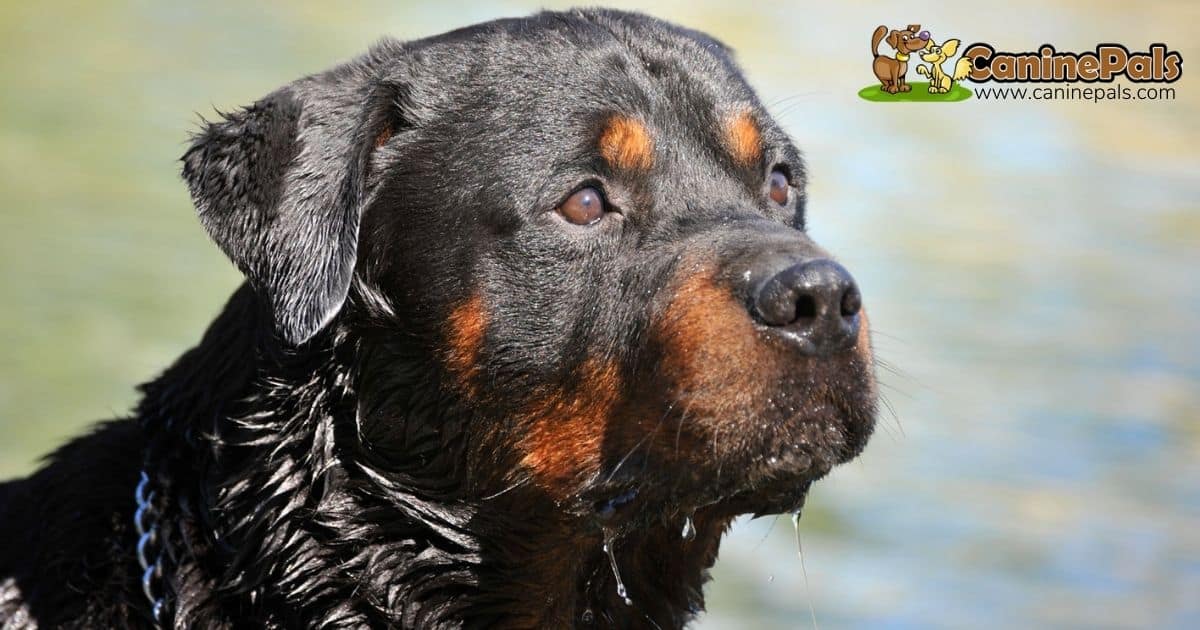
  • Head: The head of the Rottweiler is medium-sized in length and broad between the ears. When seen from the side, their forehead appears to look arched.
    Their nose is broad and round, and they have large nostrils. The color of their nose is always black.
    Their black and closely-fitted lips are invisible. The gums are dark too (should be black), with strong and broad lower and upper jaws.
    Their eyes are almond-shaped, medium-sized, and dark brown in color with close-fitted eyelids.
    Their ears are alert, triangular-shaped, placed high on their head, and wide apart. They have tight-fitted skin on their head.
  • Neck: Without excessive dewlap, their neck is free from throatiness. It appears strong and well-muscled with adequate length and a slight arch.
  • Body: Rottweilers have a strong bodies. Their deep chest is broad with well-sprung ribs.
  • Tail: Here lies the major American rottweiler vs. German rottweiler difference. Germany has banned the practice of tail-docking, while in the US, the practice is still prevalent, and the Rottweilers with a docked tail are preferred. The FCI (Fédération Cynologique Internationale) follows the Country of Origin Breed Standard for tail description.
  • Limbs: The front and rear legs are not placed too close to each other. The shoulders are strong and laid back well. The front feet and toes are strong, well-arched, and tight with strong and short black nails.
  • Gait: If a Rottweiler trots, that’s fine. Trotting comes naturally to them. But if the Rottie is sluggish while trotting, that is deemed a severe fault. Their movements are steady, unrestricted, and energetic, and they have a fine pace. Their balance and effectiveness are harmonious.
  • Coat: They have an outer coat and an undercoat. Their undercoat is not visible through the outer coat and is present on the thighs and neck. Rottweilers belonging to hotter regions may not have the undercoat. Their outer coat is medium-length, dense, coarse, and flat. They are easy to maintain, but they do experience seasonal shedding. AKC considers long and wavy coats as faulty. According to AKC’s standards, the coat of Rottweilers is short and straight.
  • Colors and Markings: Rotties are distinctive when it comes to colors and markings. The FCI standards describe them as black with rich tan markings on their cheeks, muzzle, over both eyes, throat, chest, legs, and under the base of the tail.

The AKC also counts rust or mahogany-colored markings that are not on more than 10 percent of the Rottie’s body. The AKC also specifies a dot above each eye on the inner brow ridge, on the cheeks, and on each side of the snout.

American Rottweiler vs German Rottweiler Dogs

American Rottweiler vs. German Rottweiler Difference (Physical Appearance)

If you make the American and German Rottweiler stand side by side, you’ll notice that the American Rotties are more tall and spindly than the Germans. The American Rottweilers are known for their strength and endurance, and they are medium-large in size.

These are powerful canines and are considered working dogs. German Rottweilers are more striking and look intimidating with their broader and more muscular bodies. Their thick bones and blocky heads make them look impressive.

The head of American Rottweilers is relatively smaller than that of the German Rotties. The major difference between the two that instantly distinguishes them is a docked tail. Since tail-docking is prohibited in Germany, the German Rots are never bred with a docked tail, while the AKC appreciates a docked tail.

Another trait that distinguishes them is their size. The comprehensive differences are discussed further.

German Rottweiler vs. American Rottweiler Size

When it comes to size analysis of German vs. American Rottweilers puppies, both AKC and ADRK have their set of standards. They come in all sizes, i.e., small, medium, and large. The male dogs are relatively bigger than the female dogs.

AKC Standards for Size

The AKC has provided a general size of the Rottweilers for both male and female dogs. Their standards are:

Male American Rotties Female American Rotties
Height 24 to 27 inches 22 to 25 inches
Weight 95 to 135 pounds 80 to 100 pounds


Rottweiler
Rottweiler

ADRK Standards

ADRK standards are incredible when it comes to Rottweiler sizes. They have split their size as small, medium, large, and very large. Since their aim is to produce perfect Rotties, they provide their breeders with well-guided information.

Male German Rotties Female German Rotties
Height 24 to 27 inches


Small: 24 inches

Medium: 25 inches

Large: 26 inches

Very Large: 27 inches

22 to 25 inches


Small: 22 inches

Medium: 23 inches

Large: 24 inches

Very Large: 25 inches

Weight 110 pounds approx. 93 pounds approx.

German Rottweiler vs. American Rottweiler Temperament

Although their temperament greatly depends on how they were raised and socialized by the breeders and owners, in general, they have a placid attitude. Besides, while registering the Rotties, they are tested for their temperament as well. The more their temperament deviates from their natural temperament, the more is a chance they won’t get registered.

American Rottweilers German Rottweilers
Trainability In short, these dogs are intelligent and easy to train. They love to please their master. But they do show signs of aggression and stubbornness if treated roughly. German Rotties are obedient. They pick up the commands and learn them quickly. If given treats, they can respond even better. They are taught to track and protect too.
With Children As compared to other dog breeds, American Rottweilers get along well with kids. German Rottweilers are good with kids, just like American Rottweilers. But adult supervision is always appreciated no matter whatever dog you have.
With Strangers Since Rottweilers are guard dogs, they get alert seeing a stranger. German Rotties are no different than American Rotties when it comes to getting along with strangers. They won’t show signs of aggressiveness; rather, they’ll get alert.
With Other Pets Dog-on-dog dominance can never be neglected with Rottweilers. They can get along with other pets, especially if raised with them, but seeing a dog of the same gender may make them react violently. With sharp personalities and dominance in their nature, German Rotties show disliking towards dogs of the same gender. They may accept other pets, though.

What Happens to Rottweilers When Breeding Standards are Lowered

If breeding standards are lowered, the dogs may deviate from their natural physical appearance over time. Their temperament is also highly affected, and health issues may arise as well.

  • A visible change in their wide head occurs. It becomes narrow, and their short muzzle becomes elongated.
  • Their muscular structure rather changes to less compact and leggy.
  • The markings on their fur fade.
  • Their eyes turn to pale from the dark brown.
  • Their gums become pink from black.
  • Their temperament shows signs of aggression, and their behavior gets destructive.

The only thing that distinguishes an American Rotties bloodline from the German Rotties is the lower standards of breeding. If the American Rotties are bred as per the strict standards of Germans, there won’t be much difference between them.

Who is to Blame for the Distinction Between German Rottweilers and American Rottweilers?

There are some people and organizations responsible for the categorization of the breed. In order to preserve the breed, they set up their own standards and deviated from the originality of the Rottweilers. Some of the people to be held responsible are:

●       Dog Clubs:

Many kennel clubs tailor their own standards to breed the dog. This has resulted in extreme variation and deviation.

●       Dog Shows:

Sometimes, the judges of the dog shows might be learning the ropes of the breed specification. Without having comprehensive knowledge, they may sometimes incline towards a trait that is not associated with the breed. That results in breeders working on transforming the dogs.

●       Breeders:

Dog breeders play an important role in transforming the dogs and deviating them for their profits. They work on changing the breed’s characteristics and temperament for their personal gains.

●       Dog Owners:

Yes, dog owners are not excluded from the list of people who are supposed to be blamed. The reason is their own demands for a dog to be bred in a respective manner because they think it’s cool.

Which One is Good for You?

Whether American Rottweiler or German Rottweiler, they both need proper training, socializing, and physical and mental stimulation. They can be robust players if not trained well.

If you think you cannot manage time to train your pups, or you’re too lazy to do that, a rottweiler is not recommended for you. But if you think your Rottweiler won’t get neglected in your daily chores, they are the perfect family companions because of their lively yet placid temperament.

Besides, they may develop severe separation anxiety. If you stay too much outside the home, then as well, a Rottweiler isn’t for you.

Price Difference Between the American and German Rottweiler

The price of the Rottweilers depends on their breeding—the more rigorously bred, the more the piece. The breeders conforming to AKRD standards offer puppies at a higher price, while the breeders registering their pups with the AKC have a relatively lower price.

Rottweiler
Rottweiler

To give an estimate, a Rottweiler puppy can cost anywhere between $500 to $4000. The less you pay initially, the more you’ll have to pay later for their training as well as to deal with their health issues. When a puppy is cheap, the chances are that sub-standard methods were used for breeding them that may cause health problems in the future.

Rottweiler Dog
Rottweiler Dog

German Vs. American Rottweiler Conclusion:

To sum up the discussion of German vs. American Rottweiler dogs, there isn’t much difference between them other than the fact that the German Rotties are bred in Germany while the American Rotties are bred in America.

Unless you have imported your Rottie directly from Germany, your Rottweiler isn’t German. The American-bred Rottweiler (even though their parents were imported from Germany) are American with German bloodlines.

Whichever Rottie you have, if it is purebred, we are pretty sure you are in for a great time of your life. With an affectionate, loyal, obedient, mild, calm, trainable, yet fearless temperament, get ready to get your socks knocked off!

Copyright CaninePals.Com. All Rights Reserved.

References and Further Reading:

[1] American Kennel Club, Rottweiler Information.
 

Basenji Colors

Get to Know all the Different Basenji Colors

Basenji is an ancient breed of canine usually used for hunting. They are known as “the barkless dog” because their larynx is shaped, preventing them from making the typical canine barking noise. However, the Basenji is not completely mute and has a characteristic yodeling sound. This loving dog would cheerfully use these yodels to communicate with their owners all day long!

Anyone who sees a Basenji is positively affected by their loveable, amiable, and intellectual nature. They have entirely unmistakable pointed ears and lean, muscular bodies.

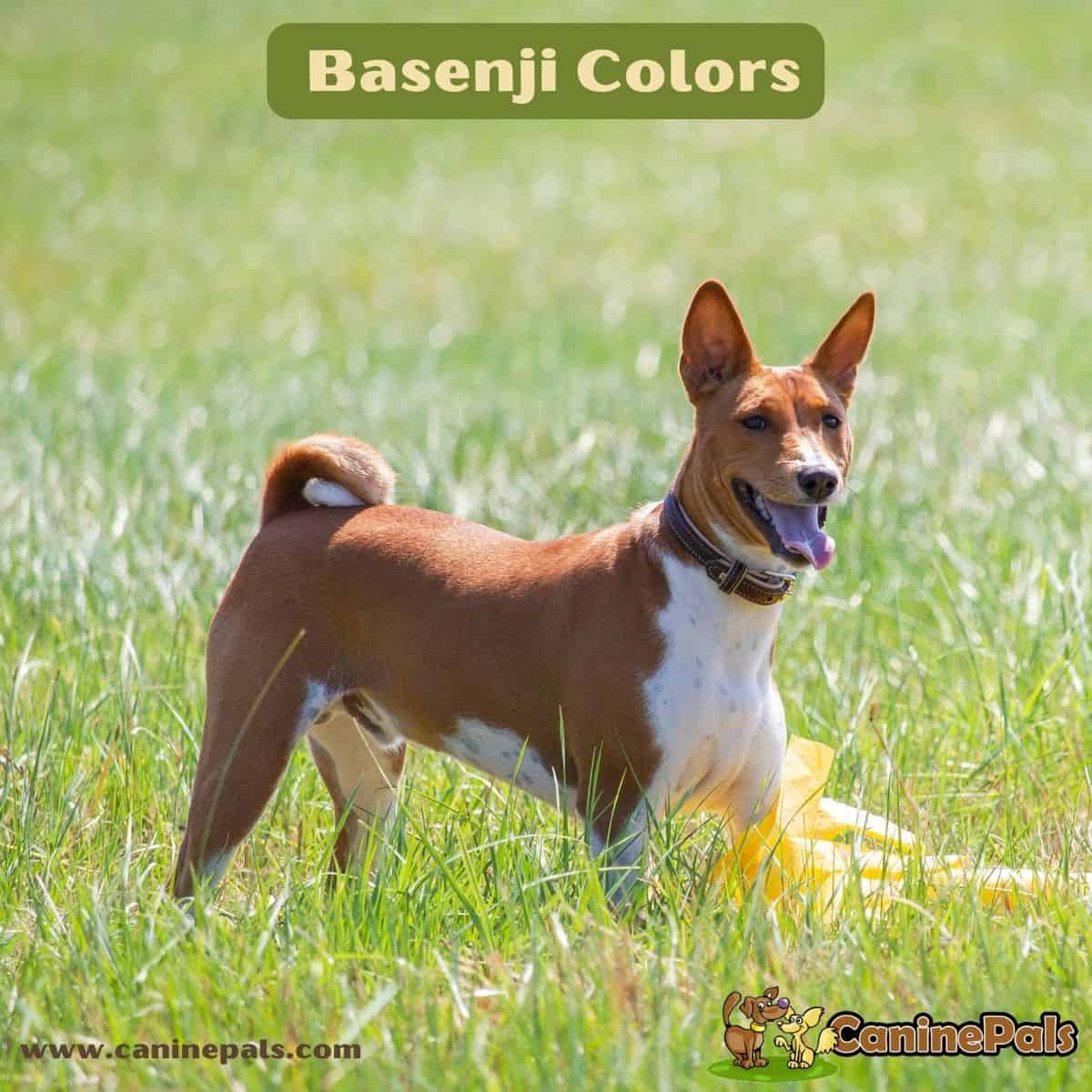
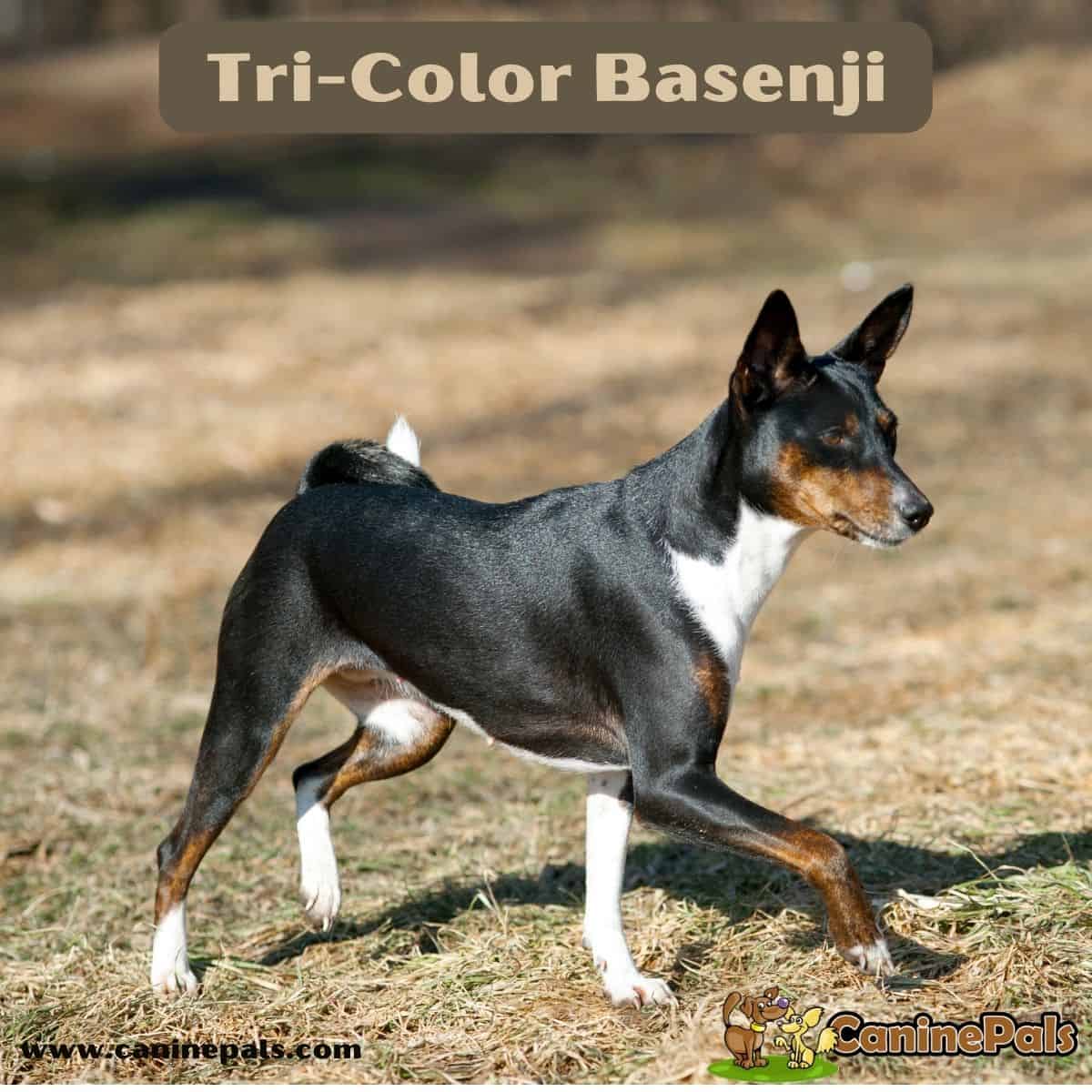
This breed comes in various colors, the most usual Basenji colors are the famous red or orange ones, but there are white, black, and tri-colored Basenji too.

Before hopping onto these dogs’ color theory, let’s look at some amazing things about it.

Basenji Colors
Basenji Colors

History

The Basenji is possibly one of the oldest domestic dog breeds; they were used for hunting and which could be why he doesn’t bark. It is quite possible that hunters liked this quiet dog not to alert their prey. The Basenji can bark, just like his wolf cousin in the wild, although he often only does it once before going, completely silent. He is thought to be only a slightly tamed dog and is not preferred as a Pet. He also has a different metabolism than any other domestic dog, and unlike other house dogs, the female Basenji only cycles once a year, much more like wild canids.

Westerners first came across Basenjis in the 19th century in the Congo region of West Africa. The dogs were trained there to flush wildlife into nets, carry supplies, and alert trail users of dangerous creatures. Some African communities valued a good hunting Basenji because of the dog’s resourcefulness and inventiveness.

Initially, attempts to introduce the Basenji to Europe were unsuccessful since the imported canines all passed away from illness soon after arrival. In England and the United States, the first successful importation occurred in the 1930s.

In 1942, the Basenji Club of America was established, and in 1943, the American Kennel Club approved the breed. The first Basenji to be registered with the AKC was Phemister’s Bois in 1944.

Personality

Basenji is a hound, which means he is independent, intelligent, tender, and watchful. Being a sighthound, he will chase anything moving that attracts his attention, including cats, squirrels, and rabbits. He is not the type of dog who will immediately comply with commands. He needs to consider these and determine whether or not he truly wants to comply with your request. That is one reason why Basenji is not your typical domestic pet.

Care

The Basenji needs daily activity because it is a hunting dog. While some Basenjis may get by with a daily stroll, others need more vigorous exercise. Basenjis that have grown up around another Basenji frequently spend their time exhausting one another.

Word of Caution!

The Basenji is not a breed of dog that should be kept in the backyard unattended. He’s a skilled escape artist. Therefore a Basenji left unattended will soon be a Basenji gone missing. If you give him a few daily 30-minute walks or play sessions, he might do fine in an apartment or condo.

Never leave your Basenji unattended unless you’re in a completely enclosed space, and never rely on any fence to keep him in its confines. He will use a chain link as a ladder, and a wood fence will only prevent him if you remember to place the smooth side toward the yard where the dog is and then cover it with an electric wire.

What makes them Unique?

Basenji have the propensity to leap vertically into the air stealthily, to locate the game in the thick grasslands of their peripheral vision. These traits make Basenjis highly sought-after hunters.

The breed even has an African name that loosely translates to “the bouncing up and down dog.”

Now, Basenjis are primarily kept for breeding, displaying, and companionship. They are known for their graceful speed, enormous and upright ears, curled tails, and glossy, smooth coats.

Tri Color Basenji
Tri-Color-Basenji

Different Colors of Basenji

Ever wondered how many Basenji coat colors are available? Here, red and white basenji, black and white Basenji, tricolor, brindle, and white are typical of Basenji coat colors. Although Basenji is conceivable and frequently from Africa, other colors like cream and white or blue tricolor are still uncommon in the United States.

Regardless of the breed, the topic of coat color may be very perplexing.

As we walk you through the conventional Basenji colors and explain why most lovely, natural, alternate colors have disappeared in the domesticated Basenjis of today, we’ll try to keep things as simple as possible.

Basenji’s Traditional colors

The four most frequently seen colors—red, black, tricolor, and brindle—are regarded as standards even though the AKC breed standards make no mention of color disqualifications.

Dogs of unusual colors can still be registered, bred, and displayed, albeit the judge may penalize them in the show ring for their color.

The feet, chest, and tail tip are usually in the standard white color for most Basenji dogs.

White legs, a white collar around the neck, and a white blaze on the face are all suggested but not needed. There is so many more color in the coat than white.

White And Red

People typically see a Basenji in their usual red and white when they think of these dogs. Many Basenjis have this lovely coloring, and numerous shades of red may be found within it.

Even though many individuals unfamiliar with the breed would probably characterize the red as orange, beige, or dark tan, it is described as a deep chestnut red that is rich and bright in saturation.

The sections of red are clearly defined; they do not at all “bleed” into the white, as is the case with all Basenji colors. Unwanted colored hairs are also occasionally found among the coat’s white hairs.

In this litter, the puppies born from mating two pure-for-red (homozygous for the trait and lacking any other hidden color genes) are also pure-for-red.

Black and White

The white on Basenjis with black and white markings is bright and distinct, while the black is glossy, deep, dark, and pure.

Black is a dominating color; thus, black and white puppies are flexible in color as long as one parent dog is of multiple colors. All the puppies born from a white and black Basenji union and another black and white would be of that color, though they might be carriers of another color if either parent was.

Due to black dominance, most black and white Basenjis are heterozygous for the trait, which means that they carry a recessive color that was not manifested.

Tan, Black, And White (Tri-Color)

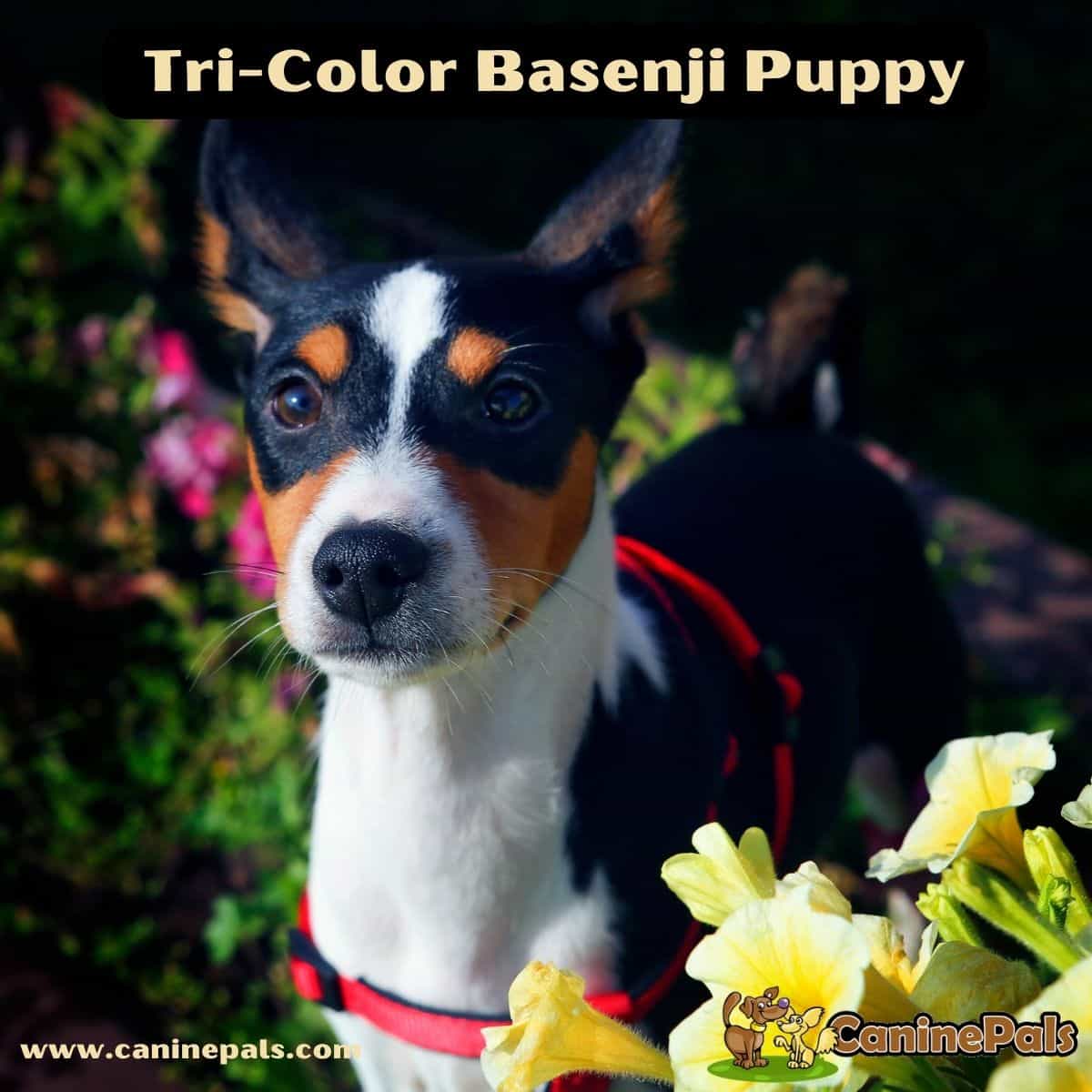
The tri-colored Basenji looks very unique and wonderful. The typical white patches are still there, but the majority of the coat is a stunning deep black with extra chestnut red coloring that is typically found on the eyebrows, cheeks, inner part of the upper legs, the base of the ears, and inner ear.

You’ll get a better sense of what tri-colored Basenjis look like if you can see the color pattern of a Rottweiler and then put in the white Basenji patterns. Basenji enthusiasts affectionately refer to black, white, and tans as “tris.”

As the tri-coloration is a recessive trait, breeding two tri-colored Basenjis will always produce a litter of tris. However, breeding two tri-factored Basenjis (meaning they carry the tri-coloration but do not exhibit it) will result in a litter of pups that may be black, red, brindle, tri, or trindle.

White And Brindle

Brindle and white Basenji still have the customary white markings, but instead of having solid red markings, they have distinct black stripes as a backdrop of chestnut red.

Mating two brindles or brindles can produce red and white brindle puppies to a tri. But if two tri-factored brindles were to breed, the resulting litter might include reds, brindles, tris, and trindles.

Fun fact: It took a unique importation initiative in the late 1980s for brindles to start showing up in America.

Unique Colours

With the exception of trindles, which are seen very frequently, the standard colors are unquestionably the ones that are most commonly seen on purebred Basenjis. While entirely appropriate, other hues are now hardly ever seen.

However, it is noteworthy that alternate hues are frequently found in Basenjis residing in Africa, and slowly some of these dogs are being imported to the U.S. in an effort to revive these natural colors in American Basenji stock.

Although the Basenji Club of America now only includes the Basenji breed’s standard colors, the AKC does recognize the following colors as appropriate. Many members of both groups want to see the breed’s alternative colors used more frequently.

Trindle, Black, Brindle, and White

Although for AKC showings, dogs with this pattern would be regarded as tricolor, a black, brindle, and white Basenji is a tri-colored dog with brindle markings in place of the red and is frequently referred to as a trindle or a brindle-pointed tri.

The Basenji Club of America claims that a trindle recently took home the best-in-show honor at an all-breed dog show, despite the fact that some breeders dislike this coloration.

Breeders that favor this pattern frequently cross a trindle with a tri, a tri-factored red, a black, or a tri-factored black to create litters with a mixture of trindles and conventional colors.

White and Cream

As you may expect, cream and white Basenjis have a light cream to pale yellow tint instead of the chestnut red coloring.

Cream and white was a prevalent color pattern among the earliest imported Basenjis, but breeders did not like the color or the light-nose leather and greenish eyes that went along with it. They used selective breeding to eliminate the color and came very close to success. As a result, you could hardly ever see this unique combination in a Basenji.

White, Cream, and Blue

In addition to the typical white patches, Basenjis with this color pattern also have a blanket of diluted black (referred to as blue) with cream highlights. Because these variations of tri-coloured Basenjis had the cream gene, they also started to go extinct as early breeders tried to eradicate the cream hue.

Dark Wood and White

White and dark wood color is a rarity. It is basically the red and white Basenji but with a twist. Due to the scattered black hairs throughout the red section, Basenjis are much darker in color than conventional red and white dogs. Because of this unusual color pattern, there aren’t many images of it, and the ones that do exist are, regrettably, in black and white.

White Sable

Sable and white Basenji feature the typical red and white pattern, but the red hairs have black tips, giving the dog a completely different appearance. This color pattern is known as sesame in Shiba Inus.

Markings on a Basenji

The AKC permits brindle markings, of course, but it also allows black markings, such as a black saddle over the ribs and capped markings, even though these are less prevalent than the other colors.

Fun facts related to Basenji

  • The Egyptian god of mummification and the afterlife, Anubis, is said to have taken his likeness from Basenjis.
  • Basenjis self-groom almost catlike manner, keeping their short-haired coats essentially odorless and tidy.
  • Basenji dogs yodel instead of yipping normally.
  • Basenjis were once taken from central Africa up the Nile as presents for the Egyptian pharaohs.
  • Basenjis were valuable hunting dogs used by tribe members in central Africa.

Tri Color Basenji Puppy

Conclusive Thoughts

If you decide that a Basenji is the right dog for you, be prepared to spend some time on a breeder’s waiting list as they are one of the rarest dogs—ranking 84th of the 155 breeds and varieties—that the AKC recognizes.

Copyright CaninePals.com. All Rights Reserved.

References and Further Reading:

[1] American Kennel Club, Basenji Information.
Do Border Collies Bark A Lot

Do Border Collies Bark A Lot: Full Details for Owners

Border Collies are endearing and full of energy. They’re a total powerhouse when it comes to the overall work rate. Specifically bred for herding purposes, they will take every bit of hardship to please their owners. You might have to face some Border Collie behavior issues including Border Collie barking, but we will help you learn how to resolve any issues.

They require low maintenance and can be trained pretty effectively. Plus, they have intelligent brains too. If you’re looking for a pet that never gets tired and is always up for games, then look no further than a Border Collie.

Keep reading this article to learn more about this amazing breed especially if you’re considering getting a Collie for your home and you need to know everything about Border Collie barking issues.

Do Border Collies Bark A Lot

Do Border Collies Bark a Lot?

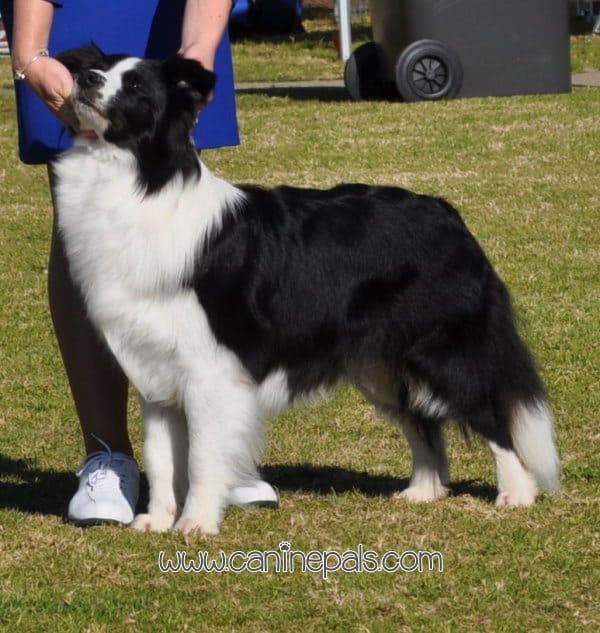
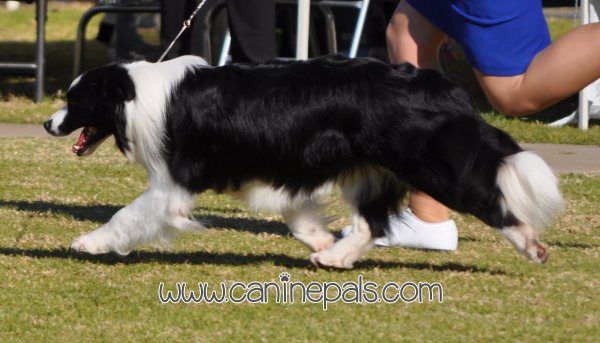
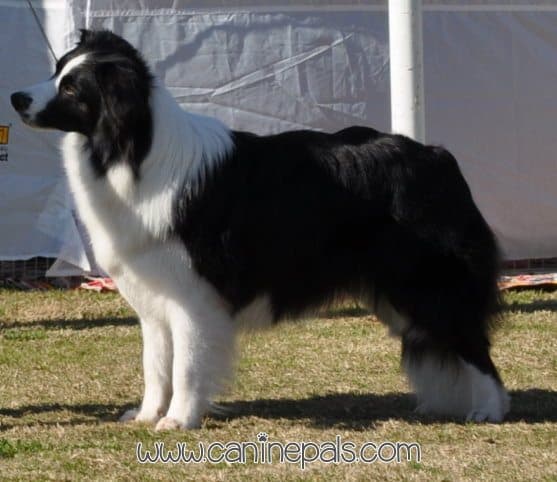
Like any other dog, the answer depends on the individual border collie. Some border collies may bark more frequently than others, but they are not known for being especially vocal dogs.

However, if a border collie is left alone for long periods, it may bark out of boredom or frustration. If you’re considering getting a border collie, research to ensure they will fit your lifestyle and personality well.

This gets asked around every time there’s a mention of Border Collies. Sad to say that if you’re expecting this breed to stay quiet and remain calm, then you’re on the wrong side. Due to their highly energetic nature, they can get pretty vocal as well, which can upset a lot of people, especially your neighbors. It can be a really tough job to find the actual cause behind a barking Border Collie.

Why do Border Collies Bark so Much?

Border Collies are often prone to barking due to their high energy levels and herding instincts. Some Border Collies may bark excessively to herd other animals or people, while others may do it simply out of excitement or boredom. If your border collie is constantly barking, it’s crucial to figure out the root cause so you can try to address it.

They’re intelligent dogs, but most of the time they fail to distinguish real threats from normal situations, which sets their alarm on. For example, if a stranger is approaching your doorway, there’s a high chance a Border Collie would start barking at them continuously unless the stranger goes away.

How To Stop a Border Collie from Barking

They crave attention, a lot of it, and to get that attention they’ll bark. But don’t make the mistake of giving your dog attention when it is barking, it will further condition them to bark for attention, and in turn, make them bark even more.

Rather, make sure to give them lots of attention so that they avoid barking. Border Collies are always supercharged for action, you need to have some sort of energy outlet for them. Pent-up energy can increase vocalization and cause them to get stressed.

In old times, they used to exert all their energy in herding the cattle, however, as pets, no physical activity looks demanding enough to them. You can take them on long walks, and they’ll still demand more from you. You can incorporate healthy activities like looking for hidden objects, fetching the ball, or best of all playing frisbee with them.

Border collie exercise is very important and cannot be neglected at all. Border Collies are crazy for frisbees, they’ll jump way above their weight and catch the frisbee midway through the air. Once they’ve exerted all their energy, you’ll have a handsome smiling Border Collie that won’t bark, at least for a while.

The best way to deal with Border Collie barking would be to socialize them with strangers right from the beginning, otherwise, they’ll continue to be vocal at such times. Another way to mitigate this issue would be by training them to bark on command, with the passage of time they’ll avoid barking on their own and would wait for your command to bark.

Border collies will often bark less if given plenty of mental stimulation and exercise. If your border collie is bored, try adding new toys or puzzles to their environment. If they seem to be barking out of excitement, try redirecting their energy into another activity, such as fetch or tug-of-war.

Barking is a natural behavior for dogs that they use to communicate with their pack. A Border Collie will bark for many reasons, including excitement, fear, frustration, boredom, and loneliness.

If your dog is barking excessively, an underlying issue may need to be addressed. Consult your veterinarian or a qualified trainer to help you manage the problem.

In the meantime, here are some training tips to help you manage your dog’s barking behavior:

  1.  Make sure your dog gets plenty of exercise and stimulation. An exhausted dog is less likely to bark unnecessarily.
  2.  Provide adequate shelter and insulation from the weather elements.
  3.  Give your dog plenty of chew toys and bones to keep them occupied.
  4. Avoid leaving your dog alone for long periods.
  5. Train your dog using positive reinforcement techniques. Be consistent in your commands and rewards, and remain patient while training. Following these tips should help reduce (but not eliminate) excessive barking in most dogs.

Border Collie
Border Collie


Border Collie Behaviour Issues

As it turns out, they might have some inherent issues that can potentially rule them out as a pet choice. We’ll look in-depth at these issues, and why they are so prevalent even in modern Border Collies. Roughly most of these issues can be resolved with immediate training, while some of them can persist because they’re genetic.

If you’re looking for a dog that is obedient and can be trained very easily, then a Border Collie might just be the best choice. Since they were raised for herding, they can be trained with low effort and be great pets, but that isn’t the end.
Some of the questions that are frequently raised about Border Collies are the following:

Why do Border Collies Chase Things?

All dogs love to play race and chase, if you’re running then they’ll start chasing you. In the same way, these cute Border Collies love playing chase as well, but the kind of chase they play can be intense. Since they don’t get tired easily, you might find yourself running more than you can handle. This isn’t a big issue for the owner, since they’re accustomed to it.

However, it becomes a major issue when the Border Collie is chasing someone else, like a stranger. For the stranger, it would get extremely horrifying to get chased by such a small dog endlessly.

Border Collies are very sensitive when it comes to visual stimuli, events such as a stranger nearby can put them in chase mode, and cause a ruckus everywhere. One way or another, these Border Collies will find a way to exert their energy, even if it means chasing a butterfly floating around, or a small bird pecking in mud.

Border Collie
Border Collie

Physical Traits of a Border Collie

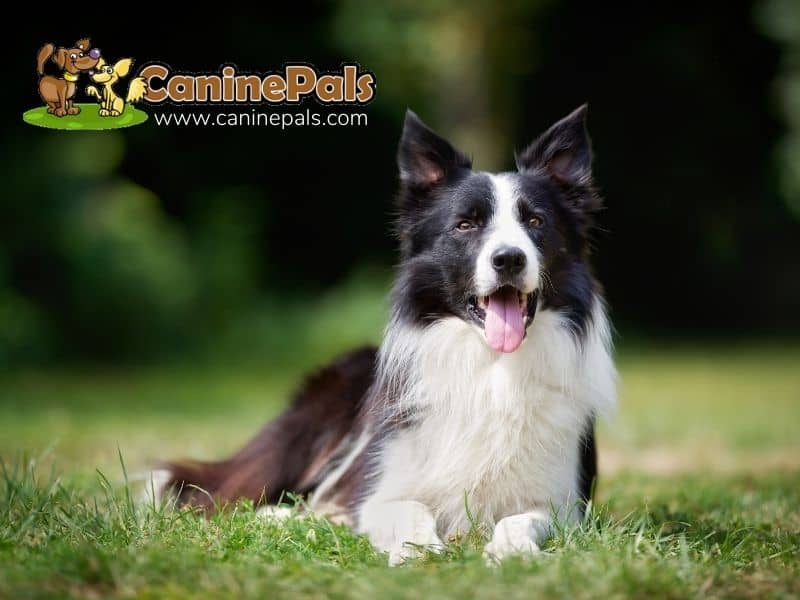
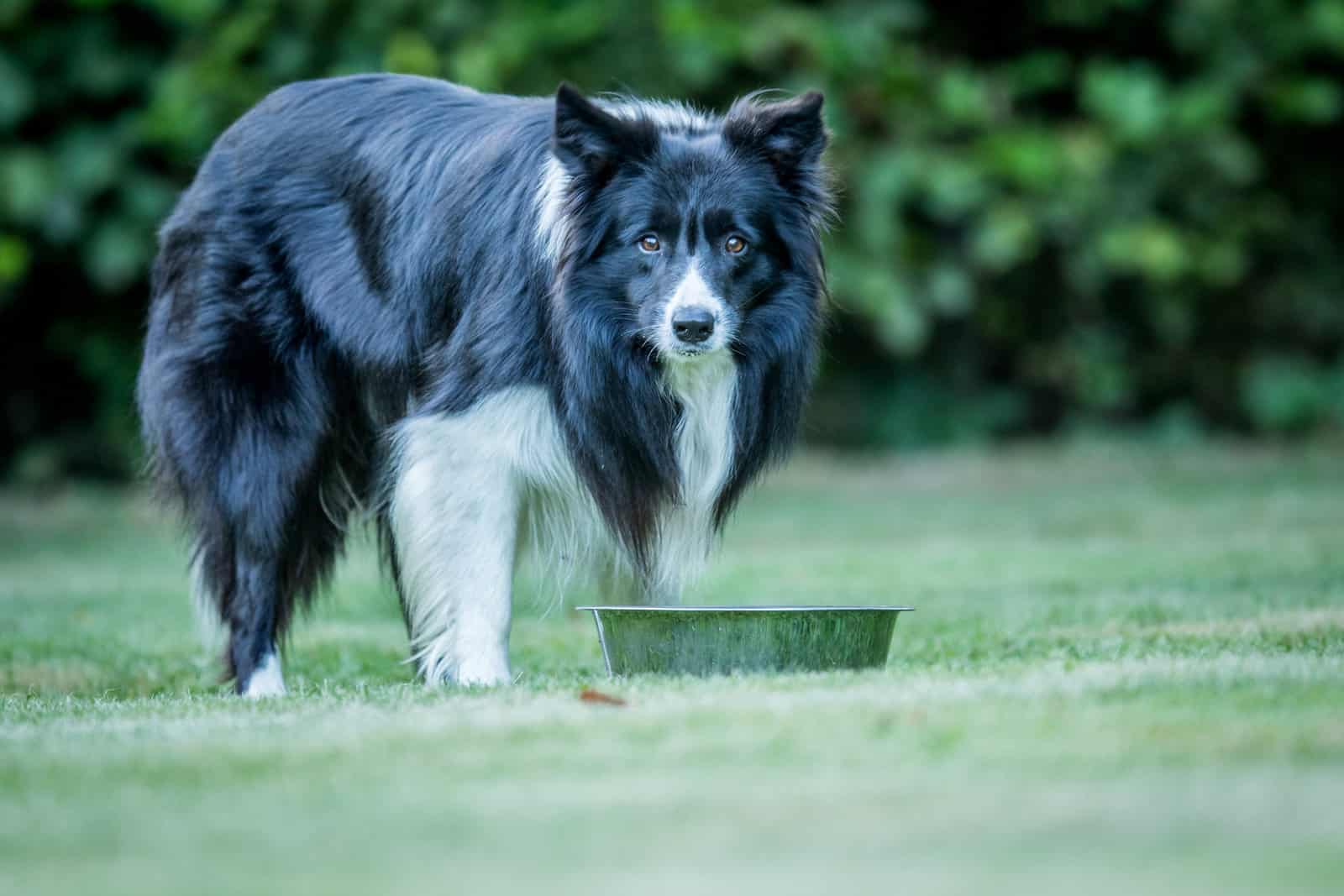
Both show Collie and regular Border Collies are similar in terms of physical traits such as height and fur color variation. Border Collies are a medium-sized breed, and they fall somewhere between a small spitz dog and a regular shepherd dog.  They usually have a double coat, though single-coat variation does exist as well.

Male Border Collies would grow up to be around 19 to 22 inches, whereas the female ones will be around 18 to 21 inches. An adult would weigh somewhere between 15 to 20kgs, depending on the level of activity and the type of diet.

They have a very distinctive white muzzle and white patterns usually underneath them complemented with another fur color like black, tan, or red. Recently, there have been more variations in Border Collies as well such as blue, brindle, and lilac.

They are prone to shedding almost every season, therefore grooming them can be quite hard, but since they’re usually meant for outdoors you won’t have to deal with fur inside your house.

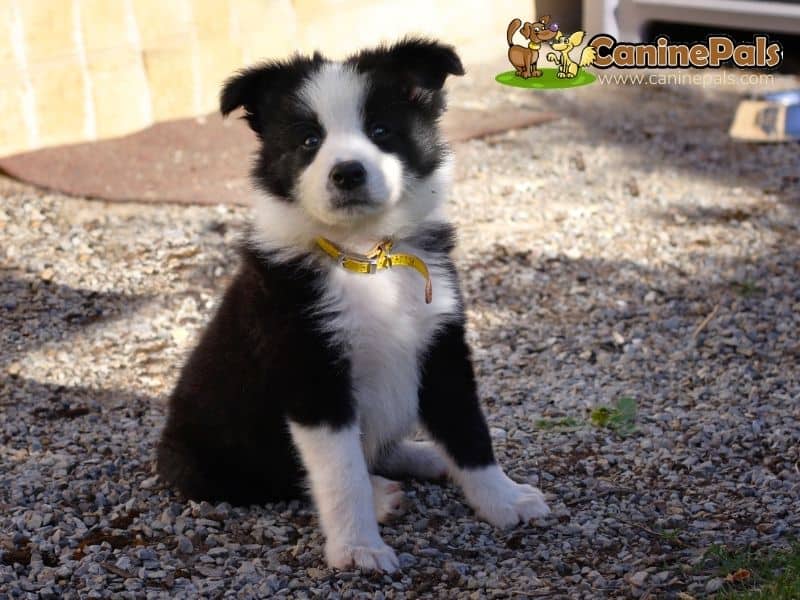
Bringing Home a Border Collie Puppy

So you’ve finally decided that you’ll be bringing home a Border Collie pup, they make great loyal pets, but there are a few things you need to be prepared for when bringing the puppy for the first time. This is crucial for first-time dog owners, as well as the folks who’ll be raising a Border Collie for the first time as well.

Border Collie Puppy
Border Collie Puppy

Below are some of the most important things that you’ll have to keep in mind:

They are highly impressionable

All animals learn to adapt and live according to the stimuli provided by the environment. Humans are the most impressionable beings on earth, and this can be observed from their childhood and well after their adulthood. Similarly, Border Collies are some of the most impressionable dog breeds out there. They are highly observant of their owners and can sense even the slightest disparity in your mood.

You can use this trait to your advantage as well, like training them more effectively, they’ll gladly follow all your orders. But on the other side, if you’re not feeling well and something is off, this can cause them to panic. If you act aggressively, then they might get sad, since they relate all this to fear of loss, discouragement, and abandonment. So, always make sure to appreciate their efforts and give them treats from time to time. This way they’ll adapt more quickly and stay calm.

They Learn Very Quickly!

Think of them as the brightest students in class, Border Collies will do whatever it takes to get the best grades. They can be trained without much hassle, unlike other dog breeds where you might have to hire a specialized trainer to train them. Border Collies are truly intelligent and can make complex decisions on their own, and learn from the experience. You can stay sure that a Border Collie won’t repeat the same mistake again.

This trait is passed down from their ancestors who were trained for herding jobs and would work tirelessly to please the shepherds who kept them. During their herding days, they knew exactly when it was time for the sheep to graze, and the time to bring them back.

They are not afraid to take a decision on their own, even if it means going against the will of the owner. Once a task is assigned to them, they’ll take care of it all without being bothered by anyone.

Training them as puppies is highly advised, however, they can be trained as adult dogs too. But adult dogs might have a harder time incorporating most of the training routines. Puppies on the other hand will pick on the cues easily and learn without any repetitions. Take, for example, if you stop the Border Collie from entering a specific section of your house then it won’t enter again. Similarly, if your dog is pulling its leash, then pulling the leash slightly once or twice might be enough to stop it from pulling it once more.

Border Collies have a curious minds and they keep trying new things out continuously, you should never stop a dog at a young stage from trying new things. It negatively affects their mental health and can lead to a whole lot of issues.

They’ll Wear You Out!

If you’re someone who’s into staying fit and wants a running partner that’ll take you to the next level, then don’t think twice and get a Border Collie. These furry creatures never wear out, they’ll run, chase, and jump endlessly. On the other hand, if you live in an apartment, then don’t consider this breed to be an ample fit for you. They really need the border collie exercise in order to stay healthy, both physically and mentally.

Border Collies enjoy going out with their owners, they will kill for a fetch game with you. If you’re not able to provide them with the right exercise opportunities, then be ready to find spoilings in your house, torn sofa sets, and broken pots.

They Don’t Like Being Confined

Border Collies are free-spirited and hate it when they are confined to smaller spaces. Normally, they were kept in dog kennels but only during the night time, during the day they would be herding the sheep. Confinement can lead to strange issues, such as the Border Collie herding your family members, toys, and other pets. These issues would keep on mounting unless you fix the underlying problem.

Make sure you have ample space in your backyard so that the dog can roam and play. Their herding behavior cannot be isolated, but it can be supplemented with exercises. Even in the show Collies, their instincts will kick in once in a while and within no time they’ll want to do the herding job.

Let’s have a look at some vital stats on Border Collies:

Stats Description
Dog Breed Group Herding dog group
Purpose Working dog
AKC Breed Popularity Ranks 35 of 197
Average Height 19-22 inches (male), 18-21 inches (female)
Weight Range 30-55 pounds
Temperament  Very intelligent and full of energy
Energy Level High
Features Loyal and loves to cuddle.
Life Expectancy 12 to 15 years

Origin of Border Collie

The Border Collie was first known as a Scotch Sheep Dog and has been around for over 100 years. Queen Victoria was a Border Collie enthusiast in the late 19th century when the dog took on its current name. He’s the world’s best sheepdog, with excellent instincts, high intelligence, and a good work ethic. This canine has an intense stare known as “the eye” which he uses to intimidate stock.

The Border Collie’s coat can be many colors, including bi and tri-colors, solid patterns, sable, or merle. He’s full of energy and needs regular intensive exercise, not just a short walk or a run around your backyard. He’s best with mature children, not young ones, and he’s devoted to his family but reserved while around strangers. The Border Collie is a seasonal shedder and requires regular brushing. His height is 18 – 22 inches.

Border Collies weren’t popular as pets for a long time, because they were bred for a few specific purposes such as herding livestock and keeping potential threats away.

Apparently, their smaller stature might not give the vibe of being threatening, however, when it comes to their agility and vocal ability a.k.a barking, they can scare away most predators and herd the livestock back to the pen.

Border Collie Barking

It is speculated that they originated somewhere between modern England and Scotland during the time of the agricultural revolution. Even to this day, they’re considered the top breed for herding jobs in European nations. Even Queen Victoria commended the ability of Border Collie on her visit to Scotland, after that they were given royal status.

Till the 20th century, these high-energy dogs were only used for herding jobs, such that they weren’t popular in other areas. Soon that changed and Border Collies became mainstream. Which led to a number of issues, such as that there became a major distinction between the show-quality Border Collie and the regular Border Collie.

The regular one had all of its characteristics intact and was being bred by the shepherds without any issue, on the other hand, the show quality one was being bred just for the looks, which made it weaker and lose some of the highlighting characteristics such as agility.

Generally, Show Collies are the perfect fit for a family dog since they can be tamed rather easily and have overall fewer exercise requirements as compared to their farm counterpart. Nevertheless, you can opt for the purebred Border Collie, given that you understand them and realize what issues they bring to the table.

Today Border Collies are recognized by all of the major kennel clubs around the world, however, their herding ability is often neglected when standardizing them as a breed. But that shouldn’t stop you from enjoying the company of this highly energetic dog.

A Border Collie would never disappoint you at all. Even though it can get quite hard to manage them due to their exercise requirements, still you’ll learn to love each other well.

Their average life span ranges from 12 to 15 years, which can be quite a commitment. Nevertheless, a Border Collie is a dog that’ll always keep you and your family entertained with its amazing feats.

Border Collies
Border Collies

Final Word on Border Collie Barking and Behavior Issues:

Dogs bark for a lot of reasons, but the most common one is to communicate. When your dog barks at someone or something, they’re trying to tell you something.

It would be best if you learned how to interpret their barks and take action accordingly. If you can understand why your border collie is barking, you can help them stop.

Barking is often a symptom of an underlying issue, so addressing the problem will also help reduce the amount of barking your dog does.

Have you ever struggled with understanding why your border collie is barking? What solutions have worked best for you? Let us know in the comments below!

Copyright CaninePals.Com. All Rights Reserved.

References and Further Reading:

[1] American Kennel Club, Newfoundland Dog Information.
Border Collie

Border Collie
Border Collie

Border Collie
Border Collie

Border Collie
Border Collie

Is The Norfolk Terrier Hypoallergenic?

Is The Norfolk Terrier Hypoallergenic or Not?

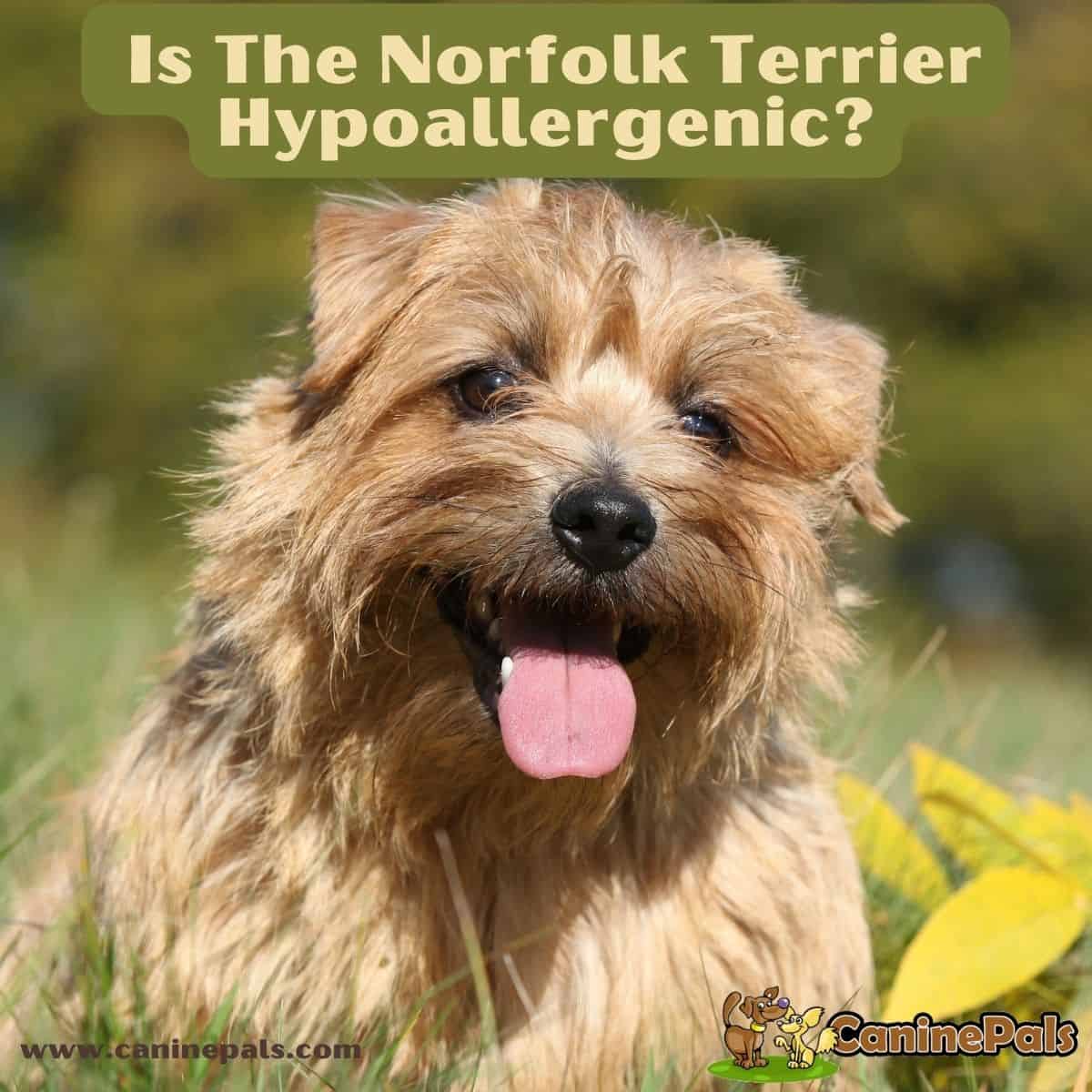
Norfolk Terriers are very playful and loving dogs but if you suffer from allergies you’ll need to consider the effects on your health before considering getting a Norfolk Terrier puppy. On this page, we’ll answer the following question: Is the Norfolk Terrier hypoallergenic? Let’s check this out.

Are Norfolk Terriers Hypoallergenic?

The Norfolk Terrier is considered to be hypoallergenic. No dog breed is totally hypoallergenic, but these dogs shed less than most breeds. They also shed throughout the year rather than in certain seasons, avoiding a sudden shedding of hair which can be a problem for those suffering from allergies.

If you are allergic to dogs or other animals then you’d do well to heed the advice of an experienced breeder of Norfolk Terriers, Shiela Foran, who says that she cannot definitely say whether this breed of dog is hypoallergenic or not. She advises anyone with allergies to try spending some time with this dog before buying one.

The reason for this advice is simple. Despite the dog, everyone reacts slightly differently and sufferers of dog allergies may react more to certain breeds and less to others.

Is a Norfolk Terrier Hypoallergenic or Not?

What is a Norfolk Terrier?

A Norfolk Terrier is a small, compact dog that is known for its friendly and outgoing personality. They are also known for their intelligence and agility.

Norfolk Terriers are a cross between the Norwich Terrier and the Black-and-Tan Terrier. They were originally bred in England to hunt rats in the Norfolk area. They were also used to hunt foxes and other small animals. They are known for their long, wiry coats and their ability to hunt in packs.

The Norfolk Terrier is native to England and is among the smallest working terriers. He was formerly regarded as the same as the Norwich Terrier. He’s a barnyard ratter and fox hunter. In 1979, the drop-eared breed took the name of the Norfolk Terrier while the prick-eared breed remained as the Norwich Terrier. He works equally well on his own or in packs and is hardy, compact, and very active.

He easily adapts to different environments so he can live in the country or the city. He’s loyal and a devoted companion, His coat is wiry and resistant to the weather. Coat colors can be black, red, tan, wheaten, or grizzle.

The Norfolk Terrier temperament is charming. His energy levels are moderate and he is a fun-loving dog who loves walking and being with his owner. His coat needs regular hand stripping to remove dead hair. Brushing and grooming to remove dead hair. He’s 9 – 10 inches high.

Is a Norfolk Terrier Hypoallergenic or Not?

Norfolk Terriers are the Perfect Dog for People with Allergies

Norfolk terriers are one of the better small dogs for people with allergies. They have a low to no shedding coat, which means they produce fewer allergens than other breeds. These little dogs also don’t require as much grooming as other breeds, which helps with allergies too. This does not mean, however, that they shouldn’t be brushed. Brushing a dog regularly helps remove matted hair that may cause allergies and removes dead skin cells from the fur.

Norfolk terriers are known for their wiry coats. Their coats can be black, brown, or tan in color with white markings on the chest and feet. The hair is usually short but can grow to be longer if it is not trimmed regularly.

Is The Norfolk Terrier Hypoallergenic or Not?

What is the Reason for Allergic Reactions to Dogs in Some People?

As explained by Scientific American, most allergic reactions are not caused by hair or shedding of the dog but a protein in the dog’s saliva. This means that no dog can be truly hypoallergenic.

The reason why there is a connection between the shedding of dog hair and fur and human allergies is that the saliva protein exudes from the skin and is transferred to the hair of the dog. As dogs such as Norfolk Terriers shed less than other breeds they are less likely to cause allergic reactions in people who are sensitive to this protein.

However, different proteins exist in different breeds and some of these proteins may affect fewer people than others. Therefore two factors affect the potential of the Norfolk Terrier to cause allergies in people: the type of protein from the dog’s saliva that a person is allergic to and the amount of shedding of the dog.

It just so happens that the Norfolk Terrier is much less likely to cause these allergies because of its less frequent shedding and also due to the type of coat it has.

In fact, there is even less likelihood of an allergic reaction to a female or a neutered dog as they often produce less of the proteins that can cause allergies. Here is some research on this.

Is The Norfolk Terrier Hypoallergenic

What is the Evidence that Norfolk Terriers are Hypoallergenic?

Norfolk Terriers have a double coat which means they shed less than other dogs because the undercoat is not as thick as the topcoat. The topcoat sheds more because it has to protect the undercoat from dirt and debris.

There doesn’t appear to be much in the way of scientific research to confirm that the Norfolk Terrier is truly a hypoallergenic dog breed, but many claims they are as close as any dog can come to this.

According to Preferred.com, the Norfolk terrier is classed as a low-shedding dog breed and requires little grooming. It claims the dog can be included in those considered hypoallergenic.

Also, on this website, the Norfolk Terrier is described as a hypoallergenic dog. There is also other useful information about this dog breed that is so popular.

Is a Norfolk Terrier Hypoallergenic or Not?

Final Thoughts on is the Norfolk Terrier is Hypoallergenic or Not?

The Norfolk Terrier is one of the smallest terriers according to the American Kennel Club and as such, they shed less hair than larger dogs. The kind of hair they have and the lack of sudden seasonal shedding mean that they have less hair which drops off the dog and floats around the home. The Norfolk Terrier is more hypoallergenic than most other dog breeds but can never be totally hypoallergenic because shedding does occur if only at low levels.

It is not the hair that causes allergies in people but the dander, or dead skin cells which become trapped in the falling fur of dogs. Within these skin cells is a protein from the dog’s saliva which is the real culprit for the allergies that sensitive people have as a result of dog shedding.

Fortunately, as Norfolk Terriers shed less they deposit less dander around the home and their coats can be managed quite easily due to the wiry nature of the hair. Norfolk Terrier grooming is probably best left to a professional groomer. 

Any person who is concerned about a possible allergic reaction to this dog should first test spending time with one and make sure they do not suffer allergies before getting their own Norfolk Terrier.
Copyright CaninePals. All Rights Reserved.

References and Further Reading:
American Kennel Club Norfolk Terrier Information

Is The Norfolk Terrier Hypoallergenic?

Are German Shorthaired Pointers Hypoallergenic Dogs?

Are German Shorthaired Pointers Hypoallergenic Dogs?

The most frequently asked question is, are pointers hypoallergenic, or are German shorthaired pointers good for allergies? In the following piece, we will cover all these aspects of German shorthaired pointers and how you can keep them at home.

Are German Shorthaired Pointers Hypoallergenic?

GSPs are certainly not hypoallergenic, but the correction is that no such dog is truly hypoallergenic as all of them shed some hair and skin particles called dander. And the dander can cause some kind of allergic reaction in those prone to allergies, but some dogs cause lesser allergies, but none is 100 percent hypoallergenic.

German shorthaired pointers are double-coated breeds that have two short coats. They have a thick and short top coat, and beneath that, they have water-resistant undercoats, which make them shed more. However, GSPs are moderate shedders that only shed twice a year and aren’t the most allergenic dogs out there.

German shorthaired pointers, known as GSPs, are among the most popular dog breeds for outdoor activities and adventures. GSPs are very friendly, obedient, and energetic dogs that they bred for hunting purposes. These dogs have a well-muscled body with solid thighs and can eagerly become more muscular if given the proper training and exercise. Pointers are a versatile sporting breed that is great for hunting; these types of dogs have water-resistant courts that make agile hunters perform terrifically in both land and water fields.

When going out to buy a dog, everyone wants to get on board a breed that is playful, loyal, friendly, and easy to train and groom. German shorthaired pointers are those versatile sporting breeds that can hunt and live as great family dogs. They can sometimes become challenging to handle for new owners, but once they settle down, you won’t like having any other pet.


Are German Shorthaired Pointers Hypoallergenic Dogs?

History

German shorthaired pointers are the most obedient and well-mannered hunting dogs; they are known for their high performance in dog services and sports like dog diving, agility, and obedience. This breed can survive well in outdoor and indoor atmospheres, but their best performance is indoors. This sleek and speedy dog breed is full of stamina and famous for its endurance. They have been honored for having great smelling sense and courage to fight big animals.

This famous breed came into being during the 18th century after German hunters spent generations cross-breeding several hunting dogs to get this breed. Many German tracking dogs contributed to the expansion of this breed, like English pointers and Arkwright pointers.

However, it’s not known which two breeds produced GSP. Still, it seems that GSPs are the descendant of Spanish pointers and German bird dogs. After going through several phases of evolution, the breed got official recognition from American Kennel Club in 1930. GSPs breeding was highly affected by the Second World War, and the breed became rare; by the war’s end, the German breeders worked extensively with the limited gene pool to rebuild this beloved breed.

GSPs are best known for working with intelligence and law enforcement agencies to track illicit material and criminals. This breed assists the armed forces when they perform big missions; their outstanding sense of smell makes them one of the favorites of the armed forces as they help them sniff out explosives.

Besides their exceptional hunting abilities, German shorthaired pointers inspired many writers to celebrate this breed in their writings; one such display in a famous mystery series Spencer in which the famous detective had three German shorthaired pointers.

German Shorthaired Pointer

Appearance

GSP is medium-to-large-sized dogs with short and flat coats that are water resistant to keep them warm in winter. Pointers are known for their unique combination; the coats of this beautiful breed are usually liver (dark brown) in color with black or white spots on it, or in some cases, they can be in solid colors, but commonly they are liver with spots.

They have a large nose, big almond-shaped eyes, and dark-colored floppy ears, and the unique thing about pointers is that the color of their nose always matches the coats. The male GSPs are 55-70 pounds in weight and are generally 23-25 inches tall, while the females usually reach 23-25 height and weigh around 45-60 pounds.

Temperament

GSPs are one of the most friendly, playful, energetic, and intelligent dogs. There are hardly times when you would find this breed not doing any activity. Their hunting history makes them an incredibly free-spirited breed that likes wandering around if not trained to live under the fence.

The good thing about these pointers is they are quick learners and easy to train. They are also kid and dog friendly and love playing with kids, but it’s suggested not to leave this breed unsupervised with kids. Pointers generally welcome strangers and don’t bark excessively but alarm their caretaker of any strange activity going around nearby.

Moreover, GSPs are working dogs as they get training to do hunting jobs, so they don’t like sitting idly. If these dogs are not kept busy with activities, they can become aggressive and furious. So it’s suggested to always occupy their mind with plenty of activities, exercises, and interactive toys, so they don’t get bored. These dogs crave for purpose, and if they don’t get one, they start barking and chewing.

This breed can become challenging to handle for impatient owners when they are untrained and babies. Pointers are very sensitive and like living in a positive environment to get trained; they are not happy when left alone, so we recommend that only those caretakers keep these dogs who stay out for long.

Living Atmosphere

As we have discussed, GSPs are sporting dogs who need a spacious area to run and play; that’s why these dogs can’t live in confined places like apartments and condos. GSPs possess boundless energy; they need owners with ample space to engage them in different activities. GSPs are great performers as organized athletes, but even if you don’t train them for competitive agility, they can happily become your companion for family adventures.

A positive atmosphere encourages them to do good, so always treat your pointer delicately and praise them for all their good deeds because this breed gets disappointed with the harsh and commanding behavior of the owner. Even treating them with some delicacy can also do wonders.

German Shorthaired Pointer

Care Tips for German Shorthaired Pointers

GSPs are easy to groom and clean; their nails need trimming at least once a week, while their ears also need to be checked for cleanliness. Pointers have small coats that need regular brushing with the right tools.

This breed relies heavily on its natural oils for skin protection; they only require occasional or once-a-month bathing and shampooing. A German shorthaired pointer sheds hair only twice a year in fall and spring; they need extra brushing with a firm bristle brush during this time.

GSPs need considerable food and water as they are active mid-to-large-sized dogs and might get dehydrated if they don’t get enough water. The vigorous exercises require them to eat high-quality dog food in reasonable portions divided into meals a day. But your pet’s diet should have a proper balance so they don’t get obese.

The Lifespan of GSPs and Their Health Issues

German shorthaired pointers are generally healthy dogs; they live for a good 12-14 years, which is a healthy lifespan. Like any other mid-sized dogs’ pointers also face several health conditions, progressive retinal atrophy, heart issues, skin disorders, and hip dysplasia. Pointers are also prone to gastric problems like excessive bloating and vomiting, which can become life-threatening if not treated promptly. Hence, scheduling check-ups with your veterinarian for all health-related issues is better.

Hunting dogs also quickly get fungal and bacterial infections on their open wounds and cuts that the contact due to scratching against bushes as they go out in the woods for hunting sessions. Here are a few other diseases commonly found in a German shorthaired pointer.

Von Willebrand’s Blood Disorder

This disease is a blood disorder that influences clotting due to the shortage of von Willebrand’s in the blood. The dogs that suffer from this disease have typical symptoms of excessive nose bleeding, gums bleeding, and sometimes bleeding in the stool. Fortunately, there are treatments for this disease, and the transfusion can fully cure your pet of von Willebrand’s factor.

Entropion

Entropion is a common eye defect found in most dog breeds; in this disease, the eyelid starts rolling inwards, which causes irritation and injury to the eyeball. Generally, GSPs get this defect at an early age, at six months, and start rubbing their eyes relentlessly. The proper treatment for this condition is surgery.

Lymphedema

Lymphedema is a common disease in dogs that occurs due to an obstruction in the lymphatic system; in this condition, lymph flow gets blocked, resulting in tissue swelling. There is no cure or surgical procedure to cure this condition; you can only improve your pet’s condition by giving them rest and massage on the affected area to improve lymph circulation.

Gastric Dilatation Volvulus

Gastric dilatation volvulus or bloat is a known life-threatening disease in medium-to-large-sized dogs that is caused by excessive rapid eating, drinking and doing forceful exercises after eating. This condition occurs when the stomach gets full of gas, and the dog cannot get rid of it. This condition becomes life-threatening when dogs panic and their blood pressure drops. You should call for immediate medical assistance for help if your dog suffers from this condition.

Is GSPs Good For Allergies?

Well, German shorthaired pointers are not bad for allergies if you can manage the cause of allergies. But it completely depends on how severely allergic you are to dogs. You can always ask your doctor for advice on whether the breed is workable for your type of allergy.

People are generally allergic to dander; you can always reduce the risk of allergies by getting rid of dander and hair by regularly bathing and brushing your pointer, as it reduces the dander’s presence in the house.

Tips to Manage Allergies

If you are allergic to dander and still want to keep a dog in your house, then there are plenty of things you can do to minimize the impact of allergens a dog carries in your house, which include the following:

  • Regularly vacuuming your house can help eliminate the dander settling in different parts of your house.
  • Mop the areas that can have dander settled there.
  • We would also suggest you keep the dogs out of your resting places like the bedroom and other places where you can sleep.
  • The easiest way to remove the dander from your house is to groom and bathe the pet outside. Bathing outside will help you secure the house from allergens. It would be better if you did the job wearing masks and gloves.
  • An air purifier can be a savior when cleaning the air; try getting one with HEPA filters.
  • Always wash your hands and properly sanitize them after touching and cuddling your dog.

German Shorthaired Pointer

Conclusive Thoughts

German shorthaired pointers are an exuberant and full-of-life breed; they can bring liveliness to your household through their active presence and playful nature. Hence to sum it up, we would say that this smart breed is not hypoallergenic, but German shorthaired pointers are not too bad for allergies as no dog is 100 percent hypoallergenic. And if you are living with it, then it’s because you take all the right precautions. You can always live with a German shorthaired pointer harmoniously with having an allergy; it’s just that it’s not very common.

So, if you are keen to include a pointer in your family as a pet, then you can always manage the impact of allergens in your house with the management tips we have shared in this article. However, we can only help you understand a German shorthaired pointer more clearly so that you can decide whether you want to keep one or not. We hope this piece helps you take the right pawsome decision.

Copyright CaninePals. All Rights Reserved.

References and Further Reading:
American Kennel Club German Short Hair Pointer Information

Dalmatians and Cats

Everything About Dalmatians and Cats

Keeping a Dalmatian and cat is a dream of every pet enthusiast. Everything you need to know about how to keep the two pets together happily.

Do Dalmatians harmonize with Cats? Things you need to know before keeping these two darlings together.

You’ve finally decided to get a Dalmatian as a pet. You love their spotted fur, friendly disposition, and loyalty to you.

But your pet enthusiast soul cries out for more. You want a cat, too!

While most dog breeds can live harmoniously with cats, you must know whether or not Dalmatians are good with cats before introducing them to each other.

You might think that the answer is straightforward, but several factors come into play when determining how well these two species will get along.

We’ve got everything covered you need to know about Dalmatians and cats before bringing the two darlings under one roof.

Stay tuned!

Dalmatians and Cats
Dalmatians and Cats

Are Dalmatians Good With Cats?

Dalmatians are typically very friendly, outgoing dogs that enjoy the company of other pets.

Their playful and energetic nature makes them fun to have around and interact with.

While they still retain their hunting instincts, they don’t typically chase after small pets like cats or birds as regular day-to-day activities.

However, it is important to consider that Dalmatians were bred as livestock guardians like many other dog breeds. This means they are territorial by nature and will likely view other pets as an intruder into their territory.

But this doesn’t mean you shouldn’t keep the two furry buddies under one roof.

The simple answer to the most commonly asked question ‘Are Dalmatians good with cats?’ is YES!

Dalmatians make excellent companions for any felines! As long as you introduce them properly, both will likely get along quite well. A Dalmatian who is not used to cats as a puppy can behave inappropriately with other pets and chasing cats can occur.

Proper socialization with other animals for all dog breeds is necessary to ensure your Dalmatian dog is cat friendly and the two species can peacefully coexist. My mother owned a Dalmatian dog called Gemma, many years ago. Gemma had a best feline friend. Each individual dog will respond differently to other animals and some will get along with cats.

07 Steps To Introduce A Dalmatian To A Cat

It’s time to introduce your cat to a new friend — a Dalmatian.

Dalmatians are known as a very friendly dog breed, but introducing them to your cat can be a little tricky.

But, if you do it right, you’ll have two happy pets in no time!

Here’s how:

Step 01: Teach Your Dalmatians Basic Commands

Teaching your dog commands like “sit,” “stay,” and “down” will help keep him under control when meeting with the cat for the first time.

While you’re working on commands, keep the cat away from the dog, so they don’t have any chance of interacting until he is fully trained.

Make sure you practice these commands often, so they become second nature for your dog.

Step 02: Give Your Two Pets Individual Space

The first time you introduce your cat and dog, give them their own space in separate rooms.

This will allow them to get used to each other’s scent before they’re forced into close contact.

Keep them separate until you are certain that the two pets can coexist peacefully.

Step 03: Feed Them Separately

A Dalmatian dog can be very territorial and don’t like sharing their food. This is why it is best to feed them separately for the first few weeks until they get used to each other.

You can also bring their food bowls into separate rooms during mealtime so that they don’t feel like they’re competing for territory.

Also, try feeding them and the other pet at different times of the day so that they are not around each other for most of the day.

Step 04: Arrange A Meet Up on the Opposite Side of The Fence/Baby Gate

Introducing a cat to a Dalmatian dog can be fun and exciting, but it could also turn out to be difficult if you are not careful enough while doing it.

When arranging a meet-up between your cat and dog, it is best to do it on opposite sides of a baby gate or fence, not in the same room for the first few sessions.

The barrier will prevent jumping on each other in excitement or aggression.

Also, make sure no toys are lying around which might cause an injury

Step 05: Arrange A Meet Up In A Common Room

When the meet-up with the fence/baby gate goes well, you can now arrange a meet-up in a common area without any barrier.

Keep the meet-up session short and ensure your puppy is on-leash.

If the two pets are calm and friendly towards each other, you can now let them play together in the same space. However, if they are not getting along well, try to separate them before things get out of control.

Step 06: Reward Them For Exhibiting Good Behavior

It’s easy for dogs and cats to get riled up when they’re together — especially if they’re not used to each other yet.

Start off by rewarding both pets for exhibiting good behavior while they are around each other.

Treat their minor positive acts, whether they are sitting quietly when they see each other, sniffing each other through a partially opened door, or even just looking at each other without growling or hissing.

The treats and rewards will encourage positive behavior in them, and they will value each other’s presence.

Step 07: Keep An Eye on Them

Even when the pets are behaving well, it’s important to keep an eye on them. Make sure they’re not getting rough or being aggressive with each other.

As soon as you notice signs of aggression, such as growling or hissing, be sure to separate the two pets immediately.

Note: If the two furry buddies aren’t getting along well, restart with step 01.

Dalmatian Puppy
Dalmatian Puppy

Things To Avoid When Introducing A Dalmatian To A Cat

Remember, the first step isn’t only challenging for you but for your pets too.

They are feeling stressed, too, and trying to adjust to each other’s presence.

Below are the things that need to be avoided when introducing your Dalmatian to a cat.

First, Don’t Be Harsh To Any of Your Pets

Even though the introduction process can be a little stressful and frustrating, it’s important to remember that you should never be harsh or mean with either of your pets. This includes yelling at them, giving them mean looks or names, hitting them with an object, and more.

You want to make sure they both feel safe and comfortable during this time.

Don’t Confine Them Together In One Room

When confined in one room together, the two pets might end up hurting or chasing each other, leading to destructive behavior.

Therefore, keeping them in separate rooms while they are getting used to each other is recommended.

Never Use Shock Collars

Shock collars are used for punishment-based training. And while introducing Dalmatians to a cat, we avoid harsh behaviors.

Moreover, shock collars cause severe physical harm or even death if misused by their owner.

Therefore, using shock collars on either of your pet is highly discouraged.

Dalmatians and Cats
Dalmatians and Cats

Pros And Cons of Dalmatian Dogs

There is a big debate about whether or not people should have Dalmatians in their homes.

Before you weigh in on the issue, it’s important to consider the pros and cons of Dalmatians at home.

Pros of Dalmatian Dogs

All dog breeds have its own specifications, which make them different from the others.

Similarly, Dalmatians have pro points that make them stand out from other breeds.

1.    Eager To Tickle Pink

Dalmatian dogs score a 10 in bonding with their human family. Dalmatians are known for their loyalty and eagerness to please their owners.

They love to play around, go on a walk, respond quickly to given commands, and understand their owner.

Their endless love makes the owner tickles pink.

2.    A Micky Mouse

Forget about your dark nights, gloomy days, and stressful life.

Dalmatians are here to save you!

Everything becomes colorful and exciting when you have a Dalmatian by your side. They are a source of happiness and laughter and will give you a break from your hectic schedule.

Their playful nature, mischievous actions, and great sense of humor will surely make you laugh out loud.

3.    Bundle of Energy

Dalmatians are highly energetic and are always up for adventure and fun.

They love to play, run around, and chase things. They have high stamina and can keep up with your busy lifestyle. They are also great companions for taking walks or running errands around town.

4.    Easy To Train

Dalmatians are very intelligent dogs and can be trained with ease.

They love the attention and praise they get when they do something right, making them quick learners, and they will remember the things you teach them.

Dalmatians can be easily trained to obey basic commands such as sit, stay, come, and heel.

5.    Pal Around

Dalmatians love to be with people. You’ll see your puppy whirl around their favorite people and other pets.

They have outgoing and playful personalities and are very good with children. They love to play and will keep your kids entertained for hours on end.

6.    A Guardian

Dalmatians have an innate desire to protect their owner, which makes them good guard dogs. They will bark at anything that comes near their yard or home, making them good watchdogs.

Though they are not aggressive toward strangers, they will not hesitate to give warning barks if they feel something is wrong.

Cons of Dalmatians

Bringing a Dalmatian into your home can end up being more than you bargained for.

A few cons of owning a Dalmatian include:

1.    Heavy Shedders

Dalmatians are heavy shedders, and their fur can get everywhere.

They shed year-round and will leave behind bits of hair on your clothes, furniture, and floors.

Grooming and bathing are daily chores that you have to deal with when owning a Dalmatian.

People with allergies should not own Dalmatians.

2.    Not Suitable For First Time Owner

Dalmatians are independent-minded dogs who can be stubborn at times. They may be easy to train but requires patience.

Their highly energetic soul, extensive exercise need, and tendency to bond with one owner may make them a bad choice for first-time dog owners.

3.    Not For Small Apartments

Dalmatians are energetic dogs that need a lot of exercise.

Dalmatians are not a breed for you if you live in an apartment or condo and don’t have access to a yard.

4.    Can Be Destructive When Left Alone

Dalmatians love to socialize with their loved ones and can easily get bored when alone.

Dalmatians are prone to destructive behavior when left alone and may end up chewing furniture or other household items to keep them busy.

5.    Health Problems

Dalmatians are prone to multiple health problems. They suffer from deafness, urinary stones, iris sphincter dysplasia, hypothyroidism, allergies, seizures, and more.

Dalmatians and Cats
Dalmatians and Cats

Are Dalmatians Aggressive?

Dalmatians have an outgoing and friendly nature. They are not aggressive, which makes them good family dogs.

However, their aggression depends on their upbringing, breeder, and environment.

Some people fail to recognize their high maintenance, exercise, and social needs, which turn them into aggressive Dalmatians.

However, when these puppies are not properly trained or socialized early, they can become aggressive. Dalmatians also suffer from separation anxiety which makes them destructive when left alone for a long time.

What Causes Aggression in Dalmatians?

There are many reasons why Dalmatians become aggressive. Some of the common causes of aggression in Dalmatians are:

  • The dog was not properly trained and socialized at an early age
  • The dog is left alone for a long time which causes separation anxiety and leads to destructive behavior such as chewing on objects or urinating in the house
  • Poor breeding
  • Mistreatment in the former year of life.
  • Using shock collars

What Are The Signs of Aggression In Dalmatians?

Like other dog breeds, Dalmatians show the signs of aggression in multiple ways, including;

  • Growling and snarling
  • Biting
  • Snapping or baring teeth
  • Erected tails that don’t wag
  • Pulling leash
  • And more
Dalmatians and Cats
Dalmatians and Cats

Final Words: Do Dalmatians Get Along With Cats?

While the cartoon image of the Dalmatian certainly suggests that it will get along with cats, the real-life version is often a little different.

The Dalmatian is playful and doesn’t mind spending time frolicking with cats. However, he may find it irresistible sometimes to playfully nip at their tails and pounce on them, so you have to supervise their interaction closely.

If you see any signs of aggression in your Dalmatian, it’s important to take action immediately. The Dalmatian is shown in the non-sporting group at American Kennel Club Shows.

Happy Petting!
Copyright CaninePal.Com. All Rights Reserved.
References and Further Reading:

[1] American Kennel Club, Dalmatian Information.

 

Everything About Dalmatians and Cats