

Disclaimer

Do Samoyeds Shed?

Do Samoyeds Shed? An extensive Guide to Samoyed Shedding

Samoyeds make great human companions in terms of loyalty, socializing, and guarding. Keeping a Samoyed dog raises concern about Samoyed shedding due to their double coat. Do they shed a lot of dog hair? Let’s learn in this article!

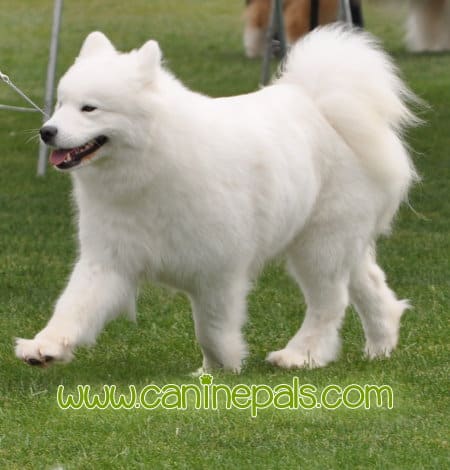
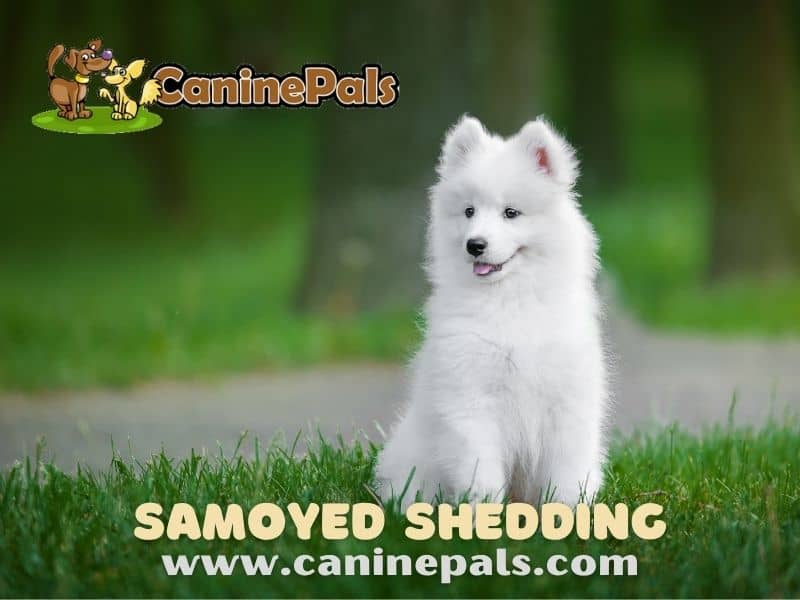
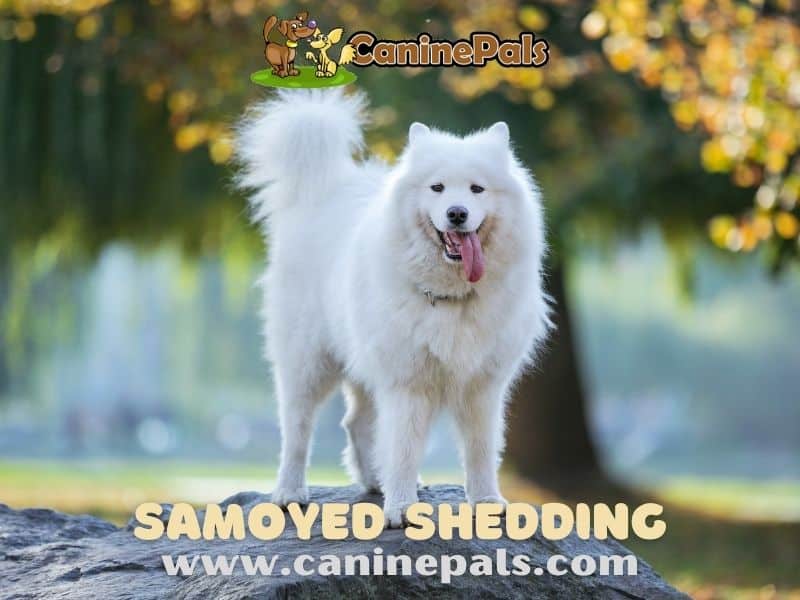
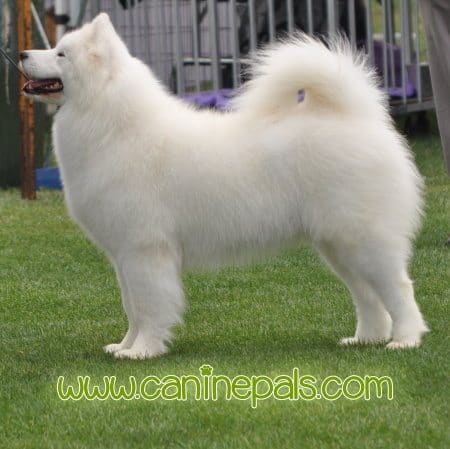
Samoyeds possess soft white fur, almond-shaped eyes over their complete white coat, and a cherubic smile. Along with a pristine white coat and large build, they are exceptionally loyal, intelligent, and social dogs with a loving nature towards humans.

Let’s discuss the point of concern – knowing Samoyeds are snow dogs, you must be wondering if Samoyeds shed. The answer is, yes, they do. A lot!

This is because nature has provided them with a double coat for insulation against extreme cold weather. As a result, the shedding lasts for 2 to 3 weeks in the Samoyeds, and they shed significant fur throughout the year apart from the shedding seasons.

Let’s dig up into how much do Samoyeds shed. What are the ways to handle Samoyed shedding dog hair? If you are considering having this adorable breed as your pet.
Samoyed Shedding
Samoyed Dog Shedding

History Of Samoyed Dogs

The Samoyed is an ancient working dog and is almost a primitive dog. There’s no mixture of fox or wolf in his breeding. The Samoyede people from Siberia developed this dog.

He was used to herding reindeer, haul sleds, hunt, and as a guard dog. The Samoyede people loved these dogs and allowed the dogs to sleep in their tents because they relied on the Samoyed for their very survival.

The Siberian Samoyed people anciently used Samoyeds to hunt down wild reindeer after the last ice age passed. The Samoyed people used to keep them as work resources and treat them kindly.

For this reason, the Samoyeds are dear to humans from an ancient era. They take part in family activities because they are trustworthy, harmless, and loyal dogs. These traits evolved in today’s Samoyed breed, which made people more attracted to them.

This dog breed is named after Nenets, aka Samoyeds of the Russian Tundra, who used them as work partners in herding and breeding the domestic reindeer for their survival. Samoyeds are genetically identical to wolves, and they have retained their genetic traits over all these years of selective breeding made by humans.

Samoyed’s evolution proceeded from Siberia in the late 19th century when the expeditions accompanied them on the trails. Samoyeds have the stamina to tolerate cold weather, which makes them a choice for hikers to take assistance from Samoyeds during long expeditions.

Antarctic Buck is the first-ever Samoyed dog brought to England for Queen Alexandra, a Samoyed enthusiast. Today, most American and English Samoyeds are the descendants of Queen Alexandra’s Antarctic Buck.

About the Samoyed

He’s a keen worker, intelligent, alert, loyal, and gentle. He’s recognized for his black lips that curl a little at the corners and look like a “smile.” He loves being busy and enjoys sledding, herding, pack hiking, agility, weight pulling, conformation shows, and anything else that’s required of him.

His heavy coat is resistant to the weather and is ideal for frigid climates. This dog’s fur color is biscuit, cream, biscuit, and white or white. He loves being with his family.

He may bark and chase things, so try to keep him occupied. He needs daily exercise, and his coat requires weekly brushing to stop it from matting and because he sheds dog hair.

Personality Trait Of Samoyeds

Samoyeds are energetic and make great walking and swimming companions. Their double coat makes them great partners to play in the snow. Because of their high energy expenditure, they need sufficient exercise and a healthy diet. They are intelligent focused on the given task but quickly get bored. Due to their cheerful nature, they are praised in public for pulling Santa’s sleigh and herding trials.

The height of the male Samoyeds ranges from 21 to 23 inches, and the height of a Samoyed female ranges from 19 to 21 inches. The weight ranges from 50 to 60 pounds in both males and females. It would help if you did not leave them alone as their personality and history don’t make them loners. Samoyeds love to be around family members.

They tend to remain close to their owner and don’t like to stay in the backyard or a kennel. Samoyeds are often kept as watchdogs because of their alertness and hunting traits. They can efficiently chase their prey and not hesitate to mingle with new people.

Inheritance, training methods, and environment are the factors that affect the temperament of Samoyed dogs. If you find a Samoyed playful and curious, he is well-trained or genetically has a good character.
Samoyed Shedding
Samoyed Dog Shedding

How Shedding Takes Place In Samoyeds?

The shedding in dogs depends upon the cycle of their hair growth. But do Samoyeds shed a lot? Yes, they do! This means that their fur grows (anagen phase) and is replaced with fresh fur (telogen phase) faster. They are large dogs with thick and profuse coats. This also makes them heavy shedders.

Their fluff is of more concern than low shedders, especially when the Samoyed shedding season begins, which is spring and fall. Nature has given them double coats because they are meant to survive below-freezing temperatures, which cannot happen without solid insulation. Here are some reasons why Samoyed dogs shed a lot:

  • As the Samoyeds were bred to hunting, their job was to hunt and guard in freezing cold temperatures. This breed is a reindeer herder and sled puller. This multipurpose dog breed has to work in the harsh cold weather, so nature has given them aid in the form of soft white double-coated fur, which works as an insulator for them. They possess a thick coat which means you have to be prepared for more shedding than usual.
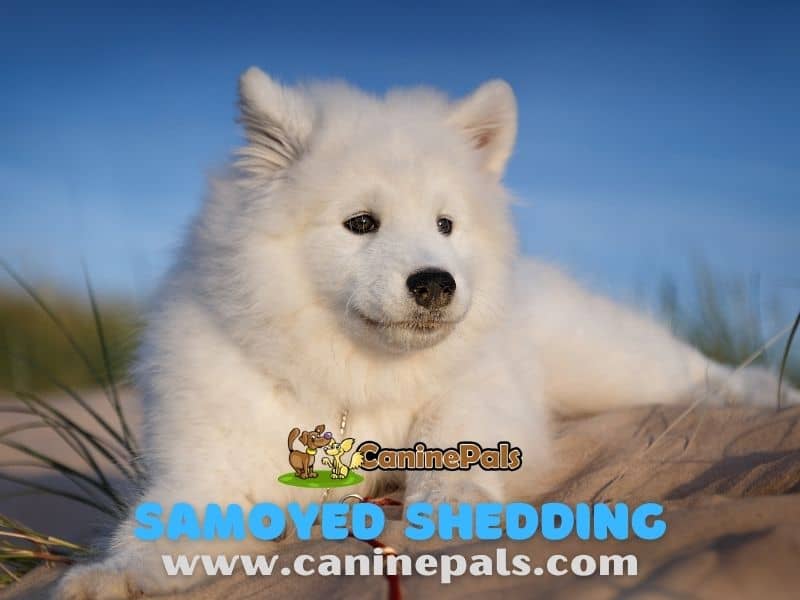
  • They have a unique coat that only 78 recognized dog breeds possess. The double coat of Samoyeds contains two layers, a top coat, and an undercoat. The latter is dense and short, which plays a role of an insulator and keeps them warm in freezing cold temperatures. The fluffy your Samoyed is, the denser his undercoat is. The topcoat contains long hair, which makes up a protective layer for their skin and is called “Guard hair.” The top coat has a biscuit and cream-like texture underneath.
  • Samoyeds shed excessively twice a year, and their double coat is termed the “Blowing Coat.” When fall is around the corner, Samoyed starts shedding on a lighter level which becomes excessive with the arrival of summer as their coat is getting prepared for the winter. Samoyeds shed the most during the spring season as they have to stay light in the summer to remain safe from over-insulation.
  • Samoyeds excessively shed when there is a lack of nutrition. Although it requires attentive observation when a Samoyed is shedding moderately or excessively, when you observe heavy shedding remains persistent, you should consider changing your dog’s diet.
  • There is an exciting feature about Samoyed’s fur. It’s that the mud doesn’t remain stuck to it stubbornly. It means that cleaning a Samoyed is not that much difficult. They are called “Teflon” dogs for this particular reason it is easier to rinse off the mud from a Samoyed’s fur.

How To Take Care Of A Shedding Samoyed?

With a Samoyed pal, you’ll need to keep high maintenance as they shed a lot. Even when it’s not their shedding season, you’ll need to brush them every day to collect and dump their white fur. This is how you are supposed to take care of your shedding Samoyed:

Brushing Daily

Brushing your dog daily keeps its long, medium-length hair detangled and hence prevents painful brushing for the next time and frequent trimming of your canine’s hair. If you don’t brush a Samoyed daily, its fur may stick to every household, which may include your bed, furniture, clothes, utensils, and carpets.

Brushing just doesn’t let the crazy hair spread all over as you remove it as a precaution and save yourself from a long hassle. When there is no shedding season, you can switch brushing your Samoyed from daily to multiple times a week. Samoyeds have a water-resistant double coat of fur for which a slicker brush or a metal comb will make a perfect tool.

These tools pass easily from the hard outer coat and the soft inner hair, removing the shedding hair along with debris.

Bathing

Maintenance of a Samoyed’s coat also requires bathing. It removes their old fur and aids the growth of the fresh ones. Usually, a Samoyed needs monthly baths because it doesn’t possess a foul body odor. But you should consider more frequent baths during the shedding season.

Beware! Frequently bathing your dog can remove natural oils and leave your canine’s skin dry, stimulating abnormal shedding. Instead, use a good quality dog shampoo that moisturizes the skin and doesn’t cause irritation.

Healthy Diet

Taking care of your canine’s intake plays a role in its shedding pattern. Dog food that contains cheap and low-quality ingredients promote heavy shedding. A diet is rich in vitamins, minerals, and the right amount of proteins and carbs that your dog needs help to develop a naturally healthy coat. Omega 3 and Omega 6 fatty acids are food fats that make the fur healthier and shiny.
Samoyed Shedding
Samoyed Dog Shedding

Are Samoyeds Hypoallergenic Dogs?

Hairless animals can cause allergies, and their skin becomes a carrier of germs. The agent which causes allergies is not fur. It’s the dander that resides in the animal fur, and most people are concerned about dog breeds being hypoallergenic. The allergy-causing agents could be urine or saliva as well.

The microscopic dander is the dead skin that your pet naturally loses, and the amount of shedding can estimate its quantity. But there is an interesting fact about Samoyeds: even if Samoyed shedding is too heavy, they are not regarded as allergy-causing dogs.

To make it clear that no dog comes with zero allergy-causing fur. The hypoallergenic term refers to the more tolerable pets by susceptible people than other animals. So if you get a hypoallergenic dog, this means that there are fewer chances of coughing, sneezing, and developing skin conditions.

However, these smiling sled dogs are considered hypoallergenic as their fur usually doesn’t stimulate the immune responses of sensitive people. You should spend some time with a Samoyed and observe how your body responds to it, in case you get one and are concerned about it being a whole allergen.

Is A Samoyed Dog Good To Keep?

Samoyeds love to contact humans as the nomads kept them as family members. So if you have kids and caregivers at home, you should keep this loyal animal for sure.

Their socializing ability is good with other pets, and they are likely to make friends. You can keep a Samoyed if you or your family are not allergic to fur because Samoyed shedding can pose health concerns to some people.

However, knowing that this breed sheds throughout the year and, at times, more excessively than usual, you’ll need to give good care, including daily brushing, bathing, and a habitat where your canine doesn’t get overheating.

Get a Samoyed only if you have time for its grooming and training. They have a great work ethic, make exceptional playmates, and are affectionate towards kids. Their upturned mouth signifies them as always happy dogs at which people can’t resist smiling.

However, bringing them to a hot climate will not be favorable for them as there are high chances of developing heat stroke due to the thick coats of fur on their body.

They are heavy shedders that should not be kept in small places like apartments. However, if you have a fenced yard or a garden where your Samoyed can cheerfully play and get trained, you can become a good Samoyed parent!
Samoyed Shedding
Samoyed Shedding

Blowing Off The Coat – Importance of Brushing Your Samoyed

To control Samoyed shedding, Samoyed owners need to brush them every day. However, brushing and grooming a Samoyed dog only once a week will only let you wrap excess fur from Samoyed shedding.

The peak shedding season in summer is when they need to shed their undercoat so that their body may minimize the insulation and keep them cool. As these dogs are meant to fight ice-cold temperatures, their coat is bi-layered and thick, which plays a crucial role in their survival in low temperatures. Therefore, the phenomenon of shedding in Samoyeds is called “Blowing off the coat”.

Keeping them in shade, exercising in the cold mornings and evenings, and daily brushing keeps your Samoyed safe from overheating.

The Final Word On Samoyed Dog Shedding

If you are going to become a Samoyed owner and keep this cute dog breed as a pet, you should know that they shed excessively in the shedding season to the extent their fur can fill several shopping bags (if you do not pay attention to grooming). All double-coated dogs shed, but not as much as smooth-coated dogs.

For being super loyal, playful, and affectionate, Samoyeds only require your little time to groom them and give them a favorable lifestyle in return.

Copyright CaninePals. All Rights Reserved.

References and Further Reading:
American Kennel Club Samoyed Dog Information
Samoyed
Samoyed
Samoyed
Samoyed


Do Rat Terriers Shed?

Do Rat Terriers Shed? – Here’s What You Need To Know.

Do you find rat terriers super adorable due to their small size? Well, this breed is playful & loving too. But do rat terriers shed dog hair lots? Are they hypoallergenic? You’ll get the answers right here.

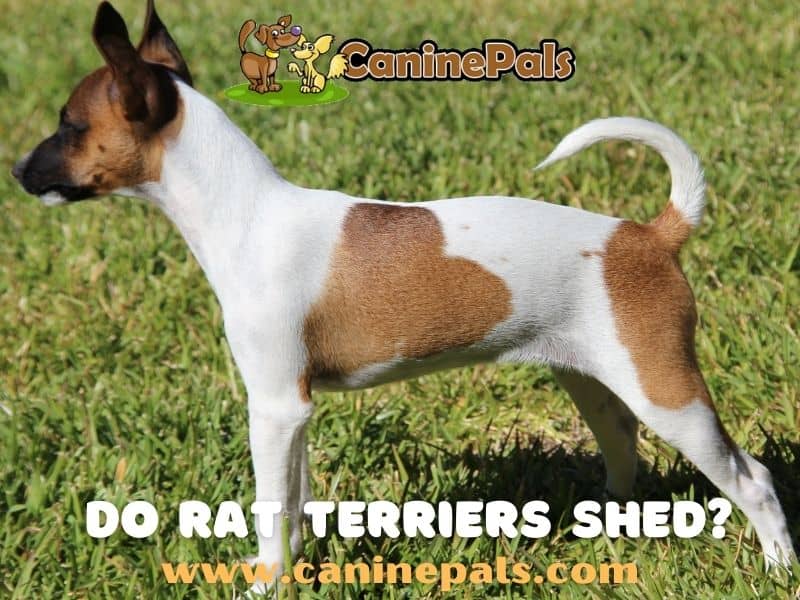
Small body with big ears – rat terriers are adorable dogs with a shiny, sleek coat of hair in a range of neutral tones. This breed is so competent at hunting that the farmers used to keep them as companions to protect their fields from rodents. Rat terriers are highly energetic and playful dogs with dexterous rat-catching and prey hunting abilities.

They are super active, fun-loving, and more peaceful than other terriers at the same time. This quality makes them great companions for kids. But this also points to the reason why they get easily bored, and you can’t let them be alone.

Your rat terrier may keep barking or start chewing the household out of anxiety if you leave him alone in the house. These little rat-catchers require socialization as they can’t bear the separation. So, if you are about to have a rat terrier, you must consider training him for dog-proof rooms and staying alone in the crate.

Now let’s discuss this shedding thing of this attention-seeking dog breed. Do rat terriers shed? Yes, they do, especially during spring and fall. There are times when you’ll need to brush him more often than usual to control rat terrier shedding. Let’s go deeper into the shedding phenomenon of rat terriers to keep your dog groomed.

Do Rat Terriers Shed?

Origin And History Of Rat Terriers

Rat terriers had their origin in America, sharing ancestry with many dogs. Their ancestry includes Fox Terriers, Manchester Terriers, Bull Terriers, and Old English White Terriers. The Rat Terrier is an American dog but was created from a mix of Fox Terrier, Beagle, Manchester Terrier, Old English White Terrier, Toy Fox Terrier, Italian Greyhound, and Whippet.

Their name comes from the rat-baiting history of the British Migrants. From 1910 through to the 1930s, he was among the most popular farm dogs and was used to hunt, catch rats and other creatures, and do other farm work. He can hunt below and above ground equally well and deal with vermin, rodents, and small game.

The breed is recognized as a hunter of the farms. In the 1910s and 1924s, used to keep them for hunting rats, squirrels, and rabbits due to their immense speed. But later, their need became limited in the fields as the owners started controlling rodents through rat poison.

This remained limited, even went rare by the 1950s, but there was a rise in the 1970s. The Decker strain became a famous breed that could hunt deers, wild pigs, and cougars out of rat terriers. By 1972, a hairless rat terrier female started the population of hairless rat terriers that are popular as the American Hairless Terrier.

You’ll find those little hairless rat catchers in standard and miniature sizes. Miniature Rat Terriers come in up to 13 inches and weigh around 10 pounds. At the same time, the standard size is up to 18 inches and weighs up to 13 pounds.

Temperament Of Rat Terriers

Although Rat Terriers love to socialize, they can be aloof to strangers. However, they get mingled in less time with the visitors. Therefore, you need to keep training them to socialize because if you don’t, they might become anxious upon seeing the strangers like other dogs. Being fearless can be a dangerous trait of Rat Terriers in that case.

Rat terriers are great family pets and love to be around their owners. They continuously look for activities to amuse themselves as they are highly energetic.

Do Rat Terriers Shed?

Coat & Color Of Rat Terriers

His coat color can be any pied patterns. Pied is when large colored patches are mixed with white. The primary colors are fawn, lemon, tan, blue, apricot, chocolate, black or red, and he may have tan points.

He’s athletic, elegant, playful, and loyal He is happiest when with his family. He’s easy to train and very intelligent. He does well in obedience and agility events and needs plenty of exercise. His coat sheds seasonally and needs to be brushed with a rubber curry mitt or soft brush.

Rat Terriers have a sleek, dense, and shiny coat of dull hues ranging from white and rust to black, brown, and red. There are also lemon, chocolate, and orange as middle tones.

Intermittent spots, white marks, and dark patches are also found in the fur of rat terriers. However, no matter which color a rat terrier has, it does have a typical white mark on the fur.

However, their dense fur is quite manageable due to the short size of rat terriers and the presence of a single coat. The fur is easily shredded on the floor, and you’ll find bunches of hair if you do not frequently brush your terrier’s hair. Brushing makes it easier for you to collect your dog’s fur for once rather than roaming around the house with a broom or cleaner.

In the following sections, you’ll explore how much rat terriers shed along with their shedding phenomenon.

Shedding Phenomenon in Rat Terriers

You must be wondering whether rat terriers shed a lot. The answer is No! We can say that they shed moderately throughout the year. Let’s discover how:

Seasonal Rat Terrier Shedding

The light fur that your terrier developed in the summer is shed faster than usual during spring and fall. The reason is that the skin of rat terriers is replaced with thick and more dense hair during this season to keep them insulated in the winter season.

On the contrary, the opposite happens when winter says goodbye. Again, the rat terriers are ready for seasonal shedding of loose hair, but this time for a less dense and lighter coat.

Frequent Shedding

Female rat terriers shed regardless of the season. That is when their heat cycles are over.

The shedding phenomenon occurs in three stages:

Anagen: Growth of newly appeared hair.

Catagen: When hair growth ends. This takes a period of 10 to 20 days.

Telogen: When the fur starts shedding and becomes ready to replace a new coat.

This phenomenon takes place in all terriers. However, shedding frequency is more minor in miniature rat terriers as they are smaller in size.

How To Control Shedding In Rat Terriers?

Shedding dog hair in rat terriers is a normal process for which you don’t need to worry. You only have to put some extra effort into grooming your dog. You can achieve less shedding by brushing your dog weekly, giving him a proper bath, and taking care of the diet.

However, you’ll need to be a little more conscious of your dog’s fur during the spring season, as this is the peak time when your terrier will shed a little extra hair.

Also, taking care of a rat terrier during the peak shedding seasons tells the quality of new hair. Following are the ways with which you can control shedding and make sure that the next coat comes healthier:

Brushing Them Weekly

Brushing your rat terrier frequently will reduce unwanted shedding in the home and make your dog less irritable. You should choose a brush that goes suitable for your terrier.

A natural bristle brush or a slicker brush both are good to comb a shedding rat terrier. However, a slicker brush is a better choice. It can be used along with grooming gloves if you are a new dog owner. Slicker brushes are easy to use and remove dead hair quickly and trouble-free.

Taking Care Of Cleanliness

Bathing is preferred less often in rat terriers. You are bathing them once in 4 weeks comes under best practices. However, it is not a hard and fast rule. If your dog rolls in the mud and messes up himself, then you must keep cleanliness on top.

Bathing your rat terrier frequently favors dryness and removes the layer of natural oils from the coat. This leads to damage of hair follicles, dry skin, and even abnormal shedding. Using a suitable dog shampoo and conditioner and avoiding the chemical containing human shampoos comes under the best hair care practices for your rat terrier.

Make sure that your dog goes outdoors after getting thoroughly dried. Otherwise, he may develop stressful skin.

Maintaining A Healthy Rat Terrier Diet

Feeding your rat terrier with protein and omega 3 containing fatty food ensures the development of healthy skin and a healthy coat. Cheap dog food should be avoided to prevent allergies and poor hygiene. Keep the diet natural to achieve good results.

Do Rat Terriers Shed?

How To Groom Your Rat Terrier?

Grooming a rat terrier is not a big struggle as you don’t have to bathe them more often. They only need weekly brushing with a little more dedication in the spring and fall. However, grooming a rat terrier doesn’t stop only on bathing brushing.

Maintenance Of Rat Terrier Oral Hygiene

It would help if you also kept cleaning your teeth at least thrice a week to maintain oral hygiene. This prevents the chances of developing gum diseases.

Maintenance Of Rat Terrier Ear Hygiene

Grooming your dog also requires the maintenance of ear hygiene. Check its ear once a week for redness and smell. This might indicate infection. Damp a cotton ball gently to clean them and use a ph-balanced ear cleaner superficially to clean the ears of your dog.

Other Rat Terrier Considerations

The short size of a rat terrier is a plus in making their grooming easier, even when the shedding period is there. You only need to focus on brushing weekly with a rubber curry comb (optional) to make the dead hair go away and your dog looks tidy.

Do Rat Terriers Shed?

Does Dog Shedding Bring Allergies?

Although none of the dogs are completely hypoallergenic, we definitely do not call rat terriers hypoallergenic. Obviously, they shed, and the fur contains dander that is responsible for allergies. The dander contains minute protein fragments that trigger allergic reactions in sensitive individuals. It can also travel through the furniture, air, and entire house.

But the severity of allergy caused by a dog’s dander varies from person to person. Just because a rat terrier sheds doesn’t mean susceptible people have harm from them. They are prone to get allergic reactions through any pet’s fur and mucus.

There is good news for people concerned about rat terrier dogs being hypoallergenic that there is a dog breed called poodle who shed to a minimal extent. This makes poodles hypoallergenic and favorable for sensitive people.

Also, if you keep a miniature rat terrier, the chances of developing allergies are least because they shed less than other breeds. They weigh 10 pounds and are 13 inches long, which is less surface area for shedding as compared to the standard breed that is up to 18 inches.

Should You Consider Having A Rat Terrier?

The rat terrier dogs were used historically to hunt down rats from the fields. They even do rat-baiting, which is a blood sport. Whether or not you are considering keeping a rat terrier for this specific purpose, I suggest keeping it! Rat terriers are highly energetic dogs who are friendly and love to stay around people.

If you reside in an apartment or a less spacious house, rat terriers will make a great companion for you! However, if you have a mansion, villa, or big house, you may prefer a miniature rat terrier or a standard one. The reason is that they shed less often and suit best to those who are concerned about shedding and dander.

Frequent play sessions, daily walks, and socialization is favorable habitats for a rat terrier to grow healthy. Rat terriers can be friends with any dog, even cats. There is no harm to the cats in raising them along with rat terriers, as once they get familiar with the cats, they do not take them as prey. Bringing a rat terrier to a home full of kids would be a gift to them!

Final Word on Rat Terrier Shedding

The small-sized rat-catchers are expert hunters and cheerful dogs who need your attention by nature. Therefore, spending time with them, not keeping them alone as per their natural trait, and maintaining their hygiene are the practices that a good owner should adopt.

The dense hair of an American terrier keeps shedding throughout the year, but the process speeds up during spring and fall. Shedding also occurs after heat cycles in female rat terriers.

You can groom your rat terrier with less worry by brushing it once weekly using a slicker brush or a shedding tool. In addition, rat tarrier’s small size makes their grooming less worrying and more engaging.

Unless you are not sensitive to allergies, a rat terrier could be your best companion as it is a loving and playful breed that would love hunting for you!

Copyright CaninePals.Com. All Rights Reserved.
References and Further Reading:
American Kennel Club Rat Terrier Information
How Much Does A Kangal Dog Cost?

How Much Does A Kangal Dog Cost?

Buying a Kangal dog is a great deal as this breed is super loyal and promising to protect your ranch or farm. If you are looking for how much does a Kangal dog cost? You are at the right place.

Powerful, protective, intelligent, heavy-boned – Kangal is a calm and contented hound dog known as a guardian against predators. A Kangal stays aloof towards new faces but is loyal towards the owners.

Keeping a Kangal dog in your apartment is debatable due to its aloof nature. Dogs like these are extremely powerful and always ready for battle when the fight comes. I guess it’s their endurance that makes them great at what they do.

They grab the attention by their size. Broadhead with dropped ears, a dense double coat, a black coloured patch masks the mouth, and a typically curled tail; Kangal shepherds are born to be the protectors!

Kangal dogs are also called Anatolian shepherds due to their origin from Turkey as livestock guardian breeds. Depending on their bloodline, a Kangal shepherd dog may often cost higher. It’s a well-known breed but only among enthusiasts. This factor also affects a Kangal shepherd dog’s availability and hence cost.

This article aims to give you an insight into how much does a Kangal dog cost. Read on if you are making up your mind to own a Kangal shepherd.

How Much Does A Kangal Dog Cost?
How Much Does A Kangal Shepherd Dog Cost?

Kangal Dogs – Temperament, Appearance, & History

History suggests that Anatolia is the hometown of these dogs. They are often called Anatolian shepherds because of their origin in Turkey. To date, Anatolian shepherds are the symbol of pride to the residents of Turkey. Nomads also keep the Kangal dogs as the protectors of domestic animals like sheep and goats. Therefore, other name for Kangals is the Turkish Shepherd dog and the  Anatolian Shepherd Sheepdogs.

An adult male Kangal weighs from 50 to 66 kgs, and a female weighs from 41 to 54 kgs. No matter how large their breed is, their bony skeletons render super-fast speeds of 50 km/hr. This anticipates their chasing ability – another reason for naming them, protectors.

A Kangal shepherd would never allow a stranger to cross the barrier when their owner is not around. They do not trust a trainer easily, which is why one might face challenges in training a Kangal dog. However, this animal is super loyal to its owner.

How Much Do Kangal Puppies Cost?

How much is a Kangal dog? This must be your next concern after checking on its nature and breed. Kangals remain in demand by the ranch and farm owners because of their livestock guarding ability. This nullifies the fact that the Kangals are not as popular as other breeds.

If you buy a Kengal shepherd from a recognised breeder, it will cost you between $800 to $1300 on average. And if it belongs to a superior bloodline, a Kangal puppy price will be from $1700 to $5000. However, the factors that affect a Kangal breed price are discussed in the next listings

Factors Which Affect A Kangal Puppy Price

Kangals are not cheap. But what makes a Kangal puppy price high? Here are some factors which affect the cost of a Kangal and ultimately help you decide better.

Reputable Kangal Dog Breeders?

The breeder sells you a dog at expensive rates if he is recognised for breeding the champion dogs. If you get a Kangal dog from a reputable breeder, the cost would also cover the professional expertise of a breeder in raising the puppy. These breeders are often members of the kennel clubs and are well-known in their businesses.

So from a professional point of view, their demanded prices directly affect the overall market cost of a Kangal Shepherd Dog.

What is the Dog’s Pedigree?

A Kangal’s bloodline directly affects its cost. If a pair trained for events, performances, and conformation shows, the breed would be sold higher than usual. Comparatively, you’ll get companion dogs at less high prices.

What’s the Gender?

The breeding capability of the female Kangal dogs makes them pricey. As a result, many breeders often save their female Kangals from spaying and grow their businesses from the litter.

What’s the Health Guarantee?

This factor again includes the reputation of a breeder. A recognised, reputable breeder will provide you with a Kangal with a health guarantee and medical certification. A non-congenital healthy Kangal puppy will cost you greater than usual. You can also take a check on the puppy’s health by genetic testing, which ultimately requires more money.

Do you need a Trainer?

Kangals taken from the professional breeders are usually trained for socializing. However, if you still need to get the puppy trained according to your preference, owning a Kangal dog will add more expense.

How Much Does A Kangal Dog Cost?
How Much Does A Kangal Shepherd Dog Cost?

Costs After Getting A Kangal Shepherd Dog

Initial Cost

The cost of being a paw parent is not only limited to buying one. No matter how much is a Kangal puppy, you need to spend on its good care. Get the puppy essentials first before bringing them home. The average initial cost of parenting a Kangal shepherd is roughly $300 to $350.

The following table summarizes the average prices of the essential supplies your dog may need. Let’s check.


Expense Average Cost
Good quality dog food $85
Leash and collar $20
Water Bowl $20
Chew Toys $25
Dog Crate $44
Dog Bed $40
Training Treats $25
Dog’s shampoo $10
Brush $15
Poop Scooper $20
Urine Cleaner $25

This is the initial cost or one-time expense after bringing a new Kangal home.

Later Expenses

Veterinary visits, emergency treatment, vaccination, and medications lie in the later and gradual expenses of your dog. A reckoning estimates a sort of annual expenditure required to raise your Kangal dog.

Here is a table showing the average yearly cost summing up other considerations while keeping a Kangal dog.

Expense Average Cost
Vaccination $100
Annual Food Intake $945
Deworming $50
Medications (flea, tick etc.) $200
Pet Insurance $240
Pet License $20
Veterinary visits $400


Some services like deworming and veterinary visits are optional at the initial stage. However, such expenses can be minimized if you get your Kangal shepherd from reputable breeders who make sure to provide vaccinated and healthy pets.

The monthly expense is not very costly if you take care of your Kangal in an affordable way. The average monthly expense in taking care of a Kangal shepherd is $180 to $190, depending on the extent you want to make premium choices.

Potential Expenses in Keeping A Kangal Dog

This section covers unexpected situations like emergencies or other necessities for your Kangal dog, which you may consider in future. You can read them in the following listings to budget potential expenses.

  • Hiring a Dog Walker: The dog walkers charge around $15 in helping your dog not skip its routine walks. You may need a dog walker when you become too busy to take your dog out for a walk.
  • Taking Aid From Daycare: Daycare services are helpful when you are not available at home to take care of your dog. This ensures that your pet is being taken care of in a good environment. Daycare services also cost $15 on average.
  • Kennel Fee: Letting your pet compete in the conformation shows and events help them socialize. Many owners love to take them to such events. If you are one of those who love to portray your dog’s social skills, a kennel registration club will allot you $90 for signing up for registration.
  • Physical Grooming: Getting your dog groomed from a salon is totally optional. If you want your Kangal to be groomed by a professional’s hand, spend $35 on a dense haired Kangal shepherd and let it enjoy the changes.
  • Behavioral Grooming: Special skills adaptation and behavioral grooming often require a trainer if you can’t spend much time with your Kangal dog. The trainers charge $100 minimum to train the dogs with special skills.
  • Health Concerns: A chronic disease or unexpected medical condition may appear during the lifespan of your dog. Keep a figure of $150 to $1000 ready for such situations.

Protips For Money Saving While Buying A Kengal Dog

You can get a Kangal puppy at reasonable prices or save initial expenses after getting them. Follow these listings to know-how.

Adopting a Kangal from Rescue

Adopting a dog from a rescue is a great money-saving idea if you want to give a home to neglected dogs. The shelters and rescue homes provide Kangals with a minimum adopting fee ranging from $300 to $400. It’s a roughly researched range that excludes shipping and other services.

Their behavior and socializing abilities must be your concerns if you look up to adopting Kangals. Well, we can thank the shelter homes for this. These shelter homes ensure that the dogs are vaccinated against congenital diseases and work on their socializing ability.

The volunteers subject the Kangals to adoption after working on their behavior and health concerns.

Training a Kangal at Home

Train your dog at home if you can. Hiring a trainer is a privilege for your dog as it gets full-time attention and supervision. But, it costs you a good amount of money in hiring a full-time professional trainer.

So to save your pocket, you spend time with your pet, parenting it with basic behavioral skills.  Learn how to groom your dog and look for an affordable veterinarian if you want to save the initial expenses.

Prepare Raw Meal

Preparing a raw diet for your puppy is a great money-saver! You can learn many recipes and techniques for preparing a natural and healthy diet for your dog. You can also buy kibbles for being frugal.

How Much Does A Kangal Dog Cost?

Health Concerns and Treatment Cost

The average lifespan of a Kangal dog is 12 to 15 years, depicting their good resistance. That is why the farmers prefer keeping Kangals to protect their fields.

Being living creatures, they may also be exposed to certain diseased conditions, which give an idea of what kind of expenses you should expect while parenting a Kangal dog.

Following are the diseases seen in Kangal dogs, and you should also examine them while buying one.

  • Lipoma, in general terms, is a benign fatty tumor that develops in middle-aged Kangals. It can develop anywhere in the body. Benign tumors are not life-threatening but cause discomfort and crankiness in your dog. If you remove a lump, it will cost you around $200 to $500.
  •  Hip Dysplasia is nothing but the dislocation of the hip joint. One or two veterinary visits may treat a minor deformity of the hip joint. But if it becomes severe, the owner might need to spend around $3000 to $7000 to restore it.
  • Entropion is a hereditary disease in which a dog develops an abnormal eyelid. The eyelid is rolled inward so that the skin touches the cornea. Surgery may cure it upon the expenditure of $500 to $1509.

These chances of sooner or later expenses are minimized if you buy a Kangal dog from a reputed breeder.

Kangal Dog Price Conclusion

So this was all about how much do Kangal puppies cost. Parenting a dog demands you to be financially and mentally prepared to raise a guardian dog breed of the superior bloodline. From the above listings, you might have gotten an idea that it requires more stability in taking care of a Kangal shepherd than buying it for once.

The expenses on medications and frequent vet visits can be minimized by preferring the quality of life you are providing to your pet. The lifestyle should include a healthy diet, a friendly environment, and behavioral training.

In the end, a Kangal dog is a great choice if you own a lawn or a ranch. This breed is a great companion of humans, being calm and protective in nature and powerful in appearance.

Copyright CaninePals.Com. All Rights Reserved.

Norwich Terrier

Are Norwich Terriers Hypoallergenic?

The Norwich Terrier is a breed of dog that is considered by many to be hypoallergenic. However, we’ll look more closely at this because not everybody agrees. Hypoallergenic means they do not produce the same amount of allergens as other dogs, which makes them more suitable as pets for people who are allergic to dogs.

The term “hypoallergenic” is used to describe substances or animals that do not cause allergic reactions in people who are sensitive or allergic to them. The term “hypoallergenic” does not refer to the ability of an animal or substance to reduce the symptoms of allergies, but rather it refers to their ability to prevent allergies from developing in those who are sensitive or allergic.

Do Norwich Terriers Shed?

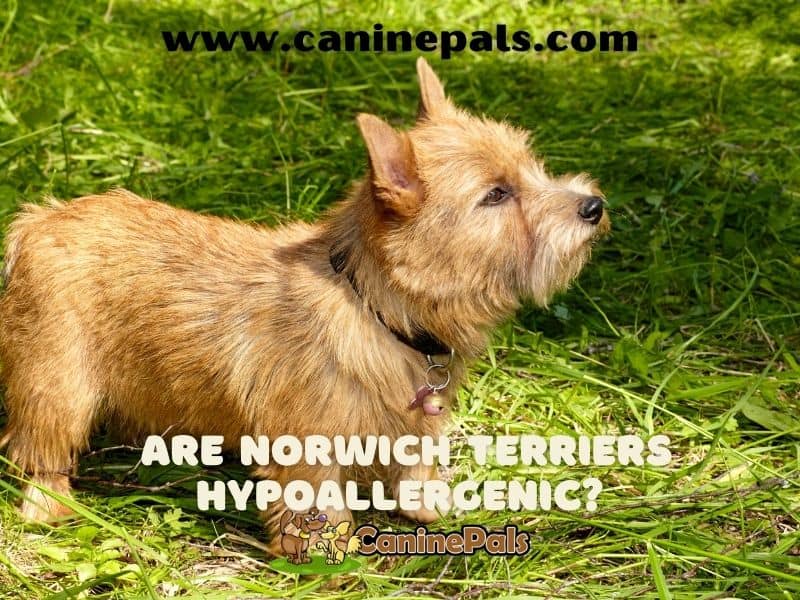
Norwich Terriers are a small, compact dog breed that has a double coat that is a medium shedder of dog hair and this can cause allergic reactions in people with sensitive skin.

Norwich Terrier
Norwich Terrier

What Makes a Dog Hypoallergenic?

A hypoallergenic dog breed is one that has been bred to produce little or no dander. The breed’s coat is usually wiry and sheds less than most other breeds.

There are many factors that make a dog hypoallergenic, including the breed, coat type, and shedding habits.

A dog is considered hypoallergenic if it does not shed hair or dander. This means that the dog will not cause an allergic reaction in people who are allergic to animal hair or dander.

There are many breeds of dogs that are considered hypoallergenic, but there is no one breed that is universally accepted as being hypoallergenic.

There are many breeds of dogs that are considered hypoallergenic. These include the Poodle, Bichon Frise, Maltese, and the Havanese.

Why are Some People Allergic to Dogs?

Researchers have found out that dog allergies  are caused by a protein found in the dog’s saliva and skin cells. This protein is also present in the dog’s dander and is often spread throughout the house or on furniture.

Some people are allergic to dogs because they have a hypersensitive immune system. This means that their immune system is overactive and reacts to things that it shouldn’t. When this happens, the body releases histamine which causes the symptoms of an allergic reaction.

The most common symptoms of an allergic reaction are:

– Sneezing

– Runny nose

– Itchy eyes

– Hives or rash

Why Norwich Terriers are the Perfect Dog for People with Allergies

One of the most common allergies in people is dog allergy. The good news is that there are breeds that are perfect for people with this allergy. One of these breeds is the Norwich Terrier.

Norwich Terriers have a medium shedding coat, which means it doesn’t shed too much dog hair and dander, which is what causes allergies in most humans. It also has a hypoallergenic coat which means it doesn’t have any fur or dander to cause an allergic reaction.

Norwich Terriers are a small breed of dog that is known for its medium, wiry coat. The hair on the head and ears is shorter than the rest of the body.

The Norwich terrier has a double coat that consists of an outer layer of coarse, straight hair and an undercoat that is soft and dense. The outer layer protects the dog from harsh weather conditions while the undercoat provides insulation to keep it warm during cold weather.

Norwich Terriers require to be brushed regularly to prevent matting and tangles from forming in its fur. It also needs to be trimmed every six months or so to maintain its shape and appearance.

The coat of a Norwich Terrier is typically short and smooth. The coat is usually black, but can also be brown, tan, or white. The hair is usually short but can grow to be longer if it is not trimmed regularly.

What is the Evidence that Norwich Terriers are Hypoallergenic Dogs?

Norwich Terriers have a double coat which means they shed dog hair less than other dogs because the undercoat is not as thick as the topcoat. The topcoat sheds more because it has to protect the undercoat from dirt and debris.

There doesn’t appear to be much in the way of scientific research to confirm that the Norfolk terrier is truly hypoallergenic, but many claim they are as close as any dog can come to this.

Norwich Terriers are is classed as a medium shedding dog breed and requires lots of grooming. It does not make claims this dog breed can be included in those considered hypoallergenic dog breed.

Also, on the American Kennel Club website,  Norfolk Terriers are described as requiring frequent grooming. There is also other useful information about this breed of dog that is so popular.

Are Norwich Terriers Hypoallergenic?

What is the History of the Norwich Terrier?

The Norwich Terrier is a small breed of dog that was originally bred in the 19th century for hunting. The dogs were bred by crossing the now extinct Black and Tan Terrier and the Norwich Terrier.

The Norwich Terrier is now primarily considered to be a companion dog, but they still make good hunting dogs as well as watchdogs.

The Norwich Terrier originally came from East Anglia in England and was used as a barnyard ratter. He’s among the smallest of working terriers. He flushed out foxes and other vermin from wherever they hid. He’s a great hunter as well as an ideal pet. There used to be two different ear styles but now he only has upright ears. He has strong hunting instincts so he needs to exercise in a fenced enclosure or on a leash to stop him running off in search of prey.

About the Norwich Terrier

His wiry coat is resistant to the weather and can be coloured grizzle, tan and black, wheaten or red. He can live in the city or country equally well as he’s highly adaptable. His coat needs to be groomed regularly, including stripping and brushing. His height is always less than 10 inches.

Norwich Terrier Hypoallergenic Conclusion

The Norwich terrier is one of the smallest terriers according to the American Kennel Club and as such, they shed less hair than larger dogs. The kind of hair they have and the lack of sudden seasonal shedding mean that they have less hair which drops off the dog and floats around the home. The Norwich terrier is more hypoallergenic than most other breeds but can never be totally hypoallergenic because shedding does occur if only at low levels.

It is not the hair that causes allergies in people but the dander, or dead skin cells which become trapped in the falling fur from dogs. Within these skin cells is a protein from the dog’s saliva which is the real culprit for the allergies that sensitive people have as a result of dog shedding. 

Any person who is concerned about a possible allergic reaction to this dog should first test spending time with one and make sure they do not suffer allergies before getting their own Norwich terrier.

Copyright CaninePals. All Rights Reserved.

References and Further Reading:
American Kennel Club Norwich Terrier Information
Leonberger Size Comparison Details

Leonberger Size Comparison Details

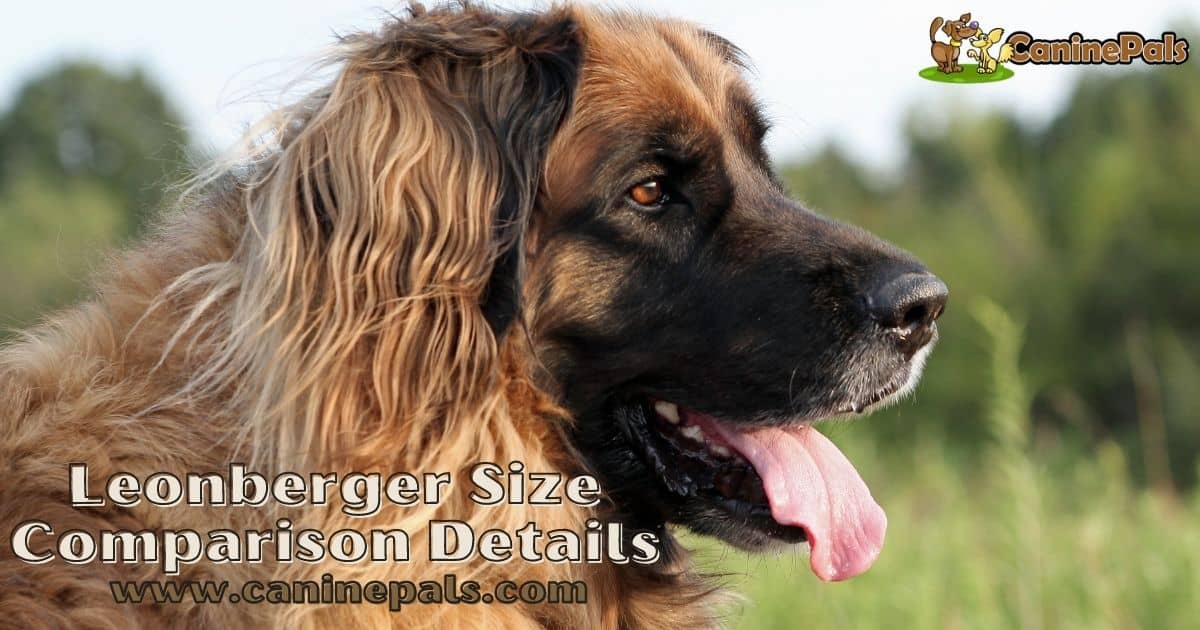
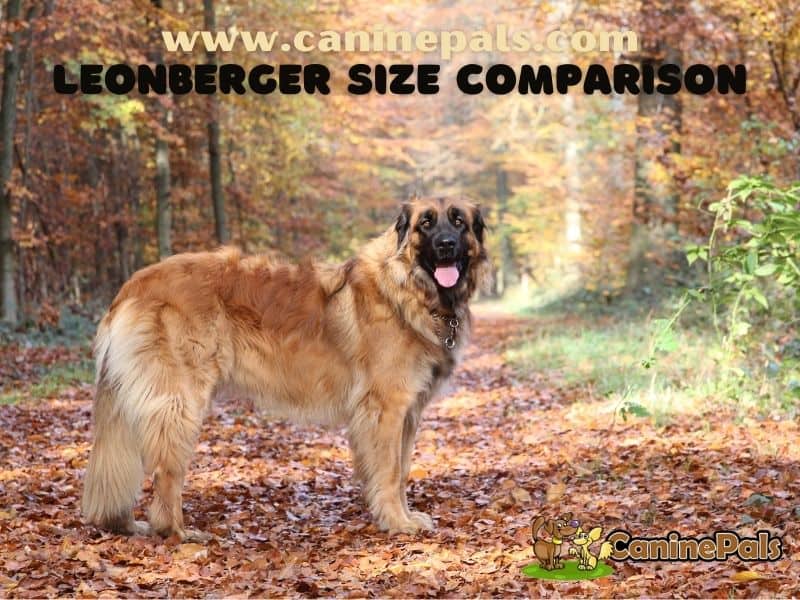
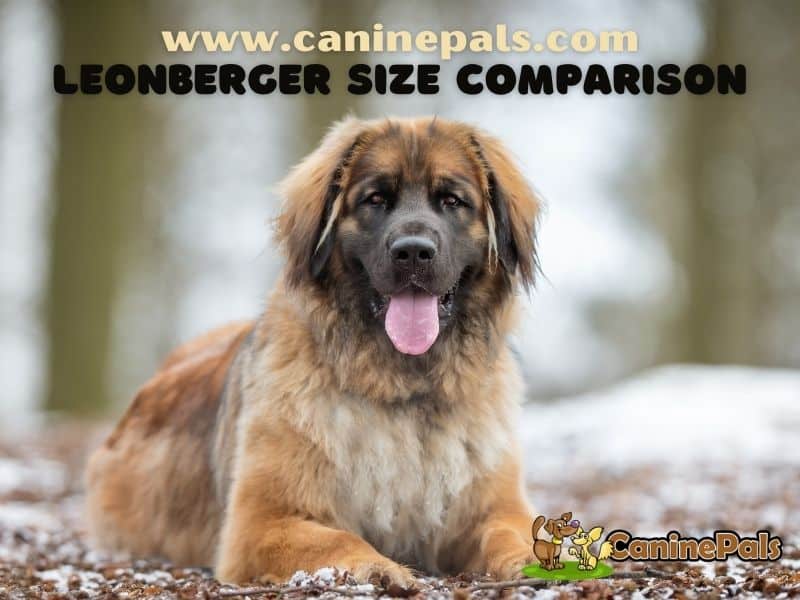
The Leonberger is a giant dog breed with a thick mane around their necks that favors a lion. They are certainly majestic large dogs – a true sight to behold. But do you know just how big these lovable giants are? Find out as we explore details of Leonberger size comparison. 

Just a quick glance shows that it’s not surprising that the Leonbergers are one of the largest dog breeds around. After all, as if their size alone wasn’t large enough, they look like a lion with their thick mane and fur!

Despite their enormous size, they are known for being very gentle and patient in nature and make great companion dogs. They are among the most affectionate of all dog breeds around and are known for being great with families and other dog breeds.

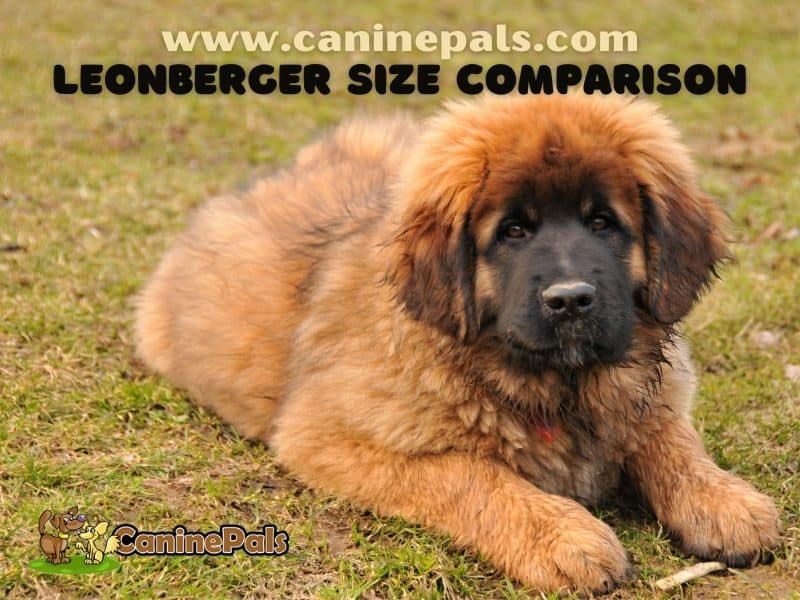
Leonberger Puppy Size

Let’s have a look at the Leonberger puppy’s average weight:

Leonberger age Leonberger puppy weight
3 Months 36.6 – 50 pounds
4 Months 48.7 – 66.6 pounds
5 Months 58.6 – 80.9 pounds
6 Months 68.1 – 94.5 pounds
7 Months 74.5 – 106.9 pounds
8 Months 81.4 – 117.3 pounds
9 Months 87.5 – 123.7 pounds
10 Months 93 – 130.1 pounds
11 Months 94.7 – 139.3 pounds
12 Months 98.7 – 146.7 pounds

Figuring out their weight will help you to track their development every step of the way. Every Leonberger puppy is unique and their weight might vary. The important thing to note is that your puppy is making progress. Don’t worry if your Leonberger puppy doesn’t follow this weight formula exactly, though. As long as your furry child seems healthy, energetic, and active, you don’t need to worry.

Leonberger Size Comparison Details
Leonberger

How Big is a Leonberger?

According to the American Kennel Club, the Leonberger breed is a lush-coated giant dog breed of German origin. This huge and powerful dog is also known for his aristocratic grace and elegance. Leonberger males are bulkier and taller than their female counterparts.

Let’s have a look at American Kennel Club Leonberger’s average height and weight.

  • Average Height: 
    • Males: 28-31.5 inches
    • Females: 25.5-29.5 inches
  • Average Weight:
      • Males: 110-170 pounds
      • Females: 90-140 pounds
  • Life Expectancy: 7 years 

Pro Tip: To get an idea of how big the Leonberger will get is to take a look at their parents. Usually, Leonbergers will be an average of both their parents’ size.

Leonberger Size Comparison
Leonberger

Human vs. Leonberger Size Comparison

Wondering just how you would size up to these giant giants? Leos can be taller than a human when standing on their hind legs!

Leonbergers weigh as much as, if not more than, the average full-grown human. However, if you were to place that same Leonberger on the scale with the average 3-year-old, it would take nearly 6 children to weigh the same as Leo. Wow! That’s an entire pre-kindergarten class!

Leonbergers vs Giant Breeds – Size Comparison

The Leonberger dog breed was developed through the combination of a Saint Bernard and a Newfoundland to create a truly majestic companion fit for royalty.

While the Leonberger may not be the biggest of all dog breeds, there’s no denying that these gentle giants are truly majestic and giant! And this Leo size comparison will show you just how true that is by comparing them against Great Danes, Kangal Dog, Newfoundland, and many more dog breeds.

Leonberger vs Saint Bernard

  • Leonberger Height: 28-31.5 inches
  • Leonberger Weight: 110-170 pounds
  • Saint Bernard Height: 25.5-27.5 inches
  • Saint Bernard Weight: 110-200 pounds

Leonberger vs Kangal Dog

  • Leonberger Height: 28-31.5 inches
  • Leonberger Weight: 110-170 pounds
  • Kangal Dog Height: 28-34 inches
  • Kangal Dog Weight: 85-150 pounds

Leonberger vs Newfoundland Dog

  • Leonberger Height: 28-31.5 inches
  • Leonberger Weight: 110-170 pounds
  • Newfoundland Height: 26-28 inches
  • Newfoundland Weight: 100-150 pounds

Leonberger vs Great Dane

  • Leonberger Height: 28-31.5 inches
  • Leonberger Weight: 110-170 pounds
  • Great Dane Height: 28-32 inches
  • Great Dane Weight: 110-175 pounds

Leonberger vs Bernese Mountain Dog

  • Leonberger Height: 28-31.5 inches
  • Leonberger Weight: 110-170 pounds
  • Bernese Mountain Dog Height: 23-27.5 inches
  • Bernese Mountain Dog Weight: 70-115 pounds

Leonberger vs Bullmastiff

  • Leonberger Height: 28-31.5 inches
  • Leonberger Weight: 110-170 pounds
  • Bullmastiff Height: 24-27 inches
  • Bullmastiff Weight: 100-130 pounds

Leonberger vs Dogue de Bordeaux

  • Leonberger Height: 28-31.5 inches
  • Leonberger Weight: 110-170 pounds
  • Dogue de Bordeaux Height: 23-27 inches
  • Dogue de Bordeaux Weight: starts at 100 pounds

Leonberger vs Cane Corso

  • Leonberger Height: 28-31.5 inches
  • Leonberger Weight: 110-170 pounds
  • Cane Corso Height: 23.5-27.5 inches
  • Cane Corso Weight: 90-120 pounds

Leonberger vs Great Pyrenees

  • Leonberger Height: 28-31.5 inches
  • Leonberger Weight: 110-170 pounds
  • Great Pyrenees Height: 25-32 inches
  • Great Pyrenees Weight: 85-160 pounds

Leonberger vs Neapolitan Mastiff

  • Leonberger Height: 28-31.5 inches
  • Leonberger Weight: 110-170 pounds
  • Neapolitan Mastiff Height: 24-31 inches
  • Neapolitan Mastiff Weight: 110-150 pounds

Leonberger vs Tibetan Mastiff

  • Leonberger Height: 28-31.5 inches
  • Leonberger Weight: 110-170 pounds
  • Tibetan Mastiff Height: 24-26 inches
  • Tibetan Mastiff Weight: 70-150 pounds
Leonberger Size Comparison
Leonberger

When do Leonbergers Stop Growing?

Leonbergers go through distinct developmental periods just like other dogs do. Of course, the larger the dog, the longer it takes for him to grow into his final size. The first few months of a Leonberger’s life are a time of rapid development. However, Leonbergers continue to grow and develop much longer than many other dog breeds.

Both male and female Leonbergers will reach a full height at about 18 – 22 months. They still have some weight to gain before they have reached their adult bulk. Leonbergers continue to develop muscles and gain healthy bulk up to the age of about 3 years. Usually, Leonbergers will attain mental maturity when they are around 3 years of age with the proper training in place.

Remember that these are averages and may vary slightly. Female Leonbergers don’t get as bulky as males. Females usually reach their final size before males do because they run slightly smaller than their male counterparts.

What if My Leonberger Puppy is Losing Weight?

Healthy and active Leo puppies should never lose weight. If your Leo puppy is losing weight, it might be a sign of an underlying illness. It’s best to talk to a veterinary professional and address this issue immediately. 

Health Risks During Leonberger Growth

Leonbergers are generally healthy dogs. However, some conditions may affect them during growth. These health concerns include: 

  • The Leonberger breed has a high incidence of orthopedic problems such as hip and elbow dysplasia, osteochondritis dissecans, and panosteitis.
  • Eye diseases including cataracts, entropion, and ectropion are a cause of concern.
  • You can expect that your Leonberger may suffer from bloating. This is where your stomach twists and there is gas trapped inside.
  • All kinds of parasites and worms can invade your Leonberger’s body, inside and out.

Not all of these conditions are detectable in a growing puppy and some don’t appear until later in life. An overweight Leonberger puppy might become obese in adulthood. Also, there are health risks including arthritis, diabetes, or heart problems, associated with obesity.

Leonberger Size Comparison
Leonberger

Factors that Affect Leonberger’s Growth 

Here are some factors that affect the growth of the Leonbergers:

  • Genetics

Your Leonberger’s genetics can determine whether it will be taller, shorter, or more prone to weight gain. Some genetic health conditions could affect your Leonberger puppy’s growth.

If your Leonberger is the pick of the litter, it will be stronger and bigger by nature. If your canine is the runt of the litter, it will be smaller by nature. 

  • Nutrition

Diet has a huge effect on your Leonberger’s weight. Good nutrition can determine how well your Leonberger is growing. Healthy and good food supports normal growth and maintains the puppy at a healthy weight and better body condition. 

  • Parasites 

Parasites are a very common cause of weight loss or a lack of weight gain in Leonberger. These parasites and intestinal worms can steal enough calories from the puppy to slow its growth. Leonberger puppies that have a heavy worm burden typically look small and unhealthy.

  • Physical activity 

Another factor that will affect your Leonberger’s weight is its physical activity. Leonbergers require a good amount of exercise to keep them healthy and prevent them from getting overweight.  

  • Health and ailment

Good health is important for growing puppies. Your Leonberger might be short and underweight due to an illness. If it seems sick, the best option is to take your dog to a vet.

  • Anxiety

Your Leonberger might be stressed, which is causing it to lose weight.

About the Leonberger

The Leonberger originated from Leonberg, Germany, in the 1800s as a farm, draft, and family dog. He was often used as a model for German artists and on some European countries’ stamps. He almost became extinct after WWI but was recreated from a few other dogs.

He’s a gentle, calm dog willing to please and ideal as a therapy dog. The Leonberger is recognized by the American Kennel Club. Even though he’s a big dog, he’s graceful and light on his feet. He can have a sandy, red, brown, or yellow-brown coat color and always “wears” a black mask. He loves children and, with consistent training, makes a great pet. His double coat sheds heavily, so it needs to be brushed every day. He requires a moderate amount of exercise. His height is 25.5 – 31.5 inches.

Leonberger Size Comparison Details

Final Thoughts on Leonberger Size Comparison

Large, fluffy, and soulful, the Leonberger is a dog breed you should get to. Despite their massive size, they’re actually wonderful to live with, as most prefer to relax all day and are relatively calm inside the house. The Leonberger’s size hasn’t stopped them from becoming superb family dogs.

A healthy diet, a stress-free environment, and physical and mental stimulation will help your Leonberger develop and grow greatly.

Leonbergers make great pets for families due to their playful and loving nature. This dog breed is highly energetic and is likely to get bored if not exercised properly. 

If you liked this article, make sure you check out the rest of the posts on the website.

Copyright CaninePals. All Rights Reserved.

References and Further Reading:
American Kennel Club Leonberger Information
Leonberger Size Comparison Details
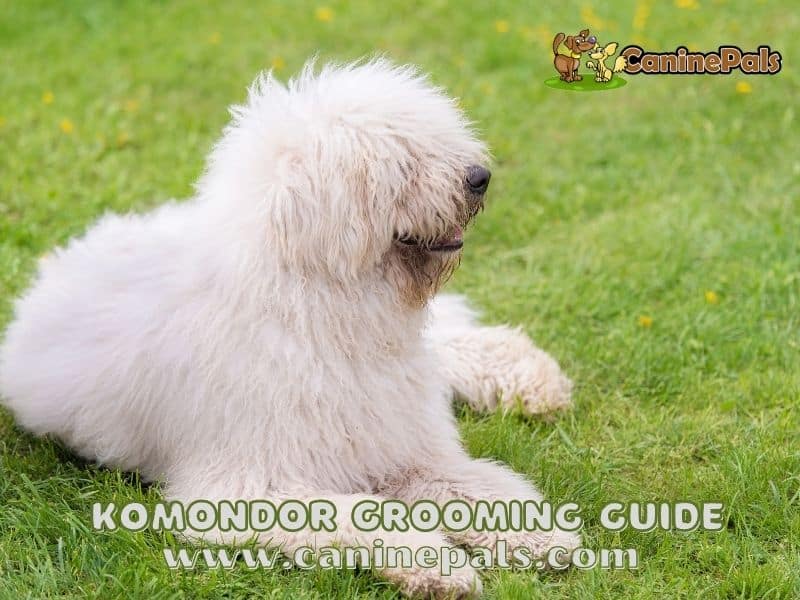
Komondor Grooming Guide

A Komondor Grooming Guide to keep your Mop Dog Pretty & Clean

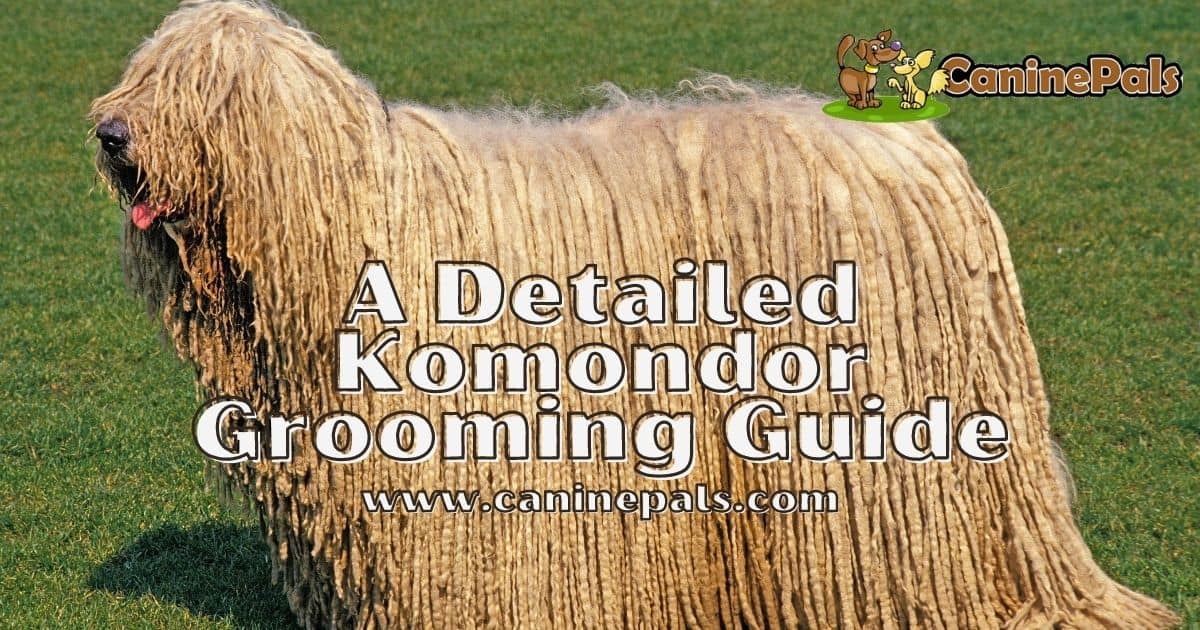
A Komondor dog looks like a felt ball from afar, but below that thick coat is a strong canine pal who is always alert and watchful. Although initially raised as guards for livestock, the Komondor buddies make equally good pets for your home.

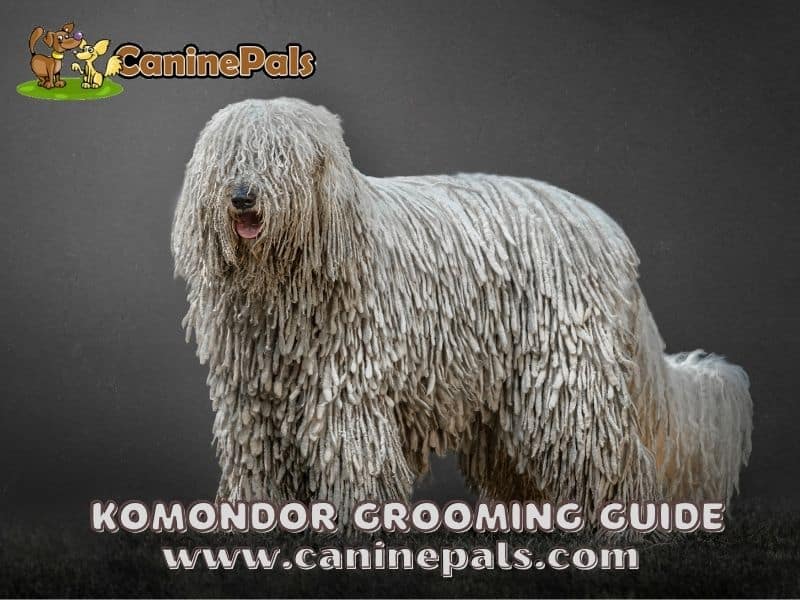
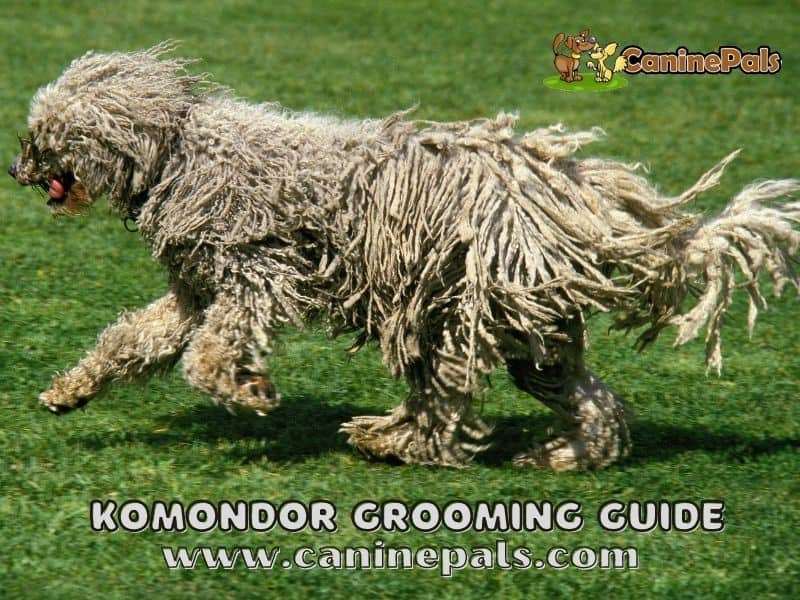
This breed is often called mop dogs, thanks to their thick and long fur cords. At first glance, all you see on a Komondor dog is thick braid-like dog hair hiding its physical appearance. But once you get to know your mop dog, you’ll admire how attentive, energetic, and playful this corded dog is.

Sure, a dog loaded with fur cords looks cute; keeping it clean and well-groomed is no easy play. Owners of pet dogs will need some patience to keep their Komondor shaved and the corded coat groomed at all times.

The idea of Komondor dog hair grooming might overwhelm you (again, thanks to its unique coat), but you can easily learn this and be a pro at it.

So, without any ado, let’s understand everything you need to know about Komondor coat maintenance and shaving!

Komondor Grooming Guide

Komondor Dog Breed Characteristics

The Komondor was developed as a herding dog in Hungary to protect big herds of cattle and sheep. He’s a descendent of the Aftscharka, a dog discovered by the Huns when they went through Russia. Instead of rounding up flocks or herds, he accompanies the animals and doesn’t need to be told what to do to protect them.

He’s a muscular, big dog with a very dense, protective coat of white, heavy cords. He looks a bit like a huge mop. The coat protects vulnerable parts of his body in case of attack and also helps him camouflage himself among his flock. He also appears in American show rings. He needs obedience training and regular exercise and his coat takes lots of time to maintain so learn how from an expert. He’s 25.5 inches high.

Komondor is an intelligent, independent, and high-protective dog breed. Shepherds have been using Komondor adult dogs for centuries to protect their livestock from foreign attacks and unpleasant flock situations.

Since these canine buddies are pleasantly sharp and attentive, they’re widely trusted for watching and protecting duties. But that doesn’t mean you cannot pet a Komondor; you’re welcome to do so if you have a heart of steel to train one.

Those seeking a lazy pup for their home are better off than choosing a Komondor because this one is going to be tough. Here are the primary breed characteristics of Komondors that make them unique:

https://caninepals.com/komondor/

Adaptability

You give a Komondor a home and watch it become a vital member of your family. These different-looking dogs are highly sensitive and cheerful. Coat maintenance of the corded coat will make pet parenting a tiny bit more tedious for you.

Komondors prefer playful spaces where they can run around and stretch their legs instead of compact apartments where they have limited movement.

But this does not disqualify apartment residents from adopting a Komondor. You can do this well by planning your mop dog’s play area beforehand. Give him plenty of free space, and it’ll adapt to your home environment pretty quickly.

Friendliness

Komondor dogs can develop separation anxiety and show signs of distress when left alone. If you cannot provide them with a friendly environment, it can limit their personality development.

These watchdogs love their family but aren’t pleasant to the strangers – get away from our garden, neighbor!

A Komondor can be a kid-friendly dog when trained to dispel its aggression and control its barking. But because this is an aggressive breed, you shouldn’t leave your Komondor and kids unwatched.

Trainability

This is where a Komondor can test your patience. Sure, this breed is obedient, it doesn’t mean you can train your Komondor however you want. As we said earlier, you need a heart of steel to train a Komondor because of its sharp mind.

A Komondor can scare others with his howling and loud barking; not so good for pet parents. This stubborn student will need some extra effort and consistency to become obedient, but it will be worth it.

You must socialize your Komondor when he is a puppy to make him more welcoming and friendly. If your mop dog doesn’t give a pleasant vibe and you plan on raising him as a house pet, social interactions are inevitable.

Take your fellow to the neighborhood and your nearest park so that he develops a sense of familiarity. Once your pup’s social awkwardness is over, the remaining training is easy.

Be consistent with your training commands and reward your bud for his positive behavior to experience a peaceful future.

Physical Exercise Needs

Don’t expect your Komondor to sit around the house because this one moves around a lot. Your mop dog won’t always be a ball of energy, but he will still keep the spirits of your place up.

You’ll need a regular dog walking and exercising schedule to maintain your bud’s bone health. These dogs aren’t high-energy and are usually happy watching and observing. But that doesn’t mean you can overlook the need for regular exercise.

Komondor Grooming Guide

Health and Grooming Requirements

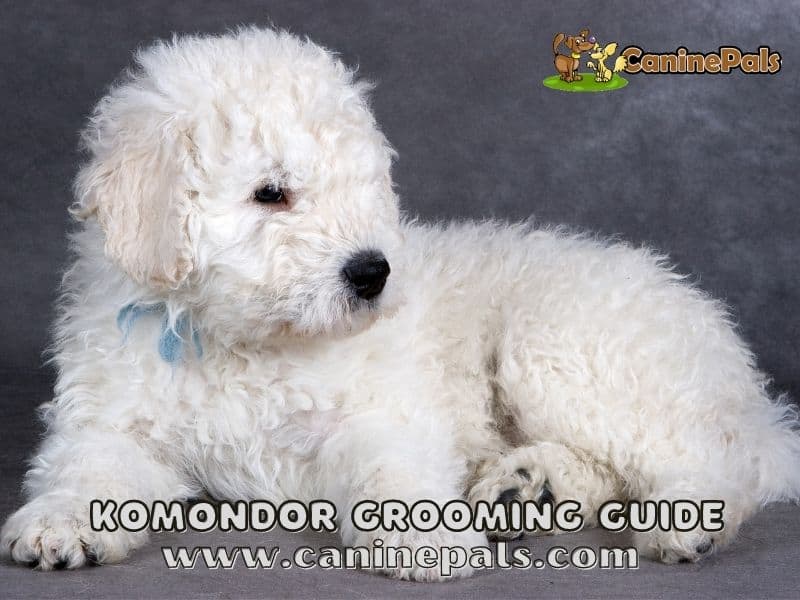
A Komondor dog’s identity is his unique coat and a feltlike appearance. Other than giving the Komondor a unique trait, this thick fur coat also becomes a test for pet parents. Cords begin to form on these dogs when they are just past young puppyhood.

When your dog’s body is hidden under long locks of fur, keeping his skin free of pests and debris gets difficult. That’s why Komondor dogs are more prone to skin allergies and infections than most other pets.

You’ll have to regularly trim your Komondor’s fur, clip the dog’s nails, and de-matt his cords to protect his health. This breed sheds little excess hair when in adult coat.

But by learning the correct way to groom and de-matt a Komondor, you can prevent multiple health and cleanliness-related conditions.

Not sure how to keep your Komondor shaved and groomed? No worries, because that’s what we’ll explain next.

Komondor Corded Coat Grooming Explained

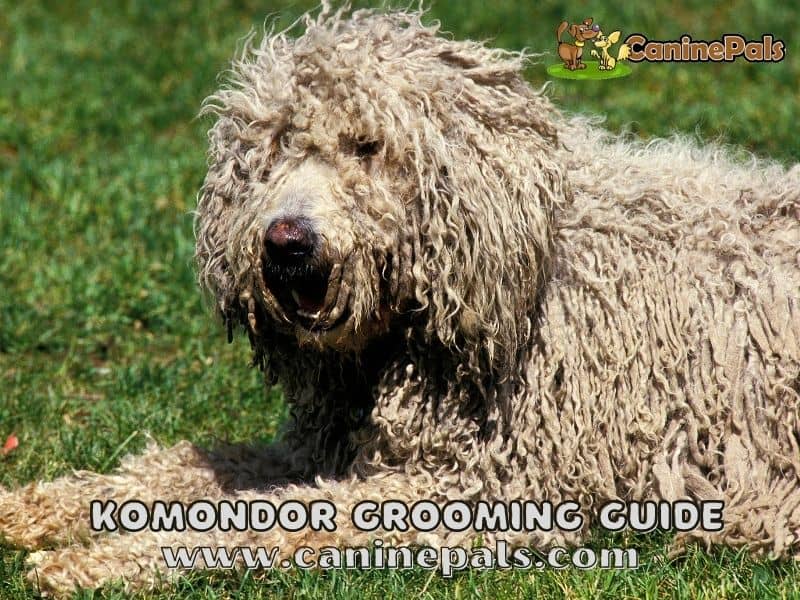
Komondor puppies have a soft puppy coat that grows  all the cords as they mature. These feltlike cords resemble the strands of a mop, giving your dog its name, mop dog. Now, these strands surely look unique and cute, but keeping your Komondor groomed is one tiring task.

The Komondors have two fur coats; the undercoat is softer, and the outer one coarser. As these coats grow, they form braid-like cords on your dog that can change in length and density with time. If you like your Komondor shaved or keeping its fur manageable is the goal, you might think trimming will suffice this task. But there’s more to Komondor grooming than shaving and trimming.

The No-Bath Komondor Corded Coat Grooming

Bathing a Komondor dog is time-consuming and tedious, something you can’t manage on busy days. That’s why adopting a no-bath grooming routine is smart. Once you learn to keep your pal’s fur cords untangled and clean, you can protect it from multiple skin conditions.

Things Needed for No-Bath Komondor Grooming:

  • De-matter
  • Scissors
  1. Once your Komondor dog’s basecoat covers his entire body and feels like a thin cushion, you can start grooming it.
  2. Take a strand in your hand from your dog’s skin and move down with it.
  3. You can either twist this strand to form a cord or wrap it around your finger to detangle it.
  4. Once you have made long fur strands on your buddy, see if they touch the floor.
  5. If they do, trim their edges to avoid matting. Don’t cut these strands too short, though.
  6. If the Komondor’s fur feels coarse and matted, use a de-matter to retain its original form.
  7. Run your fingers through your canine’s fur to see if all the strands are nicely wrapped/twisted.
  8. After this initial Komondor grooming phase, remove dirt and debris from its hair every day with your hand, and you’re good.
Komondor Grooming Guide

Bathe your Canine Bud for a Fresher Feel

Sure, the no-bath method is quicker; it doesn’t always give a groomed look to your dog. Especially when your fellow plays in dirt and mud. That’s when you have to bathe your dog to keep it clean.

Things needed for a Komondor bath:

  • Shampoo
  • Conditioner
  • Nail clipper
  • Dryer
  • Towel
  1. Mix dog shampoo in lukewarm water and pour this solution on your buddy’s fur strands.
  2. Use your fingers to form some foam and ensure it nicely moves through the fur locks.
  3. Rinse the shampoo until all the product comes out of the cords.
  4. Use some dog conditioner to soften your buddy’s hair strands and to improve its shine.
  5. Wash all product off, and wrap your dog in a towel to pat dry it.
  6. Switch on your ceiling and pedestal fan to speed up the drying process because air drying can take hours.
  7. Once your dog’s fur is dry and clean, use scissors or a trimmer to neat the strand edges.
  8. Keep your Komondor shaved around its genitals, mouth, and near the nails.
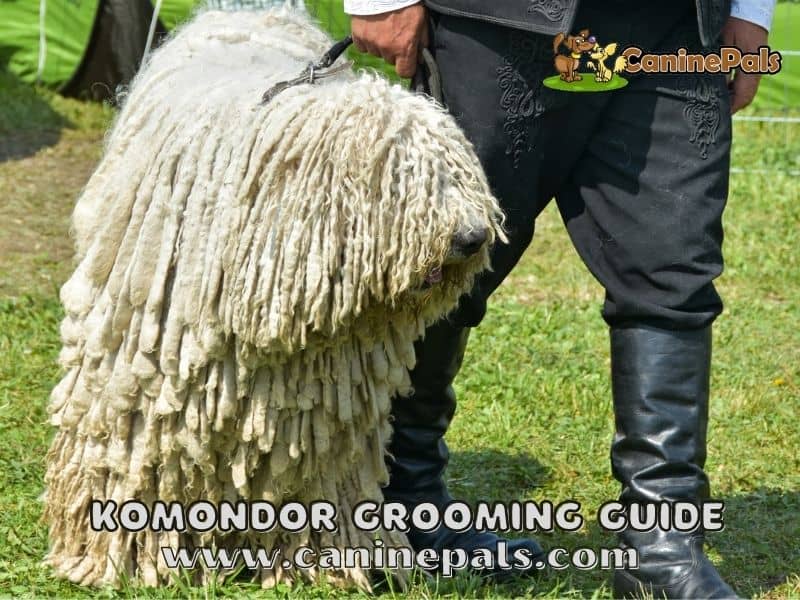
  9. Don’t let its fur cords touch the ground as that causes matting and fur discoloration.
  10. Clip your buddy’s nails and cords short to avoid matting.

The trademark Komondor cords don’t need brushing or combing, but you must keep them free of parasites and dirt. Don’t let your dog roam around with a wet coat because that fosters parasite growth. A Komondor’s coat must be dried right after it bathes to avoid matting and tangling.

If you groom your Komondor once and don’t bother its coat afterward, his cords will begin clumping and forming matts, which is never a pretty sight.

Komondor Grooming
Komondor Grooming

To Shave or Not to Shave?

Can you shave a Komondor? This is probably the most common question this breed’s owners ask from experts. If you’re in the same boat, here’s your answer:

Keeping your Komondor shaved might seem easier than grooming its coat, but doing so can rip him off his rare identity. Komondors are known for their long cords that curl along their body to give a poofy look.

If you shave these cords near the dog’s body, he won’t be a mop dog anymore. Don’t shave your mop dog; clip its strands instead to keep your Komondor groomed and clean.

If your Komondor is a show dog, you want its coat to reach its full length, and shaving won’t let that happen. Also, don’t worry about the Komondor dog’s fur strands because they don’t irritate his eyes or nose. Keep these felt like strands trimmed, and you’re good to go.

Komondor Grooming
Komondor Grooming

How to Keep your Komondor Dog from Smelling Bad?

A Komondor dog’s extra-thick fur can make you think that it’ll smell extra bad, but it’s not always the case. This dog smells just as much as any other breed would if you take care of its cleanliness. Regular trimming, bathing, and dematting keep your Komondor’s coat shiny and healthy, eventually dispelling the bad smell.

Here are a few tips to keep your Komondor odor-free:

  • Trimming the fur cords around the dog’s genitals prevents odor build-up.
  • Don’t let his coat grow extra long or thick. Give its skin some space to breathe.
  • Regular bathing will retain your dog’s coat softness and prevent matting.
  • Always dry the Komondor’s fur after bathing to prevent debris and parasite build-up.
  • Komondor fur grooming will keep dirt and debris build-up at bay.
Komondor Grooming Guide

Komondor Grooming Best Practices

Once you adopt a good Komondor grooming schedule, your to-do list about this dog becomes impressively easy. You don’t have to deal with bad odor, matting, tangles, or skin conditions after keeping your Komondor groomed.

  • Don’t brush the Komondor’s cords after he crosses 9 months of age; give its coat enough time to grow and form cords.
  • Walk your dog every day to keep its bone health strong and coat shiny.
  • Use a good-quality fur drier to avoid matting and coat staining.
  • Groom your Komondor’s cords with your fingers every day to pick dirt particles.
  • If your dog has ticks or any other pest infestation, trim its cords unless this situation is over.
Komondor Grooming
Komondor Grooming

Final Thoughts on Komondor Grooming

Komondor grooming is a time-taking but rewarding task. Once you adopt a mop dog, keeping its coat clean and odor-free is an essential task. Although Komondor shaving is not mandatory, you can still trim it to keep your bud clean.

Once your Komondor puppy is 9-10 months old, it’s better to stop brushing his coat. Let his cords grow and form wrapped strands for that trademark Komondor look.

Regular bathing and fur grooming can keep your mop dog from smelling bad and protect its skin. When you notice matting on your Komondor’s strands, use a de-matter to smooth its fur out. Clip your Komondor dog’s nails and trim its corded edges to maintain its pleasant look.

A Komondor dog will quickly become your family member because of his sharp mind and jovial nature. He might take some extra work compared to other dog breeds, but once done, you’ll love this curious ball of energy roaming in your home.

Copyright CaninePals. All Rights Reserved.

References and Further Reading:
American Kennel Club Komondor Information
Pekingese Grooming Guide

Pekingese Grooming Styles Explained in Detail

Pekingese Grooming Guide: Basic Trim to Full Grooming and Everything In Between.

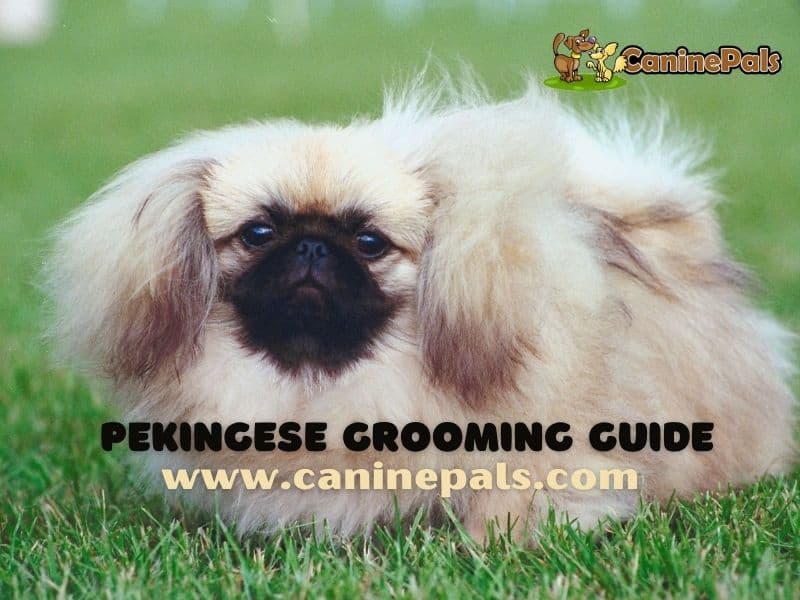
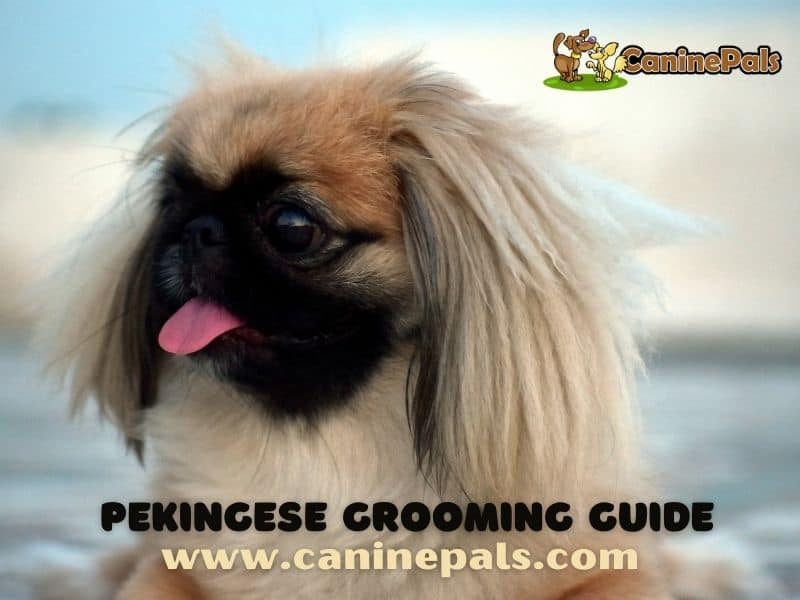
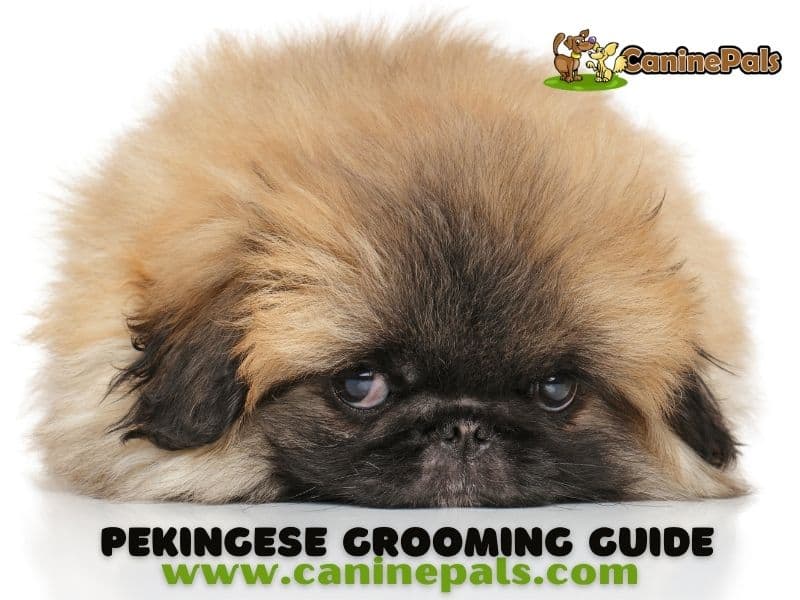
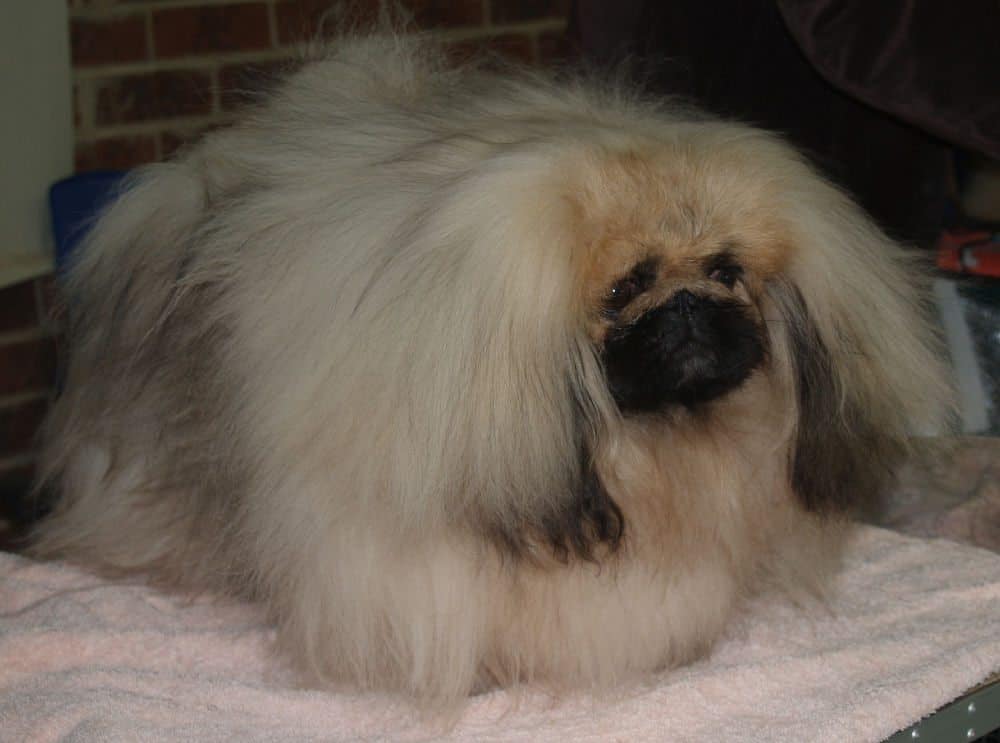
Do you know? Pekingese or Pekes (as they are affectionately called) is one of the oldest dog breeds, famous for its lion-like mane and cutesy looks. These charming dogs with luscious coats are known to be lions shrunk to miniature size by the Lord Buddha.
If you just fell flat to their oh-so-cute features and got lost in the fluffy coat of Pekes, you would like to add them into your life, right?
(Whoa!!! You have a great choice)
But, one thing that you might find a tad bit tricky is Pekingese grooming.
This Pekingese grooming guide covers everything you need to know about giving your Pekingese a basic trim to overall grooming.

Pekingese Grooming Guide

Grooming Your Pekingese So That The Dog Doesn’t Look Like a Matted Mess

Those who are up for including this chunky ball of fluff in their lives often question, “Do I need to spend a greater chunk of my time upkeeping my Pekingese?”

Just one look at the Pekingese is enough to tell that they need a BOATLOAD of grooming…

That’s a matter of common sense.

They’ll often need to be taken care of to stay happy, healthy, and beautiful. So, consider owning a Peke if you are someone who wouldn’t mind keeping a lint roller handy and brushing off the loosened hair often because they shed like crazy.

Did you say, “No, I won’t mind”? Congratulations! You are a perfect fit to be a PEKE-PARENT.

Pekingese are going to require so much of your attention to carry out their severe maintenance needs. They would need to brush their generously grown coat several times a week and would require bathing sessions oftentimes.

Without frequent brushing and trimming, your dog would turn into a shaggy ball of entangled fur. “Not-so-cute”, right?

Frequent trimming at the rear area of your dog is also mandatory for sanitary purposes.

Keeping your Pekingese puppy presentable and beautiful takes regular upkeep sessions and a trip to a professional groomer every 8 – 12 weeks. If you can’t afford professional grooming trips that often, worry not! Below we are sharing a checklist for grooming your Pekingese that you can follow to keep your Peke in a perfect form.

Here’s the checklist:

  • Dirt Cleaning
  • Brushing the Fur
  • Nail Trimming
  • Brushing the Teeth
  • Ear Cleaning
  • Bathing
  • Trimming
Pekingese Grooming Guide

Pekingese Coat Grooming Regimens to Follow At Home

#1. Dirt Cleaning:

It’s important to clean the dirt and debris from the eyes and creases of your Peke’s face daily to prevent hotspots. Some Pekingese owners also trim the hair around their puppy’s eyes to help their furry see clearly.

#2. Brush the Fur:

Pekes have an abundance of fur. So it’s vital to keep their fur detangled and trim their long hair repeatedly. Regular trimming will help keep your pet cool and neat.

You might think brushing a Peke’s hair is going to be a hard task. But, it isn’t really that hard. Just mist your pet’s hair with normal water and brush them thoroughly using a natural bristle brush. It is important to get the brush through the under coat.  Misting your doggie’s hair will stop the hair from breaking. Brush small sections of outer coat hair in the downward direction. It will take all the dead hair off, and you’ll be done.

#3. Trim the Dog’s Nails:

Trim your Peke dog’s nails usually every week or two because overly long nails can cause discomfort to your pup.

#4. Brush the Teeth:

Small dogs including Pekingese are prone to periodontal diseases. Therefore, brushing their teeth frequently with dog-specific toothpaste becomes a must.

#5. Clean the Ears:

Check for the wax build up in your Pekingese ear and clean it up often. Some Pekingese might need to have their hair plucked out of the ear canal. Plucking out the ear from the ear canal will make the air circulation better.

However, you need not pluck the entire ear from your doggie’s ear canal because they prevent the debris buildup in the air canal.

NOTE THAT: You must be an expert in pulling off the hair from the ear canal of your Peke otherwise you might hurt your dog.

#6. Bath Your Peke:

An occasional bath will help your Pekingese look its best. However, bathing a Peke requires patience and utmost care. You shouldn’t let the water go into the nasal cavity of your pup.

For this, try using a damp cloth to cleanse the wrinkles and muzzle as a preventive measure. A cotton ball may be placed in each ear prior to bathing.

Use a dog-friendly shampoo on the coat and rinse it off. Shampooing the Pekingese coat will help you manage the abundantly grown hair. Dab the coat with a towel to wick the excess moisture. Let it dry. Brush and comb the coat once it’s dry.

Areas you should pay special attention to while detangling your dog’s coat with a slick brush are:

  • Thighs
  • Behind the Ears
  • Tail
  • Around the ruff

#7. Doing a Basic Trim on Your Pekingese Puppy:

When you own a Pekingese puppy, trimming tools become your best friends because you often get to use them.

Trimming not only neatens up your pup’s appearance but also helps them stay comfortable, healthy, and maintain better traction.

Start by shaving the paws until you actually can see the pads. Brush to make sure there are no mattes there. Use a rake to detangle the shaggy hair and get rid of the dead hairs that are hidden under the thick coat of your Pekingese. Hold the skin of your furry tight so it doesn’t get caught in the rake and be gentle.

Next, use a fine-tooth comb to get all the dead hair off. It’s also good for checking for mattes.

Cut the elongated hair all over the body to define the shape of your Pekingese using scissors. Say, for example, if you are trimming the hair from the feet, follow the shape of the foot. Make sure there is no extra fluff once you have trimmed. You can cut the extra hair by brushing the remaining hair upward and trimming them off.

Repeat the same process on all four feet.

While trimming the hair on the stomach, follow the curve of the stomach. Make sure all the hair is flowing and you get the shape you desired.

There you have it – your Pekingese ready to show its swag.

Remember! The care and maintenance of the coat of a Pekingese set the foundation of keeping your pup with healthy skin and coat.

Because when the coat is dirty the hair shaft of your Pekingese puppy becomes dirty and triggers massive shedding.

Even worse? It can also lead to coat damage and cobweb matting. The intense form of matting can lead to multiple skin issues if left unattended.

Pekingese Grooming Guide

Famous Pekingese Grooming Styles to Amp up Your Pet’s Look

Whether you decide to be your Pekingese hairstylist or opt to visit a professional groomer there’s a variety of haircuts that you can opt for. The generous coat of your Pekingese allows you to play with your dog’s hair.

Wondering what different hairstyling options you have to implement on your Peke pup?

Here are some of the options:

  • Pekingese Basic Trim
  • Pekingese Lion Cut
  • Pekingese Puppy Cut / Pekingese Teddy Bear Cut / Pekingese Summer Cut

Let’s explain these haircuts one by one.

Pekingese Basic Trim

We have talked about this earlier. The Pekingese basic trim is a way to define your Peke’s bodyline – nothing fancy! It’s the easiest and does the trick of keeping your Pekingese in a refined shape. This hair trim is ideal for DIY’ers. You don’t really need so much practice and skill to do a basic trim.

Just follow the bodyline of your dog, trim the excess hair, and you are good to go!

Pekingese Lion Cut

As the name suggests, the Pekingese Lion cut resembles a lion’s hair shape.

The lion cut is a short hairstyle for Pekes that do not have to enter dog shows. In this type of cut, a Peke’s coat is trimmed off from the shoulders, across the back, from sides, and about halfway up the tail (almost one-quarter inch in length). This trim recreates a lion-like look on a Peke.

Pekingese shaved like a lion have hair on the top of the head, ear, and around the neck. These hairs are kept longer.

The mane and the body fur are neatened to resemble a lion using scissors.  The rest of the trimming can be carried out using an electric body clipper.

Pekingese Puppy Cut OR Teddy Bear Cut

The Pekingese puppy cut is a cut that features an all-over hair length throughout the body. Some other famous names for puppy cut are teddy bear cut, summer cut, or kennel cut.

The puppy cut is commonly known and popular because it works perfectly on a variety of pets. Speaking about dogs only, we can say that it works wonders on any breed that has a longer coat. The reasons why Pekingese puppy cut is popular amongst Peke owners are many.

For example, it’s cute, easy-to-care-for, and easy to remember style for Peke owners.

Pekingese teddy bear cut is an all-around trim that is easy to achieve with just a pair of scissors or a clipper fitted with a long guard comb over the board. But, scissoring the fluffy hair to acquire this cut is a heck of a lot of work. Plus, you also require practice and skill to make your Peke look like a teddy bear. The common hair length in a puppy cut is 1 to 2 inches over the body including legs, tails, heads, and ears.

The puppy cut gives your pet a youthful, cutesy, and puppyish look.

Are You Supposed to Shave Pekingese Dogs?

Well, Pekingese is a breed whose beauty lies in their fluffy coats.

Agree? Then, what’s the point in shaving them?

In fact, you should trim your Peke to a certain extent. Clipping their hair too short would ruin the coat which ultimately, will affect their beauty. Keeping your puppy cool, comfortable, healthy, or whatever your concern is (that urges you to shave your Pekingese), you should know that you are not supposed to shave your Pekingese. For any reason.

You can succeed with the above-mentioned goals by getting a light trim and keeping your pet’s coat natural.

Shaving your Pekingese isn’t a solution.

Repeatedly shaved Pekingese often don’t get their incredibly thick coat back. Moreover, the fluff over a Peke’s body acts as insulation to keep your dog warm in the colder weather.

In short: You shouldn’t think about shaving your Pekingese no matter what.

FAQs:

Q1. How often should a Pekingese be groomed?

Ans. Brushing your Pekingese hair for at least one hour every week will suffice your pet’s hair grooming needs. This way, you can remove the loosened or dead hair and prevent matting. Plus, one-hour brushing will also help your pet’s coat remain shiny and sleek.

Q2. How do you take care of Pekingese hair?

Ans. You can take care of Pekingese hair by brushing them daily and with occasional bathing. This will keep the bad odors at bay and also help your noble doggie look glorious. While brushing makes sure you don’t leave any matting unattended in the undercoat of your Peke.

Q3. Are Pekingese high maintenance?

Ans. Yes, Pekingese is a high-maintenance dog breed because they have an extraordinarily fluffy coat that sheds a lot.

Q4. What is the difference between a puppy cut and a teddy bear cut?

Ans. A puppy cut and a teddy bear cut are almost the same. These are two different names for the same haircut that is mostly done on the long hair dog breeds.

Q5. Do Pekingese require a lot of grooming?

Ans. Yes, they do! Frequent baths and brushing their fur off are necessary to keep the skin and coat of your Pekingese in a presentable condition. The rest they need is basic care.

About the Pekingese Breed

The Pekingese was depicted in Chinese art as far back as the 8th century during the Tang dynasty. He’s named after the old city of Peking, which is now named Beijing. He was sacred in ancient China and only royalty could own such a companion dog. Death was the punishment for stealing a Pekingese. He was brought to Europe during war time. When the Chinese Imperial Palace was taken by the British in 1860, the British took home a few of these dogs.

He’s a small companion dog with a lighter hindquarters and heavier front quarters. He’s not dainty or delicate. He’s depicted as being like a lion, dignified, courageous and high self-esteem. His coat can be any colour. He’s highly intelligent and affectionate. He’s a good pet and can live in any environment. However, he can be stubborn and hard to housetrain. He likes to walk but doesn’t need a yard. His long undercoat needs at least one hour of brushing each week. He’s 6 – 9 inches in height.

Final Thoughts on Pekingese Coat Grooming

The Pekingese breed are great personality dogs that love to be the center of attention of their owner.

Grooming your puppy at the right intervals doesn’t only keep your pup healthy and beautiful but also strengthens the bond between you and your cute Pekingese.

Affectionately small in size, squishy faced and fluffy! Why would they not be a cute addition to any family? The hard work of grooming them often shouldn’t get in the way of you enjoying the warmth of a Pekingese love. Tidy up your Peke, look at their mushy face, and you’ll feel that all the hard work of up-keeping the dog was worth it.

Happy Grooming!

Copyright CaninePals.Com. All Rights Reserved.
References and Further Reading:
American Kennel Club Pekingese Information
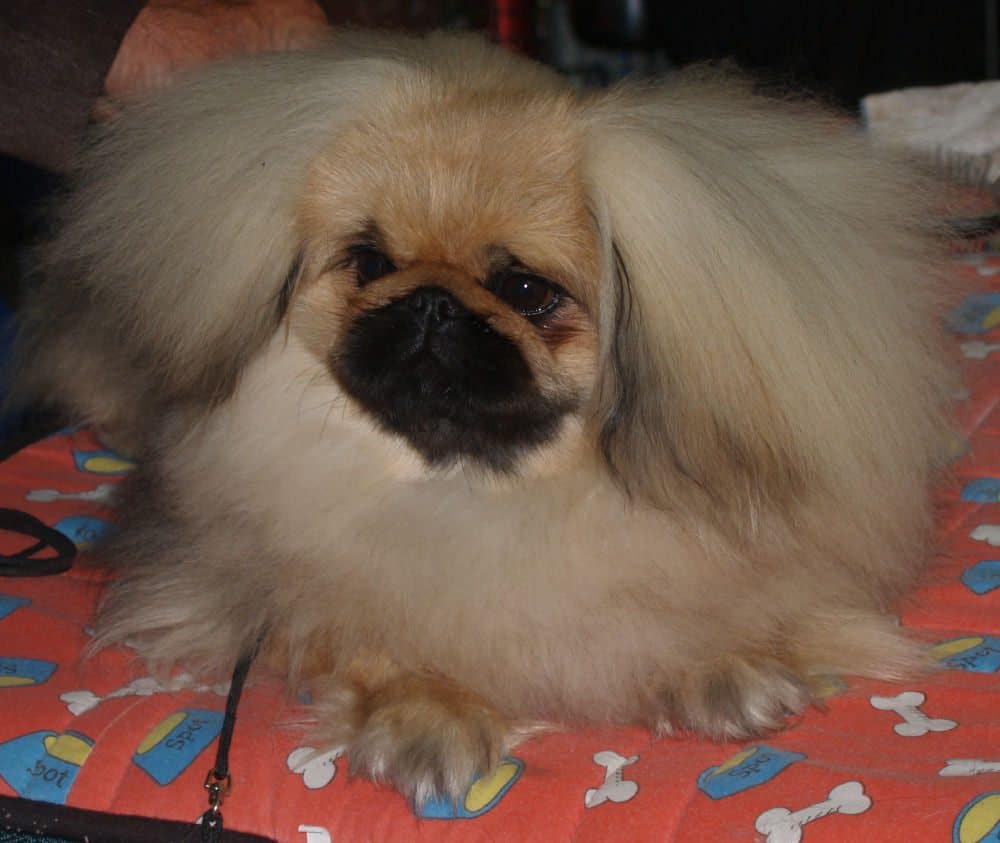
Pekingese dog
Pekingese dog
Pekingese dog
Pekingese dog
Pekingese dog
Pekingese dog


Do German Shorthaired Pointers Shed a Lot?

Do German Shorthaired Pointers Shed a Lot?

Like all dogs, German Shorthaired Pointers shed. To avoid this becoming a problem, we look at what you as an owner should do to look after the coat of your dog. With the right care, this is a great pet to own, and GSP dog shedding shouldn’t become a huge problem.

German Shorthaired Pointers are known for their tendency to shed. In fact, they are heavy shedders and this shedding can occur throughout the year, particularly in warmer climates. This is a result of the smooth coat that German Shorthaired Pointers have. 

According to the American Kennel Club, the small hairs of this breed can get all over your furniture and carpet, and therefore regular brushing is recommended. The hairs can cause allergies, so GSP dog shedding can be a problem if not addressed.

Some of these dogs can have longer or shorter hair and that may change the amount they shed. As we will see, there are also seasonal influences that increase or decrease the amount that this breed of dog sheds.

The majority of these dogs will lose this hair about once a year, which is also known as “blowing”. However, some German Shorthaired Pointers may not have significant shedding at all or tend to shed less often than this. One reason why this may happen is because of the genetic makeup of your particular dog.

Do German Shorthaired Pointers Shed?

German Shorthaired Pointer’s Coat Shedding Habits Explained

A typical German Shorthaired Pointer sheds all year round, but the duration and frequency of shedding vary throughout the year. In general, your dog will shed less during the winter months and more during the summer months.

As this dog has a double coat, including an undercoat that is water-resistant and there to keep the animal warm and dry during colder times of the year, the season affects shedding. There will be more in spring as the weather begins to warm up and the dog tries to prepare to keep cool by shedding some of its undercoats before the summer arrives. The exception to this is when your dog lives in a warmer climate and the undercoat is not so important to the dog, as it does not get cold. The result is that your dog will keep shedding excessive hair to keep the undercoat lighter.

All this is completely natural and is necessary to keep your dog healthy and happy, so don’t worry. What you will need to do though is to ensure, especially in warmer periods, that you groom your dog well for your sake and for the comfort of your dog.

This is not the only reason why your German Shorthaired Pointer may shed more than normal. Your dog’s rate of shedding will also depend on its genes as well as its diet. Genes you obviously can do nothing about, but its diet is something you can change. Always seek a vet’s advice if you think your dog is shedding too much or if you have questions about its dietary needs.

In general, if you have a dog with short hair, it may shed at the same rate as a dog with longer hair, but a long-haired dog will seem to shed more as it will be more noticeable. For this reason, the German Shorthaired Pointer may actually shed more than other breeds with longer hair but will appear to shed less.

german shorthaired pointer shedding EXPLAINED
German Shorthaired Pointer shedding explained

The German Shorthaired Pointer

The German Shorthaired Pointer is a hunting dog breed that possesses great speed, intelligence, and adaptability. It has a compact body with short hair, but its ears are long and it has the ability to point at game. Pointers are known for their excellent nose and tracking ability. They also have an excellent scenting capability which is why they are used in hunting for upland game birds such as pheasants and partridges.

The German Shorthaired Pointer’s ancestry isn’t clear but it’s believed that he came from the German Bird Dog and is related to the Spanish Pointer and other game and hunting dogs. He’s an excellent hunter on land and in the water and can track and retrieve waterfowl, grouse, quail, pheasant, possums, raccoons, and deer. He was bred with the English Pointer to develop a dog with good temperament, sporting attributes and good looks.

His coat can be black, black and white, liver and white or solid liver in color. He loves being with his family and is a loyal, intelligent, mild-mannered watchdog. He does need lots of exercise because he’s an athlete. He does shed but doesn’t need much grooming. He stands at 23 – 25 inches high.

The German Shorthaired Pointer is a medium to large size dog breed weighing an average of 55 to 70 pounds for males and 45 to 60 pounds for females. 

How Does a German Shorthaired Pointer’s Coat Shedding Compare to Other Dogs?

There are many different dog breeds, each with its own unique characteristics. But how do German Shorthaired Pointers compare to other dog breeds in terms of shedding?

American Kennel Club German Shorthaired Pointers are one of the few breeds that don’t shed coat excessively and can be brushed without causing coat damage. They are basically moderate shedders.

German Shorthaired Pointers shed about 1/10th as much as most dogs and they do not lose fur like other breeds. This is because their fur is undercoat and not guard hairs like in other dogs, which need to be periodically replaced with new hairs. The undercoat of a German Shorthaired Pointer keeps the dog warm in colder periods of the year. If the area where the dog lives is warmer than normal for this breed, it can shed more during every season of the year.

The German Shorthaired Pointer’s shedding can be off-putting to some people. These dogs shed more than some other breeds of dog, but they are also considered to be very intelligent and good with children which is why they are popular with families.

Another problem with the shedding of German Shorthaired Pointers is that they shed both light and dark colored hair, which means that you will see on different colors of furniture. Actually removing some of this coarse hair can be rather difficult because it is so short. The best thing to do is to try to prevent hairs from shedding too much in the first place and save yourself the trouble of having to remove them.

German Shorthaired Pointer shedding explained

The Importance of Shedding of Dog Hair

Shedding is a natural process that most animals undergo to release their winter coats and grow a new one. It is also a way for the dog to adapt to different seasons and weather conditions.

Research has shown that shedding dog hair can be a cause of asthma and allergies. Pets shed fur and dander which is how they transfer their allergens to us. Shedding is a natural process for all animals, but we cannot always keep up with the mess it leaves behind. The only way to minimize the amount of dog hair in your home is to brush your pet regularly and vacuum often.

You may have to consider getting rid of your furry friend if it causes allergies or asthma symptoms. However, this would be a serious step to take, so let’s explore what we can do to manage German Shorthaired Pointer  shedding.

A Typical German Shorthair Pointer’s Shedding Schedule

A German Shorthaired Pointer will typically shed their coat twice a year. The first shedding period will be in the spring and the second shedding period will be in the fall.

A typical German Shorthaired Pointer’s shedding schedule is very dependant on the season. In the spring, a German Shorthaired Pointer will shed a lot of fur to get ready for a good summer soaking. The shedding also happens after every four to eight weeks of growth.

In the winter, German Shorthaired Pointers don’t shed as much because they are not growing as fast and their fur is thinner due to lack of sun exposure. However, this does not mean that there is no shedding at all during this time. The winter season for a dog usually has more dander being released because the airways are not fully clogged up by allergens or other external irritants that can cause an allergic reaction in humans and animals alike.

Is there anything you can do to reduce a German Shorthair Pointer’s Shedding?

German Shorthaired Pointer’s shed a lot and it is difficult to keep up with their shedding.

There are a number of things that you can do to reduce your German Shorthaired Pointer’s shedding. These include the following:

Bathing the dog more often

Grooming the dog more often

– Brushing the dog’s coat on a regular basis

You can reduce their shedding by grooming them regularly and brushing them with a brush made for dogs. This will help remove the excess dead hair before they shed it all over your home, car, and clothes.

1) Brush your dog daily with a firm bristle brush or a fine comb

Daily is only a suggestion, but this breed requires a minimum of once a week. Do the brushing outside to avoid the small hairs getting all over your carpet and house or flat.

The reason we need to brush a dog is to take out the hairs which have already shed but are not falling out of the fur yet. Brushing, therefore, reduces the effects of shedding and makes your dog more comfortable at the same time.

Always be careful to brush slowly because you don’t want to aggravate the dog’s skin or cause irritation. The brushing you do can help to spread the natural oils in your dog’s coat.

2) Brush your dog’s feet with a slicker brush

You should brush your pet daily with a slicker brush or comb to help remove excess shedding fur from his or her coat so it doesn’t have…. German Shorthaired Pointers are very easy to groom.

3) Frequently bathe him in warm water and shampoo, using a conditioner that can hydrate the coat and prevent dry skin can also help. If your dog does have problems with dry skin you should read this guide.

A word of caution here though. Don’t wash your dog more than is necessary or this will probably cause more shedding not less! You should bathe your dog a minimum of 2 or 3 times each year to a maximum of weekly, depending on your dog’s condition and lifestyle. Only wash your dog if it is smelly or looking dirty after it has been outside.

By washing your dog you are helping to look after its fur and you will lessen shedding. However, it can be quite difficult to bathe a dog and then go through the drying routine. I have experienced my dog trying to dry itself after a wash and it can cause quite a disturbance in your house. My dog used to tear around everywhere and try to dry himself on the carpet, on rugs, or on the sofa!

German Shorthaired Pointers are a breed of hunting dog that sheds hair. Here, we will discuss how to bathe your German Shorthaired Pointer and what you need to know about the best types of brushes for this type of dog.

In order to bathe your German Shorthaired Pointer, you will need a tub or a shower stall, a washcloth or a rubber mat, and shampoo designed for dogs, and a dry towel. It is important to use a very good quality shampoo that hydrates the dog’s coat in order to look after it and ensure you do not see excess shedding.

You can wash your dog in the bathtub or shower stall with warm water. After thoroughly wetting the fur with water, apply shampoo onto the fur and lather it up by massaging it into the skin. Rinse off all of the soap from your pup’s skin with warm water. The next step is to apply a conditioner.

4) Use an anti-shedding spray or powder on your dog’s coat before brushing him

Another important thing to bear in mind when grooming your dog is how you dry your dog’s coat. This can have an effect on its shedding.

The best way to dry the coat of your German Shorthaired Pointer is to do as follows:

  • Allow your dog to shake off the water naturally. This actually the best way for your dog to get rid of the water from its hair.
  • Use a towel to dry your dog as much as you can. This will make a big difference to the amount of shedding. If you leave the coat wet your dog will shed more.
  • Let your dog dry itself naturally after towelling it.
  • If you want you can try using a hairdryer and be sure to gently blow-dry your dog’s coat. This can also help release hair that is trapped in the coat, thereby reducing shedding.
German Shorthaired Pointer shedding explained

Final Thoughts on German Short Hair Pointer Shedding

I hope this article has been helpful and informative. If you have any questions about German Shorthaired Pointers, please reach out to me anytime! I am happy to answer your queries or provide more information on my experience with GSPs. Thanks for reading.
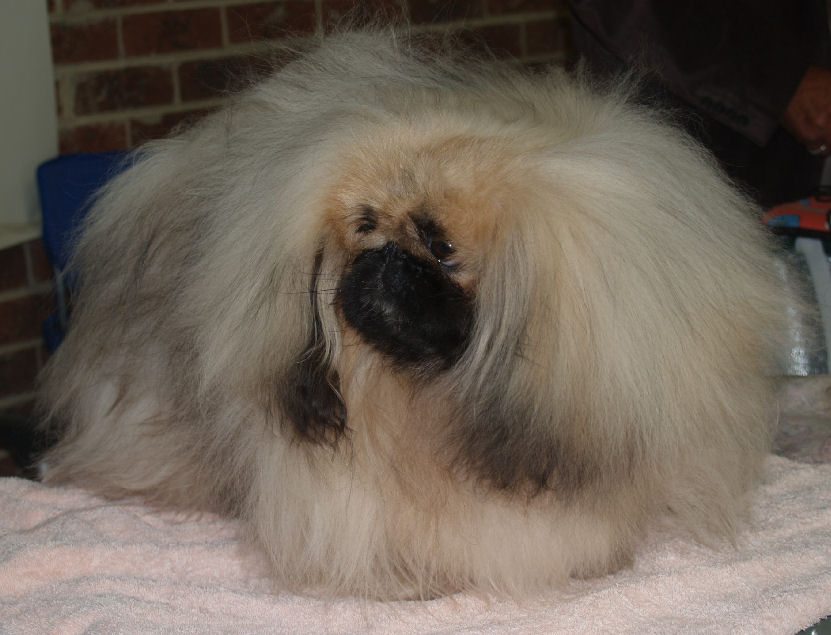
Copyright CaninePals. All Rights Reserved.

References and Further Reading:
American Kennel Club German Short Hair Pointer Information