
Disclaimer

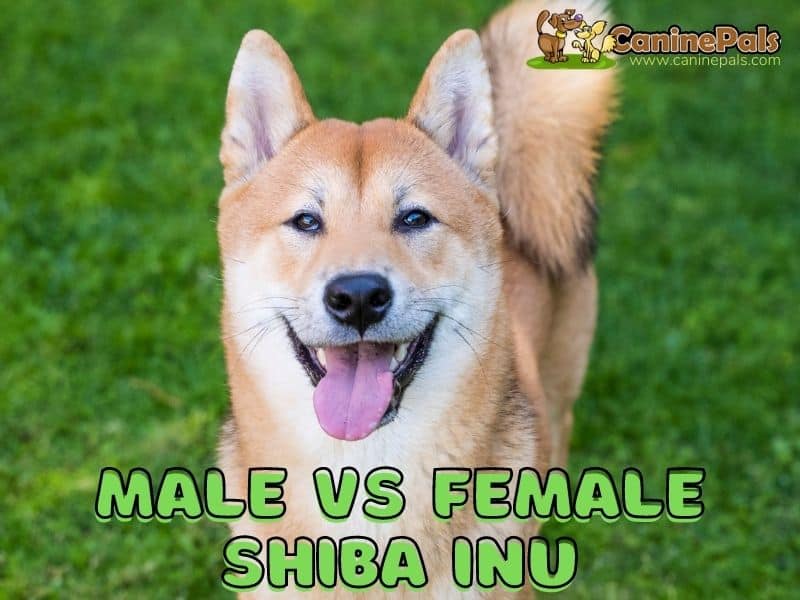
Male vs Female Shiba Inu

Male vs Female Shiba Inu: Expectations vs. Reality

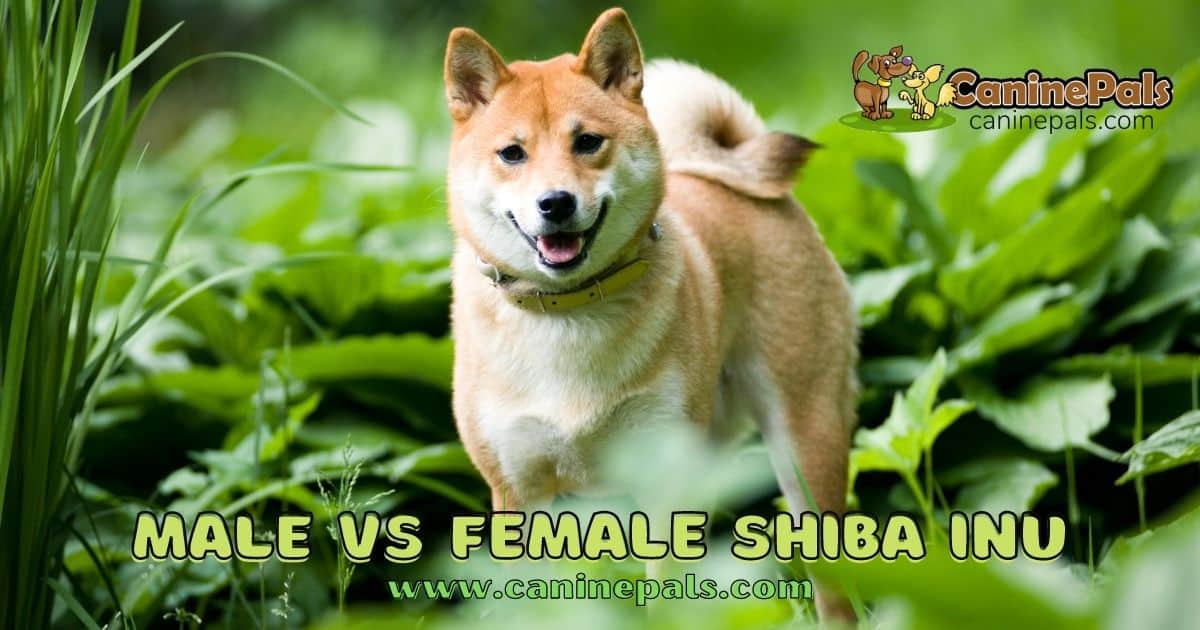
Short and small but agile, muscular and active – these are the defining traits of this ancient Japanese dog. Loved and adored in all of Japan, once the best of hunter dogs is a family companion of today. It is always pretty easy to differentiate between male vs female Shiba Inu.

The Shiba Inu has a big round face, the size of which is proportionally large. Two almond shaped black eyes adorn its face. A long nose ends in a black tip and the small mouth makes it look cute and adorable.

This article is all about are male or female Shiba Inu better? We are going to discuss this dog in a lot of detail, so read on to find out all the facts.

Shiba Inu Traits and Characteristics

AKC Size Specification

Shiba Inu was recognized by the American Kennel Club in 1992. There is a marked difference in the height with respect to the male and female Shiba Inu. The height of a male dog can reach from 14.5 inches to 16.5 inches. On the other hand, the height of a female Shiba Inu can only grow from 13.5 inches to 15.5 inches.

The weight of a male dog is more as well. A male Shiba Inu can weigh upto 23 pounds. On the other hand, the weight of a female Shiba Inu can only grow upto 19 pounds. When it comes to Shiba Inu male vs female life expectancy, both can live for 13 to 16 years.

Male vs Female Shiba Inu Details

It is very easy to differentiate between male and female Shiba Inu. The physical characteristics and temperament is very different for Shiba Inu male vs female.

The first major difference between male vs female Shiba Inu is that of their height. A male Shiba Inu can grow upto 16.5 inches whereas a Shiba Inu girl can grow to 15.5 inches. The difference of an inch makes it a lot easier to differentiate a male from female.

The next is the difference in their facial features. The male Shiba Inu is always broad faced while the Shiba Inu girl comes with softer facial features. However, the Shiba Inu built is strong, sharp and muscular irrespective of gender. The shape of their body is ideal for a hunting animal.
Male vs Female Shiba Inu


Shiba Inu Temperament

Male vs Female Shiba Inu Temperament

Shiba Inu Male Temperament

Shiba Inu Female Temperament

cuddly, playful and outgoing

protective of her human family

loyal and very intelligent

loyal and very intelligent

wants to learn, easy to train

stubborn

agreeable 

independent and free spirited

●       Shiba Inu is One of the Six Spitz Japanese Breeds

Shiba Inu resembles a fox. It has quite unique facial features that are the characteristic of spitz dogs. The other spitz that have originated in Japan include Akita, Kishu, Hokkaido, Kai, Shikoku, and small Shiba. These are the six spitz breeds that have originated in Japan.

●       The Mental Traits of the Shiba Inu

Shiba Inu is bold, energetic and like the color of its coat, fiery. Japanese describe Shiba Inu with the following three mental traits:

  1. Kaani – Spirited Boldness
  2. Ryosei – Having good nature
  3. Soboku – Alertness

These three traits combine to give what is known to be the strong-willed, intelligent and loving temperament of Shiba Inu.

●       Self-Perception of  the Shiba Inu

Shiba Inu is a small dog when compared to other dog breeds. But the small size adds to its qualities. Because it is small and compact, it can move around easily. It is an agile, fairly quick and energetic dog. Shiba Inu stays alert all the time and because of this trait, it can be made a watchdog.

●       The Dignified Walk of the Shiba Inu

Shiba Inu’s self-perception is that of a strong dog. It moves around and walks with such dignity that the onlookers can easily guess the larger than size attitude of this dog. Shiba Inu is an independent and free-thinking dog. It has remained free and that is why it gets difficult to tame the spirits of this dog.

●       Socialization of Shiba Inu Dogs

Early socialization is highly recommended when it comes to Shiba Inu. If it is not socialized early, the dog may not be good for apartment living.

When it comes to training, Shiba Inu may be difficult to train. It is really hard to get this dog to understand the idea of subordination.
Similarly, this dog is too possessive. It guards its territory and possessions. It is over protective about these things. However, these behavior traits can easily be corrected if this dog gets to have early socialization.

Shiba Inu Dog Personality

Shiba Inu is a good natured dog that stays alert. This dog is loyal and loves the members of its human family above everything.

He is muscular and strong. Other than that, Shiba Inu is intelligent and has an idea about his own self.

On one hand, he is loyal and loving to the members of his family but on the other hand, he can be very suspicious of strangers. Suspicion is not the only personality trait that is worrying. Shiba Inu has a tendency to be a guard dog. Because of his guarding nature, he is over possessive.

Shiba Inu marks his own territory and then protects it from breach by any stranger. If any dog might get into his territory, Shiba Inu can behave in an aggressive manner towards that dog. Other than dogs, he can scare small animals. It is in his habit to chase the one that annoys him.

The Shiba puppy is usually very nice tempered. Curious and playful, it is always best to train a puppy before it is too late. Shiba Inu, after some time, gets stubborn. The training must give special attention to calm down the free spirit of this independent dog.
Male vs Female Shiba Inu

Are Male or Female Shiba Inu Better?

Male and female Shiba Inu have their distinctive characteristics. Whether a male or a female is better for you totally depends on your choice. However, there is a difference in the traits of these dogs. The differences are described below in detail.

●      Behavior Difference Between a Male vs Female Shiba Inu

A male Shiba Inu is playful, outgoing and more open to fun. Female Shiba Inu is more reserved and independent. This can be a real problem and the female Shiba Inu is nicknamed as the spoiled princess.

A female Shiba Inu can cause problems for novice dog owners because of its peculiar behavior. If you are a new dog owner and intend to own Shiba Inu, go for the male Shiba Inu rather than a Shiba Inu girl.

 Male dogs are open hearted and love to play with everyone. Females are very choosy and picky about who to play with.

●      Difference Between Fertile and Neutered Shiba Inu

Dogs have considerable behavioral and temperamental changes if they are neutered and Shiba Inu is no foreign to this phenomenon. Intact male dogs tend to be very dominant. The dominance can be seen in every aspect of their life. It is quite common for a male Shiba Inu to mark its territory by humping or by lifting a leg.

A neutered male Shiba Inu, however, loses much of the dominant inclinations. A neutered dog behaves well in all the aspects of his life.

The female Shiba Inu, if neutered, can become much more sophisticated. The free and independent nature is under control and it does not try to dominate as well. A fertile female dog, however, is a total mess.

During the time when the female is hot, it is prone to getting pregnant. Male dogs will follow her to the house. Also, you will have to face the bloody discharge. All this nuisance can be avoided by getting your dog neutered.

●      Male vs Female Shiba Inu Friendliness

It is a proven fact that male Shiba Inu is playful, joyful and loving whereas the female is more independent and free spirited. A male dog can mingle well with strangers. Although the male dog is also cautious as it is the breed characteristic, the male is cautious to an agreeable limit.

The female Shiba Inu is far more aggressive and cautious. It can become a great guard dog but when it comes to friendliness, it is going to disappoint you. Even a highly trained female is less friendly.

Hence, there is no doubt in the fact that the male dog is far more friendly than a female Shiba Inu.

●      Male vs Female Shiba Inu Activity Level

It has always been mentioned that a male dog is far more agile, playful and active than a female dog. No one knows why a male is more active, but it is an established fact.

Male dog loves to play around with the other members of the family. They would also need the daily dose of their exercise. You can take them out for a walk around the neighbourhood. You can also take your dog on a short hike or trail. But you cannot expect the same from the female.

A female is of carefree and independent spirits. Shiba Inu girls would always display lower levels of energy. However, there is a catch which you need to understand. Although male dogs are more active yet they are more destructive around the house.

With greater energy, they are more likely to chew, bite and throw away stuff. Females are more calm and cool. Hence, it can be concluded that although males are more active yet they are also a bit destructive. Females might be a bit inactive but the inactivity means calmness.

●      Male vs Female Shiba Inu Cleanliness

A Shiba Inu girl is a cleanliness freak. It is in her habit to keep herself clean all the time. Playing in the mud might be unimportant for her as it would get her dirty. She spends time and effort to keep her clean.

A male dog is prone to get dirty. He would love to play in the mud. A muddy pool is an excellent treat for a male. Because of their loving and playful nature, male Shiba Inu get dirty very easily.

Males also have a tendency to mark the boundary of their territory by lifting a leg. This way they pee and define the boundaries of their space. If not socialized early, the inside of your house is supposed to get messy. However, if you get your dog neutered, you can get away with this problem.

A female on her period is a total mess as you have to clean the bloody remains. A few times of the year when the female is on her period, it remains very unclean. Getting it neutered is the best solution to prevent this problem.

Hence, we can say that a female is cleaner than a male in all circumstances other than being on her period.

Are Male or Female Shiba Inu Better?

Heading towards a final answer, we can say that both male and female have different traits and it is up to you to choose the best traits you want to see in your dog.

If you want a playful, active, agile and loving dog then you should go for the male Shiba Inu. All these traits are found in males.

However, if you prefer a dog that can protect your house from suspicious persons and you want a clean dog, then the dog of your choice is a female Shiba Inu.

Conclusion

The Shiba Inu is native to Japan from where he traveled around the world. Loyal to the family, friendly, loving, playful, agile and with a muscular build – Shiba Inu is loved by dog owners throughout the world.

A comparison between the male vs female Shiba Inu shows that both have specific qualities that you must consider carefully before buying the dog. A male dog is playful and loving while the female is a better guard dog and cleaner.
Have a happy Shiba Inu experience!

Copyright CaninePals.Com. All Rights Reserved.

References and Further Reading:

[1] American Kennel Club, Shiba Inu Information.

How Long Do Silky Terriers Live?

How Long Do Silky Terriers Live?

Small pointed ears that are set wide apart, round black eyes that are separated by a protruding nose that ends in a black tip, a tiny face, small mouth and a dog body covered with thick silky hair – here comes the lovely Silky Terrier.

How long do Silky Terriers live? Well, that depends on so many things. The health, food, exercise and many other factors determine the Silky Terrier life expectancy. No one would want to lose their cute, silky canine to absurd causes for this dog is too cute to lose.

This article deals with all the questions such as how long does a Silky Terrier live and Silky Terrier life expectancy.

How Long Does the Silky Terrier Live?

The Silky Terrier life expectancy is between 13 to 15 years.  This dog breed can live to its fullest given the right conditions, adequate exercise, required nutrition and beneficial environment.  The Silky Terrier is a healthy dog of small size.

Australian Silky Terrier

The Silky Terrier is also known as the Australian Silky Terrier but only in Australia. Its original name was Australian Silky Terrier there and still is its official name. When the dog was brought to America, the name was adopted as the Silky Terrier, dropping the manifest reference to Australia. The Australian Silky Terrier lifespan is 13 to 15 years.

How Long Do Silky Terriers Live?

Silky Terrier Breed Characteristics

AKC Size Specification

Silky Terrier is a relatively small dog. AKC specifies that the height of both the male and the female ranges approximately from 9 to 10 inches. The weight of the breed is also quite less. On an average, an adult dog can weigh up to 10 pounds

Silky Terrier Color Chart

If one thing draws everyone’s attention to this dog, it’s the coat of the Silky Terrier. Nature has blessed this dog with a beautiful coat. The coat can reach a length of 5 to 6 inches down. Long, sleek and silky, the coat is parted at the back of the dog.

The coat of the Silky Terrier comes in many colors. AKC recognizes six colors of the coat of Silky Terriers. These are listed below in the table along with the registration code.

Coat Color Registration Code
Black and Tan 18
Blue and Tan 44
Blue Silver and Tan 55
Grey and Tan 103
Silver and Tan 181
Silver Black and Tan 184

AKC Breed Specification

The AKC recognized the breed specification of Silky Terrier on 30 November 1989. An overview of the breed specifications as recognized by AKC is described below in detail.

●       General Appearance:

It is referred to as the ‘toy terrier’ because of its small appearance. The dog is of moderate size and structure. The bones and body have significant strength that allow it the courage to hunt and kill domestic rodents.

The coat is silky, smooth and sleek. Parted sideways at the back, the coat runs from the neck to the tail. The body of the Silky Terrier is about one-fifth longer than its height at the withers. The build is light and the structure of the bones is fine.

●       Head:

The head of the Silky Terrier is strong and wedge shaped. It is moderately long and gives piercely keen expressions. The eyes are dark and shaped like an almond. The rims of the eyes are also darker. Light eyes in Silky Terrier is a fault.

The ears are set apart and come in the shape of an inverted V. They stand erect all the time and do not fall off. The teeth are strong and perfectly aligned. They are as sharp as scissors.

●       Neck:

The shoulders are sloppy. However, the neck sits beautifully between the shoulders and looks perfect. The neck is medium long and fine. It is somewhat crested. Chest is wide enough and it extends to the elbows.

●       Body:

The body is low set. It is one-fifth longer than the height of the dog at the withers. Too long a body as well as a too short body is considered a serious fault in the Silky Terrier. The tail is set high and carried at twelve to two o’clock position.

●       Forequarters:

The shoulders are laid back. There is a proper angulation at the upper arm which sets the forelegs perfectly under the body. Forelegs are strong, muscular, straight and fine boned. The front feet are small and catlike. The shape of the paws is round and compact and allows them to carry the weight of the body.

●       Hindquarters:

The thigh muscles are well developed. They are strong but not heavy. The feet are small, compact and round.

●       Gait:

The gait is free. The dog should walk straight, lively and light footed. The power comes from the hindquarters that propel the dog forward when running. Toeing in or out is considered a fault.

Silky Terrier Barking

Silky Terriers may be small but they are very loud when it comes to barking. They bark a lot. Also, they bark in a high pitched sound that resonates indoors. In an apartment, it is very difficult to keep a Silky Terrier because of their excessive barking. Your neighbors might get offended because of the Silky Terrier barking.

Behavior with Family

Some dogs are aloof and want to stay laying in their bed all day long. However, the Silky Terrier is just the opposite. They love the attention of their owners. They want to be loved, cuddled and included in the home activity.

If you want a dog to keep around all day and help you around the house, Silky Terrier is the ideal one for this job. However, don’t expect them to be at home alone all day.

With children, their behavior is relatively good. However, they might hurt your child if left alone with them. Hence, it is necessary that the time with children is supervised by an adult.

How Long Do Silky Terriers Live?

Grooming Requirements of Silky Terriers

With a thick and long coat, it appears as if the coat grooming requirements for Silky Terriers would be immense. However, it is exactly the opposite. It only needs coat brushing twice or thrice in a week. Because of the silky texture of its coat, brushing is easy and actually fun.

It is important to brush the coat of your Silky Terrier twice or thrice a week. Their coat is approximately five to six inches long. Due to which, dirt and tartar can build up. You also need to clean the coat from ticks, fleas and burrs that might cause disease.

Other than a weekly brushing, there is apparently no additional grooming requirement. The drooling level is low which means it is not one of those dogs you have to carry a towel around for cleaning.

Behavior with Strangers and Other Dogs

Silky Terrier is a loving dog. With family, it’s always lovey dovey. However, it is moderately playful and receptive towards strangers. It makes human friends very easily and enjoys a good time in their company.

With other dogs, it is vigilant. It protects its space and minds the presence of other dogs. However, it would not attack another dog. It is not aggressive. It does register a light offence to the presence of other dogs.

Physical Requirements of Silky Terriers

The Silky Terrier is a small dog with a big, bold dog personality. It is playful and enjoys outdoor time. Although it has a small body yet it’s never lacking in courage. Silky Terrier would scare any intruder with its shrill barking.

The Silky Terrier also displays the general characteristics of a Terrier dog. Like other Terriers, it is often scrappy, energetic and lively. It loves to dig, bark and chase. These are the traits that are common to all the Terrier dogs. If you love the playful attitude of the dog, you would love to pet a Silky Terrier.

Since it is full of energy, it can never be left alone at home. It can easily get into accidents inside a home if left alone. Also, it is in their temperament to be together with the members of the human family. It is a loyal dog that needs attention, love and company.

The Silky Terrier needs to have its daily dose of exercise. Although it does not require a hike or a stroll on the mountain. However, it can never go with its daily dose of light exercise. A neighborhood walk is sufficient for your dog.

Silky Terrier Health

Silky Terriers are healthy. They are generally free from all diseases. However, they might be susceptible to some of them. The diseases that are commonly related to Silky Terriers are listed below:

●       Legg Calve Perthes Disease:

A dog infected with legg perthes has a decreased blood flow to the head of the femur. The head of the femur is connected to the hip joint. Because of the incidence of this disease and the decreased blood flow, the femur head starts to disintegrate.

The disease occurs early when the puppy is four to six months old. The disease can be corrected with surgery.

●       Patellar Luxation:

Patellar Luxation is the dislocation of the knee cap. This dislocation is quite common in small dogs. The dislocation causes a lot of pain. In extreme conditions, Patellar Luxation leads to crippling. However, many dogs lead normal lives with this health condition.

●       Epilepsy:

Epilepsy is a neurological condition that is mostly inherited. In epilepsy, dogs might experience fits of unusual behavior. At times, they might start running fanatically as it is being chased. At other times, they get unconscious with rigid limbs and fall down.

The seizures are painful for the dog. Contact a vet if your dog experiences any such symptoms. Get your dog thoroughly examined because other diseases might also lead to seizures.

●       Tracheal Collapse:

It is a common problem in smaller dogs. In tracheal collapse, the cartilaginous pipe that transports oxygen to the lungs gets collapsed. The result is that the oxygen supply is cut off. The disease is quite common in smaller dogs and Silky Terriers are not immune.

The disease is curable. Contact your vet if your dog has a cough or develops intolerance to exercise because of exasperation. These are the common symptoms of tracheal collapse. Medication can help cure this disease.

●       Diabetes Mellitus:

Diabetes is a disease in which the body is unable to regulate the sugar levels. Excessive weight loss, frequent urination, thirst and increased appetite are the common symptoms related to Diabetes.

Diabetes needs to be controlled if the dog is diagnosed with it. Insulin administration and diet control are the two ways that help control diabetes in dogs.

How Long Do Silky Terriers Live?

Silky Terrier Training

Training the Silky Terriers requires patience, kindness and perseverance. It is a very sensitive dog breed and requires love and passion for training. Training yields best results if the Silky Terrier is treated with respect and patience. Rewards work best to encourage the dog to obey commands.

However, scolding, yelling and punishment would never achieve the desirable results. With yelling and punishments, the dogs not only get scared but also become stubborn. Training needs to be a refreshing and sought after activity for your dog.

History of Silky Terrier Dogs

The Silky Terrier also known as the Australian Silky Terrier originated in Australia in the late 1800s when some Yorkshire Terriers came from England and were bred with different female Australian Terriers to improve the colour of the blue and tan Australian Terrier.

Silky Terriers are native to the land of Kangaroos – Australia. A cross was orchestrated in the 1890s between the imported Yorkshire Terrier and the native Australian Terrier. One of the many dogs produced as a result of this cross yielded the Silky Terriers of today.

The Silky Terriers were interbred until the breed characteristics were crystalized. The breed characteristics were documented in the Australian city of Sydney, New South Wales in 1906. Interestingly, another city did the honors to document the traits of this breed in 1909. The latter ones were recorded in Victoria.

However, the two documents marked deviation on the account of many traits especially the ear types and approximate weight. It led a compromise to draft the new breed standards in the year 1926 that were widely recognized in the country.

Being its recognized origin in Sydney, the dog was earlier known as Sydney Silky Terrier. In 1955, it came to be known as Australian Silky Terrier – a name that still retains the official status in Australia.

When the dog was introduced in the US, the name was changed to the Silky Terrier. The Silky Terrier was recognized as a breed by the American Kennel Club (AKC) in 1959.

Although he’s a Toy in size, he’s bigger and resembles the Australian Terrier if compared to the Yorkshire Terrier. He’s playful, friendly and energetic but is still tough enough to hunt and kill rodents. He hates being ignored so if he belongs to you, you must play with him a lot.

He loves playing fetch and walks. He needs to be brushed and bathed regularly. He’s 9 – 10 inches tall.

Conclusion

How long do Silky Terriers live depends on many factors. However, the Silky Terrier life expectancy is between 13 to 15 years on an average.

Silky Terrier is a loyal family companion. The breed was developed in Australia and later introduced to the rest of the world. The Silky Terrier is famous for its long shiny, smooth and silky coat. The coat can reach a length of 5 to 6 inches.

Although it might appear that the grooming requirements of this dog would be time taking, brushing this dog is fun because of the smooth coat that it has. Silky Terrier is a loyal companion, great partner as well as a protector.

If you want to own a playful and loving dog, Silky Terrier is the best choice for you.

Copyright CaninePals.Com. All Rights Reserved.

References and Further Reading:
[1] American Kennel Club, Silky Terrier Information.

Australian Silky Terrier
All Blue Boston Terrier Details

All Blue Boston Terrier Details

A little lively companion, known for the distinctive markings on its coat that make him look like wearing a tuxedo, the Boston Terrier is the Gentleman of American dogs.

According to American Kennel Club (AKC), the breed comes in black and white, black brindle and white, brindle and white, seal and white and seal brindle and white coats. However, AKC does not register a blue Boston Terrier.

Gentle in behavior, affectionate in companionship, kind to all the members of its human family and loyal to its owner – Boston Terrier is impeccable in its manners.

This article is about blue Boston Terriers and other lesser known colors found in this breed such as Lilac Boston Terrier, Blue and White Boston Terrier and Merle Boston Terrier.

What is a Blue Boston Terrier?

The blue Boston Terrier is the result of a dilute gene affecting a traditional black Boston terrier. The outcome is a Blue Boston with a blue, silver or grey appearance instead of the usual black Boston Terrier.

Blue Boston Terrier Details

All the Boston Terriers have originated from one dog named Judge that came from Liverpool, England. It was owned by a Boston man named Hooper and the dog has become famous with an alias Hooper’s Judge.

Hooper’s Judge was bred to a female dog named Gyp and their offspring is the all famous Boston Terrier. All the purebred Bostons can trace their roots to them.

Unfortunately, an all Blue Boston Terrier isn’t a purebred dog. The blue color is the result of poor breeding practices.

The blue color occurred because of the mutation in the chromosome pool. Hence, instead of having a natural color, the mutated dog is blue, silver or grey in color.

All Blue Boston Terrier Details

American Kennel Club Specification of Colors in Boston Terriers

American Kennel Club (AKC) believes in the ideal representation of every breed and registers only those dogs that display a certain specific and peculiar criteria related to colors. A purebred Boston Terrier always has a coat of white mixed with any other color. The other color usually is black or seal. However, in sunlight the seal color also appears black.

The most frequent occurrence of Boston Terriers is in black and white. This black and white Terrier appears to be wearing a tuxedo and it has helped the Boston earn the nickname of American Gentleman. The American Gentleman usually comes with a splash of white on the chest, a white muzzle and a white blaze between the eyes.

AKC also recognizes brindle and white, and seal and white to be the colors of purebred Boston Terriers. However, it does not recognize other colors such as solid black, tan and black and liver (red) and mouse (blue). Even an all white coat is not recognized to be purebred by AKC.

The case of the blue Boston Terrier is peculiar. It descends from a line of dogs that can be traced back to Hooper’s Judge and Gyp. However, there has been sufficient mutation making its coat blue in color.

It is not recognized by the AKC. However, it is a Boston Terrier by all counts and though it may not be purebred, many dog loving folks happily own a Blue Boston Terrier.

Blue Boston Terrier Traits and Characteristics

Weight and Size

Blue Bostons come in three weight classes.

  • Under 15 pounds
  • Between 15 to 19 pounds
  • Between 20 to 25 pounds

They can grow from 12 to 17 inches high. The height of the female terrier is smaller than the male terrier. The life expectancy of the Boston Terrier is between 13 to 15 years.

Physical Appearance

The blue Boston is a medium sized non-sporting dog. It usually has a blaze between the eyes with a muzzle that adds to its beauty. With eyes brown in color and nose black,  the blue Boston Terrier has erect ears and a short tail. Its compact size makes it a perfect fit for small apartments.

Personality and Temperament

A Blue Boston Terrier is known for its lively and playful nature. It does not like to be left alone for it always prefers company. This trait makes it the best family dog. Not only is it friendly with adults, this dog is very kind to children also. Even it tolerates the presence of other dogs.

With shedding levels below minimum, fortnightly coat grooming requirements and drooling close to zero, the blue Boston Terrier is one of the cleanest breeds among many.

The blue Boston Terrier wants non-stop fun. It wants to stay with family and wants to actively participate in the chores. Another desirable characteristic that puts it ahead of others is its inclination to not bark. It barks only to alert its owner. It stays calm otherwise.

Coat Types and Colors

As it is evident from its name, A blue Boston Terrier has a blue coat with occasional white markings. Some dogs even have a blue nose as well as blue eyes. Other Blue Boston Terriers are not blue but grey or silver and give a shiny silver hue when seen in sunlight.

The coat of the Boston Terrier is pretty smooth and fine. The fine coat is easy to brush and it should be brushed twice within one week to keep the coat healthy. Brushing removes any ticks, burrs and fleas that may infect the skin.

There are other unique colors of Boston Terriers such as Brown Boston Terrier and Merle Boston Terrier. The Merle Boston Terrier is also a unique dog that has a patchy coat and blue eyes. It can also have two different colored eyes such as one blue and the other black.

Training a Blue Boston Terrier

The blue Boston Terrier is an intelligent dog and that is why it is easy to train it. The training of these dogs works similar to any other dog and works on the principle of rewards and punishments.

A blue Boston loves to be respected. While training, it is extremely important that you should be calm and composed. Never train your dog when you are angry or you might scold it. Scolding a dog can lead to your dog becoming stubborn to your instructions.

Always use simple words or hand gestures to assign tasks for your dogs to accomplish. Do not use more than one word or gesture for a single task. That can confuse your dog and it can result in the failure of the training. Always reward your dog when it obeys your command and punish when it disobeys. However, don’t ever be harsh on your dog.

Grooming a Blue Boston 

The coat of the Blue Boston Terrier is smooth. It does not attract very much dirt. The grooming of the coat can wait up to a fortnight. However, it is good to brush the coat of your dog once or twice a week. Brushing the coat keeps the fleas, ticks and burrs away. Also, while brushing you can collect the loose hair and shedding.

You also need to arrange for a dog shower at least once a week if you want its coat to smell fragrant. However, a shower can wait up to as often as six weeks. Brushing the coat before showering can help in loosening the dirt. This way it is removed easily.

Boston Terrier
Boston Terrier

Colors of the Boston Terriers

Lilac Boston Terrier

A lilac Boston Terrier is a combination of a dilute black and brown coat. On official dog standards, it is referred to as the seal color. There can either be a lilac Boston Terrier or a lilac and white Boston Terrier.

A lilac Boston Terrier has a coat that displays a distinct purple or bluish hue that sometimes looks like a dusty red coat. The nose is not black but also displays a lilac hue as well. As they age, their coat also gets darker in color.

However, lilac Boston Terriers have unique eyes that are not at all lilac but bright blue in color. The blue color lasts for weeks until it changes to a crisp green color. However, after the puppy has grown into an adult dog, the eyes color changes finally to become amber.

Black and White Boston Terrier

A black and white Boston Terrier is the classic color in this breed. This is the one that resembles a tuxedo and is alternately referred to as the tuxedo dog.

A classic black and white Boston Terrier has a white blaze, a white muzzle and also a white forechest. The rest of the body is black. The forelegs, however, may be partially white.

A blue and white Boston Terrier is similar to the classic black and white. However, where the classic terrier has a black coat, blue and white terrier has a blue coat in place of black.

The Merle Boston Terrier

Merle is a coat color that is specific to only a few dog breeds and Boston Terrier is one of those diverse breeds.  The Merle Boston can never be purebred. A Merle Boston is always a mixed breed. Since AKC registers purebred dogs only, A Merle Boston Terrier is not recognized by the club.

Merle is sometimes also known as harlequin or dapple. There are several health risks attached to this dog. That is because the gene that produces Merle color is also responsible for eye and ear disorders in dogs.

Brindle and White Boston Terrier

Brindle is not a color but a pattern. This pattern occurs with a color. Brindle pattern can occur with black, dilute lilac and blue and brown coats. Brindles come in many shades from very light to extremely dark.

The standard brindle and white should be a black coat with a brindle pattern over the black color along with white markings. The white markings are found on, but are not restricted to, blaze between the eyes and the forechest.

Seal and White Boston Terrier

American Kennel Club describes the seal as a black color when viewed without sunlight and when viewed in sunlight a seal has a red cast. The red hue is not visible as it may look like a dark brown or a medium brown because of the red undertones.

AKC recognizes black seal Boston Terrier only. Liver, red or fawn seal Boston Terriers are not recognized by the AKC. A seal and white Boston Terrier has a seal-colored coat with the usual white markings on the blaze, muzzle and chest front. Purebred dogs have a black nose and brown eyes.

Red and White Boston Terrier

A red and white Boston Terrier comes in a red coat. The color variations may range from a copper color to a deeper red. The dog has usual white markings at the same spots. The white spots are found on the blaze between the eyes, at the muzzle and on the front chest. The eyes of these dogs are amber or hazel. The nose of these dogs is red.

Liver and White Boston Terrier

The coat color of liver and white Boston Terriers is darker than the red with usual white markings. The coat appears dark brown. The usual white spots are on the blaze, muzzle and front chest. The forelegs can also be partially white.

Fawn Boston Terrier

There are many shades of fawn. From a light fawn that looks like champagne color to a darker fawn that looks like red, the shade variations of fawn Boston Terriers are many. The coat color is fawn with occasional white markings. A distinctive feature is that their coat has a combination of fawn and black hair. This variation gives it a boxer-like appearance.

While the coats of Boston Terriers are found in a wide variety of colors, they are not found in tricolor. There is no Blue Belton Boston Terrier. However, there is a blue belton English Setter that is known as the Gentleman of the world.

Pros and Cons of owning a Blue Boston Terrier

Pros

  1. Blue Boston Terrier is a family dog that makes it a great pet. They are kind to children and the elderly. Their attention seeking and playfulness makes them a perfect choice as a family dog.
  2. They are quiet dogs and they never bark. They don’t disturb neighbors nor create a commotion at night for no reason. Bostons bark only to alert their owner.
  3. The grooming requirements of a Blue Boston are below average. They have a smooth coat that needs brushing once in a fortnight. Their shedding level is below average. They also don’t drool.

Cons

  1. The digestive system of a Blue Boston Terrier is weak and they are susceptible to digestive disorders. Once their stomach is upset, they pass wind a lot.
  2. They have very big protruding eyes. Although their eyes look cute, they are vulnerable to risk or injury. Most dogs with large protruding eyes can end up with scratched cornea.
  3. Sometimes these dogs become stubborn and they are difficult to handle.

All Blue Boston Terrier Conclusion

All Blue Boston Terriers are medium sized dogs that are known for their companionship. They are family dogs. All Blue Boston Terriers have a blue coat but they are not purebred and that is why they are not recognized by the AKC.

However, these dogs have a very unique color. Other unique coats that are found in the Boston Terrier breed include the lilac Boston Terrier, merle Boston Terrier and the blue and white Boston Terrier.

Copyright CaninePals.Com. All Rights Reserved.

References and Further Reading:

[1] American Kennel Club, Boston Terrier Information.


Canine Neuter FAQ

Canine Neuter Surgery FAQ

Canine neuter surgery provides several health benefits for dogs. Before you make the decision to proceed with the dog neuter procedure familiarize yourself the dog neutering procedure.

You will probably want to ask how do vets neuter male dogs and should ask about any canine neuter procedure questions you might have? Most  owners usually have questions about dog neuter surgery side effects, the risk of dog neutering complications and male dog desexing aftercare instructions.

Why do People Neuter Dogs?

Dogs who are not neutered i.e. still entire are vulnerable to many health issues. One of the major worries is about the prostate gland. Testosterone can gradually cause the gland to grow bigger during the dog’s lifetime.

As the dog ages, it often becomes uncomfortable and if it grows so big, it may affect your pet’s ability to defecate. Infections can be caused when the prostate’s affected and neutering is the only way to solve this problem.

If your dog is neutered, his prostate may shrink a lot. It also prevents prostatitis and benign hyperplasia (an enlargement), both issues that occur as a dog gets older. There’s also a widely-held belief that if you neuter your dog, it will prevent the onset of prostate cancer. However, this is just a myth.

There are other benefits of having your dog neutered and they include: tumours in the anus and testicles, prevention of some forms of hernias and excessive preputial discharge.

Does Neutering Change Behaviour?

The only behavioural changes that may happen are those that are affected by changes in hormones. Your dog’s friendliness, playful nature and his social interactions with other people won’t be affected. The behaviours that generally change are the negative ones.

90% of neutered dogs lose their interest in roaming. 70% of neutered dogs will lose their desire to mount other dogs. 60% of dogs who are neutered lose their aggressive behaviour towards other male dogs. 50% of those dogs who are neutered stop urine marking.

Canine Neuter FAQ
Canine Neuter FAQ

How Do They Neuter a Male Dog?

Canine neuter surgical procedure involves the Vet cutting an incision a little forward of the scrotum. This incision is where the vet pulls the testicles through. Stalks are cut and tied and so castration is now done.

Do They Remove Testicles When Neutering a Dog?

If his testicles aren’t removed, the above-mentioned benefits won’t be realised. The vet may or may not use stitches for the incision.

Canine Neuter Discharge Instructions

Canine neuter discharge instructions will be provided by your Vet. Male dog neutering aftercare instructions will probably include the instructions for a light tasty evening meal for your dog, a warm soft bed inside, limit activity and the requirement for your dog to wear a cone to prevent damage to the incision.

Male dog desexing aftercare can occasionally include giving painkillers to your dog, which will need to be given for the first few days as per your Vet’s instructions.

Dog neutering complications and dog neuter surgery side effects are rare if the dog’s owner follows the vet’s instructions post surgery correctly.

What to Expect after the Dog is Brought Home from the Vet Hospital?

Male dog neutering recovery in younger male dogs is often very rapid. Owners should expect a male neutered dog’s scrotum to be swollen for the initial few days following the dog neuter procedure.  Some owners may think the procedure wasn’t done at all. If it’s an immature dog, his empty scrotum will flatten as he ages.

If he is as mature dog, it will stay as a skin flap. Occasionally the incision is slightly bruised.

Most dogs want to play as soon as they get home but, to ensure the incision stays intact, you need to stop him from playing boisterously.

Best Age to Neuter a Dog?

Provided that both testicles have dropped, age for dog neutering is after the age of eight weeks. If a dog is neutered before he hits puberty (around the six month mark) often grow larger than dogs who have it done after puberty.

Testosterone causes bones to stop growing so if the dog doesn’t have testosterone, the point at which the growth is stopped occurs later in his life.

The same health benefits and behaviour of the prostate can happen regardless of your dog’s age. This means no dog is “too old” to gain the benefits. Most vets say the ideal age for dog neutering is six months old.

 Side Effects of Neutering a Male Dog

Will the dog become lethargic or obese?

Your dog’s appetite and level of activity won’t change after the procedure. Nor should he gain weight.

Will he still like females?

His interest will drop but he’ll be aroused if he’s near a female dog in heat. Mounting is sometimes a sign of dominance and a male that has been neutered may mount for many reasons, not all motivated by sex.

Can male dogs still mate after being neutered?

Male dogs who are neutered as adults may retain the ability to mate with a bitch in season. There is no chance of puppies resulting from such a mating.

Canine Neuter FAQ
Canine Neuter FAQ

What if his Testicles Haven’t Dropped?

Tumours are more common in dogs with undescended testicles. They might get twisted on the stalks and cause potentially life-threatening inflammation. Neutering is strongly recommended for dogs if their testicles haven’t dropped.

However, the procedure is more complicated. The testicle might be under the skin along the path it would have taken to descend to his scrotum or it might be in his abdomen. The vet may need to do some exploring to locate it, so he may have two incisions.

The other testicle will be under-developed and sterile. If one has descended, it will be fertile. However, because retaining a testicle is genetic, it’s usually fertile and the dog shouldn’t be bred until after he has been neutered.

Are you Legally Required to Neuter your Dog?

Check with your local government office or council as some places do make it illegal not to neuter a dog because they’re trying to control the population of the pets.

Copyright Caninepals.Com. All Rights Reserved.

Disclaimer: The Content is not intended to be a substitute for professional veterinarian advice, diagnosis, or treatment. Always seek the advice of your veterinarian with any questions you may have regarding the medical condition of your dog. Never disregard professional advice or delay in seeking it because of something you have read on ANY website.

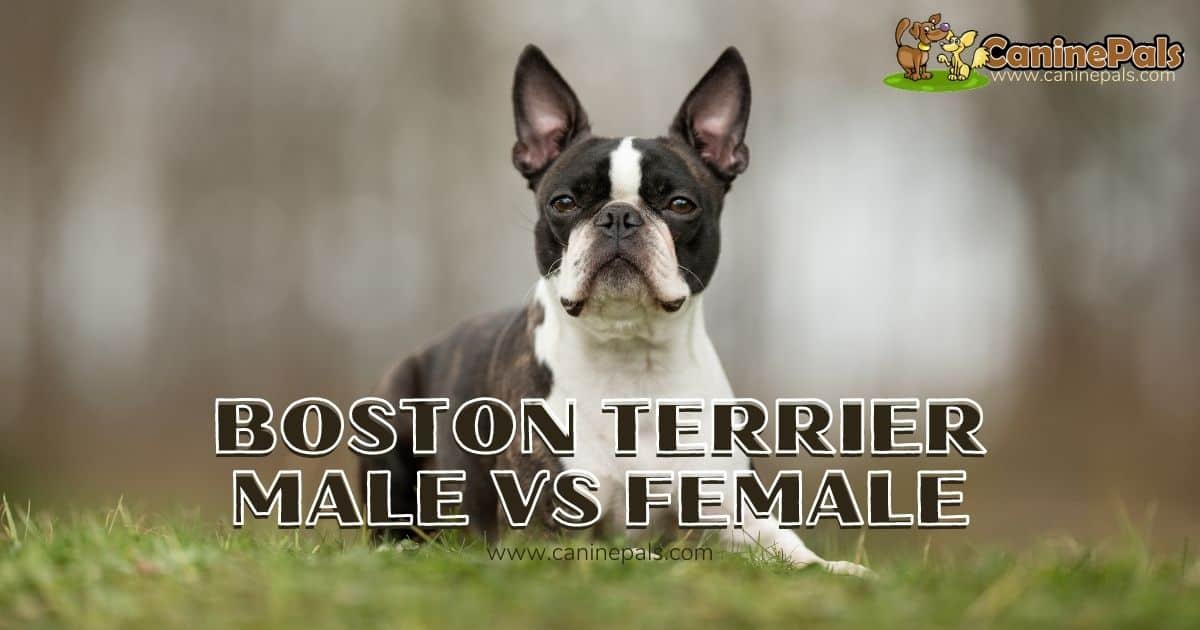
Boston Terrier Male vs Female

Boston Terrier Male vs Female Details

Small in size and affectionate in nature, Boston Terrier is a lively family companion. This article is all about Boston Terrier male vs female and their traits and characteristics.

Small, sturdy and muscular build with naturally large ears that stand erect; a broad flat nose and a face without wrinkles – you can easily recognize a Boston Terrier from a distance. A comparison between Boston Terrier male vs female would mark no physical difference as they apparently look alike.

Known for their sleek, shiny and straight coat that displays crisp white markings and makes it appear as if the dog is wearing a tuxedo. Because of this outstanding feature, the Boston Terrier is known as the American Gentleman.

History of the Boston Terrier

American Kennel Club (AKC) finds the origin of the Boston Terrier in 19th century England. In those days, blood sports were famous in England and people used to cross breed dogs to create fierce breeds that would help them earn a victory in the ring.

The Boston Terrier was developed as a fighting dog after the American Civil War. The ancestor of most Boston terriers was a “Hooper’s Judge” dog that was sold to a man in Boston in 1870. He’s a mixture of a white English Terrier and an English Bulldog.

Judge is explained by one dog historian in his writings as “strongly built, high stationed dog of about thirty two pounds weight. In color he was a dark brindle, with a white stripe in the face. His head was square and blocky, and he resembled the present Boston Terrier in that he had a nearly even mouth.”

Judge was brought to the United States and was owned by Robert C. Hooper who lived in Boston. This dog Judge is the common ancestor of all the Boston Terriers.

In 1891, the Boston Terrier Club of America was formed. AKC registered the first dog in the year 1893. In 1891, the name was changed to the Boston Terrier, named for the city of origin. The Boston Terrier is considered as the pride of Boston. Honoring the breed, Boston University changed its official mascot to Boston Terrier and in 1979 State legislature of Massachusetts declared Boston Terrier the official dog of Massachusetts.

During the successive breeding, Boston Terrier underwent a transformation from the bulky fighter dog to a small, sweet and attractive dog of today.  The Boston is an intelligent, lively canine with a dapper appearance and is most suited to being a family pet.

A Boston Terrier is easy to train and prefers to stay by his owner’s side. He’s a short, dog who is coloured either seal, black or brindle and has white markings.

He can vary in weight from 10 – 25 pounds and is 15 – 17 inches high.

Boston Terrier Male vs Female

AKC Breed Specification of Boston Terrier

American Kennel Club offers a detailed breed specification of Boston Terriers. Following are the important pointers that are specific to these dogs.

General Appearance:

Boston Terrier has a smooth coat, short head and a compact body. With a short tail, it looks like a perfectly balanced dog. The size of the head is in the right proportion when compared to the size of the body. Boston Terrier is a highly intelligent dog as appeared from its expressions.

Head:

The skull is a square that is flat on top. Face is free from any wrinkles and cheeks are flat.

The eyes are dark, round and set wide apart from each other. There must not be any trace of blue on the body and in the eyes for a dog to be a purebred Boston Terrier. The ears are small and naturally erect. They are situated at the corners of the skull.

Neck, Topline and Body:

Neck is slightly arched. It displays an image of balance. The size of the neck is in the right proportion when seen along with the size of the head and the body. The neck sits perfectly in the middle of the two shoulders. The topline is level and the back is slightly curved to the tip of the tail. The tail is short and tapered.

Forequarters:

The shoulders are well supported and perfectly laid back. It allows the Boston Terrier to have a graceful walk. The forelegs are set moderately apart and match in a straight line to the upper tip of the shoulder blade. The feet are small, round and compact. They are designed beautifully and can take the weight of the body perfectly well.

Hindquarters:

Thighs in the hindquarters are muscular and strong that allow it to leap forward while running. Thighs are bent at stifles. The feet are small and compact with short nails.

Gait:

Boston Terrier has a graceful gait. The forelegs and hindlegs move in a straight line and in a perfect rhythm. Boston Terrier’s gait is that of a sure footed, straight gaited dog.

Coat:

The coat is short, smooth, bright and fine to touch.

Color and Markings:

Boston Terriers come in brindle, seal or black colors with white markings. The desired markings include white muzzle band, white blaze between the eyes, white blaze over the head, white collar, white fore chest, white on a part or whole of forelegs and hindlegs.

Temperament:

Boston Terrier is a lively and intelligent dog. It is a perfect human companion.

Boston Terrier Male vs Female

Boston Terrier is a small, muscular and a pretty looking dog. Affectionate and loving, Boston Terrier is really a family dog. Whenever it looks at you with its cute, round and black eyes, you immediately fall in love with this breed.

There are many traits and characteristics salient to this outstanding breed. However, there are marked differences when it comes to Boston Terrier Male vs Female. In this section, we are going to focus on the gender specific traits of Boston Terrier Male vs Female.

boston terrier
Boston Terrier

Boston Terrier Male vs Female Size

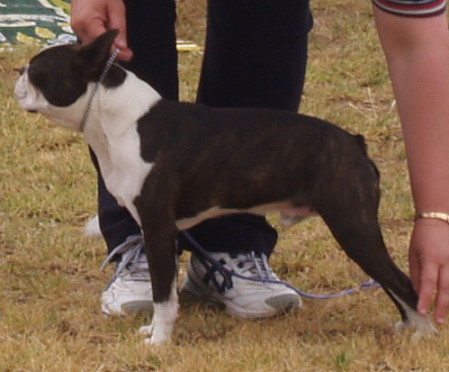
The Boston Terrier male dog has an average height of 15-17 inches. It weighs between 10lbs and 25lbs whereas a Boston Terrier girl weighs between 9lbs and 20lbs and reaches a height of about 9-15 inches.

Male dogs have more muscle mass and are much bulkier in comparison to the female dogs. A Boston Terrier girl is lean with less muscle mass.

Male Boston Terrier Temperament

A male Boston Terrier dog is friendly, bright and amusing. It takes more time to train a male dog in comparison to a female dog. However, it is a great family companion and loves to please its owner.

The Boston Terrier male loves to eat and food motivates it. It loves to be cuddled and played with and appreciates a belly rub and back scratches. A boy Boston Terrier is more playful and agile than a female Boston Terrier.

It gets aged physically fairly quickly whereas mentally it still remains a playful and agile dog.

A Boston Terrier male acts as the protector of the territory and the family. It allows no other dog to enter its territory or to harm its family in any way. Being a protector, it gets along well with all the members of the family and loves them.

It seeks its owner’s attention all the time. It is kind to strangers and gets along well with female dogs.

The disadvantage of a male Boston Terrier is that it is a messy dog and requires a lot of cleaning. It is very difficult to train a male dog to walk off a leash. In a crowd, they tend to go off track. Plus they are clumsy with children.

Female Boston Terrier Temperament

A female Boston Terrier learns fast and is easy to train. It is friendly, energetic and fun loving. Though it enjoys company, it has less desire to please its owner than a male terrier.

Like its male counterpart, a Boston Terrier girl gets motivated by food. The motivation for food dies down when it is pregnant. It is more independent, calmer and less passionate than a male terrier.

It is less playful than a male dog and reaches mental maturity pretty quickly whereas the physical maturity hits late. In this way, it is a total opposite of its male version. It is not protective of its territory at all and when it comes to protecting its family, it takes care only of its owner.

The female Boston Terrier is less attention seeking and does not always bother its owner. A female allows you to have your private time and respects it.

A girl Boston terrier often bonds well with only one person in the family – its owner. It gets along well with male dogs but it is not very welcoming when it comes to strangers and children.

Boston Terrier Traits and Characteristics

Behavior with family

Boston terrier is an affectionate family dog. It keeps you company and because of its playful nature, it would stay agile and active all day long. It is kind towards children and behaves well around them.

However, like with every other dog, the dog and children’s time should always be supervised by an adult. It is fairly good with other dogs and tolerates their presence when it is not threatening.

Physical Traits

The physical requirements of the Boston Terrier for grooming are minimum. Its shedding frequency is minimum. So, you would not have to clean around often. The coat grooming requirements are also minimum and you can take a fortnight to groom its coat that makes the job easy. The additional benefit of having a Boston Terrier is that it is less likely to drool.

General personality traits

The Boston Terrier is fairly easy to train. It is always full of energy and tries its best to please its owner. When it comes to the barking tendency of this dog, it does not bark at all. However, it barks only to alert its owner which makes this dog a great watchdog.

On a daily basis, it requires less exercise and outdoor time. A moderate activity would be enough for this dog. For the rest of the day, they would love to lounge.

Boston terriers
Boston terriers

Boston Terrier Male or Female?

If you love the Boston Terrier and you are in the process of owning one, you might wonder what is the best for you to own – Boston Terrier male or female?

 It is really a tough call between Boston Terrier male vs female. A male possesses certain specific qualities and so does the female dog.

There are subtle differences in owning a male or a female Boston Terrier. A male Boston Terrier is playful and agile. It would love to stay around all day long. Since it is good with children, it would keep them in good company.

However, a female dog is a loyal companion of its owner only. If you want to have a dog that always stays by your side  and puts you first than any of the other members of your family, you should go for a Boston Terrier female dog.

There are different advantages of owning a male over a female and vice versa. Let us look at the individual advantages of each.

Advantages of owning a male Boston Terrier

  • Joyous and playful
  • Agile and energetic
  • It would play all day long with your children
  • Protects all the members of the family
  • A good watchdog
  • Patient towards strangers and kind to children
  • Does not bark but to alert

Advantages of owning a female Boston Terrier

  • Less playful and more patient
  • Respects the free time of the owner
  • Loyal only to the owner and protects him to death
  • Easier to train and easier to handle
  • Excellent companion for adults
  • Low maintenance dog

Now that you have gone through the advantages of male and female dogs, it is easier for you to make a decision which dog to own.

If there are children in your family, a male Boston Terrier might be a better choice for you. If you live alone and want company, a female Boston Terrier would serve great as a companion.

Conclusion

Boston Terrier is an agile, muscular, playful and an excellent family dog. Though it was crossed to get a dog for the love of blood sports, it has come far away from its wild ancestors. Today’s Boston Terrier is a cheerful and loving dog.

There are stark differences when it comes to Boston Terrier male vs female. The male dog is more playful, active and protective. The female dog is more calm, intelligent and a silent companion.

It depends on your personality whether you want to own a male Boston Terrier or a female one. Choose wisely.

Good luck.

Copyright CaninePals.Com. All Rights Reserved.

References and Further Reading:
[1] American Kennel Club, Boston Terrier Information.


Boston Terrier
Boston Terrier
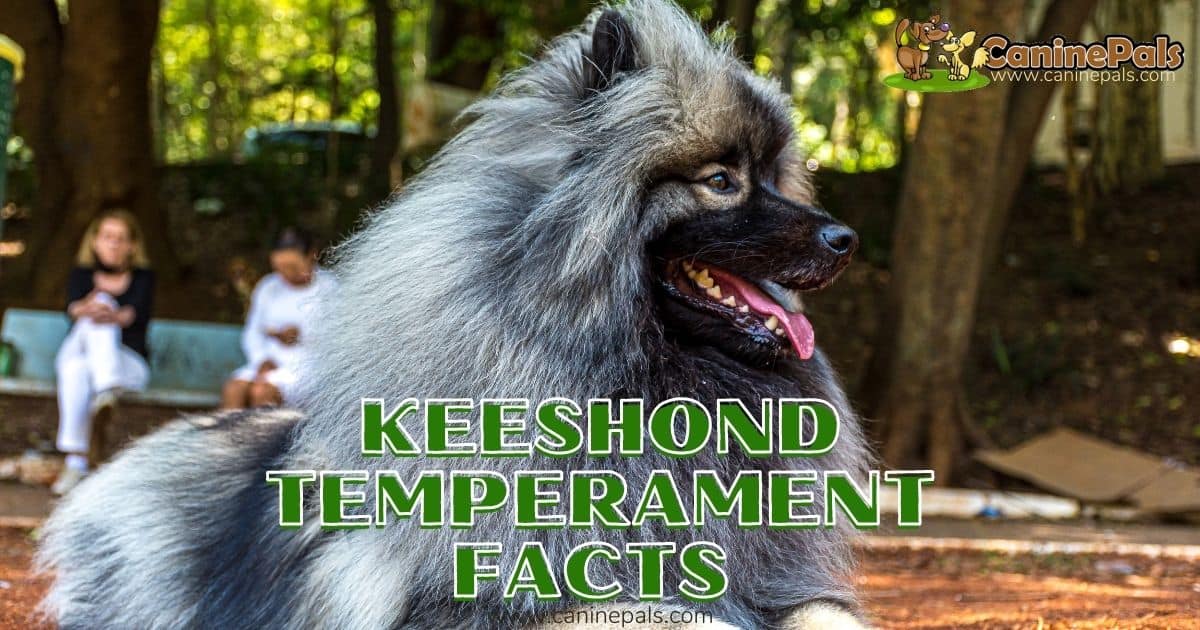
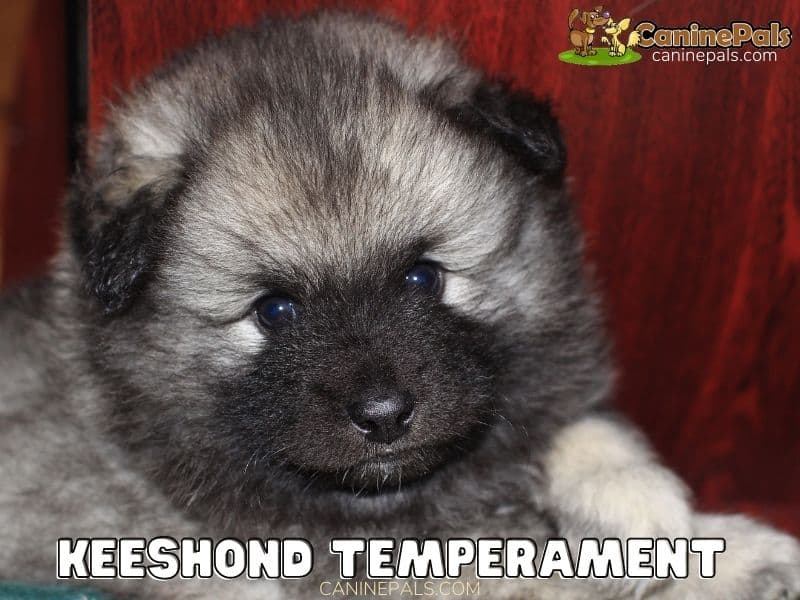
Keeshond Temperament Facts

Keeshond Temperament Facts

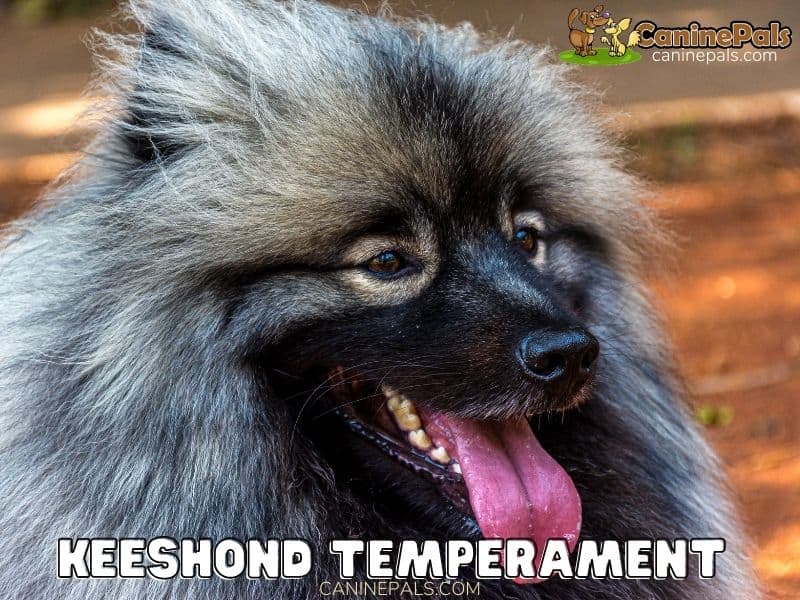
Medium in size, covered in a thick woolly coat, curled tail, small and pointed ears, spectacled eyes and an expressive face – Keeshond is known to be the best family oriented dog. Unusual barking, however, is a downside of Keeshond’s temperament.

Affectionate and family oriented, kids friendly, kind to other dogs as well as strangers, playful, bright, agile, obedient, quick and sturdy are some of the salient traits when it comes to Keeshond temperament.

This article is all about the outstanding traits of this loving family dog Keeshond and Keeshond temperament. So, brace yourself for all that is yet to come.

History of the Keeshond Dog

Keeshond is originally a Dutch breed. Genetically, Keeshond is a close cousin to Samoyed, Chow, Norwegian Elkhound, Finnish Spitz and Pomeranian. Loved by riverboat captains, farmers and working people, Keeshond was generally a country dog back in the 17th and 18th century Holland.

But Keeshond became famous for its role as a companion and the vigilant watchdog on small vessels and barges that sailed through the man-made waterways.

The dog became the center of ire and anger in the historical power struggle between the supporters of the Prince of Orange and their opposers who were  known as the patriots. The patriot leader owned a Keeshond and kept it along as his constant companion. Keeshond thus became a symbol of rebellion against the Prince of Orange.

The power struggle was won by the Prince of Orange and the dog bore the brunt of unhappiness of his followers and fell into infamy.

The Keeshond is descended from various dogs including the Samoyed, Pomeranian, Norwegian Elkhound, Chow Chow and the Finnish Spitz. He was popular in Holland during the late 1700s and became a symbol of Kees de Gyselaer, the leader of the Dutch Patriot political party who had a dog named Kees. Once defeated, they became very rare but resurfaced in America and England 100 years later.

The Keeshond was a watchdog on farms, barges and riverboats. This dog has a fox-like expression and his coat is coloured black, cream and gray with various shaded colouring and “spectacles” around the eyes.

Keeshond Temperament Facts

Keeshond Traits and Characteristics

The Keeshond is an old dog breed and is exclusively known for its companionship and love of humans. This dog is a total people lover. If you want to own a lively and agile dog that should participate in all the family activities then you must own a Keeshond.

He’s a good-natured, affectionate dog and relates well to people and other dogs. He’s a fast learner and is full of energy, needing regular exercise. His coat should be brushed twice each week.

This section is all about the Keeshond temperament and personality traits.

AKC Size Specifications

Keeshond is a medium sized dog. He’s 17 – 18 inches high. According to American Kennel Club, the average height of a male Keeshond reaches up to 18 inches whereas a female dog can reach as high as 17 inches.

The average weight of a Keeshond is somewhere between 35-45 pounds.  The life expectancy of this dog is between 12-15 years.


AKC Size Specifications

Height 18 inches for Male dog

17 inches for Female dog

Weight 35-45 pounds
Life Expectancy 12-15 years

Physical Traits

Dog owners do have an ample idea what it is like if your dog sheds its fur. If the shedding is massive, it becomes a pain to clean around. Keeshond shedding level is somewhat average. It certainly isn’t one of those dogs that shed massively. You can expect minimum shedding of its fur, however.

Keeshond coat grooming requirements are also not very frequent. It can be groomed as frequently as after every fortnight. As compared to dogs who drool so heavily that you always need to have a towel to attend to them, Keeshond drooling is less likely to occur. In that regard, it is quite a cleaner and drool free dog.

Also, with its double coat and long coat length, it is soft to touch and it is an amazing experience whenever you cuddle or hug this dog.

Personality Traits

Keeshond is a kind dog in all respects when it comes to its personality. It is highly adaptable to different situations. When it comes to training a Keeshond, it is not surprising to see that it is highly trainable. It learns quickly and obediently.

Filled with energy, it is highly agile and playful. But it certainly isn’t one of those breeds who are so full of energy that they tend to break stuff. It is filled only with positive and playful energy.

However, it is quite stern when it comes to barking. These dogs bark more often than other dogs and it can be a nuisance at times. Your neighbours are going to be annoyed because of its usual and high pitched barking.

The Keeshond loves to be engaged in play and it would get upset if left alone. It is necessary for Keeshond to have regular outdoor sessions. It is not the kind of dog who would recline all day long in the lounge.

Keeshond Temperament Facts

Keeshond Temperament

Family Affection

Family affection of dogs ranges from extreme affectionate to extreme aloof. Some dogs like to spend all the time with the members of their family while other dogs would want to stay all day in their beds sleeping.

When it comes to Keeshond, it is well-known that it is a family oriented dog. It treats members of its human family as its best friend. It loves to play with them all the time and never wants to be left alone.

Kees Dog Behavior with Children

Keeshond is known for its love for the family. It is patient and loving towards younger members of the family especially the children enjoy its company. However, it is usually advised that dogs should be supervised by an adult whenever they are near children.

Behavior with Other Dogs

This characteristic deals with how a dog behaves in the presence of other dogs. Some dogs are hostile towards other dogs. Others are generally more friendly towards the members of their own species.

When it comes to Keeshond, it is kind to other dogs and behaves well.

Keeshond Behavior with Strangers

Keeshond is a loving and affectionate dog. It is kind not only to the members of its human family, children and other dogs but also to the strangers that visit its owner’s household. He is open to strangers and treats them as his best friend.

Playful Nature

Keeshond is agile, enthusiastic and playful. A Kees loves to be around and participate in the family chores, games and other activities. It is not one of those dogs who love to be in their bed all the time. It loves excitement and enjoys fun and work.

Keeshond as a Watchdog

Because of its agile, active and playful nature, it keeps an eye around. Nothing skips its attention. Because of these peculiar characteristics, Keeshond is ideal to serve as a watchdog. Even in its ancestral country, Keeshond served the purpose of a watchdog on small vessels and barges.

Adaptability Level

Keeshond is a highly adaptable dog. It is not like those dogs who always like routine and would never adapt to changed circumstances. It is quite adaptable when it is keenly asked to by the owner.

Owning a Keeshond Dog

Keeshond is a sensible, intelligent and loving dog. It is cheerful, bright and lively. These characteristics make owning a Keeshond to be a fun experience. It needs constant companionship. That can be a good thing as well a bad thing.

It can be a good thing in the sense that if you are alone and isolated, this dog would provide a loving company. It would obey you, bring stuff for you and be happy around you. But if you have a job that requires you to stay in the office for long hours, it would be hard for Keeshond to tolerate that.

On a positive side, it is family oriented. It can earn the love, attraction and care of all the members of the family. Polite to strangers, decent with children and kind with other dogs. Keeshond is the darling of novice dog owners as it is easy to train.

Keeshond does have a barking problem. This dog barks a lot. In an apartment or a high rise, your neighbors are going to suffer because of the unwanted and unnecessary barking of your dog.

Overall, owning a Keeshond is a complete package. Medium-sized, playful, loving and kind. If you can tolerate the unwanted barks, owning a Keeshond can be a wonderful experience.

Keeshond Puppy
Keeshond Puppy

Understanding Keeshond Barking 

Keeshonds bark loudly and persistently in comparison to other dog breeds. If they are not trained early in life to control their barking, it becomes highly unpleasant for their owners later. Barking is the most interactive way of communication for a dog. Keeshond may bark for a number of reasons. These may include

 Being Territorially Protective

When Keeshond senses any other dog trying to break into their sphere, they bark. The intensification of the risk leads to intensified barking. This type of bark is not gentle at all. It is louder and more aggressive.

From Fear or Boredom

Keeshonds have a tendency to bark if they feel frightened because of anything. If they are bored, you might expect a bark as well. Barking is Keeshond’s way of communicating.

From Happiness

Keeshonds bark extensively whenever they are ecstatic.

Separation Anxiety and Attention Seeking

Yet another cause of Keeshond barking includes separation anxiety. If you have left your dog alone at home, don’t expect it to stay quiet all day.

If it is a Keeshond, it might start barking the moment you set your foot out of the house. Similarly, dogs bark in order to seek attention from their owner.

If you are annoyed because of the barking of your Keeshond, you should employ a few techniques. Whenever your dog starts barking, you need to figure out first what is the trigger. If you can identify the trigger, you can simply remove it to pacify your dog.

If you fear that the dog is barking just to seek your attention then you need to train your dog not to bark for seeking attention. You can start ignoring your dog when it starts barking rather than giving all the attention.

If boredom is the cause of excessive barking, you should keep your dog entertained and tired. Physical exertion and regular exercise would keep your dog tired.

These are some of the techniques you can use to demotivate your dogs from barking.

Keeshond Colors

According to American Kennel Club, there are six colors a Keeshond can appear in. The Keeshond colors are listed below.

  • Black and Silver
  • Gray and Black
  • Gray Silver and Black
  • Silver and Black
  • Wolf Grey and Black
  • Gray Cream and Black

Keeshond Puppy Training

Training a puppy is not about getting him to obey your command. It is all about how you want to live with your puppy. A well trained puppy is one that understands how you want him to be in the house. It takes a little effort, patience and struggle and you can enjoy a really happy life with a well-trained puppy.

It is normal for puppies to display every kind of behavior. They would do things that you like and other things that you don’t like. It is your reaction to a puppy’s behavior that trains it.

If you want your puppy not to eat from the table or ever touch your food at the table, then you must stop serving his food at the table. If you serve his food at the table, it becomes normal for it to touch every food that is there on the table.

Following are the three important techniques that you can use for proper training of a Keeshond puppy

  1. First of all, you need to understand that during the training you should confine your puppy to a crate when you are not interacting with him. That way, he wouldn’t learn or do anything that you don’t like.
  2. Be calm when you are training. Puppies are sensitive to human emotions. You should stay composed and kind all the time while training your puppy.
  3. Use reward and punishment methods. Reward your puppy whenever it obeys your command during training.

Conclusion

Playful, agile, kind and protective are some of the salient characteristics of Keeshond. This Dutch breed is known for kindness and love. Keeshond’s temperament is mild, friendly and welcoming. It is one of those dogs that would enjoy work all day. It keeps company and is a family oriented dog.

The only disadvantage of owning a Keeshond is the unusual and loud barking that creates hell of a nuisance especially at night. If the dog gets proper attention and training, it can overcome the barking as well.

Because of its many loving traits, Keeshond is the darling of novice and experienced dog owners alike.

Copyright CaninePals.Com. All Rights Reserved.

References and Further Reading:

[1] American Kennel Club, Keeshond Information.

American Staffordshire Terrier Colors

American Staffordshire Terrier Colors

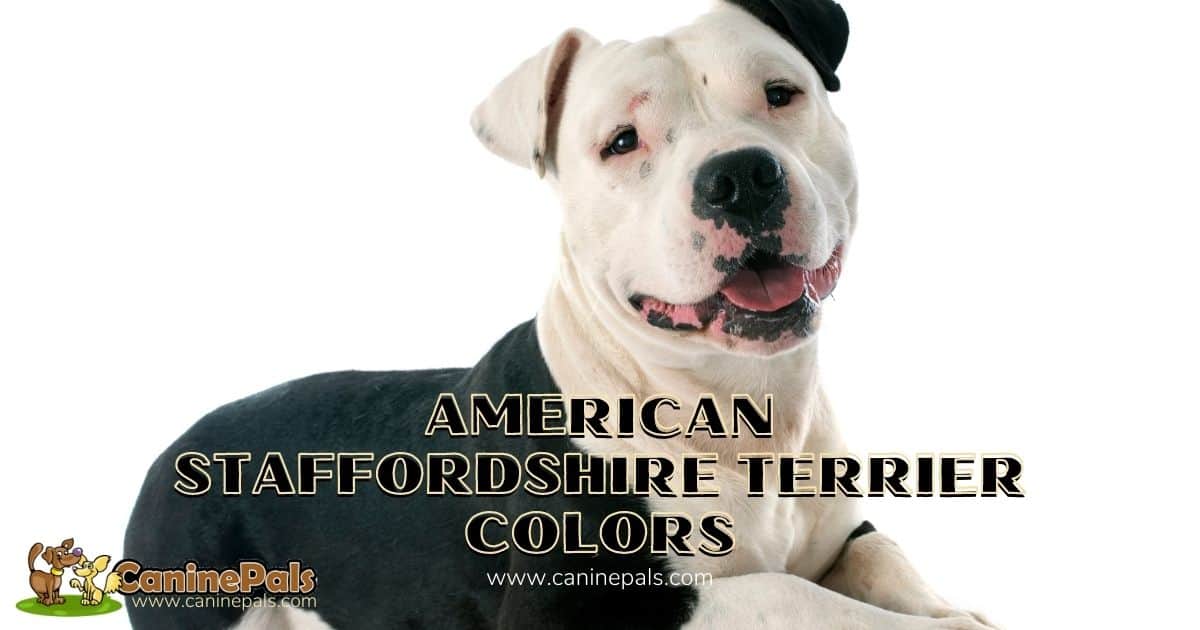
This article is going to discuss the variety of American Staffordshire Terrier colors. No other dog breeds come in as many colors as the AmStaff does.

The American Staffordshire Terrier is a muscular and agile family dog. It is an intelligent, playful and loyal pet that has a life expectancy of up to 12 years.

Big muscular head with chiseled cheekbones, wide apart eyes set in perfect circles, broad shoulders, muscular build with no loose skin, and a glossy coat are the characteristics that make American Staffordshire Terriers or the AmStaff a unique dog breed. There is an absolute variety in American Staffordshire Terrier colors.

Stay tuned for more details that are yet to come.

American Staffordshire Terrier Colors

American Staffordshire Terriers come in a wide range of colors. According to the American Kennel Club breed specifications,  the AmStaff can come in any color. If we give a quick glance at the American Staffordshire Terrier color chart, we will notice that there is no color or combination, this dog breed is not found in.

Some color schemes are more widely seen than others. Occasionally, a rare coat color known as “grizzle” or agouti may be seen in American Staffie dogs.

The AmStaff comes in solid colors as well as in many combinations. Mostly white dots or patches are observed with a solid color such as black or blue.

In this section, we are going to delve deeply into the details of American Staffordshire Terrier colors.

American Staffordshire Terrier Color Chart

●      Black American Staffordshire Terrier

It is an AmStaff that is thoroughly black in color. The shade can be shiny in many dogs. The face, neck, body, and legs all are completely black in color. There are no spots of white or any other color on a black American Staffordshire Terrier. Even the eyes of a black AmStaff are black in color.

      Black and White American Staffordshire Terrier

A black and a white AmStaff is no different from a black one. The difference is that a black Staffordshire Terrier is thoroughly black whereas the black and white AmStaff has a black base with white spots on it. The white spots are found on the face, neck, forelegs, and on the lower portion of the hindlegs. The toes can be white as well.

●      Blue American Staffordshire Terrier

A blue AmStaff is darker in tone. It is so dark that a novice might take it as black. But in fact, it is not black but a heavier shade of blue. Just like black Staffordshire Terrier, a blue AmStaff is thoroughly blue. All the visible skin is the same color. The eyes are dark. There are no patches of white or any other color.

●      Blue and White American Staffordshire Terrier

A blue and white American Staffordshire Terrier has a blue-colored base with white patches here and there. The white portion in this type of Terrier is comparatively more in comparison to the white portion of Black and White Staffordshire Terrier.

The face is white with blue patches on it as well. You may find a blue spot over the ear or around the eye. The neck, forelimbs, and hindlimbs are generally white. The white patches may also be visible on the body of this AmStaff.

●      Blue Brindle American Staffordshire Terrier

The Blue Brindle American Staffordshire Terrier is somewhat similar to the Blue AmStaff. It has stripes that resemble gray with a tinge of fawn. The whole body is covered in dark-colored stripes. Even the face, legs, and tail exhibit the same color. The darker shade of fawn may also be found along with the stripes of the body.

●      Blue Brindle and White American Staffordshire Terrier

When a blue brindle American Staffordshire Terrier has patches of white, it is a blue brindle and white AmStaff. The position of white patches is similar to that of black and white and blue and white AmStaffs. White spots can be found on the face, neck, body, and preferably on the fore and hind legs.

●      Blue Fawn American Staffordshire Terrier

A blue fawn Terrier looks like a brown-colored dog. The skin is colored blue fawn throughout. The shade may range from a lighter version of blue fawn to a darker one. There are no patches of any other color. However, the nose may have a black patch around it.

●      Blue Fawn and White American Staffordshire Terrier

This kind of Staffordshire Terrier has white spots on a blue fawn skin. The skin is colored white rather than having any patches in specific areas. Usually, the neck, front and hind legs are white in color and the rest of the skin is blue fawn.

●      Blue Fawn Brindle American Staffordshire Terrier

Blue Fawn Brindle is a cross between blue fawn and blue brindle. This type of AmStaff has a blue fawn body with blue brindle stripes. The nose and mouth area is slightly darker or might be black. The rest of the body has dark gray stripes.

●      Blue Fawn Brindle and White American Staffordshire Terrier

It is a blue fawn brindle AmStaff with white portions of the skin. The lower body is preferably white with an occasional white patch on the face and legs. The rest of the dog has a fawn base and brindle stripes that appear dark gray in color. The stripes do not run across the white patches.

●      Fawn Brindle American Staffordshire Terrier

Fawn brindle resembles very much the blue fawn brindle. Both have a fawn skin with gray stripes running along the body. The only difference is that the fawn brindle Staffordshire Terrier has a greater number of stripes and these are darker in tone.

●      Fawn Brindle and White American Staffordshire Terrier

It is a fawn brindle dog with white patches over the skin. The blue fawn brindle and white and fawn brindle and white look exactly alike. The difference is that in fawn brindle and white, the stripes are darker in tone.

●      Fawn Sable American Staffordshire Terrier

This fawn American Staffordshire Terrier looks like a light brown or golden-colored dog. The fawn sable AmStaff resembles a blue fawn. But where the blue fawn displays darker shades of color, the fawn sable is lighter in color and has lighter notes.

●      Fawn Sable and White American Staffordshire Terrier

The fawn sable and white American Staffordshire Terrier is a fawn sable AmStaff with occasional patches of white on the face, around the neck, on the back, and in the fore and hind legs.

●      Red Brindle American Staffordshire Terrier

Red Brindle is a darker shade of brown with even darker gray stripes. The red brindle is a much darker shade of brown that in all the contrasts of brown displayed by AmStaff, would stand champion in the darkness of tone. The gray stripes on its body are further dark giving this dog a wild look.

●      Red Brindle and White American Staffordshire Terrier

It is a red brindle dog with patches of white. The white contrasts with the darker red brindle and makes the appearance agreeable.

●      Red Sable American Staffordshire Terrier

Red sable is one note darker than the blue fawn and two notes darker than the fawn sable Staffordshire Terrier. In this way, it is the darkest brown in the color scheme.

●      Red Sable and White Staffordshire Terrier

A red sable with white patches of skin is red sable and white Staffordshire Terrier.

American Staffordshire Terrier Colors

A Brief Introduction to American Staffordshire Terriers

Origin and History

American Staffordshire Terrier was introduced to the United States in the mid-eighteenth century. It is a close relative of English Staffordshire Terrier that adopted differant characteristics after it was brought to the United States.

The Staffordshire Terrier was a cross between Bulldog and Terrier dog breeds. It was specifically bred to become a blood sports champion. The blood sports are history now and the wildness of this breed has been tamed. It has been civilized enough that it has become a darling of the family dog owners as a beloved family pet. They are also used as guard dogs.

American Staffordshire Terrier Colors

AKC Size specifications

According to American Kennel Club (AKC), male AmStaff ranges from 18 to 19 inches in height whereas the female dog has an average height of 17 to 18 inches. The male dog weighs 55 to 70 pounds whereas the female dog is 40 to 55 pounds in weight.

American Staffordshire Terrier Traits

American Staffordshire Terrier is considerably bigger than many small-sized dogs. It is a popular belief that small-sized dogs are ideal for apartment living. The truth is against it. Many small-sized dogs are so full of energy that they can’t live in an apartment. AmStaff, on the other hand, goes perfectly well for people living in apartments.

The Am Staff is an intelligent dog and understands the commands of its owner perfectly well. And this trait makes it an ideal dog for novice dog owners. You just need to establish leadership over it and you are good to go.

Am Staff has a short coat. A short coat means that it is moderately sensitive to touch and cuddling. With a short coat, Am Staff is an easygoing dog. It is very tolerant and resilient.

But a short coat also means that it cannot keep itself warm in winters. Hence, it needs to stay indoors in winters to avoid catching a cold. However, Am Staff can withstand the heat. But you should avoid taking your dog out in extreme heat, let alone make it exercise under the sun.

The most prized characteristic of the American Staffordshire Terrier is its friendliness. Some dogs want to stay aloof, laying in their beds all day – not with AmStaff. The dog loves to be around and interact. It is full of energy that keeps it going all day. It likes to stay busy and join you all day long no matter how much work you command it to do.

The AmStaff is kind to older kids as well. Children love the affectionate presence of the Staffordshire Terrier. It bonds well with the kids. But being a muscular dog, can sometimes be harsh with the kids. Hence, it is advised that the dog and children’s time should be supervised by an adult.

American Staffordshire Terriers are very aggressive to other dogs, however. It cannot tolerate the presence of any other dog. With early socialization in the form of training, this defect can also be overcome. These terriers make great family pets and also are good guard dogs.

Finally, the puppy continues into adulthood and becomes a playful, loving, sociable, and loyal dog that is loved by its family.

Summing Up

The Staffordshire Terrier exhibits a range of colors. Some of which are solid colors such as black, blue, fawn, and brindle while others are striped with darker tones. Occasional patches of white create variations in the color scheme of this dog.

The color range displayed by American Staffordshire Terrier is remarkable. You would find many colors that you may have not heard of earlier. But now you know that your much loved Staffie comes in multiple shades and colors. Find the perfect one for you and your family.

Copyright CaninePals.Com. All Rights Reserved.

References and Further Reading:

[1] American Kennel Club, American Staffordshire Terrier Information.

American Staffordshire Terrier Colors
Male Pomeranian Vs Female Pomeranian

Male Pomeranian Vs Female Pomeranian Comparison

Pomeranian puppies are small-size bundles of love in fluffy coats that never want to leave your side. Most of the time, pet parents ask if should I get a male or female Pomeranian. Prospective Pom owners usually have many questions about the male Pomeranian vs. female Pomeranian puppy question.

They often ask if male or female Pomeranians are better or if is it better to get a male or female Pomeranian.

As a longtime, very dedicated member of the Pomeranian dog community, I could easily ask the owners of these toy breed dogs for their thoughts.

Over 14,000 Pomeranian owners were polled about the “male Pomeranian vs. female Pomeranian” question. The results of this Pomeranian poll were not a surprise, with a 50/50 result obtained.

Whether you choose a Pomeranian male or female, it doesn’t matter. However, experienced Pomeranian breeders and owners can explain a slight variance between male and female pups.

Vital Stats about Pomeranian Dogs

Here are some important stats that are common in both Pomeranian male and female dogs:

Stats

Description

Dog breed group

Toy group

Purpose

Companion dogs

Temperament

Lively, bold, inquisitive

Average height

8-11 inches

Average weight

3-7 pounds

Energy level

Moderate

Exercise requirements

Low

Grooming needs

Medium

AKC breed popularity

23 out of 200

Life Expectancy

12-16 years 

Male Pomeranian Vs Female Pomeranian

Male Pomeranian vs. Female Pomeranian Size Details

The Pomeranian is one of the few dog breeds where the female Pomeranian’s size should be slightly bigger than that of the male Poms.  Pomeranians often have difficulty whelping litters, and having the female slightly larger than the male Pomeranian is thought to assist Pomeranian breeders.

Male Pomeranian

  • Average Height: 7 – 12 inches ( about 20 cm tall).
  • Average Weight: 3 – 7 pounds (American Kennel Club breed standard). The English Kennel Club size for Pomeranian males is 4 – 4.5 lbs. (1.8 – 2kg).
  • Build: Male Pomeranians are slightly smaller in build.

Girl Pomeranian

  • Average Height: 7 – 12 inches ( about 20 cm tall).
  • Average Weight: 3 – 7 pounds. ( American Kennel Club breed standard). The English Kennel Club size for Pomeranian females is 4.5 – 5.5 pounds (2 – 2.5 kg).
  • Build: Female Poms are slightly bigger in build.

Temperament Difference Between Male vs. Female Pomeranian

Remember that every Pom will have a personality that may not fit these generalizations. As for every generalization, there are always exceptions.

The Female Pomeranian

Here are some of the personality traits of female Pomeranians:

  • Female Poms are independent and stubborn. This is due to their strong-willed temperament.
  • They demand attention and want to rule the pack. They determine pecking order and intent upon exercising dominance by participating in alpha behaviors.
  • Female Poms are territorial and need to be socialized. Otherwise, they may get too protective over their favorite family member.
  • Female Pomeranians will love to be around you all day, every day. When the girl Pom has had enough, she will move away.
  • The male and female Poms are incredibly affectionate and loyal to their families, and they’re not aggressive.
  • Females love to exercise their dominance, and they love to get away with doing their own thing. 
  • Most females are not aggressive. However, most fights usually break out between two females fighting for dominance.
  • During the heat cycle, female Pom may become moody and withdrawn. This is mainly due to hormones rapidly rising and dropping. It may also be due to discomfort and abdominal cramping.
  • Females are very successful in trying to outsmart you.
  • Female Pomeranians are usually less distracted during training. They want to get this training thing over and done.
  • Female Poms tend to become more reserved or dignified with age.

It is always best to spay a female Pomeranian to keep her healthy unless you are keeping her for breeding purposes.

The Male Pomeranian

Here are some of the personality traits of boy Pomeranians:

  • Pomeranian males are very sweet-natured. They love staring at you and will likely want to stay in your lap all day. Their number one reason for living is to worship you.
  • Male Poms can be very fun-loving. They act silly-like and will want to play games well into old age.
  • Pomeranian males are usually more affectionate, spirited, steadfast, and less moody. You can’t help giving them all your attention because they are charming.
  • Male Pomeranians become very attached to their human family. They will love you with all their heart, no matter who you are.
  • Male Pomeranians are more accepting of other pets in your house. Boy Poms are, in most instances, easily motivated by praise and food, thus making training easier.
  • Male Poms can be easily distracted from training. In most instances, they are easily motivated by praise and food.
  • Neutered boy Poms rarely exhibit secondary sexual behavior such as “humping” or “marking.”
  • When urinating, male Poms lift their legs to mark territory, which can ruin things. However, if neutered at a young age, many males will not need to mark territory.
  • Male Poms are slightly more massive than their female counterparts. 

It is always best to neuter a male Pomeranian to keep him healthy unless you are keeping him for breeding purposes. Remember that the differences between male and female Pomeranians can also be more pronounced in spayed and neutered dogs.

Male Pomeranian Vs Female Pomeranian
Orange Pomeranian

Male Pomeranians vs. Female Pomeranians Health Problems

Research hasn’t established that male or female Pomeranians are more susceptible to certain health issues. However, it is worth noting that dogs that haven’t been neutered tend to have a higher risk of facing serious health concerns, irrespective of their breed.

Health conditions for both male and female Pomeranians include:

Both male and female Pomeranians have the same average life expectancy. However, gender-specific diseases are risks for both male and female Pomeranians.

Female Pomeranians have the risk of developing breast cancer and uterine cancer. The possibility of these problems can be greatly reduced or eliminated once the female Pom is spayed.

Male Pomeranians are at risk for prostate problems and testicular cancer. The possibility of these problems can be greatly reduced or eliminated once the male Pom is neutered.

Breeding Considerations for Pomeranians

Male Pomeranians tend to achieve sexual maturity earlier than females, typically around the 6-month. Although they can technically breed from 6 months of age, it’s recommended to delay breeding until after they’re a year old.

For female Pomeranians, experts generally advise waiting until 18 months before breeding to safeguard against potential health issues.

Male vs. Female Pomeranian Grooming

Pomeranians have a glamorous, thick, double coat. There is an undercoat of soft, thick, fluffy hair and a long, straight, shiny top coat that’s harsh to the touch. Both male and female Poms require a lot of grooming. Pomeranians are considered to shed moderately.

Male Poms typically blow their undercoats once a year. Female Poms who are not desexed often shed their undercoats when they are in season after they deliver a litter and whenever they are stressed. So, if you own a girl Pom, expect a lot of shedding throughout the year. 

Pomeranian Gender Myths

Many intending Pomeranian owners have gender-based questions concerning Pomeranians. We will try our best to answer most of the questions and correct some common gender myths about Pomeranians.

  • Myth 1: Female Poms are easier to train than their male counterparts

It is largely believed that boy Poms are difficult to train while females are easier to train, but this is largely untrue. Both male and female Pomeranians have issues with training, although the reasons for these challenges differ. Male Pomeranians get distracted easily, while female Poms have an inherent stubborn nature. Regardless of these problems, many pet owners have successfully trained their male and female Pomeranians. All it takes is patience and consistency.  

  • Myth 2: Female Poms are more affectionate than their male counterpart

This is perhaps the most common myth about Pomeranians, and that’s untrue. The female Poms tend to bond quite early, but they do bond with an individual rather than a family. Male Pomeranians, especially females, will bond easily with as many family members as possible. You can safely say that male and female Pomeranians have a loving and affectionate temperament.  

  • Myth 3: Female Pomeranians don’t express dominant traits

A common misconception is that girl Poms don’t possess dominant traits and are very easy-going. In reality, female Pomeranians often fight for dominance in a kennel. Two female Pomeranians are more likely to get into fights than two male Pomeranians are.  

  • Myth 4: Female Poms are easier to housebreak than male counterparts 

Both male and female Pomeranians have the same issues and can be house-trained simultaneously. You need to be consistent and show patience. Both male and female Poms can be housetrained in a few weeks, and it is neither easy nor more difficult for any gender.

Male Pomeranian Vs Female Pomeranian
Chocolate Pomeranian

Are Male or Female Pomeranians Better?

A Pomeranian that fits your personality and blends well into your family is the best Pom for you. Regarding Pomeranians, personality outweighs gender at any time of the day. You should learn how male and female Pomeranians behave, the reasons for their behaviors, and how you can manage and train them.

Is it Better to Get a Male or Female Pomeranian? 

While there are differences in the sexes, male and female Pomeranians are cuddly and loving creatures. They will brighten your day and want you to go everywhere you go.  Many dog lovers with male and female Pomeranians will tell you that the little differences don’t matter in the large picture.

While it’s natural to wonder if a male or female Pomeranian might be a better fit for you, it’s important to remember that a dog’s behavior is largely influenced by its early training and the environment it grows up in.

No concrete research indicates significant behavioral differences between male and female Pomeranians. Thus, your choice between a male or female Pom should be based on your preference.

There’s nothing wrong with getting a male, female, or even both! It’s all up to your preference and personality. The worst mistake you can make is to adopt a Pomeranian based on vague and unfounded information.

My Take on Pomeranian Male vs. Female: What’s the Big Deal?

There is nothing cuter than a pair of Pomeranians bouncing around your house. The small pack can be all males, all females, or a mixture of both.  Here’s what I want to say about the Pomeranian male vs. female debate:

“Don’t base your decision on gender myths and hearsay. The most important aspect is the individual health and personality of the Pomeranian. In most cases, whether you choose a male or female Pomeranian does not matter.

Denise Leo, Dochlaggie Pomeranians.

So, rather than wondering whether to get a male or female Pom, you should talk to a responsible breeder about personality and health issues to look out for. These little furry creatures will create a happy, joyful atmosphere in your home.

If you want to know more about Pomeranians, please get in touch with me. I would love to hear from you. Best of luck with your new Pomeranian member!

More Pomeranian Information is available on the Pomeranian Resource Website

Pomeranian Dog Breeders

Pomeranians Australia

Copyright CaninePals.Com. All Rights Reserved.

References and Further Reading:

[1] Official Standard of the Pomeranian (AKC). American Kennel Club, 2011.
[2] Official English Kennel Club Pomeranian Breed Standard, 2017.
[3] Kimbering Pomeranians “1891-1991”.
[4] Denise Leo, The Pomeranian Handbook.
[5] E.Parker, The Popular Pomeranian.
[6] L.Ives, Show Pomeranians.
[7] L.Ziegler Spirer & H.F. Spirer, This is the Pomeranian.
[8] FEDERATION CYNOLOGIQUE INTERNATIONALE (FCI) German Spitz, including Keeshond and Pomeranian Breed Standards. PDF file.

Male Pomeranian Vs Female Pomeranian

The Pomeranian Handbook by Denise Leo